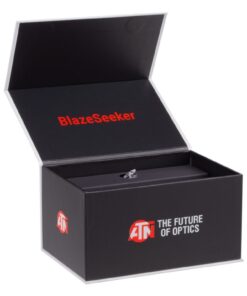
ATN BlazeSeeker 210 Thermal Imaging Monocular – Advanced Thermal Detection for Outdoor Exploration
ATN BlazeSeeker 210 Thermal Imaging Monocular – Clear Vision Beyond Darkness
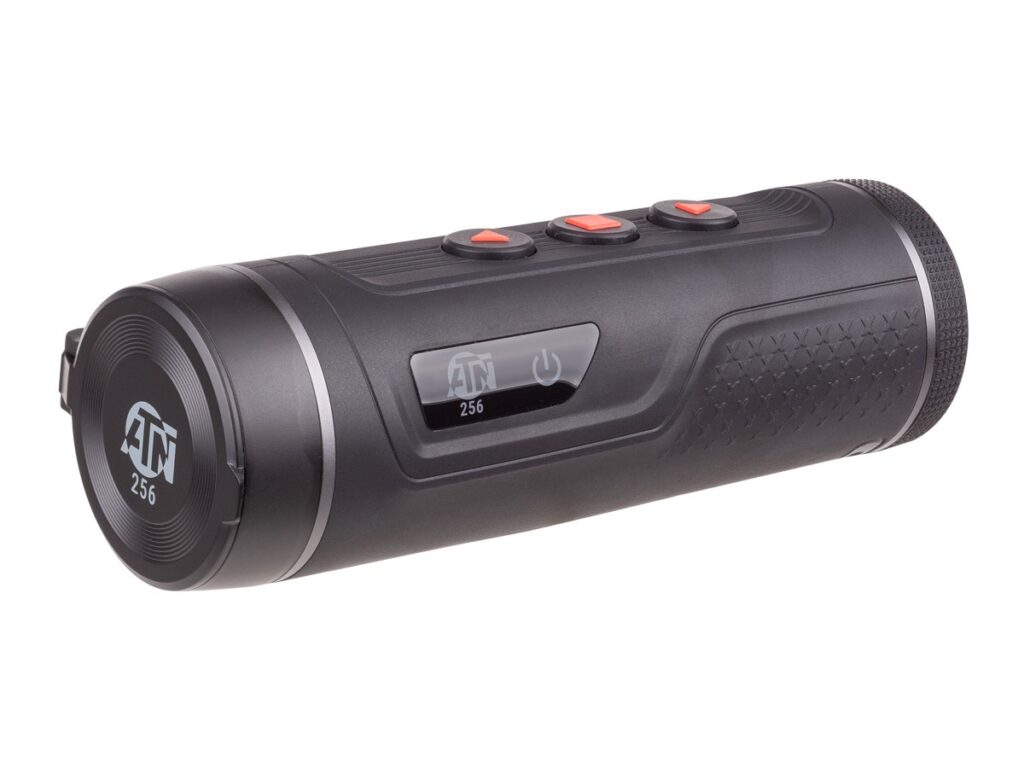
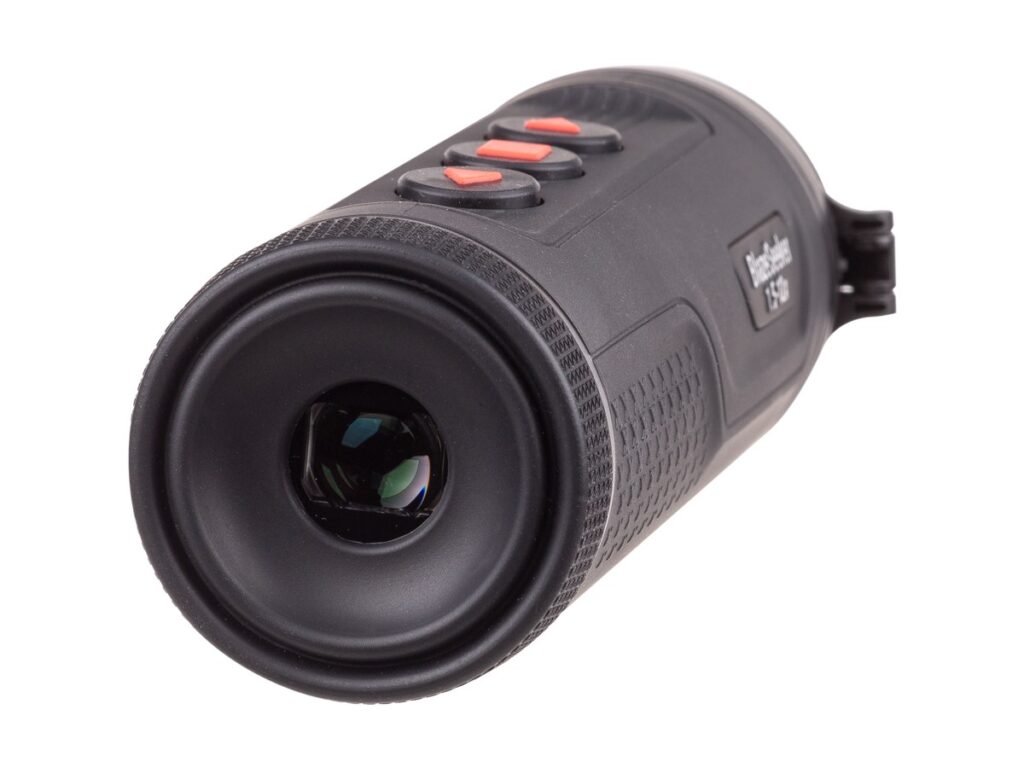
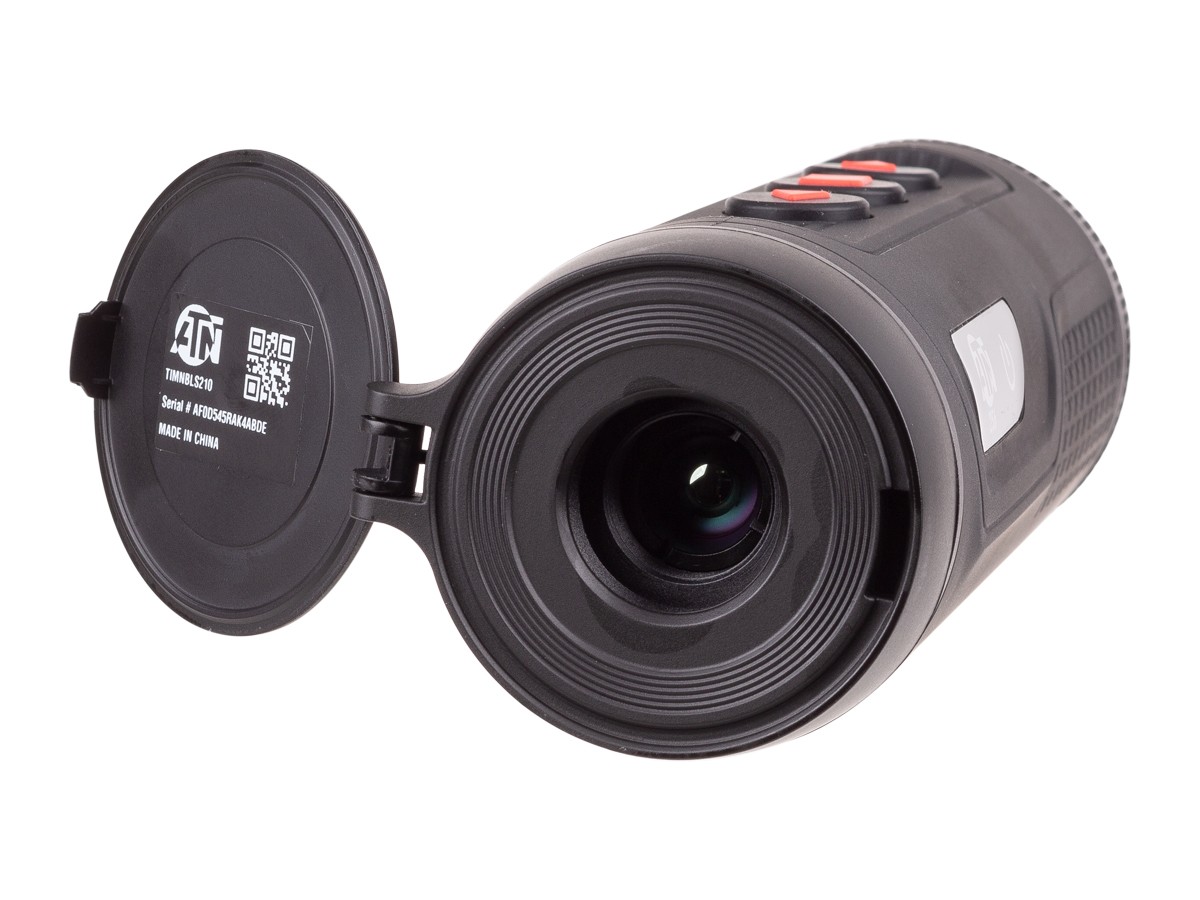
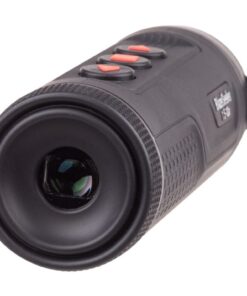
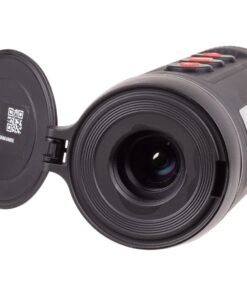
Experience advanced thermal observation with the ATN BlazeSeeker 210 Thermal Imaging Monocular, a compact, high-performance device designed for outdoor exploration, wildlife monitoring, nighttime observation, security inspections, and search-and-rescue activities. With its sensitive thermal detector, digital magnification, and portable construction, impressive thermal visibility can be enjoyed in demanding environments.
Unlike traditional optical devices, which depend on visible light, thermal imaging technology detects infrared radiation emitted by objects. Consequently, heat signatures can be observed even in complete darkness, allowing greater environmental awareness during nighttime activities.
Furthermore, a 256 × 192 thermal sensor is integrated into the device, while smooth imagery is supported by a 50 Hz refresh rate. As a result, moving animals, people, and other heat-emitting objects can be monitored with improved visual continuity.
Whether nighttime wildlife observation, property inspection, or outdoor exploration is planned, dependable thermal detection can be achieved through this convenient handheld device.
Key Features and Product Highlights
- Thermal Sensor Resolution: 256 × 192 pixels for detailed heat-signature detection.
- Sensor Pixel Pitch: 12 μm for compact thermal-sensing technology.
- Thermal Sensitivity: Below 35 mK for detecting subtle temperature differences.
- Magnification Range: 1.5–12× for flexible observation.
- Thermal Detection Range: Up to 460 metres, according to ATN’s original model specifications.
- Refresh Rate: 50 Hz for smooth observation of moving subjects.
- Display Resolution: 800 × 600 AMOLED display for comfortable thermal viewing.
- Objective Lens: 10 mm thermal imaging lens.
- Field of View: 17.3° × 13.1° for practical environmental scanning.
- Colour Palettes: Multiple thermal display modes for different viewing preferences.
- Photo and Video Recording: Integrated recording functionality with 16 GB internal storage.
- Wireless Connectivity: Built-in Wi-Fi for compatible mobile-device connections.
- Battery: Internal rechargeable battery with up to approximately eight hours of operation.
- Charging Connection: USB Type-C.
- Portable Construction: Approximately 270 g for convenient handheld use.
- Manufacturer Warranty: Three-year limited warranty.
Specifications refer to the original BlazeSeeker 210, rather than the newer BlazeSeeker 6 210. Battery performance and detection results can vary with operating conditions.
Advanced Thermal Imaging Technology for Enhanced Detection
High-Sensitivity Thermal Sensor for Detailed Observation
Exceptional thermal awareness is supported by a highly responsive infrared detector. Temperature differences are translated into visible thermal patterns, allowing warm subjects to be distinguished from cooler surroundings.
Moreover, the 256 × 192 sensor resolution provides sufficient thermal detail for everyday observation, while the 12 μm pixel pitch supports efficient image acquisition.
Through the device’s thermal sensitivity of less than 35 mK, relatively small temperature differences can be represented within the displayed image. Therefore, greater visual separation between heat sources and their surroundings can be achieved under suitable environmental conditions.
Additionally, image transitions are made smoother by the 50 Hz refresh rate. When wildlife moves through an observation area, its changing heat signature can be followed without the severe image interruptions associated with slower refresh rates.
Although thermal imaging is particularly valuable after sunset, effective use is not restricted to nighttime conditions. During daylight, temperature contrasts can also be examined for outdoor observation and inspection purposes.
Extended Detection Range and Adjustable Digital Magnification
Greater observational flexibility is provided through the device’s 1.5–12× magnification capability. Distant heat sources can initially be located at lower magnification, while closer examination can subsequently be performed through digital zoom.
Furthermore, a detection range of up to 460 metres is specified for the original model. This capability can be especially valuable when distant thermal activity must be located across open terrain.
However, detection should not be confused with positive identification. Although a heat source may be detected at considerable distances, its exact identity may remain uncertain.
For this reason, careful observation and appropriate verification should always be prioritised.
Comfortable Viewing With Multiple Thermal Colour Palettes
High-Resolution AMOLED Display
Clear thermal images are presented through an 800 × 600 AMOLED display. As a result, a comfortable viewing experience can be maintained during extended observation sessions.
Additionally, the display provides a convenient interface through which thermal patterns, environmental contrast, and moving heat signatures can be evaluated.
Because different observation environments produce varying temperature contrasts, adaptable display settings are particularly useful.
Customisable Thermal Display Modes
Several colour palettes are provided for interpreting thermal information according to individual preferences.
For example, White Hot can be selected when warmer objects need to appear brighter than their surroundings. Conversely, Black Hot can be used when darker representations of warm subjects are preferred.
Meanwhile, alternative colour modes can help emphasise particular temperature differences.
Consequently, viewing flexibility is improved, and suitable visual presentations can be selected for wildlife observation, outdoor inspections, and environmental monitoring.
Built-In Recording and Wireless Connectivity
Capture Photos and Thermal Videos
Important observations can be preserved through the integrated image-capture and video-recording functions.
Rather than relying entirely on visual memory, thermal footage can be recorded and reviewed after an observation session.
Furthermore, 16 GB of internal storage is provided for saving supported media files.
This functionality can be particularly useful for documenting wildlife activity, recording inspection findings, or reviewing environmental observations.
Convenient Wi-Fi Connectivity
Wireless functionality is integrated to provide additional flexibility when using compatible mobile devices.
Through supported ATN applications, recorded thermal information can be accessed or shared according to the device’s available connection features.
Additionally, the USB Type-C connection provides a convenient charging interface.
Therefore, modern connectivity and portable thermal observation are combined within a single handheld system.
Compact, Lightweight, and Designed for Outdoor Use
Portable Design for Convenient Carrying
At approximately 270 grams, the device can be carried comfortably during outdoor activities.
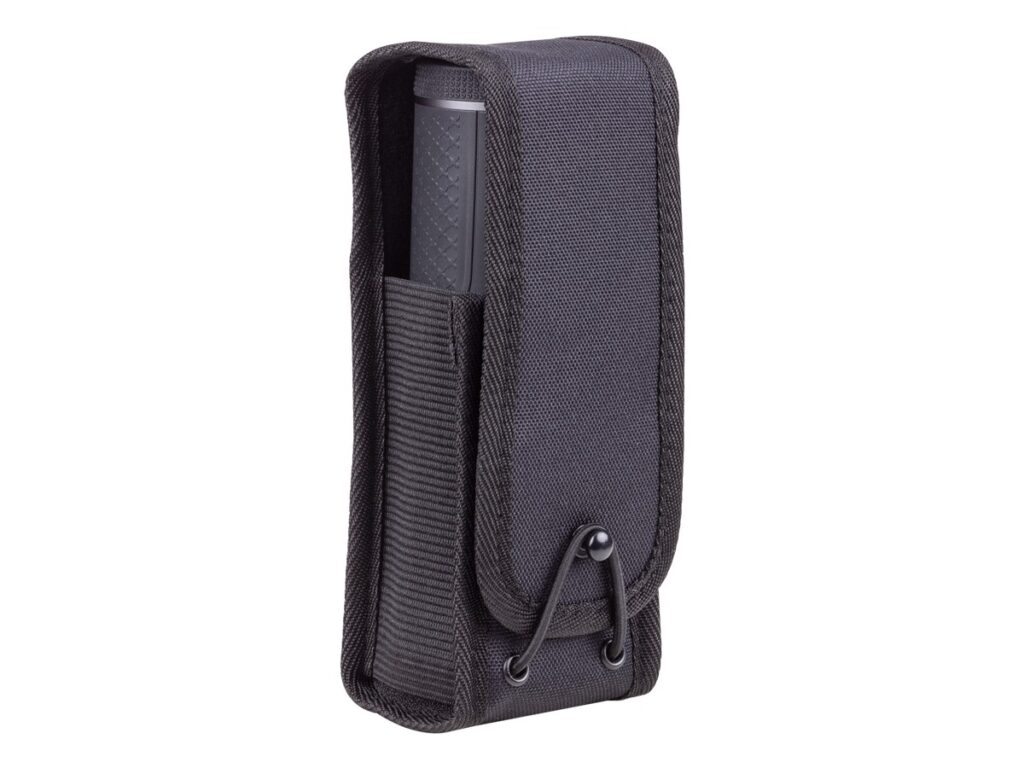
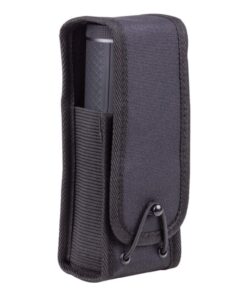
Its compact construction also allows convenient storage inside suitable carrying equipment, while the handheld format supports straightforward observation.
Furthermore, the absence of a complicated external power arrangement contributes to its practical design.
Whether a campsite is being monitored or wildlife is being observed from a suitable location, minimal carrying weight can be maintained.
Rechargeable Battery for Extended Observation
Reliable portable operation is supported by the integrated rechargeable battery.
Under suitable conditions, operation of up to approximately eight hours can be achieved, reducing the need for frequent charging during shorter excursions.
Moreover, convenient recharging is provided through the USB Type-C interface.
Nevertheless, battery endurance can be affected by temperature, wireless connectivity, recording activity, and other operating settings.
Practical Applications of the ATN BlazeSeeker 210 Thermal Imaging Monocular
Wildlife Watching and Nature Exploration
Wildlife observation can be enhanced through heat-signature detection, particularly when visibility is limited.
Animals may be detected against cooler surroundings without requiring visible illumination. Consequently, movement patterns can be examined from an appropriate distance.
However, solid objects and dense vegetation cannot be seen through using thermal imaging alone.
Property Security and Outdoor Inspections
Additional situational awareness can be provided during authorised property inspections.
Heat-generating equipment, warm surfaces, and unusual thermal patterns may be identified when sufficient temperature contrast exists.
Similarly, the device can support preliminary inspections in low-light environments.
Nevertheless, specialist diagnostic equipment should be used whenever accurate temperature measurements or professional electrical assessments are required.
Search-and-Rescue Support
Thermal observation may also assist authorised search teams when identifying heat sources during nighttime operations.
Although thermal imaging can support search activities, environmental conditions, subject distance, and surrounding heat signatures can influence effectiveness.
Therefore, it should be regarded as a supplementary observation tool rather than a replacement for established search procedures.
Why Choose the ATN BlazeSeeker 210 Thermal Imaging Monocular?
A practical combination of thermal sensitivity, portable construction, and recording functionality is offered by this versatile observation device.
Compared with ordinary daylight monoculars, visibility is not dependent on ambient illumination. Additionally, thermal contrast can be interpreted through multiple display modes, while digital magnification provides greater flexibility when examining distant subjects.
Further convenience is delivered through the rechargeable battery, wireless connectivity, and compact handheld construction.
Most importantly, useful thermal observation capabilities are provided without the size and complexity associated with some larger professional imaging systems.
For wildlife enthusiasts, outdoor explorers, authorised security personnel, and property inspectors, the device represents an accessible introduction to modern handheld thermal imaging.
Upgrade Your Outdoor Observation Experience
Discover greater visibility in darkness with the ATN BlazeSeeker 210 Thermal Imaging Monocular. Advanced heat detection, smooth thermal imagery, adjustable magnification, and convenient recording features are combined to support a wide variety of observation activities.
From nighttime wildlife monitoring to routine outdoor inspections, improved thermal awareness can be achieved through one lightweight device.
Choose the ATN BlazeSeeker 210 Thermal Imaging Monocular for dependable thermal observation, practical portability, and versatile performance whenever ordinary visibility becomes limited.
Falcon Scope, Falcon Optics, Element Titan 3-18×50 and Precision Rifle Optics: Complete Buying Guide
Discover Falcon Scope Technology and Modern Precision Optics
Choosing the right falcon scope can transform the viewing experience for target shooters, outdoor enthusiasts, and precision optics users. Modern optical technology combines high-quality glass, adjustable magnification, durable construction, and advanced reticle systems to support clear observation across different distances.
Whether researching falcon optics, falcon optical, falcon vision, or falcon tactical equipment, understanding individual product specifications remains essential. Different optic companies manufacture equipment for competitive target shooting, hunting, observation, thermal imaging, and specialist applications.
The Falcon Optical Systems product range includes competition-oriented riflescopes, while other manufacturers offer digital and thermal solutions. Consequently, buyers should distinguish traditional optical scopes from electronic observation equipment before comparing features.
Falcon Optics and Popular Optical Configurations
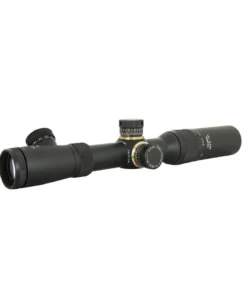
Falcon Optical Systems produces riflescopes designed for demanding precision applications. Its competition-oriented products include high-magnification options featuring specialized turret adjustments and optical systems.
Popular search terms include:
- falcon 10×50 and 10 x50 configurations for fixed-magnification optical research.
- falcon xl and falcon sp for model identification and compatibility searches.
- falcon 40 and 30 falcon when researching unidentified Falcon-related equipment.
- falcon claw and falconclaw for accessories or products requiring brand verification.
- tactical falcon and falcon arm when comparing tactical accessories and related equipment.
- falcon receiver when identifying device-specific components.
- falcon scanner and falcon thermal for electronic observation equipment.
Because similarly named products may belong to unrelated manufacturers, confirming the exact model is always recommended.
Understanding Rifle Scope Magnification and Objective Lens Sizes
Comparing 3-18×50, 4.5-18 and High-Magnification Scopes
Optical magnification determines how large a distant subject appears through a scope. For example, 3-18 magnification provides an adjustable viewing range suitable for diverse observation and sporting applications.
Searches for 3×18, 3×18 scope, 3-18 scopes, and 3:18 often relate to variable-magnification optics. Meanwhile, 4.5 x 18, 4.5 18, 4x-18, and 18 scope reflect interest in alternative magnification ranges.
Consumers comparing nightforce 3-18 equipment with the best 3-18 scopes should examine optical clarity, adjustment consistency, weight, eye relief, and warranty coverage.
Similarly, numerical searches such as 18x-4, 60x 3 50x 5, 3/5/25, and 3 5 25 should be checked against manufacturer specifications rather than interpreted automatically as verified optical configurations.
Understanding 50mm and 60mm Objective Lenses
An objective lens collects incoming light and contributes to image brightness and resolution. Common measurements include 50mm and 60mm, although overall image quality depends on glass composition, coatings, magnification, and environmental conditions.
Buyers sometimes search for how big is 50 x 60 or what size is 50 x 60. These measurements require context because 50 x 60 could describe physical dimensions rather than magnification.
Other numerical search variations include 25 x .50, 500 x 50, 500×60, 510 50, 50×0, 36x 50, 1/4×40, .25×50, 800 x 50, 60 x50, .50 x 10, 50x.05, 7.5 x 50, 50x 05, .25 x 50, 50 600, and 1050 x 5.
Furthermore, searches such as 10:50, scope50, and xoi50.com may represent alternative notation, incomplete model references, or unrelated websites. Therefore, these strings should never substitute for documented optical specifications.
Element Titan 3-18×50: Premium Optical Performance
Why the Element Titan 3-18×50 Deserves Attention
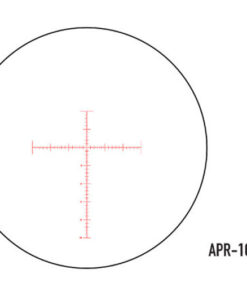
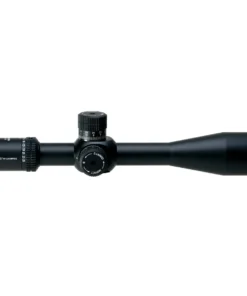
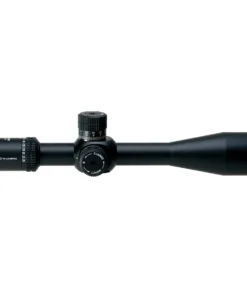
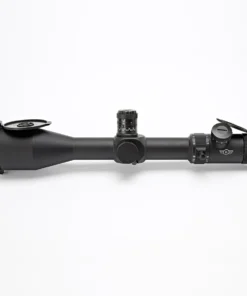
The element titan 3-18×50 is a versatile first-focal-plane riflescope designed around a broad magnification range and precision adjustment system.
Also searched as element titan 3 18×50, this model combines a 34mm main tube, 50mm objective lens, illuminated reticle, and adjustable parallax.
Its notable features include:
- 3-18x magnification: Supports flexible viewing across different distances.
- 50mm objective: Provides substantial light-gathering area.
- 34mm main tube: Accommodates a wide internal adjustment range.
- First-focal-plane reticle: Maintains consistent angular subtensions throughout magnification changes.
- Precision turrets: Support repeatable elevation and windage adjustments.
- HD glass: Helps minimize optical distortion and improve image definition.
- Weather-resistant construction: Supports operation in challenging outdoor conditions.
The manufacturer’s published specifications include 150 MOA of elevation adjustment, a mechanical zero-stop, and parallax adjustment beginning at 10 yards.
Consequently, this optic is worth considering when comparing premium variable-magnification scopes. Element Optics official specifications.
Chromatic Aberration and Optical Image Quality
Understanding chromatic aberration scope performance helps buyers evaluate image sharpness. Chromatic aberration appears as unwanted colored fringes around contrasting objects.
High-quality glass and effective lens coatings can reduce these imperfections, improving visual definition.
Likewise, users researching element ll should verify whether the search refers to a specific product generation, model designation, or accessory.
Falcon Thermal Imaging, Red Dot Optics and Electronic Sensors
Advanced Falcon Vision and Thermal Observation
Modern thermal equipment detects infrared radiation rather than depending entirely on visible light.
For users exploring falcon thermal, this distinction is important because thermal imaging and conventional optical magnification serve different purposes.
Some searches also mention elbit falcon and elbit falcon red dot. However, the precise manufacturer and model must be established before making compatibility or performance claims.
Additionally, falcon sensor manual searches generally indicate a need for operating instructions, sensor calibration information, maintenance guidance, or technical support.
Related search terms such as falke optics and optical camp may point toward alternative optic brands or specialist optical applications.
Even accessories marketed under unrelated product categories, including the falconeye patriot convertible bluetooth headset, require independent compatibility checks.
How Far Can a Falcon See?
The question how far can a falcon see can refer either to the bird’s remarkable natural eyesight or the observation distance of an optical device.
For riflescopes, useful viewing distance depends on magnification, atmospheric clarity, objective lens performance, and the size of the observed subject. No universal distance rating applies to every Falcon-branded device.
Rifle Rangefinders and Advanced Distance-Measuring Technology
Choosing a Rifle Rangefinder and Integrated Optics
A rifle rangefinder measures distance using optical or electronic technology. Modern laser devices can provide fast measurements and improve distance awareness in sporting and observation environments.
Common product searches include rifle range finder, laser range finder for rifle, rangefinder scope for rifle, and rangefinding rifle scope.
Additionally, scopes with rangefinders built in combine observation and distance measurement within a single optical platform.
A picatinny mounted rangefinder, sometimes described as a picatinny range finder, uses a compatible rail interface for attachment.
Other configurations include a weapon mounted range finder, while the abbreviation wmlrf commonly refers to a weapon-mounted laser rangefinder.
Electronic Ballistic Calculators and Distance Systems
A weapon mounted ballistic calculator can combine measured distance with programmed ballistic information, depending on its design.
Products associated with arken wmlrf searches include Arken’s weapon-mounted ranging equipment. Its TargetLock TL3000 incorporates laser-ranging and ballistic calculation capabilities. Arken Optics official product information.
Meanwhile, element rf searches may relate to Element Optics rangefinding products. Buyers should confirm the exact model, intended purpose, and accessories before purchasing.
Rifle Scope Mounts, Rings and Precision Accessories
Understanding Picatinny and Dovetail Scope Mounts
Choosing the correct mounting system is essential for secure installation and optical alignment.
A dovetail scope mount connects compatible optics to a dovetail-style rail, while dovetail rings provide alternative mounting arrangements.
Similarly, dovetail scope mounts and 30mm dovetail scope rings must match both the optic tube diameter and rail dimensions.
For Picatinny systems, popular options include picatinny scope mounts, picatinny scope rings, 30mm scope mount picatinny, and 30mm picatinny scope rings.
Buyers should confirm tube size, ring height, rail compatibility, and appropriate installation specifications.
Diving Board Mounts and Scope Accessories
Specialist mounting configurations include a 34mm diving board mount, 34mm scope mount with diving board, diving board scope mount, and 30mm diving board mount.
A scope diving board generally describes an elevated accessory mounting platform integrated with or attached to a compatible optical mounting system.
An element mount may provide a manufacturer-specific mounting solution, while a turret wheel can assist with handling or adjustment on compatible scopes.
Protective Covers for Optical Equipment
Protecting lenses helps preserve optical performance during transportation and storage.
Popular protective accessories include:
- tenebraex scope caps for compatible objective and ocular lenses.
- tenebraex scope covers for additional lens protection.
- allen neoprene scope cover for cushioning and shielding an optic during storage or transport.
Choosing the Right Falcon Scope and Optical Accessories
Selecting an effective optical system requires more than comparing magnification numbers. Glass quality, mechanical reliability, reticle design, mounting compatibility, environmental resistance, and manufacturer support all influence long-term satisfaction.
Whether researching Falcon optics, Element Titan models, advanced rangefinding technology, or protective accessories, prioritize verified product specifications over ambiguous search terminology.
For the best purchasing experience, compare authentic manufacturer documentation, confirm compatibility, and choose equipment suited to your intended sporting or observation application.
Frequently Asked Questions (FAQs)
1. What is a thermal imaging monocular, and how does it work?
A thermal imaging monocular is a handheld optical device designed to detect infrared radiation emitted by objects, animals, people, and surrounding surfaces. Unlike conventional optical equipment, which relies on reflected visible light, thermal technology creates images using detected temperature differences.
Infrared energy is collected by a specialised sensor and converted into an electronic signal. Subsequently, the signal is processed into a visible image displayed through an integrated screen. Warmer and cooler areas are represented using different shades or colours, depending on the selected display mode.
Consequently, heat-emitting subjects can be observed even when conventional lighting conditions are unsuitable. However, performance depends on environmental temperature, humidity, distance, and the thermal contrast between objects.
2. Can thermal imaging equipment be used in complete darkness?
Yes. Thermal observation can be performed in complete darkness because visible light is not required for detecting infrared radiation.
Instead, heat energy emitted naturally by objects is collected and translated into a visible thermal image. Therefore, outdoor environments can be examined without flashlights, spotlights, or additional visible illumination.
Furthermore, moving animals and other warm objects may be distinguished from cooler surroundings when sufficient temperature differences exist.
Nevertheless, visibility can be reduced when environmental conditions create weak thermal contrast. Heavy precipitation, dense fog, and certain atmospheric conditions may also reduce effective detection distances.
3. What is the maximum detection range?
A maximum thermal detection distance of approximately 460 metres is specified under suitable conditions.
However, detection range should not be confused with recognition or identification range. A distant heat source might be detected without enough image detail being available to determine its exact identity.
Additionally, effective observation distance is influenced by object size, ambient temperature, humidity, weather conditions, and surrounding vegetation.
For example, a large animal in an open field may be detected more easily than a small animal partially concealed by vegetation.
Therefore, realistic expectations should be maintained when evaluating long-distance thermal observation capabilities.
4. How does sensor resolution affect image quality?
Sensor resolution determines how many individual thermal measurement points are available to construct an image.
With a 256 × 192 detector, thousands of thermal pixels are used to represent temperature differences across the observed scene. Consequently, objects and environmental features can be displayed with useful visual definition.
Higher detector resolutions can provide additional detail, particularly when distant or smaller objects are examined.
However, overall performance is also influenced by sensor sensitivity, lens quality, image processing, display resolution, and operating conditions.
Therefore, resolution should be considered alongside other technical specifications rather than being treated as the only indicator of image quality.
5. What does thermal sensitivity below 35 mK mean?
Thermal sensitivity describes the ability of an imaging sensor to distinguish small temperature differences.
A sensitivity rating below 35 millikelvin indicates that relatively subtle thermal variations can be detected under specified testing conditions.
Consequently, improved separation between objects with similar surface temperatures may be achieved compared with less sensitive systems.
This capability is particularly useful when animals, vegetation, buildings, and surrounding terrain produce closely related temperature patterns.
Nevertheless, real-world image quality is also affected by atmospheric conditions, device calibration, lens performance, and image-processing settings.
A lower sensitivity figure generally represents improved temperature-difference detection, although practical performance must always be assessed as a complete system.
6. Can the device be used during daylight?
Yes. Thermal observation technology can be operated during daylight as well as nighttime.
Because infrared radiation is detected instead of visible light, operation is not restricted to dark environments.
For instance, warm machinery, animals, and surfaces can be examined during daytime inspections when suitable temperature differences exist.
However, direct sunlight can warm surrounding objects and reduce the contrast between a subject and its background.
Additionally, accurate visual interpretation may become more challenging when multiple nearby surfaces have similar temperatures.
Therefore, thermal imaging should be understood as a complementary observation method rather than a replacement for conventional daylight optics.
7. What is the advantage of a 50 Hz refresh rate?
A 50 Hz refresh rate allows the thermal display to update approximately 50 times per second.
As a result, moving subjects can be represented with smoother image transitions than those generally produced by significantly lower refresh rates.
This feature becomes especially beneficial during wildlife observation, environmental scanning, and handheld tracking of movement.
Furthermore, improved image continuity can make rapid changes within an observed scene easier to follow.
Nevertheless, smoothness is also influenced by image-processing performance and display behaviour.
The refresh rate does not increase the sensor’s native resolution or guarantee that distant subjects can be identified.
8. What magnification options are available?
A digital magnification range of approximately 1.5–12× is provided, allowing different viewing preferences to be accommodated.
Lower magnification is generally recommended for scanning wider areas and locating heat sources.
Meanwhile, increased magnification can be selected when a detected subject needs closer visual examination.
However, digital enlargement does not create additional thermal sensor detail. Instead, existing image information is enlarged, which can make individual pixels more noticeable at higher settings.
Consequently, moderate magnification often provides a useful balance between situational awareness and visual detail.
The most appropriate setting should be selected according to distance, subject size, and environmental conditions.
9. Does thermal imaging allow users to see through walls?
No. Standard thermal imaging technology cannot see through solid walls, doors, trees, or other opaque physical barriers.
Infrared radiation from an object behind a solid barrier is generally blocked from reaching the sensor.
However, temperature differences on the visible surface of a wall may sometimes be detected.
For example, heat transferred through building materials could produce a surface pattern that suggests insulation problems or unusual heating.
Nevertheless, such patterns do not reveal a detailed image of objects hidden behind the wall.
Accurate conclusions about concealed structures may require additional inspection instruments.
10. Can thermal images be recorded and saved?
Yes. Integrated photo and video recording functions allow thermal observations to be documented for later review.
Recorded material can be useful when wildlife behaviour is being monitored, equipment inspections are being documented, or outdoor observations need to be preserved.
Furthermore, approximately 16 GB of internal storage is provided for compatible media files.
The amount of footage that can be stored depends on recording duration, file size, and the device’s encoding format.
Consequently, available storage should be checked before extended recording sessions.
Important recordings should also be transferred and backed up when appropriate, reducing the risk of accidental data loss.
11. Is wireless connectivity supported?
Yes. Built-in Wi-Fi functionality is provided for compatible wireless connections.
Through supported mobile applications, selected device functions and stored media may be accessed according to the manufacturer’s software capabilities.
This feature can simplify certain recording, viewing, and media-management activities.
However, wireless performance depends on connection quality, application compatibility, device firmware, and the operating environment.
Additionally, enabling wireless communication may influence battery consumption.
For reliable operation, compatible software should be installed, and the manufacturer’s connection instructions should be followed.
12. How long does the rechargeable battery last?
Battery operation of up to approximately eight hours is specified under suitable conditions.
This endurance can provide convenient power for nighttime observation, outdoor exploration, and routine inspection activities.
However, actual operating time may vary depending on ambient temperature, screen settings, recording activity, wireless connectivity, and battery condition.
Cold environments can reduce available battery capacity, while prolonged recording may increase power consumption.
Therefore, the battery should be fully charged before extended outdoor activities.
When charging is required, an appropriate USB Type-C connection and manufacturer-compatible power source should be used.
13. Is the device waterproof and suitable for outdoor conditions?
The equipment is designed for portable outdoor observation, and environmental protection is incorporated into its construction.
Nevertheless, the manufacturer’s stated protection rating should be checked before exposure to rain, dust, or moisture.
Weather resistance should not automatically be interpreted as permission for underwater operation.
Furthermore, charging ports and protective covers should be kept properly secured when the device is used in demanding environments.
After exposure to moisture, external surfaces should be dried carefully using suitable materials.
For long-term reliability, storage in a dry protective case is recommended whenever the equipment is not being used.
14. Can wildlife be observed without disturbing animals?
Thermal imaging can support less intrusive wildlife observation because visible illumination is not required to detect heat signatures.
Consequently, animals may be observed without directing conventional bright lights towards them.
This can be particularly valuable when nocturnal activity is being studied from an appropriate distance.
However, the absence of visible illumination does not guarantee that wildlife will remain undisturbed.
Human movement, noise, scent, and proximity can still influence animal behaviour.
Therefore, responsible observation practices should be maintained, including compliance with protected-area regulations and wildlife conservation requirements.
15. What are the benefits of multiple colour palettes?
Different thermal colour palettes allow detected temperature variations to be represented in alternative visual formats.
For example, White Hot displays warmer areas using lighter shades, while Black Hot generally represents warmer objects using darker shades.
Other palettes may apply contrasting colours to highlight thermal differences across a scene.
Consequently, individual viewing preferences and environmental conditions can be accommodated.
A particular palette may appear more comfortable in one situation but less effective in another.
Therefore, several display modes should be tested to determine which provides the clearest interpretation of a specific environment.
Colour selection changes the presentation of detected information rather than increasing the sensor’s underlying resolution.
Does a thermal device require regular calibration?
Thermal imaging systems may use automatic or manually initiated image correction to maintain consistent display performance.
This process is commonly called non-uniformity correction, or NUC.
During correction, internal image-processing functions compensate for differences between individual detector elements.
Consequently, temporary image interruptions or faint mechanical sounds may sometimes occur, depending on the device’s operating design.
These behaviours can be normal and should not automatically be interpreted as faults.
However, persistent image distortion, unusual interruptions, or repeated operating errors should be investigated using the manufacturer’s troubleshooting guidance.
25. What warranty protection is available?
A three-year limited manufacturer warranty is associated with the original model, subject to the applicable warranty terms.
Warranty coverage generally depends on the nature of the fault, purchase conditions, product registration requirements, and regional service policies.
Damage caused by misuse, unauthorised repairs, or operation outside specified conditions may be excluded.
Therefore, the warranty documentation should be reviewed before purchase.
Proof of purchase should also be retained in case technical support or warranty service becomes necessary.
For additional reassurance, customers should confirm the seller’s return policy, after-sales assistance, and available manufacturer support before completing an order.

Reviews
There are no reviews yet.