Hi-Lux Malcolm 8X Lyman Mounts & Recoil Spring – Vintage Precision Riflescope
Experience Classic Optical Performance With Modern Precision
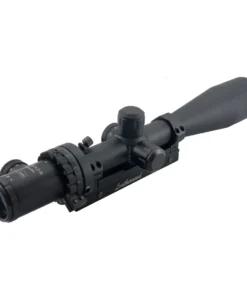
The Hi-Lux Malcolm 8X Lyman Mounts & Recoil Spring combines historic riflescope styling with modern optical engineering, exceptional craftsmanship, and dependable mechanical adjustment. Inspired by traditional American target-shooting optics, this premium riflescope offers enthusiasts an opportunity to experience classic external-adjustment technology without sacrificing contemporary optical clarity.
Designed with an authentic vintage appearance, this sophisticated optic features fixed 8X magnification, Lyman-style micrometer mounts, and a practical recoil spring assembly. Consequently, collectors, historical firearm enthusiasts, and recreational target shooters can appreciate a combination of period-inspired engineering and modern manufacturing standards.
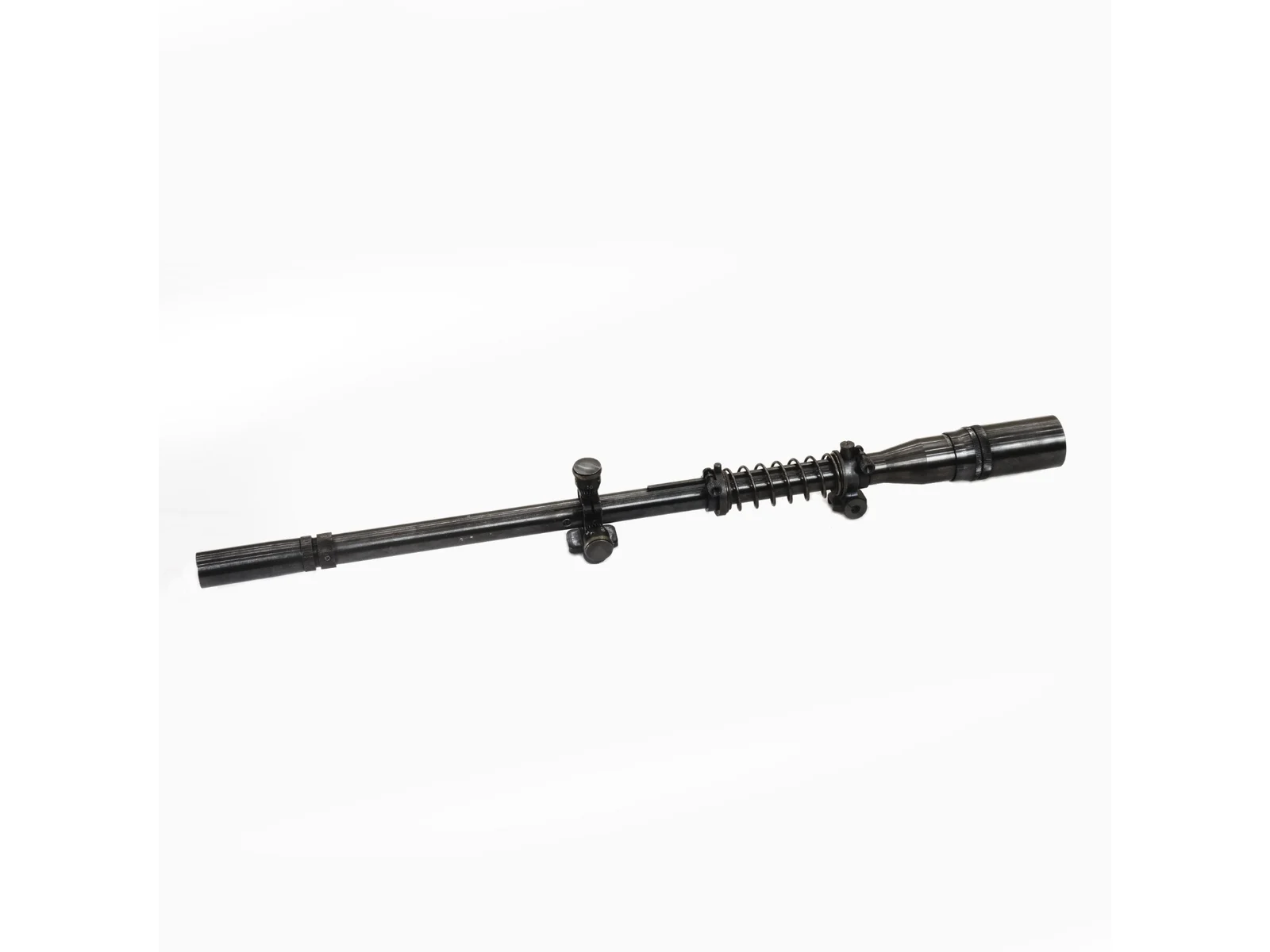
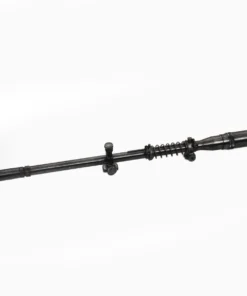
Furthermore, the long, slender optical tube creates a distinctive silhouette reminiscent of classic military and competition riflescopes. Unlike conventional modern optics, the externally adjustable mounting system provides a traditional approach to windage and elevation control.
Exceptional attention has also been given to optical performance. Fully multi-coated lens surfaces enhance light transmission, improve contrast, and support clear target observation. Meanwhile, the durable tube construction contributes to dependable performance throughout regular range sessions.
Whether completing a historically inspired rifle restoration or selecting an optic for vintage-style target competition, the Hi-Lux Malcolm 8X Lyman Mounts & Recoil Spring delivers an attractive balance of heritage, optical quality, and mechanical functionality.
Key Features and Technical Specifications
Premium Features at a Glance
-
-
Product Name: Hi-Lux Malcolm 8X Lyman Mounts & Recoil Spring
-
Generation: Malcolm 8X Gen I
-
Magnification: Fixed 8X optical magnification
-
Objective Lens Diameter: 31mm
-
Main Tube Diameter: 3/4 inch
-
Overall Length: Approximately 23 inches
-
Weight: Approximately 25.4 oz with mounting hardware
-
Eye Relief: Approximately 3 inches
-
Field of View: Approximately 11 feet at 100 yards
-
Adjustment System: External Lyman-style micrometer mounts
-
Adjustment Value: Approximately 1/4 MOA per click with 7.25-inch mount spacing
-
Parallax Adjustment: From approximately 15 yards to infinity
-
Optical Coating: Fully multi-coated lens surfaces
-
Recoil Management: Included return spring assembly
-
Mounting Hardware: Front and rear mounting rings and compatible bases
-
Design: Vintage military-inspired telescopic riflescope
-
Recommended Applications: Historical rifle restoration, traditional target shooting, and compatible vintage rifle competitions
These specifications reflect the Gen I configuration and manufacturer mounting guidance. Adjustment values depend on mount spacing and installation geometry.
Advanced Optical Engineering and Outstanding Viewing Clarity
Fixed 8X Magnification for Consistent Target Observation
At the heart of this classic riflescope, fixed 8X magnification delivers a consistent viewing experience without requiring variable zoom adjustments. Therefore, shooters can concentrate on target visibility, optical alignment, and repeatable observation.
Unlike adjustable-power systems, a fixed-magnification design provides a straightforward optical configuration. Additionally, fewer magnification controls simplify everyday operation while preserving the traditional appearance associated with historical target optics.
The 31mm objective lens supports a useful combination of optical clarity and authentic proportions. Consequently, target details can be observed clearly under suitable lighting conditions, making the scope appealing for structured range activities.
Fully Multi-Coated Optics for Enhanced Brightness
Modern lens technology plays an important role in the overall viewing experience.
Multiple optical coatings are applied to the lens surfaces to improve light transmission and reduce unwanted reflections. As a result, users can benefit from improved contrast, reduced glare, and clearer image presentation.
Moreover, the carefully engineered optical components help reproduce the visual character of vintage riflescopes while offering the advantages of contemporary manufacturing.
Precise objective focusing also allows parallax adjustment across a broad distance range. Therefore, users can adapt the optical setup to different target distances while maintaining appropriate viewing alignment.
Traditional Lyman-Style Mounting System
External Micrometer Adjustments With Classic Engineering
One of the most distinctive characteristics of the Hi-Lux Malcolm 8X Lyman Mounts & Recoil Spring is its traditional external adjustment system.
Rather than relying on conventional internal elevation and windage mechanisms, the riflescope uses adjustable mounting hardware to control optical alignment.
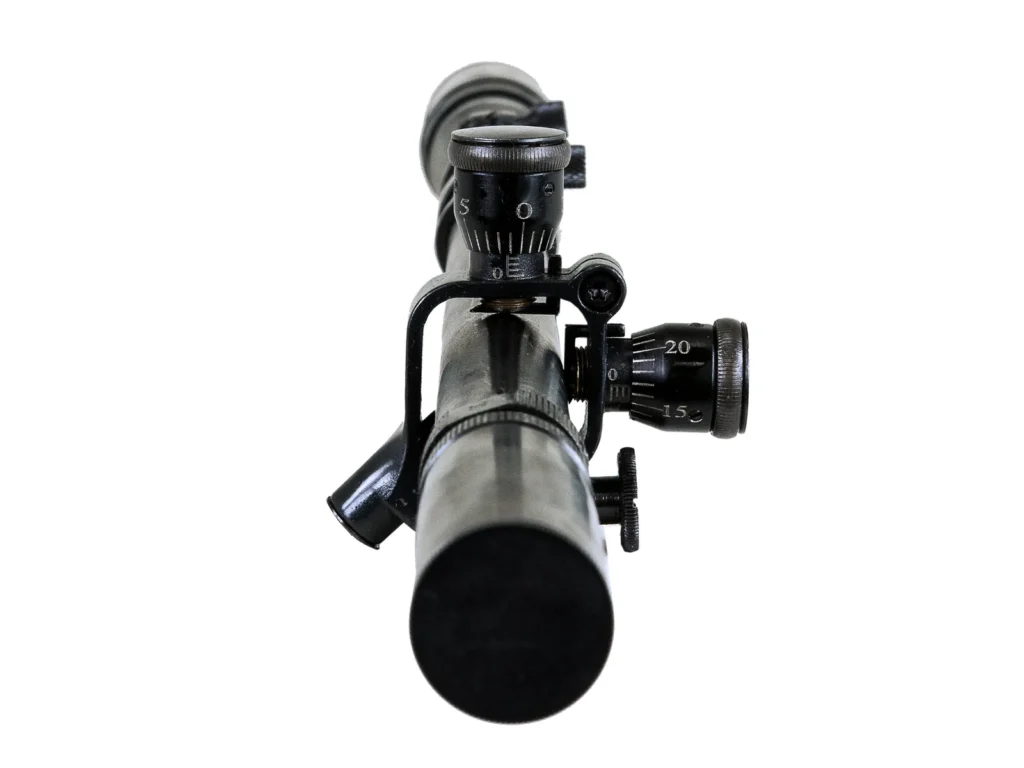
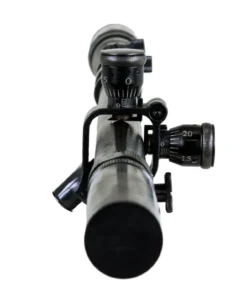
The rear Lyman-style micrometer mount features graduated adjustments and mechanical click feedback. Accordingly, the system provides a recognizable operating experience for enthusiasts familiar with historical precision optics.
Furthermore, the external arrangement preserves the appearance of classic target rifles while providing measurable adjustment increments.
With appropriate mounting geometry, approximately 1/4 MOA adjustment increments can be achieved. However, actual angular adjustment values depend on the distance between mounting blocks, making compatibility verification particularly important.
Sliding Mount Design and Recoil Spring Functionality
A traditional sliding-scope arrangement distinguishes this model from many contemporary riflescopes.
During recoil, relative movement occurs between the rifle and optical tube. The incorporated return spring helps restore the scope to its original operating position after recoil, while compatible mounting components guide that movement.
As a result, the included recoil spring provides a practical addition to the historical external-adjustment design.
Furthermore, the mounting arrangement reflects established engineering principles associated with early precision target optics.
Proper installation and periodic inspection remain essential because external components must remain correctly secured and aligned. Manufacturer guidance should always be followed when maintaining the recoil spring and mount assemblies.
Durable Construction and Authentic Historical Appearance
Precision-Manufactured Optical Tube
The slender 3/4-inch main tube provides the characteristic appearance of a vintage precision riflescope.
Modern manufacturing techniques complement this traditional design, supporting mechanical consistency and optical alignment.
Additionally, the extended 23-inch profile creates an unmistakable historical silhouette. This feature is particularly attractive for collectors seeking a visually appropriate optic for classic rifle configurations.
Carefully finished external components further contribute to the product’s refined presentation. Meanwhile, the mounting hardware reinforces the traditional character of the complete optical assembly.
Ideal for Historical Rifle Enthusiasts
Historical authenticity remains a defining attraction of the Malcolm series.
Inspired by vintage sniper and target riflescopes associated with twentieth-century shooting traditions, this model offers visual characteristics that complement period-themed restorations.
For collectors, the combination of classic mechanical controls and modern optical technology provides substantial appeal.
Likewise, recreational enthusiasts can appreciate the distinctive appearance without needing to locate a rare original historical optic.
Nevertheless, rifle compatibility, mounting-block dimensions, and competition regulations should always be confirmed before purchase.
Why Choose the Hi-Lux Malcolm 8X Lyman Mounts & Recoil Spring?
A Distinctive Combination of Tradition and Technology
Selecting an appropriate vintage-style riflescope involves considering historical appearance, optical quality, mechanical construction, and hardware compatibility.
Fortunately, this model combines several desirable characteristics within one coordinated package.
First, the fixed 8X optical configuration offers straightforward viewing performance. Additionally, fully multi-coated lenses help improve image clarity under suitable conditions.
Meanwhile, the Lyman-style mounting arrangement provides the traditional external-adjustment functionality sought by many historical optics enthusiasts.
The included recoil spring further distinguishes the package from versions supplied without that component.
Finally, the classic scope dimensions create an authentic appearance that remains difficult to replicate with contemporary tactical-style optics.
Suitable for Collecting, Restoration, and Target Shooting
Several applications highlight the appeal of this optical system.
For vintage firearm collectors, its recognizable design can complement a historically themed display.
For restoration enthusiasts, the traditional mounting arrangement offers an alternative to conventional modern scope configurations.
Likewise, recreational target shooters interested in classic equipment may appreciate the fixed-power optical system and micrometer adjustment features.
However, historical competition eligibility varies between organizations and match categories. Consequently, equipment requirements should be reviewed before registration or installation.
Maintenance, Compatibility, and Long-Term Value
Maintaining Optical and Mechanical Performance
Regular maintenance helps preserve both the appearance and functionality of a precision optical instrument.
Lens surfaces should be cleaned using appropriate optical cleaning materials. Similarly, exposed metal components should be inspected for contamination, corrosion, or signs of wear.
External mounting hardware deserves particular attention because mechanical stability contributes to dependable adjustment behavior.
Additionally, the recoil spring assembly should be inspected according to the manufacturer’s published instructions.
When the riflescope is not being used, protective storage in a dry environment helps limit unnecessary exposure to moisture and dust.
Confirming Mounting Compatibility
Before ordering, buyers should confirm that their rifle supports the appropriate mounting blocks and external adjustment hardware.
Certain historical rifle configurations may require professional installation or additional fitting. Moreover, existing receiver and barrel features can affect mounting requirements.
For this reason, consulting an experienced gunsmith and reviewing Hi-Lux’s compatibility documentation is recommended.
Buy Hi-Lux Malcolm 8X Lyman Mounts & Recoil Spring With Confidence
The Hi-Lux Malcolm 8X Lyman Mounts & Recoil Spring offers an appealing combination of vintage aesthetics, fixed-power optical clarity, traditional micrometer adjustments, and practical recoil-spring functionality.
With its distinctive construction and period-inspired appearance, this riflescope presents an attractive option for collectors, traditional target-shooting enthusiasts, and historical restoration projects.
Whether appearance, optical consistency, or mechanical heritage matters most, the Malcolm 8X provides a thoughtfully designed alternative to modern riflescope styles.
Explore the Hi-Lux Malcolm 8X Lyman Mounts & Recoil Spring today and discover the enduring appeal of classic American optical engineering.
Element Optics Riflescopes: Complete Guide to THEOS, HELIX, TITAN, NEXUS, Prism Optics, Rangefinders and Mounting Accessories
Discover Element Optics: Precision, Clarity and Advanced Optical Technology
When premium riflescope technology is considered, element scopes are frequently explored by shooting enthusiasts seeking optical clarity, reliable adjustment systems and dependable construction. Developed around practical shooting requirements, element theos, element helix, element titan and element nexus scopes represent different approaches to magnification, reticle functionality and optical performance.
As an established optic scope manufacturer, Element Optics provides optical equipment designed for sporting applications. Buyers researching element tactical, element vision, spectrum element, op element, element 3.0 or element ll may also encounter related search terminology while comparing optical products.
A comprehensive scopes website should explain the differences between magnification ranges, objective lenses, focal planes and mounting systems. Consequently, selecting suitable optics becomes easier when technical information is presented clearly.
Element THEOS Scopes: Advanced Long-Range Optical Performance
The element theos series is associated with premium precision optics. In particular, the theos scope attracts interest from enthusiasts seeking detailed reticles, sophisticated adjustment systems and high-magnification capabilities.
The element theos 6-36, also searched as element theos 6 36×56, features a 6–36× magnification configuration with a 56mm objective lens. The 36×56 specification identifies the maximum magnification and objective diameter, making it important when comparing high-powered optical systems.
Meanwhile, searches involving element theos 2-10, element theos 2 10, theos 2-10 and theos 2-10×42 ffp indicate interest in more compact magnification configurations. These terms should be distinguished from confirmed manufacturer model names before purchasing.
Interest in a 10 optic, 2-10 optic, 2-10x scope, element 2-10 or element 2-10 scope commonly reflects a preference for versatile lower magnification.
Similarly, customers searching for an element 2 10 scope or element optics 2-10 should compare verified product specifications rather than assume every search phrase describes an existing THEOS configuration.
Understanding Magnification and Optical Versatility
A 2-12 scope or 2×12 scope provides a broad magnification range for observation at varying distances. Furthermore, a 2-12 scope ffp uses a first focal plane reticle whose subtensions remain consistent throughout magnification changes.
Search expressions such as fffp 2, 12×4/2, 10×40 and .10×40 may appear in optical comparisons, although individual terms should be verified against actual product specifications.
Element HELIX: Reliable Optics and Practical Magnification
The element helix collection offers multiple configurations designed around dependable optical adjustment and functional reticle systems.
For example, the helix scope is frequently researched by customers comparing magnification flexibility and overall value.
The element optics 6-24×50, also described through searches such as element helix 6 24×50, combines 6–24× magnification with a 50mm objective lens. Depending on the specific model, first or second focal plane configurations may be available.
Buyers investigating helix hd 2 16×50 and hdlr should also examine the appropriate HELIX HD or HDLR product specifications. Different optical configurations can affect field of view, reticle behavior and shooting preferences.
Importantly, rifle scope reticles should be evaluated for legibility, subtension consistency and compatibility with the intended sporting discipline.
Comparing HELIX Models
When evaluating HELIX optics, several considerations deserve attention:
- Magnification flexibility and optical clarity.
- First versus second focal plane reticles.
- Turret adjustment repeatability.
- Objective lens diameter and eye relief.
- Weather resistance and mounting compatibility.
- Manufacturer warranty and accessory availability.
By comparing these features carefully, buyers can distinguish between individual configurations without relying exclusively on magnification figures.
Element TITAN: Precision Optics With Versatile Magnification
The element titan family occupies an important position within premium sporting optics. In particular, the titan scope collection includes configurations suited to different magnification preferences.
The element titan 3 18×50, alternatively written as element titan 3-18×50, provides a 3–18× magnification range and 50mm objective lens.
Searches for 3-18 scopes, 3-18, 3×18, 3×18 scope and 3:18 often concern this general category.
Additionally, comparisons involving nightforce 3-18 and best 3-18 scopes may help researchers identify differences in optical quality, reticle systems, adjustment mechanisms and overall dimensions.
The TITAN family also includes a 5–25×56 configuration, which explains searches for 5-25 scope, 25/56, titan 5 and titan25.
For more detailed comparisons, element titan 5 25×56 ffp review is a relevant research phrase associated with first focal plane performance, image quality and adjustment precision.
Neither magnification nor objective diameter alone determines optical quality. Lens coatings, mechanical consistency and viewing conditions must also be considered.
Element NEXUS and NEXUS GEN 2: Premium Precision Optics
The nexus scope family has attracted attention among enthusiasts interested in premium optical construction.
Across the nexus scopes range, optical quality and mechanical precision remain central comparison points.
The element nexus gen 2 is particularly relevant to buyers investigating modern first focal plane designs.
Searches for nexus 4-25×50 refer to a configuration offering a 4–25× magnification range and 50mm objective lens.
Additionally, terms such as nexus tactical often appear in discussions about precision-oriented optics, robust turret systems and specialized reticle designs.
Before selecting any model, specifications should be checked for tube diameter, adjustment range, parallax capability and supported mounting accessories.
Element Prism Optics and Alternative Optical Designs
The element prism category introduces another approach to optical viewing.
Unlike conventional variable riflescopes, a prismatic scope uses a prism-based optical arrangement, often allowing a compact optical design.
Customers asking what is a prismatic scope generally want to understand the difference between prism optics, traditional riflescopes and other sighting technologies.
Search phrases such as prismatic scale of the elements should not be confused with official optical specifications or reticle calibration systems.
The Element Optics element hyper 7 search commonly relates to the HYPR-7 hybrid optic. Likewise, hqp7-rf-2 specifications details should be verified against an actual manufacturer product designation before being treated as a confirmed model.
Other searches, including 14×50, relate to fixed-magnification optical configurations.
Meanwhile, chromatic aberration scope comparisons concern unwanted colored fringes that may appear around high-contrast objects. Optical coatings, lens design and glass quality can influence how effectively this effect is controlled.
Element RF: Rangefinding Technology and Ballistic Information
Accurate distance measurement is an important part of modern optical equipment evaluation.
The phrases element rf and element range are associated with searches for rangefinding solutions and related optical technology.
A ballistic rangefinder combines distance information with ballistic calculation features when supported by the specific device.
Other common search terms include rifle rangefinder, rifle range finder, laser range finder for rifle, rangefinder scope for rifle and rangefinding rifle scope.
Customers may also compare scopes with rangefinders built in against separate rangefinding instruments.
Specialized accessory research frequently includes picatinny mounted rangefinder, picatinny range finder, weapon mounted range finder and wmlrf.
For integrated electronic calculations, searches involving weapon mounted ballistic calculator and arken wmlrf refer to a broader category of rangefinding and ballistic-support equipment.
Importantly, individual devices differ in measurement capability, electronic features and mounting requirements. Product documentation should therefore be consulted before assuming compatibility.
Scope Mounts, Picatinny Rails and Dovetail Accessories
A secure element mount or other compatible mounting system is essential for maintaining consistent optical alignment.
Common accessories include a dovetail scope mount, dovetail rings and dovetail scope mounts, each intended for appropriately matched mounting interfaces.
Alternatively, picatinny scope mounts, picatinny scope rings, 30mm scope mount picatinny and 30mm picatinny scope rings are relevant when selecting accessories for Picatinny rail systems.
For dovetail configurations, 30mm dovetail scope rings should be matched carefully to both the optic’s tube diameter and the available rail dimensions.
Specialized accessory searches also include 34mm diving board mount, 34mm scope mount with diving board, diving board scope mount, 30mm diving board mount and scope diving board.
Such terminology commonly describes mounting arrangements incorporating an additional platform above or near the main optic.
Protective Scope Covers and Optical Maintenance
Protective accessories contribute to equipment longevity by reducing exposure to dust, debris and accidental surface contact.
Products such as tenebraex scope caps and tenebraex scope covers are frequently considered by owners seeking lens protection.
Similarly, an allen neoprene scope cover can offer general protective coverage during storage or transportation.
Before purchasing covers, buyers should verify the precise scope model and external lens-housing dimensions.
Choosing Element Optics With Confidence
Selecting among THEOS, HELIX, TITAN, NEXUS and prism-based optics requires more than comparing magnification alone.
Optical clarity, eye relief, reticle configuration, mechanical reliability, mounting compatibility and product authenticity should all be assessed together.
By researching verified product specifications, reviewing the available accessory options and selecting equipment suited to individual sporting requirements, customers can make more informed decisions.
Ultimately, the Element Optics range provides several distinct optical configurations, allowing enthusiasts to compare premium precision scopes, versatile mid-range designs, compact prism systems and compatible accessories within one broader optical product category.
Frequently Asked Questions (FAQs)
1. What makes this vintage-style optical system different from modern alternatives?
This optical system combines traditional external adjustment technology with contemporary lens manufacturing and precision-engineered components. Unlike many modern alternatives that feature internal adjustment mechanisms, its design incorporates a classic mounting arrangement that reflects historic target-shooting equipment.
Additionally, the elongated optical tube creates an unmistakable appearance associated with early precision optics. Modern lens coatings improve light transmission and contrast while maintaining the visual character of historical equipment.
Furthermore, the mechanical adjustment components provide a distinctive operating experience for enthusiasts who appreciate traditional craftsmanship. Consequently, collectors, restoration specialists, and recreational target shooters can enjoy a combination of historical styling and contemporary optical functionality.
2. Does fixed magnification provide advantages over variable magnification?
Fixed magnification offers several practical advantages, especially for individuals who appreciate straightforward equipment operation. Because the optical power remains constant, users do not need to make magnification adjustments during ordinary observation.
Additionally, a fixed-power arrangement eliminates unnecessary zoom controls and maintains a consistent viewing experience. This simplicity can be particularly appealing during structured target sessions.
Meanwhile, the optical design supports dependable image presentation and encourages familiarity with a single viewing configuration.
However, variable magnification systems offer greater flexibility when observing subjects at significantly different distances. Therefore, the preferred configuration depends on the intended application, individual preferences, and viewing conditions.
3. How does the external adjustment mechanism work?
The traditional adjustment mechanism controls optical alignment through specialized mounting components rather than conventional internal adjustment turrets.
Graduated mechanical controls allow adjustments to be measured through the mounting assembly. Furthermore, the micrometer-style system reflects historical approaches to precision optical positioning.
Because adjustment geometry depends on the spacing between mounting blocks, actual angular movement can vary according to the installation.
Additionally, properly secured mounting components help maintain mechanical stability throughout normal use.
For optimal results, installation and adjustment procedures should follow the manufacturer’s documentation. Professional guidance is particularly valuable when working with specialized historical mounting configurations or unfamiliar equipment.
4. What is the purpose of the recoil spring assembly?
The recoil spring forms part of the traditional sliding optical arrangement associated with historical target riflescopes.
During recoil, relative movement can occur between the firearm and the optical tube. The spring helps return the optical assembly toward its original operating position after this movement.
Consequently, the spring provides functionality that complements the external mounting design.
Furthermore, the assembly preserves an important mechanical characteristic of traditional precision optics.
However, correct spring placement, mounting compatibility, and mechanical inspection remain essential. Users should always follow official installation guidance and avoid modifying spring tension or associated components beyond manufacturer recommendations.
5. Are the lenses suitable for clear target observation?
Yes. Modern optical coatings help improve brightness, contrast, and overall visual clarity under appropriate environmental conditions.
Multiple coated lens surfaces reduce unwanted reflections, allowing more useful light to pass through the optical system.
Additionally, improved contrast can make target details easier to distinguish against suitable backgrounds.
Nevertheless, image quality also depends on available light, environmental visibility, lens cleanliness, and correct focusing.
For example, bright daylight generally provides different viewing conditions from overcast or low-light environments.
Consequently, realistic expectations should be maintained regarding optical performance, particularly when comparing traditional fixed-power designs with larger modern optical systems.
6. Can this optical system be used with different historical rifle models?
Compatibility depends on the firearm’s mounting arrangement, available mounting blocks, mechanical dimensions, and the requirements of the optical assembly.
Certain traditionally configured rifles may accommodate external adjustment equipment when suitable hardware is available.
However, visual similarity does not automatically guarantee mechanical compatibility.
Additionally, historical reproductions and original firearms may have different mounting dimensions despite sharing comparable external appearances.
Therefore, prospective buyers should verify compatibility through official manufacturer documentation before purchasing.
Consultation with a qualified gunsmith is also recommended when specialized installation work is required.
Importantly, permanent alterations to collectible firearms should be carefully considered because such modifications may affect originality and collector value.
7. Is this product suitable for historical restoration projects?
Yes. Its period-inspired styling makes it appealing for projects intended to reproduce the appearance of traditional target or military-style optical equipment.
The elongated tube, external adjustment components, and classic mounting arrangement contribute to an authentic historical presentation.
Furthermore, modern production provides an alternative to sourcing rare original optics that may have experienced significant age-related wear.
Nevertheless, historical accuracy depends on the specific period, firearm configuration, and reference material used for the restoration.
Collectors seeking exact reproductions should research the original equipment associated with their chosen historical model.
Therefore, this system is particularly attractive when a project values traditional appearance alongside contemporary optical functionality.
8. Does the mounting system require professional installation?
Professional installation is advisable, especially for individuals unfamiliar with externally adjustable optical equipment.
Unlike conventional contemporary mounting arrangements, traditional systems may require specific mounting-block dimensions, mechanical alignment, and careful compatibility assessment.
Additionally, incorrect installation can lead to unstable positioning, component damage, or unreliable adjustment behavior.
A qualified gunsmith can evaluate whether the intended firearm and mounting hardware are compatible.
Furthermore, professional assessment is particularly important for valuable historical firearms, replicas, and custom restoration projects.
Manufacturer instructions should always guide assembly, inspection, and maintenance. This helps protect the optical components while supporting dependable long-term operation.
9. How durable is the optical tube and external hardware?
The optical tube and associated mounting components are manufactured to provide mechanical reliability during appropriate use.
Modern production methods support consistent component dimensions, while protective surface finishes help preserve appearance.
However, traditional external adjustment systems contain exposed mechanical parts that deserve careful handling.
Unlike fully enclosed contemporary mounting arrangements, these components may be more vulnerable to accidental impacts or improper storage.
Consequently, users should avoid unnecessary mechanical stress and regularly inspect the equipment for visible damage.
Proper transportation, protective storage, and routine cleaning can also help preserve performance.
Long-term durability ultimately depends on operating conditions, maintenance practices, and adherence to manufacturer recommendations.
10. Can this product be used for recreational target shooting?
Yes. Its optical design and traditional adjustment arrangement can appeal to recreational shooters interested in vintage-style target equipment.
Fixed magnification provides a consistent viewing configuration, while external mechanical controls offer a distinctive adjustment experience.
Additionally, the historical appearance makes it suitable for enthusiasts who enjoy traditional shooting disciplines.
However, suitability depends on firearm compatibility, mounting stability, and applicable range regulations.
Some organized competitions may also impose restrictions concerning optical design, equipment age, or mounting configuration.
Therefore, participants should confirm relevant equipment rules before entering a formal event.
Responsible handling and compliance with local safety requirements remain essential during every shooting activity.
11. How should the lenses be cleaned without causing damage?
Proper optical cleaning begins with removing loose dust and abrasive particles before wiping the lens surfaces.
A clean optical blower or suitable soft lens brush can help remove surface contamination.
Afterward, an approved lens-cleaning solution and clean microfiber cloth may be used according to the manufacturer’s recommendations.
Importantly, household cleaning chemicals, rough fabrics, and excessive pressure should be avoided.
These materials can damage protective lens coatings or leave unwanted residue.
Furthermore, cleaning should be performed only when necessary rather than through excessive polishing.
Protective lens covers and appropriate storage can reduce dust accumulation and simplify routine maintenance.
12. Does the optical system offer adjustable focus?
The optical design incorporates focusing functionality that allows the viewing system to accommodate appropriate target distances.
Correct focusing helps improve image sharpness and viewing comfort.
Additionally, the objective adjustment arrangement provides a means of managing parallax within the product’s specified operating range.
However, optical focusing and parallax adjustment serve different purposes and should not be treated as identical functions.
Image clarity can also depend on the observer’s eyesight and environmental conditions.
Consequently, users should consult the official operating manual to understand the available controls and their intended functions.
Following the documented procedures helps prevent unnecessary stress on delicate optical components.
13. Is the product appropriate for collectors who value authenticity?
Absolutely. Its traditional appearance and mechanical design make it particularly appealing to collectors interested in the evolution of precision optical equipment.
The extended tube, classic mounting hardware, and external adjustment arrangement reflect important characteristics associated with historical riflescope technology.
Furthermore, the design offers a recognizable alternative to the compact appearance of many contemporary optics.
However, modern reproduction equipment should not be confused with original antique instruments.
Collectors should distinguish between authentic historical artifacts, period-correct reproductions, and modern products inspired by earlier designs.
This distinction is particularly important when evaluating historical provenance, restoration accuracy, and long-term collectible interest.
14. What maintenance does the recoil spring require?
The spring assembly should be inspected periodically for corrosion, visible deformation, contamination, and signs of abnormal wear.
Additionally, associated mounting components should remain clean and appropriately secured.
Regular inspection helps identify potential maintenance concerns before they affect normal operation.
However, unnecessary disassembly or unauthorized modification should be avoided.
The spring should not be stretched, shortened, substituted, or otherwise altered without explicit manufacturer guidance.
Likewise, lubricants should only be applied where permitted by the official maintenance instructions.
Appropriate storage conditions can further protect exposed metal components from moisture-related deterioration.
For damaged or questionable assemblies, qualified professional inspection is the preferred approach.
15. Does the product perform well in changing weather conditions?
Performance depends on environmental conditions, optical cleanliness, mechanical maintenance, and the manufacturer’s environmental ratings.
The optical coatings can help manage unwanted reflections under different lighting conditions.
However, heavy rainfall, condensation, airborne dust, and extreme temperature changes may affect visibility or exposed mechanical components.
Therefore, protective handling is recommended whenever environmental conditions become unfavorable.
After exposure to moisture, the equipment should be dried and inspected according to manufacturer instructions.
Additionally, storage in a controlled, dry environment helps reduce the possibility of corrosion.
Unless explicitly confirmed by official specifications, complete waterproofing or other environmental resistance ratings should not be assumed.
16. What accessories can help protect the optical assembly?
Several general accessories can support protection, storage, and maintenance.
A padded transportation case helps reduce the likelihood of accidental impact during movement.
Likewise, suitable protective lens covers can limit contact with dust and debris.
Clean microfiber cloths and approved optical cleaning supplies are useful for routine maintenance.
Additionally, a dry storage cabinet or humidity-controlled storage environment can help protect exposed metal components.
However, accessories should be selected according to the optical system’s actual dimensions and manufacturer recommendations.
Incompatible covers, brackets, or replacement hardware may interfere with normal operation.
Consequently, compatibility verification remains important before purchasing supplementary equipment.
17. How does the long optical tube influence the product’s appearance?
The elongated tube creates a distinctive silhouette strongly associated with classic target and military-style optical instruments.
This appearance differs significantly from the compact, wide-objective configurations frequently encountered in modern optics.
Additionally, the narrow tube profile complements traditional mounting hardware and exposed mechanical adjustment components.
For collectors, these visual characteristics contribute to the appeal of historically inspired equipment.
The extended design also helps distinguish the product when displayed alongside vintage firearms or restoration projects.
However, overall dimensions should be considered when choosing transportation cases, storage arrangements, and compatible mounting configurations.
A visually attractive design must still satisfy practical compatibility requirements.
18. Is this product a worthwhile investment for traditional optics enthusiasts?
Value depends on individual priorities, intended use, craftsmanship expectations, and compatibility requirements.
For enthusiasts who appreciate historical design, this product offers a distinctive combination of traditional mechanical construction and modern optical manufacturing.
Additionally, the included mounting equipment and return spring may provide convenience compared with purchasing compatible components separately.
Collectors may also appreciate the recognizable appearance and specialized engineering.
However, resale value, long-term appreciation, and collectible demand cannot be guaranteed.
Therefore, purchasing decisions should focus primarily on genuine interest, intended functionality, product condition, and overall suitability.
Comparing official specifications and current warranty provisions can also support an informed decision.
19. What should buyers verify before placing an order?
Before purchasing, buyers should confirm the exact product generation, included accessories, mounting requirements, and compatibility with their intended firearm.
Additionally, the supplied package contents should be checked carefully because configurations may differ between retailers.
Warranty coverage, return conditions, product availability, and applicable legal requirements also deserve consideration.
Furthermore, the buyer should determine whether additional compatible mounting hardware or professional installation services will be necessary.
For historical restoration projects, checking period accuracy is equally important.
A careful review of these factors reduces uncertainty and helps ensure that the selected equipment meets the purchaser’s expectations.
20. Why is this optical system an appealing choice for long-term ownership?
Long-term appeal comes from its distinctive historical character, straightforward fixed-power optics, and traditional mechanical engineering.
Unlike equipment designed primarily around changing modern styling trends, this configuration reflects an established period of optical development.
Furthermore, contemporary lens manufacturing contributes useful optical performance while preserving the appearance of earlier instruments.
With appropriate care, the optical surfaces and exposed mechanical components can remain in good condition throughout regular ownership.
Collectors may particularly appreciate the combination of craftsmanship, recognizable styling, and technical heritage.
Ultimately, buyers seeking classic aesthetics, practical optical functionality, and an engaging connection to historical precision equipment may find this product a rewarding addition to their collection.

Reviews
There are no reviews yet.