Daystate Wolverine R C-Type Regulated Walnut
The Daystate Wolverine R C-Type Regulated Walnut is a pre-charged pneumatic air rifle from Daystate’s Wolverine platform. Its configuration combines a traditional walnut stock with a regulated pneumatic operating system and a compact C-Type format. Consequently, the model brings together conventional sporting-rifle aesthetics and modern PCP engineering in one platform.
Rather than relying solely on reservoir pressure throughout the usable air supply, the regulated system is designed to manage the pressure delivered to the firing system. As a result, shot-to-shot operation can remain comparatively consistent across the appropriate operating range.
Because specifications, power limits, calibre availability, and configurations can vary by market, the exact specification of an individual rifle should always be verified from its documentation and the manufacturer or authorized distributor.
Understanding the Daystate Wolverine R C-Type
The Wolverine family has been developed around a PCP architecture in which compressed air is stored onboard and released in a controlled manner during operation. Within this family, the Wolverine R designation identifies models incorporating regulated air management.
Meanwhile, the C-Type configuration provides a particular balance of reservoir arrangement, overall proportions, and handling characteristics. This makes it distinct from other Wolverine configurations that may use different air-storage systems or dimensions.
Regulated PCP Operating System
A regulator forms an important part of the Wolverine R’s pneumatic architecture. Instead of allowing the firing system to receive air directly according to the continually changing reservoir pressure, the regulator is intended to provide a controlled working pressure.
This arrangement can contribute to:
- More consistent pressure delivery
- Predictable operation throughout the usable fill range
- Reduced variation caused by declining reservoir pressure
- Efficient management of stored compressed air
- Repeatable mechanical behavior when properly maintained
Actual performance remains dependent on the individual configuration, ammunition, environmental conditions, maintenance status, and applicable factory settings.
Walnut Stock and Traditional Styling
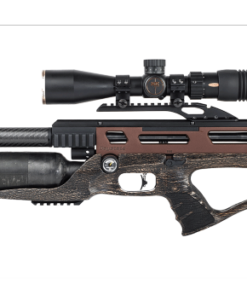
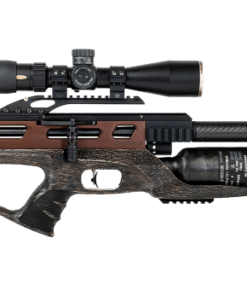
One of the defining visual characteristics of the Daystate Wolverine R C-Type Regulated Walnut is its wooden stock.
Walnut has long been associated with sporting rifles because each piece of timber naturally develops its own grain structure, coloration, and figuring. Therefore, two stocks may display noticeable cosmetic differences even when they belong to the same model.
The stock also serves an important functional role. Its geometry establishes the interface between the user and the rifle while supporting the action and associated components.
Natural Walnut Characteristics
Because walnut is a natural material, variations in grain should be expected. Dark streaks, lighter sections, contrasting grain patterns, and subtle differences in tone are normal characteristics rather than necessarily being manufacturing inconsistencies.
Routine care is important as well. Excessive moisture, prolonged exposure to harsh environments, and inappropriate cleaning products should be avoided. Manufacturer-approved stock-care practices are preferable whenever maintenance is required.
C-Type Configuration
The C-Type designation separates this Wolverine variant from alternative configurations within the broader product family.
Its layout is intended to combine useful onboard air capacity with manageable overall dimensions. However, reservoir capacity, overall length, barrel specifications, weight, and other measurements can differ according to calibre, production period, and market specification.
For that reason, buyers, owners, technicians, and researchers should identify the exact model and serial-specific configuration before relying on generalized specifications.
Key Product Characteristics
Typical characteristics associated with this configuration include:
- Manufacturer: Daystate
- Product family: Wolverine
- Model: Wolverine R
- Configuration: C-Type
- Power system: Pre-charged pneumatic
- Pressure management: Regulated
- Stock material: Walnut
- Feeding system: Model-dependent magazine system
- Calibre availability: Market and configuration dependent
- Power specification: Market and legal-jurisdiction dependent
- Primary construction: Metal action combined with a wooden sporting stock
These details should be treated as general identification information rather than serial-specific specifications.
Engineering and Pressure Regulation
Consistency is one of the principal reasons regulators are incorporated into modern PCP systems.
Inside an unregulated pneumatic system, reservoir pressure gradually decreases as compressed air is consumed. A regulated design introduces another pressure-control stage between the reservoir and firing mechanism.
Therefore, within its intended operating range, the system can manage air delivery more consistently.
However, regulation does not mean that every shot will produce an identical measured result. Pellet characteristics, temperature, mechanical condition, seals, barrel condition, fill pressure, and other variables can influence measured performance.
Compressed-Air Reservoir
The onboard reservoir stores high-pressure air and should be treated as a pressure vessel rather than as an ordinary accessory.
Only compatible filling equipment and manufacturer-specified procedures should be used. Maximum working pressure must never be exceeded.
Additionally, seals, connectors, gauges, hoses, and filling equipment should be periodically inspected according to the relevant manufacturer’s recommendations.
Barrel and Mechanical Architecture
The barrel assembly forms another central part of the Wolverine platform. Its condition can affect consistency, mechanical reliability, and general operation.
Routine inspection should therefore focus on cleanliness, visible damage, correct component installation, and the condition of associated seals and fittings.
Aggressive cleaning methods should generally be avoided unless specifically recommended by the manufacturer. Likewise, internal modifications should be performed only by appropriately qualified personnel.
Trigger and Controls
The trigger and control layout is designed as part of the overall Wolverine action. Individual adjustment capability can depend on the specific production configuration.
Any adjustment should remain within manufacturer specifications. Safety mechanisms should also be checked before use, particularly after storage, transport, servicing, or component replacement.
Magazine and Loading System
Depending on the exact Wolverine R configuration, a compatible magazine system may be used to provide sequential pellet feeding.
Correct calibre compatibility is essential. A magazine intended for one calibre should not be assumed to work with another.
Similarly, damaged, contaminated, or incorrectly loaded magazines may interfere with normal operation. Components should therefore be kept clean and inspected for visible wear.
Maintenance and Long-Term Care
Proper maintenance helps preserve both the mechanical system and the walnut furniture.
After handling, exposed metal surfaces can be wiped using an appropriate protective cloth or manufacturer-approved product. Meanwhile, the wooden stock should be kept reasonably dry and protected from extreme environmental conditions.
For longer-term storage, the rifle should be unloaded and secured appropriately. Local requirements regarding storage, transportation, ownership, and access should always be followed.
Important Maintenance Areas
Routine attention may include:
- Inspecting seals for deterioration
- Checking filling connections
- Monitoring the pressure gauge
- Keeping the barrel appropriately maintained
- Protecting exposed metal surfaces
- Examining the walnut stock for moisture damage
- Checking magazines for wear or contamination
- Following recommended servicing intervals
High-pressure pneumatic components should not be dismantled casually. Where specialist work is required, an appropriately trained airgun technician or authorized service provider should be consulted.
Calibre and Power Variations
The Daystate Wolverine R C-Type Regulated Walnut may be encountered in different calibre and power configurations depending on the market.
Consequently, one specification sheet should not automatically be applied to every Wolverine R C-Type.
Local regulations can also determine which versions are supplied in a particular country. Some jurisdictions impose specific muzzle-energy thresholds, licensing requirements, age restrictions, transportation rules, or storage obligations.
Therefore, the markings and documentation supplied with the individual rifle provide the most relevant starting point for identifying its configuration.
Accessories and Compatibility
Optics and other compatible equipment may be fitted where permitted by the rifle’s specification and local law.
However, compatibility should be confirmed rather than assumed. Mounting dimensions, calibre, thread specifications, pressure ratings, magazine format, and model generation can all affect whether a component is suitable.
Using correctly specified components also helps avoid unnecessary mechanical problems.
Safe Handling Considerations
The Wolverine R should always be handled as a potentially loaded air rifle until its condition has been positively verified.
The muzzle should remain pointed in a safe direction, and the trigger should not be touched until appropriate use is intended. Before cleaning, storage, transportation, or inspection, the rifle should be unloaded according to the manufacturer’s instructions.
Eye protection and an appropriate controlled environment should also be considered when the rifle is being used.

Frequently Asked Questions
What is the Daystate Wolverine R C-Type Regulated Walnut?
The Daystate Wolverine R C-Type Regulated Walnut is a pre-charged pneumatic air rifle from the Wolverine family. It combines a regulated pneumatic action with a traditional walnut stock and the proportions associated with the C-Type configuration. The regulator is designed to control the pressure supplied from the main air reservoir to the firing system, while the walnut stock provides the traditional appearance associated with sporting rifles. Exact specifications can vary according to calibre, production period, power classification, and destination market.
What does the “R” in Wolverine R mean?
The “R” identifies the regulated version of the Wolverine platform. A regulator manages the pressure delivered from the primary reservoir before air reaches the firing system. Consequently, the rifle is designed to operate with more controlled pressure delivery throughout the appropriate portion of its usable air supply. This regulation should not be confused with a guarantee that every measured shot will be identical, because ammunition, temperature, maintenance condition, seals, and other variables can still influence measured performance.
What does C-Type mean?
C-Type identifies a particular configuration within the Wolverine range. It distinguishes the rifle from other Wolverine arrangements that may use different reservoir formats, dimensions, or overall layouts. Because several Wolverine variants have existed, specifications from another Wolverine should not automatically be applied to a C-Type rifle. Checking the exact model markings and manufacturer documentation remains the most reliable method of identification.
Is the stock made from real walnut?
The model is supplied with a walnut stock. Because walnut is a natural material, individual stocks can vary considerably in grain pattern, figuring, shade, and contrast. Those differences are normal characteristics of natural timber. Proper wood care is recommended, particularly if the rifle has been exposed to moisture or significant changes in temperature and humidity.
Which calibres are available?
Wolverine models have been produced in several established air-rifle calibres, although exact C-Type availability depends on the market and production specification. Common Wolverine-family chamberings can include .177, .22 and .25, while some specialized Wolverine configurations have also appeared in larger calibres.
The calibre marked on the individual rifle should always be checked before selecting pellets, magazines, replacement components, or related equipment.
Is every Wolverine R C-Type supplied at the same power level?
No. Power specifications can vary considerably according to calibre, factory configuration, destination country, and legal requirements. A rifle intended for one market may therefore have a different specification from an outwardly similar example supplied elsewhere.
For this reason, published figures from an unrelated Wolverine should not be assumed to describe a particular rifle. Manufacturer documentation and the markings or records associated with the individual example provide a more dependable reference.
What does FAC mean when discussing this rifle?
FAC is an abbreviation for Firearm Certificate in the United Kingdom. Within the UK context, the term is commonly used when discussing air rifles configured above the statutory energy threshold applicable to air rifles that can otherwise be possessed without a firearm certificate.
The term should not be interpreted as a universal international classification. Firearms and airgun laws differ significantly between countries and regions. Owners should therefore determine the classification applicable in their own jurisdiction.
Can the power level be adjusted?
Internal pneumatic settings can affect operating characteristics, but regulator or power-related adjustments should not be treated as routine user modifications. Altering factory settings can affect reliability, component loading, warranty coverage, and legal classification.
Where inspection, servicing, or adjustment is necessary, manufacturer guidance and appropriately qualified technical assistance should be used. Local legal requirements must also be observed.
How does the regulator improve operation?
The regulator creates a controlled intermediate pressure between the high-pressure reservoir and the firing mechanism. Without regulation, reservoir pressure naturally declines as compressed air is consumed.
By controlling the pressure available to the firing system, the regulator is intended to reduce variations caused solely by changing reservoir pressure. However, pellet characteristics, environmental conditions, mechanical condition, and other factors can still affect measured results.
What type of ammunition does it use?
The rifle uses airgun pellets appropriate to its marked calibre. Pellet diameter, mass, profile, and construction can vary substantially.
Only ammunition corresponding to the actual calibre should be used. Owners should also consult manufacturer guidance concerning suitable projectile types and avoid assuming that every pellet carrying the same nominal calibre will behave identically.
Does the rifle use a magazine?
Wolverine R configurations can use a compatible magazine system. Magazine compatibility depends particularly on calibre and model generation.
A magazine should therefore be selected according to the exact rifle specification rather than appearance alone. Using an incorrect magazine can lead to feeding difficulties or component damage.
Can a single-shot loading system be used?
Compatible single-shot loading arrangements may exist for certain Daystate configurations. However, compatibility can differ between models and production generations. Anyone requiring this type of accessory should verify the relevant Daystate part specification for the exact rifle before installation.
What type of air supply does the rifle require?
As a PCP system, the rifle requires clean compressed air delivered using properly rated equipment. Depending on the manufacturer’s requirements and available infrastructure, this may involve an appropriate charging cylinder, hand pump, or suitable PCP compressor.
The specified maximum working pressure should never be exceeded. Filling hoses, connectors, adaptors, gauges, and other high-pressure components should also have suitable pressure ratings.
How should the reservoir be filled?
The manufacturer’s filling procedure should be followed. Before charging, the filling equipment and connections should be checked for cleanliness, condition, and compatibility.
The reservoir should not be intentionally overfilled. High-pressure pneumatic equipment deserves particular care because incorrect connectors, damaged hoses, contamination, or excessive pressure can create serious hazards.
How many shots can be obtained from one fill?
There is no single shot-count figure that accurately describes every Wolverine R C-Type. Shot count can vary with calibre, power configuration, reservoir specification, regulator setup, pellet characteristics, and the pressure range being used.
Therefore, an advertised figure for another version should not automatically be applied to a specific rifle. The relevant manufacturer’s specification should be consulted for the particular configuration.
Does the regulator require maintenance?
Like other mechanical and pneumatic components, regulators can eventually require inspection or servicing. Seals can age, contamination can occur, and components may change condition over extended use.
Regulator servicing generally involves high-pressure components and should be carried out according to manufacturer procedures by appropriately qualified personnel.
What accessories can be used?
Depending on the exact configuration, compatible equipment may include optical sights, suitable mounting hardware, magazines, approved filling equipment, protective cases, cleaning equipment, and manufacturer-specified service components.
Compatibility should be verified individually. Mount dimensions, thread specifications, calibre, model generation, and pressure ratings are examples of details that can determine whether a component is appropriate.
Can a telescopic sight be fitted?
The rifle is designed to accommodate an appropriate aiming system using compatible mounting equipment. Before fitting an optic, the mounting interface, ring dimensions, objective clearance, and overall physical compatibility should be confirmed.
Mounting hardware should also be installed according to the relevant manufacturer’s instructions rather than being excessively tightened.
How should the walnut stock be maintained?
Walnut should be kept reasonably clean and dry. After exposure to moisture, the stock should be allowed to dry under appropriate conditions rather than being subjected to excessive direct heat.
Only suitable wood-care products should be applied. Harsh solvents and inappropriate chemicals can affect the stock’s finish.
Because natural walnut varies in grain and coloration, normal visual differences between rifles do not necessarily indicate deterioration.
How should the metal components be maintained?
External metal surfaces can be wiped clean after handling using an appropriate cloth and manufacturer-approved protective product. Excessive quantities of oil should be avoided, particularly around pneumatic components.
Internal servicing should follow the manufacturer’s instructions. Products suitable for conventional firearm components should not automatically be assumed suitable for a high-pressure PCP system.
Does the barrel require frequent cleaning?
Cleaning frequency depends on use, ammunition, environmental exposure, and observed condition. Unnecessary aggressive cleaning can be counterproductive.
When cleaning is required, equipment and methods appropriate for an air-rifle barrel should be used. Manufacturer recommendations take priority over generalized cleaning routines.
Can ordinary firearm oil be used inside the pneumatic system?
Products should not be introduced into high-pressure pneumatic components unless they are specifically suitable for that purpose and recommended by the manufacturer.
PCP systems contain seals and pressure-bearing components that can require particular materials and lubricants. Using an inappropriate product can damage seals or affect operation.
How should the rifle be stored?
The rifle should be unloaded and secured against unauthorized access. Storage should also protect it from excessive moisture, corrosive environments, and extreme temperature changes.
Applicable local requirements concerning storage should be followed. Because laws differ considerably between jurisdictions, owners should check the requirements that apply where the rifle is kept.
How can the exact model specification be confirmed?
Begin with the markings on the rifle, serial information, calibre designation, original documentation, and any manufacturer records available for the individual example.
These details are more reliable than assuming specifications from photographs or another Wolverine model. Production changes can occur, and visually similar rifles may have different internal or market specifications.
Are replacement seals and service parts available?
Service components may be available for Wolverine models, but the correct part should be identified for the specific production version.
Seals should not be selected purely by visual comparison. Dimensions, material specifications, pressure compatibility, and component revisions can matter. Manufacturer-specified replacement parts are preferable.
Can components from another Wolverine model be installed?
Not necessarily. Products within the same family can share design characteristics without making every component interchangeable.
Reservoir parts, magazines, stock components, seals, filling hardware, barrels, and internal pneumatic parts should all be checked for exact compatibility before installation.
What should be inspected on a previously owned example?
A general condition assessment can include the walnut stock, external metalwork, pressure gauge, filling connection, seals, magazine, controls, barrel condition, and evidence of unauthorized modification.
Any concern involving the high-pressure system should be evaluated by a suitably qualified technician. The rifle’s legal classification and documented specification should also be confirmed.
Why can specifications found online differ?
Different Wolverine generations, calibres, markets, and power configurations are frequently discussed under similar names. Retail listings can also remain online after specifications have changed.
As a result, reservoir capacity, dimensions, weight, energy output, magazine details, and other figures may differ between sources. Manufacturer information corresponding to the exact production version should therefore receive priority.
Is the walnut version mechanically different from every other Wolverine R?
The walnut designation primarily identifies the stock material, but an individual rifle’s complete specification depends on more than its stock. Calibre, reservoir configuration, power classification, production generation, and destination market can all influence the final configuration.
Accordingly, the complete model designation should be considered when comparing two examples.
What is the most important information to verify before using the rifle?
The calibre, mechanical condition, reservoir condition, pressure specification, correct ammunition, compatible magazine, and applicable local regulations should all be established.
The rifle should also be handled according to standard airgun safety principles: treat it as potentially loaded until its status has been positively checked, maintain safe muzzle direction, keep fingers away from the trigger until appropriate, and secure the rifle when it is not in use.
What distinguishes the regulated Wolverine platform?
Its combination of PCP operation and regulated pressure management is a defining mechanical characteristic. The regulator is intended to provide controlled air delivery while the reservoir supplies the stored compressed air required for operation.
In the walnut C-Type configuration, this pneumatic architecture is combined with traditional wooden furniture and the particular physical arrangement associated with the C-Type platform. Exact specifications should nevertheless always be confirmed for the individual rifle because calibre, power classification, components, and market configuration can differ.
Daystate Wolverine R C-Type Regulated Walnut Overview
The Daystate Wolverine R C-Type Regulated Walnut combines a regulated PCP mechanism with the traditional appearance of a natural walnut stock. Its design reflects the broader Wolverine platform while the C-Type configuration provides its own reservoir and dimensional arrangement.
Its regulator is intended to control pressure supplied to the firing system, while the PCP architecture stores compressed air onboard. At the same time, the walnut furniture gives each example a somewhat individual appearance because natural grain patterns vary.
For anyone documenting, maintaining, identifying, or researching this model, exact calibre, reservoir pressure, dimensions, power specification, magazine compatibility, and component specifications should be confirmed against the documentation for the particular rifle.
Ultimately, careful maintenance, correct pressure-system handling, compatible components, secure storage, and compliance with applicable regulations are essential parts of responsible ownership and operation of the Daystate Wolverine R C-Type Regulated Walnut.
Daystate, Delta Wolf, Alpha Wolf and Premium PCP Air Rifle Accessories
For shooters researching premium PCP platforms, daystate blackwolf, daystate redwolf, delta wolf, huntsman daystate, and daystate alpha wolf frequently appear among the most searched Daystate-related terms. Whether someone searches for wolf delta, day state, daystate delta wolf, blackwolf, deltaw, daysta, or wants to understand the delta wolf meaning, these rifles are commonly associated with modern PCP engineering, electronic control systems, adjustable configurations, and high-end airgun performance.
People asking what is a delta wolf are generally researching the electronic Daystate platform and how it differs from conventional PCP rifles. Related searches often include electronic wolves, firing cycle, lock time, lock timing, short cocking, cocking ball, index pin, and pin magazine. Searches may also focus on configuration-specific components such as an alpha wolf barrel, stock walnut, safari stock, dima stock, stock replacement, rimfire stocks, or a rifle butt pad.
Daystate Red Wolf, Alpha Wolf and Wolverine Searches
The daystate redwolf family remains closely connected with searches for daystate redwolf price, red alpha wolf, alpha red wolf, and the newer daystate blackwolf platform. Some shoppers may also compare these rifles with the daystate wolverine sapphire, wolverine gun, wolveriner, wolf gun, wolfpack armory wolverine, or even search unusual phrases such as can wolverine go on planes while researching transport rules.
Accessories frequently searched alongside these platforms include a rubber butt, rubber butt pad, butt pad rifle, bradley cheek riser, gecko grips, picatinny bag rider, and buddy bottle cover. Cosmetic or clothing-related search phrases such as red bodywarmer and black snood may also appear alongside broader brand searches.
Magazine-related searches include 177 magazine, mag 177, and 25 magazine, while ammunition research can include 177 pellets types, 5.0 mm pellets, and slug pellet. Because pellet suitability depends on the rifle, barrel, legal power level, and intended range use, compatible ammunition should always be selected according to the manufacturer’s specifications.
PCP Air Systems, Moderators and Thread Accessories
Many enthusiasts researching Daystate rifles also search for air rifle compressed air, compressed air rifle, what are pcp air rifles, and what is a pre charged pneumatic air rifle. These searches relate to the fundamental operating principle of PCP systems, in which stored compressed air is used to power each shot.
Common accessory searches include air gun pc, air gun suppressor, air gun suppressors, airgun moderator, air rifle moderator, 0db, 0db moderator, and 0 db moderator. Buyers may also encounter searches for a hogan decimeater silencer, silencer thread adapter, thread protector rifle, and muzzle thread protector when comparing muzzle accessories and compatible threaded components. Local regulations should always be checked before purchasing or fitting sound-moderating equipment.
Maintenance-related searches often include pcp o ring kit, while tuning-oriented users may look for an ats tuner. Search terms such as unfend can also appear in broad airgun keyword datasets, even when the intended product or meaning is unclear.
M-LOK, Picatinny and Rifle Sling Accessories
Accessory compatibility is another major area of interest. Common searches include mlok to picatinny rail adapter, best m-lok to picatinny rail adapter, m-lok to picatinny adapter, and picatinny m lok adapter. These adapters are often researched by users who want to mount compatible optics, rests, bipods, bags, or other permitted accessories on an appropriate rail system.
Sling-related searches include riffle sling, rigle sling, how to put a gun sling on a rifle, how to put a rifle sling on, how to install a rifle sling, how to put sling on rifle, installing a rifle sling, and attaching a sling to a rifle. Because attachment arrangements differ between stocks, rails, swivels, and chassis systems, the correct mounting points should always be confirmed from the manufacturer’s documentation.
Other general mechanical or unrelated search phrases found within broader keyword datasets include how to put extinguisher call back together, weatherby vanguard trigger adjustment, and 3.55kg in lbs. While these terms may appear in search data, they are not necessarily specific to Daystate PCP rifles.
BRK, Brocock and XR Air Rifle Searches
Alongside Daystate products, many buyers compare models produced under the Brocock and BRK families. Popular searches include brocock ltd, brocock sniper xr, brocock commander xr, pathfinder xr, brk ghost, brocock airguns, brocock commander, brk ghost air rifle, and brk sniper xr.
The brocock sniper xr is often researched by shooters comparing compact PCP platforms, while the brocock commander xr and brocock commander searches generally relate to larger tactical-style PCP configurations. Meanwhile, brk ghost and brk ghost air rifle searches reflect growing interest in BRK-branded PCP systems.
Those comparing local purchasing options may also search fx airgun dealer near me, even when their primary interest is Daystate or Brocock. This reflects the way many airgun shoppers compare several premium manufacturers before deciding which PCP platform, stock configuration, calibre, regulator setup, magazine system, and accessory package best matches their intended sporting use.
Additional Daystate and Airgun Search Terms
Broader searches surrounding these rifles may include model alpha gun, griffin gun, and general comparisons involving a wolf gun or other premium PCP platform. Buyers may also investigate different stock materials, rail systems, moderators, magazines, barrel options, butt pads, cheek risers, thread protectors, and compressed-air accessories before completing a build.
Whether someone begins with daystate redwolf, explores the daystate alpha wolf, compares a daystate delta wolf, investigates the daystate blackwolf, or considers a daystate wolverine sapphire, the most useful approach is to verify model compatibility, calibre, pressure specifications, local regulations, and manufacturer-supported accessories before purchasing replacement components or upgrades.
Daystate Wolverine R C-Type Regulated Walnut: Calibres, FAC, Power and Accessories
The Daystate Wolverine R C-Type Regulated Walnut has been produced in different calibre and power configurations, with availability depending on production period, destination market, and applicable legislation. Because Daystate specifications can vary between versions, the markings and documentation supplied with an individual rifle should be treated as the definitive reference.
Available Calibres
Wolverine R models have been associated with several common air-rifle calibres. However, not every calibre is necessarily offered in every C-Type configuration or jurisdiction.
Common Wolverine-family calibre designations include:
- .177 / 4.5 mm – a small-diameter pellet calibre commonly associated with target and general sporting air-rifle applications.
- .22 / 5.5 mm – a widely encountered calibre offering a larger and heavier projectile than .177.
- .25 / 6.35 mm – a larger-bore option found on certain higher-output configurations.
- .303 / 7.62 mm – associated with selected high-energy Wolverine configurations rather than every standard C-Type model.
Calibre directly affects compatible pellets, magazines, barrels, and some other components. Therefore, accessories should always be matched to the exact calibre marked on the rifle.
Pellet mass and design also vary substantially within the same calibre. Manufacturer guidance should consequently be considered when determining suitable ammunition.
Understanding FAC and Non-FAC Specifications
The term FAC is frequently encountered when discussing higher-powered air rifles in the UK market. FAC refers to a Firearm Certificate and is relevant when an air rifle exceeds the applicable legal threshold under UK firearms law.
Accordingly, the expression “FAC version” generally describes a rifle configured above the power level permitted for an unlicensed air rifle in that jurisdiction.
This distinction should not be assumed to apply identically worldwide. Other countries—and sometimes individual states, provinces, or territories—use different classifications, licensing systems, age limits, storage requirements, transportation rules, and power restrictions.
Therefore, an owner should establish the rifle’s actual specification and determine which local rules apply before possession or use.
Power Configuration
Power output on the Daystate Wolverine R C-Type Regulated Walnut should not be represented by one universal figure because Wolverine configurations differ.
Depending on calibre, market, and factory configuration, examples can be supplied at different energy levels. UK non-FAC rifles, for example, are configured to remain within the relevant statutory air-rifle limit, whereas FAC-market versions may operate at higher factory-specified outputs.
In other international markets, different specifications may be supplied.
Several variables can also affect measured muzzle energy, including:
- Pellet weight
- Pellet design
- Calibre
- Individual rifle configuration
- Regulator setup
- Reservoir pressure
- Mechanical condition
- Temperature
- Barrel condition
- Factory specification
For these reasons, the rifle’s documentation and manufacturer information should be consulted when an exact power specification is required.
Regulated Air Delivery
The “R” designation is associated with the regulated Wolverine platform.
A regulator manages the pressure supplied from the main compressed-air reservoir to the firing system. Consequently, the mechanism does not simply depend on the continuously declining pressure of the primary reservoir.
Within the regulator’s intended working range, this arrangement is designed to provide comparatively controlled air delivery.
Nevertheless, a regulator should not be treated as a user-adjustable method for bypassing legal power restrictions. Changes to regulator pressure or other internal settings can affect reliability, energy output, component stress, and legal classification.
Internal adjustment should therefore be left to appropriately qualified personnel and performed within manufacturer specifications and applicable law.
Air Reservoir and Filling Accessories
As a PCP rifle, the Wolverine R requires an appropriate high-pressure air source.
Depending on the equipment and locally available filling infrastructure, compatible equipment may include a suitable diving cylinder, PCP charging cylinder, manufacturer-approved hand pump, or properly rated PCP compressor system.
Any filling equipment must have the correct pressure rating and connection system.
Pressure Gauge and Filling Equipment
The rifle’s pressure indication allows reservoir condition to be monitored. Users should follow Daystate’s documentation concerning operating pressure and filling procedures rather than relying on generalized PCP values.
Potential filling-related accessories include:
- Correct charging connector or adaptor
- Properly rated high-pressure hose
- PCP filling cylinder
- Suitable pressure gauge
- Compatible compressor equipment
- Manufacturer-approved hand pump
Connections should be inspected for contamination and visible damage before use.
Magazine Compatibility
A compatible Daystate magazine may form part of the rifle’s feeding system.
Magazine specifications can vary according to calibre and model generation. Consequently, visual similarity alone does not establish compatibility.
A .177 magazine, for example, should not be substituted for a .22 or .25 magazine. Replacement magazines should be identified using the exact rifle model, calibre, and applicable Daystate part information.
A compatible single-shot loading system may also exist for certain configurations, although compatibility should be verified for the particular rifle.
Optics and Mounting Accessories
Because the rifle is intended to accommodate an aiming system, compatible optical equipment may be installed using the appropriate mounting arrangement.
Potential equipment can include:
- Telescopic sight
- Correctly sized scope rings
- Compatible mounting hardware
- Lens covers
- Sunshade where compatible
- Protective optic accessories
Ring diameter, mounting interface, objective clearance, and physical dimensions should all be checked before installation.
Overtightening mounting hardware can damage components or create alignment problems, so manufacturer-specified installation procedures should be followed.
Additional Compatible Equipment
Other accessories may be available for specific Wolverine R configurations.
These can include appropriate cases, cleaning equipment, replacement seals, magazines, filling equipment, and manufacturer-specified service components.
Where a muzzle device is legally permitted, thread type and model compatibility should be established directly from the rifle’s specification. A component should never be installed merely because its thread appears visually similar.
Maintenance Accessories
Useful maintenance equipment can include appropriate cleaning materials, lint-free cloths, approved lubricants, and stock-care products intended for walnut.
Petroleum-based products should not automatically be applied to high-pressure pneumatic components. PCP systems contain seals and components that may require specific materials.
Likewise, excessive lubrication can be undesirable.
Matching Accessories to the Exact Rifle
The safest approach is to identify accessories from the complete model designation rather than simply searching for “Wolverine accessories.”
Important compatibility information includes:
Model: Daystate Wolverine R C-Type
Stock: Walnut
Operating system: Regulated PCP
Calibre: Verify individual rifle
Power classification: Verify factory and jurisdictional specification
Magazine: Match calibre and model generation
Filling equipment: Match specified pressure and connector
Optic mounting: Confirm the rifle’s actual mounting interface
Replacement parts: Use manufacturer-specified components
Ultimately, the Daystate Wolverine R C-Type Regulated Walnut exists in multiple market configurations. Calibre, FAC classification, factory power specification, magazine compatibility, and accessory requirements should therefore be established from the particular rifle rather than inferred from another Wolverine model.
Correctly identifying those details helps preserve mechanical reliability while ensuring that the rifle, pressure equipment, and associated components are handled within their intended specifications and applicable regulations.
Practical Use Scenarios
Understanding how a regulated PCP platform behaves in realistic settings provides more useful context than specifications alone. The Daystate Wolverine R C-Type Regulated Walnut combines compressed-air operation, regulated pressure management, a multi-shot configuration, and traditional wooden furniture. Consequently, its practical characteristics can be considered across controlled target shooting, recreational range sessions, equipment familiarization, maintenance routines, training environments, and lawful field use where permitted.
The following scenarios describe general applications rather than instructions for modifying power or maximizing destructive performance. Appropriate backstops, safe handling practices, manufacturer instructions, and local regulations should always govern use.
Controlled Target Shooting at an Established Range
A formal airgun range provides one of the clearest environments for understanding the rifle’s operating characteristics. Distances are known, targets are positioned against suitable backstops, and firing positions can usually be established under controlled conditions.
Before beginning a session, the rifle can be inspected externally to confirm that the filling system, magazine, optic, stock, and controls appear to be in normal condition. Reservoir pressure should remain within the manufacturer’s specified operating range.
Once the equipment has been prepared appropriately, the regulated pneumatic system becomes particularly relevant. As air is consumed, reservoir pressure naturally decreases. However, the regulator is designed to manage the pressure delivered to the firing system during its normal operating range.
This allows the user to concentrate on fundamentals such as sight alignment, breathing, body position, trigger control, and follow-through rather than continually compensating for large pressure-related changes..25 caliber brocock sniper xr



Reviews
There are no reviews yet.