Seneca Eagle Claw Lever-Action PCP Air Rifle
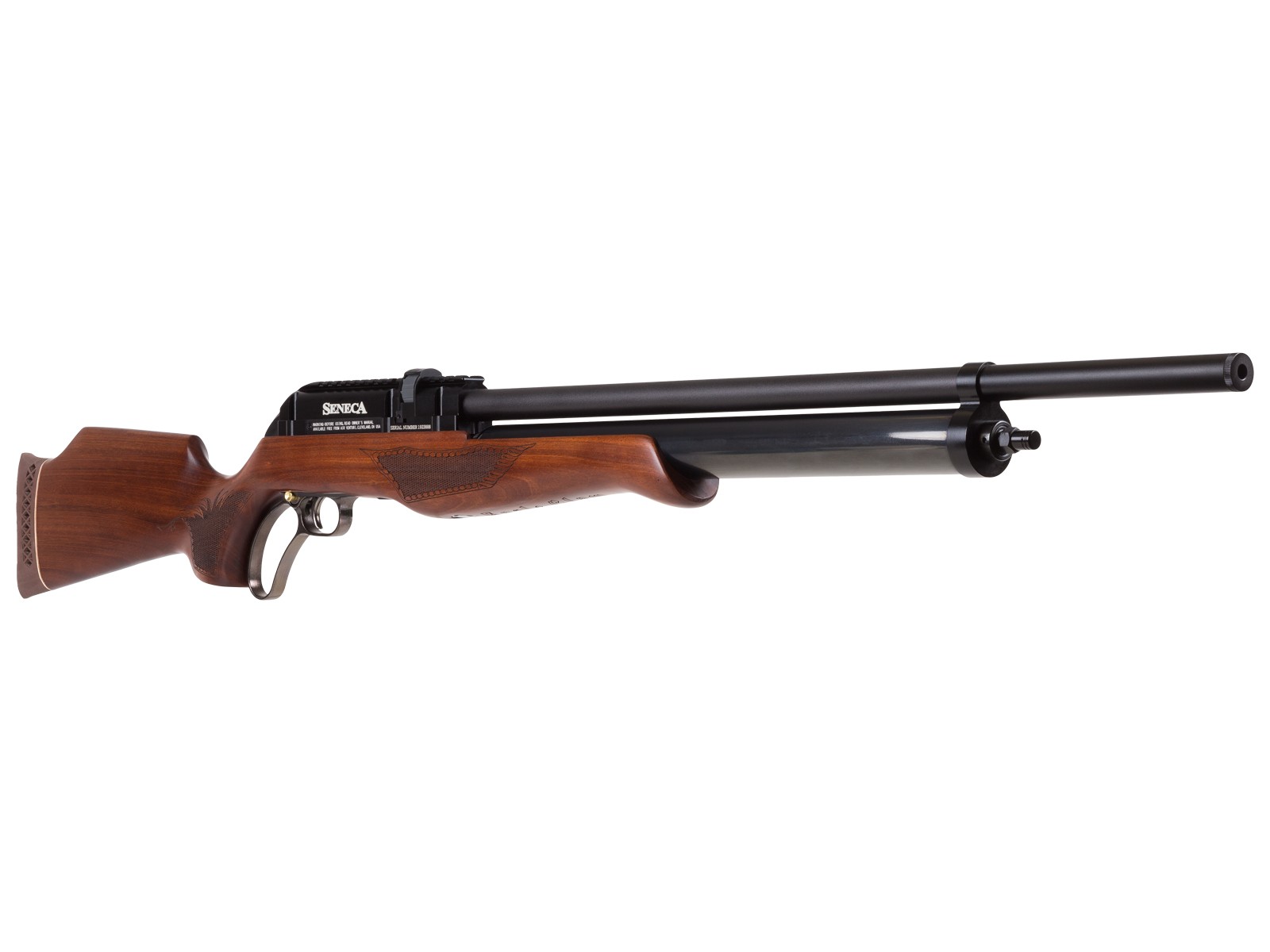
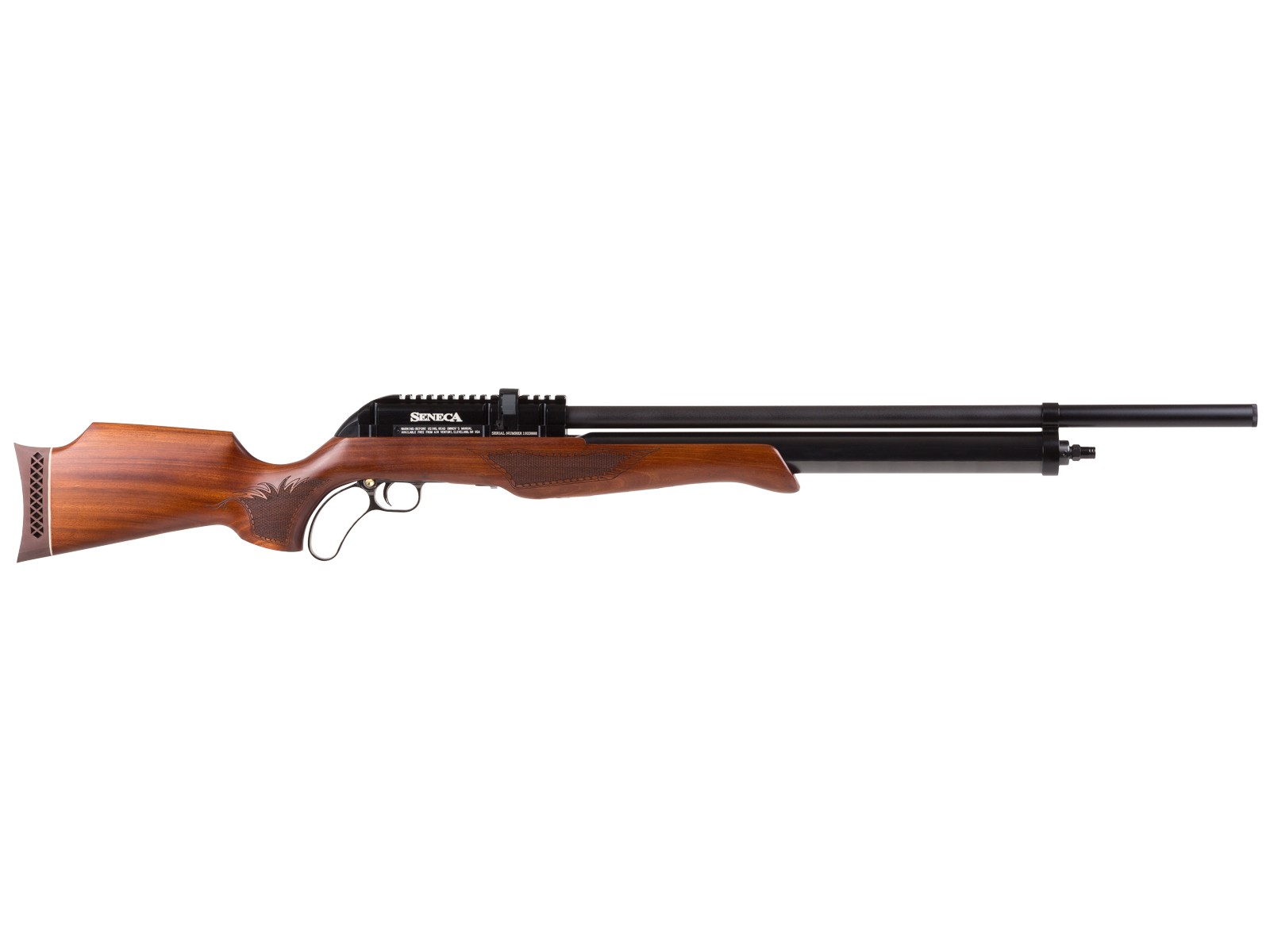
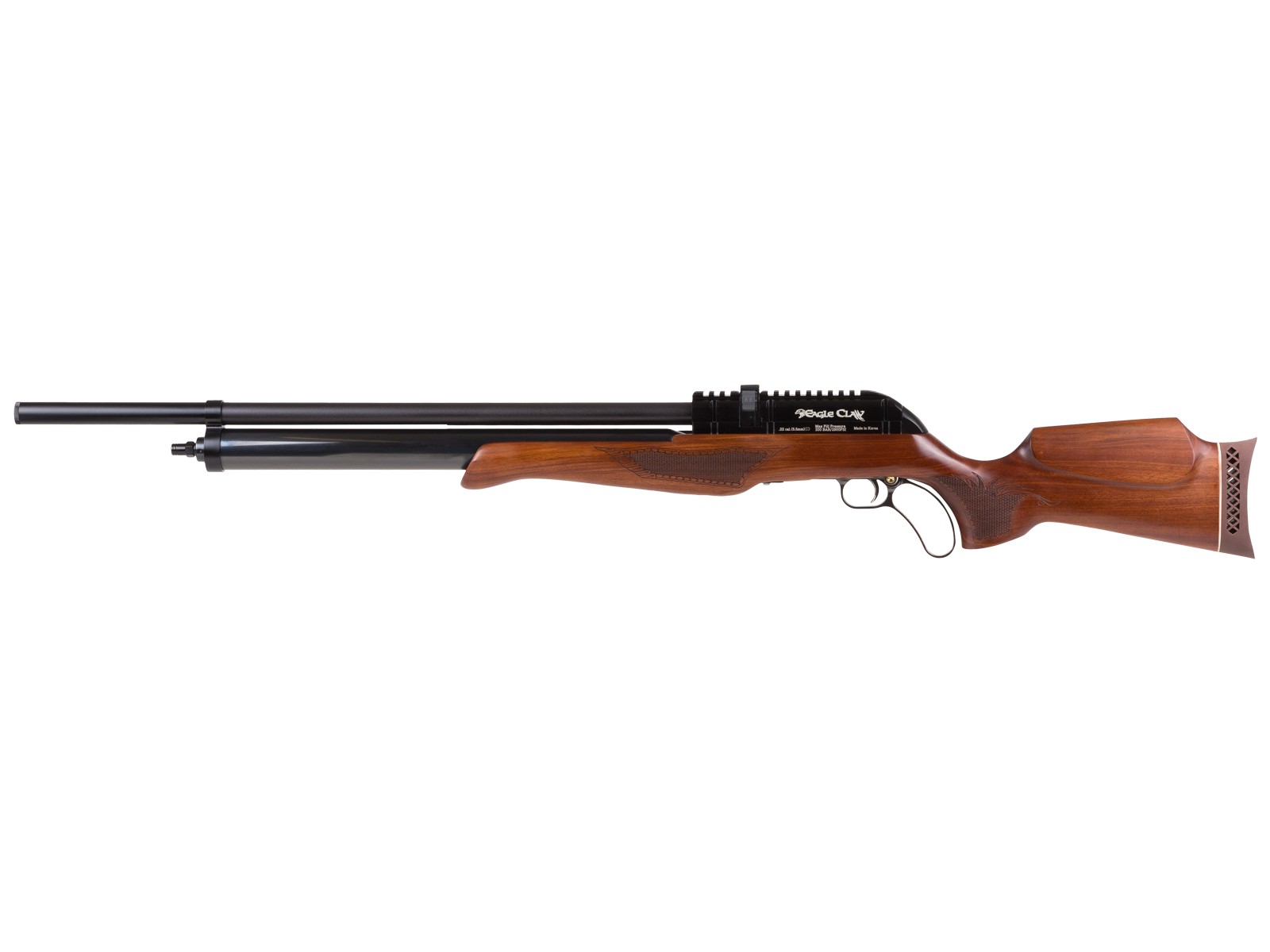
Unmatched field versatility is delivered by the Seneca Eagle Claw. Classic lever-action character is combined with modern pre-charged pneumatic performance, and rapid follow-up capability is provided for hunters, pest controllers, and precision shooters alike. Furthermore, adjustable power, a shrouded barrel, and a handsome Indonesian walnut stock are featured so that both backyard practice and serious small-game work can be handled with confidence.
Why the Seneca Eagle Claw Is Chosen by Serious Shooters
A distinctive Western-inspired profile is presented by the Seneca Eagle Claw, yet contemporary PCP engineering is employed throughout. Consequently, smooth lever cocking is experienced, magazines are indexed automatically, and follow-up shots are placed in less than a second. Moreover, neighborhood-friendly shooting is supported by the shrouded barrel, while hunting-level energy is still available when the power wheel is raised.
Additionally, two popular hunting calibers are offered so that different quarry and pellet preferences can be matched. Therefore, whether paper targets, pests, or small game are pursued, a capable platform is provided.
Calibers, Power, and Magazine Capacity
Flexible energy is supplied through an onboard power-adjustment wheel. As a result, velocity can be reduced for extra shots and quieter sessions, or it can be increased for longer shots and heavier projectiles.
- .22 caliber: A 10-shot magazine is included; advertised energy of approximately 45–51 ft-lbs is achieved, with velocities approaching 1070 fps on lighter pellets.
- .25 caliber: An 8-shot magazine is included; advertised energy near 70 ft-lbs is delivered for greater impact on larger small game.
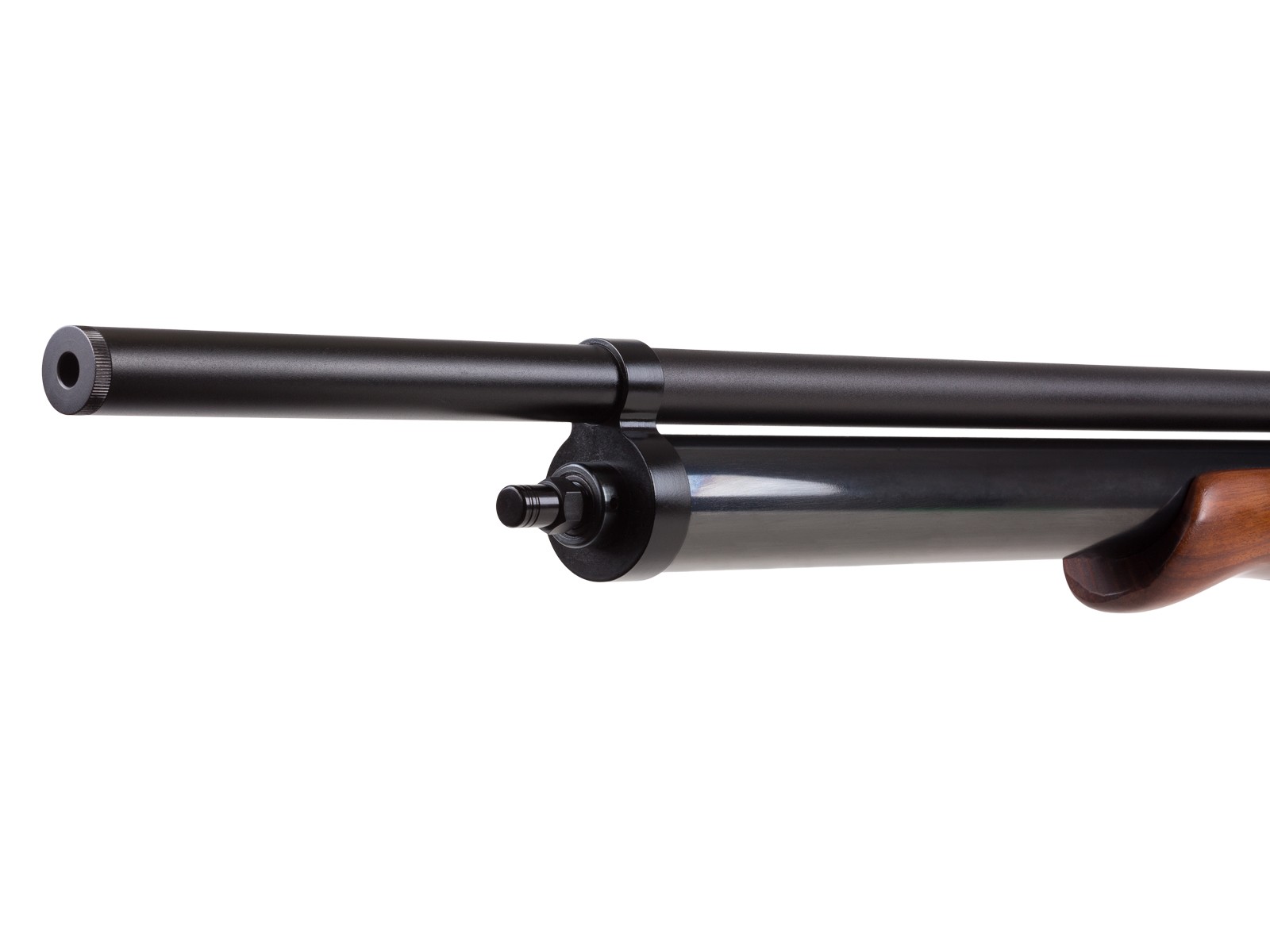
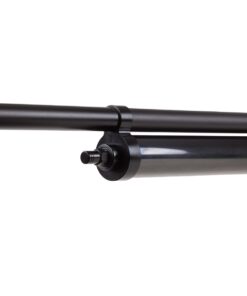
- Air supply: A 460 cc reservoir is filled to 3000 PSI / 200 BAR through a Foster quick-disconnect fitting.
- Shot count: Roughly 35 usable shots per fill in .22 and about 25 in .25 are typically obtained at higher power settings; more shots are gained when power is lowered.
- Included magazines: Two magazines are supplied so that a spare can be kept loaded.
Meanwhile, slugs as well as conventional pellets are commonly used by many owners, especially in .25, because stable flight and extra downrange energy are often obtained.
Stock, Handling, and Optics Readiness
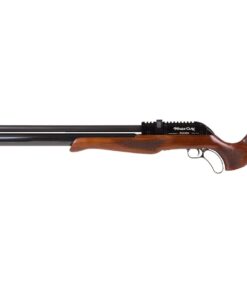
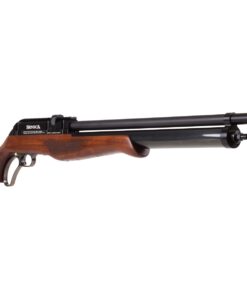
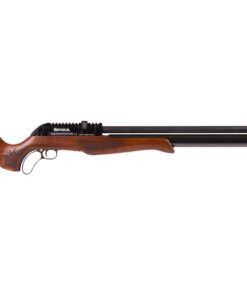
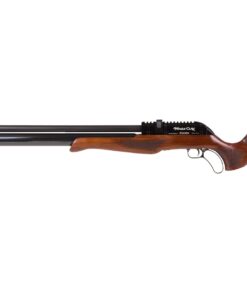
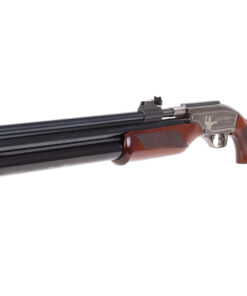
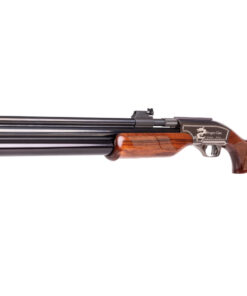
A right-handed Indonesian walnut Monte Carlo stock is fitted, and a warm traditional appearance is created. Furthermore, a rubber recoil pad is installed so that comfort is improved during longer sessions. Likewise, checkering is applied to the pistol grip and forestock so that a secure hold is maintained in the field.
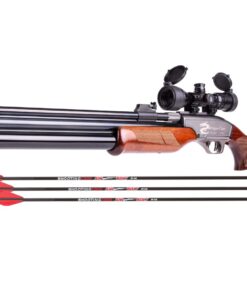
In addition, a Weaver / Picatinny rail is mounted on the receiver. Consequently, a hunting scope or compact red-dot sight can be attached without extra adapters. No iron sights are provided, so an optic is expected for best results. Overall length of 45.5 inches and a weight of about 8.7 pounds are measured, while a 20.5-inch rifled, shrouded barrel is used to balance maneuverability and ballistic performance.
Performance Features That Support Accurate, Repeatable Shooting
Reliable hunting and range use is supported by several practical design choices. First, a two-stage adjustable trigger is fitted; second-stage weight can be tuned with a 2 mm Allen key after the lever is lifted. Subsequently, a manual safety is provided so that the rifle can be made safe between shots. Moreover, the lever action is designed so that cycling remains fast and relatively smooth once technique is practiced.
Additionally, the power wheel is located on the underside of the stock, ahead of the lever and near the pressure gauge. Therefore, energy can be changed without tools. When the wheel is turned counterclockwise, velocity is increased; when it is turned clockwise, velocity is reduced. Accordingly, air consumption and report can be traded against impact energy as conditions change.
Practical Field Uses
The Seneca Eagle Claw is well suited to several roles:
- Small-game hunting where a second shot may be needed quickly
- Pest and predator control around farms and properties (where legal)
- Backyard and range practice when power is dialed down
- Introduction to lever-action PCP handling for shooters who prefer a classic action
However, local airgun laws, FAC requirements, and hunting regulations must always be observed. Responsible ownership, safe storage, and confirmed backstops are required before any live firing is begun.
Build Details and What Is Included
A pre-charged pneumatic powerplant is used. The barrel is rifled and shrouded, loudness is generally rated medium, and the body type is a conventional rifle rather than a bullpup. Fill pressure of 3000 PSI is specified, and a built-in gauge is positioned under the stock so that remaining pressure can be checked without looking down the muzzle.
Highlighted product listing at a glance:
- Lever-action PCP repeater
- Available in .22 (10-shot) and .25 (8-shot)
- Adjustable power wheel
- Shrouded 20.5″ barrel
- Indonesian walnut Monte Carlo stock with rubber pad
- Weaver / Picatinny optics rail
- Two-stage adjustable trigger
- Foster QD fill fitting
- Manual safety
- Two magazines included
- Suggested for small-game hunting and target practice
- Typical 1-year limited manufacturer warranty (confirm at purchase)
Furthermore, spare magazines, pellets, slugs, a suitable high-pressure air source, and a quality scope are commonly added so that the rifle can be used immediately after unboxing.
Getting the Most from the Seneca Eagle Claw
Consistent groups are encouraged when the fill pressure is kept within the range that produces the tightest velocity string for the chosen pellet. Likewise, magazines should be loaded skirt-first as specified so that pellets remain seated. In addition, the trigger should be adjusted only in small increments, because sear engagement can be affected if the screw is over-turned.
Moreover, power should be matched to the task: lower settings are preferred for close plinking and extra shot count, while higher settings are reserved for hunting distances and heavier projectiles. Consequently, both air and barrel life are used more efficiently. Periodic inspection of o-rings, the fill probe, and the shroud is recommended so that leaks and excess noise can be avoided.
Inclusive shooting communities are served when safe practices are shared: eye and ear protection should be worn, the muzzle should always be pointed in a safe direction, and every shot should be accounted for. Therefore, newcomers and experienced shooters can enjoy the same platform with equal emphasis on skill and responsibility.
Ready for the Field
A rare mix of classic lever feel, adjustable PCP power, and rapid follow-up capability is offered by the Seneca Eagle Claw. As a result, it remains a strong choice for anyone who wants a handsome hunting air rifle that can also be tamed for quieter practice. When a reliable .22 or .25 lever-action PCP is required, this model is frequently selected for its balance of energy, shot count, and handling.
Legal compliance, proper filling equipment, and quality ammunition should be confirmed before the first session. Then the Seneca Eagle Claw can be put to work wherever precision, speed, and traditional styling are valued.
Western Airguns, Benjamin PCP Rifles and Big-Bore Airgun Guide
People searching for air guns near me or comparing air gun dealers near me increasingly look beyond conventional pellet rifles toward PCP platforms, compact bullpups, hunting configurations, and American-designed big-bore systems. Whether the search begins with airguns usa, air rifle dealers, air rifle online, or airguns online, understanding the major platforms, calibers, operating systems, and intended applications makes it easier to compare available models responsibly.
Western Airguns and Big-Bore PCP Platforms
Among modern PCP manufacturers, western airguns has attracted considerable attention for compact designs and larger-caliber platforms. Searches such as western air guns, western air gun, western rifles, western firearm, western firearms, and western arms are commonly associated with people researching the Western Airguns product family.
Popular models include the western rattler, western rattler air gun, and western rattler bullpup. Buyers researching larger calibers may also encounter the western rattler 357, 357 rattler, 357 air rifle, .35 cal air rifle, western rattler 45, and western big bore bushbuck 45. These searches generally relate to powerful PCP platforms designed around larger projectiles rather than conventional small-caliber recreational pellet rifles.
The term western rattler bullpup for sale is frequently used by shoppers comparing availability, while western rattler bullpup amazon may appear in searches from users attempting to determine whether the platform is offered through major marketplaces. Availability, shipping rules, age restrictions, and licensing requirements should always be verified for the buyer’s jurisdiction.
Another recognizable Western platform is the western mordax. Related searches include western mordax pcp, western airguns mordax, western mordax venom, mordax venom, mordax airgun, mordax air gun, and mordax air gun price. People using these phrases are generally researching specifications, configurations, pricing, and availability rather than a traditional spring-powered rifle.
The western sidewinder is another platform frequently associated with the brand. Search phrases include western sidewinder compact, sidewinder gun, sidewiner, sidewinder length, and even technical searches such as sidewinder k7a-00008 manual. Product dimensions, magazine systems, air-cylinder capacity, operating pressure, and manufacturer documentation should be checked against the exact version because specifications can vary.
For customers researching very large-caliber Western models, bush buck and bushbuck air rifle price are common search phrases. Big-bore platforms are sometimes described broadly as a big bore pellet gun, big air rifle, big game airgun, or big game air guns. Their intended use, permissible energy level, and legal hunting applications vary significantly between regions.
Calibres, FAC Considerations, Power Settings, and Accessories for the Seneca Eagle Claw
A practical choice between two proven hunting calibres is offered by the Seneca Eagle Claw. Consequently, different quarry, pellet weights, and legal environments can be matched without a change of platform. Furthermore, adjustable power is provided so that energy can be raised or lowered as conditions require. Therefore, both regulated practice sessions and full-power field use can be supported by the same rifle.
Calibres Available on the Seneca Eagle Claw
Two small-bore options are supplied. As a result, shooters who prefer higher pellet counts and flatter trajectories can be served by one chambering, while those who want extra impact energy can be served by the other.
- .22 (5.5 mm) is fitted with a 10-shot magazine. Advertised muzzle energy of approximately 45–51 ft-lbs is quoted by retailers, and velocities approaching 1070 fps can be reached with lighter pellets when the power wheel is raised. Moreover, a useful balance of shot count, accuracy, and terminal performance is often obtained for small game and pest work.
- .25 (6.35 mm) is fitted with an 8-shot magazine. Advertised energy near 70 ft-lbs is listed, and heavier pellets or slugs are commonly preferred. Additionally, greater downrange momentum is delivered, so larger small game and longer shots can be considered where law and ethics allow.
Meanwhile, no .177 version is offered. Accordingly, the line is aimed at hunting and high-power target use rather than ultra-light plinking. Likewise, both pellets and slugs are regularly used; skirt-first loading of the magazine is required so that projectiles remain seated during cycling.
Inclusive use is supported when calibre is chosen for the intended task rather than for fashion. Thus, newer shooters and experienced hunters can select the chambering that best matches local quarry, range, and legal limits.
FAC, Legal Power Limits, and Responsible Ownership
High advertised energy is produced by the Seneca Eagle Claw. Consequently, in many jurisdictions this rifle is treated as a firearm rather than a low-powered airgun. In the United Kingdom, for example, air rifles that exceed 12 ft-lbs of muzzle energy are generally subject to Firearm Certificate (FAC) controls. Therefore, possession, purchase, and use may require an FAC, approved storage, and compliance with local conditions.
However, laws differ widely. In some regions the same rifle may be owned under sporting or airgun rules; in others additional licences, age limits, or hunting permits are required. Moreover, transport, filling of high-pressure air, and hunting of live quarry are separately regulated. Accordingly, current national and local rules must be verified before any order is placed or any shot is fired.
Furthermore, power can be reduced at the wheel, yet advertised maximum energy remains the figure that authorities typically consider. As a result, dialling the rifle down does not automatically remove FAC or equivalent obligations. Safe storage, a confirmed backstop, and eye protection should always be used. Inclusive communities are strengthened when legal advice is sought from official sources rather than from informal forums alone.
Power Adjustment and Real-World Energy
An onboard power wheel is located under the stock, ahead of the lever and near the pressure gauge. Velocity is increased when the wheel is turned counterclockwise; velocity is reduced when it is turned clockwise. Subsequently, air use, report, and impact energy can be traded against one another.
At higher settings, hunting-level performance is delivered: roughly 45–51 ft-lbs in .22 and up to about 70 ft-lbs in .25 are commonly cited. Independent strings have shown strong results with JSB and similar heavy pellets, while slugs have been used to push energy further in some tests. Conversely, at the lowest settings, velocities in the low hundreds of feet per second have been recorded with the same pellets. Therefore, quiet backyard practice and extra shots per fill can be obtained when full power is not needed.
A 460 cc reservoir is filled to 3000 PSI / 200 BAR through a Foster quick-disconnect fitting. Typical shot counts of about 35 in .22 and about 25 in .25 are quoted at higher power; more shots are gained when the wheel is lowered. Meanwhile, consistency is often improved when fill pressure is kept slightly below the absolute maximum and a favourite pellet is chosen. The two-stage trigger can be adjusted with a 2 mm Allen key after the lever is raised, but only small increments should be used so that sear engagement remains safe.
Recommended Accessories for the Seneca Eagle Claw
Full use of the rifle is made easier when a few supporting items are added. Highlighted accessories include:
- Optics: A Weaver / Picatinny rail is fitted. A hunting scope in the 3–12× or 4–16× class, or a compact red-dot for close work, is therefore recommended. No iron sights are supplied.
- Air supply: A 3000 PSI-capable compressor, hand pump, or scuba/HPA tank with a Foster-compatible hose is required. A bleed valve and quality o-rings should be kept on hand.
- Magazines and ammunition: Spare 10-shot (.22) or 8-shot (.25) magazines allow a loaded spare to be carried. Quality domed pellets, hollow-points, and slugs matched to the chosen calibre should be tested for grouping.
- Support gear: A two-point sling, bipod or shooting sticks, and a padded case protect the walnut stock and shrouded barrel. Cleaning pellets, a soft jag, and silicone chamber oil help maintain the barrel and seals.
- Safety and legal extras: Hearing and eye protection, a lockable cabinet where required, and printed copies of local regulations support responsible ownership.
Additionally, a moderator-friendly shroud is already fitted, so extra silencers may be unnecessary or legally restricted depending on location. Likewise, a quality fill adapter and a spare Foster probe reduce downtime in the field.
When calibre, FAC status, power setting, and accessories are planned together, the Seneca Eagle Claw can be set up as a versatile lever-action PCP for practice and for ethical small-game use. Legal confirmation and safe handling remain the first steps before any live firing is begun.
Bullpup and PCP Air Rifle Technology
A bullpup air rifle places much of the action behind the trigger, allowing a comparatively long barrel to be packaged into a shorter overall platform. This layout has become particularly popular with pcp guns, pcp rifle, and pcp air rifles because compressed-air cylinders and magazines can be incorporated into relatively compact designs.
A compressed air rifle stores high-pressure air and releases a controlled amount during each shot. This system differs substantially from a break barrel pellet gun, where the barrel is typically used to cock a spring or gas-ram mechanism.
People researching an accurate pellet rifle or long range air rifle often compare regulator performance, barrel quality, projectile consistency, trigger characteristics, stock fit, shot count, and optics compatibility. Accuracy depends on the complete system rather than power alone.
Some shoppers also search for a semi automatic pellet gun or full auto air gun. These terms describe different cycling mechanisms and should not be treated as interchangeable. Regulations governing semi-automatic or fully automatic air-powered platforms may also differ from regulations covering manually cycled rifles.
Search phrases such as lethal air guns and steel penetrating full auto airgun sometimes appear online, but airguns should never be treated as toys or casually tested against unsafe targets. High-energy models can cause severe injury and should be used only with suitable backstops, eye protection, safe handling procedures, and full compliance with local law.
People also ask where do bullets land when shot in air. Projectiles fired upward eventually return toward the ground, and their landing point cannot be safely predicted. For that reason, an airgun or firearm should never be discharged vertically or in any direction without a verified safe impact area and backstop.
Other Western-Style and Specialty Airgun Searches
A number of additional terms appear alongside Western Airguns searches, including serpent arms, venom arms, desert scorpion pistol, atlas airguns, and lindstradt air gun. Similar searches may also include edgun west, edgunwest, and ed gun west, which are spelling variations commonly entered by people researching EDgun-related products and U.S. availability.
Search terms such as az air guns can relate to retailers, regional airgun communities, or businesses associated with Arizona. Because similar names can refer to different organizations, buyers should verify the manufacturer, retailer, warranty provider, and exact product before ordering.
A double barrel air gun or shotgun air rifle represents another specialized category that differs considerably from the typical single-barrel PCP rifle. Likewise, searches for a western arms shotgun may refer to products from a different manufacturer than Western Airguns, so model identification remains important.
Benjamin Air Rifles and PCP Platforms
Benjamin has a long history in the airgun market, which is why searches for a benjamin air rifle, benjamin air rifles, benjamin pellet gun, and benjamin pellet remain common among recreational shooters and hunters.
One of the best-known PCP families is the benjamin marauder. Search variations include benjamin marauder pcp and benjamin marauder air rifle. The Marauder platform is often researched by users comparing PCP rifles for target use, recreational shooting, and lawful pest-control applications.
Another widely searched model is the benjamin bulldog, a larger-caliber PCP platform. Queries such as benjamin bulldog 457 20 joules may refer to specific regional configurations, energy-restricted versions, or product information. Because power specifications can differ by market, purchasers should verify the manufacturer’s specifications and applicable regulations.
The benjamin prowler represents another area of interest for users comparing more traditional air-rifle configurations. Meanwhile, benjamin air rifle 22 break barrel is frequently searched by shoppers specifically looking for .22-caliber break-barrel designs.
Older or heavily used rifles may lead owners to search for benjamin air rifle repair. Seal condition, valves, pressure systems, triggers, barrels, stocks, and other components should be inspected or serviced according to manufacturer recommendations, particularly when dealing with high-pressure PCP equipment.
Airbows, Arrow Rifles and Alternative Air-Powered Platforms
Not every compressed-air hunting platform uses pellets. Searches for air bow, airbow, air bow rifle, arrow gun, benjamin airbow, and benjamin bow refer to systems designed to propel arrows using compressed air.
These products differ fundamentally from ordinary air pellet gun systems and should be selected according to their intended purpose and applicable local hunting regulations. Buyers should also confirm compatible arrows, pressure requirements, filling equipment, optics mounting options, and manufacturer-recommended accessories.
Air Pistols and Hunting-Oriented Searches
An air rifle and air pistol can serve very different roles depending on caliber, energy, operating system, and regional law. Searches such as hunting air pistol, air pistols for hunting, and co2 pellet guns often involve very different products.
CO2-powered models typically use replaceable carbon-dioxide cartridges, whereas PCP pistols rely on pre-charged compressed air. Local regulations determine whether either type can lawfully be used for hunting.
The term m357 can also appear when shoppers research revolver-style air pistols or products carrying similar model designations. Because this phrase can refer to multiple items, checking the manufacturer’s full model number is important before selecting accessories or replacement components.
Additional Airgun Types and Search Categories
The broader airgun market includes everything from a basic bb gun rifle and traditional spring-powered designs to sophisticated regulated PCP systems. Some buyers search for a pellet gun with silencer, although suppressor, moderator, and sound-reduction laws vary significantly between jurisdictions.
Others look for a hunting air rifle, big game air guns, or other high-powered platforms. The appropriate caliber and energy level depend on local law, target species where hunting is legal, shooting distance, projectile selection, and manufacturer recommendations.
A search such as air gun for semi truck may refer to an air-powered accessory, cleaning tool, pneumatic device, or another product entirely rather than an air rifle. Clarifying the intended equipment category is therefore important before purchasing anything based solely on that phrase.
Choosing Between Western, Benjamin and Other Airgun Platforms
Comparing products from western airguns, Benjamin, EDgun-related brands, and other PCP manufacturers requires more than comparing advertised power figures. Consider overall length, weight, caliber availability, magazine capacity, fill pressure, regulator design, shot count, trigger system, stock configuration, warranty coverage, parts availability, and manufacturer support.
A compact western sidewinder, larger western rattler, western mordax pcp, traditional benjamin marauder, big-bore benjamin bulldog, or another pcp air rifles platform may suit very different users and applications.
Responsible selection should therefore begin with the intended lawful use, followed by caliber, dimensions, power level, filling equipment, ammunition availability, service support, and local regulatory requirements. Whether someone begins their search with air guns near me, air gun dealers near me, air rifle dealers, or airguns online, careful comparison helps distinguish between recreational airguns, precision PCP rifles, hunting-oriented systems, specialty bullpups, and big-bore platforms.
Practical Use in the Field and at the Range
Everyday shooting tasks are supported when power, calibre, and handling are matched to the job. Consequently, quiet practice, rapid pest work, and ethical small-game hunts can all be completed with the same lever-action PCP platform. Furthermore, follow-up shots are delivered in less than a second once the lever is cycled smoothly. Therefore, opportunities that would be missed with a slower single-shot rifle can still be taken.
Inclusive use is encouraged when new and experienced shooters share the same safety habits. Eye protection is worn, a safe backstop is confirmed, and local laws are checked before any pellet is loaded. Moreover, power is reduced for close work and raised only when extra energy is genuinely required. As a result, air is conserved, report is moderated, and neighbours or hunting partners are shown consideration.
Close-Range Practice and Skill Building
A low power setting is selected when groups are being built at 15 to 25 yards. Subsequently, velocities drop, the report is softened by the shroud, and many extra shots are obtained from one fill. Meanwhile, trigger control and lever timing can be rehearsed without wasting high-pressure air.
Paper or steel targets are placed against a verified backstop. Additionally, a compact optic or a hunting scope on a modest magnification is used so that hold-over can be learned. Likewise, magazines are loaded skirt-first and a spare magazine is kept ready so that strings are not interrupted by fumbling.
Highlighted practice goals include:
- Consistent cheek weld on the Monte Carlo comb
- Smooth, complete lever strokes without short-stroking
- Second-stage trigger press that does not disturb the sight picture
- Calling wind at short range before longer distances are attempted
- Recording which pellet or slug prints the tightest group at each power click
However, even at reduced power the rifle remains a high-energy airgun in many legal systems. Accordingly, the same respect given to a full-power hunting load is maintained. After a session, residual pressure is noted on the underside gauge and the action is left uncocked.
Pest Control Around Buildings and Outbuildings
Fast second shots are often needed when several animals appear at once. Consequently, the repeater magazine and lever action are used so that a follow-up can be placed before the group scatters. Furthermore, the shrouded barrel helps keep the report from carrying as far as an unshrouded high-power PCP.
A mid-range power setting is commonly chosen for pests at 20 to 40 yards. Energy remains sufficient for humane dispatch of typical farm and garden species, yet air use and noise stay more moderate than at the top of the wheel. Moreover, a .22 chambering is frequently preferred here because ten shots are held in the magazine and a flatter trajectory is obtained with mid-weight pellets.
Positions are taken from a doorway, vehicle rest, or low fence. Additionally, a sling or shooting sticks are employed so that the 8.7-pound rifle is supported without fatigue. Inclusive teams work best when one person watches the backstop and another takes the shot. Therefore, ricochet risk toward livestock, glass, or public paths is reduced.
After each successful shot, the area is approached only when it is safe to do so. Subsequently, the magazine is topped up and the power wheel is left at the setting that produced clean results. Legal permission from the landowner and compliance with local pest-control rules remain mandatory.
Small-Game Hunting in Woodland and Field Edges
Greater energy is selected when rabbits, squirrels, or similar quarry are pursued at 30 to 60 yards. As a result, the .25 chambering is often favoured because heavier pellets and slugs carry more momentum. Meanwhile, the .22 remains effective when shot placement is precise and ranges are kept realistic.
A high but not always maximum power click is used so that a usable shot string is preserved. Independent testers have shown that filling slightly below the absolute 200 BAR mark can tighten velocity spread. Likewise, a favourite dome or slug is chosen after grouping tests rather than after a single chronograph reading.
Stalking is conducted with the rifle slung or carried at the ready. Furthermore, the classic lever profile allows the gun to be shouldered quickly when a target appears in a gap. Checkering on the grip and forestock helps maintain control when gloves or damp weather are involved. A rubber pad reduces fatigue during long sits.
Ethical hunting is supported when:
- Ranges are limited to those at which first-shot accuracy has been proven
- Vital-zone hits are the only shots taken
- A second shot is available immediately if the first is not conclusive
- Weather, light, and wind are allowed to cancel a hunt rather than force a poor attempt
- Harvested game is retrieved promptly and used respectfully
Inclusive hunting parties brief one another on lanes of fire before anyone loads. Consequently, companions, dogs, and unseen walkers remain protected. After the hunt, the Foster fitting is capped, magazines are emptied, and the rifle is cased for transport according to local rules.
Predator and Longer Small-Game Shots
When distances stretch toward 70 yards and beyond, the heavier .25 load and a raised power setting are typically combined. Subsequently, drop and wind drift must be known from prior range work. A higher-magnification optic on the Weaver rail is therefore fitted, and a dope card or turret set is prepared in advance.
Follow-up speed still matters. Predators and wary small game rarely wait. Therefore the lever is cycled fully and the next pellet is chambered without looking away from the target longer than necessary. A two-point sling can be tightened into a hasty support if no bipod is mounted.
However, maximum power consumes air faster and increases report. Accordingly, many hunters keep one click below the top of the wheel so that more consistent shots remain available from the 460 cc reservoir. Shot counts near the mid-twenties in .25 and the mid-thirties in .22 are commonly planned at hunting power; extra shots appear when the wheel is eased back.
Terrain is used for cover. Additionally, sitting or kneeling positions are preferred over unsupported offhand when time allows. Inclusive groups assign a spotter so that missed or wounded animals can be tracked immediately. Night or thermal use, where legal, requires separate optics and extra care with identification.
Backyard and Club Range Sessions
Neighbour-conscious shooting is made easier when the power wheel is turned down and the shroud is allowed to do its work. Consequently, regular practice can be maintained without drawing unnecessary attention. Steel spinners, paper targets, and reactive plates are used at known distances so that hold-over becomes automatic.
A session plan is followed. First, a cold-bore shot is recorded. Next, a five- or ten-shot group is fired at the chosen setting. Then the wheel is moved one click and the process is repeated. Meanwhile, magazines are rotated so that both included magazines are confirmed reliable.
Trigger adjustment, if needed, is performed only in quarter-turn steps with the correct 2 mm key after the lever is lifted. Over-adjustment is avoided because sear engagement can be compromised. Furthermore, the manual safety is applied whenever the rifle is not on target.
Club days benefit from inclusive coaching. Newer shooters are shown lever timing and magazine orientation before live fire. Experienced shooters share pellet notes rather than competing over raw energy figures. As a result, the platform is enjoyed as a teaching tool as well as a hunting tool.
Weather, Maintenance, and Day-Long Carries
Damp woodland and dusty farm tracks both affect seals and the walnut stock. Therefore the rifle is wiped after use, the fill port is kept capped, and the stock is protected from long soaking. A padded case is used in vehicles. Moreover, o-rings on the Foster fitting and magazine are inspected so that slow leaks are caught early.
All-day carries are managed by slinging the rifle across the body or using a light harness. The 45.5-inch overall length is balanced enough for woodland, yet doorways and thick brush still require muzzle awareness. Additionally, two loaded magazines in a pouch prevent a hunt from ending when the first magazine runs dry.
Temperature swings change fill pressure and point of impact. Consequently, a brief confirmation group is fired when a cold morning warms into afternoon. Inclusive partners remind one another to re-check zero after a long drive or a change of altitude.
Matching Power, Calibre, and Scenario
A simple field rule is applied. Close pests and practice receive lower clicks and, often, the ten-shot .22 magazine. Typical small-game distances receive mid-to-high clicks in either calibre. Longer or heavier quarry receives the .25 and a higher setting, provided accuracy at that energy has already been proven.
Highlighted pairing suggestions:
- Low wheel, .22, light-to-mid pellets — quiet practice and close pests
- Mid wheel, .22 heavy pellets — general small game inside 40 yards
- Mid-to-high wheel, .25 pellets — woodland hunting and extra authority
- High wheel, .25 slugs — longer shots after grouping has been confirmed
- Spare magazines, known-zero optic, and a legal fill source — every outing
Nevertheless, no pairing replaces a verified backstop and a legal right to shoot. Laws on energy, hunting seasons, and transport differ by country and sometimes by county. Therefore official guidance is consulted rather than assumed.
When these scenarios are practised in advance, the lever-action PCP becomes a flexible working rifle rather than a range toy. Smooth cycling, adjustable energy, and a ready second shot are then used where they matter most: clean first hits, rapid follow-ups, and responsible time in the field.airrifle
Frequently Asked Questions
Clear answers are provided below so that purchase, setup, and field use can be planned with confidence. Consequently, legal limits, power settings, magazines, and accessories can be understood before the first fill is made. Furthermore, inclusive guidance is offered for newer shooters and experienced hunters alike. Therefore, safety, ethics, and local rules remain at the centre of every session.
Calibres, Magazines, and Ammunition
Which chamberings are offered?
Two small-bore options are supplied. A ten-shot magazine is paired with .22, while an eight-shot magazine is paired with .25. Moreover, no .177 version is produced. As a result, the platform is aimed at hunting energy and practical pest work rather than ultra-light plinking.
How must magazines be loaded?
Pellets are seated skirt-first. Otherwise, rounds can fall free of the carrier. Additionally, both included magazines should be tested so that a spare can be carried loaded. Likewise, extra magazines are commonly added for longer hunts.
Are slugs as well as pellets used?
Both are regularly used. Domed pellets are often chosen for grouping and general small game. Meanwhile, slugs are frequently preferred in .25 when extra momentum is wanted. However, each projectile must be grouped at the intended power setting before hunting distances are attempted.
Which pellet weights are typically tried first?
Mid-to-heavy hunting pellets are usually started in both calibres. Subsequently, lighter practice pellets can be tried at reduced wheel settings. Inclusive testing is encouraged: several tins are compared rather than a single favourite being assumed.
Power, Fill Pressure, and Shot Count
How is energy changed?
An adjustment wheel is located under the stock, ahead of the lever and near the gauge. Velocity is increased when the wheel is turned counterclockwise. Velocity is reduced when the wheel is turned clockwise. Consequently, report, air use, and impact energy can be traded against one another.american made air rifles
What fill pressure is specified?
A maximum of 3000 PSI / 200 BAR is specified. A Foster quick-disconnect fitting is used. Furthermore, many shooters find slightly lower fills produce tighter velocity strings. Therefore, a brief confirmation group is fired after any change of fill habit.



Reviews
There are no reviews yet.