We Deliver Airguns Directly To Your Door
SKU N/A Category

Seneca Recluse II Dual Tank .357 cal

$520.00

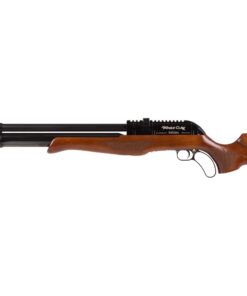
Great for hunting woodchucks, nutria, possums, rats, raccoons, crows and similar-sized pests. If you like to hunt and do it extensively, then the Seneca Recluse II .357-caliber air rifle with a 500cc reservoir will give you lots of shots.

Seneca Recluse II Air Rifle Features

  • Pre-charged pneumatic (PCP)
  • Single-shot
  • Bolt-action with longer cocking handle
  • Rifled steel barrel (0.3543″ to 0.359″ diameter)
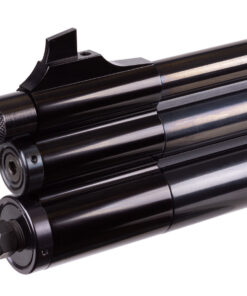
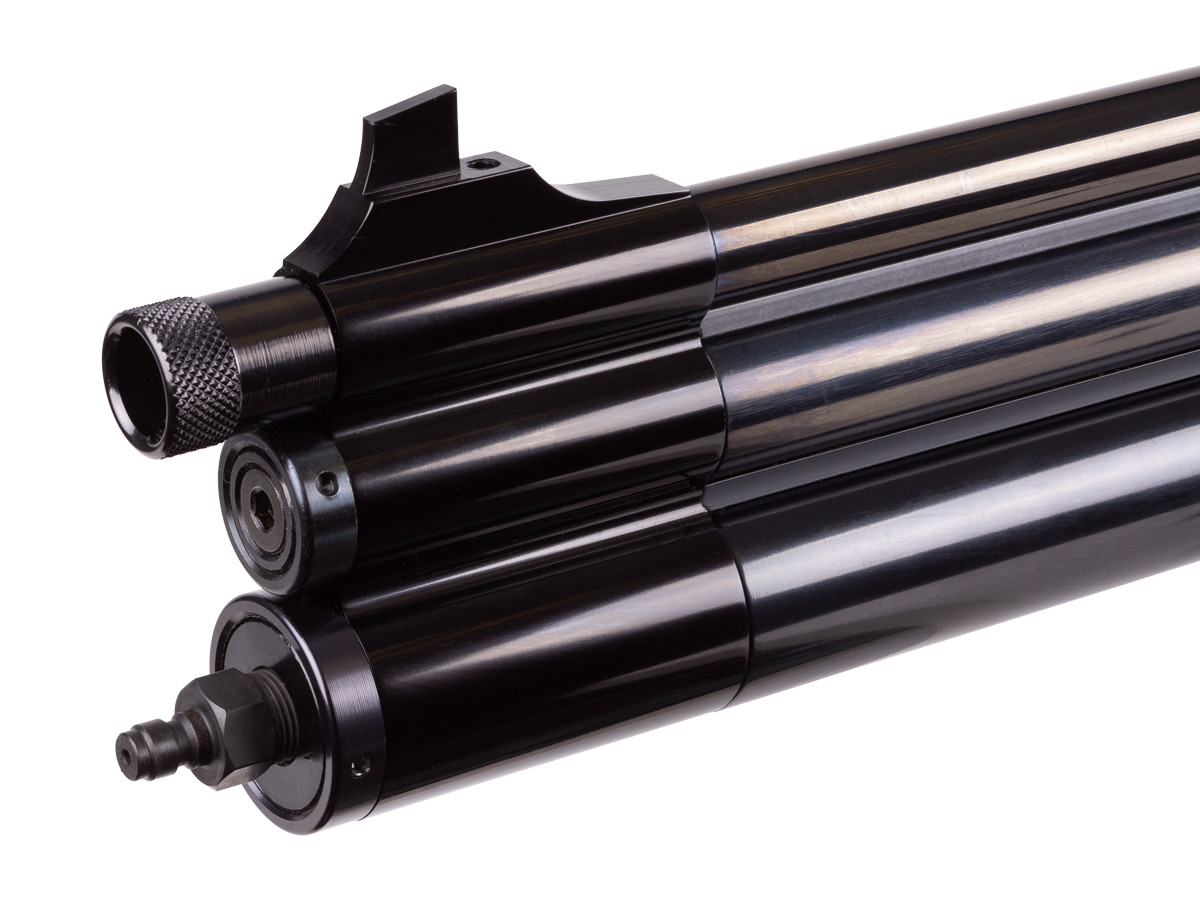
  • Dual air reservoir (500cc total air capacity)
  • 11mm scope rail (use only compact scopes)
  • 2 power levels (first bolt stop is low power, second is high)
  • Fixed front sight
  • Fully adjustable, removable rear sight
  • Up to 890 FPS with 126 grain slugs
  • Up to 220 FPE with 126 grain slugs
  • Up to 210 FPE (over 500 FPS) with Seneca Air Bolts
  • 3000 psi max fill pressure
  • Built-in manometer (air pressure gauge)
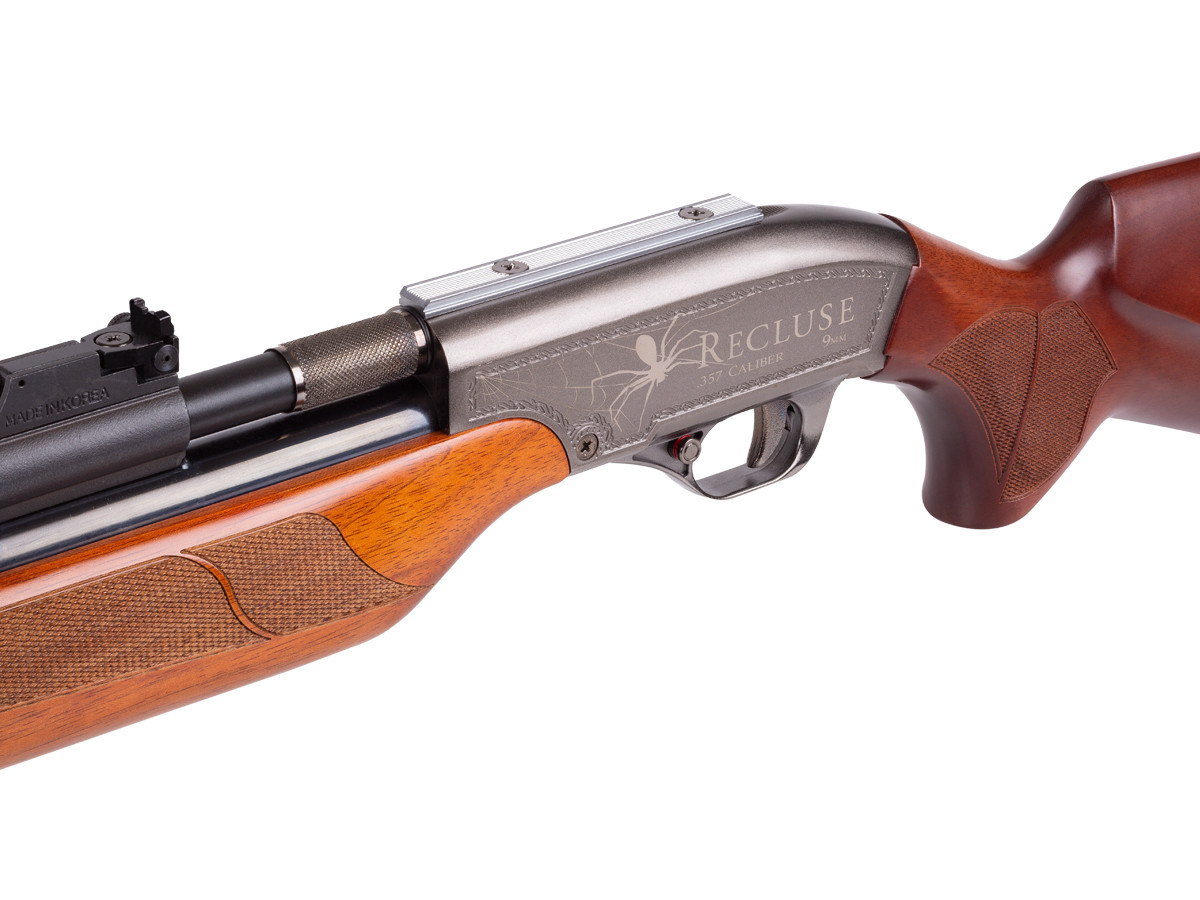
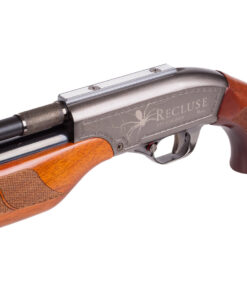
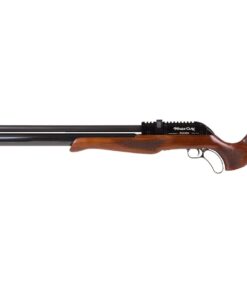
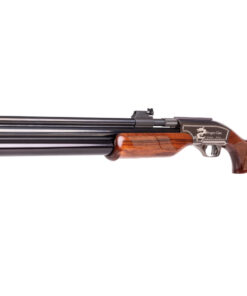
  • Hardwood Monte Carlo stock with checkered forearm & grip
  • Raised right-hand cheekpiece
Click here for California's Proposition 65 warning. Click here for California’s Proposition 65 warning.
Specs
  • ManufacturerSeneca
  • Caliber .357
  • Velocity 890 fps
  • Condition New
  • Ammo Type Pellets
  • Action Bolt-action
  • Barrel Style Rifled
  • Fire Mode Single-shot
  • Gun Weight 8.50
  • Overall Length 42.10
  • Barrel Length 21.65
  • Loudness 5-High
  • Magazine Capacity 1
  • Mechanism Pre-charged pneumatic
  • Rail 11mm dovetail
  • Safety Manual
  • Front Sights Blade & Ramp
  • Rear Sights Adjustable for windage & elevation
  • Shots per Fill 8
  • Use Hunting
  • Warranty 1-year limited warranty

Seneca Recluse II Dual Tank .357 Cal: Big-Bore PCP Hunting Power

Serious knockdown energy is delivered by the Seneca Recluse II Dual Tank .357 cal, a pre-charged pneumatic hunting rifle that is built around dual air reservoirs and an upgraded action. Consequently, medium and larger game can be engaged with slugs or Air Bolts when local laws and ethical shot placement are observed. Moreover, classic hardwood lines are retained while internal power is increased, so field presence and stopping power are combined in one platform.


Why the Seneca Recluse II Dual Tank .357 Cal Is Chosen

Confidence in the field is inspired by a design that is refined rather than reinvented. Therefore, hunters who already know the original Recluse feel immediately at home. In addition, two selectable power stops are offered by the longer bolt handle, so shot count or maximum energy can be prioritized on demand. Furthermore, compact optics can be mounted on the 11mm dovetail, while iron sights remain available when a scope is left in the pack.

Highlighted Product Features

  • Dual air reservoir totaling 500 cc is provided for extended air supply
  • Maximum fill pressure of 3000 PSI / 206 BAR is supported
  • Muzzle velocity of up to 890 FPS is achieved with 126-grain slugs
  • Muzzle energy of up to 220 FPE is generated with those slugs
  • Air Bolt performance of over 500 FPS and about 210 FPE is produced with 375-grain Seneca Air Bolts
  • Two power levels are selected by the first or second bolt stop
  • Rifled steel barrel (approx. 0.3543″–0.359″ groove diameter) is fitted
  • Hardwood Monte Carlo stock with checkered forearm and grip is used
  • Raised right-hand cheekpiece is shaped for a consistent sight picture
  • Built-in manometer and Foster male quick-disconnect fitting are included
  • Manual safety, blade-and-ramp front sight, and fully adjustable removable rear sight are supplied
  • Overall length of 42.1″ and barrel length of 21.65″ are measured
  • Unloaded weight of about 8.5 lb is carried

Power, Caliber, and Dual-Tank Capacity

Authoritative energy in .357 (9 mm) is produced because slugs in the 126-grain class can be driven to the advertised 890 FPS window. As a result, up to 220 foot-pounds can be placed on target when high power is selected. Likewise, heavy Air Bolts can be launched at more than 500 FPS, so another ethical hunting option is opened for users who prefer that projectile style.

Meanwhile, air volume is doubled by the twin reservoirs. Consequently, more usable shots per fill are stored than on a single-tank sibling. Typically, a modest string of full-power hunting shots is available, after which additional lower-power shots can still be taken for practice or closer pest work. Because the valve is unregulated, velocity naturally declines as pressure falls; therefore, a pressure gauge is watched so the sweet spot for hunting ammo is respected.

Dual Power Settings Explained

Low power is engaged when the bolt is drawn only to the first stop. Subsequently, more shots per fill are obtained and recoil is slightly reduced. High power is engaged when the bolt is drawn fully rearward. Thereafter, maximum energy is released for the heaviest game the caliber and local regulations allow. Thus, one rifle can be adapted to range time or a stalk without tools.


Stock, Handling, and Optics

A traditional Monte Carlo hardwood stock is fitted so recoil is absorbed and a raised cheek weld is offered to right-handed shooters. Additionally, checkering is cut into the pistol grip and forend so a secure hold is maintained in wet weather. A rubber buttplate is attached so shouldering remains comfortable during longer sits. Although the platform is right-oriented, inclusive use is still possible when a compact optic is zeroed and stance is adjusted.

Furthermore, an 11 mm dovetail rail is machined for compact scopes only; oversized optics are avoided so balance and bolt clearance are preserved. Iron sights can be left in place or removed once a scope is preferred. In the same way, a manual safety is positioned for deliberate engagement before every shot.


Practical Field Use and Responsible Ownership

Hunting of appropriate-sized game is the intended role of the Seneca Recluse II Dual Tank .357 cal when every shot is placed with care. Therefore, local airgun hunting laws, FAC or licensing rules, and landowner permission must be confirmed before the rifle is taken afield. Moreover, hearing protection is strongly recommended because report is rated high.

Accuracy potential is realized when quality slugs or bolts that match the groove diameter are selected and a consistent rest is used. Afterward, groups can be tightened at typical hunting distances once the preferred power stop and fill pressure are mapped. Maintenance remains straightforward: a dry-fire-safe action is specified by many retailers, Foster fills are completed to 3000 PSI maximum, and the gauge is monitored so overfill is avoided.

Transition from range to woods is simplified because the same rifle can send practice slugs on low power and hunting slugs or bolts on high power. Consequently, familiarity with trigger break (approximately 7.5 lb, single-stage) and cocking effort is built before a live hunt.


Who This Rifle Serves

Enthusiasts who want classic wood-and-steel looks with modern big-bore energy are served by this model. Similarly, hunters who value selectable power and Air Bolt versatility find a practical tool. Inclusive language applies throughout: any responsible adult shooter who can legally own a high-power PCP, who can manage the weight and length, and who will follow safety and game laws can put the platform to work.

Calibres, FAC, Power and Accessories for the Seneca Recluse II Dual Tank .357 Cal

A single dedicated calibre is used by the Seneca Recluse II Dual Tank .357 cal, so projectile choice, legal classification, and accessory pairing are all built around that 9 mm big-bore platform. Consequently, hunters and target shooters can plan ammo, paperwork, and add-ons with fewer variables than on a multi-calibre rifle. Moreover, inclusive language applies throughout: any responsible adult who can legally own a high-power PCP and who will follow local rules can put this combination to work.


Calibre and Compatible Projectiles

Only .357 calibre (9 mm) is chambered in this model. Therefore, groove diameter is specified in the approximate range of 0.3543″ to 0.359″, and projectiles that match that window are required for safe, accurate use. In addition, three projectile families are commonly employed.

Highlighted Calibre and Ammo Notes

  • A single-shot .357 / 9 mm chamber is provided; no other factory calibre is offered
  • Slugs of about 126 grains are used for the advertised 890 FPS and 220 FPE window
  • Heavier hunting slugs and cast bullets in the same diameter band can be tested once pressure and power stop are mapped
  • Seneca / Air Venturi Air Bolts of about 375 grains can be launched at over 500 FPS, producing around 210 FPE
  • Round balls and lighter pellets may be fired, yet energy and trajectory will differ from slug figures
  • Consistent seating and a clean rifled barrel are required so grouping is not wasted

Because the action is single-shot, each projectile is loaded individually. Subsequently, a deliberate rhythm is established in the field, and mixed ammo types can be swapped without a magazine change. Furthermore, Air Bolts turn the same barrel into a short-range hunting arrow launcher when that style is preferred and legal.


FAC, Power Levels, and Legal Context

High muzzle energy is produced by the Seneca Recluse II Dual Tank .357 cal. As a result, classification under UK FAC (Firearms Certificate) rules is typically required where the 12 ft-lb air-rifle limit is exceeded. Likewise, other jurisdictions apply their own energy, licensing, or hunting statutes. Therefore, local law is confirmed before purchase, fill, or use; no assumption of “airgun-only” status should be made.

Power itself is unregulated. Consequently, velocity falls as reservoir pressure declines from the 3000 PSI / 206 BAR maximum fill. Two mechanical stops on the longer bolt handle are used to select output:

  • The first bolt stop engages low power, so more shots per fill and slightly milder recoil are obtained
  • The second (full) stop engages high power, so maximum energy for hunting slugs or Air Bolts is released

Typically, a short string of full-power hunting shots is available from the 500 cc dual tanks, after which additional lower-power shots can still be taken. Meanwhile, the built-in manometer is watched so the preferred pressure band for a given slug or bolt is respected. Inclusive practice means every user—regardless of experience—treats fill pressure, power stop, and legal limits as part of the same safety checklist.

Reported factory figures remain the planning baseline: up to 890 FPS and 220 FPE with 126-grain slugs, and about 210 FPE with 375-grain Air Bolts above 500 FPS. Real-world numbers vary with pellet weight, temperature, and fill, so a chronograph session is recommended after the rifle is received.


Accessories That Complete the Rifle

A compact accessory list is enough because the platform is already hunting-ready. However, optics, fill gear, and projectile support make the Seneca Recluse II Dual Tank .357 cal more versatile.

Optics and Sights

An 11 mm dovetail rail is machined for compact scopes only. Therefore, oversized or long-eye-relief optics that crowd the bolt or unbalance the 42.1″ rifle are avoided. Factory iron sights remain useful: a fixed blade-and-ramp front sight is paired with a fully adjustable, removable rear sight for windage and elevation. Subsequently, a scope can be added for low-light or longer shots while iron sights stay as backup.

Fill, Air, and Field Support

A Foster male quick-disconnect is fitted, so a standard PCP hose and a compressor or carbon tank can be used up to the 3000 PSI limit. In addition, a quality filter and dry air are advised so the unregulated valve stays consistent. A bipod or sling is often added by owners; factory sling studs are not always present, so aftermarket furniture or a barrel-band / forend mount may be required. Hearing protection is strongly recommended because report is rated high.

Projectiles and Support Gear

A supply of diameter-correct .357 slugs and, where wanted, Seneca Air Bolts should be kept with the rifle. Likewise, a small kit of patches, a suitable jag, and manufacturer-approved lubricant keeps the rifled 21.65″ barrel clean. A compact shooting rest or sticks helps groups to be verified before a hunt. Inclusive setup means left- or right-leaning shooters can still run a compact optic and a stable rest even though the Monte Carlo cheekpiece is raised for right-handed weld.


Putting Calibre, Power, and Accessories Together

A coherent hunting system is formed when .357 slugs or Air Bolts, the correct FAC or local licence, the chosen power stop, and compact accessories are planned as one package. Moreover, ethical range and shot placement remain the user’s responsibility regardless of advertised FPE. Transition from paperwork to first fill is smoother when a reputable dealer supplies the rifle, a compatible fill adapter, and diameter-matched ammo.

Finally, warranty terms (commonly one year limited) and spare parts availability should be confirmed at purchase. Thus, the Seneca Recluse II Dual Tank .357 cal is kept in service as a dedicated big-bore PCP rather than a multi-role experiment. Responsible ownership, legal compliance, and matched accessories are what turn published energy figures into clean, repeatable field results.

Finally, a limited manufacturer warranty (commonly one year) is typically provided. Therefore, purchase from a reputable dealer is advised so support and genuine parts remain available.

When knockdown authority, dual-tank capacity, and traditional handling are required in .357, the Seneca Recluse II Dual Tank .357 cal is positioned as a focused hunting PCP. Ethical use, correct ammo, and legal compliance remain the foundation of every successful outing.

Snowpeak Airguns, PCP Rifles, Air Pistols and Umarex Airguns

For shooters researching Snowpeak airguns, Snowpeak Sports, and the wider Snowpeaks product range, there are many PCP rifles, air pistols, and shooting accessories to consider. Popular searches include the Snowpeak AP900, Snowpeak AP900B PCP air rifle, Snowpeak MAX 1, Snowpeak MAX 1 price, Snowpeak PP750, PP750, Snow Peak PP750, and PP750 air pistol. Buyers also regularly compare models such as the Snowpeak P35, P35, P 35, PCP P 35, Snowpeak P35X, P35X, P35X PCP, and Snowpeak P35 vs P35X.

Other Snowpeak models attracting attention include the Snow Peak PP20, Snowpeak PP20, Snowpeak M25, M25 rifle, M-25, M25 weapon, Snowpeak M60, Snowpeak M60B, M 60B, rifle M60, rifle M50, and M50 rifle. Searches such as Snow Peak brand origin are also common among buyers who want to understand the manufacturer before choosing a rifle or pistol.

Snowpeak PCP Models and Related Airgun Searches

The PCP category covers everything from compact pistols to full-size hunting and target rifles. Searches frequently include PR900 Gen 3, CR650, SR 1000X, T Rex 6000, and pistolet PCP Arcea-Snowpeak Onix Sport. People comparing pneumatic platforms may also search what is a PCP airgun, air gun, air rifle, pellet pistol, air gun accessories, 9mm pellet, and pellet 9mm.

Some search phrases overlap with firearm terminology even when shoppers are researching airgun products. These include rifle M60, how much did the M60 weigh, rifle M50, M50 rifle, M25 weapon, and snowfall gun. Therefore, model specifications should always be checked carefully so that a historical firearm search is not confused with a modern sporting airgun product.

Umarex Airguns, Air Rifles, Pistols and PCP Platforms

Alongside Snowpeak products, Umarex USA, UmarexUSA, Umarex airguns, and Umarex air rifles are widely searched by recreational shooters, target shooters, and PCP enthusiasts. The Umarex range includes PCP rifles, CO₂-powered platforms, break-barrel pistols, BB guns, airsoft replicas, and large-caliber airgun systems.

Popular PCP searches include Umarex Notos, Umarex Notos Carbine, Umarex Gauntlet, Umarex Gauntlet 2, Umarex Gauntlet 30, Umarex Zelos, Umarex Origin, Umarex Komplete, and Umarex Komplete NCR .22. Hunters researching larger airgun platforms may also encounter the Umarex Hammer, Umarex Hammer .50 caliber, Umarex Hammer Carbine, Umarex Primal 20, and Umarex AirSaber.

Umarex Pistols, BB Guns and T4E Models

For handgun-style platforms, popular searches include Umarex BB gun, BBgun, BB gun pistol, metal BB gun, Umarex TR50, Umarex HDR 50, Umarex T4E, Umarex T4E Smith, Umarex Smith, and Umarex P2P DR50 how many joules.

Glock-style replicas remain another major category. Search terms include Glock BB gun, Glock 19 BB gun, Umarex Glock 19, Umarex Glock 19X, Umarex Glock 19 Gen3 .177 caliber BB gun air pistol, Umarex Glock 17, Umarex Glock 17 Gen 5, Umarex Glock, airsoft Glock, airsoft Glock 19, Glock 17 airsoft, and Glock airsoft gun.

Other replica and recreational searches include Umarex MP40, Umarex MP5, Umarex Legends, Umarex HK Heckler, Umarex shotgun, and airsoft pistol.Umarex DX17.

Break-Barrel and Sporting Umarex Airguns

Shooters looking for spring or gas-piston platforms frequently research the Umarex Trevox, loading Umarex Trevox break barrel .177, Umarex pistol break barrel, Umarex Fusion 2, Umarex Synergis Elite, and Amazon Umarex Browning 800 Express. These platforms provide alternatives for people who want an airgun without relying on a high-pressure PCP charging system.

Additional searches across the Umarex catalog include Umarex H, while broader terms such as air rifle, pellet pistol, air gun, and air gun accessories help buyers compare platforms, ammunition, optics, filling equipment, targets, cases, and other shooting equipment.

Whether the focus is a Snowpeak M60, Snowpeak M25, Snowpeak P35X, Snowpeak PP750, Snowpeak MAX 1, Umarex Notos, Umarex Gauntlet 2, Umarex Origin, or Umarex Hammer Carbine, buyers should compare caliber, operating system, power level, dimensions, intended use, and local regulations before selecting an airgun.

Practical Use Scenarios in the Field

Everyday hunting and practice routines are shaped by a dual-reservoir .357 PCP that is charged to a high fill pressure, offered in two mechanical power stops, and loaded one projectile at a time. Consequently, each outing is planned around air remaining in the tanks, the weight of the slug or bolt that will be seated, and the distance at which an ethical shot can be taken. Moreover, inclusive language applies throughout: any responsible adult who can legally possess a high-power air rifle, who can manage the length and mass of a wood-stocked hunting piece, and who will follow local game laws can adapt the same habits.


Dawn Sits Over Known Travel Lanes

A still morning is used so movement along a field edge or creek bottom can be observed before the wind rises. Therefore, the rifle is filled the night before, the gauge is checked at first light, and high power is selected only when a clear, broadside opportunity is expected. Meanwhile, a compact optic that does not crowd the bolt is already zeroed, so the first legal shot is not spent confirming holdover.

Low light is managed by a rest against a pack or sticks. Subsequently, trigger press is kept slow because the break is relatively heavy by design. After the shot, the single-shot action is opened only when the animal’s reaction has been watched. If a follow-up is required, a second slug is seated without haste; air is not wasted on a rushed cycle. Hearing protection remains in place even on a quiet farm, because report is high and nearby livestock or neighbors may be startled.

Highlighted Dawn-Sit Habits

  • A full fill is completed at home so field topping is avoided in the dark
  • High power is reserved for the first ethical opportunity
  • A compact scope and iron-sight backup are both confirmed before first light
  • A stable rest is used so the 8-plus-pound rifle does not wobble on a cold shoulder
  • The gauge is glanced at after the shot so remaining hunting pressure is known

Midday Pest and Property Work

Closer work on agricultural pests is often handled on the first bolt stop. As a result, more shots per fill are obtained and recoil is slightly reduced while energy remains far above typical small-game airguns. In addition, heavier slugs can still be used if the animal is larger than a groundhog, provided local rules allow that use.

A walking route around barns, orchards, or irrigation ditches is planned so the sun stays at the shooter’s back when possible. Furthermore, a removable rear sight can be left in place if brush is thick and a scope might snag. Inclusive practice means a second family member who is licensed can be handed the same rifle after a brief reminder of the two bolt stops; the raised cheekpiece favors a right-hand weld, yet a compact optic and a short length of pull still allow others to take a careful shot from sticks.

Transition from pest shot to refill is made at a vehicle, not in a paddock. Consequently, dry air and a Foster hose are kept in a case so moisture is not introduced after a humid walk.


Stalking Timber and Thick Cover

Wooded stalks favor the traditional stock and the option to drop to iron sights. Therefore, the optic can be left in the pack when branches are tight. Moreover, low power may be chosen for the first twenty yards of a close approach so a miss does not send a full-power slug through cover at an unsafe angle.

Because the action is single-shot, the stalk is paused before the bolt is worked. Noise from the longer cocking handle is accepted as part of the platform; a hurried cycle is avoided. Afterward, the animal is given time to settle if it has only been alerted, not struck. Ethical range inside timber is kept short. Heavy .357 slugs retain energy, yet brush deflection remains a real risk, so a clear lane is required.

Air Bolts are sometimes preferred in this setting when regulations and landowner rules allow an arrow-style projectile. Subsequently, trajectory is learned on the range first; a bolt that is launched above 500 feet per second still drops and drifts, and a second bolt cannot be sent as quickly as a magazine-fed pellet. Inclusive hunting parties brief every participant on which projectile is loaded before anyone moves.


Open-Field Shots and Wind

Longer grass and crop edges demand that holdover and wind drift be known for the chosen slug weight. Consequently, a chronograph session at the same fill pressure used in the field is completed before the season. High power is typically selected so the advertised energy window with mid-weight slugs can be approached. Meanwhile, the unregulated valve means later shots in the string are slower; therefore, the first two or three full-power shots are treated as the hunting pair, and later shots are reserved for practice or closer work.

A bipod or pack rest is used because freehand groups at hunting distance waste both air and opportunity. Furthermore, a sling may be added even if factory studs are absent, using aftermarket furniture so the rifle can be carried across a long walk without a cramped grip on the checkered forend.

Wind flags or grass movement are read before the shot, not after. Inclusive coaching on a shared property includes showing newer shooters how pressure drop changes point of impact, so two people do not argue over a “cold barrel” when the tanks are simply lower than the zero session.


Range Days That Prepare the Hunt

Practice is structured so hunting habits are rehearsed, not just groups shot. Therefore, the same slugs that will be carried afield are used. Low power is employed for a longer string to learn trigger and follow-through. High power is then used for a short string that mimics a morning sit. Afterward, the rifle is refilled and the process is repeated until the gauge reading that still produces ethical energy is memorized.

A clean barrel and consistent seating depth are maintained between strings. In addition, hearing and eye protection are worn for every shot. Dry-firing, where the maker indicates it is safe, can be used to confirm trigger feel without wasting air, yet live confirmation with a chronograph remains the standard before any hunt.

Air Bolts receive their own session. Trajectory cards or simple hold marks are recorded. Subsequently, a quiver or side mount is tested so a bolt is not fumbled when gloves are worn. Inclusive range time means a companion can run the timer or spot impacts while the shooter stays behind the rifle; the heavy trigger and manual safety are treated as features, not flaws, during that coaching.

Highlighted Practice Structure

  • Matching ammo to the field load is required so zeros are not theoretical
  • Low-power strings are used to build repetitions per fill
  • High-power strings are kept short to mirror hunting air use
  • Gauge readings that still produce ethical energy are written down
  • Bolt and slug zeros are kept on separate notes so they are not mixed

Weather, Carry, and End-of-Day Care

Rain and cold change both wood handling and point of impact. Consequently, the checkered grip is valued when gloves are wet, and the rubber buttplate is kept against a padded shoulder so a long sit does not bruise. The rifle is not left charged at maximum pressure in a hot vehicle for hours; temperature swings affect both air density and seals. After the day, residual moisture is wiped from steel, the Foster fitting is capped, and the tanks are left at a moderate storage pressure according to the owner’s usual PCP routine.

A single-shot cadence also shapes packing. Extra slugs or bolts are carried in a pocket that can be opened quietly. A small cleaning kit rides in the vehicle, not on the belt, so the barrel is not neglected after muddy crawls. Inclusive camp rules assign one person to confirm that the safety is on and the chamber is empty before the rifle is cased.


Ethical Limits and Shared Land

Energy figures on paper are not a licence to take every animal that appears. Therefore, body size, angle, and distance are judged against the projectile in the barrel at that moment. High power and a heavy slug are reserved for shots that can be placed in the vital zone with a rest. Low power is not used as an excuse for a longer poke at large game. Local seasons, licensing, and FAC or equivalent paperwork—where they apply—are completed before the first fill of the trip.

Shared land requires extra communication. Moreover, neighbors are informed that a loud PCP may be in use. A missed shot is followed by a search, not a shrug. Inclusive groups agree in advance who shoots, who spots, and who stays off the gun when an animal is down.


From Fill to Last Light

A complete practical cycle looks like this: air is supplied to the dual tanks at home; the preferred power stop is chosen for the day’s terrain; a diameter-correct slug or a tested bolt is seated only when a shot is imminent; the rest is built; the shot is pressed; the animal is watched; the gauge is read; and the rifle is made safe before anyone walks forward. Consequently, the limitations of an unregulated, single-shot big bore become a discipline rather than a surprise.

When those habits are repeated, the platform earns its place on mixed farms, timber edges, and prepared ranges. Transition words of the hunt—wait, confirm, press, watch—matter more than any brochure claim. Responsible, inclusive use is what turns stored air and a heavy .357 projectile into a clean, legal result at the end of the day.

Frequently Asked Questions

Clear answers are provided below so first-time owners and experienced hunters can plan fills, ammo, and legal use without guesswork. Consequently, each reply is written in a way that any responsible adult who can legally own a high-power PCP may apply the same habits. Moreover, inclusive language is used throughout: shared land, family members with licences, and mixed skill levels are all assumed to be possible.


Air Supply, Fills, and Shot Count

How is air stored and how high may a fill be taken?

Air is stored in a pair of reservoirs that together hold about half a litre. Therefore, a larger usable volume is available than on a single small tube of similar length. A maximum working pressure of 3000 PSI (about 206 BAR) is specified by typical factory guidance. Subsequently, a Foster-style male fitting is used so a standard PCP hose can be attached. Overfill is avoided because seals and valves are rated to that ceiling. In addition, a built-in gauge is watched during every fill so the tanks are not left guessing.

How many hunting shots can be expected from one fill?

A short string of full-power shots is typically available when the second bolt stop is used and heavy slugs are seated. Afterward, additional lower-power shots can still be taken as pressure falls, because the valve is unregulated. Exact counts vary with temperature, slug weight, and how far the bolt is drawn. Consequently, a chronograph session at the same fill used in the field is recommended so the pressure band that still produces ethical energy is known. Inclusive practice means a hunting partner can log gauge readings while the shooter focuses on groups.

Must the tanks be emptied after every range day?

A moderate storage pressure is preferred by many PCP owners rather than a complete dump after every session. However, a full 3000 PSI charge should not be left in a sealed hot vehicle for hours. Temperature swings change both density and stress on seals. Therefore, local climate and maker guidance are followed. Dry, filtered air is used at every fill so moisture is not introduced into the reservoirs.


Calibre, Projectiles, and Power Stops

Which projectiles are appropriate?

A dedicated .357 (9 mm) groove is cut, with a typical diameter window of roughly 0.3543″ to 0.359″. Therefore, slugs and bullets that match that band are required. Mid-weight slugs near 126 grains are the load around which advertised velocity and energy figures are usually quoted. Heavier hunting slugs may be tested once pressure and power stop are mapped. In addition, purpose-made air bolts of about 375 grains can be launched at high speed, producing energy in a similar hunting class when that projectile style is legal. Light pellets and round balls may be fired, yet trajectory and terminal performance will differ.

How are the two power levels selected?

Low power is engaged when the bolt is drawn only to the first stop. Subsequently, more shots per fill and slightly milder recoil are obtained. High power is engaged when the bolt is drawn fully rearward. Thereafter, maximum energy for hunting slugs or bolts is released. No tools are required. Inclusive coaching includes a physical demonstration of both stops before a new licensed shooter is left alone with the rifle.

Is the action regulated?

A regulator is not fitted. Consequently, velocity declines as reservoir pressure falls. The first shots after a full fill are the fastest; later shots are slower. That behaviour is planned for, not treated as a defect. A written note of gauge reading versus impact is kept so holdover is not blamed on “the barrel” when the tanks are simply lower than the zero session.

What energy and speed are commonly cited?

With slugs in the mid-weight class, velocities approaching 890 feet per second and energies approaching 220 foot-pounds are widely published. With heavy air bolts, speeds above 500 feet per second and energies near 210 foot-pounds are similarly cited. Real-world numbers depend on ammo, temperature, and fill. Therefore, published figures are treated as a planning ceiling, not a guarantee on every shot.


Handling, Sights, and Accessories

Can a large scope be mounted?

An 11 mm dovetail is provided for compact optics only. Oversized tubes that crowd the bolt handle or unbalance the rifle are avoided. Iron sights remain available: a fixed blade-and-ramp front sight is paired with a fully adjustable, removable rear sight. Subsequently, a scope can be added for low light while irons stay as backup. Inclusive setup still works for shooters who prefer a shorter eye relief or who share the rifle, provided the optic stays compact.

How is the stock oriented?

A hardwood Monte Carlo stock with a raised right-hand cheekpiece is fitted. Checkering is cut into the grip and forend. A rubber buttplate is attached. Left-leaning shooters can still use a compact optic and a rest, yet the comb is shaped for a right-side weld. Weight is typically in the mid-eight-pound class and overall length is a little over 42 inches, with a rifled barrel of about 21.65 inches. A sling or bipod is often added by owners; factory sling studs are not always present, so aftermarket mounts may be required.

Is the rifle quiet?

Report is rated high. Hearing protection is therefore recommended on every shot, including pest work near buildings. Neighbours and livestock should be considered before high power is used at dawn.

Highlighted Owner Checks

  • Legal classification and hunting permission are confirmed before the first fill
  • Diameter-correct slugs or tested bolts are the only projectiles seated
  • Gauge readings that still produce ethical energy are written down
  • Compact optics and hearing protection are treated as standard kit
  • The manual safety and empty chamber are verified before transport

Who is this platform for?

Hunters and practice shooters who accept a single-shot rhythm, an unregulated power curve, and a traditional wood stock are served. Pest work, timber stalks, and prepared sits can all be completed when air, ammo, and law are aligned. Newer licensed shooters can be included when both bolt stops, the heavy trigger, and the loud report are explained in person. Conversion from curiosity to a planned outing happens when those limits are respected rather than fought.

Finally, questions that remain after these answers—local seasons, exact slug brands that group in a given barrel, or suppressor-adapter legality—are taken to a qualified dealer and to the statutes that apply at the place of use. Responsible, inclusive habits are what turn stored air and a heavy .357 projectile into repeatable, legal results.

Caliber

.357,, .357

Reviews

There are no reviews yet.

Be the first to review “Seneca Recluse II Dual Tank .357 cal”

FAQ

  • Spring-Piston (Break-Barrel or Underlever): Cock by compressing a spring. Reliable, no external air source needed, but can have more recoil (“spring twang”) and require technique to shoot accurately.
  • Pre-Charged Pneumatic (PCP): Filled from a scuba tank, compressor, or pump. High power, low recoil, multiple shots per fill. Popular for precision and hunting.
  • CO₂: Powered by disposable cartridges. Good for pistols and semi-auto/repeaters, but performance drops in cold weather.
  • Multi-Pump Pneumatic: Hand-pumped to build pressure. Versatile but requires effort.
  • Gas Ram (Nitro Piston): Uses compressed gas instead of a metal spring. Smoother than traditional springers.

Calibers: Most common are .177 (4.5mm) for speed/flat trajectory and general use, and .22 (5.5mm) for better hunting knockdown power. Larger “big bore” (.25, .30, .357+) exist for hunting bigger game where legal.

Yes, many modern PCP and springers deliver enough energy for small game (rabbits, squirrels, birds) and even larger game in some areas. Muzzle energy (in ft-lbs or joules) matters more than velocity alone. Always match caliber, pellet weight, and energy to the game and check local hunting regs.

Treat every airgun as if it is loaded.

  • Always point the muzzle in a safe direction.
  • Keep your finger off the trigger until ready to shoot.
  • Know your target and what is beyond it (pellets can ricochet or travel far).
  • Wear eye protection.
  • Store unloaded, out of reach of children/untrained users, and ideally locked.
  • Never shoot at hard surfaces or in areas where pellets could escape your property.

Follow these rules strictly—airguns cause real injuries.

Laws differ dramatically by country, state/province, and even city. Always verify current local laws before buying, owning, transporting, or using an airgun. Age restrictions (often 18+) are common.

Examples (summaries only; check official sources):

  • UK: Air rifles ≤12 ft-lbs (16.3 joules) and pistols ≤6 ft-lbs generally do not require a license (FAC needed above that).
  • USA: Varies by state. Some treat powerful airguns as firearms; others do not. Many states now allow big-game hunting with air rifles.
  • Canada: Some airguns classified as firearms if they exceed velocity/energy thresholds.
  • Australia: Often treated as firearms; licensing/registration required in most states.
  • EU/France/Belgium/etc.: Varies; many allow low-power (<20J) guns freely to adults, with higher power needing permits. Germany has strict ~7.5J limits in some contexts.
  • Other countries: Some have no restrictions below certain energies; others ban or heavily regulate them.

Resources: Wikipedia “Air gun laws”, airgun forums, or official government sites. For travel, research transit laws carefully.

Consider:

  • Purpose: Plinking/backyard → lower power springer or CO₂. Hunting/precision → PCP.
  • Budget: Entry-level springers are affordable; PCPs need a fill system (extra cost).
  • .177 vs .22: .177 easier for beginners/targets; .22 better for hunting.
  • Power source: Convenience vs performance.
  • Test pellets in your gun—accuracy varies.

Buy from reputable dealers and consider warranties.

  • Clean barrel periodically (especially if accuracy drops) with patches and appropriate tools/solvents. Avoid over-oiling.
  • Lubricate moving parts and seals with airgun-specific oil (not general gun oil). Springers need piston seal oil occasionally.
  • Check screws, seals for leaks (PCP), and safety mechanisms regularly.
  • Store in a cool, dry place, ideally in a case. Avoid leaving cocked for long periods.

Follow your model’s manual. Basic care extends life significantly.

International shipping may be available for select products. Customers are responsible for understanding and complying with their local import laws and regulations before ordering.

Yes. Customers are required to confirm their order number through WhatsApp or Live Chat before orders are processed and shipped.

If local laws prevent shipment to your area, your order may be canceled and refunded according to our store policy.

Processing typically takes 1–3 business days after payment confirmation. Delivery times vary depending on destination, carrier, and product availability.


  • Wrong pellets for your barrel/caliber.
  • “Death grip” or poor shooting form (especially with springers—let the gun recoil naturally).
  • Loose scopes or mounts.
  • Ignoring safety or local laws.
  • Over-oiling or shooting with obstructions.


Pellets are the most common projectile (lead or lead-free). Match them to your gun, caliber, and purpose—test several brands as accuracy varies by barrel.

  • Domed (Round-Head): Best all-rounder. Excellent accuracy, ballistic coefficient, and energy retention. Ideal for target shooting, field target, and general hunting (e.g., JSB Exact, Air Arms Diabolo Field, H&N Field Target Trophy).
  • Wadcutter (Flat-Head): Clean holes in paper. Best for close-range target/plinking (under 20-25 yards).
  • Hollow Point: Expands on impact for better energy dump. Good for small game hunting (e.g., Predator Polymag, H&N Terminator).
  • Pointed: More penetration, but often less accurate than domed.
  • Slugs: Heavier, more aerodynamic for high-power PCPs at longer ranges (better for big game where legal).

Tips: Heavier pellets in .22/.25 for hunting (better momentum). Lighter in .177 for speed/flat trajectory. Always check head size fit (e.g., 4.51-4.53mm variants).

Muzzle energy (ft-lbs or joules) matters more than velocity. Ethical shots require precise placement (head/heart-lung) within effective range.

Rough Guidelines (adjust for distance, pellet, and local laws):

  • Small game (squirrels, rabbits, birds): 9-20+ FPE, .177/.22.
  • Medium (raccoons, etc.): 25+ FPE, .22/.25 recommended.
  • Larger game: 40-100+ FPE in .30+ calibers (up to big bore for deer/hogs where permitted).

PCPs dominate serious hunting due to power and shot count. Springers/gas rams work well for small game but require skill. Always prioritize clean kills and check seasons/species rules.

  • Barrel Cleaning: Use a pull-through kit or rod with patches. Avoid brushes that could damage rifling. Clean when accuracy drops or after 500-1000 shots.
  • Lubrication: Airgun-specific silicone oil for seals/O-rings (sparingly—excess causes dieseling in springers). Springers may need piston lube periodically.
  • PCP Specific: Check for leaks (soapy water test), monitor regulator/hammer settings, and keep fill systems clean. Don’t exceed rated pressure.
  • General: Tighten stock screws, inspect for wear, store properly. Chronograph shots to track consistency.

Common Issues:

  • Inconsistent velocity → dirty barrel, bad pellets, or seal problems.
  • Spring “twang” → tuning or proper hold.
  • Low power → worn seals or under/over-pumping.

Toggle Content

  • Scopes: Airgun-rated (hold zero under recoil). 3-9x or 4-12x common.
  • Fill Systems: Hand pumps, compressors, or tanks for PCPs.
  • Safety Gear: Eye/ear protection, targets with backstops.
  • Noise: Airguns quieter than firearms, but moderators help further.

Budget Tip: Start with a quality springer (~$150-400) before investing in PCP setup.

Airgunning offers endless depth—from backyard plinking to precision competition and ethical hunting. Prioritize safety, legality, and practice. If you want specifics (e.g., recommendations for a country, budget, hunting small game, or a particular type like PCP vs springer), let me know for more targeted info! Shoot responsibly.

Tuning improves accuracy, reduces noise/recoil, or increases power (within legal limits).

  • Springers: Lighter springs, guides, seals, or custom tuning kits for smoother shot cycle. “V-Mach” or similar professional tunes popular.
  • PCPs: Regulator tuning, hammer spring adjustments, valve work for efficiency and shot count. Some add electronic systems.
  • Accessories: Suppressors (often unregulated on airguns), better triggers, stocks, and scopes.

Caution: Check laws—power increases may reclassify your gun. DIY only if experienced; professional tuners recommended.

You must be at least 18 years old to purchase any airgun or related accessories from our store. By placing an order, you confirm that you meet the legal age requirements in your state or country.

Yes. Orders may require age verification before processing and shipping. In some cases, we may request a valid government-issued ID to confirm eligibility.