Seneca Dragon Claw II Dual Tank Powerful Big-Bore PCP Air Rifle
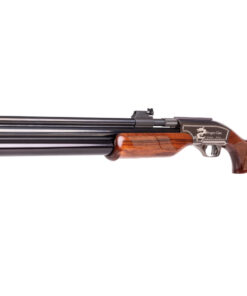
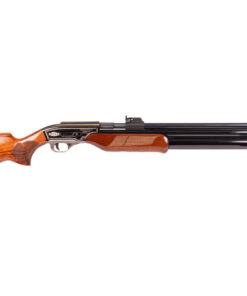
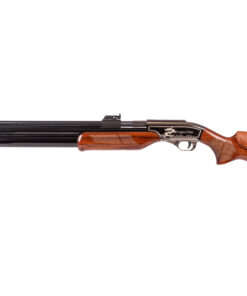
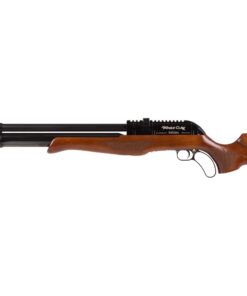
The Seneca Dragon Claw II Dual Tank has been developed for shooters who value substantial big-bore performance, dependable construction, and the traditional appearance of a full-sized sporting air rifle. Through its distinctive dual-air-cylinder configuration, an increased quantity of compressed air can be carried while a balanced rifle profile is retained. Consequently, fewer interruptions may be required during a shooting session, depending on the selected ammunition, fill pressure, environmental conditions, and power setting.
Designed around the established Dragon Claw platform, this PCP air rifle combines classic styling with modern pre-charged pneumatic technology. A substantial stock is paired with robust metal components, while the dual-tank system provides one of the model’s most recognizable characteristics. Therefore, the rifle can appeal to experienced adult airgun enthusiasts who want something considerably different from a conventional small-calibre PCP.
Because large-bore air rifles are regulated differently between countries and jurisdictions, local ownership, power, transportation, and use requirements should always be confirmed before purchase.
Why Choose the Seneca Dragon Claw II Dual Tank?
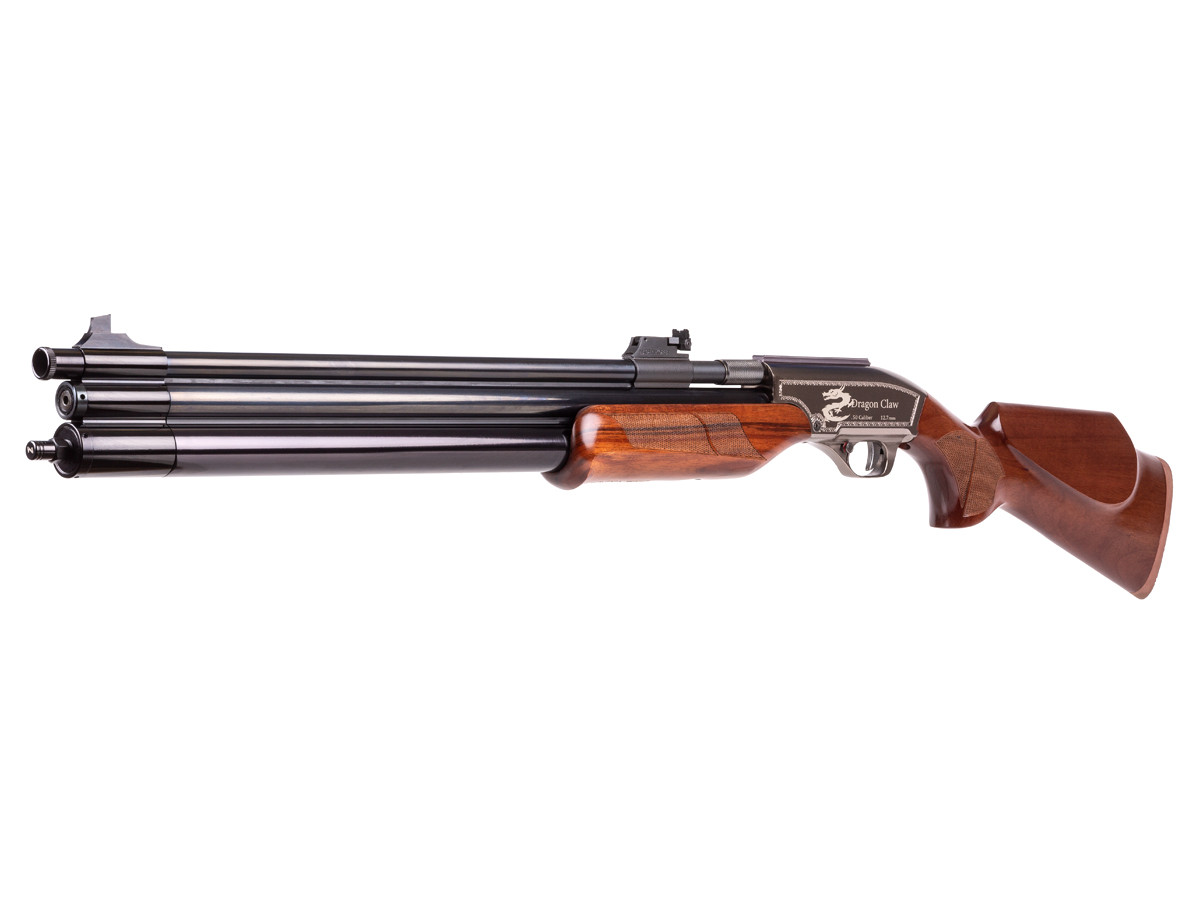
Rather than being designed as a lightweight entry-level air rifle, the Seneca Dragon Claw II Dual Tank is built around a substantial shooting platform. Its dimensions, air capacity, large bore, and traditional stock design give it a purposeful character.
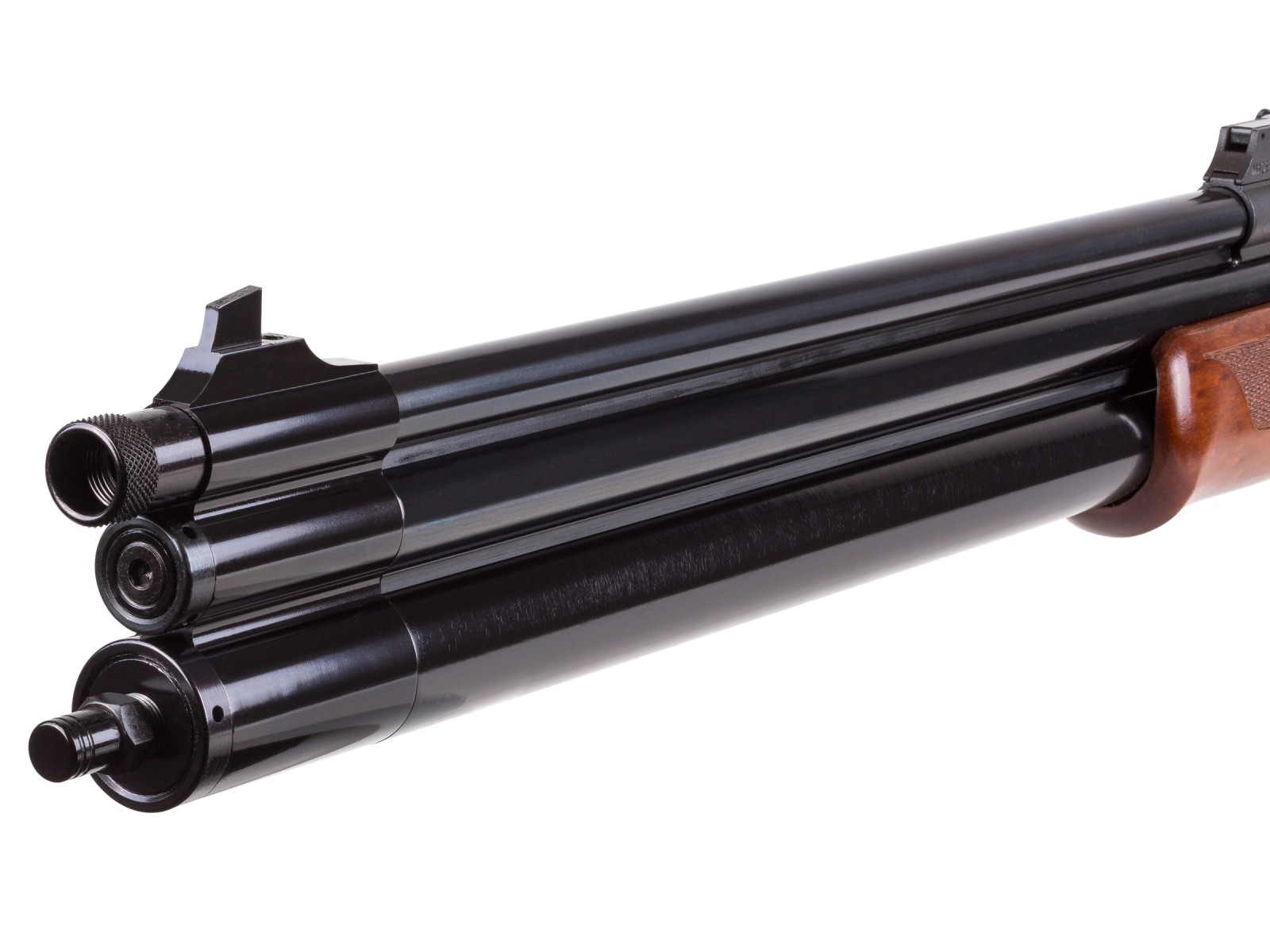
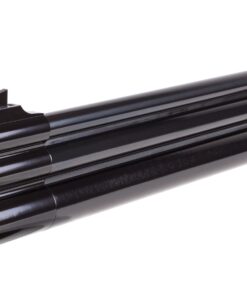
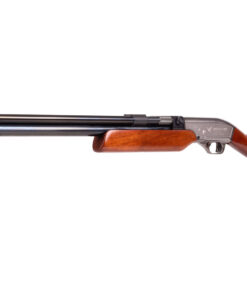
Moreover, compressed air is stored within two integrated cylinders. As a result, usable air capacity can be increased without requiring an oversized single reservoir. The arrangement also contributes significantly to the distinctive appearance for which the Dragon Claw series is recognized.
Durability has additionally been emphasized throughout the design. Metal working components are combined with a traditional stock, while a straightforward operating system has been incorporated to reduce unnecessary complexity. Consequently, maintenance, routine inspection, and general ownership can remain relatively straightforward when the manufacturer’s recommendations are followed.
Product Highlights
- Distinctive Seneca Dragon Claw II Dual Tank configuration
- Large-bore PCP air rifle platform
- Dual compressed-air reservoirs for increased onboard air capacity
- Traditional full-length sporting rifle appearance
- Robust metal construction
- Manual operation for deliberate shot control
- Designed primarily for experienced adult airgun users
- Suitable for controlled recreational and sporting applications where legally permitted
- Compatible with appropriate big-bore ammunition specified for the rifle
- Built with a combination of traditional styling and PCP technology
- Reusable compressed-air power system
- Designed for shooters seeking substantial big-bore performance
Dual Tank PCP Air System
At the heart of the Seneca Dragon Claw II Dual Tank is its twin-reservoir compressed-air system. Before shooting, the reservoirs are charged using suitable high-pressure filling equipment in accordance with the manufacturer’s instructions.
Once filled correctly, compressed air is released in a controlled manner whenever the rifle is fired. Unlike spring-powered systems, no heavy mainspring must be compressed before every shot. Therefore, the shooting characteristics of a PCP platform can feel different from those of traditional spring-piston air rifles.
Additionally, the dual tanks provide greater air-storage capability than would generally be expected from a compact single-cylinder arrangement. That additional capacity can be particularly useful during extended target sessions because repeated refilling may be reduced.
Nevertheless, the exact number of useful shots obtained from one charge will vary. Projectile weight, fill pressure, temperature, individual rifle condition, valve performance, and power selection can all affect efficiency.
Substantial Big-Bore Performance
Considerable energy can be produced by the Seneca Dragon Claw II Dual Tank because the rifle belongs to the big-bore PCP category. Consequently, it should be treated with the same seriousness given to any high-powered sporting airgun.
A suitably rated backstop and controlled shooting location should always be used. Eye protection should also be worn, while ammunition appropriate for the manufacturer’s stated specifications should be selected.
Because of its larger projectile format, the Dragon Claw II offers a shooting experience that differs substantially from conventional .177 or .22 calibre recreational air rifles. Rather than emphasizing very high pellet counts or lightweight handling, the platform has been engineered around large-bore pneumatic performance.
For that reason, prospective owners should consider the rifle’s intended use, local regulations, available filling equipment, ammunition availability, storage requirements, and suitable shooting facilities before purchasing.
Traditional Stock and Full-Sized Design
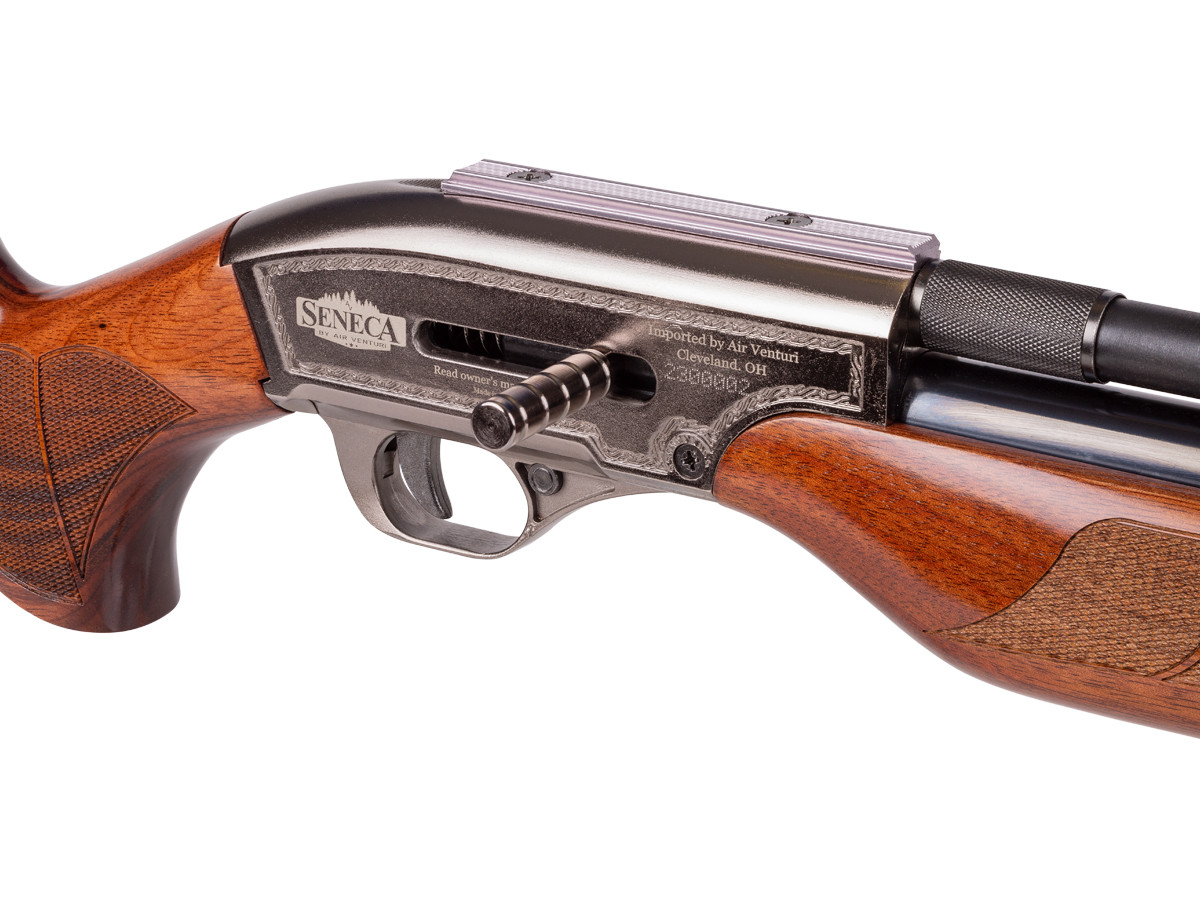
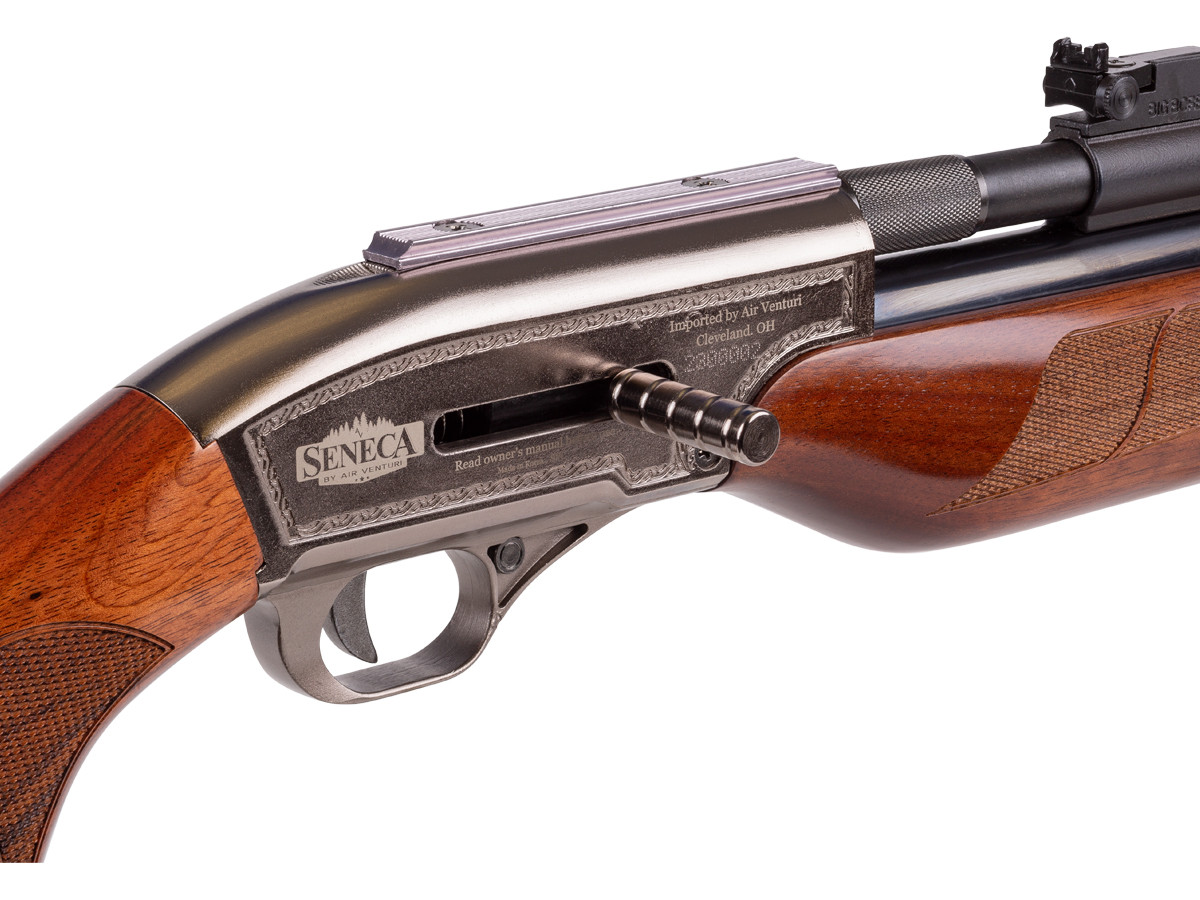
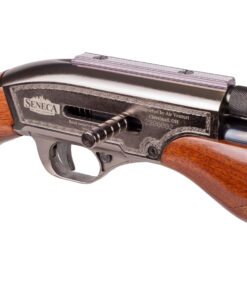
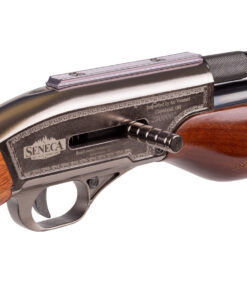
A traditional sporting appearance is provided by the rifle’s full-length stock. Instead of using a highly compact tactical chassis, the Seneca Dragon Claw II Dual Tank maintains a more conventional profile.
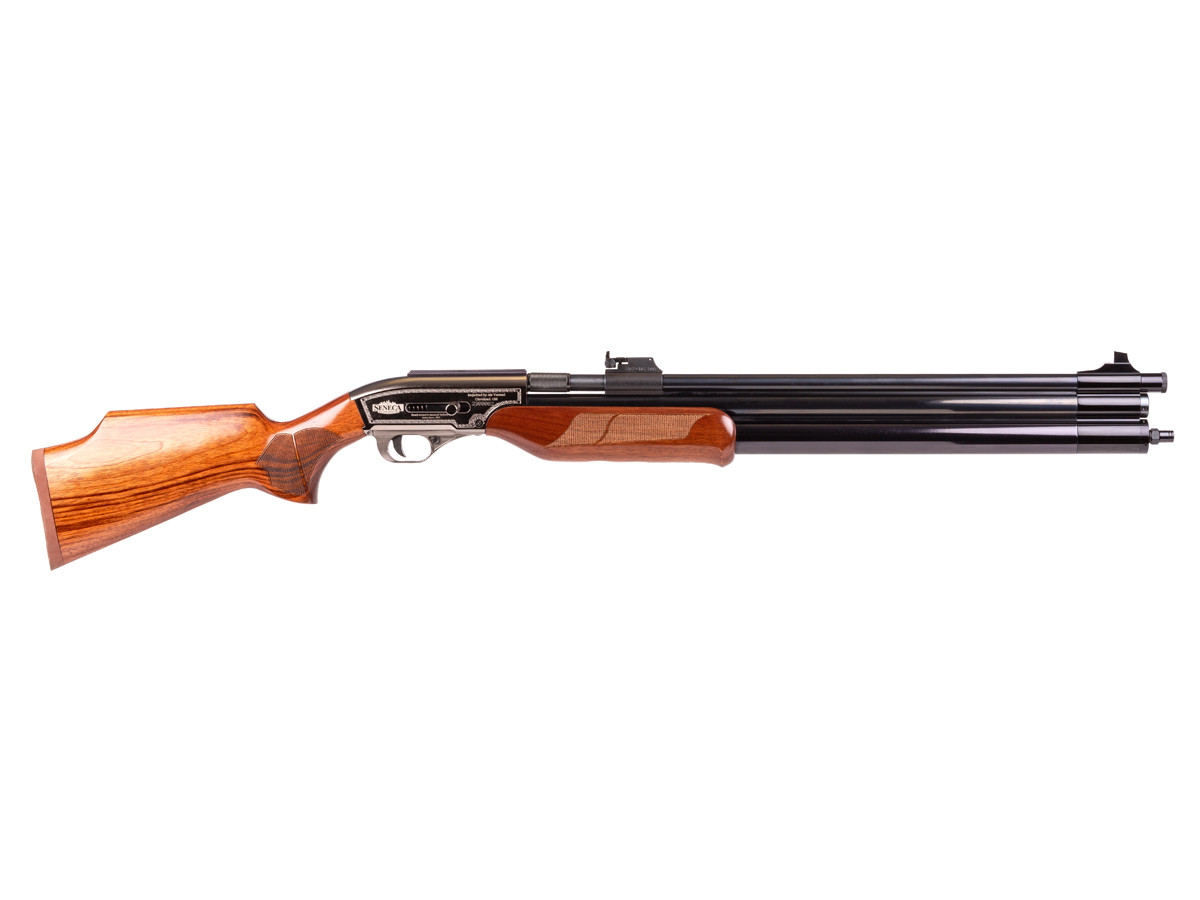
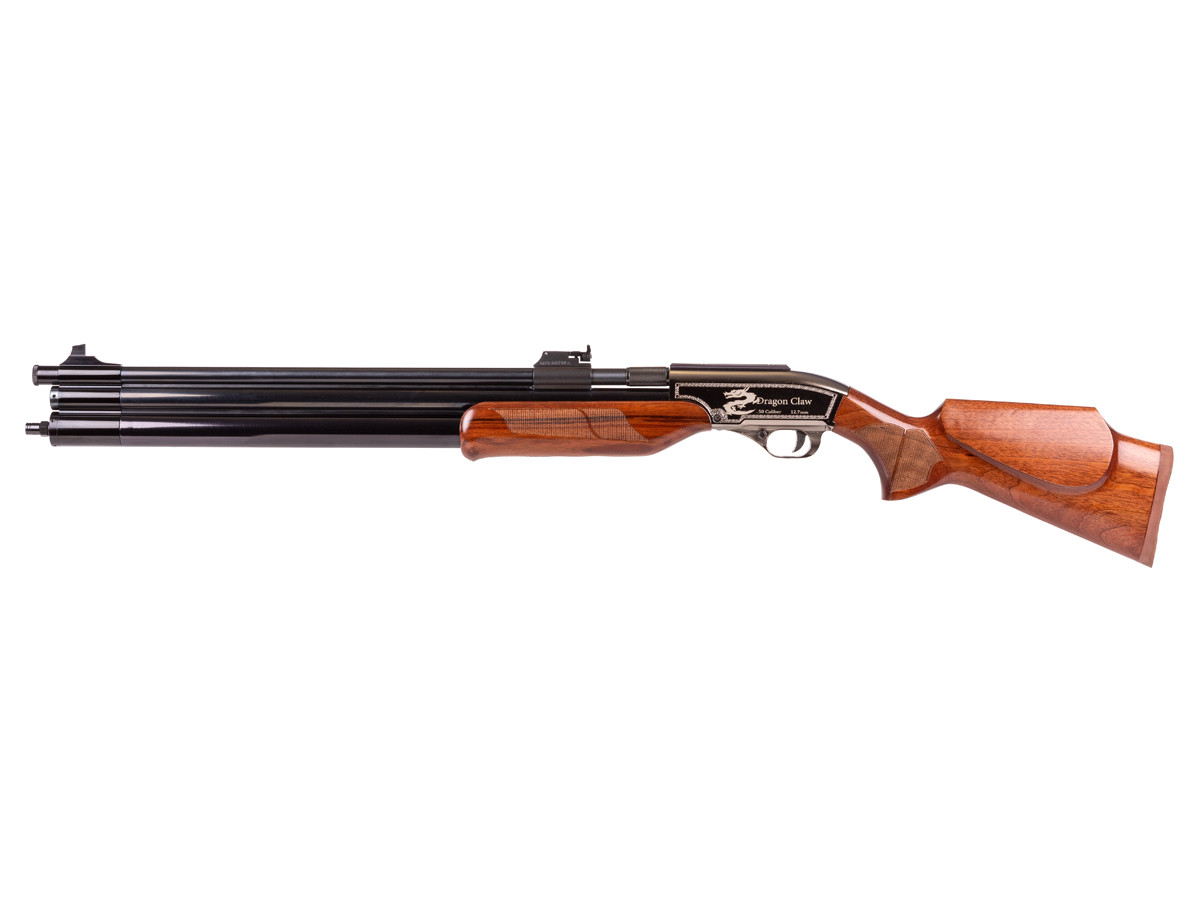
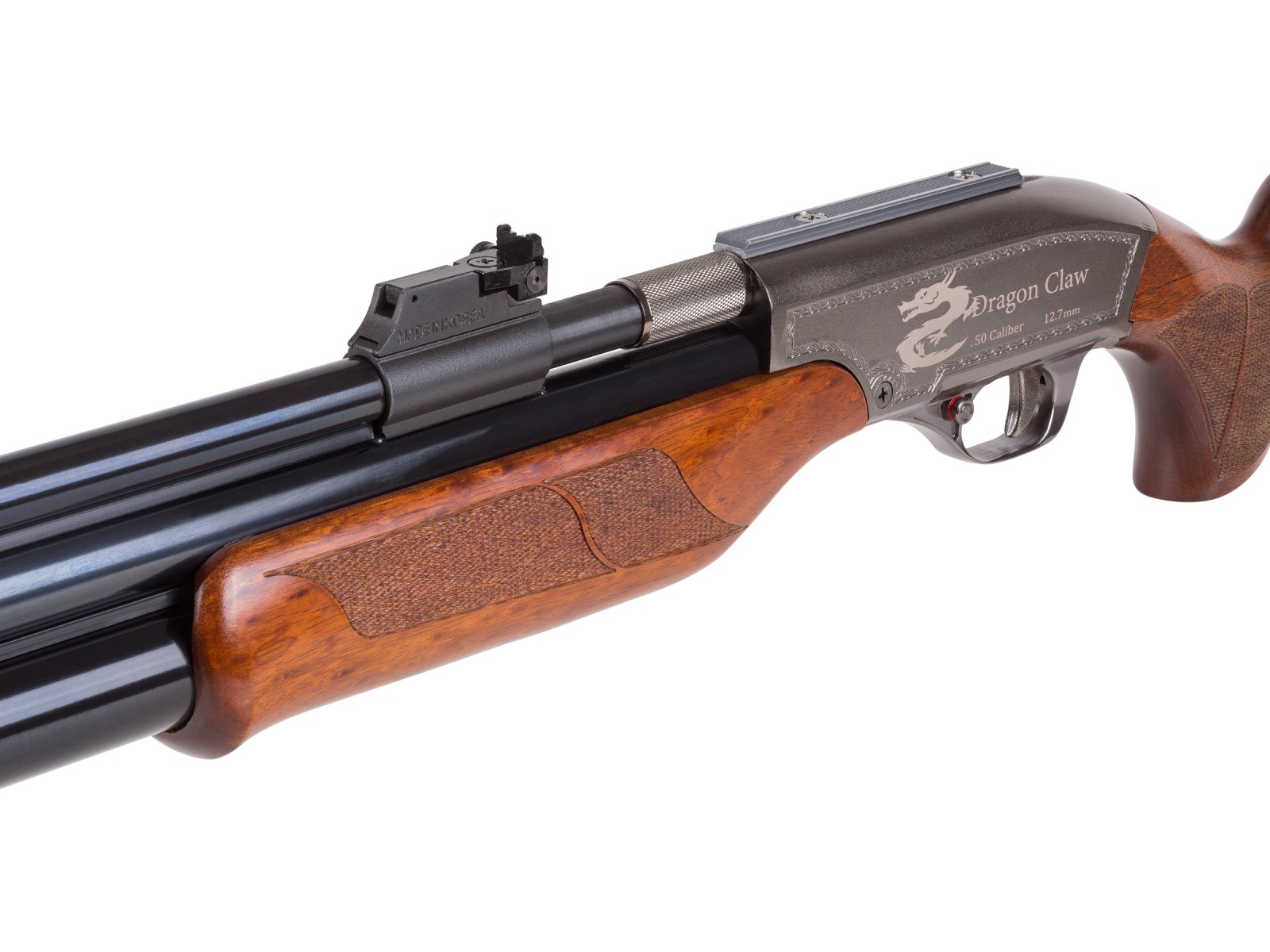
The stock provides multiple contact points for stable handling, while the rifle’s substantial dimensions give it a solid feel. Furthermore, the dual cylinders are integrated beneath the barrel area, creating a recognizable profile without abandoning the visual character associated with traditional sporting rifles.
Since individual body proportions differ, overall comfort will naturally vary between users. Consequently, appropriate stance, positioning, and safe handling techniques should be established before extended use.
Built for Controlled, Deliberate Shooting
Big-bore PCP shooting is generally approached differently from casual backyard plinking. Each shot should be prepared carefully, a safe direction should always be maintained, and the shooting environment should be suitable for the rifle’s power.
Accordingly, the Dragon Claw II can be particularly appealing to established airgun enthusiasts who already understand compressed-air filling procedures and safe PCP operation.
Beginners should receive appropriate instruction before using high-powered pneumatic equipment.
Practical Compressed-Air Operation
Another major advantage of PCP technology is consistency of operation when the rifle is maintained and filled correctly. Because compressed air supplies the operating energy, conventional firearm cartridges are not required.
Before each session, reservoir pressure should be checked according to the manufacturer’s instructions. Likewise, seals, fittings, the barrel, and external components should periodically be inspected for wear or damage.
Only filling equipment rated for the required working pressures should be connected. Moreover, reservoirs should never be deliberately overfilled, modified, heated, drilled, or dismantled without appropriate technical knowledge.
Through proper maintenance, the Seneca Dragon Claw II Dual Tank can provide dependable service while its pneumatic system remains protected.
Who Is the Seneca Dragon Claw II Dual Tank For?
Experienced adult PCP enthusiasts are likely to appreciate this model most. In particular, it may suit shooters who want a large-bore airgun with traditional aesthetics rather than an ultra-modern tactical design.
It may also appeal to collectors interested in distinctive pneumatic platforms. Because dual reservoirs are immediately visible, the Dragon Claw II possesses a recognizable identity within the broader PCP market.
Furthermore, users who already own suitable high-pressure filling equipment may find integration into their existing airgun setup relatively straightforward.
However, purchasers entering the PCP category for the first time should remember that additional equipment may be required. A correctly rated pump, compressor, or charging system may be necessary, together with suitable ammunition and appropriate safety equipment.
Quality, Character, and Versatility
While many modern PCP rifles emphasize compactness, the Seneca Dragon Claw II Dual Tank follows a more substantial design philosophy. Traditional materials, large-bore capability, compressed-air technology, and dual reservoirs are combined into one distinctive platform.
Consequently, the rifle stands apart visually and mechanically from typical small-calibre airguns.
For controlled target shooting and other lawful sporting applications for which the rifle is appropriate, its combination of air capacity and robust construction provides a practical foundation. Most importantly, every application should remain consistent with local law, manufacturer guidance, safe handling practices, and an adequate shooting environment.
Buy the Seneca Dragon Claw II Dual Tank with Confidence
For enthusiasts searching for a distinctive big-bore pneumatic rifle, the Seneca Dragon Claw II Dual Tank delivers an appealing blend of traditional styling and modern PCP engineering. Its dual-reservoir configuration provides generous onboard air storage, while its substantial construction reinforces the serious nature of the platform.
Furthermore, its recognizable Dragon Claw styling gives the rifle a character that is difficult to confuse with ordinary PCP designs.
Whether being considered as an addition to an established airgun collection or as a dedicated sporting platform, the Seneca Dragon Claw II Dual Tank offers a combination of capacity, durability, heritage-inspired styling, and big-bore pneumatic performance.
Before ordering, buyers should confirm applicable calibre, power, licensing, age, transportation, and ownership requirements in their jurisdiction. When responsibly owned and correctly maintained, the Seneca Dragon Claw II Dual Tank provides an impressive example of modern large-bore PCP airgun engineering.
Snowpeak Airguns, PCP Rifles, Air Pistols and Umarex Airguns
For shooters researching Snowpeak airguns, Snowpeak Sports, and the wider Snowpeaks product range, there are many PCP rifles, air pistols, and shooting accessories to consider. Popular searches include the Snowpeak AP900, Snowpeak AP900B PCP air rifle, Snowpeak MAX 1, Snowpeak MAX 1 price, Snowpeak PP750, PP750, Snow Peak PP750, and PP750 air pistol. Buyers also regularly compare models such as the Snowpeak P35, P35, P 35, PCP P 35, Snowpeak P35X, P35X, P35X PCP, and Snowpeak P35 vs P35X.
Other Snowpeak models attracting attention include the Snow Peak PP20, Snowpeak PP20, Snowpeak M25, M25 rifle, M-25, M25 weapon, Snowpeak M60, Snowpeak M60B, M 60B, rifle M60, rifle M50, and M50 rifle. Searches such as Snow Peak brand origin are also common among buyers who want to understand the manufacturer before choosing a rifle or pistol.
Snowpeak PCP Models and Related Airgun Searches
The PCP category covers everything from compact pistols to full-size hunting and target rifles. Searches frequently include PR900 Gen 3, CR650, SR 1000X, T Rex 6000, and pistolet PCP Arcea-Snowpeak Onix Sport. People comparing pneumatic platforms may also search what is a PCP airgun, air gun, air rifle, pellet pistol, air gun accessories, 9mm pellet, and pellet 9mm.
Some search phrases overlap with firearm terminology even when shoppers are researching airgun products. These include rifle M60, how much did the M60 weigh, rifle M50, M50 rifle, M25 weapon, and snowfall gun. Therefore, model specifications should always be checked carefully so that a historical firearm search is not confused with a modern sporting airgun product.
Seneca Dragon Claw II Dual Tank Calibre, FAC, Power and Accessories
The Seneca Dragon Claw II Dual Tank has been designed as a serious big-bore PCP air rifle rather than a conventional small-calibre plinking platform. Its .50 calibre configuration, substantial compressed-air capacity, selectable power levels, and compatibility with appropriate shooting accessories give it a distinctive position within the modern PCP market.
For prospective owners, however, calibre and power should always be considered alongside local legislation. Regulations covering high-powered air rifles differ significantly between countries and sometimes between individual regions. Therefore, licensing, ownership, transportation, hunting, and permitted-use requirements should always be checked before purchase.
.50 Calibre Big-Bore Configuration
The Seneca Dragon Claw II Dual Tank is currently offered in .50 calibre. This large-bore format separates the rifle from conventional .177, .22, and .25 calibre PCP rifles and places it firmly within the big-bore airgun category. Current product information lists the rifle specifically as a .50 calibre platform.
Because a significantly larger projectile is used, substantial muzzle energy can be generated. Consequently, ammunition should always be selected according to the manufacturer’s specifications rather than simply by nominal calibre.
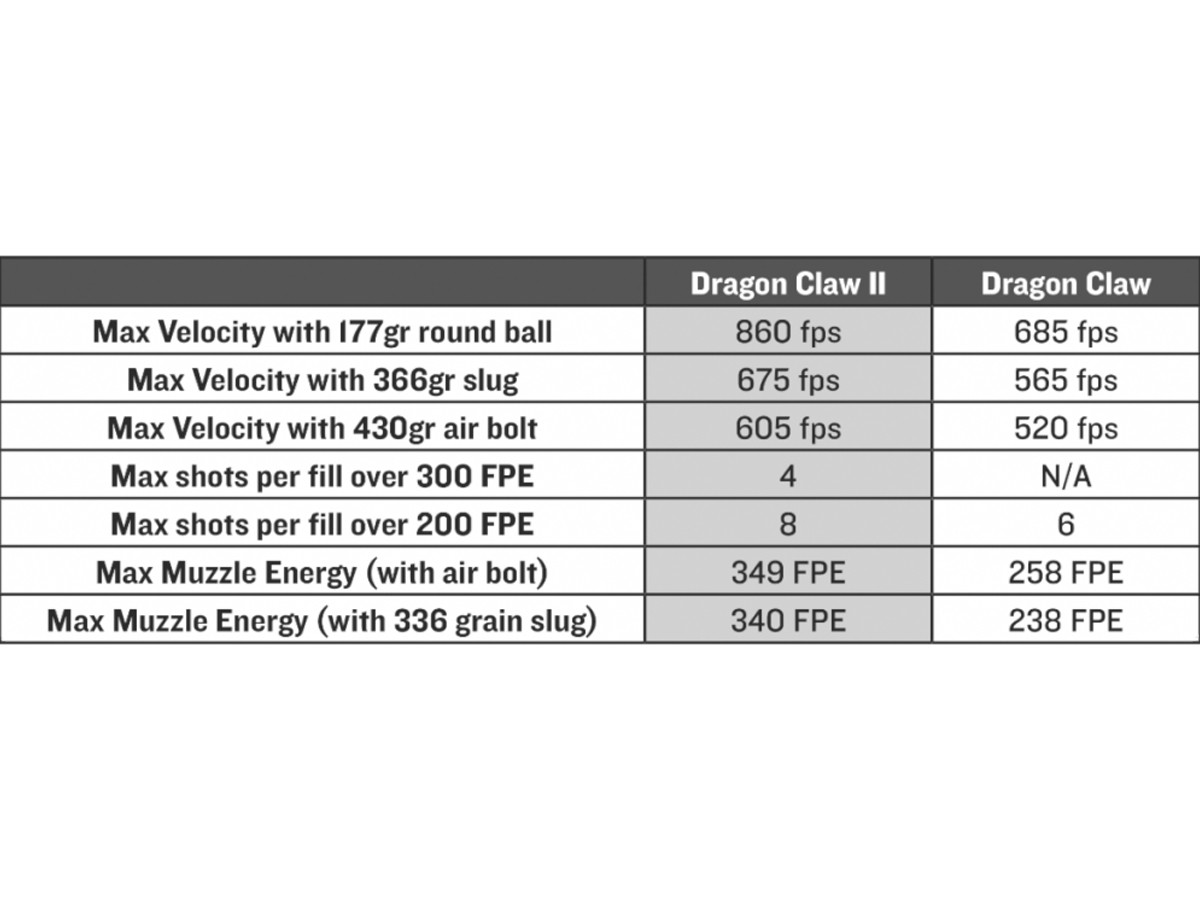
Different projectile weights can also produce noticeably different velocity and energy figures. Therefore, advertised maximum velocity should not be interpreted as the performance level of every compatible projectile.
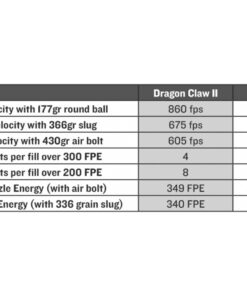
The manufacturer’s published figures include performance with round balls, heavy slugs, and compatible Seneca Air Bolts. These figures demonstrate the versatility of the platform while also showing why projectile type and weight are important when comparing performance.
Dual 500cc Air Capacity
One of the defining characteristics of the Dragon Claw II is its dual-reservoir arrangement. Combined air capacity is listed at approximately 500cc, providing a substantial compressed-air supply for a large-bore pneumatic rifle.
A maximum operating pressure of 3,000 PSI, approximately 206 BAR, is specified. Additionally, a built-in pressure gauge allows reservoir pressure to be monitored before and during use.
Rather than relying on disposable gas cartridges, the rifle is refilled from an appropriate high-pressure air source. For this reason, prospective buyers should include suitable filling equipment when planning their overall setup.
Only equipment rated for the rifle’s required pressure should be used. Likewise, the manufacturer’s filling instructions and pressure limits should always be followed.
Power and Performance
Considerable power can be produced by the Seneca Dragon Claw II Dual Tank. Current specifications indicate a maximum velocity of approximately 860 FPS with 177-grain round balls. With compatible Seneca Air Bolts, advertised velocity reaches approximately 600 FPS.
With heavier ammunition, the emphasis shifts from maximum velocity toward muzzle energy. Published specifications state that energy can reach approximately 340 foot-pounds with a 336-grain flat-nose slug.
Actual performance can vary according to projectile weight, reservoir pressure, temperature, rifle condition, ammunition fit, and selected power level. Therefore, these values should be regarded as manufacturer or retailer performance specifications rather than guaranteed results for every shot.
Two Selectable Power Levels
Another notable feature is the rifle’s two-level power system. According to current specifications, the first bolt stop corresponds to the lower-power setting, while the second position provides the higher-power setting.
This arrangement allows the rifle’s available pneumatic power to be managed according to the shooting application. However, because this is a high-powered big-bore platform, appropriate safety precautions, a suitable shooting environment, and a properly rated backstop remain essential regardless of the selected setting.
FAC and Legal Classification
The term FAC generally refers to a Firearm Certificate in jurisdictions such as Great Britain. Whether an air rifle requires licensing depends on the applicable national and regional regulations, particularly its muzzle energy and where it is possessed or used.
Given the Dragon Claw II’s published energy figures, buyers should not assume that it can legally be treated in the same manner as a lower-powered unrestricted air rifle. Instead, applicable firearm and airgun legislation should be confirmed before ordering.
Licensing thresholds, permitted hunting use, age requirements, transportation rules, storage requirements, and import restrictions may all vary.
Therefore, the safest approach is straightforward: check the current law applicable to your location before purchasing or using the rifle.
Recommended Accessories for the Seneca Dragon Claw II
Suitable accessories can make ownership more practical while helping protect the rifle and supporting responsible operation.
Useful Accessory Options
- High-pressure PCP compressor or charging source rated for the required 3,000 PSI operating pressure
- Compatible Foster-style filling equipment, as the rifle includes a male quick-disconnect Foster fitting
- .50 calibre projectiles selected according to manufacturer specifications
- Appropriate compact optic, where legally permitted
- Protective rifle case for secure storage and transportation
- Quality eye and hearing protection
- PCP maintenance supplies recommended by the manufacturer
- Secure gun-storage equipment
- Suitable big-bore-rated target and backstop system
- Pressure-rated filling hoses and connectors
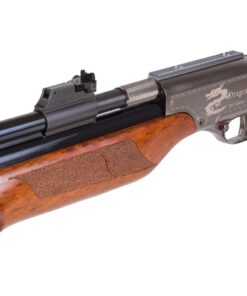
The standard rifle is equipped with an 11mm dovetail scope rail, although published product information advises the use of compact optics because of the rifle’s configuration.
A fixed front sight and adjustable removable rear sight are also included, meaning the rifle can be used with its supplied sighting system where appropriate.
A Complete Big-Bore PCP Platform
By combining a .50 calibre barrel, approximately 500cc of total air capacity, a 3,000 PSI operating pressure, two selectable power settings, and up to approximately 340 FPE of published muzzle energy, the Seneca Dragon Claw II Dual Tank offers specifications well beyond those of conventional recreational PCP rifles.
When paired with properly rated filling equipment, suitable ammunition, protective gear, and secure storage equipment, the platform can form a comprehensive big-bore PCP setup.
Above all, correct ammunition selection, responsible handling, proper maintenance, and compliance with applicable licensing and airgun regulations should remain central to ownership.
Umarex Airguns, Air Rifles, Pistols and PCP Platforms
Alongside Snowpeak products, Umarex USA, UmarexUSA, Umarex airguns, and Umarex air rifles are widely searched by recreational shooters, target shooters, and PCP enthusiasts. The Umarex range includes PCP rifles, CO₂-powered platforms, break-barrel pistols, BB guns, airsoft replicas, and large-caliber airgun systems.
Popular PCP searches include Umarex Notos, Umarex Notos Carbine, Umarex Gauntlet, Umarex Gauntlet 2, Umarex Gauntlet 30, Umarex Zelos, Umarex Origin, Umarex Komplete, and Umarex Komplete NCR .22. Hunters researching larger airgun platforms may also encounter the Umarex Hammer, Umarex Hammer .50 caliber, Umarex Hammer Carbine, Umarex Primal 20, and Umarex AirSaber.
Umarex Pistols, BB Guns and T4E Models
For handgun-style platforms, popular searches include Umarex BB gun, BBgun, BB gun pistol, metal BB gun, Umarex TR50, Umarex HDR 50, Umarex T4E, Umarex T4E Smith, Umarex Smith, and Umarex P2P DR50 how many joules.
Glock-style replicas remain another major category. Search terms include Glock BB gun, Glock 19 BB gun, Umarex Glock 19, Umarex Glock 19X, Umarex Glock 19 Gen3 .177 caliber BB gun air pistol, Umarex Glock 17, Umarex Glock 17 Gen 5, Umarex Glock, airsoft Glock, airsoft Glock 19, Glock 17 airsoft, and Glock airsoft gun.
Other replica and recreational searches include Umarex MP40, Umarex MP5, Umarex Legends, Umarex HK Heckler, Umarex shotgun, and airsoft pistol.Umarex DX17.
Break-Barrel and Sporting Umarex Airguns
Shooters looking for spring or gas-piston platforms frequently research the Umarex Trevox, loading Umarex Trevox break barrel .177, Umarex pistol break barrel, Umarex Fusion 2, Umarex Synergis Elite, and Amazon Umarex Browning 800 Express. These platforms provide alternatives for people who want an airgun without relying on a high-pressure PCP charging system.
Additional searches across the Umarex catalog include Umarex H, while broader terms such as air rifle, pellet pistol, air gun, and air gun accessories help buyers compare platforms, ammunition, optics, filling equipment, targets, cases, and other shooting equipment.
Whether the focus is a Snowpeak M60, Snowpeak M25, Snowpeak P35X, Snowpeak PP750, Snowpeak MAX 1, Umarex Notos, Umarex Gauntlet 2, Umarex Origin, or Umarex Hammer Carbine, buyers should compare caliber, operating system, power level, dimensions, intended use, and local regulations before selecting an airgun.
Practical Use Scenarios
A large-bore PCP platform is most useful when it is matched with the right environment, suitable safety controls, and a clearly defined shooting purpose. Rather than being treated like a lightweight backyard plinker, this type of air rifle is better suited to deliberate sessions where space, backstop quality, handling discipline, and compressed-air management can all be controlled properly.
Because of its substantial construction and large pneumatic system, the rifle is particularly well suited to experienced adult users who already understand PCP ownership or who are prepared to learn correct filling, maintenance, storage, and range procedures before regular use.
Controlled Target Shooting at Established Ranges
One of the most practical applications is organized target shooting at a properly managed range. In this environment, adequate distance, suitable backstops, clear firing lines, and established safety rules are normally available, which makes the experience more structured and predictable.
Instead of repeatedly firing lightweight pellets at short distances, a large-bore setup encourages a slower and more deliberate shooting rhythm. Each shot can be prepared carefully, sight alignment can be checked, and the user can concentrate on consistency rather than volume.
This style of shooting is especially useful for people who enjoy evaluating groups, comparing different approved projectiles, checking point-of-impact consistency, and becoming more familiar with the rifle’s handling characteristics.
Furthermore, a range environment makes it easier to observe how changes in shooting position, reservoir pressure, optic setup, or projectile choice affect practical performance. Although results will vary from one rifle and ammunition combination to another, controlled conditions make comparisons more meaningful.
For that reason, recreational range sessions can also help owners build confidence in the platform before using it in any other lawful sporting context.
Recreational Precision Practice
Precision-oriented recreational shooting offers another useful scenario. Rather than focusing on speed, the user can concentrate on trigger control, breathing, stable positioning, repeatable cheek placement, and sight picture.
The substantial dimensions of a big-bore PCP rifle naturally encourage careful handling. Consequently, sessions can be organized around smaller shot strings with greater attention being given to each attempt.
For example, a shooter may establish a fixed-distance target, confirm zero, and then monitor consistency across a carefully planned group. Afterward, the same process can be repeated under similar conditions to identify changes in technique.
This form of recreational practice can be satisfying because progress becomes measurable. Group size, vertical spread, consistency, and shooter comfort can all be recorded over time.
Additionally, slower shooting sessions reduce the tendency to rush. Instead, the shooter is encouraged to evaluate every stage of the process from loading and sight alignment through to follow-through.
Where local rules and range regulations permit, this approach can provide a disciplined and rewarding way to enjoy a high-powered PCP platform.
Familiarization With Big-Bore PCP Systems
Owners moving from smaller PCP rifles into a larger platform may benefit from using the rifle primarily as a familiarization tool during their first several sessions.
A bigger pneumatic system behaves differently from a low-powered recreational airgun. Air usage, projectile weight, rifle balance, noise level, and overall handling can all feel noticeably different.
Therefore, early sessions can be used to understand the platform without introducing unnecessary complexity.
Reservoir pressure can be monitored before and after controlled shot strings. Filling procedures can be practiced according to the manufacturer’s instructions. Additionally, users can become familiar with safe loading, unloading, storage, and transportation routines.
Over time, these habits become part of normal ownership.
Rather than immediately attempting demanding shooting scenarios, a careful owner can first learn how the rifle responds under predictable conditions. That gradual process is especially useful when moving into the large-bore PCP category for the first time.
Use in Private Sporting Facilities
Where legal and where an appropriate private facility is available, the rifle may also be used on properly prepared private shooting land.
However, the location must be genuinely suitable for the power level involved. A large-bore pneumatic rifle should never be treated as appropriate for informal shooting simply because it is powered by compressed air.
A safe private facility requires a controlled firing direction, an effective backstop designed for the expected energy level, sufficient space, and procedures that prevent unauthorized people from entering the shooting area.
In addition, nearby buildings, roads, livestock, footpaths, and neighboring properties must be taken into account.
When these requirements are satisfied, a private shooting area can provide a flexible environment for structured target practice. The owner can set up repeatable distances, record performance, and establish a consistent routine without depending entirely on commercial range availability.
Nevertheless, local legal requirements should always be checked before any private-land use takes place.
Optic Zeroing and Equipment Verification
Another practical application involves setting up and checking compatible optics and accessories.
A newly installed optic may require careful zeroing before it can be relied upon for recreational shooting. Likewise, an optic that has been removed for transport or replaced after maintenance should be confirmed again before normal use.
A controlled range provides the best setting for this process.
Initial groups can be fired at a safe, appropriate distance while sight adjustments are made gradually. Once the point of impact is aligned with the chosen point of aim, additional groups can be fired to confirm consistency.
The same session can also be used to check whether mounts remain secure and whether the chosen sighting arrangement is comfortable.
Importantly, only accessories compatible with the rifle’s mounting system and intended use should be selected. Proper installation matters because unsuitable mounts or poorly secured components can affect accuracy and reliability.
Projectile Compatibility Testing
Large-bore PCP owners often want to determine which approved projectile type performs most consistently in their individual rifle.
A practical way to approach this is through controlled comparison rather than guesswork.
Different compatible projectile designs can be evaluated at the same safe distance and under similar environmental conditions. Group size, point of impact, ease of loading, and overall consistency can then be recorded.
Because projectile weights and shapes can affect performance, results should not be assumed to be identical across different ammunition types.
Consequently, a methodical testing session can help the owner identify a combination that suits their lawful recreational requirements.
Manufacturer guidance should always remain the starting point. Projectiles that do not match the specified calibre or recommended dimensions should not be used.
Compressed-Air Management Practice
PCP ownership also involves learning how to manage compressed air correctly.
A practical shooting session therefore includes more than simply firing at a target. Reservoir pressure should be checked before use, monitored during the session, and restored safely afterward when necessary.
Users who refill from a compressor or external air cylinder must also understand their filling equipment.
Connections should be inspected, hoses should be rated correctly, and the manufacturer’s pressure limits should never be exceeded.
A slower recreational session gives the owner an opportunity to build these habits while also learning how the rifle’s practical shot count changes as pressure decreases.
This can help the user determine when performance begins to shift enough that refilling becomes sensible.
Structured Accuracy Testing
For enthusiasts who enjoy documenting performance, the rifle can be incorporated into structured accuracy testing.
Targets can be labeled by date, distance, projectile type, weather conditions, and reservoir pressure. Groups can then be compared over time.
This approach transforms casual shooting into a more technical hobby.
For instance, the owner may want to determine whether their consistency improves after becoming more familiar with the rifle. Alternatively, they may want to compare performance before and after routine maintenance.
Because conditions influence results, the most useful comparisons are made when as many variables as possible are kept consistent.
Such recordkeeping can also help identify unusual changes. If grouping suddenly becomes less consistent, the owner can review earlier results and determine whether the change may be related to ammunition, optics, pressure, maintenance, or shooter technique.
Collection and Enthusiast Ownership
Not every purchaser intends to use a large-bore PCP frequently.
Some owners are attracted by engineering, design history, unusual pneumatic layouts, or the distinctive appearance of large-bore air rifles.
In this situation, the rifle may form part of a broader sporting-airgun collection.
Even when shooting frequency is low, proper storage remains important. The rifle should be kept secure, protected from excessive moisture, and maintained according to the manufacturer’s recommendations.
Collectors may also appreciate documenting the rifle’s specifications, condition, accessories, and maintenance history.
Occasional controlled range use can then be used to verify that the platform remains functional while avoiding unnecessary wear.
Demonstration and Supervised Familiarization
Another lawful scenario can involve supervised demonstration to another responsible adult at an approved shooting location.
Someone unfamiliar with big-bore PCP rifles may benefit from seeing the filling system, controls, sighting arrangement, and safe handling procedure before attempting to use one.
Supervision is especially important because assumptions formed around lower-powered air rifles may not apply to a large-bore platform.
The supervising person should ensure that range rules are followed, the firing line remains controlled, and all equipment is handled according to manufacturer guidance.
Through careful instruction, a new user can gain an understanding of the platform without being encouraged to rush.
Routine Function Checks After Maintenance
After approved maintenance, cleaning, or sight adjustment, a controlled function check may be useful.
Rather than immediately beginning a full recreational session, a small number of shots can be fired in a safe environment to confirm that normal operation has been restored.
Point of impact can be checked, accessory mounting can be reviewed, and reservoir behavior can be monitored.
If anything appears abnormal, shooting should stop until the cause has been properly identified.
This cautious approach is particularly important with high-pressure pneumatic equipment.
Seasonal Range Use
Some owners use their rifles only during certain periods of the year.
In that case, the first session after long-term storage can be treated as a seasonal inspection and familiarization session.
External condition should be checked before use. Seals, visible fasteners, sight mounts, filling connections, and the general condition of the rifle should all be reviewed.
Once everything appears normal, a carefully controlled range session can be used to confirm operation.
Likewise, before the rifle is placed back into extended storage, it can be cleaned and maintained according to manufacturer guidance.
Responsible Recreational Ownership
Ultimately, practical use depends less on firing as many shots as possible and more on creating a safe, controlled, and repeatable shooting environment.
A large-bore PCP rifle rewards users who approach it methodically.
Target sessions can be planned in advance. Suitable backstops can be confirmed before firing begins. Filling equipment can be inspected, and approved ammunition can be prepared beforehand.
During use, the shooter can focus on consistency, stable technique, pressure awareness, and safe firearm-style handling practices.
Afterward, the rifle can be inspected, stored securely, and maintained for the next session.
That complete cycle is what makes ownership practical.
Instead of being treated as an ordinary low-powered recreational airgun, the platform is best understood as a specialized sporting tool intended for responsible adults who value controlled performance, substantial construction, and deliberate shooting.
When it is used at a properly equipped range or other lawful shooting facility, maintained correctly, and handled with appropriate safety discipline, it can provide a distinctive big-bore PCP experience while remaining focused on responsible recreational use.
Frequently Asked Questions
What type of air rifle is this?
This model is a large-bore pre-charged pneumatic air rifle designed for adult sporting and recreational use. Instead of relying on a spring mechanism or disposable CO₂ cartridges, compressed air is stored inside integrated reservoirs and used to power each shot.
Because it belongs to the big-bore category, it offers a very different shooting experience from lightweight .177 or .22 calibre recreational air rifles. Its physical size, air requirements, projectile dimensions, and overall power level all make it better suited to experienced users who understand safe PCP operation.
What calibre is available?
The rifle is commonly offered in .50 calibre. This places it among large-bore PCP air rifles rather than conventional small-calibre pellet rifles.
A larger calibre also means that approved ammunition is heavier and designed specifically for this type of platform. Consequently, users should always select projectiles that conform to the manufacturer’s recommendations instead of assuming that every projectile carrying a similar calibre marking will be suitable.
What makes the dual-reservoir design useful?
Two integrated air reservoirs provide increased onboard compressed-air capacity while retaining the recognizable profile of the rifle.
For practical use, this means a greater quantity of compressed air can be carried within the rifle before refilling becomes necessary. Actual usable shot count will still depend on several variables, including reservoir pressure, projectile weight, temperature, rifle condition, and the selected power setting.
The twin-cylinder arrangement is also one of the most distinctive visual features of the design.
What pressure is the rifle designed to use?
Published specifications commonly list a maximum fill pressure of approximately 3,000 PSI, or about 206 BAR.
Only properly rated PCP filling equipment should be used, and the manufacturer’s recommended filling procedure should always be followed. Reservoirs should never be intentionally overfilled because high-pressure air systems must be treated carefully.
Checking the pressure gauge before use is also a sensible part of routine ownership.
Does it have adjustable power?
The design includes more than one power setting, allowing the user to select between lower and higher output modes according to the rifle’s intended lawful use and the manufacturer’s operating instructions.
Performance may vary according to projectile weight, fill pressure, temperature, and rifle condition. Therefore, published velocity or energy values should be understood as reference specifications rather than guaranteed performance for every individual shot.
Regardless of the setting being used, an appropriate shooting environment and suitable backstop remain necessary.
Is it suitable for beginners?
It is generally more appropriate for experienced adult airgun users.
Beginners may find a lower-powered PCP rifle easier to learn with because it typically requires less specialized handling, less substantial backstop equipment, and simpler ammunition management.
Anyone beginning with a large-bore platform should receive appropriate instruction on safe handling, compressed-air filling, storage, maintenance, and range procedures before regular use.
What kind of shooting is it best suited for?
The rifle is well suited to controlled recreational target shooting, big-bore PCP familiarization, accuracy testing, collection use, and other lawful sporting activities where a high-powered pneumatic rifle is permitted.
A properly managed shooting range is generally the most suitable environment because appropriate firing distances, backstops, safety procedures, and controlled firing lines are normally available.
The rifle should not be treated like a low-powered backyard plinker because its performance characteristics are significantly different.
Can it be used on private property?
That depends on local law, the size and layout of the property, surrounding structures, access points, and whether an appropriate backstop and controlled firing direction are available.
Legal permission alone does not automatically make a property suitable.
Roads, homes, footpaths, neighboring land, livestock, and other potential hazards must be considered before any shooting takes place.
For many users, an established shooting range remains the safer and more practical option.
Does it require a firearms licence?
Licensing requirements vary significantly by country and region.
In some jurisdictions, air rifles above specific muzzle-energy thresholds may require a firearm certificate, permit, registration, or other authorization. In other areas, different rules may apply to ownership, transportation, hunting, storage, or importation.
Because the published power level is considerably higher than that of many ordinary air rifles, buyers should confirm current local regulations before purchasing or using the rifle.
What does FAC mean?
FAC commonly stands for Firearm Certificate, particularly in Great Britain.
Air rifles exceeding applicable legal energy limits may fall into a regulated category requiring certification.
However, legal terminology and thresholds differ between jurisdictions. Therefore, buyers should not assume that regulations applying in one country are identical elsewhere.
What type of filling equipment is required?
A suitable PCP hand pump, high-pressure compressor, or approved external air cylinder may be used when it is correctly rated for the rifle’s required filling pressure and compatible with the appropriate connector system.
Many owners who regularly use larger PCP rifles prefer a compressor or external air source because of the reservoir capacity involved.
Regardless of the chosen system, fittings, hoses, gauges, and connectors should all be pressure-rated and maintained in good condition.
Can an ordinary workshop compressor be used?
No ordinary low-pressure workshop compressor should be assumed to be suitable.
PCP air rifles require specialized high-pressure charging equipment designed for the working pressures involved.
Using inappropriate equipment can damage components and create a serious safety hazard.
Only a dedicated PCP filling system that meets the manufacturer’s specifications should be used.
Does the rifle have a pressure gauge?
Yes, the platform includes a gauge that allows the user to monitor reservoir pressure.
Checking the gauge before and during a shooting session helps users understand when the air supply is approaching the point where refilling may be required.
The gauge should be treated as part of the overall pressure-management system rather than ignored until performance changes become noticeable.
How many shots can be obtained from one fill?
There is no single exact shot-count figure that applies to every situation.
Air consumption depends on projectile weight, power setting, starting pressure, environmental temperature, valve behavior, and individual rifle condition.
Big-bore PCP rifles also generally use more air per shot than small-calibre PCP rifles.
For this reason, owners should learn the useful pressure range of their individual rifle through controlled range use rather than relying entirely on a theoretical maximum.
What ammunition should be used?
Only projectiles of the correct calibre and suitable dimensions should be selected.
Manufacturer recommendations should be followed because projectile shape, diameter, material, and weight can all influence compatibility and performance.
Using ammunition that is incorrectly sized or not intended for the platform may cause poor accuracy, difficult loading, or mechanical problems.
New owners should begin with established, manufacturer-compatible ammunition before experimenting with additional options.
Can different projectile weights be used?
Compatible projectile weights may be available, but different weights can produce different velocity, energy, trajectory, and pressure behavior.
A heavier projectile will not necessarily produce the same velocity as a lighter one.
Similarly, the projectile delivering the highest velocity may not provide the best consistency in a particular rifle.
Controlled range testing is the most appropriate way to evaluate approved ammunition choices.
Can an optic be installed?
Yes. Compatible optics can be installed using the rifle’s mounting system and suitable mounts.
Because the rifle has a distinctive receiver and reservoir configuration, compact optics may be more practical than unusually long or bulky systems.
Mounts should be fitted securely, and zero should be confirmed at a proper range after installation.
Are open sights included?
The rifle is commonly supplied with a front sight and an adjustable rear sight.
This allows it to be used without an optic where appropriate.
Some owners may prefer the simplicity of open sights, while others may choose a compatible scope depending on their shooting preferences and local regulations.
What other accessories are useful?
Several accessories can make ownership more convenient and secure.
A properly rated filling system, compatible ammunition, a protective rifle case, suitable eye protection, secure storage equipment, maintenance supplies, correctly rated filling hoses, and appropriate target equipment are among the most useful additions.
An optic may also be added if desired and legally permitted.
Accessories should be chosen for compatibility and safety rather than simply because they are marketed for PCP rifles in general.
How should the rifle be stored?
The rifle should be stored securely, in accordance with local law and manufacturer guidance.
A dry location helps protect metal and wooden components from unnecessary moisture exposure.
Access should be restricted from unauthorized users, particularly children.
Before long-term storage, the rifle should be inspected, cleaned where appropriate, and maintained according to the manufacturer’s recommended procedure.
How often does it need maintenance?
Maintenance frequency depends on usage, storage conditions, and manufacturer recommendations.
Routine ownership normally includes checking external fasteners, inspecting filling connections, keeping the rifle clean, protecting metal surfaces from corrosion, and monitoring seals for signs of leakage or deterioration.
Internal high-pressure components should not be modified casually.
If a significant air leak or mechanical problem develops, qualified service may be more appropriate than unauthorized disassembly.
What should I do if the rifle begins losing air?
First, the rifle should be removed from normal use and inspected according to the manufacturer’s troubleshooting guidance.
A slow pressure loss may indicate a seal or valve issue, although diagnosing the exact cause requires proper inspection.
High-pressure components should not be dismantled without appropriate knowledge.
Where the cause is uncertain, professional servicing is recommended.
Is the rifle loud?
Large-bore PCP rifles can produce substantially more noise than low-powered recreational airguns.
Actual sound levels depend on the rifle, projectile, surroundings, and shooting environment.
For that reason, hearing protection can be sensible during range use, and local noise restrictions should be considered.
A suitable shooting location also helps reduce disturbance to people nearby.
Is it suitable for frequent plinking?
It can be used for recreational target shooting, but it is not primarily designed around very high-volume plinking.
Large-bore ammunition, compressed-air consumption, weight, and overall power tend to encourage slower, more deliberate shooting sessions.
Shooters mainly interested in inexpensive, high-volume target practice may find a smaller-calibre PCP more practical.
Those seeking a substantial big-bore experience, however, may appreciate the slower shooting rhythm.
Is the rifle difficult to carry?
Compared with many compact PCP rifles, the platform is relatively substantial.
The dual reservoirs, full-length stock, and big-bore construction contribute to its overall size and weight.
For short range sessions this may not be an issue, but users planning to carry it for extended periods should consider the rifle’s dimensions before purchasing.
A suitable padded case can also make transportation easier and protect the rifle.
Can the rifle be transported normally?
Transportation requirements depend on local law.
Some jurisdictions require air rifles to be unloaded, enclosed in a case, separated from ammunition, or transported under specific licensing conditions.
Because this is a high-powered platform, owners should verify all relevant rules before traveling with it.
A secure, padded case is recommended for physical protection even where it is not legally required.
Is this model intended for casual backyard use?
Generally, no.
Its large-bore performance makes it more suitable for controlled ranges or properly prepared lawful shooting facilities.
A conventional backyard may not provide sufficient distance, containment, or backstop capability.
For this reason, the rifle should be approached as a specialized sporting platform rather than as an ordinary low-powered pellet rifle.
What should buyers check before ordering?
Several points should be confirmed before purchase: local licensing rules, legal calibre restrictions, maximum permitted power, availability of compatible ammunition, access to proper filling equipment, suitable storage, and access to an appropriate shooting location.
Buyers should also review current product specifications because manufacturers can revise configurations or included accessories over time.
Taking these factors into account before ordering usually makes ownership considerably easier.
Who is this rifle most suitable for?
It is best suited to responsible adult shooters who want a distinctive large-bore PCP platform and who understand the additional requirements associated with compressed-air systems.
Existing PCP owners may find the transition relatively straightforward because many of the same pressure-management and maintenance principles apply.
Collectors may also appreciate its dual-reservoir layout and traditional styling.
Above all, it suits users who prefer deliberate, controlled shooting rather than lightweight, rapid recreational plinking.
What makes this platform different from a standard PCP rifle?
Its combination of large calibre, substantial power, dual air reservoirs, traditional stock design, and full-sized construction makes it notably different from smaller PCP rifles.
Instead of prioritizing minimum weight and very high shot count, the design emphasizes big-bore pneumatic performance and a distinctive shooting experience.
That combination gives it a specialized role within the broader airgun market and explains why careful equipment selection, responsible handling, and appropriate range facilities are especially important.
 Click here for California’s Proposition 65 warning.


Reviews
There are no reviews yet.