Explore the Hatsan Air Rifle Range: PCP, Spring-Piston, Bullpup, and Semi-Auto Airguns
For shooters comparing a hatsan air rifle, the Hatsan lineup covers everything from traditional spring-powered platforms to modern hatsan pcp designs, compact bullpups, semi-automatic systems, and specialized large-bore models. Whether someone is researching an entry-level air rifle, premium PCP equipment, target-oriented air rifles, or replacement components, the broader range of air rifle options associated with hatsanusa and hatsan usa provides many configurations to compare.
Hatsan Blitz and Semi-Automatic PCP Platforms
The hatsan blitz remains one of the most recognizable names among Hatsan PCP platforms. Searches for hatsan blitz full automatic, hatsan blitz bullpup, hatsan blitz 30 cal, and hatsan blitz .30 cal commonly come from enthusiasts comparing high-capacity PCP designs and different caliber configurations. Alternative searches such as hatsun blitz and hatzan blitz may also appear when shoppers are looking for the same product family.
The term blitz guns is sometimes used more broadly when discussing this platform, while phrases such as blitz 777 may appear in related product searches. Buyers comparing a 30 cal air rifle with smaller-caliber platforms should always review the model specifications, local regulations, intended sporting application, and compatible ammunition before choosing an air gun.
Another notable semi-auto platform is the hatsan sortie. The hatsan sortie tact semi-auto pcp configuration combines compact handling with PCP operation, while hatsan sortie tact searches are frequently associated with tactical-style variants. Owners may additionally look for hatsan sortie accessories when configuring optics, magazines, maintenance components, or other compatible equipment. Likewise, buyers searching for a semi auto pellet gun may compare the Sortie with the invader auto and other semi-automatic PCP designs.
Hatsan Bullpup and PCP Air Rifles
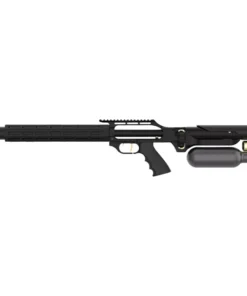
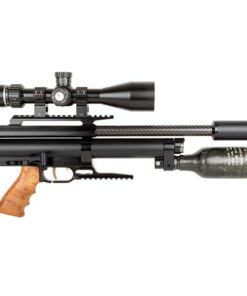
Hatsan produces several PCP configurations for shooters who prefer compact ergonomics without giving up barrel length. The hatsan bullboss is one example, while the bullmaster represents another recognizable bullpup-style platform. The hatsan hercules family is associated with higher-capacity PCP configurations, and the hatsan hercules bully provides a compact bullpup alternative within that broader design category.
The hatsan flash is another widely recognized PCP platform. Because hatsan flash configurations can vary, buyers should compare caliber, stock style, barrel arrangement, pressure system, and included equipment before purchase. The hatsan flashpup qe offers a bullpup-inspired format and is often considered by customers wanting a shorter overall rifle.
Other PCP-related searches include the hatsan invader, hatsan factor rc, and hatsan neutron star. Each platform serves a somewhat different purpose, which means specifications rather than appearance alone should determine which airguns are most appropriate for a particular type of sporting or recreational shooting.
Hatsan Jet 2 and Compact PCP Options
The hatsan jet 2 has attracted attention among customers looking for compact PCP versatility. Because the hatsan jet 2 may be configured differently depending on market and package, shoppers should verify the exact specifications supplied by the retailer. Searches for jet ii generally refer to the same Jet-series concept, while hatsan jet 2 accessories may include compatible magazines, optics solutions, carrying equipment, seals, and manufacturer-approved replacement components.
The hatsan velox is another compact platform that may appeal to customers researching modern PCP systems. However, compatible equipment should always be verified against the precise model designation rather than assuming accessories interchange across different Hatsan products.
Classic Hatsan Spring and Gas-Ram Air Rifles
Not every Hatsan buyer wants PCP equipment. Traditional spring-piston and gas-ram designs remain an important part of the catalog. The hatsan model 95 is among the best-known examples, while searches for hatsan mod 95 and simply mod 95 usually refer to the same established platform.
The hatsan 125 is another familiar full-size option. Meanwhile, the hatsan 135 is commonly researched by shooters interested in larger, more substantial break-barrel platforms. The hatsan 135 vortex air rifle incorporates Hatsan’s Vortex gas-piston concept, while the hatsan 135 carnivore is associated with larger-caliber configurations. Searches for a hatsan big bore carnivore rifle are similarly connected with users comparing large-bore air-powered platforms.
Additional traditional models include the hatsan mod 65, which appears in searches from buyers interested in full-size sporting configurations. The hatsan airtact air rifle, commonly shortened to hatsan airtact, represents another accessible platform. The hatsan zada also broadens the selection for customers comparing break-barrel designs.
Big-Bore Hatsan Models and Specialty Platforms
For customers researching large-bore PCP technology, the hatsan piledriver is one of Hatsan’s best-known specialized platforms. Large-bore air rifles occupy a different category from a conventional .177 caliber air pellet gun, so caliber, projectile compatibility, operating pressure, legal restrictions, and intended sporting use should all be carefully reviewed.
The hatsan harpoon is another specialized product name associated with Hatsan’s air-powered lineup. Because it functions differently from a conventional pellet rifle, buyers may encounter the phrase arrow launcher while researching this category.
These specialized products should not automatically be compared with a traditional pallet gun or standard pellet rifle because their operating systems, projectiles, dimensions, and intended uses can be substantially different.
Refurbished Hatsan Air Rifles and Replacement Parts
Budget-conscious customers sometimes search for hatsan refurbished equipment or refurbished air rifles. A refurbished product can offer good value when its condition, inspection history, seals, pressure system, warranty coverage, and included accessories are clearly disclosed.
Existing owners may instead require hatsan aftermarket parts. When replacing magazines, seals, fill probes, stocks, mounts, or other components, compatibility should always be matched to the precise rifle generation and caliber. Similar-looking parts should never automatically be assumed to fit every Hatsan platform.
Product names such as 1000x.25 may also appear when shoppers compare model or caliber-specific configurations, so confirming the manufacturer’s exact designation is particularly important.
Scopes, Pellets, and Air Rifle Accessories
Optics are another major consideration when configuring an air rifle. A basic 4×20 optic may be encountered in entry-level packages, and the term 4×20 is therefore frequently seen alongside airgun searches. However, optic selection should ultimately reflect the rifle’s mounting system, recoil characteristics, shooting distance, and intended use.
Pellet selection also matters. Products such as h&n field target trophy are widely recognized among airgun enthusiasts, while h&n field target trophy bleifrei refers to a lead-free option within that product family. Individual rifles may prefer different pellet weights and shapes, so consistency and accuracy should be evaluated with the manufacturer’s recommendations in mind.
The term crow magnum may also appear when users research heavier hunting-oriented pellet designs or related airgun ammunition. Ammunition compatibility must always be checked against the specific caliber and manufacturer’s specifications.
Choosing Between PCP, CO2, and Spring-Powered Airguns
A modern air pellet gun can use several different power systems. A PCP system stores compressed air inside a reservoir, while a spring-piston rifle relies on mechanical energy generated during cocking. A co2 pellet rifle, by contrast, uses carbon dioxide cartridges or a compatible CO2 supply.
Each system offers different advantages. PCP rifles may provide low recoil and repeatable operation, while spring-powered rifles avoid the need for external filling equipment. CO2 systems can offer convenient operation in compatible platforms, although performance may vary with temperature.
Customers researching the air rifle range should therefore consider much more than velocity figures. Ergonomics, caliber, overall length, weight, filling equipment, magazine design, maintenance requirements, noise level, available service support, and local regulations can all affect long-term ownership.
Hatsan Models for Different Airgun Preferences
With platforms such as the hatsan blitz, hatsan sortie, hatsan hercules, hatsan bullboss, hatsan flash, hatsan invader, hatsan piledriver, hatsan jet 2, hatsan velox, hatsan factor rc, hatsan airtact, and hatsan model 95, Hatsan covers a broad spectrum of airgun categories.
Some customers may prioritize a traditional sporting rifle, whereas others may prefer a compact PCP or bullpup. Shooters interested in sniper long style configurations may focus more strongly on stock ergonomics, optics mounting, stability, and longer-range target capability rather than simply choosing the most powerful model.
Meanwhile, terms such as econ ii may appear in accessory or product-related searches depending on the equipment being compared. Compatibility should always be established using the exact manufacturer and model specification.
Ultimately, selecting among hatsan air guns should begin with the intended application. A lightweight .177 caliber rifle may suit recreational target shooting, while a larger PCP platform can serve a very different sporting role. Models such as the hatsan blitz .30 cal, hatsan blitz 30 cal, or other 30 cal air rifle configurations should therefore be evaluated according to their specifications, local law, appropriate shooting environment, and intended lawful use.
From the compact jet ii and hatsan jet 2 to the established hatsan mod 95, powerful hatsan 135, specialized hatsan harpoon, and modern semi-auto PCP platforms, the Hatsan catalog gives airgun enthusiasts an extensive selection. Comparing specifications carefully helps buyers identify the right air rifle while ensuring that pellets, optics, filling equipment, magazines, and accessories remain correctly matched to the chosen platform.
Practical Use in the Field
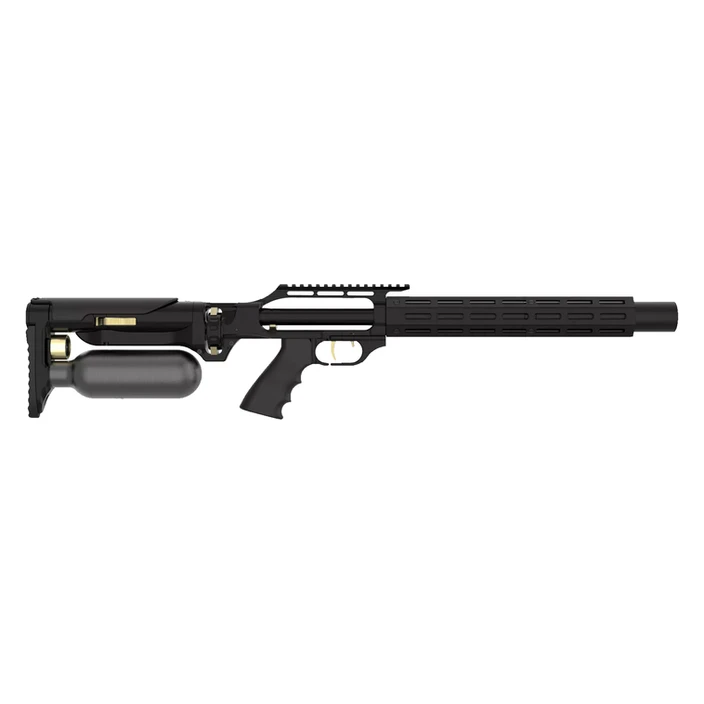
A compact self-indexing bullpup is most useful when follow-up shots must be taken without a break in aim. Consequently, a second or third pellet can be sent while the sight picture is still held. Moreover, a short overall length is retained so that movement through cover, hedges, and vehicle doors is simplified. Therefore, work around farmyards, woodland edges, and range benches can be completed with less snagging and less repositioning.
In addition, a regulated high-pressure system is relied upon so that point of impact remains predictable across a magazine. Meanwhile, a fully shrouded barrel and an integrated moderator are employed so that report is reduced when livestock, neighbors, or game must not be startled. Likewise, an octagonal handguard with multiple accessory slots is used so that a bipod, light, or sling can be attached without a second chassis.
Quiet Pest Control Around Buildings and Hedgerows
Close-range vermin work is often performed from gateways, feed stores, and orchard margins. Accordingly, a low-profile layout is favored because the optic sits close to the bore and the muzzle stays shorter than a conventional full-length rifle. As a result, shots can be taken from a kneeling or seated position beside a wall without the barrel being pushed into branches.
Rapid cycling is especially valuable when several birds lift from a roof or when two rabbits appear in the same lane. Furthermore, a twelve-round rotary magazine is loaded in advance so that a string can be finished before a reload is required. Subsequently, the magazine can be withdrawn from the side after the retainer is slid forward, and a second magazine can be inserted without the action being forced open.
A spring-free magazine design is used so that pellets are not crushed during feeding. Hence, lightweight hunting pellets can be run for quiet sub-twelve or mid-power work, while heavier slugs can be reserved for longer lanes on the same outing if a dedicated slug magazine is carried. Equally, an automatic safety associated with magazine removal is engaged whenever the drum is taken out, so an unloaded condition is encouraged during a walk between barns.
Highlighted field habits for yard and hedge work include:
- A stable rest is taken on a fence post, bag, or bipod before the first shot is released
- Wind and backstop are confirmed because urban and farm edges often hide roads and stock
- Follow-up shots are delayed a fraction of a second so that the first impact can be read
- Magazines are swapped behind cover rather than in the open
- Report is kept modest by the shroud so that remaining pests are less likely to flush at once
Nevertheless, legal limits and permission on private land must always be observed. Inclusive practice requires that every shooter, regardless of stature or experience, confirms a safe backstop and wears eye protection before a session is begun.
Woodland Hunting and Longer Lanes
A 550 mm rifled barrel is preferred when velocity and stability at fifty to eighty metres are needed. Consequently, a flatter trajectory can be obtained with suitable slugs or heavy pellets once the regulator is set within its intended range. In addition, a twenty-MOA canted rail is fitted so that a high-magnification optic can be zeroed without running out of elevation at distance.
Slug ammunition is supported without a factory choke change. Therefore, a dedicated slug magazine can be carried in a pouch and exchanged when a longer crossing shot is expected. Meanwhile, pellet magazines remain available for closer sit-and-wait work under a high seat. In the same way, consistent valve timing is relied upon so that the first shot after a pause does not wander excessively, provided the bottle has not been left near the regulator floor.
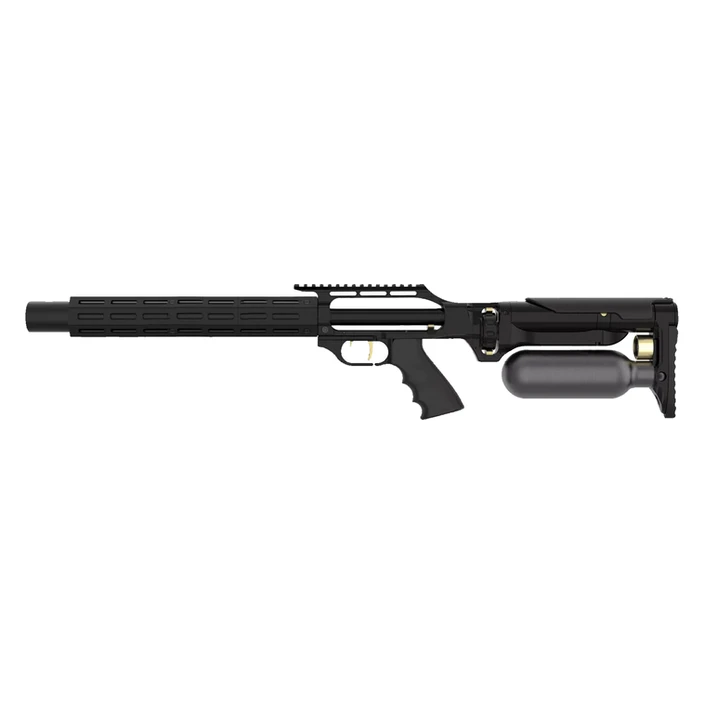
Movement through undergrowth is aided by the bullpup balance. The air bottle is housed in the butt, so mass is kept rearward and the forend stays slim. As a result, the rifle can be carried at the ready with a light sling attached to M-LOK points. Moreover, a replaceable pistol grip of AR pattern is used so that gloves or different hand sizes can be accommodated without a custom stock.
When a quarry animal is first seen, the side lever is not required after each discharge. Instead, the self-indexing cycle chambers the next round automatically. Thus, a second shot can be taken if the animal steps rather than drops. Still, ethical hunting demands that only clear, humane shots are attempted; rapid fire is never a substitute for shot placement.
Practical woodland notes can be summarized as follows:
- Zero is confirmed at the expected hunting distance before the season starts
- Slug and pellet magazines are marked so that the wrong drum is not inserted in low light
- A bipod or sticks are fitted on the octagonal handguard for sitting shots along rides
- Fill pressure is checked on the analogue gauge before a long walk is begun
- Decocking is used if a shot is abandoned so that a live chamber is not carried through dense cover
At the same time, weather sealing of optics and a simple wipe-down of the metal chassis after rain are recommended, because condensation and grit are common on autumn mornings.
Range Practice, Steel, and Skill Building
Consistency across a magazine is best learned on paper and steel before field use. Accordingly, ten-shot strings can be fired from a bench so that extreme spread and velocity variation are observed. Furthermore, the adjustable two-stage trigger can be refined so that a clean break is obtained without disturbing the sight picture during fast follow-ups.
Steel plates at thirty to fifty metres reward a self-indexing action because a plate can be re-engaged immediately after a miss or a ringing hit. Consequently, timing and recoil management are practiced without a cocking stroke interrupting the rhythm. Likewise, magazine changes can be drilled until the retainer, withdrawal, and insertion become smooth for shooters of either dominant hand, provided the layout is studied first.
A match-grade barrel and a rigid chassis are intended to keep groups tight when quality ammunition is selected. Therefore, several pellet weights should be tested rather than a single tin being assumed to be ideal. In addition, slug magazines should be tried separately, because seating depth and bearing surface differ from diabolo pellets. Thereafter, a dope card can be written for the chosen load so that holdover is known when the same setup is taken afield.
Inclusive range sessions benefit from a shared rest and clear communication. Newer shooters can be introduced to the platform beside experienced companions, and stature differences can be addressed through the adjustable buttpad and interchangeable grip. Safety flags, muzzle discipline, and a verified impact area remain mandatory for every participant.
Useful range drills include:
- Slow five-shot groups from a bag to establish mechanical accuracy
- Timed twelve-round strings to learn cadence without rushing the trigger
- Magazine-out safety checks after every string
- Positional work from kneeling and standing with a sling
- Night or low-light practice only where range rules and lighting devices are permitted
Hence, confidence is built before live quarry is approached.
Accessories, Lighting, and Modular Setups
Modular mounting is one of the main reasons a tactical forend is specified. M-LOK slots on several faces allow a compact light to be aligned with the bore for lamping, provided local law allows artificial light. Moreover, a bipod can be attached under the handguard for prone or bench work, while a short vertical grip or barrier stop can be added for vehicle-window shots.
An integrated moderator already reduces signature, yet an adapter may be required if an additional can is desired. Therefore, thread compatibility should be confirmed before extra hardware is purchased. Similarly, the Picatinny rail accepts both conventional scopes and compact prism or red-dot optics; a canted rail favors longer zeros when slugs are used at extended distance.
A carbon bottle keeps mass lower than a large steel tube of similar capacity. As a result, a light can be added without the front end becoming unwieldy. Nevertheless, battery packs and heavy thermal devices should be balanced with a rear bag or sling, because the bullpup’s short length concentrates accessories near the support hand.
Field-ready accessory habits are listed below:
- Lights are zeroed to the point of aim at the usual pest distance
- Slings are attached so that a free hand remains available for gates and calls
- Spare magazines are carried in a pouch that does not rattle
- Fill probes and seals are kept in a dry pocket for remote tops-ups
- Optics caps are used when moving through thorn or rain
Meanwhile, nothing is mounted that blocks the magazine release or the pressure gauge.
Filling, Shot Count, and Session Planning
A 300 cc bottle at up to 300 bar appears modest, yet efficiency of the valve is high. Consequently, several magazines can often be completed on one fill when power is kept within a sensible regulator setting. In the same way, air use rises if strings are fired as fast as the mechanism allows, because the plenum must recover between shots.
Planning a session therefore includes a check of the onboard gauge before leaving the vehicle. Furthermore, a portable compressor or a charged buddy bottle is recommended for all-day farm work. Subsequently, the regulator should not be driven to the extreme of its range merely to chase velocity, because consistency and shot count both suffer when the set pressure is pushed too high.
Decocking is available when a hunt is paused. Thus, spring tension and a live chamber need not be carried during a long wait. Equally, the manual safety is applied whenever the muzzle is no longer on a target. Inclusive groups should agree on a common safe condition before anyone walks ahead.
Responsible Use Across Roles
The same compact platform can serve pest control at dawn, steel practice at midday, and a high-seat sit at dusk if magazines and ammunition are swapped deliberately. However, power, caliber, and licensing must match the task and the jurisdiction. Where a certificate is required for higher energy, that document is obtained before the rifle is used at those levels. Where a legal limit applies, the factory or dealer setting is left unaltered.
Safe storage, transport in a case, and confirmation of permission on land are part of every practical scenario. Moreover, hearing and eye protection remain advisable even when a shroud is fitted, because repeated strings still produce impulse noise. Children and untrained companions are kept clear of the firing line; inclusive sport means access for trained adults of all backgrounds, not unsupervised handling.
When these habits are followed, rapid self-indexing fire, a stable 550 mm barrel, and a modular tactical chassis can be applied to real work rather than to noise alone. Accuracy is then preserved, follow-up shots remain ethical, and the outing stays productive from the first magazine to the last fill of the day.
Frequently Asked Questions
How is a self-indexing action used in the field?
A self-indexing, semi-automatic cycle is employed so that a fresh pellet or slug is chambered after each discharge without a side-lever stroke. Consequently, follow-up shots can be taken while the sight picture is still held. Moreover, a patented high-speed valve is relied upon so that opening and closing occur quickly enough for consistent energy and low air use. Therefore, a twelve-round string can be completed in rapid succession when conditions and ethics allow.
Nevertheless, the first charge of a session is still prepared with the forward side lever. Thereafter, indexing is handled by the mechanism. In addition, a unique decocking function is provided so that a live chamber can be made safe if a shot is abandoned. Inclusive use requires that every shooter, regardless of experience, confirms the muzzle direction and a clear backstop before any string is begun.
Which calibers and power levels can be selected?
Four chamberings are commonly offered: .177, .22, .25, and .30. Accordingly, approximate maximum energies on a 550 mm barrel can reach about 80 J, 140 J, 180 J, and 220 J under favorable conditions with suitable ammunition. Meanwhile, legal-limit configurations are also supplied where local rules cap muzzle energy. Hence, a certificate may be required before higher-power versions are purchased or used.
Factory energy ranges are further influenced by regulator setting, projectile weight, and temperature. As a result, published figures should be treated as guidance rather than a guarantee on every tin. Likewise, responsible ownership includes confirmation of licensing, transport rules, and permitted quarry before a caliber is chosen.




Reviews
There are no reviews yet.