Daystate, FX Airguns, PCP Rifles, Accessories and Precision Airgun Equipment
For enthusiasts researching premium PCP platforms, accessories, replacement components, and precision shooting equipment, the modern airgun market offers an extensive range of options from brands such as Daystate and FX. Searches for daystate blackwolf, daystate redwolf, delta wolf, huntsman daystate, daystate alpha wolf, wolf delta, day state, and daystate delta wolf frequently come from shooters comparing electronic PCP technology, ergonomic designs, premium construction, and sophisticated firing systems. Traditional styling also remains important, which is why terms such as stock walnut, safari stock, dima stock, rimfire stocks, and stock replacement continue to attract buyers who value both appearance and practical fit.
Among electronically controlled PCP rifles, the daystate alpha wolf, daystate blackwolf, daystate redwolf, and daystate delta wolf are commonly associated with advanced regulation, refined shot management, and a highly consistent firing cycle. Searches such as what is a delta wolf, what is a delta wolf, delta wolf meaning, deltaw, blackwolf, red alpha wolf, alpha red wolf, model alpha gun, model alpha gun, and electronic wolves often reflect buyers trying to understand how Daystate’s electronically managed rifles differ from conventional mechanical PCP systems. Other searches, including daysta, wolf gun, wolverine gun, wolveriner, daystate wolverine sapphire, daystate wolverine sapphire, and wolfpack armory wolverine, demonstrate the broad interest surrounding Wolf-branded and Wolverine-related sporting platforms.
Small ergonomic components can make a substantial difference to comfort and handling. A rifle butt pad, rubber butt, rubber butt pad, and butt pad rifle accessory can improve shoulder contact, while a bradley cheek riser can help support a more consistent head position. Likewise, enthusiasts may research gecko grips, a cocking ball, short cocking, an index pin, pin magazine, lock timing, and lock time when learning about rifle ergonomics, cycling characteristics, and replacement components. Searches for buddy bottle cover and buddy bottle cover also remain relevant for shooters who want to protect external air cylinders from cosmetic wear during transport or field use.
Magazine compatibility is another frequent consideration. Users may search for a 177 magazine, mag 177, 25 magazine, 5.0 mm pellets, 177 pellets types, slug pellet, or a general pellet rifle when comparing ammunition formats and magazine configurations. Pellet selection should always match the manufacturer’s recommended caliber and specifications for the rifle being used. A well-matched magazine and suitable ammunition can support reliable feeding and consistent performance without unnecessary mechanical stress.
PCP equipment relies on compressed air, so searches such as air rifle compressed air, air gun pc, air gun, and air guns are commonly connected with understanding pre-charged pneumatic systems. Owners also frequently search for a pcp o ring kit because seals form an important part of maintaining an air-tight pneumatic system. Maintenance should follow manufacturer-approved procedures, especially for high-pressure components, regulators, cylinders, and valves.
Sound-moderation accessories form another major category. Common search terms include air gun suppressor, air gun suppressors, airgun moderator, air rifle moderator, 0db, 0db moderator, 0 db moderator, 0 db moderator, 0 db moderator, 0 db moderator, and hogan decimeater silencer. Thread-related searches include silencer thread adapter, thread protector rifle, and muzzle thread protector. Compatibility depends on barrel threading, caliber, applicable law, and manufacturer specifications, so owners should verify all requirements before purchasing or fitting any muzzle accessory.
Mounting systems have also become increasingly important as modular fore-ends and accessory rails become more common. Searches for an mlok to picatinny rail adapter, best m-lok to picatinny rail adapter, m-lok to picatinny adapter, picatinny m lok adapter, and picatinny bag rider usually come from shooters wanting greater flexibility when mounting supported accessories. The best adapter is generally one that matches the rifle’s rail specification, uses quality hardware, fits securely, and avoids unnecessary bulk.
Sling-related searches are equally common. Buyers frequently look up how to put a gun sling on a rifle, how to put a rifle sling on, how to install a rifle sling, riffle sling, rigle sling, how to put sling on rifle, installing a rifle sling, and attaching a sling to a rifle. A compatible sling can improve carrying comfort and transportation, but attachment points should always be checked against the rifle manufacturer’s recommendations to avoid damage to the stock or mounting hardware.taipan black
The alpha wolf barrel and accessories such as an ats tuner may also interest precision-focused users researching how different rifle configurations are designed. Similarly, terms such as weatherby vanguard trigger adjustment appear in broader shooting-related searches, although trigger systems differ significantly between platforms and should be serviced or adjusted only according to the applicable manufacturer’s safety instructions. Another unusual search phrase, how to put extinguisher call back together, is unrelated to PCP rifle servicing and should be treated according to the specific extinguisher manufacturer’s maintenance guidance rather than general airgun information.
For buyers comparing premium European PCP equipment, daystate redwolf price and daystate redwolf price are common commercial-intent searches. Pricing can vary depending on caliber, stock type, configuration, region, dealer, and included accessories. People may also search fx airgun dealer near me when looking for authorized retailers, parts support, servicing, or warranty assistance.
FX Airguns remains another major name in the PCP market. Popular searches include fx impact m3 .22cal air rifle. 600mm barrel, fx impact m3, fx impact mk3, fx m3 airgun, fx m3, impact m3, and fx impact m3 air rifle. Price-focused searches such as fx impact m3 precio, fx impact m3 precio en usa, and fx impact m3 price indicate strong buyer interest in comparing regional pricing and available configurations. The modular design philosophy associated with the FX Impact family makes it especially attractive to experienced PCP users who prioritize adjustability, ergonomics, accessory compatibility, and high-quality construction.
Potential buyers also encounter less common search phrases such as griffin gun, unfend, black snood, red bodywarmer, and can wolverine go on planes. Airline transport rules for sporting equipment and compressed-air components can differ substantially between carriers and countries, so travelers should always check current airline, airport, customs, and destination regulations before making travel arrangements. Likewise, terms such as 3.55kg in lbs may appear when buyers compare rifle weight specifications across metric and imperial listings.
Whether someone is researching the daystate alpha wolf, daystate blackwolf, daystate redwolf, huntsman daystate, wolf delta, an fx impact m3, or another premium pellet rifle, the most important purchasing factors remain intended use, caliber compatibility, overall weight, stock ergonomics, magazine design, air-cylinder capacity, manufacturer support, and accessory compatibility. Premium PCP ownership is best supported by appropriate maintenance, manufacturer-approved components, secure storage, responsible handling, and compliance with all local laws and transport requirements.4.5mm air gun
Calibres, FAC Power Levels and Accessories of the Taipan Slash Tactical
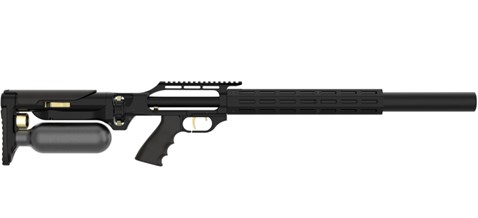
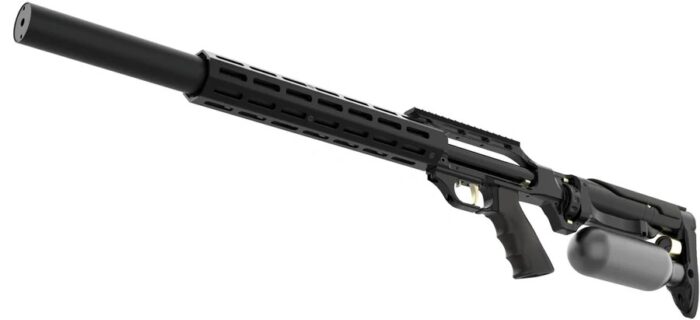
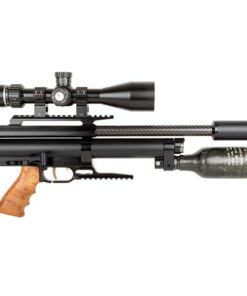
A wide choice of projectiles and power settings is provided by the Taipan Slash Tactical so that diverse shooting requirements can be met. Four established calibres are offered, two barrel lengths are available, and an externally adjustable regulator is fitted. Consequently, both sub-12 ft/lb use and higher FAC outputs can be configured according to local law and intended application. Furthermore, a generous suite of mounting points and included items is supplied, therefore optics, bipods and extra magazines can be added with ease. Inclusive fitment options such as a replaceable AR-15 grip ensure that a comfortable hold can be obtained by a broad range of shooters.
Available Calibres and Magazine Compatibility
Four popular calibres are catalogued for the Taipan Slash Tactical: 4.5 mm (.177), 5.5 mm (.22), 6.35 mm (.25) and 7.62 mm (.30). A 12-round detachable rotary magazine is employed across most configurations, while a slightly reduced capacity may be encountered in certain .25 setups depending on projectile length. Moreover, dedicated pellet and slug magazines are typically included with .22 and larger offerings, so deformation-free feeding of slugs up to 13 mm can be achieved without modification. In addition, spring-free magazine design is utilised, as a result of which consistent chambering is maintained even during rapid semi-automatic strings. Therefore both classic diabolo pellets and modern slugs can be employed according to preference and range.
Calibre Snapshot
- .177 (4.5 mm) — high shot count and flat trajectory for targets and training
- .22 (5.5 mm) — versatile all-rounder for pest control and mid-range work
- .25 (6.35 mm) — increased energy and slug capability for hunting applications
- .30 (7.62 mm) — maximum available energy on the 550 mm barrel for longer-range use
FAC Considerations and Adjustable Power
Legal power limits vary by jurisdiction, and responsible configuration of the Taipan Slash Tactical is therefore essential. Sub-12 ft/lb (approximately 16 J) versions are commonly supplied for markets where a firearms certificate is not required, while higher FAC outputs can be realised where permitted. An externally adjustable regulator is fitted so that working pressure can be fine-tuned; typical recommended regulator settings fall in the 120–170 bar range, with optional high-pressure regulator kits allowing higher values to be reached. Consequently, muzzle energy can be tailored to ammunition weight and local regulations. Meanwhile, the patented ultra-fast valve keeps air consumption low even when elevated power is selected, so a useful shot count is still delivered from the 300 cc carbon-fibre bottle.
Approximate maximum muzzle energies (550 mm barrel, ideal conditions and suitable ammunition) are published as follows: around 80 J in .177, 140 J in .22, 180 J in .25 and 220 J in .30. Lower figures are produced by the compact 420 mm barrel. Factory power bands also exist (for example 20–50 J in .177 and 50–90 J in .22 on the longer barrel), therefore a practical working range can be selected without extreme tuning. Consistency is further supported by the 46 cc power plenum, as a result of which velocity variation is kept modest when a brief interval is allowed between shots.
Barrel Length, Energy Delivery and Efficiency
Two barrel lengths are offered so that handling or velocity can be prioritised. The 420 mm option yields an overall length of 809 mm and a weight of approximately 2.8 kg, making compact carry and confined-space use more convenient. Conversely, the 550 mm barrel extends overall length to 940 mm and weight to about 3.1 kg, while additional velocity and energy are gained. A fully shrouded barrel with integrated sound moderator is fitted in both cases, therefore report is reduced and rigidity is improved. Additional external moderator adapters can be obtained separately if still quieter operation is desired.
Because air usage of roughly 7–9 cm³ per joule is achieved by the high-speed valve, impressive shot counts per 300 bar fill are recorded in regulated sub-12 configurations (often 60–90+ shots depending on calibre and pellet weight). Higher FAC settings naturally reduce the number of consistent shots, yet efficiency remains competitive for a semi-automatic platform. A built-in pressure gauge is provided so remaining air can be monitored at a glance.
Accessories, Mounting Options and Recommended Add-Ons
Extensive customisation is enabled by the tactical chassis of the Taipan Slash Tactical. A 20 MOA canted Picatinny rail is installed for optics, allowing long-range zeroing to be simplified. Multiple rows of M-LOK slots surround the octagonal forend, so bipods, lights, slings and other accessories can be attached on several faces. The polymer AR-15 compatible grip can be exchanged for aftermarket units, and a height-adjustable buttpad together with cheek rest permits a personalised fit. A unique decocking lever and dual safety system (manual slide plus magazine-removal interlock) are also incorporated for safer handling.
Typical Contents and Popular Accessories
- Two 12-shot magazines (pellet and slug where applicable)
- Fill probe and regulator adjustment tool
- Spare O-rings and basic accessory pack
- Optional high-pressure regulator kit
- Extra magazines and slug-seating tools
- M-LOK bipods, Arca adapters and sling mounts
- Quality optics matched to the 20 MOA rail
- External moderator adapter if additional suppression is required
- Protective case or padded bag for transport
Optics with generous elevation travel are recommended so that the built-in 20 MOA cant can be fully utilised at longer distances. Likewise, a sturdy bipod or rest can be mounted via M-LOK to maximise the inherent accuracy of the match-grade CZ barrel. Inclusive language and modular hardware mean that left- or right-handed shooters and users of varying stature can configure the rifle comfortably. Regular inspection of seals, regulator setting and magazine condition is advised so that reliable performance is preserved.
Taken together, the calibre range, adjustable power architecture and rich accessory interface of the Taipan Slash Tactical allow a single platform to serve target shooters, pest controllers and hunters. Legal limits must always be respected, and local FAC or airgun regulations should be verified before any high-power configuration is selected. When correctly set up, a versatile, efficient and highly customisable semi-automatic PCP is placed in the hands of the shooter.
Practical Use Scenarios in the Field and on the Range
Everyday shooting tasks are handled with unusual fluency once a regulated, self-indexing PCP bullpup is brought into service. Rapid strings can be produced without a side-lever cycle between shots, yet consistency is still preserved when a brief pause is allowed for the plenum to recover. Consequently, both measured target work and time-sensitive field shots can be completed with the same platform. Inclusive ergonomics further mean that a stable hold can be found by shooters of different stature and laterality. Moreover, pellet and slug magazines can be swapped according to distance and quarry, so one rifle can be adapted across several disciplines without mechanical conversion.
Precision Target Work and Controlled Rapid-Fire Practice
Paper and steel at 25–50 metres are routinely engaged from a bench or supported rest. Tight groups are produced when quality ammunition is selected and the regulator is left at a stable setting. Meanwhile, the 20 MOA rail allows elevation to be used efficiently so that longer zeros can be established without running out of turret travel. Subsequently, once a solid zero is confirmed, strings of twelve shots can be fired in succession to rehearse follow-up rhythm. A short interval between shots is nevertheless recommended; otherwise a slight drop in velocity may be observed as the plenum refills. Therefore measured cadence rather than maximum speed is favoured when group size is the priority.
Reactive steel and spinner targets benefit from the same self-indexing action. Hits can be confirmed instantly, and a second pellet can be sent without breaking cheek weld. In addition, the shrouded barrel and integrated moderator keep report modest, so backyard or club-range sessions remain neighbour-friendly when local rules permit. A bipod or bag rest can be attached via M-LOK slots, as a result of which wobble is reduced and the inherent accuracy of the match-grade barrel is more fully realised. Likewise, an adjustable cheek piece and buttpad allow a repeatable head position to be locked in, which is especially helpful during longer practice blocks.
Typical range session outline
- Zero confirmation at 30 m from a supported position
- Five-shot groups at 40 m with the preferred pellet
- Timed but unhurried twelve-shot strings on steel
- Slug comparison at 50 m if wind is light
- Regulator and gauge check before packing away
Pest Control and Close-to-Medium Range Management
Quiet, accurate shots on rabbits, rats, pigeons and similar pests are frequently required around farms, smallholdings and permission land. A compact 420 mm barrel configuration is often preferred in sheds, yards and dense cover because overall length stays modest and swing between targets is quicker. Furthermore, the semi-automatic cycle allows a second shot to be taken if the first is deflected by vegetation or if more than one animal is present. At the same time, the integrated moderator helps keep disturbance low so that remaining pests are less likely to scatter immediately.
A .22 or .25 pellet of proven weight is commonly chosen for this work; energy can be kept within legal limits while still delivering humane placement when range is known. Slug magazines may be reserved for slightly longer lanes across open ground. Moreover, a simple red-dot or compact scope can be mounted on the Picatinny rail for fast acquisition in fading light. Lights or lasers can likewise be added to M-LOK slots when night work is authorised. Inclusive grip options and a relatively light all-up weight mean that the rifle can be carried for extended walks without excessive fatigue, which is valuable when several buildings or field edges must be checked.
Careful range estimation remains essential. Distances should be walked or ranged in advance wherever possible, and shots should be taken only when a safe backstop is present. Consequently, the speed of the action is treated as a tool for ethical follow-up rather than as an invitation to spray shots. Magazine changes can be performed quickly in the field because the rotary unit is removed by a simple lever, so spare loaded magazines can be carried without fumbling.
Hunting Applications Where Local Law Permits
Small- and medium-game hunting with air is tightly regulated in many regions; therefore legal energy limits, licensing and quarry lists must always be verified before any outing. Where FAC-level power is authorised, the longer 550 mm barrel and heavier calibres can be employed so that slugs carry useful energy to slightly greater distances. A stable rest, whether natural or attached via M-LOK, is still advised because precision placement matters more than raw speed. In addition, wind drift on slugs should be observed during practice so that hold-off can be applied confidently.
Stalking in woodland or along hedgerows is assisted by the low-profile chassis and quiet report. The rifle can be shouldered quickly from a sling, and the first shot can be followed by a second without a noisy cocking stroke. Meanwhile, the carbon bottle in the butt keeps the balance rearward, which some shooters find helpful when the rifle is held for long periods. An adjustable regulator allows output to be matched to the chosen projectile so that expansion or penetration remains appropriate for the species. Nevertheless, range discipline and shot selection remain the shooter’s responsibility; the action’s speed does not replace fieldcraft.
Slug versus Pellet Selection under Real Conditions
Pellets remain the default choice for most target and short-range pest work because they are inexpensive, widely available and gentle on the barrel. Groups at 30–40 metres are typically smallest with a well-matched diabolo. Slugs, by contrast, are selected when a flatter trajectory or greater down-range energy is required. Dedicated slug magazines are used so that longer projectiles are not deformed on loading. As a result, the same rifle can be switched between ammunition types in minutes.
Wind and distance change the decision. Pellets may be favoured on a gusty day at modest range, while slugs can be preferred on a still evening when a longer crossing shot is anticipated. Furthermore, regulator pressure can be trimmed after a change of ammunition so that velocity stays inside a consistent window. Chronograph checks at the start of a session are therefore worthwhile whenever a new batch or a different projectile style is introduced. Inclusive practice also includes testing both ammunition types from the same rest so that personal preference is based on data rather than assumption.
Compact versus Extended Barrel in Daily Handling
The shorter barrel is chosen when vehicles, hides, attics or thick cover are involved. Overall length stays close to 81 cm, so the rifle can be slipped in and out of a case or across a fence with less snagging. Swing onto close, moving pests is also quicker. The longer barrel is selected when extra velocity and a slightly quieter, more rigid shot are valued, or when slugs are expected to be used at the upper end of practical airgun distances. Weight increases only modestly, yet the extra sight radius and energy can be felt on paper and on steel.
Transport between these roles is simple. A single fill probe, two magazines and a small tool kit cover most days. A padded sleeve or hard case protects the rail and moderator during vehicle travel. Subsequently, once at the permission or club, the chosen optic can be confirmed and the regulator setting glanced at on the gauge before the first shot is fired.
Training, Skill Development and Inclusive Use
New and experienced shooters alike can use the platform as a training tool. Trigger control is rehearsed because the two-stage unit can be adjusted to a clean break. Follow-through is practised because the self-indexing cycle does not demand an immediate lever stroke. Moreover, magazine capacity encourages planned strings rather than endless single loading, which helps build a repeatable rhythm. Inclusive language and hardware matter here: an AR-style grip can be swapped, the buttpad height can be altered, and either laterality can be accommodated with stance rather than with a dedicated left-hand action.
Coached sessions benefit from the modest report and from the ability to keep several students shooting without constant interruption for cocking. Safety briefings should still emphasise muzzle awareness, the manual safety, the magazine interlock and the dedicated decocking procedure. A live round should never be left chambered when the rifle is set down. Consequently, the same features that make the rifle fast also require disciplined handling.
Suggested skill-building drills
- Supported five-shot groups at a known distance
- Unsupported standing shots on a large steel at 20–25 m
- Magazine change under a mild time constraint
- Pellet-to-slug swap and re-zero check
- Decock and make-safe routine at the end of every string
Accessory Setups for Different Environments
A compact scope or red-dot is typically fitted for pest and close hunting use, while a higher-magnification optic with generous elevation is preferred for longer target or slug work. Lights and small cameras can be added to M-LOK when legal and useful. A bipod transforms bench and prone practice; a sling is more valuable on long walks. Extra magazines, a fill adaptor and spare seals occupy little space yet prevent a session from ending early. An optional higher-pressure regulator kit may be considered only where law and intended energy require it.
Weather protection is straightforward. The metal chassis and shrouded barrel tolerate damp conditions better than many traditional stocks, yet the rifle should still be dried and lightly protected after rain. Optics caps and a muzzle cover keep debris out of the moderator. Therefore a short end-of-day routine preserves both accuracy and reliability.
Care, Transport and Responsible Sessions
Fills are taken to the published working pressure and not beyond. The gauge is read before leaving home and again before the first shot. Magazines are loaded away from the firing line when possible, and the decocking lever is used whenever a shot will not be fired. Local airgun and hunting rules are checked in advance; power is kept within the certificate or licence that is held. Inclusive, responsible use also means that guests and younger supervised shooters are given a clear briefing on the safety catch, the magazine lock and the need for a backstop.
When these habits are observed, the same rifle can serve a quiet evening of paper punching, a permission walk at dusk and a structured practice block at the club. Speed is available when it is needed; precision remains available when it is demanded. Ultimately, the practical value of the platform is found not in any single feature but in the way rapid follow-up, adjustable power, modular mounting and quiet operation can be combined across ordinary shooting days.
Frequently Asked Questions
Clear answers to the questions most often raised by new and experienced owners are collected below. Practical setup, legal power, ammunition choice and day-to-day handling are addressed so that informed decisions can be made before the first fill is taken. Inclusive language is used throughout because a comfortable, lawful and repeatable shooting experience should be available to a wide range of users. Furthermore, each reply is written so that features can be understood without brand-specific naming.
How is the semi-automatic cycle completed?
A patented high-speed valve is opened and closed with unusual rapidity after each trigger press. Consequently, the next projectile is indexed and the action is readied without a manual cocking stroke between shots. Up to twelve rounds can therefore be discharged in a controlled string. A brief pause between shots is nevertheless advised so that the plenum can refill and velocity can remain consistent. As a result, rapid follow-up is available when it is needed, while measured groups can still be produced when precision is the priority.
Can both pellets and slugs be used without modification?
Yes. Factory tuning is arranged so that standard diabolo pellets and longer slugs can be fired from the same barrel. Dedicated magazines are typically supplied for the two projectile styles in the larger calibres; the slug unit is marked so that the correct carrier can be identified at a glance. Projectiles up to about 13 mm in length can be chambered without deformation because a spring-free magazine design is employed. Therefore a change of ammunition type can be completed in the field by swapping magazines rather than by altering chokes or breech parts.
Which calibres and barrel lengths are offered?
Four established calibres are catalogued: 4.5 mm, 5.5 mm, 6.35 mm and 7.62 mm. Two barrel lengths are also listed, a compact 420 mm option and a 550 mm option. Overall length and weight change accordingly, remaining close to 809 mm and 2.8 kg with the shorter tube, or 940 mm and 3.1 kg with the longer tube. Moreover, energy potential rises with barrel length and calibre when suitable ammunition and a legal power setting are used. A choice can therefore be made according to whether portability or maximum velocity is valued more highly.
How is power adjusted, and what about FAC limits?
An externally adjustable regulator is fitted so that working pressure can be trimmed to match ammunition and local law. Sub-12 ft/lb configurations are commonly supplied where a certificate is not required. Higher FAC outputs can be realised only where licensing and energy limits allow. Optional higher-pressure regulator components may be obtained for elevated settings, yet recommended operating bands should still be respected. Legal limits must always be verified before any increase is attempted. Consequently, the same platform can be kept within unlicensed limits or prepared for authorised higher-power use.
How many consistent shots can be expected from one fill?
Shot count depends on calibre, projectile weight, regulator setting and whether semi-automatic strings are fired quickly or with a pause. The 300 cc carbon bottle is filled to a maximum of 300 bar, and a 46 cc plenum supports each discharge. Efficient valve timing (often quoted in the region of 7–9 cm³ of air per joule) means that useful strings are still obtained even in semi-automatic use. In regulated sub-12 settings, several magazines’ worth of consistent shots are frequently recorded. Higher energy settings reduce the number of uniform shots, as is expected with any PCP. A built-in gauge should be read before a session so that remaining pressure is known.





Reviews
There are no reviews yet.