We Deliver Airguns Directly To Your Door
SKU N/A Category

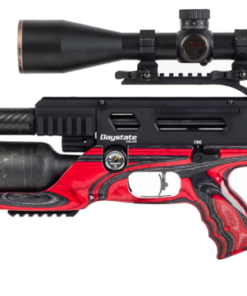
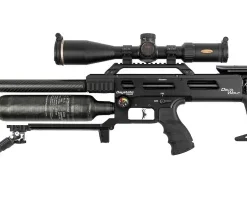
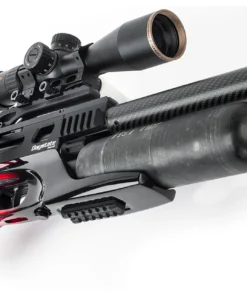
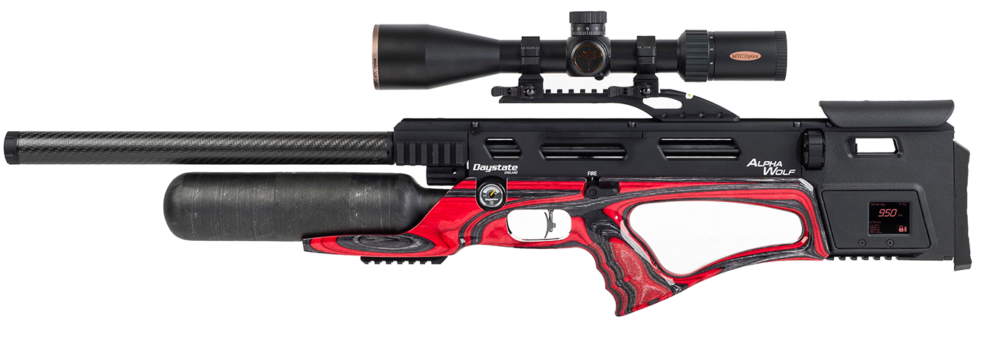
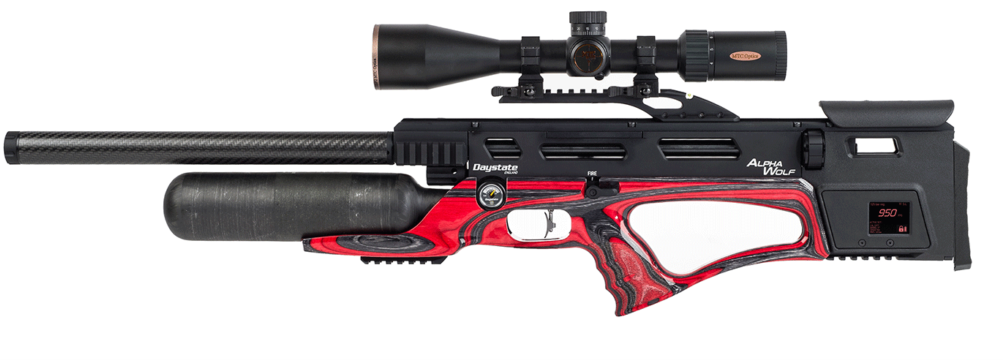
Daystate Alpha Wolf Smart

$2,120.00

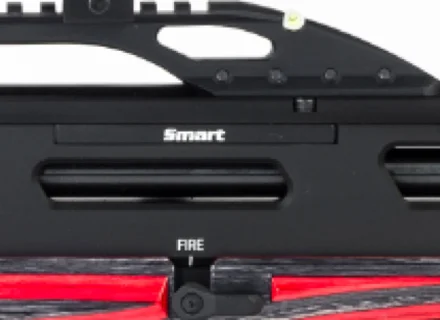
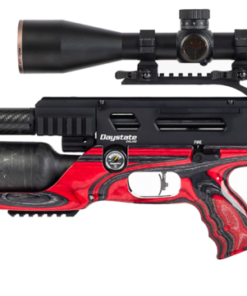
The new Alpha Wolf Smart represents a fresh take on the revolutionary electronic PCP air rifle. As its name suggests, the Alpha Wolf Smart is every bit as clever as its forebear.

However, we have made it smarter by loading it with simpler electronic programs. These compute without the need of any integral chronograph, making the Alpha Wolf Smart model much easier to operate. So Daystate can offer the Smart variant at a lower price than a standard Alpha Wolf. Yes, you can now enjoy the world’s most advanced airgun in an even more affordable package!

Of course, an Alpha Wolf Smart is still, well… smart! At its core, it retains the fabled Alpha Wolf computerised action that’s programmed to deliver the incredible performance this groundbreaking electronic PCP air rifle is known for. But with the less complicated, ‘lite’ electronics platform of the Alpha Wolf Smart, the shooter can simply ‘set and forget’… and then just concentrate on getting on with their shooting!

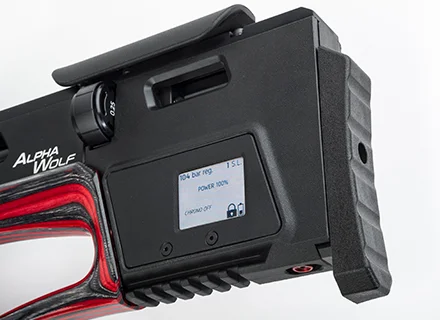
Plus, you still get the myriad of other specs that have won our flagship sporter plaudits from around the globe. Features that include an ambi thumbhole laminate wood stock with integral Picatinny accessory rails; adjustable intermount, cheek, butt pad and trigger; reversible sidelever and magazine; carbon-fibre buddy bottle and shrouded ART barrel. It also retains user-set touchscreen firing mode operation and firmware upgrade capability with Windows home computer integration (via optional DTD link), and it comes with an adjustable factory-fitted HUMA-Air Regulator.

Thanks to its computerised design, the Smart models software can easily be upgraded. So, should you ever want to add the onboard chronograph and full electronics program at a later date, the AlphaWolf Smart lets you do just that. Meanwhile, the modular design of the Alpha Wolf Smart means you can dress it with all manner of accessories. Butt claws, bag riders, forend extension rails, single-shot loaders – the Alpha Wolf Smart can be the exact rifle you want it to be. Now that’s what we call pretty smart!

Daystate Alpha Wolf Smart Specifications:

  • Overall length:  722mm
  • Barrel length:  430m
  • Cylinder capacity:  480cc
  • Weight:  3.35kg
  • Cocking:  side lever action – reversible
  • Magazine capacity:  13 shot (.177), 11 shot (.22)
  • Fill pressure:  up to 240 Bar (3,480 psi)
  • Trigger:  Electronic release. Adjustable for pull weight, length of stage and blade position.
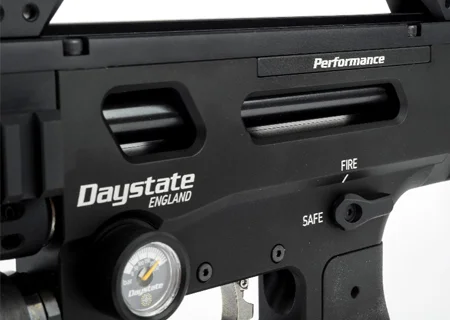
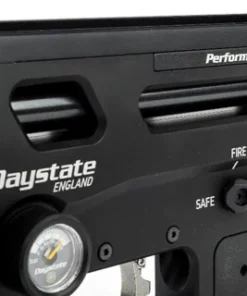
  • Safety:  Manual, electronic isolation. AR15 type lever
  • Stock:  laminated birchwood


Included with this Rifle 

  • Hard case
  • 1 magazine
  • Weaver/Picatinny scope rail
  • Fill probe- style is extended quick coupler
  • Threaded for use with 1/2 UNF moderators
  • Lifetime warranty


Daystate Accessories Package
As an optional extra, Daystate are offering an attractively priced accessories package. The package includes:

  • Aim Bipod
  • 0dB silencer
  • PRS Cheek Riser
  • PRS Adjustable Butt Plate
  • PRS Bag Rider

Daystate Alpha Wolf Smart PCP Air Rifle

Precision performance is delivered by the Daystate Alpha Wolf Smart, an electronically managed bullpup that has been refined for simpler daily use. A groundbreaking computerised action is retained, yet a lighter control program is employed so that operation is streamlined. Consequently, time at the bench or in the field is spent on the shot rather than on menus. Moreover, class-leading consistency is supported by a factory-fitted HUMA-Air regulator, a carbon-fibre air bottle, and a shrouded ART barrel. Therefore, target, hunting, and FAC applications are served from one modular platform.

Simplified Electronics That Still Feel Intelligent

Onboard complexity has been reduced without stripping capability. Integral chronograph hardware is omitted from the Smart specification; nevertheless, touchscreen firing modes, power percentage steps, magazine counters, and display options are still provided. Furthermore, firmware upgrades remain available through an optional DTD link and a home Windows computer. As a result, a later chronograph module can be added if full telemetry is later desired. Meanwhile, power is altered in clear percentage increments rather than in separate FPS tables, so velocity is raised or lowered quickly.

Adjustment of the electronic trigger is offered for pull weight, stage length, and blade position. Likewise, an AR15-style lever isolates the electronics and functions as a manual safety. In addition, reversible sidelever geometry is included so that left- and right-handed operation is supported equally. Inclusive fit is therefore built into the action from the start.

Touchscreen Control Without Extra Clutter

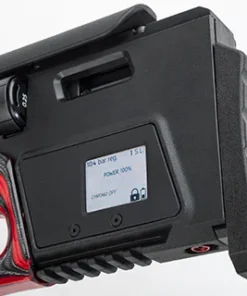
User settings are stored on the side-mounted colour display. Magazine shot count is tracked, regulator pressure is shown, and power is locked when a session profile is chosen. Subsequently, the rifle can be set and left alone while attention stays on hold and follow-through. Battery charging is completed through a USB-C port, and isolation of the electronics is achieved whenever the safety is applied.

Compact Bullpup Geometry and Fully Adjustable Furniture

An ambidextrous thumbhole laminate stock is fitted around an anodised alloy chassis. Overall length of the standard 430 mm barrel configuration is held to approximately 722 mm, while the high-power 600 mm barrel layout extends to about 842 mm. A longer Performance barrel option of 711 mm is also catalogued. Unscoped weight typically falls between 3.35 kg and 3.9 kg depending on barrel and furniture. Consequently, a long sight radius is obtained without an unwieldy overall package.

Cheek height, butt-pad position, and intermount placement are all adjusted so that eye alignment and length of pull can be tailored. Integral Picatinny rails are moulded into the forend and action for bipods, lights, bag riders, and optics. An anti-cant bubble is frequently incorporated in the scope rail. Therefore, a stable, customised hold is available to every shooter regardless of stature or dominant side.

Quick-Change ART Barrel System

A Lothar Walther ART barrel is shrouded in carbon fibre and can be swapped for another length or calibre with a conversion kit. Pellet or slug profiles are then matched to the new tube. Threaded ½-UNF muzzle architecture is provided so that a moderator can be fitted where local rules allow. Accuracy potential is thereby preserved across legal-limit and FAC setups.

Regulated Power, Calibres, and Shot Economy

A 480 cc carbon-fibre buddy bottle is filled to 240 bar (3,480 psi). Air is metered by the adjustable HUMA-Air regulator after passing a fast-flow valve and a large plenum. Shot-to-shot variation is commonly held within a few feet per second once the regulator set-point is reached. Power ceilings vary by market and certification: sub-12 ft-lb configurations are supplied for restricted jurisdictions, while FAC examples in .22 have been recorded around 70 ft-lb and .30 Smart/HP layouts are listed toward 105 ft-lb and beyond on longer barrels.

Calibre options typically include:

  • .177 (4.5 mm) — 13-shot magazine; high shot counts at legal-limit energy
  • .22 (5.5 mm) — 11-shot magazine; the most common all-round choice
  • .25 (6.35 mm) — 10-shot magazine on high-power models
  • .30 (7.62 mm) — 8-shot magazine on high-power models

Dual-magazine capacity is engineered into the loading gate, so a second magazine can be staged and swapped magnetically. Fill-port access is concealed under a magnetic cover ahead of the trigger guard and accepts a probe or Foster-style coupler.

Highlighted Product Features

  • Electronically managed PCP bullpup with simplified Smart software
  • Factory-fitted adjustable HUMA-Air regulator
  • 480 cc carbon-fibre bottle, 240 bar maximum fill
  • Shrouded quick-change ART barrel
  • Ambidextrous laminate thumbhole stock with adjustable cheek and butt pad
  • Reversible sidelever and reversible magazine orientation
  • Electronic trigger adjustable for weight, stage, and blade
  • Touchscreen power, display, and shot-count controls
  • Picatinny accessory and optics rails plus anti-cant provision
  • USB-C charging and optional DTD firmware path
  • Dual-magazine gate system
  • ½-UNF moderator thread
  • Hard case, magazine, and fill probe commonly supplied

Field and Range Applications

Compact overall length is exploited in hides, vehicles, and tight woodland lanes. High-power barrels are selected when longer-range hunting or slug work is required and local FAC rules permit. Consistency from the regulator is relied upon for Hunter Field Target and bench sessions alike. Pest-control strings are completed from a single fill when legal-limit energy is selected, because several hundred regulated shots can be obtained in .177 and .22. Modular rails allow a bipod, bag rider, or lamp to be added without custom gunsmithing. Inclusive ergonomics mean the same rifle can be shared among family members or club colleagues after a few furniture tweaks.

Legal power limits differ by country. Certification, insurance, and safe storage obligations must be observed before any high-energy configuration is commissioned. Responsible use, eye protection, and a safe backstop remain mandatory regardless of electronics.

Conversion-Focused Summary

Flagship Daystate engineering is concentrated in the Daystate Alpha Wolf Smart while day-to-day operation is kept deliberately simple. Electronic shot release, regulated air, and a match-grade barrel are combined with furniture that can be tailored to any shooter. Upgrade paths for chronograph hardware and PRS accessories are left open. Consequently, a single platform can grow with changing disciplines instead of being replaced. Precision, adaptability, and long-term support are therefore offered together in one British-built electronic PCP.

Calibres, FAC Ratings, Power Delivery and Accessories of the Daystate Alpha Wolf Smart

Calibre choice is treated as a modular decision rather than a permanent factory lock on the Daystate Alpha Wolf Smart. Four pellet diameters are catalogued across the platform, while magazine capacity, legal energy, and barrel length are matched to each option. Consequently, a single chassis can be configured for club-legal plinking, FAC hunting, or slug work after the appropriate tube and probe kit have been fitted. Inclusive access is preserved because left- and right-handed loading geometry is reversed with the same magazines.

Available Calibres and Magazine Architecture

Four chamberings are offered. A 13-shot rotary magazine is supplied for .177 (4.5 mm). An 11-shot magazine is provided for .22 (5.5 mm). A 10-shot magazine is specified for .25 (6.35 mm) on high-power layouts. An 8-shot magazine is issued for .30 (7.62 mm) FAC examples. Dual-magazine staging is engineered into the gate, so a second loaded magazine can be held magnetically and swapped without tools. Therefore, effective shot strings of 26 rounds in .177 or 22 rounds in .22 can be completed before a refill pause is required.

Barrel length is paired with calibre. A 430 mm (17 in) ART tube is typically fitted to compact, lower-energy rifles. A 600 mm (23 in) tube is used on high-power Smart configurations. A 711 mm (28 in) Performance barrel is listed where maximum muzzle energy is sought. Quick-change hardware is retained, so a different calibre or length can be installed after the corresponding pellet probe has been seated. Accuracy potential of the Lothar Walther ART profile is thereby kept available across the family.

FAC Status, Legal Limits and Power Windows

Power ceilings are governed by local statute rather than by a single factory number. Sub-12 ft-lb (approximately 16 J) settings are programmed for jurisdictions in which a firearm certificate is not required. Higher outputs are released only after FAC or equivalent certification has been granted. Fill pressure remains 240 bar (3,480 psi) on the 480 cc carbon bottle in all cases; energy is then trimmed electronically and by regulator set-point.

Published energy bands for the Daystate Alpha Wolf Smart and closely related HP/Performance barrels are summarised as follows. Figures vary with pellet weight, barrel length, and the percentage power step selected on the touchscreen.

  • .177 — legal-limit strings near 12 ft-lb with several hundred regulated shots; standard programming up to about 20 ft-lb; high-power listings around 31–37 ft-lb
  • .22 — legal-limit strings often exceeding 400 shots; standard programming up to about 45 ft-lb; high-power 600 mm barrels commonly listed near 61–71 ft-lb; longer Performance tubes toward 78 ft-lb
  • .25 — high-power listings typically 67–81 ft-lb depending on barrel
  • .30 — high-power listings typically 95–115 ft-lb depending on barrel and slug or heavy pellet choice

Percentage power steps of 5 percent between roughly 80 and 100 percent are used on the Smart interface. Regulator pressure is displayed on the same screen and is adjusted at the bottle neck after the cylinder has been emptied. Consistency within a few feet per second over a ten-shot string is routinely reported once the regulator plateau has been reached. Shot count falls as energy rises; several hundred pellets can still be expected at legal limit, while high-energy .30 strings may be limited to a few magazines between fills.

Certification, insurance, and storage rules must be satisfied before any FAC-level output is commissioned. Market-specific caps (for example lower joule limits in parts of Europe) override catalogue maxima. Safe backstops and eye protection remain mandatory at every energy level.

Power Tuning Without a Built-In Chronograph

Integral chronograph hardware is omitted from the Smart specification so that menus stay simple. Velocity is therefore inferred from the chosen percentage step, pellet weight, and regulator pressure rather than from a live FPS readout. An optional chronograph module and full electronics pack can still be added later through Daystate’s upgrade path. Firmware revisions continue to be loaded via the optional DTD link and a Windows computer. Meanwhile, the HUMA-Air regulator, fast-flow valve, and large plenum keep dwell consistent even when the chronograph is absent.

Accessory Ecosystem and Modular Dressing

A wide accessory set is supported so that the rifle can be dressed for bench, field, or PRS-style use. Highlighted items commonly catalogued for the platform include:

  • Extra gate-front magazines in each calibre
  • Single-shot loaders for bench or slug work
  • Barrel and probe conversion kits for calibre or length changes
  • ½-UNF moderators and the Daystate 0dB silencer
  • AimGrip or similar Picatinny bipods
  • PRS adjustable cheek riser and butt plate
  • Bag riders and butt claws
  • Forend extension rails
  • Optional DTD programming dongle
  • USB-C charge cables and spare batteries where specified
  • Factory hard case, fill probe, and Foster-style coupler

Picatinny rails on the action, forend, and underside accept lights, lasers, and sling hardware without gunsmithing. An anti-cant bubble is often integrated in the optic rail. Adjustable intermount travel allows compact or high-eye-relief scopes to be positioned correctly. Inclusive fit is maintained because cheek, pad, and trigger blade can be reset whenever the rifle is shared among shooters of different stature.

Conversion value is increased by this modular list. A compact legal-limit .22 can later receive a longer FAC barrel, a bag rider, and a moderator without a second rifle being purchased. Consequently, investment in the Daystate Alpha Wolf Smart chassis is protected as disciplines and local permissions change. Responsible ownership, correct certification, and regular inspection of seals and electronics are still required so that the accessory suite continues to perform as designed.

Daystate, FX Airguns, PCP Rifles, Accessories and Precision Airgun Equipment

For enthusiasts researching premium PCP platforms, accessories, replacement components, and precision shooting equipment, the modern airgun market offers an extensive range of options from brands such as Daystate and FX. Searches for daystate blackwolf, daystate redwolf, delta wolf, huntsman daystate, daystate alpha wolf, wolf delta, day state, and daystate delta wolf frequently come from shooters comparing electronic PCP technology, ergonomic designs, premium construction, and sophisticated firing systems. Traditional styling also remains important, which is why terms such as stock walnut, safari stock, dima stock, rimfire stocks, and stock replacement continue to attract buyers who value both appearance and practical fit.

Among electronically controlled PCP rifles, the daystate alpha wolf, daystate blackwolf, daystate redwolf, and daystate delta wolf are commonly associated with advanced regulation, refined shot management, and a highly consistent firing cycle. Searches such as what is a delta wolf, what is a delta wolf, delta wolf meaning, deltaw, blackwolf, red alpha wolf, alpha red wolf, model alpha gun, model alpha gun, and electronic wolves often reflect buyers trying to understand how Daystate’s electronically managed rifles differ from conventional mechanical PCP systems. Other searches, including daysta, wolf gun, wolverine gun, wolveriner, daystate wolverine sapphire, daystate wolverine sapphire, and wolfpack armory wolverine, demonstrate the broad interest surrounding Wolf-branded and Wolverine-related sporting platforms.

Small ergonomic components can make a substantial difference to comfort and handling. A rifle butt pad, rubber butt, rubber butt pad, and butt pad rifle accessory can improve shoulder contact, while a bradley cheek riser can help support a more consistent head position. Likewise, enthusiasts may research gecko grips, a cocking ball, short cocking, an index pin, pin magazine, lock timing, and lock time when learning about rifle ergonomics, cycling characteristics, and replacement components. Searches for buddy bottle cover and buddy bottle cover also remain relevant for shooters who want to protect external air cylinders from cosmetic wear during transport or field use.

Magazine compatibility is another frequent consideration. Users may search for a 177 magazine, mag 177, 25 magazine, 5.0 mm pellets, 177 pellets types, slug pellet, or a general pellet rifle when comparing ammunition formats and magazine configurations. Pellet selection should always match the manufacturer’s recommended caliber and specifications for the rifle being used. A well-matched magazine and suitable ammunition can support reliable feeding and consistent performance without unnecessary mechanical stress.

PCP equipment relies on compressed air, so searches such as air rifle compressed air, air gun pc, air gun, and air guns are commonly connected with understanding pre-charged pneumatic systems. Owners also frequently search for a pcp o ring kit because seals form an important part of maintaining an air-tight pneumatic system. Maintenance should follow manufacturer-approved procedures, especially for high-pressure components, regulators, cylinders, and valves.

Sound-moderation accessories form another major category. Common search terms include air gun suppressor, air gun suppressors, airgun moderator, air rifle moderator, 0db, 0db moderator, 0 db moderator, 0 db moderator, 0 db moderator, 0 db moderator, and hogan decimeater silencer. Thread-related searches include silencer thread adapter, thread protector rifle, and muzzle thread protector. Compatibility depends on barrel threading, caliber, applicable law, and manufacturer specifications, so owners should verify all requirements before purchasing or fitting any muzzle accessory.

Mounting systems have also become increasingly important as modular fore-ends and accessory rails become more common. Searches for an mlok to picatinny rail adapter, best m-lok to picatinny rail adapter, m-lok to picatinny adapter, picatinny m lok adapter, and picatinny bag rider usually come from shooters wanting greater flexibility when mounting supported accessories. The best adapter is generally one that matches the rifle’s rail specification, uses quality hardware, fits securely, and avoids unnecessary bulk.

Sling-related searches are equally common. Buyers frequently look up how to put a gun sling on a rifle, how to put a rifle sling on, how to install a rifle sling, riffle sling, rigle sling, how to put sling on rifle, installing a rifle sling, and attaching a sling to a rifle. A compatible sling can improve carrying comfort and transportation, but attachment points should always be checked against the rifle manufacturer’s recommendations to avoid damage to the stock or mounting hardware.

The alpha wolf barrel and accessories such as an ats tuner may also interest precision-focused users researching how different rifle configurations are designed. Similarly, terms such as weatherby vanguard trigger adjustment appear in broader shooting-related searches, although trigger systems differ significantly between platforms and should be serviced or adjusted only according to the applicable manufacturer’s safety instructions. Another unusual search phrase, how to put extinguisher call back together, is unrelated to PCP rifle servicing and should be treated according to the specific extinguisher manufacturer’s maintenance guidance rather than general airgun information.

For buyers comparing premium European PCP equipment, daystate redwolf price and daystate redwolf price are common commercial-intent searches. Pricing can vary depending on caliber, stock type, configuration, region, dealer, and included accessories. People may also search fx airgun dealer near me when looking for authorized retailers, parts support, servicing, or warranty assistance.

FX Airguns remains another major name in the PCP market. Popular searches include fx impact m3 .22cal air rifle. 600mm barrel, fx impact m3, fx impact mk3, fx m3 airgun, fx m3, impact m3, and fx impact m3 air rifle. Price-focused searches such as fx impact m3 precio, fx impact m3 precio en usa, and fx impact m3 price indicate strong buyer interest in comparing regional pricing and available configurations. The modular design philosophy associated with the FX Impact family makes it especially attractive to experienced PCP users who prioritize adjustability, ergonomics, accessory compatibility, and high-quality construction.

Potential buyers also encounter less common search phrases such as griffin gun, unfend, black snood, red bodywarmer, and can wolverine go on planes. Airline transport rules for sporting equipment and compressed-air components can differ substantially between carriers and countries, so travelers should always check current airline, airport, customs, and destination regulations before making travel arrangements. Likewise, terms such as 3.55kg in lbs may appear when buyers compare rifle weight specifications across metric and imperial listings.

Whether someone is researching the daystate alpha wolf, daystate blackwolf, daystate redwolf, huntsman daystate, wolf delta, an fx impact m3, or another premium pellet rifle, the most important purchasing factors remain intended use, caliber compatibility, overall weight, stock ergonomics, magazine design, air-cylinder capacity, manufacturer support, and accessory compatibility. Premium PCP ownership is best supported by appropriate maintenance, manufacturer-approved components, secure storage, responsible handling, and compliance with all local laws and transport requirements.

Practical Use Across Disciplines and Terrains

A compact electronically managed bullpup is pressed into service wherever a long sight line must be combined with a short overall package. Consequently, hides, farm buildings, vehicles, and woodland rides are negotiated without the muzzle being forced ahead of cover. Moreover, regulated air and an electronic trigger are relied upon so that hold and follow-through remain the only variables once a profile has been stored. Inclusive furniture is adjusted once, after which the same chassis can be shared among club members, family partners, or visiting guests without a second rifle being required.

Attention is therefore kept on the quarry or the target card rather than on mechanical fuss. Furthermore, magazine staging is used so that a second rotary magazine can be presented the moment the first is emptied. As a result, strings are completed before a refill pause interrupts the session. Meanwhile, power percentage steps are selected to match pellet weight, distance, and local energy rules, so the same air bottle supports both quiet close work and, where certification allows, heavier FAC strings.

Compact Work in Hides, Vehicles and Tight Cover

Overall length of the short-barrel layout is exploited inside a truck cab, a garden hide, or a loft hatch. The muzzle is kept inside the opening while a full-size optic remains aligned with the eye. Subsequently, a lamp or bipod is clipped to the forend rail without the balance being thrown so far forward that the hold becomes awkward. A magnetic fill-port cover is left undisturbed until the session ends, so dust and chaff are kept out of the probe inlet.

Quiet operation is assisted by the shrouded barrel and, where permitted, a threaded moderator. Therefore, livestock and neighbouring properties are less likely to be disturbed during early-morning or late-evening pest work. Sidelever travel is completed with the support hand still on the forend, and the electronic safety is isolated with the thumb without the firing grip being broken. In addition, an anti-cant bubble on the rail is glanced at before each shot so that groups are not opened by a tilted reticle in a cramped posture.

Transport between permission and home is simplified because the compact package is cased without a full-length rifle slip. Carbon-fibre bottle and laminate furniture keep mass modest, so a walk from the parked vehicle to a distant barn is completed without fatigue dominating the first magazine. Inclusive length-of-pull and cheek adjustments are reset if a second person takes the next watch, after which the same zero is recovered because the intermount and rail have not been disturbed.

Legal-Limit Pest Control Around Buildings and Pasture

Sub-12 energy settings are selected wherever a certificate is not held or where close-range humane dispatch is the only requirement. Several hundred regulated shots can be expected from a 240 bar fill in the smaller calibres, so an entire evening of loft or farmyard work is often finished from one charge. Consistency within a few feet per second is relied upon so that hold-over remains predictable from the first pellet to the last before the regulator plateau is left.

Gate-front magazines are pre-loaded at the vehicle. A second magazine is then staged in the action so that a rat or feral pigeon sequence is not broken by a reload at an awkward moment. Power is reduced by a percentage step when shots must be taken inside a confined shed, because lower velocity both limits ricochet risk and tightens groups with some pellet lots. Conversely, the upper legal-limit step is restored when a longer shot across a yard is presented.

A lamp on the forend rail is used after dark. The electronic display is dimmed so that night vision is preserved, and the safety lever isolates the screen when the rifle is slung during a walk between buildings. Safe backstops of brick, earth bank, or purpose-built pellet trap are confirmed before any shot is released. Eye protection is worn by everyone on the permission, and unused magazines are kept closed so that debris cannot foul the rotor.

Highlighted field habits for close-range work include:

  • Pre-loaded magazines carried in a pouch rather than loose in a pocket
  • Moderator fitted where local rules allow, to keep report down around livestock
  • Percentage power dropped for indoor or very short shots
  • Fill-port cover checked after each session so chaff is not packed into the inlet
  • Zero confirmed on a card at the typical engagement distance before live work begins

FAC Hunting, Slugs and Longer Permissions

Where a firearm certificate or equivalent authority has been granted, longer barrels and heavier calibres are fitted. Energy is then raised so that humane reach on rabbit, hare, or similar quarry is extended, and slug profiles can be used when the barrel and probe kit support them. Regulator pressure is increased only after the bottle has been emptied, and the new set-point is read on the touchscreen before the first hunting magazine is loaded.

A 600 mm or 711 mm tube is chosen when trajectory must stay flatter across a field edge. Wind reading becomes more important at those distances, so a stable bipod or bag rider is added to the accessory rails. Dual-magazine capacity remains useful: one magazine can be dedicated to a hunting pellet and the second kept for a heavier slug if a longer shot appears. Conversion kits allow the same chassis to return to a short legal-limit barrel after the FAC outing, so two roles are filled without two complete rifles being stored.

Shot count falls as energy rises. Consequently, a spare filled bottle or a planned refill at the vehicle is treated as part of the outing rather than an afterthought. Consistency is still expected from the HUMA-regulated valve train, yet each new pellet lot is verified on paper at the intended range before live quarry is addressed. Inclusive stock adjustments matter here as well, because a longer session from a sit-and-wait position will punish a poorly set cheek piece long before the air charge is exhausted.

Legal obligations travel with the higher energy. Certification documents, insurance, and secure transport are carried, and the rifle is never left unattended in a public car park. Local seasons, species lists, and landowner conditions override any catalogue power figure.

Club Evenings, Bench Rest and Training Loops

A regulated electronic trigger is used on the club range to isolate shooter error from mechanical variation. Pull weight and blade position are set once for the evening, after which identical release is available for every string. Paper is shot at 25, 40, and 55 metres so that hold-over and click values are confirmed for the stored power step. Meanwhile, newcomers can be coached on the same rifle after the cheek and pad have been moved, because ambidextrous geometry and a reversible sidelever remove the usual left-or-right barrier.

Training loops are built around magazine discipline. A full magazine is fired, the empty body is displaced by a fresh magazine, and the cycle is repeated until the planned shot count is reached. Electronic shot counters on the display help a coach track how many rounds remain before a fill is wise. Firmware remains upgradable through an optional computer link, so club armourers can apply maker updates without the rifle leaving the premises for long.

Highlighted range habits include:

  • Chronograph or known-distance cards used to confirm a new pellet lot
  • Trigger settings noted so they can be restored after another member has borrowed the rifle
  • Battery charged the night before a match rather than at the firing point
  • Moderator or shroud inspected for carbon build-up after high-volume strings
  • Single-shot loader fitted when group testing slugs or when a magazine rotor is being cleaned

Competition formats such as hunter field target benefit from the short overall length in kneeling and standing lanes. The adjustable intermount lets a compact scope sit where eye relief is comfortable in those positions. Bag riders and butt claws are added for the seated or prone stages and removed again for walking lanes, because Picatinny real estate is already present on the chassis.

Shared Use, Travel and Seasonal Changeover

Inclusive design is put to work when more than one person uses the rifle in a season. Length of pull, comb height, and trigger blade are marked with a paint pen or recorded in a notebook so that each user can restore a personal fit in seconds. Magazines are colour-coded by calibre if conversion kits are kept in the same case. Consequently, a .177 club-legal evening and a .22 FAC dawn outing can follow each other without confusion at the loading gate.

Seasonal changeover is planned around seals, battery health, and barrel condition. The carbon bottle is stored with a partial charge rather than empty or at absolute maximum for long periods, according to maker guidance. USB-C charging is completed before a trip, and a spare cable is kept in the hard case. Moderators are unscrewed and dried after wet woodland work so that condensation is not trapped against the crown.

Travel by car is straightforward because the cased length remains modest. Airline or ferry rules for PCP cylinders and lithium cells must be checked separately; the rifle itself is declared according to destination law. Upon arrival, zero is confirmed on a local card because temperature and pellet lot can shift point of impact even when the electronics have stored the same percentage step.

Accessories are treated as role kits rather than permanent clutter. A hunting forend might carry a lamp and bipod; a bench kit might carry a bag rider and single-shot tray. Rails allow those kits to be swapped in minutes. Therefore, the platform is adapted to the day’s task instead of being replaced. Responsible handling, a verified backstop, and current legal authority remain the constants that sit underneath every scenario, from a quiet loft to a certified long-range permission.

Frequently Asked Questions

Clear answers are collected below so that purchase, setup, and field use can be planned without guesswork. Technical detail is presented in passive voice throughout, and inclusive language is used so that every shooter is addressed. Local law always overrides catalogue figures; certification and insurance are confirmed before any high-energy configuration is commissioned.

Calibres, Energy and Fill Behaviour

Which pellet diameters are supported?
Four chamberings are catalogued across the platform. A .177 (4.5 mm) option is supplied with a 13-shot magazine. A .22 (5.5 mm) option is supplied with an 11-shot magazine. High-power layouts additionally accept .25 (6.35 mm) with a 10-shot magazine and .30 (7.62 mm) with an 8-shot magazine. Barrel and probe kits are used when a different diameter is required, so a second complete rifle is not demanded for a calibre change.

How is legal-limit energy separated from FAC output?
Sub-12 ft-lb (approximately 16 J) programming is applied wherever a firearm certificate is not held. Higher muzzle energy is released only after the correct certificate or national equivalent has been granted. Fill pressure of the carbon bottle remains 240 bar in both cases. Energy is then trimmed by regulator set-point and by percentage steps on the touchscreen. Market-specific joule caps in parts of Europe and elsewhere override any published maximum.

How many shots are typically obtained from one fill?
Shot count is governed by calibre, barrel length, pellet weight, and the selected power step. Several hundred regulated shots are commonly recorded at legal-limit energy in .177 and .22. High-energy FAC strings are far shorter; a few magazines may be expected in .30 before the regulator plateau is left. Dual-magazine staging is provided so that a second rotor can be presented immediately, yet the bottle still requires a planned refill on long FAC outings.

How is power changed without a built-in chronograph?
Percentage increments, typically in five-percent steps across an upper band, are used on the side display. Regulator pressure is shown on the same screen and is adjusted at the bottle neck only after the cylinder has been emptied. Live feet-per-second readout is omitted from the simplified electronics pack. An optional chronograph module can be added later if telemetry is desired. Consistency within a few feet per second over a short string is still expected once the regulator is on plateau.

When is a conversion kit a better choice than a second rifle?
A barrel and probe kit is chosen when the same chassis must cover club-legal evenings and certified hunting days. Furniture and electronics stay familiar, and only the tube, magazine, and stored power profile are changed. Cost, storage space, and training time are thereby reduced. A second complete rifle is still preferred if two users must shoot at the same time or if one configuration must remain zeroed without interruption.

Responsible use sits underneath every answer. Certification, a safe backstop, eye protection, and current local law are treated as non-negotiable. The platform is then able to move from a quiet loft to a certified field edge without a second action being purchased, provided the correct barrel, energy step, and paperwork travel with it.
Caliber

.177, .22, .25, .30

Reviews

There are no reviews yet.

Be the first to review “Daystate Alpha Wolf Smart”

Related Products

FAQ

  • Spring-Piston (Break-Barrel or Underlever): Cock by compressing a spring. Reliable, no external air source needed, but can have more recoil (“spring twang”) and require technique to shoot accurately.
  • Pre-Charged Pneumatic (PCP): Filled from a scuba tank, compressor, or pump. High power, low recoil, multiple shots per fill. Popular for precision and hunting.
  • CO₂: Powered by disposable cartridges. Good for pistols and semi-auto/repeaters, but performance drops in cold weather.
  • Multi-Pump Pneumatic: Hand-pumped to build pressure. Versatile but requires effort.
  • Gas Ram (Nitro Piston): Uses compressed gas instead of a metal spring. Smoother than traditional springers.

Calibers: Most common are .177 (4.5mm) for speed/flat trajectory and general use, and .22 (5.5mm) for better hunting knockdown power. Larger “big bore” (.25, .30, .357+) exist for hunting bigger game where legal.

Yes, many modern PCP and springers deliver enough energy for small game (rabbits, squirrels, birds) and even larger game in some areas. Muzzle energy (in ft-lbs or joules) matters more than velocity alone. Always match caliber, pellet weight, and energy to the game and check local hunting regs.

Treat every airgun as if it is loaded.

  • Always point the muzzle in a safe direction.
  • Keep your finger off the trigger until ready to shoot.
  • Know your target and what is beyond it (pellets can ricochet or travel far).
  • Wear eye protection.
  • Store unloaded, out of reach of children/untrained users, and ideally locked.
  • Never shoot at hard surfaces or in areas where pellets could escape your property.

Follow these rules strictly—airguns cause real injuries.

Laws differ dramatically by country, state/province, and even city. Always verify current local laws before buying, owning, transporting, or using an airgun. Age restrictions (often 18+) are common.

Examples (summaries only; check official sources):

  • UK: Air rifles ≤12 ft-lbs (16.3 joules) and pistols ≤6 ft-lbs generally do not require a license (FAC needed above that).
  • USA: Varies by state. Some treat powerful airguns as firearms; others do not. Many states now allow big-game hunting with air rifles.
  • Canada: Some airguns classified as firearms if they exceed velocity/energy thresholds.
  • Australia: Often treated as firearms; licensing/registration required in most states.
  • EU/France/Belgium/etc.: Varies; many allow low-power (<20J) guns freely to adults, with higher power needing permits. Germany has strict ~7.5J limits in some contexts.
  • Other countries: Some have no restrictions below certain energies; others ban or heavily regulate them.

Resources: Wikipedia “Air gun laws”, airgun forums, or official government sites. For travel, research transit laws carefully.

Consider:

  • Purpose: Plinking/backyard → lower power springer or CO₂. Hunting/precision → PCP.
  • Budget: Entry-level springers are affordable; PCPs need a fill system (extra cost).
  • .177 vs .22: .177 easier for beginners/targets; .22 better for hunting.
  • Power source: Convenience vs performance.
  • Test pellets in your gun—accuracy varies.

Buy from reputable dealers and consider warranties.

  • Clean barrel periodically (especially if accuracy drops) with patches and appropriate tools/solvents. Avoid over-oiling.
  • Lubricate moving parts and seals with airgun-specific oil (not general gun oil). Springers need piston seal oil occasionally.
  • Check screws, seals for leaks (PCP), and safety mechanisms regularly.
  • Store in a cool, dry place, ideally in a case. Avoid leaving cocked for long periods.

Follow your model’s manual. Basic care extends life significantly.

International shipping may be available for select products. Customers are responsible for understanding and complying with their local import laws and regulations before ordering.

Yes. Customers are required to confirm their order number through WhatsApp or Live Chat before orders are processed and shipped.

If local laws prevent shipment to your area, your order may be canceled and refunded according to our store policy.

Processing typically takes 1–3 business days after payment confirmation. Delivery times vary depending on destination, carrier, and product availability.


  • Wrong pellets for your barrel/caliber.
  • “Death grip” or poor shooting form (especially with springers—let the gun recoil naturally).
  • Loose scopes or mounts.
  • Ignoring safety or local laws.
  • Over-oiling or shooting with obstructions.


Pellets are the most common projectile (lead or lead-free). Match them to your gun, caliber, and purpose—test several brands as accuracy varies by barrel.

  • Domed (Round-Head): Best all-rounder. Excellent accuracy, ballistic coefficient, and energy retention. Ideal for target shooting, field target, and general hunting (e.g., JSB Exact, Air Arms Diabolo Field, H&N Field Target Trophy).
  • Wadcutter (Flat-Head): Clean holes in paper. Best for close-range target/plinking (under 20-25 yards).
  • Hollow Point: Expands on impact for better energy dump. Good for small game hunting (e.g., Predator Polymag, H&N Terminator).
  • Pointed: More penetration, but often less accurate than domed.
  • Slugs: Heavier, more aerodynamic for high-power PCPs at longer ranges (better for big game where legal).

Tips: Heavier pellets in .22/.25 for hunting (better momentum). Lighter in .177 for speed/flat trajectory. Always check head size fit (e.g., 4.51-4.53mm variants).

Muzzle energy (ft-lbs or joules) matters more than velocity. Ethical shots require precise placement (head/heart-lung) within effective range.

Rough Guidelines (adjust for distance, pellet, and local laws):

  • Small game (squirrels, rabbits, birds): 9-20+ FPE, .177/.22.
  • Medium (raccoons, etc.): 25+ FPE, .22/.25 recommended.
  • Larger game: 40-100+ FPE in .30+ calibers (up to big bore for deer/hogs where permitted).

PCPs dominate serious hunting due to power and shot count. Springers/gas rams work well for small game but require skill. Always prioritize clean kills and check seasons/species rules.

  • Barrel Cleaning: Use a pull-through kit or rod with patches. Avoid brushes that could damage rifling. Clean when accuracy drops or after 500-1000 shots.
  • Lubrication: Airgun-specific silicone oil for seals/O-rings (sparingly—excess causes dieseling in springers). Springers may need piston lube periodically.
  • PCP Specific: Check for leaks (soapy water test), monitor regulator/hammer settings, and keep fill systems clean. Don’t exceed rated pressure.
  • General: Tighten stock screws, inspect for wear, store properly. Chronograph shots to track consistency.

Common Issues:

  • Inconsistent velocity → dirty barrel, bad pellets, or seal problems.
  • Spring “twang” → tuning or proper hold.
  • Low power → worn seals or under/over-pumping.

Toggle Content

  • Scopes: Airgun-rated (hold zero under recoil). 3-9x or 4-12x common.
  • Fill Systems: Hand pumps, compressors, or tanks for PCPs.
  • Safety Gear: Eye/ear protection, targets with backstops.
  • Noise: Airguns quieter than firearms, but moderators help further.

Budget Tip: Start with a quality springer (~$150-400) before investing in PCP setup.

Airgunning offers endless depth—from backyard plinking to precision competition and ethical hunting. Prioritize safety, legality, and practice. If you want specifics (e.g., recommendations for a country, budget, hunting small game, or a particular type like PCP vs springer), let me know for more targeted info! Shoot responsibly.

Tuning improves accuracy, reduces noise/recoil, or increases power (within legal limits).

  • Springers: Lighter springs, guides, seals, or custom tuning kits for smoother shot cycle. “V-Mach” or similar professional tunes popular.
  • PCPs: Regulator tuning, hammer spring adjustments, valve work for efficiency and shot count. Some add electronic systems.
  • Accessories: Suppressors (often unregulated on airguns), better triggers, stocks, and scopes.

Caution: Check laws—power increases may reclassify your gun. DIY only if experienced; professional tuners recommended.

You must be at least 18 years old to purchase any airgun or related accessories from our store. By placing an order, you confirm that you meet the legal age requirements in your state or country.

Yes. Orders may require age verification before processing and shipping. In some cases, we may request a valid government-issued ID to confirm eligibility.