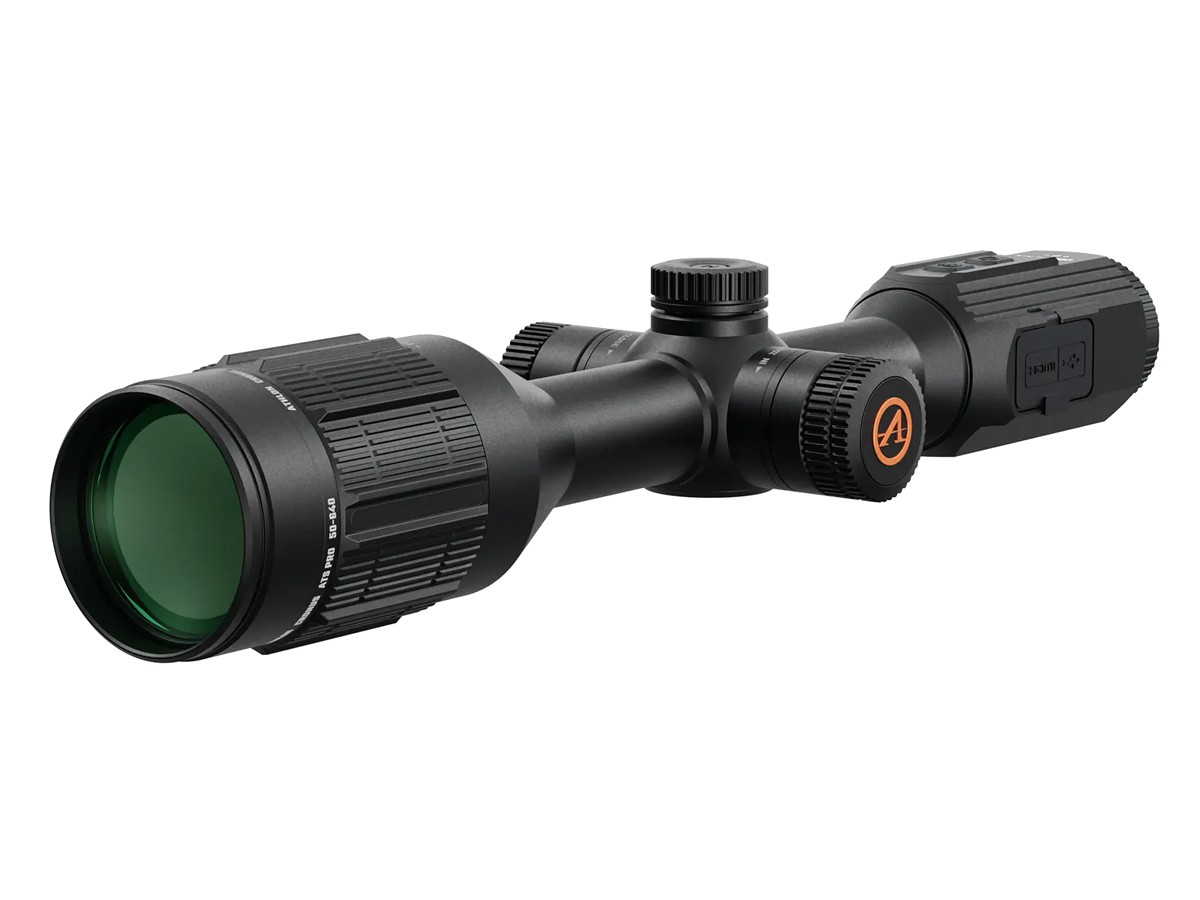
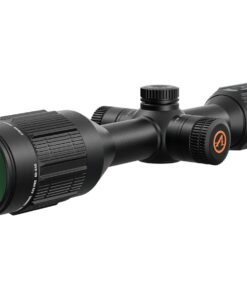
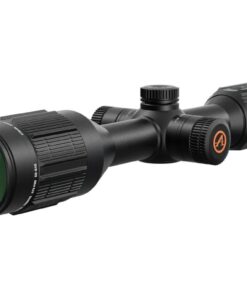
Athlon Optics Cronus ATS Pro 50L-640 LRF Thermal Scope – Premium Thermal Imaging Technology
Experience Exceptional Thermal Clarity with the Athlon Optics Cronus ATS Pro 50L-640 LRF Thermal Scope
The Athlon Optics Cronus ATS Pro 50L-640 LRF Thermal Scope has been engineered to deliver advanced thermal imaging, high-resolution observation, integrated laser distance measurement, and dependable outdoor performance. Designed for demanding environments, this premium thermal optic combines sophisticated infrared technology with practical digital features to create a versatile viewing experience.
Exceptional thermal detail is delivered through a 640 × 480 infrared sensor with a 12-micron pixel pitch. Consequently, subtle temperature differences can be distinguished, and valuable environmental information can be displayed even when conventional visible-light optics become ineffective.
Furthermore, a powerful 50 mm F1.0 objective lens enhances thermal energy collection, while the integrated laser rangefinder provides additional distance information. These technologies are complemented by an intuitive digital interface, multiple viewing modes, and a high-definition OLED display.
Whether thermal observation is conducted during outdoor surveys, wildlife monitoring, or authorized nighttime activities, users benefit from a sophisticated combination of image clarity, digital convenience, and environmental awareness.
Advanced 640 × 480 Thermal Sensor Technology
At the center of this thermal imaging system, a high-performance 640 × 480 sensor has been incorporated to capture detailed infrared information.
Unlike traditional optical systems, thermal imaging detects differences in emitted infrared energy rather than depending exclusively on visible illumination. Therefore, heat signatures can be displayed in low-light conditions or complete darkness.
Moreover, the 12 μm pixel pitch supports detailed thermal rendering, while advanced sensitivity helps distinguish variations across complex scenes.
Thermal contrast can be adjusted according to environmental conditions, allowing the displayed image to be customized for greater viewing comfort.
As a result, the Athlon Optics Cronus ATS Pro 50L-640 LRF Thermal Scope offers a modern thermal viewing platform designed around clarity, flexibility, and responsive imaging.
Key Features and Product Highlights
The following features distinguish this premium thermal optic from conventional observation equipment.
-
640 × 480 thermal resolution: High-resolution infrared imaging supports detailed thermal observation.
-
12 μm sensor technology: Fine thermal variations are captured through advanced detector technology.
-
50 mm F1.0 objective lens: Thermal energy collection is supported by a large-aperture lens.
-
Integrated laser rangefinder: Electronic distance measurement is provided directly through the optical system.
-
2.95×–23.6× magnification: Multiple digital viewing levels accommodate changing observation preferences.
-
1440 × 1080 OLED display: High-definition visual information is presented with strong contrast.
-
50 Hz refresh rate: Smooth thermal imagery is maintained during ordinary scene movement.
-
Seven thermal color palettes: Display appearance can be customized according to personal preferences.
-
128 GB internal storage: Digital recording and image storage are supported.
-
Wi-Fi connectivity: Compatible wireless features enhance digital convenience.
-
Multiple reticle options: Configurable display settings are incorporated into the interface.
-
Long battery endurance: Extended operating sessions are supported by the rechargeable battery system.
-
USB-C external power support: Additional power flexibility is provided when required.
-
IP67-rated protection: Resistance to dust and temporary water immersion is built into the housing.
These features are documented across Athlon’s official product information and model specifications.
High-Definition OLED Display and Customizable Thermal Imaging
Clear Visual Performance Across Different Environments
A high-resolution 1440 × 1080 OLED display has been integrated to provide detailed visualization of thermal information.
Through this advanced display system, contrasting thermal regions are presented with improved visual separation. Additionally, image brightness and contrast can be adjusted to accommodate different ambient conditions.
Seven selectable viewing palettes provide further customization:
Each palette offers a different way to visualize temperature differences. For example, monochrome palettes may provide a familiar grayscale appearance, while colored alternatives can make thermal regions easier to distinguish.
Consequently, viewing preferences can be adapted without changing the underlying sensor technology.
Smooth Refresh Rate and Flexible Magnification
A 50 Hz refresh rate has been specified to maintain consistent image updates during normal observation.
In addition, the magnification range extends from 2.95× to 23.6×, offering multiple viewing levels within a single digital imaging platform.
Although digital enlargement provides additional display flexibility, actual detail remains dependent on the thermal sensor resolution, environmental conditions, and image processing.
Therefore, users are offered convenient magnification adjustments without unrealistic promises of unlimited image resolution.
Integrated Laser Rangefinder and Intelligent Digital Features
Convenient Distance Measurement Technology
One of the defining characteristics of the Athlon Optics Cronus ATS Pro 50L-640 LRF Thermal Scope is its built-in laser rangefinder.
Distance information can be measured without requiring a separate handheld ranging instrument. According to the manufacturer’s technical specification sheet, the laser ranging system supports measurements from 10 to 1,600 yards, with a stated accuracy of ±1 yard under specified conditions.
Furthermore, digital measurement information is presented through the integrated display, allowing users to access relevant observation data conveniently.
This combination of thermal imaging and electronic distance measurement creates an integrated platform for lawful outdoor observation and specialized field applications.
Advanced Connectivity and Digital Recording
Modern digital functionality has also been incorporated into the system.
A generous 128 GB internal memory provides storage capacity for photographs and recorded footage. Additionally, Wi-Fi connectivity supports compatible digital features.
Automatic recording functionality has been included, while configurable display settings allow the interface to be personalized.
Consequently, thermal observations can be documented and reviewed without relying exclusively on external recording equipment.
Durable Construction and Extended Battery Performance
Built for Demanding Outdoor Conditions
Dependability has been prioritized through protective housing and weather-resistant engineering.
An IP67 protection rating has been specified, providing resistance to dust ingress and temporary immersion under defined test conditions.
Moreover, the optical system is designed to withstand a broad range of operating temperatures, making it suitable for varying seasonal environments.
Nevertheless, proper handling, regular inspection, and adherence to manufacturer maintenance recommendations remain essential.
Reliable Power for Extended Observation Sessions
Extended battery endurance has been incorporated to support prolonged viewing activities.
According to Athlon’s specifications, the battery system provides at least 10 hours of operating time under stated conditions.
Additional flexibility is offered through external battery support and USB-C power connectivity.
Meanwhile, the integrated Eco Mode can help reduce unnecessary energy consumption during periods of inactivity.
Therefore, frequent interruptions may be minimized, and convenient power management can be maintained throughout outdoor observation sessions.
Why Choose the Athlon Optics Cronus ATS Pro 50L-640 LRF Thermal Scope?
Premium thermal imaging equipment is often evaluated according to sensor quality, display resolution, convenience, environmental durability, and overall feature integration.
With this model, these important characteristics have been brought together within a single advanced optical platform.
High-resolution infrared imaging is supported by a sensitive thermal detector. Meanwhile, viewing flexibility is enhanced through selectable palettes, digital magnification, and customizable display controls.
In addition, distance-measurement functionality, substantial internal storage, and wireless connectivity improve the overall ownership experience.
Rather than requiring multiple independent devices for basic thermal viewing and distance information, essential electronic features have been combined into a comprehensive system.
For buyers seeking a feature-rich thermal optic, the Athlon Optics Cronus ATS Pro 50L-640 LRF Thermal Scope represents a premium option backed by Athlon’s established optical engineering.
Discover Premium Thermal Imaging Performance
Experience advanced infrared technology with a system designed for detailed observation, convenient digital operation, and durable outdoor use.
From its 640 × 480 thermal sensor to its integrated laser rangefinder and high-definition OLED display, every major component contributes to a sophisticated viewing experience.
Explore the Athlon Optics Cronus ATS Pro 50L-640 LRF Thermal Scope today and discover the advantages of premium thermal imaging technology.
Premium Rifle Scopes, Rangefinder Binoculars, Hunting Optics, and Precision Optical Equipment
Discover Advanced Optics for Precision, Clarity, and Long-Range Performance
Choosing premium optical equipment requires careful consideration of image clarity, magnification, durability, reticle design, and overall performance. Whether exploring a gun scope, comparing a professional hunting optic, or researching the longest range scope, buyers benefit from understanding how different optical systems support observation, target identification, and recreational shooting activities.
Modern optical technology offers impressive versatility. From leica rangefinder binoculars to precision riflescopes, specialized equipment combines advanced lenses, durable construction, and ergonomic designs. Furthermore, understanding how to buy a rifle scope helps buyers identify suitable magnification ranges, optical coatings, adjustment systems, and configurations.
Different environments demand different optical solutions. Consequently, equipment selection should reflect intended applications, environmental conditions, and individual preferences rather than magnification alone.
Leica Rangefinder Binoculars and Premium Optical Technology
Exploring the Leica Geovid Collection
The leica geovid binoculars collection attracts attention among outdoor enthusiasts who value premium optical engineering and integrated distance-measurement technology. In particular, leica geovid 10×42 rangefinder binoculars combine a 10-power magnification format with 42mm objective lenses, providing a practical combination of viewing capability and portability.
Buyers researching leica binoculars with rangefinder technology frequently compare optical clarity, ranging functionality, handling characteristics, and available connectivity features. The leica geovid pro 10×42 represents a sophisticated option within the manufacturer’s premium range.
Similarly, searches for geovid pro 10×42 often focus on advanced distance measurement, optical refinement, and suitability for extended outdoor observation.
The leica geovid rangefinder concept integrates observation and distance measurement into one optical system. Therefore, leica geovid pro rangefinder binoculars may appeal to users who prefer fewer separate devices during outdoor activities.
Additional product searches include leica geovid rangefinder binoculars, leica geovid 10×42, and leica geovid binos. Although these expressions overlap in meaning, they reflect different ways buyers research the Geovid family.
Compact Leica Binoculars and Everyday Observation
Beyond rangefinding models, traditional leica binoculars offer optical configurations suited to wildlife observation, travel, and nature appreciation.
Portable leica small binoculars can be particularly attractive when lightweight equipment is preferred. Meanwhile, buyers searching binoculars leica, leica bino, or leica binos may be comparing available formats, objective diameters, and carrying convenience.
The phrases leica binocular, leica bino rangefinder, and leica camera binoculars also appear in optical equipment searches, although Leica’s camera and binocular categories should be evaluated separately.
When browsing leica binoculars for sale, consumers should examine warranty coverage, product authenticity, optical condition, and included accessories.
SIG Sauer Binoculars and Image Stabilization
Modern Stabilized Observation Systems
The market for sig sauer binoculars includes optical equipment designed for outdoor observation and demanding field conditions.
Enthusiasts researching sig sauer binos, sig binoculars, and sig binocular configurations may encounter models with different magnification systems and specialized features.
Interest in sig self stabilizing binoculars reflects the growing popularity of technologies designed to reduce perceived image movement. Similarly, sig image stabilizing binoculars and sig auto stabilizing binoculars are common search expressions among people seeking more comfortable handheld viewing.
Buyers also use phrases such as sig sauer self stabilized binoculars and sig sauer image stabilized binoculars when researching stabilized optical equipment.
However, stabilization capabilities vary by model, making manufacturer specifications essential before purchasing.
The term sigma binoculars sometimes appears alongside SIG-related searches, although Sigma and SIG Sauer should not automatically be treated as the same manufacturer.
Nightforce ATACR Precision Riflescopes
Exploring Advanced Magnification Options
The nightforce atacr family is associated with premium riflescope design, precise adjustments, and robust mechanical engineering.
Several configurations attract particular interest, including the nightforce atacr 5-25×56 f2, nightforce atacr 4-20×50, nightforce atacr 5-25×56 f1, and nightforce atacr 4-16×50.
Each specification represents a different combination of magnification and objective size. Additionally, first focal plane and second focal plane reticle designs provide distinct viewing characteristics.
Searches for night force atacr, atacr scope, and nightforce attacker frequently lead buyers toward information about the manufacturer’s premium optics, although the latter is not an official ATACR model designation.
The shorter phrases atacr 4-20 and nightforce atacr 4 20×50 f1 may also be used when comparing configurations. Exact focal-plane specifications should always be verified against the model number.
Complementary optical searches sometimes include zeiss red dot, reflecting interest in different aiming systems rather than directly equivalent riflescopes.
Tangent Theta Scopes and Premium Optical Engineering
Optical Precision and Adjustment Quality
Products associated with tangent theta attract enthusiasts interested in premium optical construction and repeatable mechanical adjustments.
When comparing tangent theta scopes, shoppers often prioritize lens quality, reticle visibility, adjustment feel, and long-term durability.
The expressions tangent scope, tangent scopes, and tangent theta scope may appear throughout product research, although accurate manufacturer identification remains important.
Similarly, tangent optics is used in searches concerning specialized optical equipment.
The separate phrase theta optics may refer to other optical products or brands and should not automatically be confused with Tangent Theta.
A meaningful comparison should consider actual product specifications, available accessories, and manufacturer support rather than brand recognition alone.
Athlon Optics: Midas TAC, Argos BTR, Ares BTR, and Ares ETR
Midas TAC Optical Systems
The athlon midas tac collection offers configurations that appeal to enthusiasts researching precision-oriented optical equipment.
One notable product description is midas tac gen2 hd 6-24×50 aplr15 ffp moa reticle riflescope, which identifies a specific combination of magnification, optical design, and reticle characteristics.
Another frequently researched expression is athlon midas tac 6-24×50. Before choosing a configuration, buyers should verify the generation, reticle, turret units, and other model-specific details.
Argos BTR Magnification and Versatility
The athlon argos btr family also receives considerable attention from optical equipment buyers.
Search terms such as athlon argos btr gen2, athlon argos btr gen 2, and athlon btr gen 2 commonly describe interest in newer generations of the product family.
For higher magnification, athlon argos btr gen2 8-34×56 attracts attention because of its broad zoom range.
Related technical expressions include 34 56 and 34×56, although numerical combinations alone do not identify a particular optical product.
Buyers researching athlon scopes review, athlon reticles, and athalon scopes can benefit from comparing independent assessments and official technical documentation.
The phrase athens scope may also arise through spelling variations, making exact product identification especially important.
Ares BTR and ETR Premium Configurations
The athlon ares btr family provides another category for comparing advanced riflescope designs.
Meanwhile, athlon etr searches often focus on higher-end optical features, mechanical precision, and available reticle configurations.
A detailed example is the ares etr gen2 uhd 4.5-30×56 aprs12 ffp ir mil reticle, a specification that helps distinguish magnification, reticle type, and focal-plane design.
Related expressions include athlon 4.5-30×56, 4.5 30, and 4.5/30. These search variations should be interpreted using complete manufacturer specifications.
LPVO Scopes and Flexible Magnification Systems
Comparing 1-10x and 1-8x Optics
Low-power variable optics offer flexible magnification for recreational range activities.
Buyers frequently research 1 10 scope, 1×10 scope, and 1-10 rifle scope when evaluating variable-magnification equipment.
The broader 1 10 lpvo and 1-10 lpvo categories include products from different manufacturers with varying optical and mechanical designs.
Furthermore, 1-10 ffp lpvo identifies interest in first focal plane configurations, while lpvo 1-10 and lpvo 1-8 represent different zoom ranges.
Searches for ares etr 1 10 should be checked against current model catalogs to establish the exact product configuration.
Other Optical Specifications and Buying Considerations
Understanding Magnification Terminology
Optical searches frequently include formats such as 10×40, 14×44, 2.5×15, 2.5/15, and 2.5-15 scope.
Other expressions include 1/2×42, 12×4.2, 2-12x, and athlon btr 2-12. Their intended meaning should be confirmed before being interpreted as complete specifications.
Additional search terminology such as 11.5ee, 2s14, and athlon 2 may represent incomplete model references or unrelated product identifiers.
Likewise, ao scope commonly indicates interest in adjustable-objective systems, while icarus scope and avalon aries require product-specific clarification.
Fierce Optics and Related Outdoor Equipment
The names fierce firearms, fierce arms, and fierce optics also appear in sporting-equipment research.
Although these searches may involve related outdoor products, buyers should distinguish between manufacturers, product categories, and verified specifications.
Ultimately, choosing optical equipment involves more than identifying an attractive magnification range.
Lens coatings, eye relief, field of view, weight, reticle visibility, warranty terms, and manufacturer reputation all contribute to the overall ownership experience.
For that reason, comparing authentic product information and understanding the intended application remain essential when selecting binoculars, rangefinders, and premium optical systems.
Frequently Asked Questions (FAQs)
1. What makes this thermal imaging device different from conventional optical equipment?
Unlike traditional optical equipment, which relies on visible light, this advanced imaging system detects infrared radiation emitted by objects and their surroundings. As a result, temperature differences can be transformed into visible images even when conventional lighting conditions are inadequate.
Furthermore, sophisticated digital processing enhances the presentation of thermal information, allowing users to distinguish contrasting temperature patterns across different environments.
Because a high-resolution infrared detector has been incorporated, detailed thermal observations can be achieved without depending on artificial illumination. Additionally, customizable display options provide greater flexibility for different viewing preferences.
Consequently, this technology offers significant advantages for authorized nighttime observation, environmental monitoring, and wildlife research.
2. Can thermal imaging equipment function in complete darkness?
Yes. Complete darkness does not prevent an infrared detector from collecting thermal information because visible light is not required for its fundamental operation.
Instead, infrared energy emitted by objects is detected and converted into a digital image. Therefore, thermal differences can be displayed even when sunlight, streetlights, or other conventional illumination sources are unavailable.
Moreover, thermal imaging can remain useful in challenging lighting conditions where ordinary cameras struggle to produce meaningful visual information.
However, image quality may still be affected by heavy rain, dense fog, atmospheric moisture, and environmental temperature conditions.
Thus, although dependable nighttime observation is supported, perfect visibility cannot be guaranteed in every environment.
3. What advantages are provided by a 640 × 480 thermal sensor?
A 640 × 480 infrared detector provides 307,200 individual sensing pixels, allowing more thermal information to be captured than lower-resolution alternatives.
Because additional thermal detail is recorded, differences between nearby temperature regions may be displayed more clearly.
Furthermore, improved image detail can make environmental observation more comfortable, especially when objects have similar thermal characteristics.
The detector’s 12-micron pixel pitch also contributes to the overall imaging design by enabling fine spatial sampling.
Nevertheless, final image quality depends on several interconnected factors, including thermal sensitivity, lens characteristics, environmental conditions, and processing algorithms.
For this reason, sensor resolution should be evaluated alongside the complete optical system rather than treated as the only indicator of performance.
4. How does the integrated laser rangefinder work?
An integrated laser rangefinder measures distance by emitting a laser pulse and calculating the time required for reflected light to return.
Once a measurement has been obtained, the calculated distance can be displayed electronically.
This technology provides a convenient method of estimating the distance between the observation point and a suitable reflective surface.
Additionally, separate handheld ranging equipment may become unnecessary for routine measurements within the supported operating range.
However, actual ranging performance can vary according to surface reflectivity, atmospheric conditions, measurement angle, and environmental interference.
Consequently, the manufacturer’s stated range should be understood as a performance specification rather than a guarantee that every surface can be measured at the maximum distance.
5. Can the equipment be used during daylight?
Yes. Thermal imaging is not restricted to nighttime use.
Infrared radiation continues to be emitted by objects throughout the day, allowing temperature differences to be detected regardless of ordinary sunlight levels.
For example, warm machinery, heated building components, and contrasting environmental surfaces may be observed during daylight conditions.
Furthermore, the display can be adjusted to accommodate different viewing preferences.
However, solar heating may reduce temperature contrast between objects and their surroundings, making some thermal differences less distinguishable.
Direct observation of the sun should also be avoided unless expressly permitted by the manufacturer’s operating instructions.
Therefore, daytime performance remains useful, although environmental heat distribution can influence the appearance of recorded thermal images.
6. What is the purpose of the OLED display?
The OLED display converts processed infrared information into a visible image that can be viewed through the electronic eyepiece.
With a resolution of 1440 × 1080 pixels, detailed image presentation is supported.
Additionally, OLED technology offers strong contrast characteristics because individual pixels can produce light independently.
As a result, dark and bright display regions can be differentiated clearly.
Furthermore, customized brightness settings may improve viewing comfort under changing environmental conditions.
Although the display resolution exceeds the infrared sensor resolution, additional display pixels do not create new thermal information.
Instead, captured sensor data is processed and presented through the higher-resolution screen.
7. What benefits are offered by different thermal color palettes?
Different thermal palettes allow detected temperature differences to be represented using alternative colors and tonal arrangements.
White Hot, for example, generally displays warmer areas as lighter regions, whereas Black Hot reverses this visual relationship.
Other available palettes can emphasize thermal contrasts through additional colors.
Because visual preferences differ, an adjustable palette system allows users to select a display appearance that feels comfortable and informative.
Moreover, certain palettes may be easier to interpret against particular environmental backgrounds.
Nevertheless, changing the palette does not alter the actual temperature of an object or improve the underlying detector resolution.
Instead, existing thermal information is displayed differently to support interpretation.
8. Does digital magnification improve image quality?
Digital magnification enlarges the portion of the thermal image displayed on the screen.
Although greater apparent size is achieved, additional physical detail is not captured merely by increasing digital zoom.
As magnification rises, individual sensor pixels may become more noticeable, and image sharpness can decrease.
Therefore, lower magnification settings generally preserve more of the original field of view and available sensor detail.
Nevertheless, adjustable zoom remains valuable for examining particular sections of a recorded thermal scene.
For the most accurate viewing experience, digital enlargement should be regarded as a display convenience rather than a replacement for increased native sensor resolution.
9. Can photographs and videos be recorded directly?
Yes. Integrated digital recording functionality allows thermal images and footage to be stored within the equipment.
The available 128 GB internal memory provides substantial capacity for documenting observations.
Consequently, photographs and videos can be retained for later examination without requiring a separate external recording device during normal operation.
Furthermore, saved material may be useful for environmental studies, equipment inspection records, and authorized wildlife monitoring.
Actual recording duration depends on file format, compression settings, resolution, and software configuration.
Therefore, available storage capacity should not be interpreted as a fixed number of recording hours.
Regular file management is recommended to maintain sufficient free memory.
10. Is wireless connectivity supported?
Yes. Wi-Fi connectivity has been incorporated into the digital feature set.
Through compatible software and supported wireless functions, additional convenience may be provided for managing digital content and accessing available connected features.
However, supported functions depend on the installed firmware and the manufacturer’s current application compatibility.
Users should therefore verify whether their preferred smartphone, tablet, or operating system is supported before relying on specific wireless capabilities.
Additionally, stable connections depend on signal conditions, device compatibility, and appropriate software configuration.
For dependable operation, official manufacturer guidance should be followed when establishing or troubleshooting wireless connectivity.
11. How long does the rechargeable battery last?
According to the published manufacturer specifications, at least ten hours of operating time is supported under the stated test conditions.
However, actual battery endurance may vary depending on display brightness, wireless connectivity, recording activity, ambient temperature, and other operating settings.
For example, prolonged use of energy-intensive digital functions may reduce available operating time.
Furthermore, extremely cold environments can temporarily affect battery efficiency.
An energy-saving mode may help reduce unnecessary power consumption when full operation is not required.
Additionally, compatible external power options can provide greater flexibility during extended observation sessions.
Proper charging and storage practices are recommended to maintain long-term battery health.
12. Is the housing waterproof and dust-resistant?
The housing carries an IP67 ingress-protection rating.
Under standardized testing conditions, this classification indicates complete protection against dust ingress and resistance to temporary immersion in water up to one meter for a limited period.
As a result, the equipment is designed to tolerate many ordinary outdoor environmental challenges.
Nevertheless, IP67 protection does not mean that unrestricted underwater operation, prolonged submersion, or exposure to high-pressure water is permitted.
Additionally, protective covers, connections, and seals must remain properly secured for the specified protection to be maintained.
Following exposure to rain or moisture, appropriate cleaning and drying procedures should be followed.
13. Can thermal imaging detect objects through glass or walls?
No. Conventional long-wave infrared imaging generally cannot provide a direct thermal view through ordinary glass or solid walls.
Glass commonly blocks or reflects the long-wave infrared wavelengths used by these detectors.
Consequently, the displayed image may represent the temperature or reflected thermal characteristics of the glass surface rather than objects behind it.
Similarly, walls prevent direct observation of concealed objects.
However, temperature differences on an accessible wall surface may indicate heating, cooling, or insulation irregularities.
Therefore, thermal imaging can help reveal certain surface temperature patterns, but it should not be described as technology capable of seeing directly through solid structural materials.
What contributes to the long-term value of advanced thermal equipment?
Long-term value is influenced by much more than the initial purchase price.
Thermal detector quality, image-processing capability, environmental durability, available software support, and manufacturer servicing all contribute to ownership satisfaction.
Additionally, integrated features such as digital recording, wireless connectivity, and electronic distance measurement may reduce the need for certain separate observation accessories.
However, technology requirements should be considered carefully before selecting a premium device.
Higher specifications do not automatically make every feature necessary for every user.
Instead, value is achieved when available capabilities align with actual requirements.
By combining appropriate maintenance, responsible operation, and realistic performance expectations, owners can obtain dependable service from a sophisticated thermal imaging platform over an extended period.

Reviews
There are no reviews yet.