Athlon Optics Ares BTR Gen3 HD Scope – Premium Precision, Exceptional Clarity, and Reliable Performance
Product Description – Athlon Optics Ares BTR Gen3 HD Scope
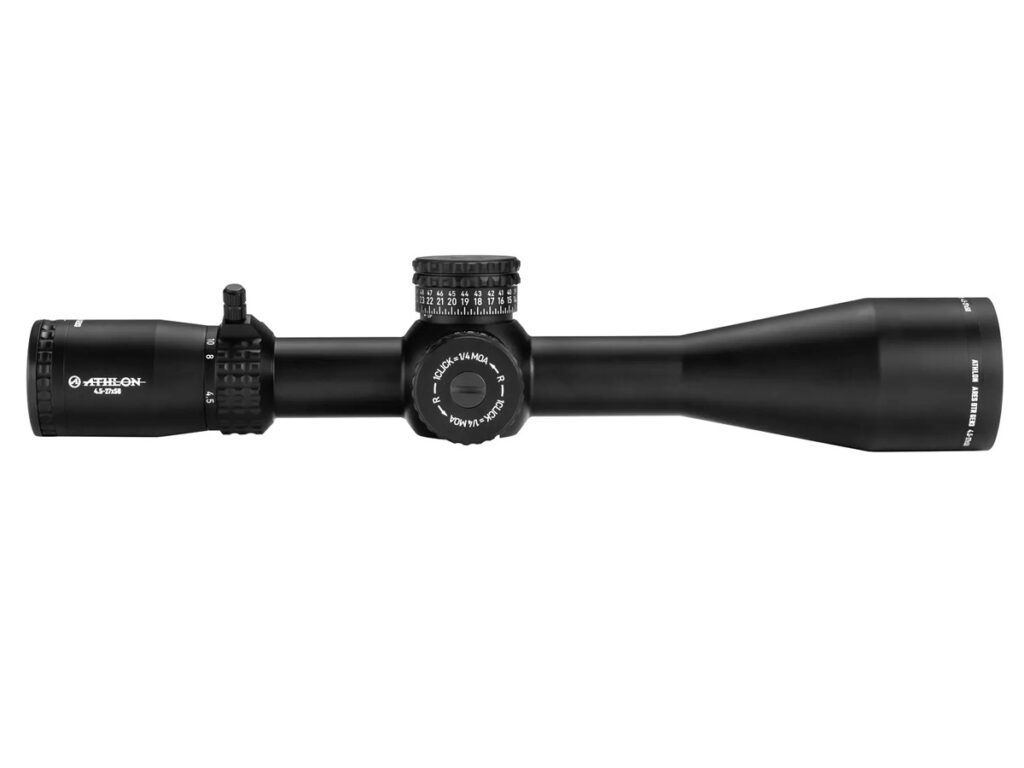
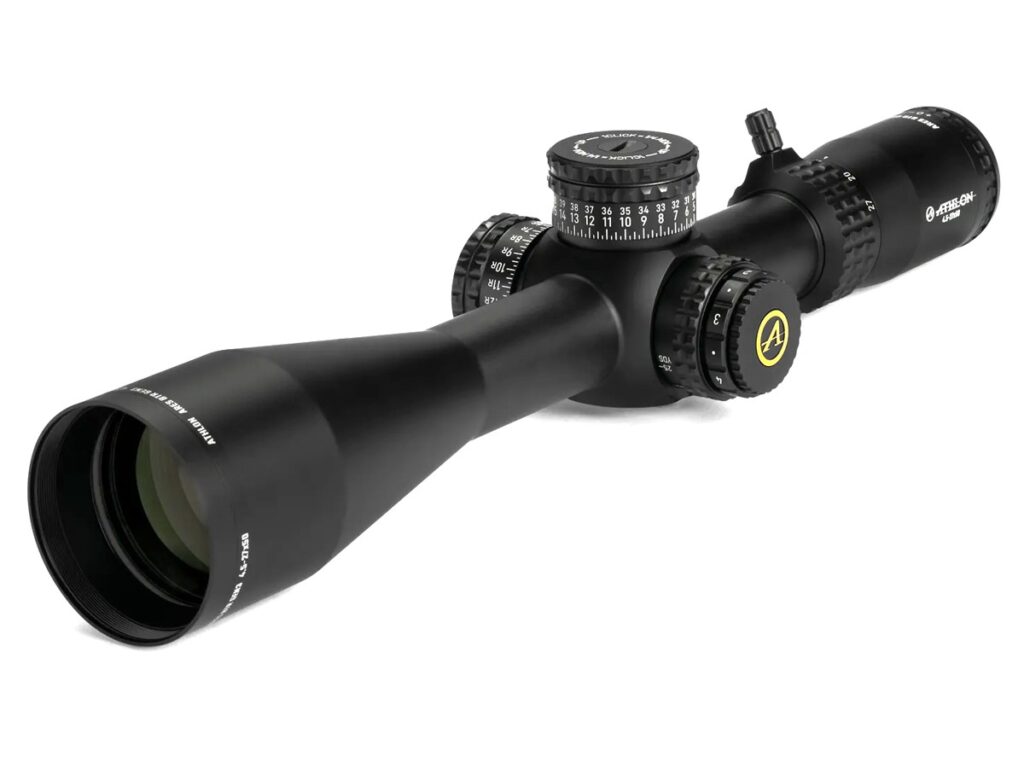
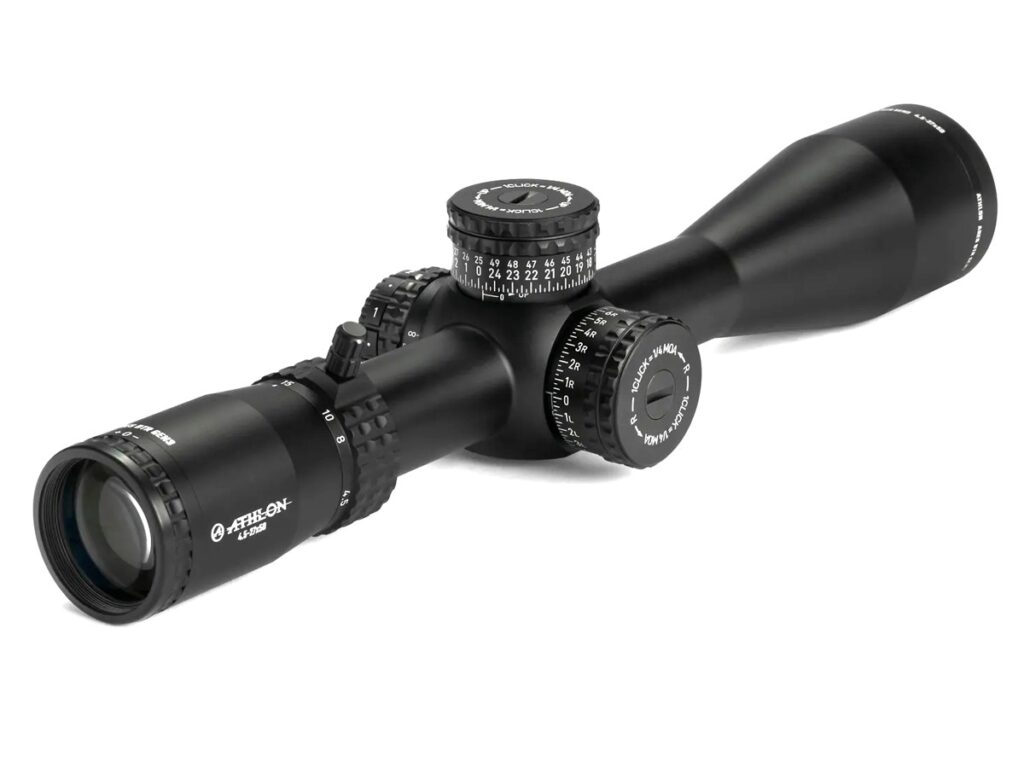
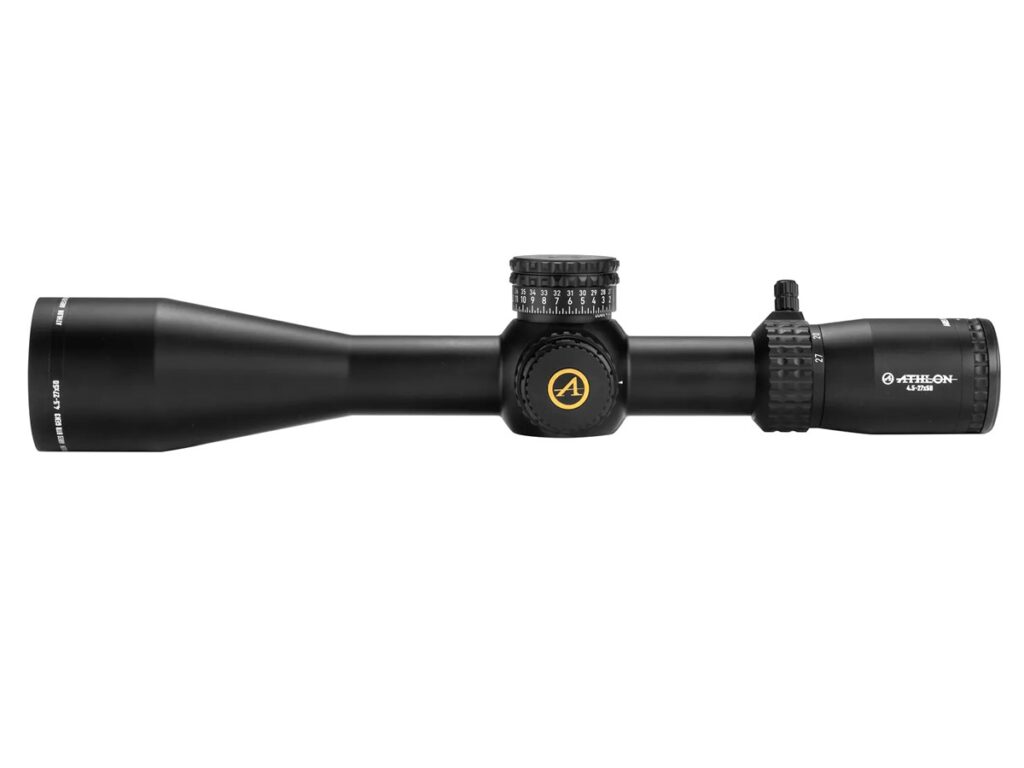
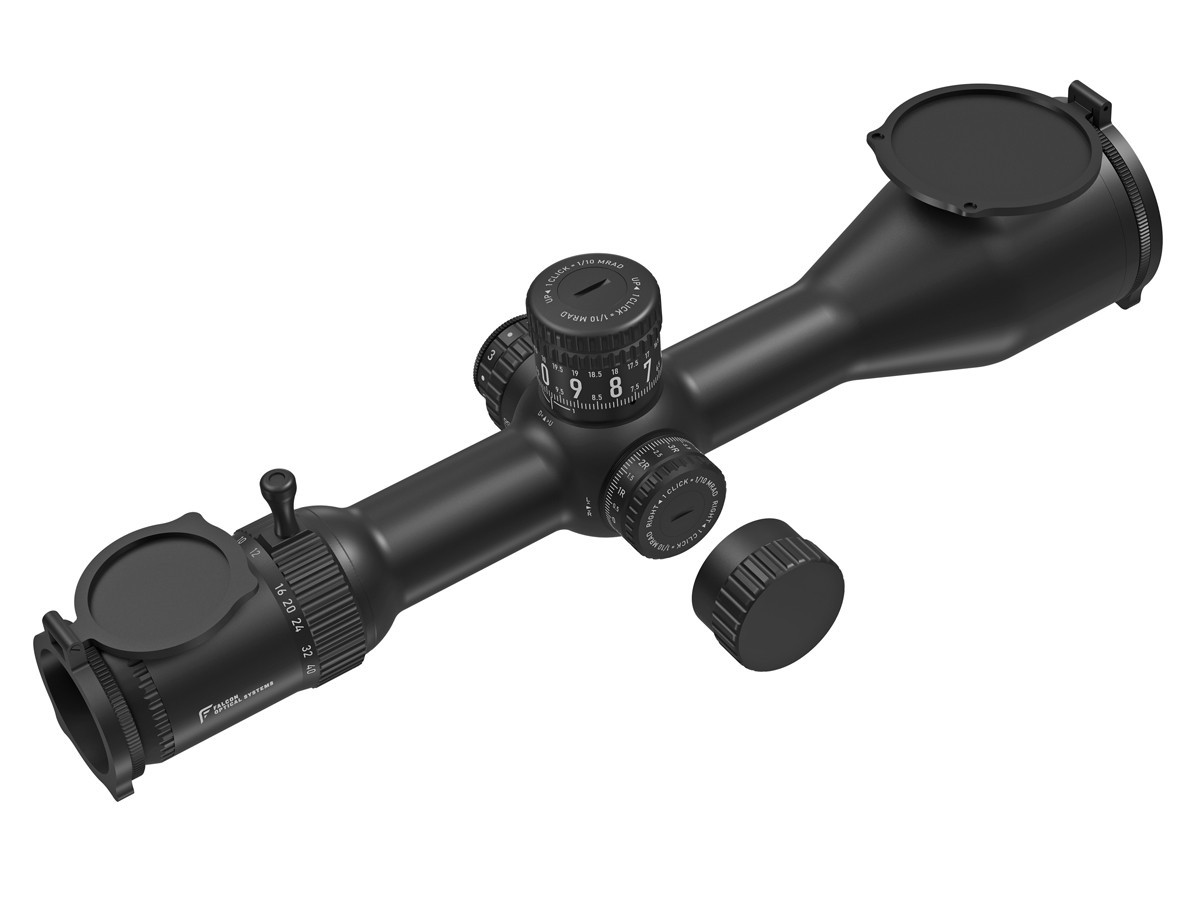
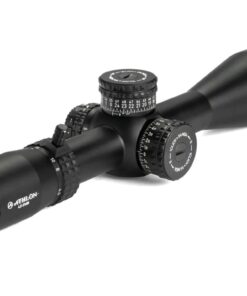
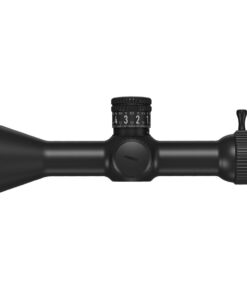
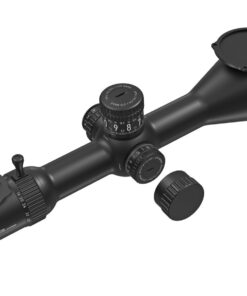
The Athlon Optics Ares BTR Gen3 HD Scope has been engineered to deliver exceptional optical clarity, dependable adjustment performance, and outstanding versatility for precision shooting enthusiasts. With advanced HD glass, an illuminated first focal plane reticle, and a precision zero-stop system, consistent visual performance is supported across different shooting environments.
Furthermore, the third-generation optical system has been refined to provide improved brightness, sharper image definition, and dependable functionality. Whether targets are being observed at moderate distances or detailed images are required at higher magnification, impressive optical performance can be experienced.
Additionally, durability has been prioritized through aircraft-grade aluminum construction, protective lens coatings, and weather-resistant engineering. Every major component has been designed to support accuracy, reliability, and convenient operation.
Consequently, this premium riflescope represents an attractive choice for buyers seeking advanced optical technology, professional-grade construction, and excellent long-term value.
Advanced HD Glass Technology for Outstanding Optical Clarity
High-Definition Lenses for Sharp and Detailed Images
Exceptional image quality is delivered through the advanced HD glass incorporated into the Athlon Optics Ares BTR Gen3 HD Scope.
By using low-dispersion optical elements, unwanted color fringing can be reduced, while image definition can be improved. As a result, finer details can be observed with greater clarity across a wide range of magnification settings.
Moreover, improved color reproduction is supported by specialized lens technology. Natural-looking images can therefore be maintained, even when challenging lighting conditions are encountered.
Additional benefits are provided through advanced fully multi-coated lenses. Light transmission is optimized through carefully engineered optical coatings, while unwanted reflections are minimized.
Consequently, the following advantages can be experienced:
-
Improved image brightness across various lighting conditions.
-
Reduced chromatic aberration for cleaner visual detail.
-
Enhanced contrast for easier target observation.
-
More natural color reproduction.
-
Sharper image presentation throughout the magnification range.
Because optical clarity has been emphasized throughout the design, a more comfortable viewing experience can be enjoyed during extended observation sessions.
First Focal Plane Reticle for Consistent Precision
Illuminated Reticle Technology for Improved Visibility
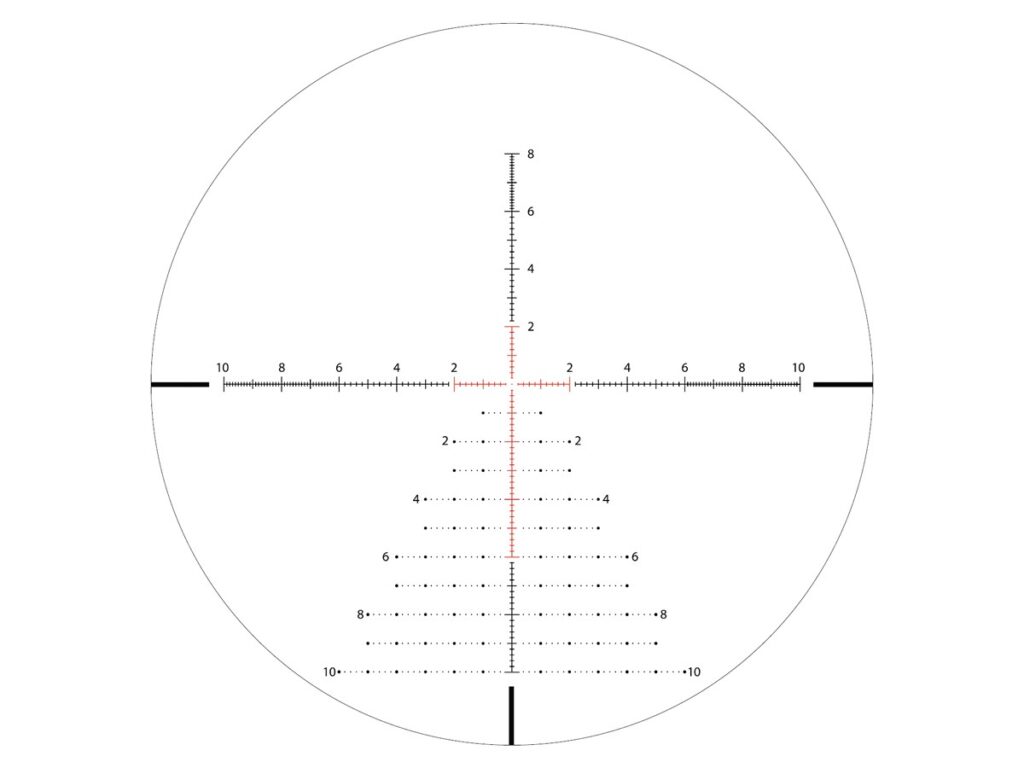
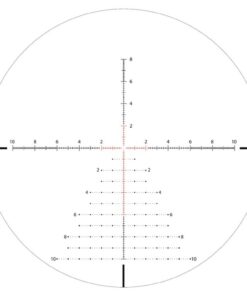
A sophisticated first focal plane (FFP) reticle has been incorporated into this advanced riflescope.
Unlike second focal plane designs, the reticle is magnified together with the viewed image. Therefore, the relationship between reticle subtensions and the observed target is preserved throughout the available magnification range.
Furthermore, an illuminated reticle is provided to improve reticle visibility when darker backgrounds or challenging contrast conditions are encountered.
The reticle has also been etched directly into glass, allowing detailed markings to be maintained without dependence on illumination.
Depending on the selected configuration, either an APRS13 MIL or APLR13 MOA reticle can be supplied.
As a result, preferred measurement systems can be selected according to individual shooting requirements.
Advantages of the FFP Reticle
-
Consistent reticle subtensions at every magnification.
-
Illuminated markings for improved contrast.
-
Glass-etched construction for dependable visibility.
-
Available MIL and MOA reticle configurations.
-
Clear markings designed for precision-oriented applications.
Thus, a practical balance between optical usability and measurement consistency has been achieved.
Precision Zero Stop and Advanced Turret Engineering
Reliable Adjustment Control
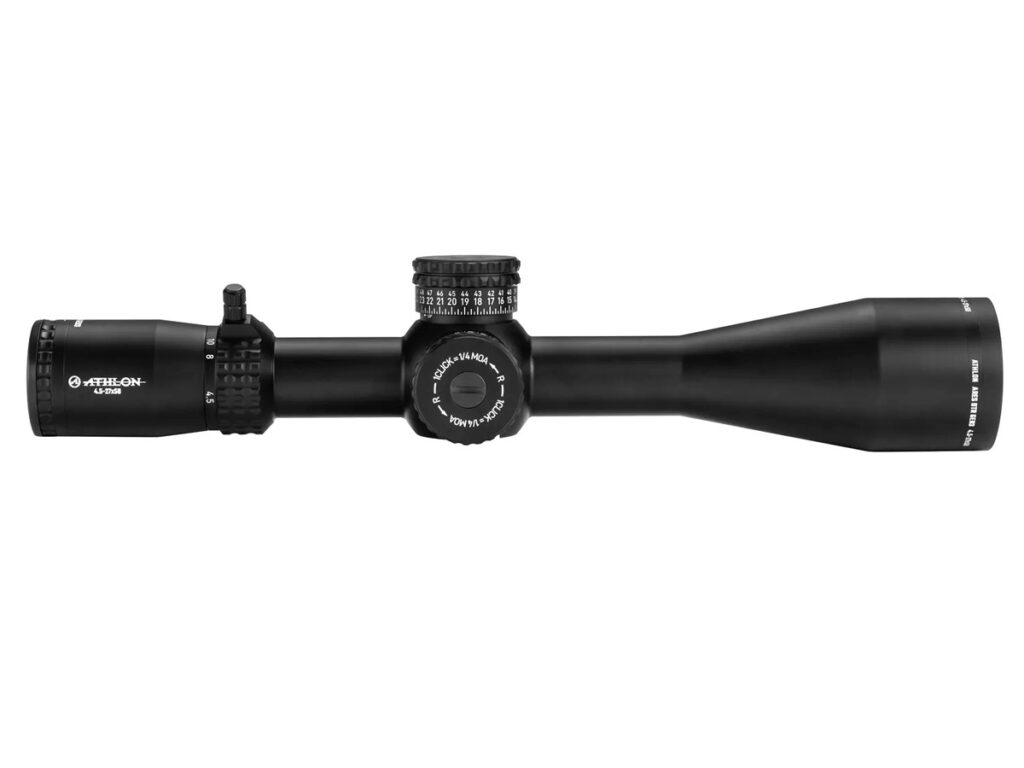
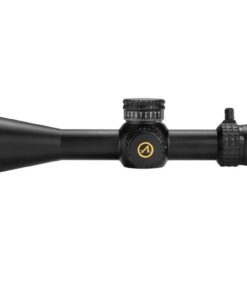
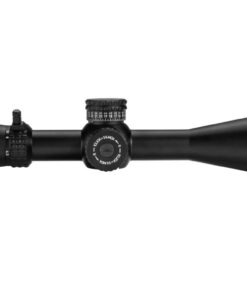
The Athlon Optics Ares BTR Gen3 HD Scope has been equipped with exposed adjustment turrets designed to provide controlled, repeatable operation.
Through the precision zero-stop system, the original zero setting can be located again after elevation adjustments have been made.
Additionally, tactile turret feedback has been improved in the third-generation design. Clearer adjustment clicks can be felt, allowing changes to be monitored more conveniently.
A high-precision erector system has also been incorporated to support consistent mechanical tracking.
Furthermore, available adjustments are configured according to the chosen MIL or MOA model.
By combining mechanical stability with carefully engineered adjustment controls, dependable operation is supported over repeated shooting sessions.
Aircraft-Grade Aluminum Construction and Weather Protection
Designed for Long-Term Durability
Outstanding structural strength is provided through a one-piece aircraft-grade aluminum tube.
Because the main body has been precision-machined, durability and structural consistency are supported without unnecessary complexity.
Moreover, the optical system has been protected through several specialized construction features.
An XPL protective coating has been applied to exposed lens surfaces to improve resistance to dirt, oil, and scratches.
Additionally, argon purging has been incorporated to reduce internal fogging caused by temperature fluctuations.
Waterproof, fog-proof, and shockproof construction has also been specified by the manufacturer.
Consequently, dependable optical performance can be maintained under a variety of outdoor environmental conditions when the riflescope is used according to its operating instructions.
Important Durability Features
-
One-piece aircraft-grade aluminum housing.
-
Argon-purged internal optical system.
-
-
Fog-resistant optical design.
-
Shock-resistant engineering.
-
XPL protective lens coating.
-
Precision-machined adjustment components.
Through these protective features, the scope has been developed for demanding outdoor use and extended service life.
Available Magnification Options and Optical Specifications
Versatile Configurations for Different Viewing Requirements
Two primary magnification configurations are offered within the Athlon Optics Ares BTR Gen3 HD Scope family.
The 2.5–15×50 version has been developed for users seeking a broad field of view combined with versatile magnification.
Meanwhile, the 4.5–27×50 configuration has been designed for applications where greater image enlargement is preferred.
Both versions have been equipped with 50 mm objective lenses and 30 mm main tubes.
Additionally, approximately 3.9 inches of eye relief has been specified for both models.
Technical Specifications
| Specification |
2.5–15×50 |
4.5–27×50 |
| Magnification |
2.5–15× |
4.5–27× |
| Objective lens |
50 mm |
50 mm |
| Main tube diameter |
30 mm |
30 mm |
| Focal plane |
First focal plane |
First focal plane |
| Reticle |
Illuminated MIL/MOA |
Illuminated MIL/MOA |
| Eye relief |
3.9 inches |
3.9 inches |
| Field of view at 100 yards |
41.8–6.8 ft |
22.7–3.8 ft |
| Parallax adjustment |
From 10 yards |
From 25 yards |
| Overall length |
13.8 inches |
13.8 inches |
| Weight |
27.3 oz |
27.3 oz |
| Zero stop |
Included |
Included |
Specifications are based on Athlon’s published product information. Adjustment increments and total travel vary by configuration.
Ergonomic Design for Comfortable Optical Observation
User-Friendly Features for Extended Sessions
Comfortable viewing has been supported through carefully selected optical dimensions and accessible external controls.
For example, the side-focus parallax adjustment allows focus corrections to be made without reaching the objective lens.
Moreover, the generous eye relief helps provide comfortable image observation when the scope has been correctly mounted.
A practical balance between magnification, overall length, and mechanical construction has also been achieved.
Additionally, the exposed turret arrangement allows adjustment settings to be inspected conveniently.
Because the controls have been designed around practical operation, routine setup and optical observation can be performed efficiently.
Why Choose the Athlon Optics Ares BTR Gen3 HD Scope?
An Excellent Balance of Performance and Value
Several premium optical features have been combined within this third-generation riflescope.
Firstly, improved visual definition is delivered through high-definition glass and advanced lens coatings.
Secondly, consistent reticle measurement is supported by the first focal plane optical system.
Furthermore, repeatable adjustment functionality is provided through the precision zero-stop mechanism and refined turrets.
Finally, long-term durability is supported by robust housing materials and protective technologies.
Key Product Highlights
-
Premium HD glass: Sharper images and enhanced visual clarity are supported.
-
Advanced fully multi-coated optics: Light transmission and image brightness are optimized.
-
First focal plane reticle: Consistent subtension measurements are maintained.
-
Illuminated glass-etched reticle: Improved visibility is provided in difficult contrast conditions.
-
Precision zero-stop system: Convenient return to the original zero position is supported.
-
High-precision erector system: Reliable adjustment tracking is promoted.
-
Aircraft-grade aluminum construction: Structural durability is enhanced.
-
Argon-purged optics: Resistance to internal fogging is improved.
-
XPL protective coating: Additional external lens protection is supplied.
-
Multiple magnification choices: Different optical preferences can be accommodated.
Upgrade Your Optical Experience with Athlon
An impressive combination of optical clarity, precision engineering, and durable construction has been brought together in the Athlon Optics Ares BTR Gen3 HD Scope.
Through advanced glass technology, an illuminated FFP reticle, versatile magnification options, and reliable zero-stop functionality, an excellent foundation for precision-oriented optical observation has been established.
Furthermore, the refined third-generation design ensures that usability, mechanical consistency, and image quality are given careful consideration.
Choose the Athlon Optics Ares BTR Gen3 HD Scope and experience premium optical performance supported by dependable engineering and outstanding versatility.
Premium Rifle Scopes, Rangefinder Binoculars, Hunting Optics, and Precision Optical Equipment
Discover Advanced Optics for Precision, Clarity, and Long-Range Performance
Choosing premium optical equipment requires careful consideration of image clarity, magnification, durability, reticle design, and overall performance. Whether exploring a gun scope, comparing a professional hunting optic, or researching the longest range scope, buyers benefit from understanding how different optical systems support observation, target identification, and recreational shooting activities.
Modern optical technology offers impressive versatility. From leica rangefinder binoculars to precision riflescopes, specialized equipment combines advanced lenses, durable construction, and ergonomic designs. Furthermore, understanding how to buy a rifle scope helps buyers identify suitable magnification ranges, optical coatings, adjustment systems, and configurations.
Different environments demand different optical solutions. Consequently, equipment selection should reflect intended applications, environmental conditions, and individual preferences rather than magnification alone.
Leica Rangefinder Binoculars and Premium Optical Technology
Exploring the Leica Geovid Collection
The leica geovid binoculars collection attracts attention among outdoor enthusiasts who value premium optical engineering and integrated distance-measurement technology. In particular, leica geovid 10×42 rangefinder binoculars combine a 10-power magnification format with 42mm objective lenses, providing a practical combination of viewing capability and portability.
Buyers researching leica binoculars with rangefinder technology frequently compare optical clarity, ranging functionality, handling characteristics, and available connectivity features. The leica geovid pro 10×42 represents a sophisticated option within the manufacturer’s premium range.
Similarly, searches for geovid pro 10×42 often focus on advanced distance measurement, optical refinement, and suitability for extended outdoor observation.
The leica geovid rangefinder concept integrates observation and distance measurement into one optical system. Therefore, leica geovid pro rangefinder binoculars may appeal to users who prefer fewer separate devices during outdoor activities.
Additional product searches include leica geovid rangefinder binoculars, leica geovid 10×42, and leica geovid binos. Although these expressions overlap in meaning, they reflect different ways buyers research the Geovid family.
Compact Leica Binoculars and Everyday Observation
Beyond rangefinding models, traditional leica binoculars offer optical configurations suited to wildlife observation, travel, and nature appreciation.
Portable leica small binoculars can be particularly attractive when lightweight equipment is preferred. Meanwhile, buyers searching binoculars leica, leica bino, or leica binos may be comparing available formats, objective diameters, and carrying convenience.
The phrases leica binocular, leica bino rangefinder, and leica camera binoculars also appear in optical equipment searches, although Leica’s camera and binocular categories should be evaluated separately.
When browsing leica binoculars for sale, consumers should examine warranty coverage, product authenticity, optical condition, and included accessories.
SIG Sauer Binoculars and Image Stabilization
Modern Stabilized Observation Systems
The market for sig sauer binoculars includes optical equipment designed for outdoor observation and demanding field conditions.
Enthusiasts researching sig sauer binos, sig binoculars, and sig binocular configurations may encounter models with different magnification systems and specialized features.
Interest in sig self stabilizing binoculars reflects the growing popularity of technologies designed to reduce perceived image movement. Similarly, sig image stabilizing binoculars and sig auto stabilizing binoculars are common search expressions among people seeking more comfortable handheld viewing.
Buyers also use phrases such as sig sauer self stabilized binoculars and sig sauer image stabilized binoculars when researching stabilized optical equipment.
However, stabilization capabilities vary by model, making manufacturer specifications essential before purchasing.
The term sigma binoculars sometimes appears alongside SIG-related searches, although Sigma and SIG Sauer should not automatically be treated as the same manufacturer.
Nightforce ATACR Precision Riflescopes
Exploring Advanced Magnification Options
The nightforce atacr family is associated with premium riflescope design, precise adjustments, and robust mechanical engineering.
Several configurations attract particular interest, including the nightforce atacr 5-25×56 f2, nightforce atacr 4-20×50, nightforce atacr 5-25×56 f1, and nightforce atacr 4-16×50.
Each specification represents a different combination of magnification and objective size. Additionally, first focal plane and second focal plane reticle designs provide distinct viewing characteristics.
Searches for night force atacr, atacr scope, and nightforce attacker frequently lead buyers toward information about the manufacturer’s premium optics, although the latter is not an official ATACR model designation.
The shorter phrases atacr 4-20 and nightforce atacr 4 20×50 f1 may also be used when comparing configurations. Exact focal-plane specifications should always be verified against the model number.
Complementary optical searches sometimes include zeiss red dot, reflecting interest in different aiming systems rather than directly equivalent riflescopes.
Tangent Theta Scopes and Premium Optical Engineering
Optical Precision and Adjustment Quality
Products associated with tangent theta attract enthusiasts interested in premium optical construction and repeatable mechanical adjustments.
When comparing tangent theta scopes, shoppers often prioritize lens quality, reticle visibility, adjustment feel, and long-term durability.
The expressions tangent scope, tangent scopes, and tangent theta scope may appear throughout product research, although accurate manufacturer identification remains important.
Similarly, tangent optics is used in searches concerning specialized optical equipment.
The separate phrase theta optics may refer to other optical products or brands and should not automatically be confused with Tangent Theta.
A meaningful comparison should consider actual product specifications, available accessories, and manufacturer support rather than brand recognition alone.
Athlon Optics: Midas TAC, Argos BTR, Ares BTR, and Ares ETR
Midas TAC Optical Systems
The athlon midas tac collection offers configurations that appeal to enthusiasts researching precision-oriented optical equipment.
One notable product description is midas tac gen2 hd 6-24×50 aplr15 ffp moa reticle riflescope, which identifies a specific combination of magnification, optical design, and reticle characteristics.
Another frequently researched expression is athlon midas tac 6-24×50. Before choosing a configuration, buyers should verify the generation, reticle, turret units, and other model-specific details.
Argos BTR Magnification and Versatility
The athlon argos btr family also receives considerable attention from optical equipment buyers.
Search terms such as athlon argos btr gen2, athlon argos btr gen 2, and athlon btr gen 2 commonly describe interest in newer generations of the product family.
For higher magnification, athlon argos btr gen2 8-34×56 attracts attention because of its broad zoom range.
Related technical expressions include 34 56 and 34×56, although numerical combinations alone do not identify a particular optical product.
Buyers researching athlon scopes review, athlon reticles, and athalon scopes can benefit from comparing independent assessments and official technical documentation.
The phrase athens scope may also arise through spelling variations, making exact product identification especially important.
Ares BTR and ETR Premium Configurations
The athlon ares btr family provides another category for comparing advanced riflescope designs.
Meanwhile, athlon etr searches often focus on higher-end optical features, mechanical precision, and available reticle configurations.
A detailed example is the ares etr gen2 uhd 4.5-30×56 aprs12 ffp ir mil reticle, a specification that helps distinguish magnification, reticle type, and focal-plane design.
Related expressions include athlon 4.5-30×56, 4.5 30, and 4.5/30. These search variations should be interpreted using complete manufacturer specifications.
LPVO Scopes and Flexible Magnification Systems
Comparing 1-10x and 1-8x Optics
Low-power variable optics offer flexible magnification for recreational range activities.
Buyers frequently research 1 10 scope, 1×10 scope, and 1-10 rifle scope when evaluating variable-magnification equipment.
The broader 1 10 lpvo and 1-10 lpvo categories include products from different manufacturers with varying optical and mechanical designs.
Furthermore, 1-10 ffp lpvo identifies interest in first focal plane configurations, while lpvo 1-10 and lpvo 1-8 represent different zoom ranges.
Searches for ares etr 1 10 should be checked against current model catalogs to establish the exact product configuration.
Other Optical Specifications and Buying Considerations
Understanding Magnification Terminology
Optical searches frequently include formats such as 10×40, 14×44, 2.5×15, 2.5/15, and 2.5-15 scope.
Other expressions include 1/2×42, 12×4.2, 2-12x, and athlon btr 2-12. Their intended meaning should be confirmed before being interpreted as complete specifications.
Additional search terminology such as 11.5ee, 2s14, and athlon 2 may represent incomplete model references or unrelated product identifiers.
Likewise, ao scope commonly indicates interest in adjustable-objective systems, while icarus scope and avalon aries require product-specific clarification.
Fierce Optics and Related Outdoor Equipment
The names fierce firearms, fierce arms, and fierce optics also appear in sporting-equipment research.
Although these searches may involve related outdoor products, buyers should distinguish between manufacturers, product categories, and verified specifications.
Ultimately, choosing optical equipment involves more than identifying an attractive magnification range.
Lens coatings, eye relief, field of view, weight, reticle visibility, warranty terms, and manufacturer reputation all contribute to the overall ownership experience.
For that reason, comparing authentic product information and understanding the intended application remain essential when selecting binoculars, rangefinders, and premium optical systems.
Frequently Asked Questions (FAQs)
1. What makes this riflescope different from other precision optics?
This riflescope has been developed with a combination of high-definition glass, advanced optical coatings, a first focal plane reticle, and precision adjustment technology. These features have been incorporated to provide excellent image clarity, dependable mechanical performance, and consistent optical measurements.
Furthermore, specialized lens coatings have been applied to reduce unwanted reflections and improve light transmission. As a result, clearer images can be enjoyed across different magnification settings.
Additionally, a reliable zero-stop system has been included to simplify returning to a previously established elevation setting. When combined with its durable aluminum construction, these features make the optical system particularly attractive to users who value performance, reliability, and long-term functionality.
2. How does high-definition glass improve image quality?
High-definition glass has been incorporated to reduce chromatic aberration, which is commonly observed as unwanted colored edges around objects. Through improved control of light dispersion, sharper visual details and more natural color reproduction can be achieved.
Moreover, image contrast is enhanced, allowing objects to be distinguished more clearly against complicated backgrounds.
Because light is transmitted through multiple precision-coated optical surfaces, improved brightness can also be experienced under suitable conditions.
Consequently, detailed observation becomes more comfortable, especially when higher magnification levels are selected. However, overall image brightness remains dependent on environmental lighting, magnification, and other optical factors.
3. What are the advantages of a first focal plane reticle?
A first focal plane reticle is positioned so that its apparent size changes together with the magnified image.
Therefore, the relationship between the reticle markings and the viewed target remains consistent throughout the magnification range.
This arrangement is especially useful when reticle-based measurements are required at different magnification settings.
Furthermore, adjustment calculations can be simplified because subtension measurements do not need to be recalculated for each magnification level.
However, reticle markings may appear relatively small at minimum magnification and considerably larger at maximum magnification.
For this reason, the preferred magnification setting should be selected according to the viewing conditions and the user’s individual preferences.
4. Does the reticle include illumination?
Yes. An illuminated reticle has been incorporated to provide improved visibility when the reticle might otherwise be difficult to distinguish from the background.
For example, greater visual contrast can be achieved when darker objects are observed or when environmental lighting is less favorable.
Additionally, illumination settings can be adjusted to suit different viewing conditions.
Because the reticle has been etched into glass, its markings remain visible even when illumination has been switched off.
Furthermore, illumination is intended to enhance reticle visibility rather than replace ambient light.
As a result, the optical system can still be used without illumination when adequate contrast has been provided by the surroundings.
5. What is the purpose of the zero-stop system?
The zero-stop system has been designed to provide a consistent mechanical reference for the elevation adjustment.
After the desired zero position has been established and the mechanism has been correctly configured, the turret can be returned to that reference position more conveniently.
Consequently, confusion during repeated adjustments can be reduced.
Moreover, the system helps users identify the established reference position through mechanical feedback rather than relying entirely on visual inspection.
However, the mechanism must be configured according to the manufacturer’s instructions.
Improper installation or adjustment may prevent the zero-stop feature from functioning as intended.
Therefore, the official operating manual should always be consulted before adjustments are made.
6. Are different magnification ranges available?
Yes. Different magnification configurations have been developed to accommodate a variety of optical preferences.
A lower-powered configuration provides a wider field of view at minimum magnification, making it suitable for situations where a broader surrounding area needs to be observed.
Meanwhile, a higher-powered configuration provides greater image enlargement, allowing smaller visual details to be examined more closely.
However, increased magnification also reduces the visible field of view and may make minor image movements more noticeable.
Therefore, magnification should be selected according to the intended observation distance, environmental conditions, and individual viewing requirements.
Neither configuration should automatically be considered superior for every application.
7. How does the objective lens affect optical performance?
The objective lens plays an important role in collecting and directing incoming light through the optical system.
A larger objective lens can support a larger exit pupil at a given magnification, although actual image brightness is also influenced by optical transmission, coatings, and environmental lighting.
Furthermore, careful lens design contributes to image resolution and overall optical clarity.
However, objective lens diameter alone does not determine optical quality.
Glass composition, manufacturing precision, lens alignment, and coating technology must also be considered.
Additionally, larger objective lenses may require additional mounting clearance.
Consequently, both optical requirements and physical installation dimensions should be evaluated before purchasing.
8. Is the optical system waterproof and fog-resistant?
Yes. Waterproof construction and internal fog resistance have been incorporated into the design.
The main housing has been sealed to help prevent environmental moisture from entering sensitive internal components.
Furthermore, argon gas has been used inside the optical system to reduce internal condensation caused by temperature variations.
As a result, dependable viewing performance can be supported in damp or changing weather conditions.
Nevertheless, waterproof construction should not be interpreted as unlimited protection against immersion or extreme environmental exposure.
Protective lens caps should still be used when appropriate, and the equipment should be dried after exposure to moisture.
Manufacturer-recommended care procedures should also be followed to maintain long-term reliability.
9. What is the benefit of aircraft-grade aluminum construction?
Aircraft-grade aluminum has been selected because of its favorable combination of structural strength, durability, and manageable weight.
Through precision machining, the main housing can be manufactured with consistent dimensions and dependable mechanical integrity.
Additionally, a one-piece tube design provides a stable foundation for the internal optical components.
Consequently, resistance to normal operational stresses is improved.
A durable exterior finish also helps protect the body against everyday surface wear.
However, damage can still occur if the equipment is dropped, crushed, or exposed to excessive mechanical force.
Therefore, careful handling and suitable protective storage remain important, regardless of the strength of the construction materials.
10. How does parallax adjustment improve viewing comfort?
Parallax adjustment has been provided to help align the apparent positions of the reticle and the observed image.
When parallax has been correctly adjusted for the viewing distance, apparent movement between the reticle and the image can be reduced as the observer’s eye position changes.
Furthermore, image focus can often be improved through the same side-mounted adjustment control.
As a result, visual observation may become more comfortable and consistent.
However, parallax adjustment should not be confused with the separate ocular focus adjustment.
Each control serves a different purpose.
For the clearest viewing experience, both should be configured according to the manufacturer’s recommendations and the user’s eyesight.
11. What types of reticle measurement systems are available?
Different measurement configurations have been offered to accommodate individual preferences.
Two commonly available systems are milliradian-based measurements and minute-of-angle measurements.
Both systems provide angular references that can be used for optical measurement and adjustment.
However, their numerical scales differ, so the selected reticle should correspond with the turret adjustment system.
Furthermore, users who are already familiar with one measurement system may prefer to continue using it for consistency.
Before purchasing, the product configuration should be checked carefully to ensure that the supplied reticle and adjustment controls match the buyer’s expectations.
12. Can the riflescope be used in low-light conditions?
Low-light observation is supported through high-quality glass, advanced anti-reflective coatings, and a relatively large objective lens.
These components have been designed to improve light transmission and preserve useful image contrast.
Additionally, reticle illumination can provide greater visibility when the markings are difficult to distinguish against the observed background.
Nevertheless, all conventional optical systems require available light to produce an image.
Therefore, performance will naturally decline as environmental illumination decreases.
For improved viewing comfort, lower magnification settings may be preferred under dim conditions because they generally provide a larger exit pupil.
The illumination intensity should also be adjusted to prevent the reticle from overwhelming the visible image.
13. Is the riflescope suitable for beginners?
Yes. Several features have been included that may appeal to newer users who are interested in learning about advanced optical systems.
For example, adjustable magnification allows the field of view to be changed according to observation requirements.
Additionally, side-focus adjustment provides convenient control over image focus and parallax.
Clear turret markings also help users become familiar with angular adjustment systems.
However, first focal plane reticles and advanced adjustment mechanisms may require some initial learning.
Consequently, the manufacturer’s instructions should be studied carefully before use.
With proper guidance and sufficient familiarity, the available features can be understood and operated more confidently.
14. How should the lenses be cleaned?
Proper cleaning is recommended to preserve optical clarity and protect the specialized lens coatings.
Firstly, loose dust and debris should be removed with a suitable optical air blower or soft lens brush.
Next, stubborn surface contamination can be treated using a cleaning solution specifically formulated for coated optical lenses.
A clean microfiber lens cloth should then be used gently to remove remaining marks.
However, excessive pressure should be avoided because abrasive particles may scratch the lens surfaces.
Household glass cleaners, rough tissues, and unsuitable chemical solvents should also be avoided.
Furthermore, protective lens covers should be fitted during storage whenever possible.
Through regular maintenance, optical performance and coating longevity can be better preserved.

Reviews
There are no reviews yet.