Hawke Frontier 30 Side AO Scope – Premium Optical Clarity, Precision Engineering and Advanced Side Focus Technology
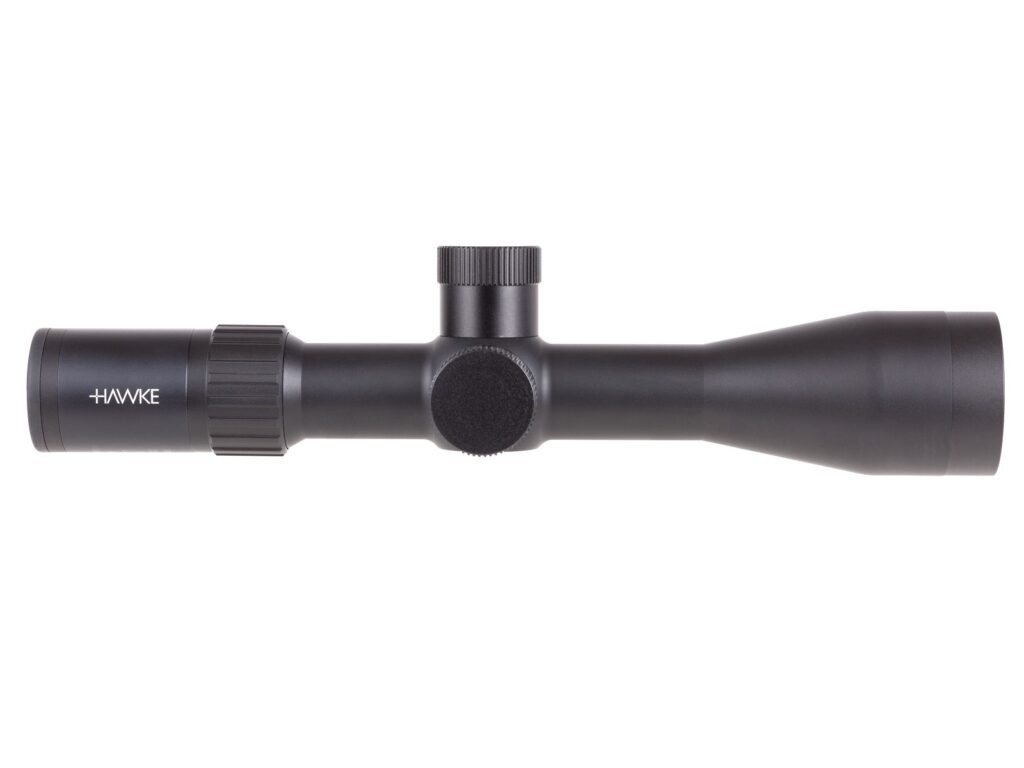
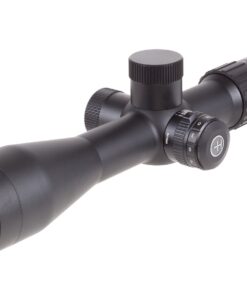
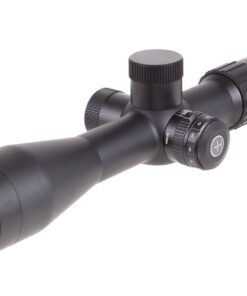
The Hawke Frontier 30 Side AO Scope is designed to deliver outstanding optical performance, dependable accuracy, and exceptional viewing clarity for demanding shooting environments. Built with advanced optical engineering, a durable 30mm mono-tube chassis, and convenient side-focus adjustment, this premium riflescope offers impressive versatility for recreational target shooting, competitive marksmanship, and hunting applications where permitted.
Furthermore, its fully multi-coated lens system is engineered to maximize light transmission, enhance image contrast, and provide excellent visual definition. Consequently, finer target details can be observed more clearly, while the illuminated reticle supports comfortable viewing under changing lighting conditions.
Whether precision is required at a shooting range or reliable optical performance is needed in challenging outdoor environments, this advanced riflescope provides a compelling combination of durability, functionality, and sophisticated design.
The description below focuses on the 2.5–15×50 Side Focus AO model with the illuminated Mil Pro reticle. Other magnifications and reticle configurations are available within the Frontier range.
Advanced Optical Performance and Superior Image Clarity
Fully Multi-Coated Lenses for Exceptional Brightness
Exceptional viewing performance is supported by the advanced 21-layer fully multi-coated optical system. Through this specialized lens treatment, unwanted reflections are reduced, while greater image clarity and improved contrast are achieved across a broad range of environmental conditions.
Additionally, the carefully engineered optical assembly helps preserve detail and natural color reproduction. Therefore, landscapes, targets, and surrounding features can be examined with improved visual definition.
Even when outdoor lighting conditions become less favorable, the premium lens design helps maintain a useful image. However, optical brightness remains dependent on ambient light, magnification, and viewing conditions.
Versatile 2.5–15× Magnification System
Greater viewing flexibility is provided through the adjustable 2.5–15× magnification range. At lower magnification, a wider field of view is available, allowing larger areas to be observed comfortably.
Meanwhile, increased magnification allows distant details to be examined more closely. As a result, the same optical platform can accommodate a variety of observation distances without requiring multiple specialized scopes.
Moreover, the convenient zoom ring features a removable thumb lever for comfortable magnification changes. This practical arrangement supports efficient handling while preserving the scope’s streamlined appearance.
Precision Side Focus and Adjustable Parallax Technology
Convenient Side-Mounted Focus Adjustment
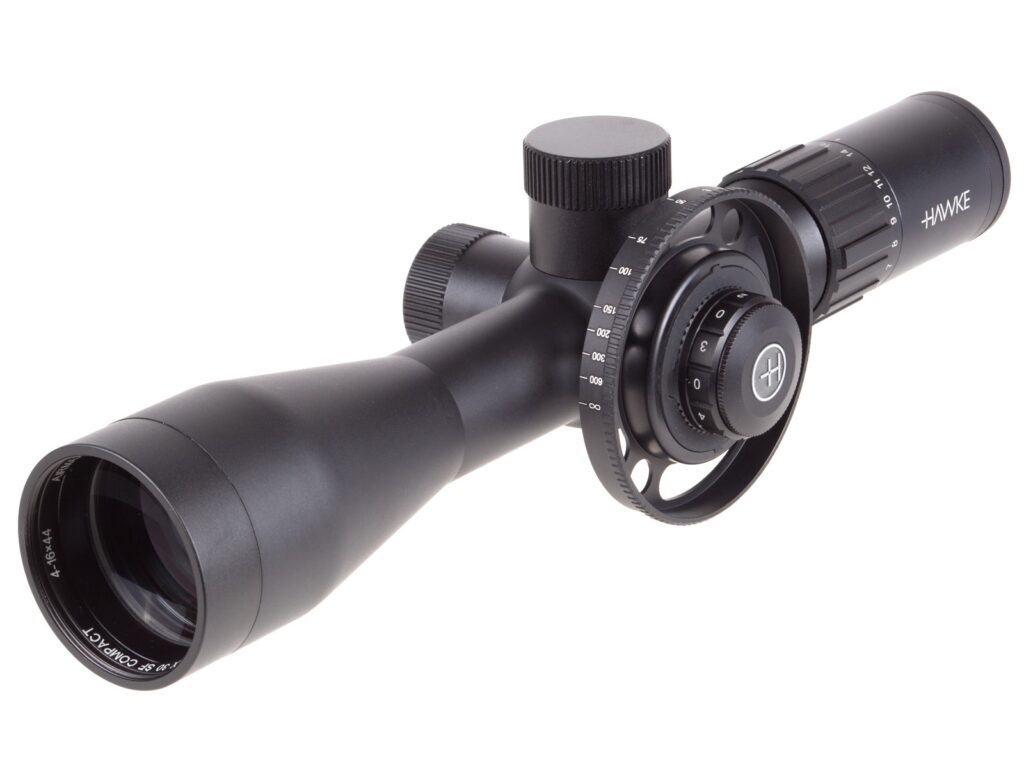
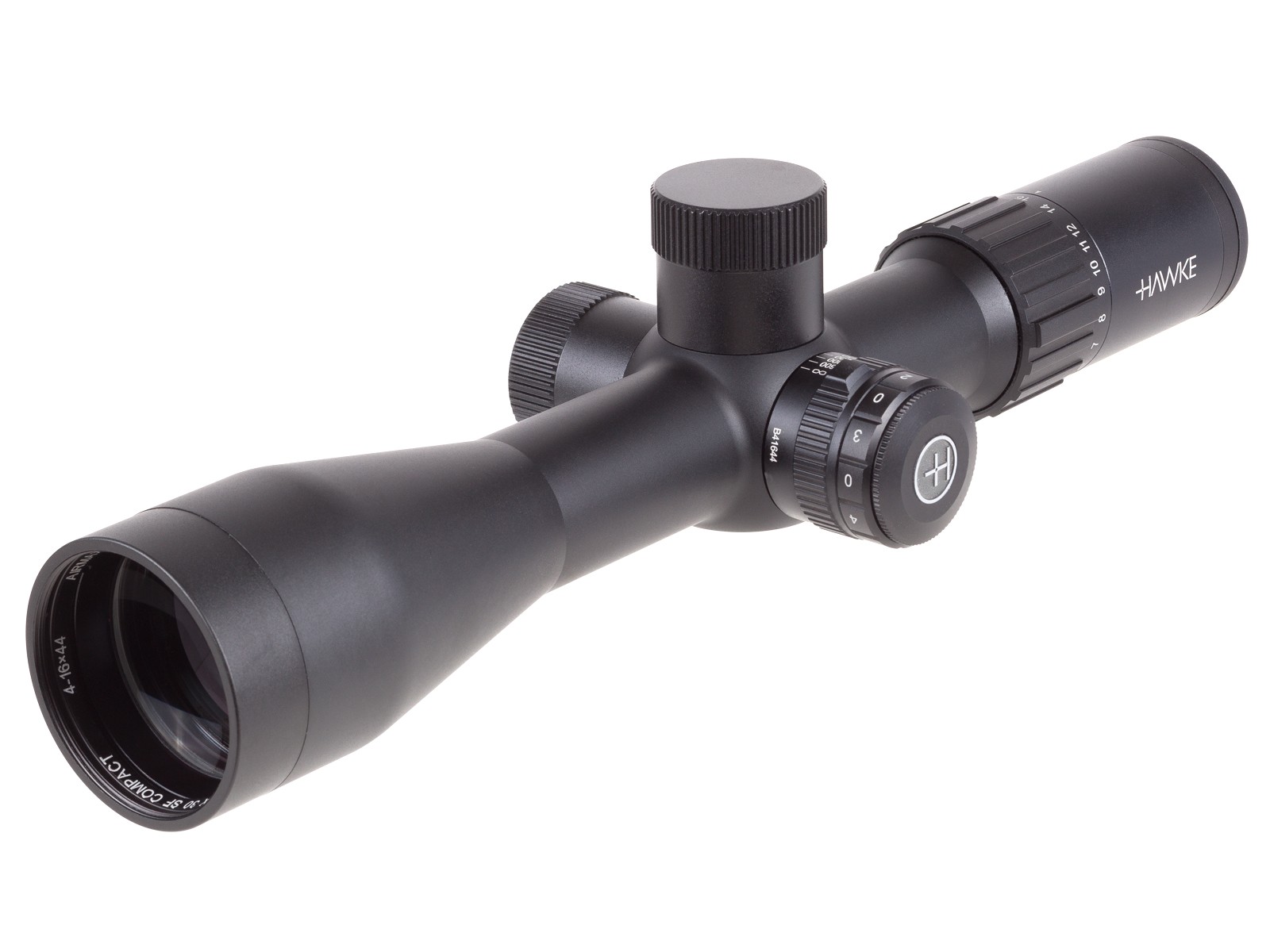
One of the most valuable characteristics of the Hawke Frontier 30 Side AO Scope is its conveniently positioned side-focus mechanism.
Through this adjustment system, image sharpness and parallax compensation can be managed without reaching toward the objective lens. Consequently, a more comfortable viewing position can be maintained during extended observation.
For the featured configuration, side-focus adjustment is specified from approximately 15 yards to infinity. This provides useful flexibility across varying target distances.
Furthermore, the side-mounted control is designed for convenient accessibility and dependable mechanical operation.
Enhanced Viewing Consistency
Parallax occurs when the apparent relationship between the reticle and the observed target changes because of eye position.
Fortunately, its effects can be reduced through the built-in adjustment mechanism. Therefore, careful optical alignment becomes easier to maintain across different viewing distances.
In addition, the focus system supports clear image presentation, while the fast-focus eyepiece allows the reticle’s apparent sharpness to be adjusted to the individual viewer’s eyesight.
Illuminated Reticle and Advanced Visual Reference System
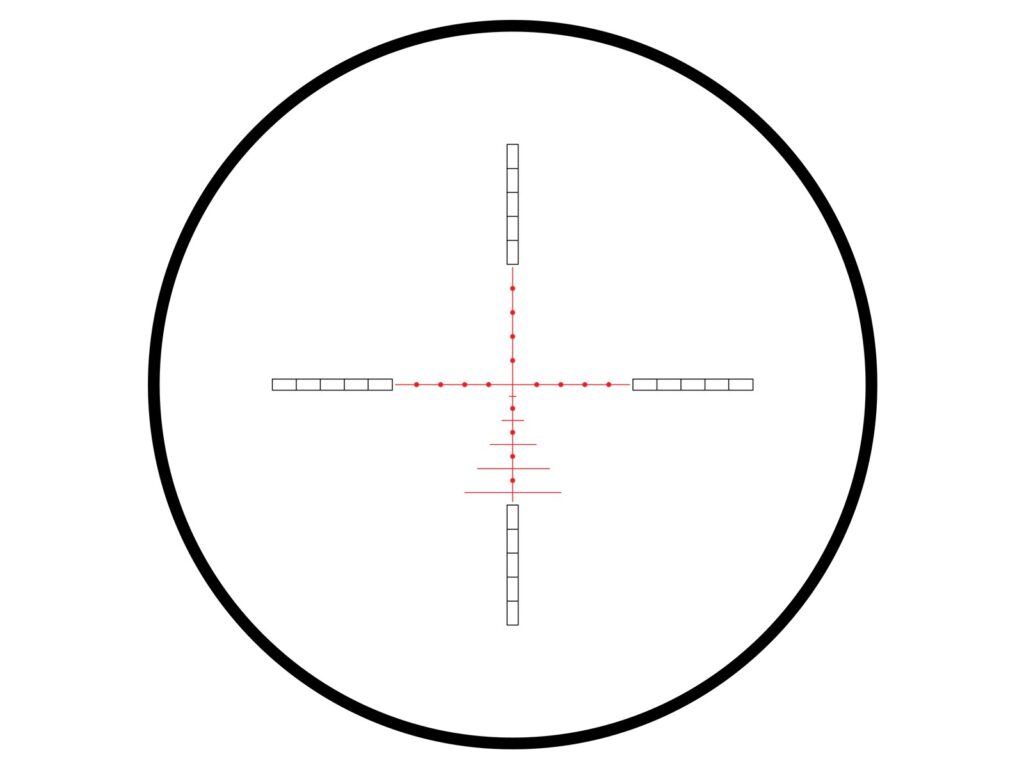
Glass-Etched Mil Pro Reticle
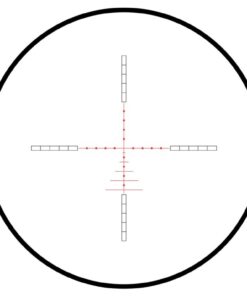
A precision glass-etched Mil Pro reticle is incorporated into the featured configuration. Its design provides clear visual reference markings without unnecessarily obscuring the central viewing area.
Additionally, six red illumination brightness levels are provided for improved reticle visibility under suitable lighting conditions.
Because the reticle is positioned in the second focal plane, its apparent size remains constant as magnification is adjusted. However, the angular values represented by its markings must be interpreted at the magnification specified for the reticle.
The result is an adaptable optical display that combines useful reference markings with comfortable target observation.
Adjustable Illumination for Changing Conditions
Different lighting environments can significantly affect reticle visibility. Therefore, adjustable illumination provides an additional level of convenience.
Lower brightness settings may be preferred in dimmer surroundings, while brighter settings can improve reticle visibility against certain dark backgrounds.
Furthermore, illumination can be switched off when unnecessary, helping conserve battery power.
Durable 30mm Mono-Tube Construction
Strong and Reliable Aluminum Housing
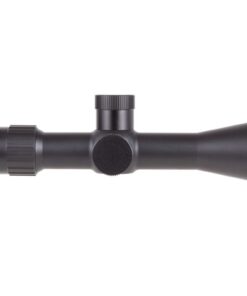
Exceptional structural integrity is supported by the one-piece 30mm aluminum mono-tube chassis.
Through this construction, the optical components are housed within a robust yet practical framework. Additionally, the streamlined design offers a professional appearance suitable for a variety of compatible sporting rifles.
Waterproof, shockproof, and nitrogen-purged construction provides additional protection against environmental challenges.
Consequently, internal fogging is less likely during changing weather conditions, while the rugged housing supports dependable service under normal intended use.
Comfortable Eye Relief and Ergonomic Handling
Approximately four inches of eye relief is provided by the featured model. As a result, comfortable eye positioning can be maintained when the scope is properly mounted.
Moreover, the carefully designed eyepiece and adjustment controls contribute to an accessible user experience.
Whether equipment is being inspected, transported, or used during an authorized shooting activity, convenient handling remains an important advantage.
Precision Adjustment Turrets and Zero Lock Technology
Clearly Defined Mechanical Adjustments
The featured configuration incorporates exposed adjustment turrets with 0.1 MRAD click increments.
These controls provide clearly defined mechanical adjustment intervals, while the engraved markings support straightforward visual identification.
Furthermore, the Zero Lock ‘n’ Stop mechanism allows a previously established zero reference to be recovered more conveniently.
Accordingly, repeatable mechanical operation is supported, although actual accuracy also depends on equipment compatibility, proper installation, ammunition consistency, and environmental conditions.
Convenient and Practical Design
Reliable adjustment performance is complemented by a sturdy turret arrangement.
Additionally, the external controls have been designed to balance accessibility and durability.
Therefore, the scope offers a sophisticated combination of traditional optical quality and modern mechanical functionality.
Key Features and Product Highlights
-
Magnification: Versatile 2.5–15× optical zoom range.
-
Objective lens: Large 50mm objective for effective light collection.
-
Main tube: Durable 30mm aluminum mono-tube construction.
-
Optical coating: Premium 21-layer fully multi-coated lens system.
-
Reticle: Illuminated glass-etched Mil Pro design.
-
Focal plane: Second focal plane configuration.
-
Illumination: Six adjustable red brightness settings.
-
Parallax adjustment: Convenient side focus from 15 yards to infinity.
-
Turret system: Exposed Zero Lock ‘n’ Stop adjustments.
-
Click value: 0.1 MRAD adjustment increments.
-
Eye relief: Approximately 4 inches.
-
Weather protection: Waterproof, shockproof, and nitrogen-purged construction.
-
Mounting compatibility: Designed for appropriately sized 30mm scope rings.
-
Warranty: Manufacturer’s limited lifetime warranty, subject to applicable conditions.
Specifications correspond to the referenced 2.5–15×50 Mil Pro variant.
Why Choose the Hawke Frontier 30 Side AO Scope?
Premium Quality and Excellent Long-Term Value
Selecting a premium riflescope involves more than simply comparing magnification levels. Optical clarity, construction quality, adjustment reliability, ergonomic design, and manufacturer support should also be considered.
Fortunately, these essential characteristics are brought together within the Frontier series.
Furthermore, its high-quality optical coatings, durable mono-tube chassis, and thoughtfully designed controls provide practical advantages for users who prioritize dependable equipment.
Unlike basic optical systems with limited adjustment options, this configuration provides advanced side focus, adjustable illumination, and a sophisticated turret mechanism.
Consequently, buyers seeking a feature-rich riflescope can benefit from a balanced combination of optical performance, mechanical refinement, and long-term usability.
Suitable for Different Sporting Applications
Versatility is another important reason to consider this optical platform.
For recreational target shooting, the adjustable magnification supports comfortable viewing at different distances. Meanwhile, competitive participants may appreciate its clear reticle presentation and repeatable adjustment controls.
Additionally, lawful hunting applications can benefit from its robust construction, variable magnification, and illuminated aiming reference.
Nevertheless, appropriate use always depends on local regulations, safe firearm handling, and compatibility with the intended equipment.
Final Overview – Premium Precision Optics for Demanding Users
The Hawke Frontier 30 Side AO Scope combines advanced optical engineering, practical side-focus functionality, and durable mechanical construction in a sophisticated package.
With its fully multi-coated lenses, illuminated reticle, robust 30mm chassis, and accessible adjustment controls, reliable optical performance is supported across a wide range of sporting environments.
Ultimately, this premium riflescope represents an attractive choice for enthusiasts seeking exceptional viewing clarity, adaptable functionality, and dependable craftsmanship from an established optics manufacturer.
Falcon Scope, Falcon Optics, Element Titan 3-18×50 and Precision Rifle Optics: Complete Buying Guide
Discover Falcon Scope Technology and Modern Precision Optics
Choosing the right falcon scope can transform the viewing experience for target shooters, outdoor enthusiasts, and precision optics users. Modern optical technology combines high-quality glass, adjustable magnification, durable construction, and advanced reticle systems to support clear observation across different distances.
Whether researching falcon optics, falcon optical, falcon vision, or falcon tactical equipment, understanding individual product specifications remains essential. Different optic companies manufacture equipment for competitive target shooting, hunting, observation, thermal imaging, and specialist applications.
The Falcon Optical Systems product range includes competition-oriented riflescopes, while other manufacturers offer digital and thermal solutions. Consequently, buyers should distinguish traditional optical scopes from electronic observation equipment before comparing features.
Falcon Optics and Popular Optical Configurations
Falcon Optical Systems produces riflescopes designed for demanding precision applications. Its competition-oriented products include high-magnification options featuring specialized turret adjustments and optical systems.
Popular search terms include:
- falcon 10×50 and 10 x50 configurations for fixed-magnification optical research.
- falcon xl and falcon sp for model identification and compatibility searches.
- falcon 40 and 30 falcon when researching unidentified Falcon-related equipment.
- falcon claw and falconclaw for accessories or products requiring brand verification.
- tactical falcon and falcon arm when comparing tactical accessories and related equipment.
- falcon receiver when identifying device-specific components.
- falcon scanner and falcon thermal for electronic observation equipment.
Because similarly named products may belong to unrelated manufacturers, confirming the exact model is always recommended.
Understanding Rifle Scope Magnification and Objective Lens Sizes
Comparing 3-18×50, 4.5-18 and High-Magnification Scopes
Optical magnification determines how large a distant subject appears through a scope. For example, 3-18 magnification provides an adjustable viewing range suitable for diverse observation and sporting applications.
Searches for 3×18, 3×18 scope, 3-18 scopes, and 3:18 often relate to variable-magnification optics. Meanwhile, 4.5 x 18, 4.5 18, 4x-18, and 18 scope reflect interest in alternative magnification ranges.
Consumers comparing nightforce 3-18 equipment with the best 3-18 scopes should examine optical clarity, adjustment consistency, weight, eye relief, and warranty coverage.
Similarly, numerical searches such as 18x-4, 60x 3 50x 5, 3/5/25, and 3 5 25 should be checked against manufacturer specifications rather than interpreted automatically as verified optical configurations.
Understanding 50mm and 60mm Objective Lenses
An objective lens collects incoming light and contributes to image brightness and resolution. Common measurements include 50mm and 60mm, although overall image quality depends on glass composition, coatings, magnification, and environmental conditions.
Buyers sometimes search for how big is 50 x 60 or what size is 50 x 60. These measurements require context because 50 x 60 could describe physical dimensions rather than magnification.
Other numerical search variations include 25 x .50, 500 x 50, 500×60, 510 50, 50×0, 36x 50, 1/4×40, .25×50, 800 x 50, 60 x50, .50 x 10, 50x.05, 7.5 x 50, 50x 05, .25 x 50, 50 600, and 1050 x 5.
Furthermore, searches such as 10:50, scope50, and xoi50.com may represent alternative notation, incomplete model references, or unrelated websites. Therefore, these strings should never substitute for documented optical specifications.
Element Titan 3-18×50: Premium Optical Performance
Why the Element Titan 3-18×50 Deserves Attention
The element titan 3-18×50 is a versatile first-focal-plane riflescope designed around a broad magnification range and precision adjustment system.
Also searched as element titan 3 18×50, this model combines a 34mm main tube, 50mm objective lens, illuminated reticle, and adjustable parallax.
Its notable features include:
- 3-18x magnification: Supports flexible viewing across different distances.
- 50mm objective: Provides substantial light-gathering area.
- 34mm main tube: Accommodates a wide internal adjustment range.
- First-focal-plane reticle: Maintains consistent angular subtensions throughout magnification changes.
- Precision turrets: Support repeatable elevation and windage adjustments.
- HD glass: Helps minimize optical distortion and improve image definition.
- Weather-resistant construction: Supports operation in challenging outdoor conditions.
The manufacturer’s published specifications include 150 MOA of elevation adjustment, a mechanical zero-stop, and parallax adjustment beginning at 10 yards.
Consequently, this optic is worth considering when comparing premium variable-magnification scopes. Element Optics official specifications.
Chromatic Aberration and Optical Image Quality
Understanding chromatic aberration scope performance helps buyers evaluate image sharpness. Chromatic aberration appears as unwanted colored fringes around contrasting objects.
High-quality glass and effective lens coatings can reduce these imperfections, improving visual definition.
Likewise, users researching element ll should verify whether the search refers to a specific product generation, model designation, or accessory.
Falcon Thermal Imaging, Red Dot Optics and Electronic Sensors
Advanced Falcon Vision and Thermal Observation
Modern thermal equipment detects infrared radiation rather than depending entirely on visible light.
For users exploring falcon thermal, this distinction is important because thermal imaging and conventional optical magnification serve different purposes.
Some searches also mention elbit falcon and elbit falcon red dot. However, the precise manufacturer and model must be established before making compatibility or performance claims.
Additionally, falcon sensor manual searches generally indicate a need for operating instructions, sensor calibration information, maintenance guidance, or technical support.
Related search terms such as falke optics and optical camp may point toward alternative optic brands or specialist optical applications.
Even accessories marketed under unrelated product categories, including the falconeye patriot convertible bluetooth headset, require independent compatibility checks.
How Far Can a Falcon See?
The question how far can a falcon see can refer either to the bird’s remarkable natural eyesight or the observation distance of an optical device.
For riflescopes, useful viewing distance depends on magnification, atmospheric clarity, objective lens performance, and the size of the observed subject. No universal distance rating applies to every Falcon-branded device.
Rifle Rangefinders and Advanced Distance-Measuring Technology
Choosing a Rifle Rangefinder and Integrated Optics
A rifle rangefinder measures distance using optical or electronic technology. Modern laser devices can provide fast measurements and improve distance awareness in sporting and observation environments.
Common product searches include rifle range finder, laser range finder for rifle, rangefinder scope for rifle, and rangefinding rifle scope.
Additionally, scopes with rangefinders built in combine observation and distance measurement within a single optical platform.
A picatinny mounted rangefinder, sometimes described as a picatinny range finder, uses a compatible rail interface for attachment.
Other configurations include a weapon mounted range finder, while the abbreviation wmlrf commonly refers to a weapon-mounted laser rangefinder.
Electronic Ballistic Calculators and Distance Systems
A weapon mounted ballistic calculator can combine measured distance with programmed ballistic information, depending on its design.
Products associated with arken wmlrf searches include Arken’s weapon-mounted ranging equipment. Its TargetLock TL3000 incorporates laser-ranging and ballistic calculation capabilities. Arken Optics official product information.
Meanwhile, element rf searches may relate to Element Optics rangefinding products. Buyers should confirm the exact model, intended purpose, and accessories before purchasing.
Rifle Scope Mounts, Rings and Precision Accessories
Understanding Picatinny and Dovetail Scope Mounts
Choosing the correct mounting system is essential for secure installation and optical alignment.
A dovetail scope mount connects compatible optics to a dovetail-style rail, while dovetail rings provide alternative mounting arrangements.
Similarly, dovetail scope mounts and 30mm dovetail scope rings must match both the optic tube diameter and rail dimensions.
For Picatinny systems, popular options include picatinny scope mounts, picatinny scope rings, 30mm scope mount picatinny, and 30mm picatinny scope rings.
Buyers should confirm tube size, ring height, rail compatibility, and appropriate installation specifications.
Diving Board Mounts and Scope Accessories
Specialist mounting configurations include a 34mm diving board mount, 34mm scope mount with diving board, diving board scope mount, and 30mm diving board mount.
A scope diving board generally describes an elevated accessory mounting platform integrated with or attached to a compatible optical mounting system.
An element mount may provide a manufacturer-specific mounting solution, while a turret wheel can assist with handling or adjustment on compatible scopes.
Protective Covers for Optical Equipment
Protecting lenses helps preserve optical performance during transportation and storage.
Popular protective accessories include:
- tenebraex scope caps for compatible objective and ocular lenses.
- tenebraex scope covers for additional lens protection.
- allen neoprene scope cover for cushioning and shielding an optic during storage or transport.
Choosing the Right Falcon Scope and Optical Accessories
Selecting an effective optical system requires more than comparing magnification numbers. Glass quality, mechanical reliability, reticle design, mounting compatibility, environmental resistance, and manufacturer support all influence long-term satisfaction.
Whether researching Falcon optics, Element Titan models, advanced rangefinding technology, or protective accessories, prioritize verified product specifications over ambiguous search terminology.
For the best purchasing experience, compare authentic manufacturer documentation, confirm compatibility, and choose equipment suited to your intended sporting or observation application.
Frequently Asked Questions (FAQs)
General Information and Optical Performance
1. What makes this premium riflescope different from standard optical sights?
A combination of advanced optical engineering, durable construction, and convenient adjustment technology distinguishes this premium optical instrument from more basic alternatives. High-quality lens coatings help improve image clarity, while the 30mm main tube provides a robust structural platform.
Additionally, the side-mounted focus system allows image sharpness and parallax compensation to be adjusted conveniently. The illuminated reticle, variable magnification, and precision adjustment turrets further enhance its versatility.
Consequently, users benefit from an optical system designed for comfortable viewing, dependable mechanical operation, and long-term durability across appropriate sporting applications.
2. Is this riflescope suitable for beginners and experienced shooters?
Yes. Both beginners and experienced enthusiasts can appreciate its combination of accessible controls and advanced optical features.
For beginners, the adjustable magnification, fast-focus eyepiece, and clearly marked controls provide a practical introduction to premium riflescope technology. Meanwhile, experienced users may value the adjustable parallax system, illuminated reticle, and repeatable turret adjustments.
However, basic knowledge of optical alignment, safe equipment handling, and reticle interpretation remains important. Therefore, familiarization with the manufacturer’s instructions is recommended before use.
3. How does the fully multi-coated optical system improve image quality?
The fully multi-coated lens system helps reduce unwanted reflections while increasing the transmission of available light through the optical assembly.
As a result, improved contrast, reduced glare, and more natural image definition can be experienced under suitable conditions.
Furthermore, high-quality coatings contribute to greater visual comfort when targets or surrounding landscapes are observed for extended periods.
Nevertheless, no optical coating can create additional ambient light. Therefore, actual image brightness remains influenced by lighting conditions, magnification, lens cleanliness, and the viewer’s eyesight.
4. What are the advantages of a 50mm objective lens?
A 50mm objective lens provides a relatively large entrance aperture through which available light can enter the optical system.
Consequently, useful image brightness can be maintained at a variety of magnification settings. This can be particularly valuable when viewing landscapes or targets in moderate lighting conditions.
Additionally, a larger objective can provide a practical exit pupil at suitable magnifications.
However, image brightness is determined by several factors, including optical coatings, lens quality, zoom setting, and environmental conditions.
For this reason, objective diameter should be considered alongside overall optical performance rather than evaluated independently.
Magnification and Viewing Experience
5. What does 2.5–15× magnification mean?
The magnification range indicates that the viewed subject can appear between 2.5 and 15 times larger than when observed with the unaided eye, depending on the selected setting.
At 2.5× magnification, a wider field of view is generally available. Therefore, larger areas can be observed more comfortably.
Conversely, at 15× magnification, smaller details may become easier to distinguish, although the visible field becomes narrower.
Accordingly, variable magnification provides flexibility for different viewing distances and personal preferences.
6. Can the scope be used in low-light conditions?
Yes, its premium optical system is designed to support effective viewing when available light becomes limited.
The fully multi-coated lenses contribute to efficient light transmission, while the adjustable illuminated reticle can improve reticle visibility against certain backgrounds.
Furthermore, the 50mm objective lens provides a useful light-gathering aperture.
However, this instrument is not a night-vision or thermal-imaging device. Therefore, adequate ambient light is still required for conventional optical observation.
7. Does increasing magnification always improve accuracy?
No. Higher magnification makes distant objects appear larger, but it does not automatically improve the mechanical accuracy of a rifle or the consistency of a shooter.
In fact, increased magnification can make natural movement, vibration, and atmospheric distortion more noticeable.
Additionally, higher zoom settings generally produce narrower fields of view and smaller exit pupils.
Therefore, the most suitable magnification depends on the viewing environment, equipment stability, and individual requirements.
Side Focus and Parallax Adjustment
8. What is the purpose of the side-focus adjustment?
The side-focus mechanism provides convenient control over image focus and parallax compensation.
Instead of reaching toward the objective lens, users can operate a control positioned on the side of the optical housing.
As a result, adjustments can be performed while maintaining a comfortable viewing position.
Additionally, the mechanism helps support clear image presentation at varying distances within its specified adjustment range.
9. What is parallax in a riflescope?
Parallax refers to an apparent shift between the reticle and the observed target when the viewer’s eye moves away from the optical axis.
This effect can occur when the target image and reticle are not positioned in the same optical focal plane.
Consequently, the apparent alignment can change even when the instrument itself remains stationary.
An adjustable parallax system helps minimize this effect at suitable distances.
Nevertheless, consistent eye positioning and correct optical setup remain important for reliable viewing.
10. What is the minimum focusing distance?
For the featured 2.5–15×50 configuration, the manufacturer’s specified side-focus range begins at approximately 15 yards and extends to infinity.
This enables image focus and parallax compensation across a broad range of observation distances.
However, minimum focusing distances can differ between optical models and configurations.
Therefore, the exact specification should always be confirmed against the product identification or manufacturer’s technical documentation.
Reticle, Illumination and Adjustment Features
11. What is the advantage of an illuminated reticle?
An illuminated reticle provides improved visibility when the viewing background makes conventional reticle markings difficult to distinguish.
For example, red illumination can help the central reference point stand out against dark vegetation or uneven lighting.
Additionally, adjustable brightness settings allow the illuminated display to be adapted to different conditions.
However, excessive brightness may cause unwanted glare, particularly in darker surroundings.
Therefore, appropriate illumination should be selected according to the available light and personal viewing comfort.
12. What is the difference between first and second focal plane reticles?
In a first focal plane optical system, the reticle appears to change size alongside the target image when magnification is adjusted.
Consequently, the angular values represented by its markings remain consistent throughout the magnification range.
By contrast, a second focal plane reticle maintains a constant apparent size as magnification changes.
However, its reference markings correspond to their specified angular values only at the designated magnification.
Both designs offer advantages. Therefore, personal preference and the intended sporting application should influence the purchasing decision.
13. How does the Zero Lock ‘n’ Stop turret system work?
The Zero Lock ‘n’ Stop mechanism provides a convenient mechanical reference for returning to a previously established zero setting.
Once correctly configured according to the manufacturer’s instructions, the mechanism helps identify the intended reference position.
Additionally, the exposed turret design provides accessible adjustment controls with clearly marked increments.
Nevertheless, the mechanism should not be considered a substitute for confirming optical alignment and equipment condition.
Importantly, turret specifications vary between models. Certain second focal plane configurations use ¼ MOA adjustments, whereas selected first focal plane versions use 0.1 MRAD increments.
Construction, Compatibility and Durability
14. Is the optical housing waterproof and fog-resistant?
Yes. The weather-resistant construction is designed to provide protection against moisture and environmental exposure.
Furthermore, nitrogen purging helps reduce internal fogging caused by changes in temperature and humidity.
The durable housing also supports shock resistance during normal intended use.
However, waterproof construction does not mean the equipment should be deliberately submerged or exposed to conditions beyond the manufacturer’s specified limits.
For optimal reliability, protective covers should be used during transportation, and the exterior should be dried after exposure to moisture.
15. What type of mounting rings are required?
A compatible set of 30mm mounting rings is required because the main tube has a nominal diameter of 30mm.
Nevertheless, tube diameter is not the only consideration when selecting mounting equipment.
Ring height, receiver compatibility, objective-lens clearance, and the dimensions of the mounting platform should also be evaluated.
Additionally, properly manufactured mounting components can help preserve alignment and minimize unnecessary mechanical stress.
For this reason, compatibility should always be confirmed using the equipment manufacturer’s recommendations.
16. Can this optical sight be used with air rifles?
Compatibility depends on the specific air rifle, its recoil characteristics, mounting system, and the optical manufacturer’s approved applications.
Many pre-charged pneumatic models produce relatively mild recoil, while certain spring-piston systems generate a distinctive bidirectional recoil impulse.
Consequently, a riflescope suitable for one platform may not necessarily be approved for another.
Before installation, users should verify that the chosen optical configuration and mounting equipment are rated for the intended airgun.
This helps protect the equipment and supports dependable long-term operation.
17. Is the riflescope suitable for repeated outdoor use?
Yes. Its aluminum mono-tube construction, weather-resistant features, and carefully engineered adjustment controls are intended to support regular sporting use.
Moreover, the protective exterior finish helps maintain its appearance under ordinary handling conditions.
However, durability also depends on appropriate maintenance, careful transportation, and correct storage.
Repeated exposure to abrasive materials, corrosive substances, or excessive mechanical impact should be avoided.
Therefore, consistent care remains essential, even when premium construction materials are provided.
Maintenance, Accessories and Long-Term Ownership
18. How should the lenses be cleaned?
Optical surfaces should be cleaned carefully to prevent scratches and preserve the effectiveness of their protective coatings.
Initially, loose dust and debris should be removed with an appropriate optical air blower or soft lens brush.
Afterward, a clean microfiber cloth and lens-safe cleaning solution may be used to remove fingerprints or remaining contamination.
Excessive pressure should be avoided, especially when abrasive particles may still be present.
Additionally, household glass cleaners and rough fabrics should not be used unless specifically approved by the manufacturer.
Regular, gentle maintenance helps preserve image clarity and the condition of the optical surfaces.
19. What accessories are recommended?
Several accessories can improve protection, storage convenience, and overall ownership satisfaction.
Protective flip-up lens covers help prevent dust accumulation and accidental contact with optical surfaces.
Meanwhile, a padded storage case provides additional protection during transportation.
A quality microfiber cleaning cloth and optical lens-cleaning kit are also useful.
Furthermore, compatible mounting rings should be selected according to the manufacturer’s specifications.
For models with illumination, carrying a suitable replacement battery can provide additional convenience.
Ultimately, accessories should be chosen according to compatibility, practical requirements, and the manufacturer’s recommendations.
20. Is a manufacturer’s warranty included?
Hawke offers a limited lifetime warranty for eligible optical products, subject to the terms and conditions applicable to the specific product and market.
Warranty protection may address qualifying manufacturing defects or failures associated with normal intended use.
However, exclusions may apply to accidental damage, misuse, unauthorized modification, or other circumstances specified in the warranty agreement.
Therefore, buyers should review the applicable warranty documentation and retain their purchase records.
Purchasing from an authorized retailer can also help simplify product identification and warranty inquiries.
21. Why is this optical system considered a worthwhile long-term investment?
Long-term value is influenced by optical clarity, durability, adjustment reliability, practical versatility, and available manufacturer support.
A premium lens system can provide consistent viewing comfort, while a robust housing helps protect sensitive internal components.
Additionally, variable magnification and convenient side focus allow the optical instrument to accommodate different observation requirements.
Consequently, users may find that a carefully selected premium model satisfies their needs for an extended period.
Rather than focusing exclusively on initial purchase price, overall construction quality, compatibility, warranty coverage, and intended use should be considered.
Ultimately, dependable engineering and responsible maintenance contribute to lasting satisfaction.
Why Choose This Premium Optical System for Your Rifle?
1. Exceptional Optical Clarity for Superior Viewing Performance
One of the most important reasons to choose this advanced optical system is its outstanding image quality. Through premium fully multi-coated lenses, improved light transmission, enhanced contrast, and excellent image definition are provided.
Furthermore, unwanted reflections are minimized, allowing surrounding details to be viewed more comfortably. Whether outdoor environments are being observed or recreational target shooting is being enjoyed, clear optical performance remains an essential advantage.
Additionally, the advanced optical construction supports natural color reproduction and consistent visual comfort across different lighting conditions.
2. Advanced Side Focus for Greater Optical Precision
Another significant advantage is the conveniently positioned side-focus adjustment system. Through this innovative mechanism, image focus and parallax compensation can be adjusted without unnecessary repositioning.
Consequently, improved viewing consistency can be maintained across different observation distances.
Moreover, the accessible adjustment control makes the overall experience more comfortable, particularly during extended sporting activities.
Unlike basic fixed-focus optical sights, greater flexibility is provided for users who regularly observe subjects at different distances.
3. Versatile Magnification for Multiple Shooting Applications
A variable magnification system provides excellent adaptability for different recreational and sporting environments.
At lower magnification levels, wider viewing areas are available, while increased magnification allows smaller details to be examined more closely.
Therefore, greater flexibility is offered without requiring several separate optical instruments.
Furthermore, the smooth magnification control contributes to convenient operation, making this configuration suitable for enthusiasts who appreciate both functionality and optical versatility.

Reviews
There are no reviews yet.