Set 3x Lenses for ATN PS31 Series Goggles – Premium Night Vision Magnification Accessories
Experience Enhanced Optical Clarity with Set 3x Lenses for ATN PS31 Series Goggles
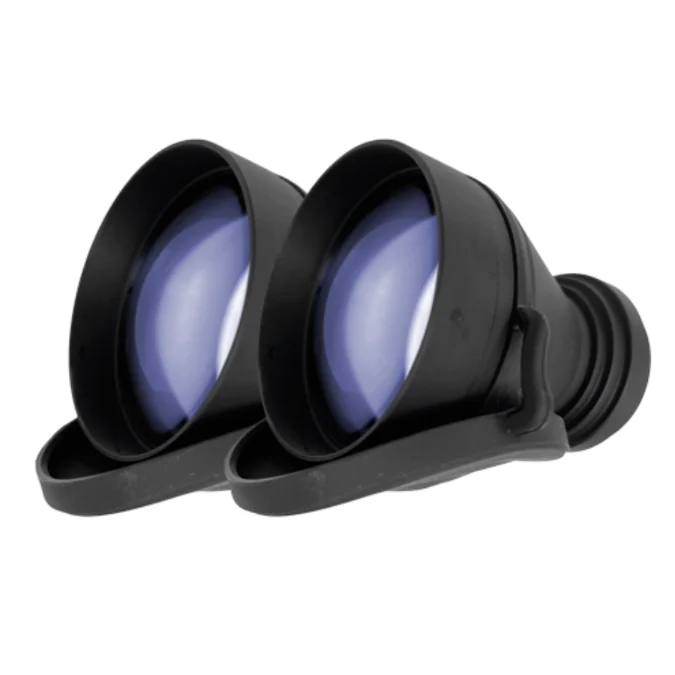
Enhanced nighttime observation is made possible with the Set 3x Lenses for ATN PS31 Series Goggles, a specialized optical accessory package developed for compatible ATN PS31 night vision systems. Exceptional magnification capabilities are provided through carefully engineered 3x lenses, allowing distant subjects and environmental details to be observed with greater apparent size.
Designed specifically for the ATN PS31 platform, this accessory set is intended to extend the observational versatility of compatible night vision goggles. Furthermore, additional flexibility is provided for users who require greater image magnification during nighttime observation, wildlife monitoring, outdoor exploration, and other authorized low-light activities.
Superior viewing opportunities are supported by the combination of precision optical components and ATN’s established night vision technology. Consequently, distant visual details can be examined more comfortably without relying exclusively on the goggles’ standard 1x magnification.
Rather than replacing an existing night vision system, the accessories are designed to complement compatible equipment. Therefore, an existing optical setup can be adapted for observation tasks requiring increased magnification.
Manufactured under ATN product number ACGOPS31LS3P, the set is advertised by ATN as containing three 3x magnification lenses.
Key Features and Benefits of ATN PS31 3x Magnification Lenses
3x Optical Magnification: Distant subjects can be viewed at increased apparent size through the dedicated magnification lenses.
ATN PS31 Compatibility: The accessory set is specifically marketed for ATN PS31 night vision goggles.
Three-Lens Package: Three 3x optical lenses are specified in ATN’s current product description.
Dedicated Optical Accessories: The lenses are designed to complement compatible PS31 equipment rather than function as independent night vision devices.
Versatile Observation Applications: Greater magnification can be useful during wildlife observation, stationary monitoring, and detailed outdoor viewing.
Black Finish: A black exterior is specified for the manufacturer accessory set.
Manufacturer-Identified Accessory: Product identification is supported by the official ATN SKU ACGOPS31LS3P.
Advanced 3x Optical Magnification for Night Vision Observation
Greater Detail Across Extended Viewing Distances
Through 3x optical magnification, a distant subject is presented at approximately three times its unmagnified angular size. As a result, greater visual detail may be distinguished when sufficient image quality and ambient illumination are available.
Additionally, a more specialized observation experience is enabled when standard 1x magnification is insufficient for the intended viewing task.
For instance, distant landscape features can be examined with increased magnification during stationary nighttime observation. Similarly, wildlife behavior may be monitored from an appropriate distance without unnecessary disturbance.
Nevertheless, the available field of view is generally reduced when optical magnification is increased. Therefore, the original 1x configuration may remain preferable for movement, close-range awareness, and activities requiring broad peripheral visibility.
Precision Optical Design for Compatible Night Vision Goggles
Reliable accessory compatibility is prioritized through a product design specifically associated with the ATN PS31 family.
Instead of being promoted as a universal optical attachment, these lenses are identified as dedicated accessories for the manufacturer’s established night vision platform.
Furthermore, the advertised 3x optical capability is delivered through the accessory lenses rather than through digital enlargement.
Consequently, the benefits of optical magnification can be considered independently from digital zoom systems, although final image clarity will still depend on the host goggles, viewing conditions, and optical alignment.
Designed to Complement Existing ATN PS31 Equipment
Convenient equipment customization is supported by the availability of dedicated optical accessories.
For users who already own compatible ATN PS31 goggles, the purchasing of an entirely separate night vision system may not be necessary when additional magnification is the primary requirement.
Moreover, optical flexibility can be improved by maintaining suitable accessories for different observation conditions.
Before installation, however, compatibility with the precise PS31 model and its existing objective configuration should be verified through the manufacturer.
Practical Applications for ATN PS31 3x Lenses
Wildlife Observation and Nature Exploration
Wildlife observation can be enhanced when distant animals are viewed through magnified night vision optics.
During responsible nighttime field observation, greater image magnification may allow an animal’s posture, movement, and surrounding environment to be examined in additional detail.
Furthermore, disturbance can be minimized when a respectful observation distance is maintained.
Although improved magnification can be beneficial, environmental conditions must still be considered. Image quality may be influenced by atmospheric haze, available ambient light, and the performance of the host night vision device.
Outdoor Observation and Landscape Monitoring
Distant terrain features may be examined more closely during organized outdoor activities.
Likewise, visual monitoring of remote structures, trail landmarks, and landscape boundaries can be supported where the activity is lawful and appropriate.
For stationary observers, increased optical magnification may be especially useful because a narrower field of view can be managed without continuous movement.
However, normal spatial awareness should not be replaced by magnified viewing during walking or navigation.
Educational and Technical Optical Applications
Additional opportunities for optical comparison can be created through magnification accessories.
For example, differences between standard and magnified night vision viewing may be demonstrated during supervised educational activities.
Equally important, the relationship between image magnification, field of view, and perceived detail can be evaluated through controlled observations.
As a result, the accessory set may be considered useful for owners who wish to better understand the capabilities and limitations of their existing optical equipment.
Product Specifications – Set 3x Lenses for ATN PS31 Series Goggles
| Specification |
Details |
| Product name |
Set 3x Lenses for ATN PS31 Series Goggles |
| Manufacturer |
ATN |
| Manufacturer SKU |
ACGOPS31LS3P |
| Accessory type |
Night vision magnification lenses |
| Optical magnification |
3x |
| Intended compatibility |
ATN PS31 series |
| Advertised lens quantity |
3 |
| Color |
Black |
| Power requirement |
No separate power requirement specified |
| Optical system |
Designed for use with compatible PS31 goggles |
Specifications are based on the manufacturer’s product listing and published retailer information. Package quantity should be confirmed before fulfillment because some retailer listings describe the same SKU differently.
Why Choose Genuine ATN PS31 Optical Accessories?
Dedicated Compatibility and Product Identification
A more informed purchasing decision can be made when the manufacturer and accessory model are clearly identified.
Through the official product number, compatibility inquiries, replacement requests, and product comparisons can be handled more accurately.
Furthermore, uncertainty surrounding generic third-party magnification attachments may be reduced when an accessory specifically marketed for the PS31 platform is selected.
Nevertheless, the exact configuration of the receiving goggles should always be checked before purchase.
Flexible Magnification Without Replacing Your Goggles
Additional optical capability can be obtained without necessarily investing in a completely separate night vision device.
Consequently, existing equipment may continue to be used for multiple observation requirements.
While standard viewing remains appropriate for broad situational awareness, increased magnification may be selected when closer visual examination is needed.
This versatility is particularly valuable for users whose observational requirements change between locations and activities.
A Specialized Addition to Your Optical Equipment Collection
Long-term equipment versatility can be supported by selecting accessories that serve clearly defined purposes.
Rather than being chosen solely for appearance, this magnification set is intended to address a practical optical requirement.
Additionally, careful accessory selection may help reduce unnecessary equipment purchases.
With appropriate handling, regular inspection, and suitable storage, the optical surfaces can be protected against avoidable contamination and physical damage.
Maintenance and Care for Your 3x Night Vision Lenses
Cleaning and Lens Protection
Proper optical maintenance is recommended whenever the accessory lenses are handled.
Before cleaning, loose dust and debris should be removed using an appropriate optical blower or soft lens brush.
Subsequently, fingerprint marks may be cleaned using manufacturer-approved lens-cleaning materials and a suitable microfiber cloth.
Excessive pressure should be avoided because delicate optical coatings may otherwise be damaged.
Storage and Safe Handling
When the lenses are not being used, protective storage is recommended.
Furthermore, exposure to unnecessary moisture, abrasive materials, and accidental impacts should be minimized.
Where suitable protective caps are provided, they should be fitted according to the manufacturer’s instructions.
Any mounting or removal procedure should be completed only after the compatibility and installation requirements have been reviewed.
Choose Enhanced Night Vision Magnification with Confidence
The Set 3x Lenses for ATN PS31 Series Goggles offers a dedicated optical accessory solution for compatible night vision equipment.
Greater apparent image magnification is provided for observation activities where distant details need to be examined more closely.
Additionally, an established manufacturer part number makes the product easier to identify and compare.
For PS31 owners seeking additional optical versatility, this accessory set represents a practical option worth considering.
Explore the 3x magnification capabilities of your compatible ATN PS31 system and select the optical accessories suited to your viewing requirements.
OPTIONAL SEO FIELDS
SEO title: Set 3x Lenses for ATN PS31 Series Goggles | Night Vision Optics
Meta description: Explore Set 3x Lenses for ATN PS31 Series Goggles. Discover dedicated 3x optical magnification, PS31 compatibility, and enhanced viewing versatility.
Suggested URL slug: set-3x-lenses-for-atn-ps31-series-goggles
Focus keyphrase: Set 3x Lenses for ATN PS31 Series Goggles
Secondary keyphrases: ATN PS31 3x lenses, ATN night vision accessories, PS31 magnification lenses, night vision goggle lenses, ATN PS31 optical accessories.
Element Optics Riflescopes: Complete Guide to THEOS, HELIX, TITAN, NEXUS, Prism Optics, Rangefinders and Mounting Accessories
Discover Element Optics: Precision, Clarity and Advanced Optical Technology
When premium riflescope technology is considered, element scopes are frequently explored by shooting enthusiasts seeking optical clarity, reliable adjustment systems and dependable construction. Developed around practical shooting requirements, element theos, element helix, element titan and element nexus scopes represent different approaches to magnification, reticle functionality and optical performance.
As an established optic scope manufacturer, Element Optics provides optical equipment designed for sporting applications. Buyers researching element tactical, element vision, spectrum element, op element, element 3.0 or element ll may also encounter related search terminology while comparing optical products.
A comprehensive scopes website should explain the differences between magnification ranges, objective lenses, focal planes and mounting systems. Consequently, selecting suitable optics becomes easier when technical information is presented clearly.
Element THEOS Scopes: Advanced Long-Range Optical Performance
The element theos series is associated with premium precision optics. In particular, the theos scope attracts interest from enthusiasts seeking detailed reticles, sophisticated adjustment systems and high-magnification capabilities.
The element theos 6-36, also searched as element theos 6 36×56, features a 6–36× magnification configuration with a 56mm objective lens. The 36×56 specification identifies the maximum magnification and objective diameter, making it important when comparing high-powered optical systems.
Meanwhile, searches involving element theos 2-10, element theos 2 10, theos 2-10 and theos 2-10×42 ffp indicate interest in more compact magnification configurations. These terms should be distinguished from confirmed manufacturer model names before purchasing.
Interest in a 10 optic, 2-10 optic, 2-10x scope, element 2-10 or element 2-10 scope commonly reflects a preference for versatile lower magnification.
Similarly, customers searching for an element 2 10 scope or element optics 2-10 should compare verified product specifications rather than assume every search phrase describes an existing THEOS configuration.
Understanding Magnification and Optical Versatility
A 2-12 scope or 2×12 scope provides a broad magnification range for observation at varying distances. Furthermore, a 2-12 scope ffp uses a first focal plane reticle whose subtensions remain consistent throughout magnification changes.
Search expressions such as fffp 2, 12×4/2, 10×40 and .10×40 may appear in optical comparisons, although individual terms should be verified against actual product specifications.
Element HELIX: Reliable Optics and Practical Magnification
The element helix collection offers multiple configurations designed around dependable optical adjustment and functional reticle systems.
For example, the helix scope is frequently researched by customers comparing magnification flexibility and overall value.
The element optics 6-24×50, also described through searches such as element helix 6 24×50, combines 6–24× magnification with a 50mm objective lens. Depending on the specific model, first or second focal plane configurations may be available.
Buyers investigating helix hd 2 16×50 and hdlr should also examine the appropriate HELIX HD or HDLR product specifications. Different optical configurations can affect field of view, reticle behavior and shooting preferences.
Importantly, rifle scope reticles should be evaluated for legibility, subtension consistency and compatibility with the intended sporting discipline.
Comparing HELIX Models
When evaluating HELIX optics, several considerations deserve attention:
- Magnification flexibility and optical clarity.
- First versus second focal plane reticles.
- Turret adjustment repeatability.
- Objective lens diameter and eye relief.
- Weather resistance and mounting compatibility.
- Manufacturer warranty and accessory availability.
By comparing these features carefully, buyers can distinguish between individual configurations without relying exclusively on magnification figures.
Element TITAN: Precision Optics With Versatile Magnification
The element titan family occupies an important position within premium sporting optics. In particular, the titan scope collection includes configurations suited to different magnification preferences.
The element titan 3 18×50, alternatively written as element titan 3-18×50, provides a 3–18× magnification range and 50mm objective lens.
Searches for 3-18 scopes, 3-18, 3×18, 3×18 scope and 3:18 often concern this general category.
Additionally, comparisons involving nightforce 3-18 and best 3-18 scopes may help researchers identify differences in optical quality, reticle systems, adjustment mechanisms and overall dimensions.
The TITAN family also includes a 5–25×56 configuration, which explains searches for 5-25 scope, 25/56, titan 5 and titan25.
For more detailed comparisons, element titan 5 25×56 ffp review is a relevant research phrase associated with first focal plane performance, image quality and adjustment precision.
Neither magnification nor objective diameter alone determines optical quality. Lens coatings, mechanical consistency and viewing conditions must also be considered.
Element NEXUS and NEXUS GEN 2: Premium Precision Optics
The nexus scope family has attracted attention among enthusiasts interested in premium optical construction.
Across the nexus scopes range, optical quality and mechanical precision remain central comparison points.
The element nexus gen 2 is particularly relevant to buyers investigating modern first focal plane designs.
Searches for nexus 4-25×50 refer to a configuration offering a 4–25× magnification range and 50mm objective lens.
Additionally, terms such as nexus tactical often appear in discussions about precision-oriented optics, robust turret systems and specialized reticle designs.
Before selecting any model, specifications should be checked for tube diameter, adjustment range, parallax capability and supported mounting accessories.
Element Prism Optics and Alternative Optical Designs
The element prism category introduces another approach to optical viewing.
Unlike conventional variable riflescopes, a prismatic scope uses a prism-based optical arrangement, often allowing a compact optical design.
Customers asking what is a prismatic scope generally want to understand the difference between prism optics, traditional riflescopes and other sighting technologies.
Search phrases such as prismatic scale of the elements should not be confused with official optical specifications or reticle calibration systems.
The Element Optics element hyper 7 search commonly relates to the HYPR-7 hybrid optic. Likewise, hqp7-rf-2 specifications details should be verified against an actual manufacturer product designation before being treated as a confirmed model.
Other searches, including 14×50, relate to fixed-magnification optical configurations.
Meanwhile, chromatic aberration scope comparisons concern unwanted colored fringes that may appear around high-contrast objects. Optical coatings, lens design and glass quality can influence how effectively this effect is controlled.
Element RF: Rangefinding Technology and Ballistic Information
Accurate distance measurement is an important part of modern optical equipment evaluation.
The phrases element rf and element range are associated with searches for rangefinding solutions and related optical technology.
A ballistic rangefinder combines distance information with ballistic calculation features when supported by the specific device.
Other common search terms include rifle rangefinder, rifle range finder, laser range finder for rifle, rangefinder scope for rifle and rangefinding rifle scope.
Customers may also compare scopes with rangefinders built in against separate rangefinding instruments.
Specialized accessory research frequently includes picatinny mounted rangefinder, picatinny range finder, weapon mounted range finder and wmlrf.
For integrated electronic calculations, searches involving weapon mounted ballistic calculator and arken wmlrf refer to a broader category of rangefinding and ballistic-support equipment.
Importantly, individual devices differ in measurement capability, electronic features and mounting requirements. Product documentation should therefore be consulted before assuming compatibility.
Scope Mounts, Picatinny Rails and Dovetail Accessories
A secure element mount or other compatible mounting system is essential for maintaining consistent optical alignment.
Common accessories include a dovetail scope mount, dovetail rings and dovetail scope mounts, each intended for appropriately matched mounting interfaces.
Alternatively, picatinny scope mounts, picatinny scope rings, 30mm scope mount picatinny and 30mm picatinny scope rings are relevant when selecting accessories for Picatinny rail systems.
For dovetail configurations, 30mm dovetail scope rings should be matched carefully to both the optic’s tube diameter and the available rail dimensions.
Specialized accessory searches also include 34mm diving board mount, 34mm scope mount with diving board, diving board scope mount, 30mm diving board mount and scope diving board.
Such terminology commonly describes mounting arrangements incorporating an additional platform above or near the main optic.
Protective Scope Covers and Optical Maintenance
Protective accessories contribute to equipment longevity by reducing exposure to dust, debris and accidental surface contact.
Products such as tenebraex scope caps and tenebraex scope covers are frequently considered by owners seeking lens protection.
Similarly, an allen neoprene scope cover can offer general protective coverage during storage or transportation.
Before purchasing covers, buyers should verify the precise scope model and external lens-housing dimensions.
Choosing Element Optics With Confidence
Selecting among THEOS, HELIX, TITAN, NEXUS and prism-based optics requires more than comparing magnification alone.
Optical clarity, eye relief, reticle configuration, mechanical reliability, mounting compatibility and product authenticity should all be assessed together.
By researching verified product specifications, reviewing the available accessory options and selecting equipment suited to individual sporting requirements, customers can make more informed decisions.
Ultimately, the Element Optics range provides several distinct optical configurations, allowing enthusiasts to compare premium precision scopes, versatile mid-range designs, compact prism systems and compatible accessories within one broader optical product category.
Frequently Asked Questions (FAQs)
General Information and Product Features
1. What is the primary purpose of these optical accessories?
These specialized optical accessories are designed to provide increased magnification when used with compatible night vision equipment. Through their optical construction, distant subjects can be observed at greater apparent size, allowing additional visual details to be examined under suitable viewing conditions.
Furthermore, observational flexibility can be improved without necessarily replacing an existing night vision system. The accessories are intended for situations where standard unmagnified viewing may not provide sufficient apparent detail.
However, the available field of view may become narrower when magnification is increased. Therefore, the viewing environment and intended activity should be considered before selecting the magnified configuration.
2. How does optical magnification improve nighttime observation?
Through increased optical magnification, distant objects are presented at a larger apparent size. Consequently, landscape features, wildlife movements, and other distant details may become easier to examine.
Unlike digital enlargement, optical magnification is achieved through physical lens components. Nevertheless, increased magnification does not automatically guarantee sharper images.
Final viewing quality remains dependent on the original night vision device, available illumination, atmospheric conditions, and the cleanliness of the optical surfaces.
Additionally, greater hand movement may be noticeable when distant subjects are viewed at increased magnification.
3. Are these accessories compatible with every night vision device?
Compatibility should not be assumed across different manufacturers, product generations, or optical configurations.
These accessories are intended for a specific family of night vision equipment. Therefore, the exact model designation and objective configuration should be checked before purchase.
Although some optical systems may appear physically similar, differences in mounting dimensions, lens interfaces, and optical design can prevent proper installation.
For this reason, compatibility should be confirmed using the manufacturer’s official documentation or an authorized technical support service.
4. Can these accessories function independently?
Independent night vision operation is not provided by magnification accessories alone.
Instead, their intended function is achieved when they are combined with a compatible host optical system. The underlying night vision equipment remains responsible for collecting and amplifying available light or otherwise producing the observable image.
Furthermore, no independent image-intensification capability should be assumed.
Before purchase, buyers should understand that a standalone night vision device is not included unless expressly specified in the product package description.
5. Is additional electrical power required?
No separate electrical power requirement is specified for the passive optical components themselves.
Magnification is achieved through their physical optical design rather than an independently powered electronic system.
However, the compatible host night vision equipment must still be operated according to its manufacturer’s power requirements.
Additionally, the absence of separate accessory batteries should not be interpreted as evidence that the complete observation system operates without electrical power.
Optical Performance and Viewing Experience
6. Will distant objects appear clearer?
Greater apparent image size may be achieved when distant objects are viewed through magnified optics.
Nevertheless, image clarity is influenced by several factors, including optical alignment, environmental conditions, available light, and the performance of the host device.
For example, atmospheric haze may reduce visible detail even when increased magnification is available.
Similarly, contamination on an optical surface may affect the viewing experience.
Therefore, improved detail recognition may be possible, but guaranteed image sharpness at every distance should not be expected.
7. Does increased magnification affect the field of view?
Yes. A narrower field of view is generally produced when optical magnification is increased.
As a result, a smaller portion of the surrounding environment may be visible at any given moment.
For stationary observation, this reduced viewing area may be acceptable because a particular distant subject can be examined more closely.
However, wider viewing angles are usually preferred for walking, navigation, and activities requiring broad environmental awareness.
Consequently, the appropriate configuration should be selected according to the intended observation task.
8. Can the accessories improve performance in complete darkness?
Magnification alone does not create additional available light.
Instead, an existing image is optically enlarged through the compatible viewing system.
If the host equipment relies on available light, its performance will remain dependent on environmental illumination and the capabilities of its image-intensification technology.
Additional illumination may be required in certain conditions, but only where supported by the device and permitted by applicable regulations.
Therefore, magnification should not be confused with independent low-light sensitivity or image enhancement.
9. Is image distortion possible when magnification is increased?
Some optical distortion may be noticeable depending on lens design, viewing position, alignment, and the characteristics of the host optical equipment.
Additionally, image softness around the edges may occur in certain optical configurations.
However, the degree of distortion cannot be reliably determined without manufacturer measurements or controlled optical testing.
Proper installation and clean optical surfaces can help maintain the intended viewing experience.
Any significant or unexpected visual irregularities should be investigated before continued use.
10. Are these accessories suitable for prolonged observation?
Extended observation may be practical when suitable equipment positioning, environmental conditions, and regular rest periods are maintained.
Nevertheless, visual comfort can vary between individuals.
Increased magnification may make image movement more noticeable, particularly when the equipment is handheld or worn without adequate support.
Furthermore, a narrower viewing area may require more deliberate scanning during observation.
For comfortable use, the manufacturer’s fitting guidance should be followed, and viewing sessions should be interrupted whenever eye fatigue, discomfort, or disorientation is experienced.
Installation and Compatibility
11. Is professional installation necessary?
Professional installation may not be required for every compatible optical accessory, but the correct procedure should always be established before fitting.
Because mounting interfaces can vary, installation steps should not be assumed without reference to the relevant manufacturer’s instructions.
Additionally, inappropriate force should never be applied to threaded connections or mounting surfaces.
Where uncertainty exists, assistance should be requested from a qualified optical equipment technician or authorized support representative.
Proper installation is important for both product protection and reliable optical alignment.
12. Can the accessories be removed when standard viewing is preferred?
The intended configuration should be confirmed through the manufacturer before any installation or removal procedure is attempted.
Where a removable accessory arrangement is supported, standard viewing may be restored after the magnification components have been detached correctly.
However, the removal method and applicable precautions may differ according to the exact host equipment configuration.
Consequently, compatibility documentation should be consulted rather than assuming that every accessory uses a quick-release mounting arrangement.
13. How can compatibility be verified before ordering?
Compatibility can be evaluated by checking the complete model designation, manufacturer part number, and relevant optical interface specifications.
Furthermore, any available product identification labels or equipment documentation should be reviewed.
When uncertainty remains, the device’s model information can be supplied to an authorized product specialist for confirmation.
A visual resemblance between two products should not be treated as definitive evidence of compatibility.
Before payment is completed, confirmation should ideally be obtained for the specific equipment configuration being used.
14. Will the original night vision equipment need modification?
Permanent modification should not be assumed to be necessary.
Nevertheless, the installation requirements must be established from official instructions for the exact accessory and compatible host device.
Unauthorized drilling, cutting, adhesive application, or structural alteration should be avoided.
Such changes may damage sensitive optical equipment or affect warranty eligibility.
Instead, only manufacturer-approved mounting procedures and compatible components should be used.
If installation cannot be completed using the specified procedure, technical advice should be obtained before further attempts are made.
Practical Applications and Everyday Use
15. Can these accessories be used for wildlife observation?
Wildlife observation is one potential application for increased optical magnification.
Through a larger apparent image, animal movements and distant natural features may be examined more closely when viewing conditions are appropriate.
Furthermore, responsible observation can be supported when suitable distances are maintained and animal habitats are respected.
However, the equipment should be used in accordance with local wildlife regulations and environmental protection requirements.
Animals should not be approached, disturbed, or exposed to unnecessary artificial illumination solely to obtain a clearer image.
16. Are they appropriate for outdoor exploration?
Outdoor observation can be supported when compatible equipment is used responsibly.
For example, distant landmarks and landscape details may be examined from a stationary position.
Nevertheless, magnified viewing is not recommended as a replacement for normal visual awareness during walking, climbing, or navigating uneven ground.
Because the available field of view may be reduced, nearby obstacles can become more difficult to notice.
Therefore, a suitable unmagnified viewing method should be used whenever broader environmental awareness is required.
17. Can they be used during daytime activities?
Daytime use must be determined by the operating restrictions of the host night vision equipment.
Some image-intensifier systems can be damaged by inappropriate exposure to bright light, especially when protective procedures are not followed.
Consequently, daylight compatibility should never be assumed merely because an optical magnification accessory is passive.
The complete equipment manufacturer’s instructions should be reviewed before any daytime testing.
Where bright-light operation is prohibited, the restriction must be respected to protect the underlying night vision system.
18. Are these accessories useful for educational demonstrations?
Optical accessories can support educational demonstrations involving magnification, field of view, and image interpretation.
For instance, differences between standard viewing and enlarged observation may be examined under controlled conditions.
Furthermore, optical principles can be illustrated through supervised demonstrations conducted by appropriately trained personnel.
However, equipment safety requirements should remain a priority.
Students and participants should be informed about environmental limitations, optical handling precautions, and any restrictions associated with the host system.
Cleaning, Maintenance, and Storage
19. What is the recommended cleaning procedure?
Optical surfaces should be cleaned using materials approved for coated lenses.
Initially, loose particles should be removed using a suitable optical blower or soft lens brush.
Afterward, remaining fingerprints or light contamination may be treated using an appropriate lens-cleaning solution and clean microfiber cloth.
Excessive rubbing should be avoided because trapped particles may scratch the surface.
Additionally, household cleaning chemicals, abrasive tissues, and unsuitable solvents should not be applied unless expressly approved by the manufacturer.
20. Can moisture affect optical performance?
Moisture may temporarily reduce image clarity when condensation develops on exposed optical surfaces.
Furthermore, prolonged storage in damp conditions may create additional maintenance concerns.
Therefore, appropriate dry storage conditions are recommended.
If condensation occurs, the equipment should be allowed to reach a suitable environmental temperature before further handling.
Heating devices, direct flames, and excessive external heat should not be used to accelerate drying.
Any suspected internal moisture penetration should be assessed by an authorized service provider.
21. How should the accessories be stored?
Protective storage should be prioritized whenever the optical accessories are not in use.
A suitable case or padded compartment can help reduce exposure to accidental impacts, abrasive materials, and environmental contamination.
Additionally, protective caps should be used where provided and compatible.
Storage locations exposed to excessive heat, persistent humidity, or significant temperature fluctuations should be avoided.
Before long-term storage, visible contamination should be removed carefully, and the accessories should be inspected for signs of damage.
22. What should be done if an optical component becomes damaged?
Damaged optical components should not be repaired using improvised methods.
If cracks, loose fittings, severe scratches, or unexplained optical defects are detected, further use should be suspended until the problem has been assessed.
Furthermore, attempts to polish coated surfaces or apply unauthorized adhesives may cause additional damage.
Instead, the manufacturer’s technical support service or a qualified optical repair specialist should be contacted.
Replacement requirements should be determined through an inspection of the affected component.

Reviews
There are no reviews yet.