We Deliver Airguns Directly To Your Door
SKU N/A Category

KRAL ARMS MORTAL DESERT

$580.00

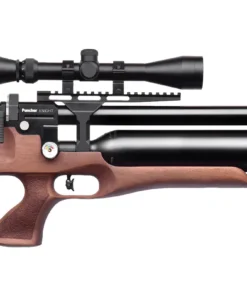
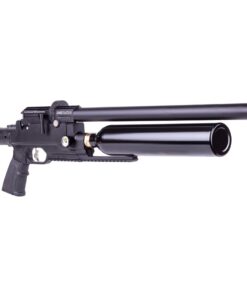
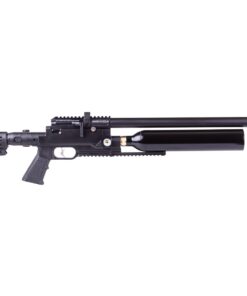
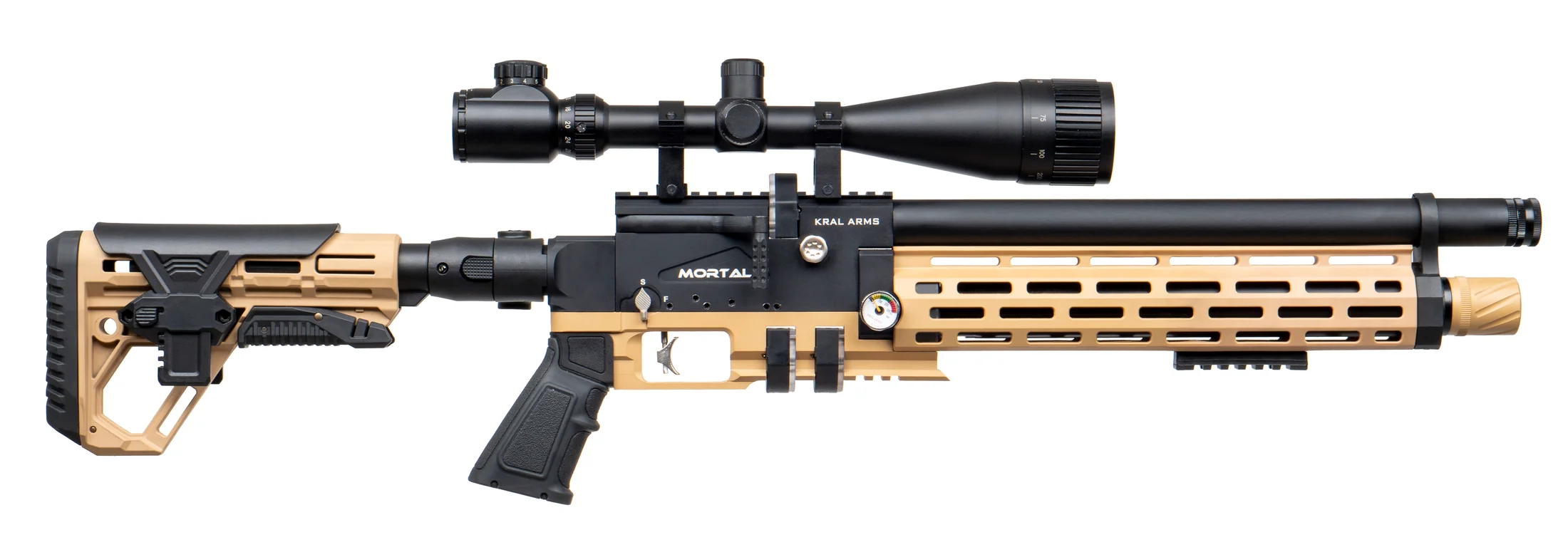
The Kral Arms Mortal FDE is a powerful PCP air rifle that gives maximum flexibility in a tactical stock. Featuring a folding and adjustable stock, adjustable cheek piece and height adjustable butt pad. The ergonomically shaped pistol grip provides a stable and comfortable grip. Both first and second stage of the trigger can be adjusted and there’s even an adjustable trigger blade. The manual safety can be (de)activated with your trigger finger.To facilitate mounting a rifle scope or red dot, the Kral Arms Puncher Mortal features a Weaver/Picatinny rail.

The stock features a removable foregrip rest, along with carrying spaces for the 2 supplied magazines.


NB Does not include Scope and mounts.


KRAL ARMS MORTAL DESERT – Tactical PCP Air Rifle with Adjustable Folding Stock

Product Description – KRAL ARMS MORTAL DESERT

The KRAL ARMS MORTAL DESERT is designed as a modern pre-charged pneumatic (PCP) air rifle, combining a distinctive desert-inspired finish with a tactical synthetic stock, side-lever operation, and adjustable ergonomic features. A combination of traditional airgun engineering and contemporary styling is presented in a configuration intended for recreational target shooting and sporting applications where permitted.

Furthermore, a versatile shooting platform is provided through its folding stock, adjustable trigger assembly, detachable rotary magazine, and integrated accessory mounting system. The rifle’s appearance is characterised by its Flat Dark Earth (FDE) colour scheme, while the mechanical components are arranged around a compact, magazine-fed PCP action.

As a result, several important characteristics are brought together, including shooting comfort, manageable dimensions, and flexible stock adjustment. Additionally, compatibility with common optical mounting standards is provided, allowing the equipment configuration to be tailored to different sporting environments.

Distinctive Desert Finish and Tactical Exterior

Flat Dark Earth Styling and Synthetic Construction

A contemporary appearance is achieved through the desert-coloured exterior, commonly described as Flat Dark Earth. This distinctive finish is associated with modern tactical equipment, while practical durability is supported by synthetic stock construction.

Unlike traditional wooden furniture, synthetic materials are generally less susceptible to humidity-related dimensional changes. Consequently, routine external cleaning can be simplified, and the stock can be maintained without specialist wood-conditioning products.

Moreover, the textured pistol grip is shaped to provide a defined contact surface. Additional flexibility is introduced through an adjustable rear stock assembly, allowing different body proportions and shooting positions to be accommodated.

The overall design is further distinguished by its angular fore-end, tactical silhouette, and integrated rail system. Accordingly, the rifle can be recognised by its combination of desert styling and contemporary PCP construction.

Advanced Pre-Charged Pneumatic Technology

Compressed-Air Power System

Reliable pneumatic operation is supported by a pre-charged air reservoir, through which compressed air is stored before shooting. Unlike spring-piston systems, no conventional mainspring is required for pellet propulsion.

Instead, pressurised air is released through the firing mechanism, and the pellet is propelled along the rifled barrel. Consequently, the characteristic spring-driven vibration associated with traditional break-barrel mechanisms is absent.

A 200 cc aluminium air reservoir is specified for the standard Mortal platform, with a nominal fill pressure of 200 bar. However, actual performance is influenced by the specific calibre, regional configuration, ammunition, and operating conditions.

Furthermore, pressure monitoring and correct filling procedures are required for responsible ownership. Only manufacturer-approved filling equipment and pressure limits should be used.

Side-Lever Action and Magazine System

A side-lever cocking mechanism is incorporated into the design, while ammunition is supplied through a detachable rotary magazine.

Different magazine capacities are specified according to calibre:

  • .177 / 4.5 mm: 14 pellets

  • .22 / 5.5 mm: 12 pellets

  • .25 / 6.35 mm: 10 pellets

These capacities are published for the standard Mortal configuration. Nevertheless, the calibre and magazine specification of the individual rifle should always be confirmed before accessories or replacement parts are selected.

Additionally, the magazine-fed system allows successive shots to be prepared through the side-lever mechanism rather than requiring a pellet to be inserted manually into the breech before every shot.

Adjustable Folding Stock and Ergonomic Design

Personalised Stock Configuration

An adjustable tactical stock is incorporated to accommodate differences in arm length and shooting posture. Through its telescopic adjustment system, the length of pull can be modified to suit the user’s physical requirements.

Meanwhile, additional storage and transport convenience is provided by the folding stock mechanism. The profile can therefore be shortened when the stock is folded, although the rifle should always be unloaded and secured before transportation.

Further ergonomic adjustment is offered through the cheek support and butt-pad arrangement described by retailers of this model. Accordingly, head positioning and shoulder contact can be adapted to different equipment configurations.

Comfortable Pistol Grip and Balanced Handling

A contoured pistol grip is included to provide a consistent gripping surface. Furthermore, the grip geometry is intended to support natural wrist positioning during sporting use.

The standard configuration is listed at approximately 3.51 kg, although the assembled weight may be increased by optics and other fitted equipment.

Because individual handling preferences differ, the suitability of the stock dimensions and overall mass should be evaluated with appropriate safety supervision.

Precision Barrel and Adjustable Trigger Assembly

Rifled Barrel Construction

A choked, rifled barrel is incorporated into the standard configuration, with a nominal barrel length of 40.7 cm. Through this arrangement, rotational stability is imparted to compatible pellets as they travel through the bore.

Furthermore, the barrel is enclosed within a contemporary shrouded assembly, contributing to the distinctive exterior profile.

Nevertheless, practical accuracy is affected by ammunition consistency, environmental conditions, mechanical condition, and the individual operator’s technique. Therefore, no universal accuracy guarantee should be assumed from the barrel specification alone.

Adjustable Two-Stage Trigger System

A two-stage adjustable trigger system is provided, allowing elements of the trigger configuration to be modified in accordance with the manufacturer’s instructions.

Additionally, adjustment is available for the trigger blade position. Consequently, different finger positions can be accommodated within the limits of the mechanism.

A manual safety is also incorporated. However, accidental discharge protection must never be considered a substitute for safe handling, secure storage, and proper muzzle discipline.

Integrated Picatinny Rail and Accessory Compatibility

Standardised Optical Mounting Platform

A Picatinny-style mounting rail is incorporated into the rifle’s tactical design. As a result, compatible sporting optical equipment can be accommodated.

Furthermore, the configuration is intended to support commonly available mounting hardware, although individual dimensions and compatibility requirements should be checked.

For the Desert version, a scope and mounts are not necessarily included in the standard package. Package contents should therefore be confirmed against the individual manufacturer’s or retailer’s listing.

Sunderland Airguns

Product Highlights and Technical Specifications

  • Model: KRAL ARMS MORTAL DESERT / Mortal FDE

  • Operating system: Pre-charged pneumatic

  • Action: Side-lever, magazine-fed

  • Stock: Adjustable, folding synthetic tactical stock

  • Finish: Flat Dark Earth / Desert

  • Barrel: Choked, rifled barrel

  • Barrel length: Approximately 40.7 cm

  • Air reservoir: 200 cc aluminium cylinder

  • Nominal fill pressure: 200 bar

  • Magazine capacities: 14, 12, or 10 pellets, depending on calibre

  • Trigger: Adjustable two-stage mechanism

  • Safety: Manual safety

  • Mounting system: Picatinny-style rail

  • Weight: Approximately 3.51 kg in the standard configuration

  • Overall length: Approximately 84–92 cm with the stock extended or adjusted

Specifications are based on the manufacturer’s Mortal platform documentation and may differ between regional versions, particularly where power restrictions apply.

kralarms.com
+1

Maintenance, Storage, and Long-Term Care

Routine Exterior Maintenance

Regular external inspection is recommended to identify visible wear, loose components, or damage. Additionally, suitable cleaning materials should be selected in accordance with the manufacturer’s maintenance instructions.

The synthetic stock can generally be cleaned with a soft cloth, while the metal surfaces should be protected against unnecessary moisture exposure.

Importantly, the pressurised air system should be serviced only by appropriately qualified personnel. Unauthorised modifications to pressure-bearing components should be avoided.

Responsible Handling and Storage

Safe ownership is supported by secure storage, appropriate training, and adherence to applicable airgun regulations.

Before cleaning or storage, the rifle should be unloaded and checked in accordance with the manufacturer’s safety procedures. Furthermore, access by unauthorised individuals should be prevented through suitable locked storage arrangements.

Conclusion – KRAL ARMS MORTAL DESERT

The KRAL ARMS MORTAL DESERT is distinguished by its Flat Dark Earth finish, folding adjustable stock, side-lever PCP action, and modern synthetic construction.

Through its adjustable ergonomic components, established mounting interface, and detachable magazine system, a technically versatile sporting air rifle configuration is presented. Meanwhile, its contemporary exterior is complemented by conventional pneumatic operating principles.

Overall, the model is characterised by a combination of distinctive styling, adjustable handling features, and established PCP engineering. Its exact specification, legal classification, and permitted uses should be verified for the intended market before ownership or operation.

KRAL ARMS MORTAL DESERT – Calibres, FAC Power, Recommended Scopes and Essential Accessories

The KRAL ARMS MORTAL DESERT is offered in several calibre configurations, with different power specifications and magazine capacities available according to regional requirements. Through its pre-charged pneumatic system, compressed air is used to propel pellets, while shooting consistency is supported by the manufacturer’s rifled barrel design.

Furthermore, different equipment options can be accommodated through the integrated Picatinny rail and adjustable tactical stock. Consequently, the rifle can be configured for permitted sporting activities, recreational target shooting, and supervised range use.

Available Calibres and Their Characteristics

.177 Calibre (4.5 mm) – Recreational Target Shooting

The .177 calibre version is commonly associated with recreational target shooting and organised sporting activities. Its smaller pellet diameter is widely supported by commercial ammunition manufacturers, making compatible pellets available in numerous styles and weights.

Additionally, a 14-shot rotary magazine is specified for this configuration. Therefore, a relatively generous magazine capacity is provided within the standard Mortal platform.

For the unrestricted manufacturer configuration, a maximum published energy of approximately 18.3 joules is listed. However, lower-powered versions are distributed in markets where legal restrictions apply.

.22 Calibre (5.5 mm) – Versatile Sporting Configuration

The .22 version is offered as another popular configuration within the range. Compared with the smaller calibre, a larger pellet diameter is provided, along with different projectile weights.

Moreover, a 12-shot rotary magazine is supplied with the standard specification. A manufacturer-listed output of approximately 35 joules is associated with the unrestricted version, although regional versions may be substantially lower-powered.

For buyers comparing available models, the legal power classification, ammunition compatibility, and intended sporting discipline should all be considered.

.25 Calibre (6.35 mm) – Larger-Calibre Configuration

A third configuration is offered in .25 calibre, through which a larger pellet diameter is provided. This version is listed in the manufacturer’s international documentation, although availability may be restricted in certain countries.

A 10-shot magazine is specified, while a published maximum energy of approximately 42.8 joules is associated with the standard unrestricted configuration.

Nevertheless, availability, licensing requirements, and permitted uses must be confirmed within the relevant jurisdiction.

FAC and Non-FAC Power Specifications

Understanding FAC Classification

Within Great Britain, the term FAC refers to a Firearm Certificate, although the precise legal requirements depend on the jurisdiction and firearm classification.

In England and Wales, air rifles exceeding 12 foot-pounds of muzzle energy are generally subject to firearms certification. By contrast, air rifles at or below that threshold are generally available without an FAC to eligible adult owners, subject to other legal restrictions.

Meanwhile, different rules apply in Scotland and Northern Ireland, where additional licensing requirements must be considered.

Manufacturer-Published Power Ratings

The standard manufacturer’s catalogue lists the following unrestricted performance figures:

Calibre Published energy Published velocity
.177 / 4.5 mm 18.3 J 850 fps
.22 / 5.5 mm 35 J 800 fps
.25 / 6.35 mm 42.8 J 750 fps

These figures are manufacturer-published specifications rather than guaranteed performance results. Actual output may differ depending on the production version, ammunition and environmental conditions.

Furthermore, UK-market examples are advertised at approximately 11–11.5 ft-lb, making the specific supplied configuration an important consideration.

Wolfman
+1

Recommended Scope Options and Optical Compatibility

3-9×40 Scope – General Recreational Use

A 3-9×40 telescopic scope is commonly selected for general recreational airgun activities. Through its variable magnification range, different levels of target visibility are provided.

Furthermore, a relatively compact optical configuration is offered, making this format suitable for users who prefer less bulky equipment.

Popular scope manufacturers include Hawke, Nikko Stirling, and MTC Optics. Nevertheless, compatibility with the existing rail and mounting hardware should be confirmed before an optical system is purchased.

4-16×44 Scope – Target Observation

For more detailed target observation, a 4-16×44 scope may be considered. Increased image magnification is provided through its variable optical system, while a 44 mm objective lens is incorporated.

Additionally, adjustable-focus features are available on certain models. Consequently, image clarity can be managed across the manufacturer’s specified focusing range.

Before selection, the scope’s physical dimensions, weight, eye relief, and manufacturer-stated airgun compatibility should be reviewed.

Red Dot Optics – Alternative Sight Configuration

A compatible red dot sight may also be fitted to the existing Picatinny rail. Compared with traditional telescopic scopes, an unmagnified aiming reference is generally provided.

These optical systems are available in several housing dimensions and reticle designs. However, the manufacturer’s mounting specifications and applicable sporting-range rules should be checked.

Essential Accessories and Maintenance Equipment

Recommended Supporting Equipment

A selection of compatible accessories can be considered for routine ownership, safe transportation, and responsible equipment maintenance.

  • Protective rifle case: Designed to protect the equipment during lawful transportation.

  • Secure storage cabinet: Recommended for preventing unauthorised access.

  • Certified filling equipment: Required for maintaining the PCP air reservoir within approved operating limits.

  • Manufacturer-approved fill probe: Used with the appropriate filling connection.

  • Calibre-matched pellets: Required for compatibility with the specified barrel and magazine.

  • Protective shooting glasses: Recommended for supervised recreational activities.

  • Hearing protection: Suitable for environments where additional noise exposure may occur.

  • Approved cleaning supplies: Intended for routine external maintenance.

  • Replacement seals: Only manufacturer-approved components should be installed by qualified personnel.

PCP Filling and Maintenance Considerations

The standard configuration is equipped with a 200 cc air reservoir and a nominal maximum filling pressure of 200 bar. As a result, correctly rated filling equipment is required.

Furthermore, pressure-bearing components should be inspected according to the manufacturer’s maintenance instructions. Unauthorised pressure-system adjustments should be avoided.

Choosing the Appropriate Configuration

The KRAL ARMS MORTAL DESERT is distinguished by its available calibre options, regional power variations, adjustable tactical furniture, and standardised accessory interface.

For prospective owners, the selected configuration should be matched to applicable legal requirements and the intended sporting discipline. Additionally, the supplied package should be checked because scopes, mounts, and accessories are not universally included.

Ultimately, informed ownership is supported by accurate specification checks, proper equipment maintenance, certified filling accessories, and safe storage practices.

Brocock BRK and Benjamin Air Rifles: Complete Guide to PCP Technology, Precision, Calibres and Accessories

Discover the Engineering Behind Brocock Airguns and Benjamin Air Rifles

Modern airgun technology has transformed recreational target shooting, competitive marksmanship, and precision air-powered sporting equipment. Today, manufacturers combine advanced pneumatic systems, ergonomic construction, and innovative engineering to produce dependable shooting platforms. Among the established names in this industry, brocock ltd and Benjamin continue to attract attention from enthusiasts seeking technical sophistication and reliable performance.

The evolution of brocock airguns reflects a strong emphasis on compact designs, efficient compressed-air systems, and consistent shot delivery. Similarly, the Benjamin product range offers numerous configurations, from traditional pellet rifles to specialized pneumatic platforms.

Whether researching a compressed air rifle, comparing a conventional pellet gun, or exploring advanced sporting equipment, understanding the available technologies helps buyers make informed decisions.

Brocock BRK Air Rifles: Innovation and Precision Engineering

Brocock Sniper XR and BRK Sniper XR

The brocock sniper xr represents an important development in regulated pneumatic rifle engineering. Featuring a semi-bullpup configuration, adjustable ergonomics, and a sidelever operating system, this model emphasizes handling convenience and mechanical consistency.

Additionally, the brk sniper xr incorporates a regulated air-delivery system designed to reduce variations between successive shots. Its adjustable stock components provide flexibility for different shooting positions.

For enthusiasts researching the .25 caliber brocock sniper xr, calibre selection deserves particular attention. The larger pellet diameter offers different projectile characteristics compared with smaller calibres, while energy output and shot capacity depend on the specific configuration.

The sniper xr also offers an example of how modern engineering combines compact dimensions with adjustable controls.

Brocock Commander XR and BRK Commander

Another noteworthy platform is the brocock commander xr, which combines a tactical-inspired stock configuration with pneumatic engineering.

The brocock commander has attracted interest from enthusiasts who appreciate adjustable furniture, modular features, and consistent operation.

Similarly, buyers researching brk ghost and Commander models often compare ergonomics, overall dimensions, available calibres, and compatible accessories.

Searches for brocock commander xr price should be evaluated using current retailer listings because pricing varies according to country, configuration, condition, and included equipment.

BRK Ghost Air Rifle: Modern Design and Customization

The brk ghost air rifle represents a distinctive approach to modern PCP rifle design. Its bullpup layout places major operating components within a compact overall configuration while retaining a full-length barrel arrangement appropriate to the model.

Furthermore, the BRK Ghost offers adjustable ergonomic components and a mechanical design intended to support controlled operation.

Owners researching ghost accessories should pay attention to manufacturer compatibility, factory specifications, and approved replacement components.

A replacement ghost handle, for example, should be checked against the exact model and production variant before purchase.

Likewise, a magpul sl k buttpad is a product-specific accessory reference rather than a guarantee of compatibility with every rifle stock.

Pathfinder XR and Compact BRK Models

The pathfinder xr offers another example of the manufacturer’s emphasis on compact pneumatic platforms.

Buyers researching the brk pathfinder, brk pathfinder xr, or general pathfinder air rifle specifications should compare verified product dimensions, stock arrangements, and applicable power ratings.

The brk concept xr is another model worth examining when comparing compact sporting rifles.

While these designs share elements of the manufacturer’s engineering philosophy, each has its own configuration and intended handling characteristics.

For anyone comparing several platforms, factors such as overall weight, trigger characteristics, stock adjustment, and service support are more useful than appearance alone.

What Are PCP Air Rifles and How Do They Work?

New enthusiasts frequently ask, what are pcp air rifles?

The abbreviation PCP means precharged pneumatic, referring to an air-powered system that stores compressed air in a pressurized cylinder or reservoir.

Consequently, understanding pcp rifle meaning helps explain the operating principles behind modern pneumatic sporting rifles.

Other common searches include what does pcp mean in air rifles, what is pcp air rifle, what is a pcp air rifle, and what is a pre charged pneumatic air rifle.

All describe the same general operating technology.

Likewise, what is a pcp air gun and pcp air rifle meaning refer to compressed-air propulsion rather than spring-powered or carbon-dioxide systems.

A pcp rifle stores energy before firing, whereas a break barrel pellet gun typically compresses a spring or gas ram through a cocking action.

This distinction also explains why a pneumatic gun, gun pneumatic, and pneumatic weapons may refer to several different mechanisms, depending on the context.

Modern pcp air rifles often feature pressure regulators, adjustable triggers, and specialized magazines. Nevertheless, operating pressure, energy output, and maintenance requirements vary substantially between models.

Essential Accessories and Equipment Compatibility

Properly selected accessories contribute to equipment suitability and long-term maintenance.

For example, the 0db moderator and 0 db moderator are search variations referring to a sound-moderating accessory. Actual sound reduction depends on the individual device, rifle configuration, and applicable legal requirements.

Meanwhile, a pcp o ring kit may contain replacement seals for specified components. Seal dimensions, materials, and pressure ratings must match the manufacturer’s requirements.

Optics are another consideration. A buyer researching how to connect scope equipment should first confirm the mounting-rail standard and the compatibility of the selected mounting system.

The mtc copperhead 4 16×44 is one example of an optical sight that may appear in airgun accessory searches.

Separately, what does prc stand for in guns is a terminology question commonly encountered during broader firearm research. PRC often refers to Precision Rifle Cartridge, which is distinct from PCP pneumatic technology.

Some searches also include bro air, a broad term that may appear alongside BRK and Brocock product research without identifying a specific manufacturer model.

Benjamin Air Rifles: Traditional Performance and Modern Pneumatic Technology

Benjamin Marauder and Popular PCP Models

The benjamin air rifle range encompasses numerous designs developed for different shooting preferences. From conventional air pellet gun platforms to specialized pneumatic systems, the manufacturer offers equipment for recreational and sporting applications.

Among its recognized products, the benjamin marauder has established a strong presence in PCP airgun discussions.

The benjamin marauder pcp and benjamin marauder pcp air rifle are associated with regulated or unregulated configurations, depending on model and generation. Similarly, the benjamin marauder air rifle is frequently considered by enthusiasts researching accurate pneumatic equipment.

Buyers comparing the benjamin marauder .25, benjamin marauder 22, and benjamin marauder regulated variants should verify the exact specifications rather than assume identical performance.

The benjamin marauder pistol provides another distinct option for enthusiasts interested in compact air-powered platforms.

Additionally, searches for benjamin pellet, benjamin pellet gun, and benjamin air pistol reflect the manufacturer’s broader presence in the sporting airgun market.

For owners of older equipment, benjamin air rifle repair should involve model identification, manufacturer-approved parts, and qualified servicing of pressurized components.

Benjamin Bulldog and Big-Bore Airguns

The benjamin bulldog is associated with the development of larger-calibre PCP platforms.

In particular, the benjamin bulldog 457 belongs to the big-bore category, while the bulldog 357 represents another calibre designation within the family.

Those researching benjamin bulldog 457 20 joules should distinguish search terminology from verified factory specifications, since this phrase does not establish an official 20-joule configuration.

More broadly, big bore air guns differ from conventional small-calibre pellet rifles in projectile dimensions, pressure-system requirements, and applicable regulations.

A hunting air rifle or hunting pellet gun must also be evaluated according to local laws, permitted activities, and the manufacturer’s intended application.

Benjamin Trail, Prowler and Break-Barrel Models

Traditional spring and gas-piston airguns remain popular alongside pneumatic equipment.

The benjamin prowler and benjamin trail np are examples associated with conventional sporting air-rifle designs.

Likewise, the benjamin np trail xl and benjamin air rifle 22 break barrel appear frequently in searches involving gas-piston technology.

The phrase benjamin break may also describe general interest in the manufacturer’s break-barrel products.

Enthusiasts comparing a benjamin 22 caliber pellet rifle with PCP alternatives should consider the differences in cocking mechanism, maintenance, recoil behavior, and operating requirements.

Benjamin Airbow Technology and Arrow-Launching Systems

The benjamin airbow belongs to a specialized category that uses compressed air to propel compatible arrows rather than conventional pellets.

Also called an air bow, airbow, arrow gun, air bow rifle, or air bow gun, this equipment differs substantially from standard pellet platforms.

The benjamin pioneer airbow helped establish the manufacturer’s presence in this category.

More recent searches for benjamin airbow m600, benjamin m600 airbow, and the general benjamin bow category reflect interest in advanced arrow-launching technology.

An airbow rifle may also be compared with an air powered crossbow, although their propulsion mechanisms and equipment requirements are different.

The M600 is a distinct PCP-powered arrow launcher with manufacturer-specific arrows and components.

Benjamin Airguns
+1


Understanding Pellet Gun Calibres and Power Ratings

Airgun buyers frequently compare .177 pellet guns, 177 pellet guns, a 22 pellet gun, and a .25 pcp air rifle.

Each calibre has its own projectile characteristics, compatible ammunition, and model-specific performance limits.

Similarly, searches for a high powered pellet gun, high power pellet gun, or pellet rifle 1500 fps should be assessed carefully. Advertised velocity alone does not establish accuracy, suitability, or energy output.

A bolt action pellet gun describes a particular loading or cycling arrangement rather than a specific power system.

Other familiar categories include the bb gun rifle, air gun rifle, airrifle, and the broader grouping of air rifle and air pistol equipment.

In comparison, co2 pellet guns use carbon dioxide cartridges, while PCP platforms rely on stored high-pressure air.

The search term m357 may refer to different products and requires model confirmation before any technical comparison.

Choosing the Right Airgun and Understanding Online Availability

Buyers asking can i buy air rifles online should first investigate local restrictions, age requirements, licensing obligations, and shipping regulations.

Rules vary significantly by jurisdiction, especially for higher-powered equipment and specialized arrow-launching platforms.

Whether comparing benjamin air rifles or modern BRK sporting platforms, reliable model specifications, lawful ownership, and qualified maintenance remain essential considerations.

The Brocock product family includes established Sniper XR, Commander XR, Pathfinder XR, Concept XR, and Ghost designs, while the manufacturer’s newer range includes updated XR2 variants.

Brocock
+2


Ultimately, selecting appropriate air-powered sporting equipment involves balancing ergonomics, engineering quality, compatible accessories, and long-term support. Understanding the distinctions between compressed-air systems, gas-piston mechanisms, and specialized arrow platforms makes product comparisons clearer and more informative.

A well-informed buying decision begins with accurate technical information, clearly identified models, and responsible equipment ownership.
Frequently Asked Questions (FAQs)

1. What makes this PCP air rifle different from traditional spring-powered models?

A pre-charged pneumatic operating system is used instead of a conventional spring-piston mechanism. Through this arrangement, compressed air is stored inside a pressurised reservoir and released when the firing mechanism is activated. Consequently, the distinctive vibration associated with spring-powered mechanisms is eliminated.

Furthermore, a detachable rotary magazine and side-lever action are incorporated, providing a different operating experience from traditional single-shot break-barrel designs. Additional flexibility is provided through adjustable stock components, modern synthetic construction, and an integrated optical mounting interface.

2. Is this model suitable for beginners?

Suitability for beginners is determined by several factors, including previous experience, physical dimensions, understanding of safety procedures, and access to qualified supervision. Although adjustable ergonomic components are provided, the equipment should not automatically be regarded as appropriate for every inexperienced user.

Ideally, introductory training should be completed at an authorised shooting facility. Furthermore, safe handling procedures, loading practices, storage requirements, and applicable regulations should be understood before independent use is considered.

3. What calibres are available?

Three principal calibre configurations are associated with the standard platform: .177 (4.5 mm), .22 (5.5 mm), and .25 (6.35 mm).

However, regional distribution restrictions may affect availability. In some markets, only selected calibres and reduced-power configurations are offered.

Additionally, magazine dimensions and ammunition compatibility differ between calibre options. Therefore, replacement components must be matched to the exact version supplied.

4. How powerful is the compressed-air system?

Power output is determined by the individual configuration, calibre, and applicable market restrictions. Different muzzle-energy ratings are published for unrestricted international versions and legally limited regional variants.

Consequently, a single universal power figure cannot be assigned to every example. The exact energy classification should be verified through the manufacturer, authorised distributor, or documentation supplied with the individual product.

Furthermore, independent modifications to the pressure system should be avoided because mechanical safety and legal compliance may be affected.

5. What does FAC mean, and when is certification required?

FAC stands for Firearm Certificate. Within England and Wales, air rifles exceeding 12 foot-pounds of muzzle energy are generally subject to firearms certification.

Nevertheless, legal requirements vary across jurisdictions. For example, separate air-weapon licensing arrangements apply in Scotland, while additional firearms controls are enforced in Northern Ireland.

Before ownership is considered, the applicable local regulations should be checked with the appropriate licensing authority. Moreover, transport, storage, and permitted-use restrictions may apply independently of muzzle energy.

6. Is the rifle equipped with a regulator?

A regulator should not automatically be assumed to be included in every version. Manufacturer specifications and regional listings may describe different equipment configurations.

A dedicated air-pressure regulator is intended to control the pressure delivered to the firing mechanism. However, its presence and adjustment characteristics must be verified against the exact production model.

For this reason, the official specification sheet or written confirmation from an authorised supplier should be consulted.

7. How many pellets can the magazine hold?

Magazine capacity varies according to calibre. For the standard configuration, capacities of 14 pellets in .177, 12 pellets in .22, and 10 pellets in .25 are specified.

However, magazine compatibility should be checked before replacement components are purchased. Although similar external designs may be shared across certain models, internal dimensions and feeding mechanisms can differ.

Additionally, only compatible ammunition should be used, and damaged magazines should be replaced with approved parts.

8. Is a single-shot loading system available?

A single-shot loading tray may be available as a compatible accessory for certain configurations. Nevertheless, inclusion should not be assumed unless it is explicitly identified in the package specifications.

Different production versions may be supplied with different loading accessories. Consequently, compatibility should be confirmed using the exact model identification and calibre.

When a replacement or additional loading component is required, manufacturer-approved equipment should be prioritised.

9. Is the stock adjustable?

Yes. An adjustable rear stock assembly is incorporated into the standard tactical design. Through its telescopic mechanism, the length of pull can be adapted within the manufacturer’s specified adjustment range.

Furthermore, folding functionality is provided, allowing the overall storage profile to be reduced.

Although these features provide additional flexibility, all adjustment mechanisms should be inspected for secure engagement before the equipment is handled.

10. Can the stock be folded for storage?

A folding stock mechanism is included in the standard configuration. As a result, a more compact arrangement can be achieved for appropriate storage and lawful transportation.

However, the equipment should always be unloaded and secured before being placed inside a protective case or storage cabinet.

Additionally, folding components should be maintained according to the manufacturer’s recommendations, particularly where hinges, locking surfaces, and adjustment mechanisms are concerned.

11. How much does the rifle weigh?

An approximate weight of 3.51 kilograms is specified for the standard configuration. Nevertheless, slight variations may be encountered between production versions and regional packages.

Furthermore, the total assembled weight may increase when additional equipment is attached.

For buyers concerned about handling comfort, the complete equipment weight should be considered rather than the weight of the base unit alone.

12. What type of barrel is fitted?

A rifled barrel is incorporated into the standard design, with a nominal length of approximately 40.7 centimetres.

Through the internal rifling, rotational stability is imparted to suitable projectiles during travel through the barrel.

Additionally, a shrouded exterior arrangement is incorporated into the contemporary design. However, barrel characteristics and muzzle attachments should be confirmed against the manufacturer’s specifications for the individual production version.

13. Is the trigger adjustable?

An adjustable two-stage trigger system is included in the standard design.

Through this arrangement, certain trigger characteristics can be configured within the limits established by the manufacturer. Nevertheless, trigger-related modifications should be performed only in accordance with official instructions and appropriate technical supervision.

Furthermore, an incorrectly adjusted trigger may create an unsafe operating condition. Therefore, inspection by a qualified airgun technician is recommended whenever the mechanism’s condition is uncertain.

14. Does the rifle include a manual safety?

Yes. A manual safety mechanism is incorporated into the standard configuration.

However, a mechanical safety device should never be treated as a complete substitute for responsible handling practices. Safe muzzle direction, appropriate storage, and careful verification of the unloaded condition remain essential.

Furthermore, the safety mechanism should be inspected regularly for visible damage or irregular operation. Professional servicing should be obtained whenever a malfunction is suspected.benjamin bow

Caliber

.177, .22

Reviews

There are no reviews yet.

Be the first to review “KRAL ARMS MORTAL DESERT”

Related Products

FAQ

  • Spring-Piston (Break-Barrel or Underlever): Cock by compressing a spring. Reliable, no external air source needed, but can have more recoil (“spring twang”) and require technique to shoot accurately.
  • Pre-Charged Pneumatic (PCP): Filled from a scuba tank, compressor, or pump. High power, low recoil, multiple shots per fill. Popular for precision and hunting.
  • CO₂: Powered by disposable cartridges. Good for pistols and semi-auto/repeaters, but performance drops in cold weather.
  • Multi-Pump Pneumatic: Hand-pumped to build pressure. Versatile but requires effort.
  • Gas Ram (Nitro Piston): Uses compressed gas instead of a metal spring. Smoother than traditional springers.

Calibers: Most common are .177 (4.5mm) for speed/flat trajectory and general use, and .22 (5.5mm) for better hunting knockdown power. Larger “big bore” (.25, .30, .357+) exist for hunting bigger game where legal.

Yes, many modern PCP and springers deliver enough energy for small game (rabbits, squirrels, birds) and even larger game in some areas. Muzzle energy (in ft-lbs or joules) matters more than velocity alone. Always match caliber, pellet weight, and energy to the game and check local hunting regs.

Treat every airgun as if it is loaded.

  • Always point the muzzle in a safe direction.
  • Keep your finger off the trigger until ready to shoot.
  • Know your target and what is beyond it (pellets can ricochet or travel far).
  • Wear eye protection.
  • Store unloaded, out of reach of children/untrained users, and ideally locked.
  • Never shoot at hard surfaces or in areas where pellets could escape your property.

Follow these rules strictly—airguns cause real injuries.

Laws differ dramatically by country, state/province, and even city. Always verify current local laws before buying, owning, transporting, or using an airgun. Age restrictions (often 18+) are common.

Examples (summaries only; check official sources):

  • UK: Air rifles ≤12 ft-lbs (16.3 joules) and pistols ≤6 ft-lbs generally do not require a license (FAC needed above that).
  • USA: Varies by state. Some treat powerful airguns as firearms; others do not. Many states now allow big-game hunting with air rifles.
  • Canada: Some airguns classified as firearms if they exceed velocity/energy thresholds.
  • Australia: Often treated as firearms; licensing/registration required in most states.
  • EU/France/Belgium/etc.: Varies; many allow low-power (<20J) guns freely to adults, with higher power needing permits. Germany has strict ~7.5J limits in some contexts.
  • Other countries: Some have no restrictions below certain energies; others ban or heavily regulate them.

Resources: Wikipedia “Air gun laws”, airgun forums, or official government sites. For travel, research transit laws carefully.

Consider:

  • Purpose: Plinking/backyard → lower power springer or CO₂. Hunting/precision → PCP.
  • Budget: Entry-level springers are affordable; PCPs need a fill system (extra cost).
  • .177 vs .22: .177 easier for beginners/targets; .22 better for hunting.
  • Power source: Convenience vs performance.
  • Test pellets in your gun—accuracy varies.

Buy from reputable dealers and consider warranties.

  • Clean barrel periodically (especially if accuracy drops) with patches and appropriate tools/solvents. Avoid over-oiling.
  • Lubricate moving parts and seals with airgun-specific oil (not general gun oil). Springers need piston seal oil occasionally.
  • Check screws, seals for leaks (PCP), and safety mechanisms regularly.
  • Store in a cool, dry place, ideally in a case. Avoid leaving cocked for long periods.

Follow your model’s manual. Basic care extends life significantly.

International shipping may be available for select products. Customers are responsible for understanding and complying with their local import laws and regulations before ordering.

Yes. Customers are required to confirm their order number through WhatsApp or Live Chat before orders are processed and shipped.

If local laws prevent shipment to your area, your order may be canceled and refunded according to our store policy.

Processing typically takes 1–3 business days after payment confirmation. Delivery times vary depending on destination, carrier, and product availability.


  • Wrong pellets for your barrel/caliber.
  • “Death grip” or poor shooting form (especially with springers—let the gun recoil naturally).
  • Loose scopes or mounts.
  • Ignoring safety or local laws.
  • Over-oiling or shooting with obstructions.


Pellets are the most common projectile (lead or lead-free). Match them to your gun, caliber, and purpose—test several brands as accuracy varies by barrel.

  • Domed (Round-Head): Best all-rounder. Excellent accuracy, ballistic coefficient, and energy retention. Ideal for target shooting, field target, and general hunting (e.g., JSB Exact, Air Arms Diabolo Field, H&N Field Target Trophy).
  • Wadcutter (Flat-Head): Clean holes in paper. Best for close-range target/plinking (under 20-25 yards).
  • Hollow Point: Expands on impact for better energy dump. Good for small game hunting (e.g., Predator Polymag, H&N Terminator).
  • Pointed: More penetration, but often less accurate than domed.
  • Slugs: Heavier, more aerodynamic for high-power PCPs at longer ranges (better for big game where legal).

Tips: Heavier pellets in .22/.25 for hunting (better momentum). Lighter in .177 for speed/flat trajectory. Always check head size fit (e.g., 4.51-4.53mm variants).

Muzzle energy (ft-lbs or joules) matters more than velocity. Ethical shots require precise placement (head/heart-lung) within effective range.

Rough Guidelines (adjust for distance, pellet, and local laws):

  • Small game (squirrels, rabbits, birds): 9-20+ FPE, .177/.22.
  • Medium (raccoons, etc.): 25+ FPE, .22/.25 recommended.
  • Larger game: 40-100+ FPE in .30+ calibers (up to big bore for deer/hogs where permitted).

PCPs dominate serious hunting due to power and shot count. Springers/gas rams work well for small game but require skill. Always prioritize clean kills and check seasons/species rules.

  • Barrel Cleaning: Use a pull-through kit or rod with patches. Avoid brushes that could damage rifling. Clean when accuracy drops or after 500-1000 shots.
  • Lubrication: Airgun-specific silicone oil for seals/O-rings (sparingly—excess causes dieseling in springers). Springers may need piston lube periodically.
  • PCP Specific: Check for leaks (soapy water test), monitor regulator/hammer settings, and keep fill systems clean. Don’t exceed rated pressure.
  • General: Tighten stock screws, inspect for wear, store properly. Chronograph shots to track consistency.

Common Issues:

  • Inconsistent velocity → dirty barrel, bad pellets, or seal problems.
  • Spring “twang” → tuning or proper hold.
  • Low power → worn seals or under/over-pumping.

Toggle Content

  • Scopes: Airgun-rated (hold zero under recoil). 3-9x or 4-12x common.
  • Fill Systems: Hand pumps, compressors, or tanks for PCPs.
  • Safety Gear: Eye/ear protection, targets with backstops.
  • Noise: Airguns quieter than firearms, but moderators help further.

Budget Tip: Start with a quality springer (~$150-400) before investing in PCP setup.

Airgunning offers endless depth—from backyard plinking to precision competition and ethical hunting. Prioritize safety, legality, and practice. If you want specifics (e.g., recommendations for a country, budget, hunting small game, or a particular type like PCP vs springer), let me know for more targeted info! Shoot responsibly.

Tuning improves accuracy, reduces noise/recoil, or increases power (within legal limits).

  • Springers: Lighter springs, guides, seals, or custom tuning kits for smoother shot cycle. “V-Mach” or similar professional tunes popular.
  • PCPs: Regulator tuning, hammer spring adjustments, valve work for efficiency and shot count. Some add electronic systems.
  • Accessories: Suppressors (often unregulated on airguns), better triggers, stocks, and scopes.

Caution: Check laws—power increases may reclassify your gun. DIY only if experienced; professional tuners recommended.

You must be at least 18 years old to purchase any airgun or related accessories from our store. By placing an order, you confirm that you meet the legal age requirements in your state or country.

Yes. Orders may require age verification before processing and shipping. In some cases, we may request a valid government-issued ID to confirm eligibility.