Weihrauch HW97KT – Premium German Spring-Powered Underlever Air Rifle
Product Description – Weihrauch HW97KT
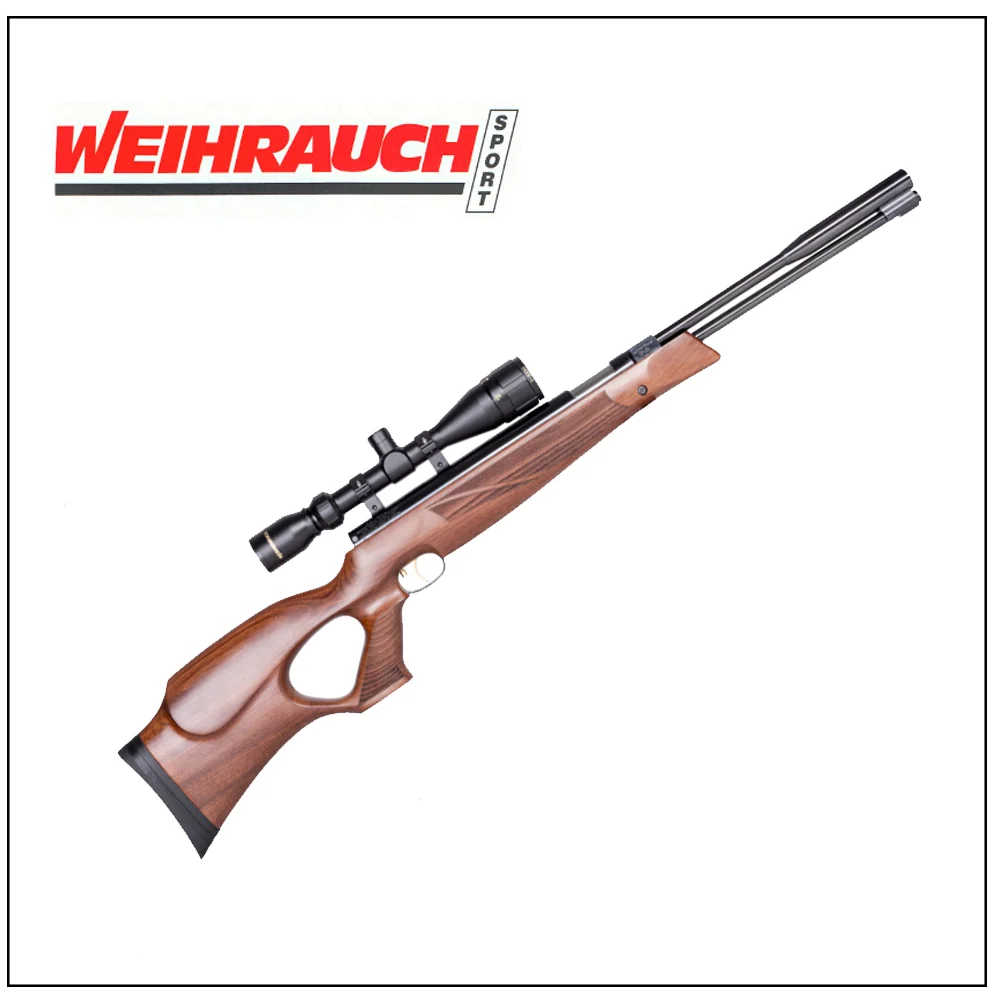
The Weihrauch HW97KT is a German-engineered, spring-piston air rifle recognised for its fixed-barrel construction, distinctive thumbhole stock, and traditional mechanical operation. Developed from the established HW97 platform, this model combines a compact underlever configuration with a carefully shaped stock intended for comfortable handling during recreational and competitive target shooting.
Furthermore, a precision-manufactured action, adjustable Rekord trigger, and scope-oriented stock design are incorporated into the rifle. Consequently, its construction reflects Weihrauch’s longstanding emphasis on mechanical consistency, durable materials, and traditional airgun engineering.
Unlike pre-charged pneumatic rifles, compressed-air cylinders, external filling equipment, and disposable CO₂ cartridges are not required. Instead, the operating energy is generated mechanically through an internal spring-piston system.
1. German Engineering and Traditional Manufacturing
Established Weihrauch Manufacturing Heritage
The HW97KT is manufactured by Weihrauch, a German company associated with precision air rifles and sporting firearms.
Throughout its production history, the HW97 family has become particularly well known among spring-powered target shooting enthusiasts.
Moreover, the model is based on a mechanical arrangement that has been refined over multiple generations of sporting air rifles.
A durable metal action is combined with a carefully finished stock, while the internal spring-piston assembly is enclosed within the receiver.
Additionally, the rifle’s fixed-barrel configuration distinguishes it from conventional break-barrel models.
Fixed-Barrel Underlever Construction
A permanently aligned barrel is incorporated into the HW97KT’s action.
Rather than being pivoted downward for loading, the barrel remains stationary during the cocking cycle. Meanwhile, an underlever mechanism is used to operate the internal spring-piston assembly.
As a result, the barrel and receiver remain in a fixed mechanical relationship.
The loading arrangement is designed for individual pellets, and a single-shot configuration is employed rather than a detachable magazine.
Furthermore, an integrated muzzle weight is included as part of the model’s characteristic external design.
2. Ergonomic Thumbhole Stock and Comfort
Distinctive Thumbhole Profile
One of the most recognisable characteristics of the Weihrauch HW97KT is its sculpted thumbhole stock.
The thumbhole opening is integrated into the rear grip area, giving the rifle its distinctive appearance.
Additionally, a pronounced pistol-grip profile and elevated cheekpiece are incorporated into the stock’s geometry.
The standard wooden version is manufactured with a beechwood stock, while alternative configurations are available within the wider product family.
Consequently, the appearance and material specifications may differ according to the selected version.
Beechwood Finish and Adjustable Butt Plate
On the standard beechwood configuration, a natural wooden finish is paired with a black metal action.
Furthermore, the butt plate is adjustable on this particular version, allowing its position to be adapted within the manufacturer’s intended adjustment range.
A raised cheekpiece is also incorporated, reflecting the rifle’s design around optical sights.
The carefully contoured stock contributes to the model’s familiar sporting profile, while its substantial weight should be considered when evaluating handling comfort.
3. Rekord Two-Stage Trigger System
Traditional Match-Style Trigger Design
The Weihrauch Rekord trigger is one of the best-known mechanical features of the company’s spring-powered rifles.
On the HW97KT, a two-stage adjustable Rekord trigger assembly is fitted as standard.
The trigger’s operation is divided into two distinct stages, and its design is associated with the manufacturer’s established match-style trigger technology.
Furthermore, the adjustment mechanism is intended to accommodate individual preferences within the manufacturer’s specifications.
Any trigger inspection or adjustment should be completed in accordance with the official operating instructions.
Integrated Automatic Safety
An automatic safety mechanism is incorporated into the rifle.
Additionally, an anti-beartrap mechanism is associated with the HW97 action’s loading system.
However, these mechanical features must never be regarded as substitutes for safe handling.
The rifle should always be treated as loaded, and its muzzle should be maintained in a safe direction.
4. Spring-Piston Power and Mechanical Operation
Self-Contained Power System
The HW97KT uses a spring-piston powerplant, meaning that external air tanks and battery-operated components are unnecessary.
Instead, mechanical energy is stored within the internal spring assembly and subsequently used to propel a pellet.
As a result, the rifle operates independently of PCP filling stations and compressed-air equipment.
Furthermore, because its operating system is mechanical, regular inspection and appropriate servicing remain important for long-term reliability.
Calibre Availability
The model is commonly offered in the following calibres:
- .177 calibre (4.5 mm): A widely recognised sporting and target-shooting calibre.
- .22 calibre (5.5 mm): Another established option within the spring-powered air rifle category.
- .20 calibre (5.0 mm): Available by special order in certain markets.
- .25 calibre (6.35 mm): Available by special order in certain markets.
Nevertheless, availability depends on national regulations, the distributor, and the particular production configuration.
Furthermore, muzzle energy varies between regional versions, including restricted-power and higher-power configurations.
Therefore, a universal power rating should not be assumed for every rifle bearing the HW97KT designation.
5. Scope-Oriented Design and External Features
Raised Cheekpiece Configuration
The HW97KT is designed primarily around optical sighting equipment rather than traditional open sights.
Accordingly, an elevated cheekpiece is incorporated into the stock, while factory-installed open sights are generally omitted.
The receiver is configured for compatible optical mounting arrangements, subject to the specifications of the individual rifle and sighting equipment.
Metal Construction and Overall Dimensions
The rifle’s substantial construction is reflected in its approximate overall weight of 4.3 kg.
Additionally, the standard beechwood version measures approximately 103 cm in overall length, with a 30 cm barrel.
These dimensions give the rifle a comparatively substantial profile despite its shortened barrel configuration.
Furthermore, the model’s external proportions distinguish it from lighter, compact sporting air rifles.
6. Technical Specifications
- Manufacturer: Weihrauch
- Model: HW97KT
- Country of manufacture: Germany
- Operating system: Spring-piston
- Cocking mechanism: Underlever
- Barrel configuration: Fixed, rifled barrel
- Loading capacity: Single shot
- Trigger: Two-stage adjustable Rekord
- Safety mechanism: Automatic
- Stock: Thumbhole beechwood, standard version
- Stock orientation: Ambidextrous
- Butt plate: Adjustable on standard beechwood version
- Overall length: Approximately 103 cm
- Barrel length: Approximately 30 cm
- Weight: Approximately 4.3 kg
- Standard calibres: .177 and .22
- Special-order calibres: .20 and .25, subject to availability
- Open sights: Not fitted
- Power classification: Dependent on market and configuration
7. Maintenance, Storage, and Long-Term Care
Routine Exterior Maintenance
Proper maintenance is an important consideration for every mechanically operated air rifle.
After handling, exterior metal surfaces should be inspected for moisture, fingerprints, and visible contamination.
Additionally, the wooden stock should be protected from prolonged exposure to excessive humidity and extreme temperatures.
Any cleaning products should be selected according to Weihrauch’s published maintenance guidance.
Professional Mechanical Inspection
Internal spring-piston components are subject to mechanical stress during normal operation.
Consequently, unusual noises, visible damage, or changes in operating behaviour should be assessed by a qualified airgun technician.
The trigger, safety mechanism, and loading assembly should also remain in their manufacturer-approved configurations.
Furthermore, unauthorised mechanical alterations may affect reliability, safety, and warranty coverage.
Responsible Storage
The rifle should be stored unloaded in a secure location inaccessible to unauthorised individuals.
A suitable locked cabinet or secure storage arrangement should be used according to applicable legislation.
Additionally, ammunition should be secured separately where required by local regulations.
8. Final Overview
The Weihrauch HW97KT represents a traditional German approach to spring-powered air rifle engineering.
Its characteristic thumbhole stock, fixed-barrel action, underlever mechanism, and two-stage Rekord trigger distinguish it within the established HW97 product family.
Furthermore, the combination of substantial metal construction and a carefully contoured stock reflects the model’s target-shooting heritage.
For anyone researching the engineering characteristics of classic spring-piston air rifles, the HW97KT provides a useful example of mechanical design developed without dependence on external compressed-air equipment.
Ultimately, the Weihrauch HW97KT is defined by its German manufacturing heritage, distinctive stock geometry, established spring-piston mechanism, and scope-oriented sporting configuration.
Prospective owners should verify their chosen model’s specifications, legal classification, and applicable licensing requirements before acquisition or use.
Weihrauch HW97KT – Calibres, FAC Power, Recommended Scopes and Essential Accessories
1. Available Calibres and Performance Characteristics
The Weihrauch HW97KT is available in several calibre configurations, allowing its traditional spring-piston system to be supplied for different sporting markets. Furthermore, its fixed-barrel construction, underlever action, and precision-manufactured components are incorporated into every standard version.
.177 Calibre (4.5 mm)
The .177 calibre version is widely associated with field-target competitions, silhouette shooting, and recreational paper-target practice. Additionally, this calibre is commonly selected within organised airgun sporting disciplines.
A manufacturer-listed maximum velocity of approximately 280 m/s is specified for the unrestricted version. However, actual velocity is influenced by pellet weight, market-specific power restrictions, and individual rifle specifications.
Consequently, the applicable muzzle-energy classification should always be verified before purchase.
.20 Calibre (5.0 mm)
The .20 calibre is offered as a special-order configuration in certain markets.
With a manufacturer-listed velocity of approximately 215 m/s, this version represents another traditional airgun calibre option.
However, ammunition availability may be more limited than for .177 and .22 models. Therefore, prospective owners should consider local pellet availability and product support.
.22 Calibre (5.5 mm)
The .22 calibre version is another established configuration within the HW97KT range.
Its manufacturer-listed velocity reaches approximately 205 m/s in the relevant unrestricted specification.
Furthermore, a broad variety of commercial pellets is generally available in this calibre, although individual brands and weights differ between markets.
The same fixed-barrel mechanism and Rekord trigger design are retained.
.25 Calibre (6.35 mm)
A .25 calibre configuration may also be supplied by special order.
Its manufacturer-listed velocity is approximately 165 m/s, subject to the rifle’s particular specification.
Additionally, this larger calibre is less commonly stocked than standard alternatives. As a result, availability should be confirmed with an authorised Weihrauch distributor.
2. FAC Classification and Power Information
Understanding FAC Air Rifle Versions
FAC refers to a Firearm Certificate under the licensing system used in Great Britain.
In England and Wales, air rifles producing more than 12 foot-pounds of muzzle energy generally require the appropriate firearm certification. Different rules apply in Scotland and Northern Ireland.
Therefore, FAC classification should not be interpreted as a universal international standard.
Additionally, regional regulations may determine which configurations can legally be supplied, possessed, or used.
Muzzle Energy and Velocity Specifications
The Weihrauch HW97KT is manufactured for different regulatory markets, meaning one power figure cannot accurately describe every model.
Manufacturer-published velocity specifications include:
- .177 (4.5 mm): Up to approximately 280 m/s.
- .20 (5.0 mm): Up to approximately 215 m/s.
- .22 (5.5 mm): Up to approximately 205 m/s.
- .25 (6.35 mm): Up to approximately 165 m/s.
These values are published manufacturer figures rather than guaranteed measurements for every rifle.
Furthermore, certain versions are manufactured for restricted-energy markets, including German F-marked configurations below 7.5 joules.
Consequently, advertised velocity should never be confused with a verified muzzle-energy rating.
3. Recommended Scope Categories
3–9×40 Optical Scope
A 3–9×40 scope is a commonly recognised sporting optic configuration.
Its adjustable magnification and moderate objective diameter make it a familiar choice for general recreational range use.
However, compatibility with a spring-piston air rifle must be confirmed directly with the scope manufacturer.
4–12×40 Optical Scope
A 4–12×40 scope provides another established optical configuration used in sporting target disciplines.
Furthermore, models incorporating adjustable parallax may offer additional flexibility for organised range activities.
Because spring-piston rifles generate a distinctive recoil impulse, only optics specifically rated for that operating system should be considered.
4–16×44 Target Scope
For formal target-range applications, a 4–16×44 configuration may be worth evaluating.
Nevertheless, additional magnification also introduces considerations involving weight, eye relief, mounting clearance, and overall balance.
Therefore, optical suitability should be established through the manufacturer’s compatibility documentation rather than magnification alone.
4. Essential Accessories and Equipment
Protective Rifle Case
A padded, lockable rifle case is recommended for secure transportation and protection against accidental exterior damage.
Furthermore, moisture-resistant materials may help protect the rifle during storage and transport.
Manufacturer-Approved Cleaning Equipment
A suitable maintenance kit may include:
- Soft microfiber cleaning cloths.
- Approved exterior metal protectant.
- Stock-safe cleaning materials.
- Manufacturer-recommended barrel maintenance products.
- Nonabrasive brushes for accessible exterior surfaces.
However, unnecessary internal lubrication should be avoided, and spring-piston components should be serviced only according to approved procedures.
Protective Storage Equipment
A secure rifle cabinet or lockable storage system is strongly recommended.
Additionally, ammunition storage arrangements should comply with local legal requirements.
Moisture-control products may also be considered where environmental conditions make corrosion a concern.
Eye Protection and Range Equipment
Certified protective shooting glasses provide an important additional safety measure during supervised sporting activities.
Furthermore, approved paper targets, suitable range facilities, and appropriate protective equipment support organised recreational use.
5. Final Considerations
The Weihrauch HW97KT combines a traditional spring-piston mechanism with a distinctive thumbhole stock, fixed-barrel construction, and adjustable Rekord trigger.
Moreover, its available calibre configurations reflect the model’s continued presence in multiple international sporting markets.
Before selecting a particular version, its factory-rated power, legal classification, calibre availability, and manufacturer documentation should be reviewed carefully.
Ultimately, the HW97KT remains a recognised example of German air rifle engineering, supported by established mechanical construction and a longstanding sporting heritage.
Frequently Asked Questions (FAQs)
1. What makes this model different from conventional spring-powered air rifles?
This model is distinguished by its fixed-barrel construction, underlever cocking mechanism, and carefully designed thumbhole stock. Unlike conventional break-barrel designs, the barrel remains stationary throughout the cocking cycle. Consequently, the arrangement maintains a consistent mechanical relationship between the barrel and receiver.
Furthermore, a two-stage adjustable trigger is incorporated to support the requirements of sporting target shooting. Its substantial construction also reflects a traditional approach to mechanical engineering.
Additionally, the absence of external compressed-air equipment makes its operating system fundamentally different from pre-charged pneumatic designs.
2. Is this model suitable for beginners?
Suitability depends on the individual’s physical ability, shooting experience, and access to qualified supervision. Although the operating system is mechanically straightforward, the rifle’s substantial weight and spring-powered cocking mechanism may present challenges for inexperienced users.
Therefore, appropriate instruction and supervised familiarisation are recommended before recreational use.
Furthermore, safe handling procedures should be understood before any shooting activity is undertaken.
For younger or inexperienced participants, a properly supervised shooting range provides a more appropriate learning environment.
3. What type of operating mechanism is used?
A traditional spring-piston operating system is incorporated into the rifle. Mechanical energy is stored within an internal spring assembly, while compressed air is subsequently used to propel the projectile.
Unlike pneumatic models requiring external pressurisation, the mechanism is self-contained.
Furthermore, the operating system does not depend on disposable gas cartridges, rechargeable batteries, or external filling cylinders.
Nevertheless, normal mechanical wear can occur over time. Therefore, scheduled inspection and appropriate servicing remain important aspects of responsible ownership.
4. Does the rifle require compressed-air cylinders?
No external compressed-air cylinders are required for the standard spring-powered configuration.
Instead, a self-contained mechanical system is used to generate the energy necessary for operation.
Consequently, accessories commonly associated with pneumatic equipment, such as filling bottles, compressors, and charging hoses, are unnecessary.
Additionally, the system does not rely on external electrical power.
However, the internal components should still be maintained according to manufacturer recommendations to preserve reliability and safe operation.
5. Is a magazine included?
A single-shot loading arrangement is used rather than a detachable multi-shot magazine.
Therefore, the design differs from repeating models that incorporate rotating magazines or removable ammunition holders.
The single-shot configuration reflects the traditional mechanical construction of this platform.
Furthermore, the loading system is integrated into the rifle’s underlever mechanism.
Because the assembly contains moving mechanical components, the manufacturer’s safety instructions must always be followed. Unauthorised modifications to the loading arrangement should be avoided.
6. What material is used for the stock?
The standard configuration is supplied with a shaped beechwood stock.
A distinctive thumbhole profile is incorporated into the design, while a raised cheekpiece and contoured grip contribute to its recognisable sporting appearance.
Furthermore, the wooden surface is finished to provide protection against ordinary handling conditions.
Because natural wood varies in colour and grain, minor appearance differences may be present between individual examples.
Additionally, alternative stock finishes may be offered within the wider product family, depending on the distributor and production version.
7. Is the stock designed for right-handed or left-handed users?
The standard thumbhole stock is generally described as ambidextrous.
Consequently, its symmetrical design may accommodate both right-handed and left-handed owners.
However, individual comfort depends on personal proportions, grip preference, and shooting posture.
Furthermore, the position of the cheekpiece and butt plate should be considered when assessing general fit.
Before purchasing, prospective owners are encouraged to consult the manufacturer’s product information and confirm the precise stock configuration supplied with their selected version.
8. How heavy is the rifle?
The standard model weighs approximately 4.3 kilograms, although minor variations may occur between configurations.
This substantial weight reflects the combination of its spring-piston action, metal receiver, fixed-barrel assembly, and wooden stock.
Furthermore, its weight is an important consideration for extended recreational sessions.
Compared with lightweight sporting rifles, a noticeably more substantial overall feel can be expected.
Therefore, physical comfort and ease of handling should be evaluated before selection, particularly by individuals unfamiliar with heavier sporting equipment.
9. What is the approximate overall length?
An approximate overall length of 103 centimetres is specified for the standard configuration.
Additionally, a barrel length of approximately 30 centimetres is listed in manufacturer documentation.
These dimensions reflect the model’s compact underlever arrangement.
Nevertheless, the overall dimensions should not be interpreted as evidence that the rifle is lightweight.
Its spring-powered operating mechanism and substantial metal construction contribute significantly to the total weight.
Consequently, appropriate storage space and a compatible protective case should be considered.
10. Does this model include traditional open sights?
Factory-installed open sights are generally omitted from this configuration.
Instead, the design is intended for use with compatible optical sighting equipment.
Furthermore, the elevated cheekpiece reflects the model’s scope-oriented sporting profile.
However, the selection of any optical equipment should be based on manufacturer-confirmed compatibility.
Because spring-piston mechanisms generate a distinctive recoil impulse, not every conventional optic is suitable.
Appropriate professional advice should be obtained before additional equipment is installed.
11. Can ordinary telescopic optics be used?
Not every conventional telescopic optic is compatible with a spring-powered operating mechanism.
Unlike certain other sporting platforms, spring-piston systems produce a characteristic two-direction recoil impulse.
Consequently, some optical instruments may be unsuitable unless they have been specifically designed or tested for that mechanical environment.
Furthermore, equipment compatibility depends on factors such as manufacturer ratings and the rifle’s particular configuration.
Prospective owners should consult the relevant product manuals and seek guidance from a qualified sporting-equipment specialist.
12. Is an adjustable trigger included?
Yes. A two-stage adjustable trigger system is incorporated into the standard design.
This mechanism belongs to a longstanding family of German-manufactured sporting trigger assemblies.
Furthermore, the two-stage arrangement distinguishes it from certain basic single-stage configurations.
However, adjustment should be undertaken only within the manufacturer’s published specifications.
Unauthorised modifications may compromise safe functioning and could affect warranty coverage.
Consequently, any uncertainty regarding trigger operation should be referred to a qualified technician rather than addressed through improvised mechanical changes.
13. Is an automatic safety mechanism provided?
An automatic safety system is incorporated into the rifle’s standard operating design.
Additionally, an anti-beartrap mechanism is included as part of the loading system.
These features are intended to support safe mechanical operation when used according to the manufacturer’s instructions.
Nevertheless, mechanical safety devices cannot eliminate every risk associated with improper handling.
Therefore, the rifle should always be treated as loaded until its condition has been properly verified.
Secure storage, appropriate supervision, and consistent muzzle discipline remain essential.
14. What does a fixed-barrel design mean?
A fixed-barrel design means that the barrel does not pivot or hinge during the normal cocking cycle.
Instead, a separate mechanical arrangement is used to operate the internal spring-piston assembly.
This configuration differs structurally from a traditional break-barrel mechanism.
Furthermore, the barrel remains aligned with the receiver throughout normal operation.
The arrangement is associated with several established target-oriented air rifle designs.
However, overall performance still depends on manufacturing quality, mechanical condition, ammunition consistency, and other relevant factors.
15. Are different power versions manufactured?
Yes. Different factory specifications are supplied for international markets.
In some countries, restricted-energy configurations are required by national legislation. Elsewhere, higher-energy versions may be available subject to the applicable licensing framework.
Consequently, the same external model designation does not necessarily indicate identical muzzle-energy performance.
Furthermore, published velocity figures may vary according to calibre, projectile characteristics, and production specification.
The factory rating and legal classification of an individual rifle should always be verified through reliable manufacturer or distributor documentation.
16. Is a firearms licence required?
Licensing requirements depend on the country or jurisdiction in which the rifle is possessed or used.
For example, different legal arrangements apply across England, Wales, Scotland, and Northern Ireland.
Additionally, other countries may regulate air-powered sporting equipment according to muzzle energy, calibre, age restrictions, or specific licensing categories.
Therefore, legal requirements should never be assumed from information describing another country.
Prospective owners should consult the relevant local authority or official regulatory guidance before purchasing, transporting, or using the equipment.
Brocock BRK and Benjamin Air Rifles: Complete Guide to PCP Technology, Precision, Calibres and Accessories
Discover the Engineering Behind Brocock Airguns and Benjamin Air Rifles
Modern airgun technology has transformed recreational target shooting, competitive marksmanship, and precision air-powered sporting equipment. Today, manufacturers combine advanced pneumatic systems, ergonomic construction, and innovative engineering to produce dependable shooting platforms. Among the established names in this industry, brocock ltd and Benjamin continue to attract attention from enthusiasts seeking technical sophistication and reliable performance.
The evolution of brocock airguns reflects a strong emphasis on compact designs, efficient compressed-air systems, and consistent shot delivery. Similarly, the Benjamin product range offers numerous configurations, from traditional pellet rifles to specialized pneumatic platforms.
Whether researching a compressed air rifle, comparing a conventional pellet gun, or exploring advanced sporting equipment, understanding the available technologies helps buyers make informed decisions.
Brocock BRK Air Rifles: Innovation and Precision Engineering
Brocock Sniper XR and BRK Sniper XR
The brocock sniper xr represents an important development in regulated pneumatic rifle engineering. Featuring a semi-bullpup configuration, adjustable ergonomics, and a sidelever operating system, this model emphasizes handling convenience and mechanical consistency.
Additionally, the brk sniper xr incorporates a regulated air-delivery system designed to reduce variations between successive shots. Its adjustable stock components provide flexibility for different shooting positions.
For enthusiasts researching the .25 caliber brocock sniper xr, calibre selection deserves particular attention. The larger pellet diameter offers different projectile characteristics compared with smaller calibres, while energy output and shot capacity depend on the specific configuration.
The sniper xr also offers an example of how modern engineering combines compact dimensions with adjustable controls.
Brocock Commander XR and BRK Commander
Another noteworthy platform is the brocock commander xr, which combines a tactical-inspired stock configuration with pneumatic engineering.
The brocock commander has attracted interest from enthusiasts who appreciate adjustable furniture, modular features, and consistent operation.
Similarly, buyers researching brk ghost and Commander models often compare ergonomics, overall dimensions, available calibres, and compatible accessories.
Searches for brocock commander xr price should be evaluated using current retailer listings because pricing varies according to country, configuration, condition, and included equipment.
BRK Ghost Air Rifle: Modern Design and Customization
The brk ghost air rifle represents a distinctive approach to modern PCP rifle design. Its bullpup layout places major operating components within a compact overall configuration while retaining a full-length barrel arrangement appropriate to the model.
Furthermore, the BRK Ghost offers adjustable ergonomic components and a mechanical design intended to support controlled operation.
Owners researching ghost accessories should pay attention to manufacturer compatibility, factory specifications, and approved replacement components.
A replacement ghost handle, for example, should be checked against the exact model and production variant before purchase.
Likewise, a magpul sl k buttpad is a product-specific accessory reference rather than a guarantee of compatibility with every rifle stock.
Pathfinder XR and Compact BRK Models
The pathfinder xr offers another example of the manufacturer’s emphasis on compact pneumatic platforms.
Buyers researching the brk pathfinder, brk pathfinder xr, or general pathfinder air rifle specifications should compare verified product dimensions, stock arrangements, and applicable power ratings.
The brk concept xr is another model worth examining when comparing compact sporting rifles.
While these designs share elements of the manufacturer’s engineering philosophy, each has its own configuration and intended handling characteristics.
For anyone comparing several platforms, factors such as overall weight, trigger characteristics, stock adjustment, and service support are more useful than appearance alone.
What Are PCP Air Rifles and How Do They Work?
New enthusiasts frequently ask, what are pcp air rifles?
The abbreviation PCP means precharged pneumatic, referring to an air-powered system that stores compressed air in a pressurized cylinder or reservoir.
Consequently, understanding pcp rifle meaning helps explain the operating principles behind modern pneumatic sporting rifles.
Other common searches include what does pcp mean in air rifles, what is pcp air rifle, what is a pcp air rifle, and what is a pre charged pneumatic air rifle.
All describe the same general operating technology.
Likewise, what is a pcp air gun and pcp air rifle meaning refer to compressed-air propulsion rather than spring-powered or carbon-dioxide systems.
A pcp rifle stores energy before firing, whereas a break barrel pellet gun typically compresses a spring or gas ram through a cocking action.
This distinction also explains why a pneumatic gun, gun pneumatic, and pneumatic weapons may refer to several different mechanisms, depending on the context.
Modern pcp air rifles often feature pressure regulators, adjustable triggers, and specialized magazines. Nevertheless, operating pressure, energy output, and maintenance requirements vary substantially between models.
Essential Accessories and Equipment Compatibility
Properly selected accessories contribute to equipment suitability and long-term maintenance.
For example, the 0db moderator and 0 db moderator are search variations referring to a sound-moderating accessory. Actual sound reduction depends on the individual device, rifle configuration, and applicable legal requirements.
Meanwhile, a pcp o ring kit may contain replacement seals for specified components. Seal dimensions, materials, and pressure ratings must match the manufacturer’s requirements.
Optics are another consideration. A buyer researching how to connect scope equipment should first confirm the mounting-rail standard and the compatibility of the selected mounting system.
The mtc copperhead 4 16×44 is one example of an optical sight that may appear in airgun accessory searches.
Separately, what does prc stand for in guns is a terminology question commonly encountered during broader firearm research. PRC often refers to Precision Rifle Cartridge, which is distinct from PCP pneumatic technology.
Some searches also include bro air, a broad term that may appear alongside BRK and Brocock product research without identifying a specific manufacturer model.
Benjamin Air Rifles: Traditional Performance and Modern Pneumatic Technology
Benjamin Marauder and Popular PCP Models
The benjamin air rifle range encompasses numerous designs developed for different shooting preferences. From conventional air pellet gun platforms to specialized pneumatic systems, the manufacturer offers equipment for recreational and sporting applications.
Among its recognized products, the benjamin marauder has established a strong presence in PCP airgun discussions.
The benjamin marauder pcp and benjamin marauder pcp air rifle are associated with regulated or unregulated configurations, depending on model and generation. Similarly, the benjamin marauder air rifle is frequently considered by enthusiasts researching accurate pneumatic equipment.
Buyers comparing the benjamin marauder .25, benjamin marauder 22, and benjamin marauder regulated variants should verify the exact specifications rather than assume identical performance.
The benjamin marauder pistol provides another distinct option for enthusiasts interested in compact air-powered platforms.
Additionally, searches for benjamin pellet, benjamin pellet gun, and benjamin air pistol reflect the manufacturer’s broader presence in the sporting airgun market.
For owners of older equipment, benjamin air rifle repair should involve model identification, manufacturer-approved parts, and qualified servicing of pressurized components.
Benjamin Bulldog and Big-Bore Airguns
The benjamin bulldog is associated with the development of larger-calibre PCP platforms.
In particular, the benjamin bulldog 457 belongs to the big-bore category, while the bulldog 357 represents another calibre designation within the family.
Those researching benjamin bulldog 457 20 joules should distinguish search terminology from verified factory specifications, since this phrase does not establish an official 20-joule configuration.
More broadly, big bore air guns differ from conventional small-calibre pellet rifles in projectile dimensions, pressure-system requirements, and applicable regulations.
A hunting air rifle or hunting pellet gun must also be evaluated according to local laws, permitted activities, and the manufacturer’s intended application.
Benjamin Trail, Prowler and Break-Barrel Models
Traditional spring and gas-piston airguns remain popular alongside pneumatic equipment.
The benjamin prowler and benjamin trail np are examples associated with conventional sporting air-rifle designs.
Likewise, the benjamin np trail xl and benjamin air rifle 22 break barrel appear frequently in searches involving gas-piston technology.
The phrase benjamin break may also describe general interest in the manufacturer’s break-barrel products.
Enthusiasts comparing a benjamin 22 caliber pellet rifle with PCP alternatives should consider the differences in cocking mechanism, maintenance, recoil behavior, and operating requirements.
Benjamin Airbow Technology and Arrow-Launching Systems
The benjamin airbow belongs to a specialized category that uses compressed air to propel compatible arrows rather than conventional pellets.
Also called an air bow, airbow, arrow gun, air bow rifle, or air bow gun, this equipment differs substantially from standard pellet platforms.
The benjamin pioneer airbow helped establish the manufacturer’s presence in this category.
More recent searches for benjamin airbow m600, benjamin m600 airbow, and the general benjamin bow category reflect interest in advanced arrow-launching technology.
An airbow rifle may also be compared with an air powered crossbow, although their propulsion mechanisms and equipment requirements are different.
The M600 is a distinct PCP-powered arrow launcher with manufacturer-specific arrows and components.
Understanding Pellet Gun Calibres and Power Ratings
Airgun buyers frequently compare .177 pellet guns, 177 pellet guns, a 22 pellet gun, and a .25 pcp air rifle.
Each calibre has its own projectile characteristics, compatible ammunition, and model-specific performance limits.
Similarly, searches for a high powered pellet gun, high power pellet gun, or pellet rifle 1500 fps should be assessed carefully. Advertised velocity alone does not establish accuracy, suitability, or energy output.
A bolt action pellet gun describes a particular loading or cycling arrangement rather than a specific power system.
Other familiar categories include the bb gun rifle, air gun rifle, airrifle, and the broader grouping of air rifle and air pistol equipment.
In comparison, co2 pellet guns use carbon dioxide cartridges, while PCP platforms rely on stored high-pressure air.
The search term m357 may refer to different products and requires model confirmation before any technical comparison.
Choosing the Right Airgun and Understanding Online Availability
Buyers asking can i buy air rifles online should first investigate local restrictions, age requirements, licensing obligations, and shipping regulations.
Rules vary significantly by jurisdiction, especially for higher-powered equipment and specialized arrow-launching platforms.
Whether comparing benjamin air rifles or modern BRK sporting platforms, reliable model specifications, lawful ownership, and qualified maintenance remain essential considerations.
The Brocock product family includes established Sniper XR, Commander XR, Pathfinder XR, Concept XR, and Ghost designs, while the manufacturer’s newer range includes updated XR2 variants.
Ultimately, selecting appropriate air-powered sporting equipment involves balancing ergonomics, engineering quality, compatible accessories, and long-term support. Understanding the distinctions between compressed-air systems, gas-piston mechanisms, and specialized arrow platforms makes product comparisons clearer and more informative.
A well-informed buying decision begins with accurate technical information, clearly identified models, and responsible equipment ownership.

Reviews
There are no reviews yet.