Air Arms MPR Sporter – Precision PCP Target Air Rifle for Competitive Shooting
Air Arms MPR Sporter – Exceptional Accuracy, Comfort, and British Engineering
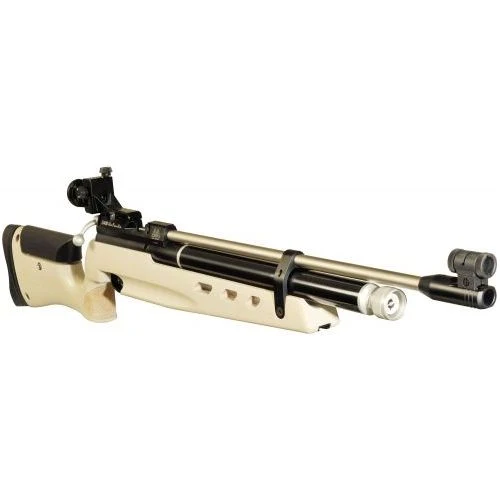
The Air Arms MPR Sporter has been developed to deliver outstanding precision, exceptional shooting consistency, and dependable performance across competitive target-shooting disciplines. Designed with both developing and experienced marksmen in mind, this premium pre-charged pneumatic (PCP) air rifle has been carefully engineered to provide the stability, adjustability, and accuracy demanded during serious target practice.
Moreover, a combination of British manufacturing expertise, precision-machined components, and competition-oriented ergonomics has been incorporated into its construction. As a result, a refined shooting experience can be enjoyed by individuals seeking improved control, repeatable accuracy, and long-term reliability.
Unlike conventional recreational air rifles, the Air Arms MPR Sporter PCP Air Rifle has been specifically configured for disciplined target shooting. Consequently, enhanced stability, consistent pellet delivery, and dependable handling have been prioritised throughout its design.
Furthermore, an adjustable stock configuration has been provided to accommodate different shooting positions and physical requirements. Whether structured club training or formal target competition is being undertaken, reliable performance can be achieved through appropriate setup and consistent shooting technique.
A Purpose-Built Air Rifle for Target Shooting Excellence
Exceptional attention has been given to balancing the rifle’s overall construction with practical shooting comfort. Therefore, improved positioning and a more natural shooting posture can be supported during extended practice sessions.
Additionally, a precision barrel, adjustable match trigger, and ergonomic stock have been incorporated to provide an advanced platform for marksmanship development.
Through this carefully considered combination, the demands of target shooting can be addressed without unnecessary mechanical complexity.
Air Arms MPR Sporter – Key Features and Specifications
The following characteristics have been incorporated into the rifle to support precision, usability, and long-term performance.
Highlighted Product Features
- Premium PCP Technology: A pre-charged pneumatic operating system has been incorporated for controlled, low-recoil shooting performance.
- .177 Calibre Configuration: A precision-focused 4.5mm pellet calibre has been selected for target-shooting applications.
- Single-Shot Bolt Action: A deliberate loading mechanism has been provided to support controlled target practice.
- Match-Grade Barrel: A precision Lothar Walther barrel has been incorporated to support consistent pellet placement.
- Adjustable Match Trigger: A competition-oriented trigger mechanism has been fitted for personalised control.
- Ambidextrous Stock: A versatile stock configuration has been designed for left-handed and right-handed shooters.
- Adjustable Cheekpiece: Improved head positioning and sight alignment can be achieved through individual adjustment.
- Adjustable Butt Pad: Additional shooting comfort and improved shoulder positioning can be obtained.
- Removable Air Cylinder: Convenient reservoir handling has been supported through a detachable cylinder arrangement.
- Integrated Pressure Gauge: Remaining cylinder pressure can be monitored before and during shooting sessions.
- Approximately 120 Shots per Fill: Extended practice sessions can be supported under suitable operating conditions.
- British Engineering: Precision manufacturing and recognised Air Arms craftsmanship have been combined.
Technical Specifications
| Specification |
Details |
| Manufacturer |
Air Arms |
| Model |
MPR Sporter |
| Rifle Type |
PCP Target Air Rifle |
| Calibre |
.177 / 4.5mm |
| Loading System |
Single-Shot Bolt Action |
| Stock |
Ambidextrous, Adjustable |
| Barrel |
Precision Lothar Walther |
| Barrel Length |
Approximately 486mm |
| Overall Length |
Approximately 945mm |
| Weight |
Approximately 3.1kg |
| Muzzle Energy |
Approximately 5.15 ft-lb |
| Fill Pressure |
200 Bar |
| Shots Per Fill |
Approximately 120 |
| Trigger |
Adjustable Match Trigger |
| Intended Use |
Target Practice and Competition |
Specifications represent the manufacturer’s listed Sporter configuration. Equipment, production revisions, and supplied accessories should be confirmed before purchase.
Precision Barrel Engineering and Consistent Shooting Performance
Match-Grade Accuracy for Reliable Target Results
A precision-engineered Lothar Walther barrel has been selected to support accurate pellet travel and dependable shooting consistency.
Furthermore, careful consideration has been given to the relationship between barrel quality, pellet compatibility, and repeatable accuracy. Consequently, the rifle has been equipped with the fundamental characteristics required for serious target-shooting applications.
Through the use of consistent manufacturing tolerances, unwanted variations in barrel performance have been minimised. Therefore, the potential for tighter shot groupings can be supported when suitable ammunition and sound shooting techniques are employed.
Additionally, the benefits of a low-recoil PCP mechanism can be appreciated throughout extended training sessions.
Smooth Single-Shot Bolt-Action Operation
A straightforward single-shot bolt-action system has been incorporated to promote deliberate and controlled loading.
Unlike magazine-fed configurations, each pellet must be loaded individually. Accordingly, a measured shooting rhythm can be maintained during structured target practice.
Moreover, the mechanism has been designed to complement the rifle’s competition-oriented construction.
Through its uncomplicated operation, attention can remain focused on shooting fundamentals, target acquisition, and trigger control.
Adjustable Match Trigger for Enhanced Precision
Refined Trigger Control and Personalised Adjustment
A multi-adjustable match trigger has been fitted to provide the refined control associated with precision target rifles.
Because trigger consistency is considered essential during competitive shooting, adjustability has been prioritised throughout the trigger system.
Furthermore, individual preferences relating to trigger feel and positioning can be accommodated within the manufacturer’s adjustment provisions.
As a result, a more personalised shooting experience can be achieved without unnecessary compromises in ergonomic comfort.
Nevertheless, all adjustments should be performed according to the manufacturer’s instructions, with safe operation verified before use.
Ergonomic Stock Design and Exceptional Shooting Comfort
Ambidextrous Construction for Versatile Handling
An ambidextrous stock has been incorporated to provide comfortable handling for a broad range of shooters.
Additionally, a practical balance between stock dimensions, overall weight, and rifle stability has been carefully considered.
Through this versatile construction, the rifle can be accommodated within different supervised training environments and target-shooting programmes.
Furthermore, a relatively manageable overall weight has been maintained to support controlled positioning during prolonged sessions.
Adjustable Cheekpiece and Butt Pad
A height-adjustable cheekpiece has been provided to assist with consistent head placement and natural sight alignment.
Similarly, an adjustable butt pad has been incorporated to improve shoulder contact and overall fit.
Consequently, shooting comfort can be personalised according to individual requirements.
For developing shooters, this adaptability can be particularly valuable, as equipment fit may need to be reviewed as experience and physical requirements change.
PCP Air System and Dependable Shot Consistency
Efficient Compressed-Air Performance
A pre-charged compressed-air system has been incorporated to deliver repeatable performance without the recoil characteristics associated with conventional spring-powered mechanisms.
Moreover, a removable air reservoir has been provided, allowing cylinder pressure to be monitored through the fitted gauge.
Approximately 120 shots per fill have been specified for the manufacturer’s current Sporter configuration, although the achievable number can be affected by operating conditions.
Furthermore, consistent performance has been supported through the rifle’s carefully engineered firing system.
The Sporter configuration has not been listed as factory-regulated; therefore, its performance should not be confused with that of independently regulated PCP designs.
Why Choose the Air Arms MPR Sporter?
Several important advantages have been combined within this competition-focused air rifle.
Firstly, precision has been prioritised through the integration of a quality barrel and adjustable match trigger.
Secondly, shooting comfort has been enhanced through the inclusion of an adaptable stock, cheekpiece, and butt pad.
Additionally, dependable PCP functionality has been incorporated to support repeated target practice.
Equally importantly, a purpose-built design has been developed for club shooting, structured training, and competitive marksmanship.
Rather than unnecessary decorative features being emphasised, meaningful performance characteristics have been selected to deliver practical value.
Air Arms MPR Sporter – A Premium Investment in Target Shooting
The Air Arms MPR Sporter has been designed for shooters who value precision engineering, adjustable ergonomics, and consistent performance.
Whether foundational marksmanship skills are being developed or established techniques are being refined, a dependable platform for continued progression has been provided.
Furthermore, the advantages of British craftsmanship, purpose-built components, and thoughtful rifle design have been brought together in one refined package.
For anyone seeking a dedicated .177 PCP target air rifle, this model deserves serious consideration.
Discover the Air Arms MPR Sporter and experience the confidence, precision, and control offered by a purpose-built British target rifle.\
Air Arms MPR Sporter – Calibres, FAC Regulations, Power, Recommended Scopes, and Essential Accessories
Available Calibres and Precision Shooting Performance
The Air Arms MPR Sporter has been specifically designed to provide exceptional accuracy, consistent shooting performance, and dependable handling during competitive target-shooting activities. Accordingly, a precision-focused calibre has been selected to complement its advanced pre-charged pneumatic technology.
.177 Calibre (4.5mm) – Precision and Target Shooting Excellence
The .177 calibre has been established as the standard configuration for this competition-oriented air rifle. Because excellent accuracy and controlled pellet flight are required during formal target competitions, this calibre has been carefully matched with the rifle’s precision barrel and adjustable match trigger.
Furthermore, the relatively lightweight pellets associated with this calibre can provide consistent trajectories within the rifle’s intended operating range. As a result, reliable target performance can be supported when suitable ammunition and shooting conditions are maintained.
Additionally, the following advantages can be appreciated:
- Precision Accuracy: Tight and repeatable shot groupings can be supported through carefully manufactured target pellets.
- Target Shooting Compatibility: The calibre has been widely adopted for organised 10-metre air rifle competitions.
- Reduced Recoil: Minimal movement during discharge can be experienced through the PCP operating system.
- Pellet Availability: A broad selection of quality .177 target pellets can be obtained from established manufacturers.
- Competition Suitability: Consistent performance can be achieved when the rifle is properly maintained and correctly adjusted.
Unlike certain multipurpose sporting air rifles, standard .22 and .25 calibre configurations have not been offered for this model.
FAC Requirements and Legal Power Classification
Understanding FAC Regulations in the United Kingdom
Under UK firearms legislation, different licensing requirements have been established according to jurisdiction, rifle type, and muzzle energy.
In England and Wales, air rifles producing muzzle energy above 12 ft-lb are generally classified as firearms requiring a Firearm Certificate (FAC).
However, the Air Arms MPR Sporter has been manufactured as a low-powered precision target rifle, with a standard listed muzzle energy of approximately 5.15 ft-lb.
Consequently, the standard configuration falls below the 12 ft-lb threshold applicable to ordinary air rifles in England and Wales.
Nevertheless, separate licensing arrangements have been established in Scotland, where an Air Weapon Certificate or another applicable authorisation is generally required. Additional requirements may also apply in Northern Ireland.
Furthermore, age restrictions, possession rules, and shooting-location requirements must be observed according to local legislation.
Is an FAC Version Available?
A dedicated high-power FAC configuration has not been listed within the manufacturer’s standard MPR Sporter range.
Instead, this model has been optimised for controlled target shooting rather than high-energy field applications.
Therefore, buyers seeking a purpose-built high-power sporting rifle should consider other manufacturer-approved models designed for that classification.

Muzzle Energy, Air Pressure, and PCP Performance
Consistent Power for Competitive Shooting
The rifle’s standard muzzle energy has been specified at approximately 5.15 ft-lb (7 joules).
This carefully selected power level has been intended to support precision shooting, particularly within controlled target environments.
Moreover, the pre-charged pneumatic system has been incorporated to provide smooth discharge characteristics and repeatable performance.
Through its low-recoil design, unnecessary rifle movement can be minimised during normal operation.
Compressed-Air Cylinder and Shot Capacity
A removable compressed-air cylinder has been incorporated into the rifle’s construction. Additionally, a pressure gauge has been provided to support convenient monitoring of the remaining air supply.
The following operating specifications have been associated with the standard configuration:
- Muzzle Energy: Approximately 5.15 ft-lb
- Recommended Maximum Fill Pressure: 200 bar
- Shot Capacity: Approximately 120 shots per fill
- Operating System: Pre-charged pneumatic
- Loading Mechanism: Single-shot bolt action
- Factory Regulation: Non-regulated configuration
Although approximately 120 shots per fill have been specified, the actual usable shot count may be influenced by temperature, cylinder condition, and operating requirements.
Furthermore, manufacturer-approved filling equipment must always be used, and the cylinder’s rated pressure must never be exceeded.
Recommended Scopes and Sighting Systems
Choosing Suitable Optics for Precision Target Shooting
The rifle has been equipped with a standard dovetail mounting rail through which compatible optical sights can be installed.
However, because the model has been developed primarily for precision competition, sight selection should be determined by the intended shooting discipline.
Hawke Vantage 3-9×40 AO Scope
For general target practice, the Hawke Vantage 3-9×40 AO can be considered a practical optical choice.
Through its adjustable objective system, parallax correction can be supported at appropriate target distances.
Furthermore, versatile magnification has been provided for recreational precision practice and suitable club shooting activities.
Hawke Airmax 4-12×40 AO Scope
Greater magnification flexibility can be obtained through the Hawke Airmax 4-12×40 AO.
Additionally, its airgun-oriented optical design can be appreciated during controlled target-shooting sessions.
Before installation, adequate clearance and compatible mounting dimensions should be confirmed.
Match Diopter Sights
For traditional 10-metre target competition, precision diopter sights may be preferred over telescopic optics.
Through a compatible rear aperture sight and front globe sight, a competition-focused sight picture can be established.
However, the equipment requirements of the relevant shooting discipline should be checked before a sighting system is purchased.
Recommended Accessories for the Air Arms MPR Sporter
Essential Equipment for Reliable Performance
A carefully selected range of accessories can be used to support maintenance, convenient transportation, and comfortable shooting.
- .177 Match Pellets: Consistent pellet quality can be obtained from recognised manufacturers such as JSB, RWS, and H&N.
- PCP Hand Pump: A compatible high-pressure pump can be used for cylinder filling when appropriate filtration and fittings are provided.
- PCP Air Compressor: Convenient compressed-air filling can be achieved with approved equipment.
- Compatible Filling Adapter: Safe connections can be established through manufacturer-specified fittings.
- 11mm Dovetail Scope Mounts: Compatible mounting rings can be selected according to the sight’s dimensions.
- Adjustable Butt Pad Spacers: Additional stock-length adjustment can be achieved through approved components.
- Protective Rifle Case: Protection against dust, moisture, and transportation damage can be provided.
- Pellet Storage Case: Ammunition can be organised and protected against deformation.
- Airgun Cleaning Kit: Suitable pull-through cleaning materials can be used for routine barrel maintenance.
- Shooting Glasses: Additional eye protection can be provided during practice sessions.
Choosing the Right Setup for Maximum Shooting Satisfaction
A well-balanced target-shooting setup can be created through the careful selection of compatible accessories, quality ammunition, and appropriate sighting equipment.
For formal 10-metre competitions, match diopter sights and high-quality .177 target pellets should be prioritised where required by the competition rules.
Alternatively, a compatible telescopic sight can be considered for disciplines where optical sights are permitted.
Ultimately, the Air Arms MPR Sporter has been engineered to deliver the precision, adjustability, and dependable consistency expected from a premium British target air rifle. Through appropriate maintenance and manufacturer-approved equipment, its performance and service life can be supported for years of enjoyable target shooting.
Frequently Asked Questions (FAQs)
1. What makes this precision air rifle suitable for competitive target shooting?
Exceptional accuracy, consistent performance, and controlled handling have been prioritised throughout its construction. A precision-engineered barrel, adjustable match trigger, and ergonomically designed stock have been combined to support disciplined target shooting.
Furthermore, the low-recoil characteristics of the pre-charged pneumatic operating system have been utilised to minimise unnecessary movement during firing. Consequently, greater attention can be directed towards maintaining consistent shooting positions, sight alignment, and trigger control.
Additionally, its adjustable components have been designed to accommodate different physical requirements and shooting preferences. Through this flexibility, a comfortable and repeatable shooting experience can be developed during structured training sessions and organised competitions.
2. Is this rifle suitable for beginners?
Yes, the design can be considered suitable for beginners who are interested in developing precision shooting skills within a supervised environment.
However, proper instruction, appropriate safety equipment, and an understanding of basic shooting principles should be established before regular use.
Moreover, the adjustable stock and manageable operating characteristics can help developing shooters achieve a comfortable shooting position.
Through consistent practice, important fundamentals such as breathing control, posture, sight alignment, and trigger discipline can be developed.
Nevertheless, individual suitability should be evaluated according to physical requirements, experience, and applicable age restrictions.
3. Which calibre is available for this model?
The standard configuration has been manufactured in .177 calibre, also identified as 4.5mm.
This calibre has been widely adopted within precision target-shooting disciplines because of its compatibility with established competition formats and readily available match-quality pellets.
Furthermore, consistent shooting results can be supported through the selection of suitable ammunition.
Different pellet designs and weights may produce variations in performance. Therefore, ammunition suitability should be evaluated through supervised target testing rather than assumed solely from manufacturer reputation.
Larger calibre versions have not been included within the standard factory configuration.
4. How accurate can this rifle be?
Excellent accuracy can be achieved when appropriate ammunition, consistent shooting technique, and suitable environmental conditions are combined.
A precision barrel has been incorporated to support repeatable pellet placement, while the adjustable trigger has been designed to minimise unwanted movement during firing.
However, specific group sizes cannot be guaranteed because individual results are influenced by multiple factors.
For example, pellet consistency, sight adjustment, shooter experience, and equipment condition can affect performance.
Furthermore, accuracy should be assessed through repeated groups rather than individual successful shots.
With suitable maintenance and disciplined practice, dependable performance can be maintained throughout extended periods of target training.
5. What type of ammunition should be used?
High-quality .177 calibre lead target pellets are generally recommended for the standard configuration.
Flat-headed wadcutter pellets have traditionally been selected for paper-target shooting because clearly defined target holes can be produced.
Additionally, reputable ammunition manufacturers offer carefully manufactured pellets with consistent dimensions and weights.
Before a particular pellet is selected, compatibility with the manufacturer’s recommendations should be confirmed.
Damaged, contaminated, or incorrectly sized ammunition should be avoided because feeding reliability and shooting consistency may be affected.
Furthermore, unsuitable projectiles and improvised ammunition must never be used.
6. How much power is produced?
The standard configuration has been specified with a muzzle energy of approximately 5.15 foot-pounds, equivalent to about 7 joules.
This comparatively modest energy output has been selected for precision target shooting rather than high-powered field applications.
Consequently, controlled handling and repeatable performance have been prioritised over maximum projectile energy.
Nevertheless, the actual energy produced may vary slightly according to individual equipment condition and pellet characteristics.
Any performance verification should be conducted using suitable measuring equipment by a competent person.
Manufacturer-specified operating limits should always be respected, and unauthorised modifications should be avoided.
7. Is a firearms certificate required for ownership?
Licensing requirements are determined by the jurisdiction in which the equipment is possessed or used.
In England and Wales, ordinary air rifles producing no more than 12 foot-pounds of muzzle energy are generally exempt from the Firearm Certificate requirement, subject to other legal restrictions.
However, different regulations have been established in Scotland and Northern Ireland.
In Scotland, an Air Weapon Certificate or another applicable authorisation may be required. In Northern Ireland, separate firearms licensing requirements generally apply.
Additionally, international ownership and importation regulations may differ substantially.
Therefore, current local legislation should be checked before purchasing, transporting, or using any air-powered rifle.
8. How many shots can be obtained from one air fill?
Air Rifles, PCP Systems, Calibers, Target Shooting and Popular Models
The world of air arms, air guns, and precision shooting equipment covers everything from recreational target shooting to sporting applications. For newcomers asking what is an air gun, what is an air rifle, what is air rifle, what is a air rifle, what is a airgun, what is an airgun, or what are airguns, the basic principle is straightforward. An air gun uses compressed gas or air to propel a projectile rather than relying on the combustion system associated with conventional firearms.
Understanding how does an air gun work, how does air gun work, how do air guns work, how does an air rifle work, how does air rifle work, and how do air rifle work can help buyers distinguish between the different operating systems available. Depending on the design, power can be supplied by a spring piston, compressed air cylinder, CO2 cartridge, or another pneumatic mechanism.
PCP Air Rifles and Compressed-Air Systems
One of the most popular categories is the pre-charged pneumatic platform. Searches such as what is a pcp air rifle, what is a pcp airgun, what is pcp air rifle, what is a pcp air gun, what is a pcp rifle, what is pcp rifle, what are pcp air rifles, and what is a pre charged pneumatic air rifle all relate to the same fundamental technology. A PCP rifle stores compressed air inside a reservoir and releases a controlled quantity each time the rifle is fired.
For shoppers researching pcp gun meaning, pcp rifle meaning, or pcp air rifle meaning, PCP simply refers to a pre-charged pneumatic system. Air is normally added using a pcp hand pump, dive cylinder, or pcp air compressor. Consequently, an air compressed gun or air compressor rifle can deliver consistent performance without requiring the shooter to manually compress a spring before every shot.
Some searches also include pcp bb gun, although many PCP platforms are primarily designed around pellets rather than traditional BB ammunition. Understanding the intended ammunition is therefore important before selecting accessories, magazines, or loading equipment.
.177 Caliber, .22 Caliber and Pellet Selection
Caliber choice is one of the most frequently researched subjects among airgun buyers. The .177 caliber remains extremely popular for recreational shooting and precision target applications. Products described as a 177 air rifle, 177 bullet, or even 177 cal darts may appear during searches, although ammunition compatibility always needs to be checked against the manufacturer’s specifications.
Questions including 177 or 22, 177 cal vs 22, 177 caliber vs 22, .177 caliber vs .22, .177 pellet vs .22 pellet, and .22 vs .177 pellet generally focus on differences in projectile size, trajectory, energy, and intended use. A smaller .177 pellet is commonly chosen for paper targets and precision shooting, whereas larger calibers may be selected for applications where additional projectile mass is desired.
Understanding bb gun pellet sizes is equally important because BBs and pellets are not automatically interchangeable. Before purchasing ammunition, shooters should confirm the caliber and projectile type specified for their particular pellet rifle, pellet pistol, or bb gun.
Air Arms Rifles and Popular Models
Among established manufacturers, air arms products remain widely searched by enthusiasts interested in precision PCP and spring-powered platforms. Well-known searches include air arms s510, s510, air arms s410, aa s400, pro sport air arms, prosport air arms, tx 200, and tx200.
Variations such as air arm and airarm are also commonly entered by shoppers searching for the brand. Buyers looking specifically for regulated sporting configurations may encounter the air arms s510 ultimate sporter .177 sub 12, a phrase frequently associated with UK-oriented searches for the S510 platform.
Each Air Arms model has its own action, stock design, power configuration, caliber options, and intended shooting environment. Therefore, specifications should always be checked against the exact version being considered rather than assumed from another model in the same family.
FX Impact M3, FX Maverick and Modern PCP Platforms
Premium PCP research frequently includes the fx maverick and the fx impact m3. Buyers may also search for fx impact mk3, fx m3 airgun, fx m3, impact m3, or fx impact m3 air rifle while comparing generations and configurations.
More specific searches such as fx impact m3 .22cal air rifle. 600mm barrel focus on caliber and barrel-length combinations. Meanwhile, international shoppers may search fx impact m3 precio, fx impact m3 precio en usa, or fx impact m3 price when researching current market pricing.
Because FX platforms can be produced in multiple barrel lengths, calibers, power settings, and regional configurations, buyers should verify the exact specification offered in their country before ordering.
Break-Barrel Air Rifles
Another major category is the break barrel air rifle. Anyone asking what is a break barrel air rifle or what is a break barrel pellet gun is usually referring to a rifle in which the barrel is hinged downward to cock the internal powerplant and expose the breech for loading.
Break-barrel designs remain popular because they can provide a self-contained shooting system without an external compressor or air bottle. Models such as a gamo pellet gun are frequently encountered by buyers exploring this category.
Learning how to load pellet gun equipment properly is particularly important. Pellets should match the manufacturer’s recommended caliber and should be loaded in accordance with the owner’s manual while the rifle is pointed in a safe direction and handled under normal shooting-range safety procedures.
CO2, Pellet Pistols and Other Airgun Types
Not every airgun uses PCP or spring power. A co2 powered pellet rifle, for example, uses replaceable CO2 cartridges as its propellant source. CO2 systems can be found in rifles and handguns intended for recreational shooting, training, and target use.
People researching air pistol uses or general pellet gun uses will encounter equipment intended for target practice, recreational plinking, skills training, competition, and other lawful sporting activities. A pellet pistol can offer a compact platform, while rifles generally provide a longer sight radius and additional stability.
Search terms such as pelet guns are also common misspellings of pellet guns and can still represent useful search intent when website content is designed to answer frequently asked buyer questions naturally.
Target Shooting and Airgun Practice
One of the most established uses of airguns is target shooting with air rifles. Dedicated air guns for target shooting may emphasize accuracy, adjustable stocks, match triggers, regulated air delivery, and compatibility with precision optics.
Likewise, airgun target practice and airgun for target practice are common search topics among people looking for an accessible way to develop shooting fundamentals. Proper backstops, eye protection, safe handling practices, and suitable ranges should always be used.
The practical range of air rifle equipment varies considerably according to caliber, muzzle energy, projectile selection, environmental conditions, and the rifle itself. As a result, buyers should use manufacturer specifications and local range rules rather than assuming that every air rifle performs identically.
Hunting Air Rifles and Appropriate Use
Some shooters research air rifles for hunting, hunting air rifles, best air rifle for hunting, pellet gun for rabbits, or even the informal phrase rats gun when looking for equipment designed for lawful pest-control or hunting applications.
Suitability depends heavily on local law, caliber, projectile energy, quarry species, shot placement requirements, and humane hunting standards. Questions such as can a bb gun kill a fox should therefore not be treated simply as equipment-selection questions. Legal restrictions and animal-welfare requirements should be checked first, and low-powered BB guns are not appropriate substitutes for equipment legally and ethically suitable for a particular species.
Similarly, searches for air rifles for deer hunting and big game hunting with air rifle involve specialized legal and ballistic requirements. Large-bore systems such as a 72 caliber air rifle or products associated with bluegrass big bore illustrate how different big-bore pneumatic platforms can be from conventional small-caliber pellet rifles. Local hunting regulations must determine whether such equipment may legally be used.
Licensing and UK Airgun Regulations
Legal requirements differ considerably by jurisdiction. UK-oriented searches frequently include do you need a licence for air rifle, air rifle certificate uk, and 22 rifle uk license. However, the rules governing air rifles, conventional .22 firearms, certificates, age restrictions, possession, transportation, and power limits are not identical.
Consequently, buyers should confirm current legislation with the relevant licensing authority before purchasing or using any regulated equipment. Particular attention should also be paid to whether a rifle is configured below or above applicable power thresholds.
Sportsman, Gamo and Other Popular Searches
Beyond specialist PCP manufacturers, buyers may encounter products such as the sportsman 900 while comparing recreational air rifles. Searches for a gamo pellet gun are also common because Gamo offers numerous spring-powered and pneumatic models across different price points and configurations.
The broader search for best air guns can include everything from affordable recreational platforms to sophisticated regulated PCP rifles. Rather than treating one design as universally superior, buyers should compare caliber, intended application, weight, stock ergonomics, power source, shot capacity, charging equipment, availability of spare parts, and local legal requirements.
Airgun Safety, Home Use and Responsible Ownership
Searches for air guns for home defense do appear online, but an airgun should not automatically be assumed to be suitable for defensive use. Laws vary significantly, and airguns can cause serious injury. Secure storage, lawful ownership, training, safe handling, and avoidance of unnecessary confrontation remain essential.
Whether someone owns an air rifle, pellet rifle, bb gun, or PCP platform, the equipment should always be treated as capable of causing injury. A secure backstop should be used for recreational shooting, the muzzle should remain pointed in a safe direction, and manufacturer instructions should be followed carefully.
Ultimately, understanding the differences between PCP rifles, break-barrel systems, CO2 equipment, caliber choices, and individual models makes it easier to compare the extensive range of modern airguns. From Air Arms platforms to FX rifles and recreational pellet guns, careful specification checking, responsible handling, lawful use, and suitable ammunition selection remain central to getting the right equipment for the intended purpose.
Frequently Asked Questions (FAQs)
1. What makes this precision air rifle suitable for competitive target shooting?
Exceptional accuracy, consistent performance, and controlled handling have been prioritised throughout its construction. A precision-engineered barrel, adjustable match trigger, and ergonomically designed stock have been combined to support disciplined target shooting.
Furthermore, the low-recoil characteristics of the pre-charged pneumatic operating system have been utilised to minimise unnecessary movement during firing. Consequently, greater attention can be directed towards maintaining consistent shooting positions, sight alignment, and trigger control.
Additionally, its adjustable components have been designed to accommodate different physical requirements and shooting preferences. Through this flexibility, a comfortable and repeatable shooting experience can be developed during structured training sessions and organised competitions.
2. Is this rifle suitable for beginners?
Yes, the design can be considered suitable for beginners who are interested in developing precision shooting skills within a supervised environment.
However, proper instruction, appropriate safety equipment, and an understanding of basic shooting principles should be established before regular use.
Moreover, the adjustable stock and manageable operating characteristics can help developing shooters achieve a comfortable shooting position.
Through consistent practice, important fundamentals such as breathing control, posture, sight alignment, and trigger discipline can be developed.
Nevertheless, individual suitability should be evaluated according to physical requirements, experience, and applicable age restrictions.
3. Which calibre is available for this model?
The standard configuration has been manufactured in .177 calibre, also identified as 4.5mm.
This calibre has been widely adopted within precision target-shooting disciplines because of its compatibility with established competition formats and readily available match-quality pellets.
Furthermore, consistent shooting results can be supported through the selection of suitable ammunition.
Different pellet designs and weights may produce variations in performance. Therefore, ammunition suitability should be evaluated through supervised target testing rather than assumed solely from manufacturer reputation.
Larger calibre versions have not been included within the standard factory configuration.
4. How accurate can this rifle be?
Excellent accuracy can be achieved when appropriate ammunition, consistent shooting technique, and suitable environmental conditions are combined.
A precision barrel has been incorporated to support repeatable pellet placement, while the adjustable trigger has been designed to minimise unwanted movement during firing.
However, specific group sizes cannot be guaranteed because individual results are influenced by multiple factors.
For example, pellet consistency, sight adjustment, shooter experience, and equipment condition can affect performance.
Furthermore, accuracy should be assessed through repeated groups rather than individual successful shots.
With suitable maintenance and disciplined practice, dependable performance can be maintained throughout extended periods of target training.
5. What type of ammunition should be used?
High-quality .177 calibre lead target pellets are generally recommended for the standard configuration.
Flat-headed wadcutter pellets have traditionally been selected for paper-target shooting because clearly defined target holes can be produced.
Additionally, reputable ammunition manufacturers offer carefully manufactured pellets with consistent dimensions and weights.
Before a particular pellet is selected, compatibility with the manufacturer’s recommendations should be confirmed.
Damaged, contaminated, or incorrectly sized ammunition should be avoided because feeding reliability and shooting consistency may be affected.
Furthermore, unsuitable projectiles and improvised ammunition must never be used.
6. How much power is produced?
The standard configuration has been specified with a muzzle energy of approximately 5.15 foot-pounds, equivalent to about 7 joules.
This comparatively modest energy output has been selected for precision target shooting rather than high-powered field applications.
Consequently, controlled handling and repeatable performance have been prioritised over maximum projectile energy.
Nevertheless, the actual energy produced may vary slightly according to individual equipment condition and pellet characteristics.
Any performance verification should be conducted using suitable measuring equipment by a competent person.


Reviews
There are no reviews yet.