Air Arms MPR Precision – Premium .177 PCP Target Air Rifle for Accuracy, Stability and Competitive Shooting
Air Arms MPR Precision – Advanced Engineering for Professional Target Shooting
The Air Arms MPR Precision is a British-engineered, pre-charged pneumatic (PCP) target air rifle developed for controlled, accurate, and consistent shooting. Designed around the requirements of precision disciplines, this specialised model is equipped with a match-grade barrel, adjustable competition stock, refined trigger mechanism, and single-shot bolt-action system.
Exceptional attention has been given to the rifle’s construction, balance, and ergonomic characteristics. Consequently, the equipment is particularly associated with 10-metre target shooting, club competitions, structured training programmes, and multi-position shooting disciplines.
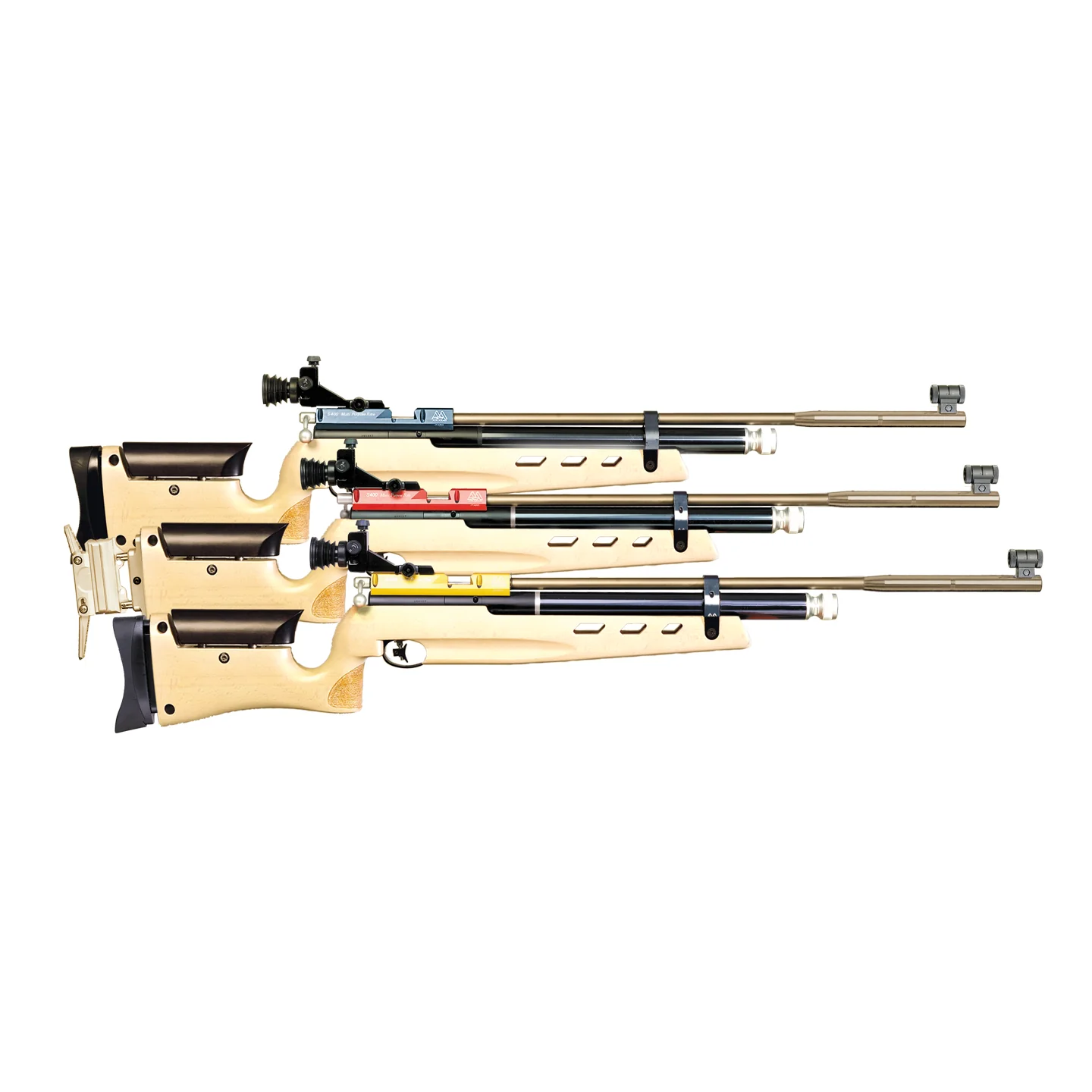
Furthermore, the Air Arms MPR Precision is distinguished by its ambidextrous poplar stock, extended sighting arrangement, and adjustable components. These features have been incorporated to accommodate different shooting positions and individual physical requirements.
A self-regulating firing valve has also been included to support consistent muzzle energy throughout the usable charging range. Unlike a mechanically regulated PCP system, this arrangement has been engineered to maintain reliable performance without a separate pressure regulator.
Whether the equipment is being considered for introductory competition training or established club-level target programmes, its technical characteristics can be assessed against demanding accuracy, handling, and repeatability requirements.
Key Features and Technical Highlights
The following characteristics are associated with the Air Arms MPR Precision and its dedicated target-shooting configuration.
- Calibre: .177 (4.5 mm) precision target pellet configuration.
- Operating System: Pre-charged pneumatic (PCP) mechanism.
- Loading Mechanism: Single-shot bolt-action operation.
- Barrel: Precision-manufactured Lothar Walther barrel.
- Trigger: Five-way adjustable match-grade trigger.
- Stock: Ambidextrous blonde poplar construction.
- Cheekpiece: Adjustable design for individual positioning.
- Butt Pad: Adjustable competition-style configuration.
- Sighting System: Extended sight base with target dioptre sight compatibility.
- Shot Capacity: Approximately 120 shots per charge under specified conditions.
- Overall Length: Approximately 1060 mm.
- Barrel Length: Approximately 486 mm.
- Weight: Approximately 3.1 kg.
- Rated Muzzle Energy: Approximately 5.15 ft-lb for the listed target configuration.
- Primary Application: Precision target shooting, club training, and organised competition.
Specifications should be verified against the particular production version and manufacturer’s documentation.
Precision Barrel and Consistent Shooting Characteristics
Match-Grade Barrel Construction
The barrel fitted to the Air Arms MPR Precision has been developed for the requirements of accuracy-focused target disciplines. A precision Lothar Walther barrel has been incorporated, and careful manufacturing tolerances have been applied to support repeatable pellet performance.
Additionally, the barrel assembly has been integrated into an extended target-shooting configuration. This arrangement is associated with a longer sight radius, particularly when compatible aperture-style target sights are installed.
As a result, the rifle’s sighting geometry has been adapted to the controlled aiming requirements of formal target disciplines.
Self-Regulating Valve Performance
A specialised firing valve has been incorporated into the pneumatic system. Through this design, changes in reservoir pressure are compensated for by the operation of the valve and firing mechanism.
Therefore, consistent muzzle energy can be maintained across an appropriate working pressure range without the inclusion of a separate mechanical regulator.
Importantly, the Air Arms MPR Precision should not be described as a factory-regulated rifle. Instead, a self-regulating valve arrangement has been used.
Ergonomic Stock and Adjustable Competition Features
Ambidextrous Poplar Stock Design
A carefully shaped blonde poplar stock has been selected for its combination of practical weight, structural characteristics, and distinctive appearance.
Moreover, an ambidextrous configuration has been incorporated to accommodate left-handed and right-handed participants.
The stock’s proportions have been developed around the requirements of multi-position target shooting. Consequently, attention has been directed towards handling consistency, positional comfort, and overall balance.
Adjustable Cheekpiece and Butt Pad
An adjustable cheekpiece has been included to accommodate variations in facial structure, posture, and sight alignment.
Similarly, the butt pad has been designed to permit individual fitting. Compatible optional components, including butt spacers and specialist competition accessories, may also be supported depending on the exact configuration.
These adjustments are especially relevant when the rifle is shared within organised clubs or used in supervised training environments.

Competition-Grade Trigger and Single-Shot Operation
Five-Way Adjustable Match Trigger
A five-way adjustable match trigger has been fitted to the rifle, reflecting its intended purpose as a precision target platform.
Considerable attention has been given to trigger feel, mechanical refinement, and consistent operation. Therefore, the component is recognised as an important element of the rifle’s specialised competition design.
Any trigger servicing or adjustment should be undertaken according to manufacturer guidance and applicable range safety requirements.
Single-Shot Bolt-Action Mechanism
The rifle has been equipped with a manually operated, single-shot bolt-action system.
This mechanism has been selected for deliberate target-shooting disciplines in which individual shots are evaluated and controlled loading procedures are followed.
Furthermore, the single-shot configuration is compatible with the structured routines commonly established at supervised target ranges.
Practical Applications of the Air Arms MPR Precision
Indoor 10-Metre Target Shooting
The rifle has been developed with formal 10-metre target shooting in mind. Its .177 calibre, match-style design, and dedicated sighting arrangement are particularly associated with precision-oriented indoor disciplines.
Within supervised clubs, the equipment may be incorporated into structured practice sessions and organised target events, subject to competition rules.
Club Training and Skill Development
A place has also been established for this model within progressive target-shooting programmes.
Its adjustable stock configuration allows fitting requirements to be considered for different participants. Meanwhile, the rifle’s specialised design makes it relevant to training environments in which repeatability and equipment familiarity are emphasised.
Multi-Position Competition
The multi-position design has been developed to accommodate disciplines involving standing, kneeling, or prone shooting, where permitted by the relevant competition format.
Accordingly, the rifle’s balance, stock configuration, and sighting components have been tailored towards specialised target applications rather than general-purpose field use.
Build Quality, Maintenance and Long-Term Care
British Engineering and Component Construction
The Air Arms MPR Precision is manufactured by Air Arms, a British airgun manufacturer recognised for producing sporting and competition-oriented pneumatic rifles.
Across the model’s construction, emphasis has been placed on precision-machined components, a specialised pneumatic action, and carefully designed stock geometry.
Furthermore, removable air-cylinder arrangements and dedicated accessory provisions have been associated with the MPR platform.
Recommended Maintenance Considerations
Routine inspection and appropriate maintenance are required for any pre-charged pneumatic rifle.
Exterior surfaces should be kept clean and dry, while seals, pressure components, and safety-related mechanisms should be examined in accordance with manufacturer instructions.
Additionally, compressed-air charging equipment must be appropriately rated and maintained. Pressure-vessel inspection requirements, storage arrangements, and local firearm legislation must also be observed.
Professional servicing is recommended whenever defects, abnormal performance, or damaged pressure-system components are identified.
Air Arms MPR Precision – Technical Summary
The Air Arms MPR Precision has been developed as a dedicated precision target air rifle with a distinctive combination of match-grade construction and ergonomic adjustability.
Through its .177 calibre configuration, Lothar Walther barrel, self-regulating valve system, five-way adjustable trigger, and ambidextrous stock, a specialised target-shooting platform has been established.
Equally importantly, its single-shot mechanism and competition-oriented configuration have been designed around controlled sporting applications.
For accurate product classification, the rifle should be identified as a British-made, single-shot PCP target air rifle intended primarily for 10-metre precision shooting and supervised competitive disciplines.
Air Arms MPR Precision – Calibres, FAC Classification, Power, Recommended Scopes and Accessories
The Air Arms MPR Precision has been developed as a specialised pre-charged pneumatic (PCP) air rifle for competitive target shooting, precision training, and organised shooting disciplines. Particular attention has been given to calibre selection, controlled muzzle energy, sighting compatibility, and competition accessories.
Furthermore, the rifle has been designed around the requirements of 10-metre precision shooting, where consistent performance, reliable operation, and appropriate equipment configuration are essential.
Available Calibres and Ammunition Compatibility
.177 Calibre (4.5 mm) – Standard Target Configuration
The Air Arms MPR Precision is offered in .177 calibre (4.5 mm), the standard calibre associated with international 10-metre air rifle competition.
This calibre has been selected for its suitability for paper target shooting and its established use within organised competitive disciplines.
Additionally, .177 ammunition is widely available in match-oriented configurations, allowing appropriate pellets to be selected according to the manufacturer’s recommendations and competition regulations.
The following characteristics are associated with the standard calibre:
- Calibre: .177 / 4.5 mm.
- Ammunition: Compatible lead or other manufacturer-approved airgun pellets.
- Loading: Single-shot bolt-action mechanism.
- Primary Purpose: Formal target shooting and competition training.
- Competition Compatibility: Commonly associated with 10-metre precision air rifle disciplines.
- Alternative Calibres: No standard factory .22 or .25 MPR Precision configuration is currently listed.
Match-Grade Pellet Considerations
For formal target disciplines, high-quality .177 match pellets are generally used. In particular, flat-headed wadcutter pellets are commonly associated with 10-metre paper-target competitions.
However, pellet specifications should be checked against the applicable competition rules and the rifle manufacturer’s recommendations.
Furthermore, unsuitable or damaged ammunition should be avoided because safe and reliable functioning may otherwise be affected.
FAC Classification and Legal Power Requirements
Is the Air Arms MPR Precision FAC Rated?
The standard Air Arms MPR Precision is supplied as a sub-12 ft-lb air rifle, with a manufacturer’s listed muzzle energy of approximately 5.15 ft-lb (7 joules).
Therefore, this standard configuration is not classified as a high-power FAC air rifle under the ordinary air-rifle power threshold applicable in England and Wales.
However, UK firearms legislation is not uniform across every jurisdiction. In Scotland, an Air Weapon Certificate is generally required for air-weapon possession unless an exemption applies. In Northern Ireland, separate firearms licensing provisions are applicable.
Consequently, the rifle’s legal classification must always be established according to the location in which it will be possessed or used.
FAC and High-Power Versions
Unlike certain sporting PCP rifles, the MPR Precision has been developed primarily for low-energy precision target applications.
No current factory FAC-rated MPR Precision option is identified in the manufacturer’s standard product listing.
Accordingly, a high-power version should not be advertised as a regular manufacturer-supplied option without documented confirmation.
Importantly, modifications affecting muzzle energy or legal classification should not be undertaken outside applicable firearms legislation and qualified professional oversight.
Power Output and Pneumatic Performance
Factory Muzzle Energy Specifications
The manufacturer’s current specifications identify the following performance characteristics:
- Muzzle Energy: Approximately 5.15 ft-lb.
- Equivalent Energy: Approximately 7 joules.
- Calibre: .177 (4.5 mm).
- Air System: Pre-charged pneumatic.
- Estimated Shot Count: Approximately 120 shots per charge.
- Firing Valve: Self-regulating design.
- Mechanical Regulator: Not fitted as standard.
- Barrel Length: Approximately 486 mm.
- Overall Length: Approximately 1060 mm.
These values have been published for the standard Precision configuration. Actual results can vary with maintenance condition, ammunition, operating pressure, and production version.
Self-Regulating Valve Technology
A self-regulating firing valve has been incorporated to support consistent energy delivery as reservoir pressure changes.
Consequently, controlled target performance can be maintained throughout an appropriate portion of the charging cycle.
Nevertheless, this arrangement should be distinguished from a separate mechanical pressure regulator. The standard Precision model is officially identified as non-regulated.
Recommended Scopes and Target Sighting Systems
Competition Dioptre Sights
For traditional 10-metre competition, precision dioptre sights are generally preferred over telescopic scopes.
An aperture-style rear sight and compatible front tunnel sight can be selected according to competition requirements.
Furthermore, the extended sighting arrangement provides compatibility with the rifle’s intended precision-target configuration.
Telescopic Scope Considerations
Where competition rules allow telescopic sights, a lightweight target scope may be considered.
The following optical characteristics are relevant:
- Clear Optical Image: A well-defined sight picture is essential for controlled target observation.
- Adjustable Parallax: Suitable correction helps accommodate the intended shooting distance.
- Fine Reticle: A clearly defined aiming reference is desirable for paper-target disciplines.
- Repeatable Adjustments: Reliable elevation and windage controls are important.
- Appropriate Eye Relief: Comfortable viewing should be maintained.
- Compatible Mounting: Mounts must match the rifle’s dovetail interface and the scope’s dimensions.
The rifle’s standard dovetail mounting provision accommodates compatible sighting equipment. However, individual accessories should be checked for mechanical fit before installation.
Additionally, any optical system selected for formal competitions must comply with the applicable discipline’s rules.
Recommended Accessories for the Air Arms MPR Precision
Essential Equipment and Competition Accessories
A selection of compatible accessories can be considered for safe maintenance, appropriate storage, and organised target shooting.
- Precision Dioptre Sight: Suitable for formal aperture-sight target disciplines.
- Compatible Front Aperture Inserts: Available for approved front tunnel sights.
- Match-Grade .177 Pellets: Intended for precision paper-target applications.
- Protective Rifle Case: Recommended for safe transportation and storage.
- PCP Filling Equipment: Must be compatible with the manufacturer’s pressure and connection specifications.
- Air Pressure Monitoring Equipment: Useful for observing the condition of the pneumatic system.
- Adjustable Butt Pad Spacers: May be compatible with the stock configuration.
- Optional Match Butt Hook: Suitable where permitted by competition regulations.
- Approved Cleaning Kit: Intended for appropriate routine barrel and exterior maintenance.
- Secure Gun Storage: Required or recommended according to local firearms legislation.
Protective and Maintenance Equipment
Proper storage and inspection are particularly important for precision pneumatic equipment.
A padded case can be used to protect external components during transport. Similarly, dry and secure storage conditions are recommended to limit corrosion and accidental damage.
Meanwhile, compatible cleaning materials should be selected according to the manufacturer’s guidance.
Compressed-air cylinders and filling systems should also be inspected periodically by appropriately qualified personnel.
Overall Calibre, Power and Accessory Assessment
The Air Arms MPR Precision is distinguished by its dedicated .177 calibre configuration, approximately 5.15 ft-lb muzzle energy, single-shot operation, and specialised competition design.
Its factory specification has been tailored for controlled target shooting rather than high-power sporting applications.
Furthermore, its compatibility with precision sighting arrangements and selected ergonomic accessories makes it relevant to supervised club programmes and formal target disciplines.
Above all, the rifle’s technical configuration should be assessed in relation to local firearms legislation, competition requirements, manufacturer-approved components, and appropriate maintenance procedures.
JTS Airguns, Airacuda, Kral Arms, Reximex and PCP Air Rifle Guide
The modern PCP market covers a broad range of platforms, calibers, accessories, and shooting styles, with JTS airguns becoming increasingly visible among enthusiasts searching for performance-focused pneumatic rifles. Popular searches include JTS Airacuda, JTS Airacuda Max, Airacuda, JTS Aircuda, Airacuda Max, and JTS Aircuda Max, reflecting strong interest in this family of regulated PCP rifles. Shooters researching ammunition also commonly look for JTS pellets, while those comparing compact or alternative platforms may search for the JTS Airstryke, JTS Airstryke Carbine, and other JTS guns.
Caliber-specific searches are equally important. Terms such as JTS Airacuda 25 and JTS Airacuda Max 30 cal are frequently used by buyers comparing configurations and specifications. Other searches connected with the wider brand ecosystem include JTS firearms, JTS Group, JT guns blog, field supply airguns, Trenier Outdoors, TSC air, QTS 11, JPC 100, lindstradt air gun, tom air gun, and even broader or less directly related searches such as JROTC air rifle and jschlatt gun.
JTS Airacuda and Airstryke Searches
The JTS Airacuda platform attracts attention because many shooters compare it with other PCP rifles in similar price and performance categories. Search variations such as JTS Aircuda, JTS Aircuda Max, Airacuda, and Airacuda Max are commonly entered by users who may spell or abbreviate the product name differently. Meanwhile, the JTS Airstryke and JTS Airstryke Carbine expand the range of search intent toward compact PCP configurations.
Ammunition research often accompanies rifle research, which explains searches for JTS pellets alongside rifle model queries. Buyers may compare pellet weights, caliber compatibility, accuracy characteristics, and intended target use before selecting ammunition appropriate for their particular air rifle.
Frequently Asked Questions (FAQs)
1. What makes this precision target air rifle different from conventional air rifles?
This specialised target air rifle has been designed primarily for accuracy-focused competition rather than general recreational shooting. A match-grade barrel, adjustable stock, precision trigger, and single-shot loading system have been incorporated to support consistent target performance.
Furthermore, the rifle’s ergonomic characteristics have been developed around the requirements of controlled shooting positions. An extended sighting arrangement has also been included to accommodate precision aperture sights.
Unlike many general-purpose sporting models, the equipment has been configured specifically for organised target disciplines. Consequently, its technical characteristics are particularly relevant to club competitions, indoor ranges, and formal training environments.
2. Which calibre is available for this rifle?
The standard model is chambered in .177 calibre, equivalent to 4.5 mm. This calibre has been established as the conventional choice for international 10-metre air rifle competition.
Additionally, a wide selection of compatible match pellets is available in this diameter. Flat-headed wadcutter ammunition is commonly associated with indoor paper-target shooting.
Alternative .22 and .25 calibre factory configurations are not listed for this particular target model. Therefore, advertised alternatives should be verified against official manufacturer documentation.
3. Is the rifle powered by compressed air or a spring mechanism?
A pre-charged pneumatic system has been incorporated into the rifle’s construction. Compressed air is stored within a dedicated reservoir and released through the firing mechanism when the rifle is operated.
Consequently, the equipment does not depend on the spring-piston mechanisms commonly associated with traditional break-barrel air rifles.
A compatible charging system is required for reservoir replenishment. Moreover, pressure limits and charging procedures must be observed according to manufacturer instructions.
Only appropriately rated compressed-air equipment should be used.
4. What is the factory muzzle energy?
The standard competition configuration has been specified at approximately 5.15 foot-pounds of muzzle energy, equivalent to roughly 7 joules.
This output has been selected for the rifle’s intended precision target applications.
Furthermore, factory performance figures may vary slightly according to production specifications and operating conditions.
Actual muzzle energy can be influenced by ammunition characteristics, mechanical condition, and reservoir pressure. Accordingly, equipment specifications should be verified against the manufacturer’s published information.
5. Is a firearms certificate required to own this rifle?
Licensing requirements are determined by the jurisdiction in which the rifle is possessed.
In England and Wales, the standard factory configuration generally falls below the 12 foot-pound threshold associated with Section 1 firearm certification for air rifles.
However, separate air-weapon licensing requirements apply in Scotland, while different firearms legislation operates in Northern Ireland.
Additional restrictions may also apply to age, possession, transportation, and shooting locations.
Therefore, current local legislation should always be checked before acquisition, transportation, or use.
6. Is the rifle suitable for 10-metre target competitions?
Yes. The equipment has been developed around the technical requirements of precision target disciplines, including 10-metre shooting.
A dedicated match-style configuration has been incorporated, while adjustable stock components support individual fitting requirements.
Furthermore, compatibility with precision aperture sights reflects the rifle’s intended competition application.
Nevertheless, formal event eligibility depends on the applicable governing body’s regulations. Weight restrictions, permitted accessories, trigger requirements, and equipment dimensions may vary between competitions.
7. Can beginners use this type of competition rifle?
The rifle may be used within structured beginner training programmes when appropriate supervision and safety instruction are provided.
Its adjustable stock components can accommodate a range of physical requirements, while the single-shot design is suited to deliberate target-shooting routines.
However, the rifle remains specialised pneumatic equipment and should never be treated as a toy.
Beginners should receive instruction from qualified personnel and follow established range safety procedures.
Additionally, age restrictions and local legal requirements must be observed.
8. Is the stock suitable for left-handed and right-handed shooters?
An ambidextrous stock has been incorporated into the standard design.
Consequently, the rifle can accommodate both left-handed and right-handed participants, subject to individual fit and comfort.
The adjustable cheekpiece and butt pad provide additional ergonomic flexibility.
Furthermore, this arrangement may be particularly useful within organised shooting clubs where equipment is shared between participants.
Individual fitting should always be carried out according to the manufacturer’s guidance, especially when the rifle is intended for competition use.
9. What material is used for the stock?
The standard stock has been manufactured from blonde poplar wood.
This material has been selected for its practical weight characteristics and suitability for a precision target configuration.
Additionally, the wood provides a distinctive appearance that separates the model from rifles equipped with conventional synthetic sporting stocks.
Although the stock is intended for regular competition use, appropriate maintenance remains important.
Prolonged exposure to excessive moisture, unsuitable cleaning chemicals, and extreme storage conditions should be avoided.
10. Does the rifle feature an adjustable trigger?
Yes. A five-way adjustable match trigger has been incorporated into the standard configuration.
This component has been developed specifically for precision-oriented shooting disciplines, where consistent trigger operation is considered important.
Furthermore, the trigger assembly forms part of the rifle’s specialised competition engineering.
Any adjustment, inspection, or servicing should be completed according to official manufacturer guidance.
Where mechanical expertise is required, the work should be entrusted to an appropriately qualified airgun technician.
11. Is the rifle fitted with a pressure regulator?
The standard configuration is not fitted with a separate mechanical pressure regulator.
Instead, a self-regulating firing valve has been incorporated into the pneumatic system.
This design has been developed to support consistent performance across a suitable range of reservoir pressures.
Consequently, the rifle should not be advertised as mechanically regulated unless a particular variant has been independently documented as such.
A self-regulating valve and a dedicated mechanical regulator are different technical arrangements.
12. How many shots can be obtained from a full charge?
Approximately 120 shots per charge have been indicated in the manufacturer’s standard technical specifications.
However, the actual number of usable shots may vary according to operating conditions, mechanical condition, and the pressure range maintained during use.
Furthermore, factory figures should be treated as reference values rather than guarantees of identical performance in every situation.
Regular monitoring of the air system and adherence to manufacturer guidance are recommended.
Reservoir charging limits must never be exceeded.
13. Can a telescopic scope be fitted?
Compatible telescopic sights may be considered where suitable mounting arrangements are available and the intended shooting discipline permits their use.
However, traditional 10-metre precision competitions commonly favour specialised aperture or dioptre sights.
The rifle’s sighting configuration has been developed with these target applications in mind.
Before selecting optical equipment, mounting compatibility, dimensions, eye relief, and competition regulations should be checked.
Additionally, formal competition rules may prohibit optical magnification in particular event categories.
14. What type of sights are most commonly associated with this rifle?
Precision aperture sights are typically associated with this class of competition air rifle.
A rear dioptre sight and compatible front tunnel sight may be incorporated into an approved target configuration.
These components are widely used in formal 10-metre shooting disciplines.
Furthermore, the extended sight base has been designed around the requirements of precision sight alignment.
Exact sight specifications and included components should be confirmed for each individual package, particularly when purchasing used equipment.
15. Is the rifle suitable for outdoor target shooting?
Outdoor target shooting may be permitted where a suitable range, appropriate safety arrangements, and applicable legal conditions have been established.
However, the rifle has been developed primarily for formal precision disciplines rather than unrestricted outdoor sporting applications.
Environmental conditions such as wind, rain, and temperature fluctuations can influence practical performance and equipment care.
Consequently, the manufacturer’s intended use and local range regulations should be considered before participation.
Only designated, lawful shooting locations should be used.
16. Can the rifle be used for hunting or pest control?
The rifle has been designed primarily as a low-energy competition target platform.
Its standard muzzle energy and specialised configuration are intended for precision paper-target applications rather than hunting.
Furthermore, hunting legislation, animal welfare requirements, and minimum-energy standards differ considerably between jurisdictions.
Accordingly, the equipment should not be represented as a general-purpose hunting rifle.
Its principal suitability remains organised sporting competition and supervised target training.
17. How much does the rifle weigh?
The manufacturer’s standard specification identifies an approximate weight of 3.1 kilograms.
This figure reflects the rifle’s competition-oriented construction and dedicated stock design.
However, additional sights, mounting equipment, and permitted accessories can increase the total assembled weight.
For formal competition, the complete equipment configuration must comply with the relevant discipline’s weight restrictions.
Therefore, total assembled weight should be checked whenever additional components are installed.
18. How should the rifle be stored when not in use?
The rifle should be stored securely in accordance with applicable firearms legislation and manufacturer recommendations.
A suitable locked storage arrangement is recommended to prevent unauthorised access.
Furthermore, the equipment should be protected from excessive moisture, extreme temperatures, and corrosive environmental conditions.
A protective case may be used during lawful transportation, although long-term storage conditions should be selected to avoid trapped moisture.
Compressed-air system requirements should also be observed.
19. What maintenance is required for long-term reliability?
Routine external cleaning, visual inspections, and appropriate pneumatic-system maintenance are recommended.
Particular attention should be given to the condition of seals, fittings, pressure components, and visible mechanical surfaces.
Furthermore, cleaning materials should be selected according to manufacturer guidance to prevent unnecessary damage.
Internal pressure-system servicing should be undertaken by qualified personnel.
Any unusual air leakage, damaged component, or mechanical malfunction should be professionally assessed before further operation.
20. Are replacement parts and accessories available?
Replacement components may be available through authorised dealers, specialist airgun service providers, and manufacturer-approved distributors.
However, availability can vary according to production age, regional distribution arrangements, and individual component specifications.
Common service requirements may involve seals, stock fittings, sighting accessories, or charging-system components.
Before replacement parts are ordered, the precise model identification and component compatibility should be verified.
Original manufacturer-approved components are generally preferred for maintaining the intended technical configuration.
21. What should be checked before purchasing a pre-owned example?
A used rifle should be evaluated according to its condition, service history, completeness, and legal status.
The stock should be examined for visible damage, while the barrel exterior and mechanical components should be checked for corrosion or deterioration.
Furthermore, the condition of the pneumatic reservoir and associated fittings should be professionally assessed.
Any supplied sights, charging connectors, cases, or accessories should be clearly identified.
Where possible, manufacturer documentation and previous maintenance records should also be reviewed.
22. Is the rifle suitable for organised shooting clubs?
Yes. Its dedicated target configuration makes it relevant to organised club environments and supervised competition programmes.
The ambidextrous stock provides flexibility, while its adjustable components allow individual fitting considerations to be addressed.
Furthermore, the single-shot loading system is associated with structured target-shooting routines.
However, club suitability also depends on the participants’ experience, supervision arrangements, equipment condition, and applicable operating procedures.
Each organisation should maintain appropriate safety and maintenance protocols.
23. What distinguishes this rifle from recreational PCP models?
A specialised competition stock, match-oriented trigger, precision barrel, and dedicated sighting configuration have been integrated into the design.
These elements distinguish the rifle from many recreational pneumatic platforms.
Moreover, the relatively low factory muzzle energy reflects its primary purpose as a target instrument.
A conventional sporting model may instead prioritise portability, general-purpose handling, or field-oriented construction.
Consequently, direct comparisons should take intended sporting disciplines into account.
24. How can the original specifications be verified?
Official technical information should be obtained from the manufacturer’s published documentation or an authorised distributor.
The precise variant, calibre, production period, and included accessories should be confirmed before specifications are reproduced in a commercial listing.
Furthermore, second-hand examples may differ from current factory configurations.
Serial-number records and original sales documents may assist with product identification when available.
Unverified claims concerning power, included equipment, or mechanical modifications should be avoided.
25. What is the most important consideration when evaluating this competition rifle?
The most important consideration is whether the equipment’s intended application matches the shooting discipline for which it is being evaluated.
Its standard configuration has been developed for specialised precision target shooting, with emphasis placed on controlled pneumatic performance, adjustable ergonomics, and competition-oriented construction.
Furthermore, compatibility with applicable event rules, lawful ownership requirements, and authorised maintenance procedures must be established.
When these factors are considered together, the rifle’s engineering characteristics and intended sporting purpose can be assessed accurately and responsibly.
Hatsan PCP and Semi-Auto Searches
Another major group of related search terms concerns Hatsan products. These include Hatsan Sortie Tact semi-auto PCP, Hatsan Sortie, Hatsan Sortie Tact, Hatsan Jet, and Hatsan Jet 3. These searches often appear when enthusiasts compare compact PCP systems, semi-automatic platforms, and portable airgun designs.
Because buyers frequently research several brands during the same shopping session, JTS products may be compared with Hatsan, Kral Arms, Reximex, and other manufacturers before a final model is selected.
Kral Arms and Kral Puncher PCP Air Rifles
Kral Arms has a substantial presence in airgun searches, particularly among users researching PCP rifles. Search variations include KRQL, Kral NP 02, Kral Puncher, Kral Breaker Puncher, Kral Puncher K, Puncher Mega, Shadow Puncher, and Puncher Auto. These terms represent different model families as well as spelling variations entered by customers searching online.
Other Kral-related search phrases include Kral pump, Kral airguns, Krale airguns, Krale wholesale, KR9, KR9 rifle, KR-101, NP500, Bigmax, Raptor S, Dazzle S, EmpireX, TacticalX, Tactical Tundra, Rutundra, ST 500, and ST-500.
Search behavior does not always follow official product naming. As a result, visitors may also enter variants such as kr al, kiral, kroll firearms, kar gun, k gun, kora gun, aram gun, and akr gun while looking for rifles, parts, manufacturers, or related shooting equipment.
International searches can introduce additional terminology. Examples include الكرال, av tüfeği, and tabancalar, which may appear alongside English-language product and category searches.
PCP Air Rifles and Related Search Terms
Broad-category phrases remain important for users who have not yet selected a specific brand. These include PCP air rifles, PCP rifles, PCP air gun, air rifle PCP, rifle PCP, and rifles PCP 5.5. These phrases can lead shoppers toward a wider selection before they narrow their choice to a particular manufacturer or model.
Users comparing platforms may also search for terms such as muskrat gun, kalibre pistol, kahr firearms, and king arms FAL. Because several of these phrases refer to different product categories or manufacturers, specifications and legal classifications should always be checked individually rather than assuming that similarly worded searches describe the same type of equipment.
Reximex Airguns and PCP Models
Reximex airguns represent another important category within PCP search traffic. Common product searches include Reximex RP, Reximex Throne Gen 2, Reximex Mito, Reximex Mitos, Reximex RPA, and Reximex Lieva. These searches often come from shooters comparing configurations, ergonomics, caliber choices, air-cylinder capacity, and other factory specifications.
Reximex products may be compared directly with JTS, Kral, Hatsan, and other PCP manufacturers. Consequently, a shopper researching the JTS Airacuda Max may also investigate a Reximex Throne Gen 2, Kral Puncher, Kral NP 02, or another PCP rifle before deciding which configuration best suits their intended lawful sporting or target use.
Shotgun and Firearm-Related Search Variations
Some search phrases in this wider keyword group refer to firearm platforms rather than PCP airguns. Examples include 223 rifle, 223 guns, 223 arma, 410 shotgun semi auto magazine fed, inertia shotguns, K12 shotgun, KP12, A12 shotgun, XM shotgun, shotgun XM, Krieg shotgun, and SBS12.
Accessory-oriented searches include JTS X12PT shotgun accessories and JTS shotgun accessories. Users entering these terms may be looking for product compatibility information, replacement components, or manufacturer-specific accessories.
Other broader firearm-related search phrases include rifle cal 22 semiautomatico and Kahr firearms. Because legal definitions, licensing requirements, permitted calibers, magazine rules, and ownership regulations differ by jurisdiction, users should verify the rules applicable in their location before purchasing or possessing regulated equipment.
Additional Model and Brand Searches
The wider search ecosystem includes terms such as Ekinoks, King Arms FAL, Raptor S, EmpireX, Bigmax, and TacticalX. Although some searches overlap semantically, each unique term can represent a distinct user query and should therefore be handled with product-specific information where appropriate.
For customers specifically researching PCP equipment, the strongest relevance remains around JTS Airguns, JTS Airacuda, JTS Airacuda Max, JTS Airstryke, Kral Arms, Kral Puncher, Kral Breaker Puncher, Kral NP 02, Reximex Airguns, Reximex Throne Gen 2, Reximex Mito, and related PCP air rifles. Clear specifications, accurate model identification, compatible ammunition information, and transparent product descriptions help visitors distinguish among these different platforms without confusing unrelated product categories.
Practical Use Scenarios – Precision Target Shooting, Club Training, Competitive Events and Everyday Performance
The practical value of a specialised pre-charged pneumatic target rifle is best understood through the environments in which its engineering characteristics are applied. From organised indoor shooting facilities to supervised training programmes, carefully developed competition equipment has been designed to support consistency, comfort, and controlled performance.
Furthermore, features such as an adjustable stock, a precision-manufactured barrel, a single-shot loading mechanism, and a refined trigger assembly have been incorporated to meet the requirements of formal target disciplines. As a result, the equipment is particularly relevant wherever accuracy, repeatability, and responsible handling are considered essential.
Several practical situations demonstrate how these characteristics contribute to organised sporting activities.
1. Indoor 10-Metre Target Shooting
Dedicated Equipment for Controlled Indoor Ranges
Indoor 10-metre target shooting represents one of the principal applications for this category of pneumatic equipment. Within regulated shooting facilities, participants are provided with controlled environments where appropriate targets, established safety procedures, and consistent shooting distances are maintained.
A specialised .177 calibre configuration has been adopted throughout many international target disciplines. Accordingly, equipment manufactured around this calibre is widely associated with formal indoor competition.
Furthermore, match-oriented construction is particularly relevant in facilities where target performance is evaluated through standardised scoring systems.
The relatively low muzzle energy associated with this category has been selected for dedicated sporting applications. Nevertheless, approved backstops, eye protection where required, and responsible supervision remain essential.
Practical Benefits During Organised Sessions
During formal target sessions, the rifle’s adjustable components can be used to accommodate individual ergonomic requirements under appropriate supervision.
Moreover, a consistent equipment configuration can be maintained throughout repeated training sessions.
Consequently, participants and instructors are better positioned to evaluate sporting development within a standardised environment.
The equipment’s specialised construction also allows club administrators to establish consistent inspection, maintenance, and storage procedures.
2. Competitive Shooting Clubs and Membership Programmes
Equipment for Organised Club Activities
Competition-oriented air rifles are frequently incorporated into established shooting clubs, particularly those offering structured programmes for precision target disciplines.
Within these organisations, equipment may be allocated to qualified members, supervised participants, or individuals enrolled in recognised sporting activities.
An ambidextrous stock is especially relevant in shared-equipment environments. Because both left-handed and right-handed participants may be accommodated, greater flexibility can be provided without requiring entirely separate stock configurations.
Additionally, adjustable ergonomic components allow equipment suitability to be assessed according to individual requirements.
Consistent Equipment Management
In club environments, maintenance records, equipment inspections, and appropriate storage arrangements are generally established.
A single-shot pneumatic configuration can be integrated into supervised range procedures, while routine inspection of the compressed-air system can form part of scheduled equipment checks.
Furthermore, competition accessories can be documented and monitored for compatibility.
As a result, clubs can maintain an organised equipment programme that prioritises reliability, responsible ownership, and compliance with local regulations.
3. Beginner Target Shooting and Introductory Training
Structured Learning Under Qualified Supervision
Formal introductory programmes are another practical environment in which specialised target equipment may be encountered.
Beginners are typically introduced to the principles of range safety, equipment identification, responsible conduct, and the rules governing organised target shooting.
An appropriately supervised environment is particularly important because pneumatic rifles remain potentially dangerous despite their sporting classification.
Furthermore, the equipment’s adjustable stock can allow individual comfort and physical suitability to be assessed.
The use of standardised competition equipment may also help instructors maintain consistent training conditions across different sessions.
Building Familiarity With Sporting Equipment
During introductory training, attention is generally directed towards understanding equipment responsibilities and complying with established club procedures.
Participants may become familiar with technical terminology, competition classifications, and the importance of routine equipment inspection.
Additionally, supervised exposure to match-oriented equipment provides an introduction to the standards expected in organised shooting disciplines.
Where age restrictions apply, parental permissions, club rules, and statutory requirements must be observed.
4. Formal Competition and Championship Environments
Equipment Used in Regulated Sporting Events
Organised shooting competitions require equipment that meets clearly defined technical and safety standards.
A dedicated competition configuration is particularly relevant because match-grade components, adjustable fittings, and specialist sighting arrangements are commonly associated with regulated target disciplines.
However, equipment eligibility is determined by the governing body’s rules rather than by manufacturer descriptions alone.
Therefore, total weight, dimensions, sighting equipment, permissible stock accessories, and other relevant specifications must be checked before participation.
Consistency Across Competition Sessions
Competition environments often involve equipment inspections, scheduled shooting periods, designated preparation areas, and established scoring arrangements.
Within these settings, dependable mechanical construction and clearly documented specifications are important.
Furthermore, standardised equipment maintenance helps reduce uncertainty associated with preventable mechanical deterioration.
Protective transportation cases and suitable storage provisions can also be incorporated into event arrangements.
Consequently, the equipment can be managed in a manner consistent with the administrative and safety requirements of organised sporting competitions.
5. Multi-Position Target Shooting Activities
Versatility Across Different Sporting Disciplines
Certain competitive shooting formats involve standing, kneeling, or prone positions, depending on the governing rules.
Specialised stock geometry and adjustable components have been developed to accommodate the differing ergonomic requirements associated with these activities.
Moreover, an adjustable butt pad and cheekpiece allow individual equipment fit to be considered when the rifle is evaluated for permitted disciplines.
The practical suitability of any configuration must nevertheless be determined according to the specific event regulations.
Equipment Suitability and Participant Comfort
During organised multi-position events, participant comfort and correct equipment fit are important considerations.
An unsuitable stock configuration may create unnecessary physical discomfort during extended sporting sessions.
Accordingly, adjustable components are often valued for their contribution to ergonomic flexibility


Reviews
There are no reviews yet.