We Deliver Airguns Directly To Your Door
SKU N/A Category

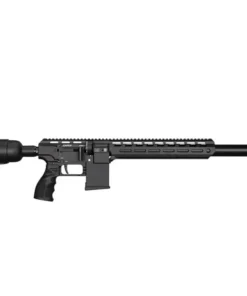
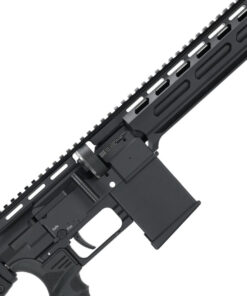
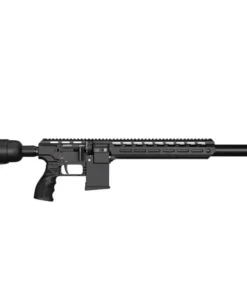
FX Impact M4 Sniper Copper

$1,800.00

FX Impact M4 Sniper Copper

IMPACT M4

The FX Impact is undeniably one of the most iconic airguns on the market, having changed the airgun industry forever and truly making an impact when it was released back in 2015. With every new release of the FX Impact, we’ve made it better, more reliable, and accurate, reinforcing its presence in the industry. The FX Impact is an airgun that over time has proven itself to be suited for just about any discipline, whether you’re a professional benchrest shooter, hunter, or a regular all-around shooter. The platform offers the perfect setup for every occasion. Therefore, we are pleased to announce the release of the FX Impact M4, improving the platform in different areas while ensuring to keep the iconic looks that make the Impact so recognizable out in the field and in competitions.

The FX Impact has been taken first places and countless podium spots at all the major competitions around the world since its release. So, we at FX Airguns made it our mission to make the FX Impact M4 not only better in many different ways but also stronger and more ridged so you as a shooter can keep competing at the top and fighting for those wins!

Comes delivered in a tailored cut-out hard-case 

Trigger
The first major upgrade we brought to the FX Impact M4 is a complete new trigger system!

Introducing the FX QUICK SET TRIGGER! We all know that the trigger lays at the core and foundation of any great shot taken. Due to the multipurpose function of the Impact Platform FX/Fredrick wanted One trigger to suit every style and that can easily and quickly be changed from a Hunter style with just the right amount of pull needed to a standard FX trigger, or pure match grade trigger that is light, clean and super crisp! All this with just a simple adjustment of one screw. The Quick Set Trigger unit! No need to upgrade to a different trigger system if you want to go from a hunter one day to match grade the next!

Rigidity
To further enhance the performance and shooting experience we improved the overall rigidity of the FX Impact M4 by designing a new top plate that is much thicker and stronger bringing more rigidity throughout the entire platform.

Grip
With the new QS Trigger unit and top rail introduced we also improved the overall feel and comfort of shooting the Impact. The new FX Grip is one of those improvements that brings that feel altogether. We designed a new style grip that is more defined, comfortable to grip onto, with just the right amount of palm swell and a beaver tail to enhance the shooting comfort, giving you a firm grip on your Impact M4. Ensuring you hit your mark with more confidence!

AMP regulator
The FX Impact M4 now comes standard with our new brass piston regulator that is stronger, has faster refresh rates, more consistent and can easily handle the higher bottle pressures with a max working pressure of 170bar.

Magazine
For the FX Impact M4 we have redesigned the high-capacity magazines . The New magazines are made from a stronger material and have a new internal mechanism to ensure the inner drum will rotate smoothly even when fully loaded with some of the heaviest slugs on the market.

Scope rail
The new top plate also features a dovetail rail machined on to it enhancing the strength but at the same time bringing more flexibility when it comes to mounting your optics. The new scope rail that is longer than before can slide along that rail to get you that perfect mounting position and can be tightly secured in place with perfect alignment to the overall system!

Design
We gave the FX Impact M4 a slightly new design without going too far from its iconic look. We have done this true a decent amount of tiny important improvements true out the whole platform, like some subtle new lines, cutouts for easy access to some part and angles to tie it all together. Making the FX Impact M4 even more practical and pleasing to the eye.

Note: Muzzle energy listed in the specifications of each rifle is for maximum setting. Due to differences in regulations the rifle is often produced with a lower muzzle energy from the factory. Contact your dealer for more info about muzzle energy in your region.

Scopes not included, 

Cocking system Right hand positioned sidelever with an ambidextrous mount for lefthanded shooters.
Magazine type Removable high capacity, easy load. 

Made in durable injection-molded POM

34 shot when Cal .177
28 shot when Cal .22
25 shot when Cal .25
23 shot when Cal .30
18 shot when Cal .35

Stock FX UG1 Grip – AR15 mount.
Adjustable recoilpad (vertically)
Calibre

4,5 (.177)

5,5 (.22)

6,35 (.25)

7,62 (.30)

9,00 (.35)

Barrel Compact: Superior STX 500mm 

Standard: Superior STX 600 mm
*500mm if sub 12ft for UK.

Sniper: Superior STX 700 mm

Extended: Superior Heavy STX 800 mm

Shot capacity 4,5 (.177) ≈ up to 375 shots
5,5 (.22) ≈ up to 330 shots
6,35 (.25): ≈ up to 160 shots
7,62 (.30): ≈ up to 105 shots
9,00 (.35): ≈ up to 45 shots
Fill pressure Max 250 bar (3625 psi)
Safety Switch style
Optics

Dual rails system;  Adjustable and removable 30 MOA Picatinny rail sits on a 9-11 dovetail rail.

Muzzle Built-In Shroud system with additional moderator. (variations may occur depending on country). 

Detachable muzzle.

Pressure gauge

Dual pressure gauges:

Airtube pressure WIKA
Regulator pressure WIKA

Trigger QST – Quick Set Trigger 

Trigger blade can be adjusted in reach, height and rotated to set the blade in an angle.

Can be set in various ways, Match, Hunter and many more.

Velocity N/A
Energy 4,5 (.177): up to 47 J – 35 ft/lbs
5,5 (.22): up to 117 J – 87 ft/lbs
Note: above figures are maximum FAC Power output using slug ammunition, slug powerkit and 800mm barrel.
Air capacity Compact: 300 cc
Standard: 480 cc
Air cylinder

Carbon fiber wrapped air tank

Length Compact: 640 mm – 25″
Standard: 860 mm – 34
Weight Compact: 2,8kg – 6,10lbs
Standard: 3,1kg – 6,85 lbs
Charging Foster Quick Disconnect
More features Brass Piston AMP MkII Regulator – Externally Adjustable (dual in some low powered applications) 

Quick Tune System (micro and macro adjustment of hammerspring tension)

Valve adjuster (valveflow tuning)

Interchangable Caliber System

Multiple Accessory rails (picatinny) sides and bottom

Accessory spot to mount angled pressure gauge

Tailored cut-out hard-case.

Plenum Power Plenum 750 (75 cc Volume) *not available on sub 12ft versions.

FX Impact M4 Sniper Copper: Precision Is Unleashed at Every Range

Exceptional long-range performance is delivered by the FX Impact M4 Sniper Copper, a modular PCP platform that has been refined for shooters who demand consistency, tunability, and presence in equal measure. From the first fill to the last regulated shot, confidence is built through a 700 mm Superior STX barrel, a 580 cc carbon-fiber air cylinder, and a striking copper-anodized finish that is immediately recognized on the line.

Moreover, versatility is provided across .177, .22, .25, .30, and .35, so target work, pest control, and FAC hunting can be pursued on one chassis. Consequently, the FX Impact M4 Sniper Copper is positioned as a complete shooting system rather than a single-purpose rifle.

Why the FX Impact M4 Sniper Copper Is Chosen by Serious Shooters

A fourth-generation Impact architecture is employed, and several core systems have been strengthened compared with earlier generations. In particular, a single brass-piston AMP regulator has been adopted so that refresh rate, consistency, and working pressure up to 170 bar can be maintained even when a 250 bar fill is used. Meanwhile, a 75 cc Power Plenum 750 is seated behind the valve so that heavy slugs can be driven with a stable air buffer.

Additionally, a thicker top plate is fitted, and an 11 mm dovetail is machined into that backbone. As a result, a 30 MOA Picatinny rail can be slid, clamped, and realigned without the wander that once appeared when rails were removed and remounted. Therefore, eye relief is fine-tuned quickly, and optic return-to-zero is preserved after travel or storage.

Core Specifications at a Glance

The following highlights are offered so that a complete picture of the FX Impact M4 Sniper Copper can be scanned in seconds:

  • Configuration: Sniper length — 700 mm Superior STX barrel, 1000 mm overall, approximately 3.25 kg
  • Air system: 580 cc carbon-fiber cylinder, 250 bar fill, Foster quick-disconnect
  • Regulation: Externally adjustable brass-piston AMP MKII, max working pressure ~170 bar
  • Plenum: Power Plenum 750 (75 cc regulated volume)
  • Magazine capacity: ~34 (.177), 28 (.22), 25 (.25), 23 (.30), 18 (.35)
  • Shot potential per fill (tune-dependent): up to ~375 (.177), ~330 (.22), ~160 (.25), ~105 (.30), ~45 (.35)
  • Energy potential (FAC / slug kits / longer barrels as applicable): up to ~47 J (.177), ~117 J (.22), ~135 J (.25), ~169 J (.30), ~211 J (.35)
  • Action: Reversible smooth sidelever, ambidextrous mount
  • Trigger: Quick Set Trigger — reach, height, angle, and both stages can be set
  • Grip & pad: FX UG1 AR-15-style grip with vertically adjustable recoil pad
  • Rails: Sliding 30 MOA Picatinny on machined dovetail, plus side and under-barrel Picatinny points
  • Safety: Switch-style manual safety
  • Included: Shroud/moderator package, high-capacity magazine, Foster adapter, tailored hard case

Furthermore, an interchangeable-caliber liner system is retained, so a second liner and magazine can be added later without a second chassis being purchased.

How Accuracy and Power Are Tuned in the Field

External controls are placed so that hammer spring, valve flow, and regulator pressure can be adjusted without tools being unpacked. First, macro and micro Quick Tune wheels are turned so that hammer tension is stepped in coarse then fine increments. Next, valve flow is opened or closed so that air mass per shot is matched to pellet or slug weight. Afterward, regulator pressure is raised or lowered with the access screw behind the trigger so that a stable working point is locked in.

Consequently, a quiet sub-12 setup can be dialed for backyard practice, and a high-energy FAC slug tune can be restored minutes later. Meanwhile, dual WIKA gauges are watched so that bottle pressure and regulated pressure remain visible throughout a session. In this way, string-to-string consistency is protected even when temperature or fill level changes.

Barrel, Shroud, and Moderator Design

Rifling is pressed from the outside on the Superior STX liner, so a smooth internal finish and reduced drag are produced. Moreover, a built-in shroud is combined with a detachable ½ UNF moderator so that report is reduced without accuracy being sacrificed. Therefore, longer sessions on a private range or discreet pest work can be completed with less disturbance to neighbors and wildlife.

Additionally, the 700 mm Sniper barrel is selected when dwell time and slug acceleration are prioritized over compact carry. As a result, heavier projectiles are stabilized more readily, and holdover at extended distances is reduced when a proper 30 MOA rail and optic are mounted.

FX Impact M4 Sniper Copper

Ergonomics That Are Shared Across Shooting Styles

An AR-15-pattern UG1 grip with a defined palm swell and beavertail is fitted so that a repeatable hold is encouraged for left- and right-handed shooters alike. Likewise, the sidelever can be reversed, and the trigger blade can be raised, rotated, and shifted in reach. Hence, benchrest, HFT-style supported positions, and field shooting can all be accommodated without a custom stock being commissioned.

Furthermore, multiple Picatinny accessory rails are provided so that bipods, lights, or angle gauges can be attached. Inclusive design is therefore expressed through ambidextrous controls rather than a single “dominant-hand” layout.

Responsible Use, Legal Power, and Ownership

Local airgun laws, FAC limits, and hunting seasons must be observed before any high-energy tune is applied. Where a 12 ft-lb ceiling is required, hammer, valve, and regulator settings can be lowered so that compliance is maintained. Conversely, where FAC power is authorized, the same platform can be opened up for ethical hunting distances with appropriate slugs and shot placement.

Safe storage, eye protection, and a verified backstop are expected on every session. Moreover, magazines should be unloaded and the safety engaged whenever the rifle is carried between positions. In this manner, the FX Impact M4 Sniper Copper remains a precision instrument rather than a liability.

Who This Configuration Serves Best

Long-range target work is supported by the 700 mm barrel, 30 MOA rail, and large 580 cc bottle. Pest control and hunting are supported when legal energy and suitable projectiles are selected. Training and plinking are supported when a milder tune and high shot count are preferred. Therefore, one rifle can be grown with the shooter instead of being outgrown after a single season.

Finally, the copper finish is not only cosmetic. Distinctive anodized accents are applied to controls and structural details so that the rifle is identified instantly in a case or on a rack, while the matte chassis still rejects glare.

Calibres, FAC Power, and Accessories for the FX Impact M4 Sniper Copper

A wide performance envelope is opened by the FX Impact M4 Sniper Copper through interchangeable STX liners, regulated air, and a modular accessory interface. Consequently, a single chassis can be adapted from quiet backyard practice to FAC hunting without a second rifle being purchased. Moreover, legal limits, projectile choice, and supporting gear can be aligned so that every shot remains predictable, ethical, and repeatable.

Calibre Options That Are Matched to the Mission

Five primary calibres are supported on the Sniper platform: .177 (4.5 mm), .22 (5.5 mm), .25 (6.35 mm), .30 (7.62 mm), and .35 (9 mm). Each liner is seated in the 700 mm Superior STX barrel so that rifling quality remains consistent when a calibre change is completed. Therefore, grouping potential is preserved even after a liner swap, provided that magazine, probe, and tune are updated together.

High pellet counts and flat trajectories are typically associated with .177, so extended paper-punching sessions and light pest work are well served. Meanwhile, a balance of energy, wind resistance, and magazine capacity is delivered by .22, which remains the most versatile choice for mixed target and field use. Greater downrange energy and slug stability are obtained with .25, so medium-game hunting and longer-range slugs are more readily supported. Still more mass and terminal performance are provided by .30 and .35, where FAC output and heavy slugs are intended.

Magazine capacity is reduced as calibre increases. Approximately 34 rounds are held in .177, 28 in .22, 25 in .25, 23 in .30, and 18 in .35. Shot-per-fill figures follow the same pattern and remain tune-dependent: up to about 375 in .177, 330 in .22, 160 in .25, 105 in .30, and 45 in .35 on the 580 cc bottle. Hence, a high-volume .22 practice string and a short, powerful .30 hunting string can both be extracted from the same cylinder when regulator pressure and hammer settings are adjusted.

  • .177: Highest shot count, light recoil signature, ideal for training and precision paper
  • .22: Most balanced pellet and slug option for everyday versatility
  • .25: Strong mid-calibre choice for slugs and medium-range hunting
  • .30 / .35: Maximum energy and slug authority where FAC and local law allow

An extra liner kit, matching magazine, and a brief re-tune are all that is required when a second calibre is added. Inclusive shooting is therefore supported: left- or right-handed users can keep one familiar chassis while projectile and power are changed to suit the day.

FAC Limits, Legal Power, and How Output Is Controlled

Power is not fixed at the factory. Instead, energy is governed by regulator pressure, hammer-spring tension, valve flow, projectile weight, and the 75 cc Power Plenum 750. Maximum published figures (often quoted with slug kits and, in some cases, longer barrels) reach approximately 47 J / 35 ft-lb in .177, 117 J / 87 ft-lb in .22, 135 J / 100 ft-lb in .25, 169 J / 125 ft-lb in .30, and 211 J / 156 ft-lb in .35. Those peaks are FAC-class outputs and must never be assumed legal everywhere.

Where a 12 ft-lb (16.3 J) ceiling is enforced, hammer, valve, and regulator settings are lowered so that compliance is maintained. Dual WIKA gauges are then watched so that regulated pressure stays inside the chosen window. Conversely, where a Firearms Certificate or equivalent authority is held, the same external controls are opened so that ethical hunting energy can be reached with appropriate slugs and shot placement.

Fill pressure remains 250 bar. Working regulator pressure is commonly set up to about 170 bar. Because the plenum is large, a lower regulator setting can still feed heavy projectiles, which helps efficiency and consistency. Local statutes, hunting seasons, and minimum energy for the species must be verified before any high-power string is fired. Safe storage, a verified backstop, and eye protection remain mandatory regardless of tune.

FX Impact M4 Sniper Copper

Accessories That Complete the FX Impact M4 Sniper Copper

A sliding 30 MOA Picatinny rail is already mounted on a machined 11 mm dovetail, so long-range optics can be positioned for eye relief and elevation travel. Side and under-barrel Picatinny sections accept bipods, lights, lasers, or an angled pressure gauge. A Foster quick-disconnect is fitted for compressors and bottles. A shroud plus detachable ½ UNF moderator is supplied so that report can be reduced without the liner being changed.

Further items are commonly added so that the platform is finished for a specific discipline:

  • High-magnification FFP or SFP scopes with generous elevation (paired to the 30 MOA rail)
  • Quality rings or a one-piece mount matched to tube diameter
  • Extra high-capacity magazines in each calibre that will be used
  • Spare STX liners and probes for planned calibre changes
  • Carbon-fiber or electric PCP compressor rated to 250 bar
  • Bipod or bag system for bench and field-supported positions
  • Slug and pellet assortments in the chosen weights for each liner
  • Extra moderator or DonnyFL-style can where thread and law permit
  • Hard-case organizers, fill adapters, and burst disks for travel
  • Aftermarket grips, cheek pieces, or rail weights only where balance is improved

Interchangeable-calibre architecture means accessories should be bought as a system: a .25 slug magazine will not feed a .22 liner, and a high-power slug tune will empty the 580 cc bottle faster than a mild .177 pellet tune. Therefore, magazines, liners, and ammunition are selected together. Inclusive setup is encouraged by reversible sidelever, adjustable QST trigger (reach, height, angle, both stages), and the UG1 grip, so supporting gear can be arranged for either shoulder without the action being rebuilt.

When calibre, legal power, and accessories are chosen as one plan, the FX Impact M4 Sniper Copper is transformed from a striking chassis into a purpose-built instrument. Confirm local FAC or energy limits, pair the 700 mm barrel with the correct liner and optic, and let regulated air do the rest.

Ready When Precision Cannot Be Compromised

A complete package is supplied: hard case, magazine, moderator, and fill adapter. Optics and rings are chosen separately so that magnification, reticle, and budget can be matched to the intended discipline. Once those choices are made, the FX Impact M4 Sniper Copper is filled to 250 bar, regulated, and brought onto target with a trigger that can be set from hunter-crisp to match-light.

When consistency, modularity, and a distinctive copper presentation are required in a single PCP, this Sniper configuration is prepared to deliver. Add it to the cart, pair it with a quality optic and compressor, and let every shot be measured—not hoped for.


FX Airguns, PCP Air Rifles, Hatsan Models and Modern Airgun Platforms

Modern airguns cover a wide range of platforms, from a basic pellet gun or BB gun to sophisticated regulated PCP airguns designed for target shooting, sporting applications, and long-range precision. Buyers researching an air rifle and air pistol collection will often encounter manufacturers such as FX and Hatsan because both companies offer extensive selections of air rifles, accessories, configurations, and caliber choices.

FX Airguns Sweden and the FX PCP Rifle Range

FX Airguns has become strongly associated with Swedish airgun engineering. Searches for fx airguns sweden, fx airguns sverige, fxairguns, and fx usa commonly lead enthusiasts toward the manufacturer’s extensive PCP lineup. In the American market, fx airguns usa is another widely searched phrase when people are researching available models, specifications, support, and accessories.

Among fx air rifles, the Impact family remains particularly recognizable. Searches frequently include fx impact, f x impact, fx impact m4, fx m4, impact m4 air rifle, and impact m4 500mm when comparing current configurations. The modular design philosophy associated with the Impact platform has helped make the fx air rifle range popular among shooters who appreciate adjustability and configurable PCP systems.

Earlier generations remain widely researched as well. The fx impact m3, impact m3, fx impact mk3, fx m3, and fx m3 airgun continue to attract attention from owners comparing generations or researching replacement components.

Caliber-specific searches include fx impact m3 .22cal air rifle, fx impact m3 .22cal air rifle. 600mm barrel, and the more general fx impact m3 air rifle. People comparing international pricing may also search fx impact m3 precio, fx impact m3 precio en usa, or fx impact m3 price before checking local regulations, specifications, and availability.

Beyond the Impact series, the FX catalog includes several distinctive designs. The fx leopard and fx leopard airgun are frequently researched alongside fx leopard .22 pcp specs by users interested in specifications and configuration details.

Other notable searches include fx drs, fx drs tactical, fx drs classic, and fx drs pro. These terms reflect interest in the different DRS configurations and their intended shooting styles.

The wider FX family also includes models such as the fx king, fx wildcat, fx panthera, and fx dreamline. Collectively, these platforms demonstrate the variety available to anyone researching a premium pcp air rifle, pellet rifle, or configurable precision air gun.

Some enthusiasts also search fx outdoors when researching outdoor shooting equipment and related products, while marketplaces and information sources such as guns.com may appear during broader online research.

Understanding Pellet Guns and PCP Air Rifles

A traditional pellet gun uses shaped pellets rather than conventional firearm ammunition. The broader term pellet guns can describe spring-powered, CO₂-powered, pneumatic, and PCP platforms.

A PCP air rifle stores compressed air inside a reservoir. This system can provide consistent pressure across multiple shots depending on the rifle’s regulator, reservoir capacity, caliber, and power configuration.

For shooters comparing ammunition sizes, .177 caliber remains one of the most common options. Larger configurations are also available, including the increasingly searched 30 cal air rifle category.

Some users accidentally search pallet gun when looking for pellet-powered equipment. Regardless of terminology, specifications such as energy output, caliber, barrel length, intended range, and local legal requirements should always be reviewed before use.

The practical range of air rifle platforms varies significantly. Pellet weight, velocity, environmental conditions, barrel design, optics, and shooter technique can all affect useful range and accuracy.

Hatsan Air Rifle and PCP Platforms

The hatsan air rifle lineup covers traditional spring-powered designs as well as modern PCP systems. Searches such as hatsanusa, hatsan usa, hatsan air guns, and hatsan pcp are commonly used by enthusiasts researching the company’s models.

One of the most recognizable platforms is the hatsan blitz. Search variations include hatsun blitz, hatzan blitz, hatsan blitz full automatic, hatsan blitz 30 cal, and hatsan blitz .30 cal. Specifications and legal classifications can vary by market, so owners should verify the rules applicable in their jurisdiction.

Another frequently researched model is the hatsan model 95, also searched as hatsan mod 95 and mod 95. This traditional air rifle platform remains familiar to shooters interested in conventional stock designs.

The hatsan 125 is another established model, while the hatsan 135 family attracts shooters researching powerful spring-piston platforms. Related searches include hatsan 135 vortex air rifle, hatsan 135 carnivore, and hatsan big bore carnivore rifle.

Hatsan Sortie, BullBoss and Bullpup Designs

Compact and semi-automatic PCP designs form another part of Hatsan’s catalog. The hatsan sortie is commonly researched alongside hatsan sortie tact, hatsan sortie tact semi-auto pcp, and hatsan sortie accessories.

Bullpup enthusiasts may encounter the hatsan bullboss, bullmaster, and hatsan hercules bully. Their compact layouts are designed to reduce overall length while maintaining useful barrel dimensions.

Other PCP models include the hatsan flash, hatsan flashpup qe, and hatsan invader. These rifles provide additional choices for people comparing conventional and bullpup PCP configurations.

Hatsan Hercules, Piledriver and Large-Caliber Platforms

For people researching larger airgun platforms, hatsan hercules and hatsan piledriver often appear in search results. Large-bore air rifles differ considerably from standard .177 and .22 pellet rifles in projectile size, power output, air consumption, and intended application.

The hatsan harpoon is associated with specialized projectile launching, while an arrow launcher represents another distinct air-powered category. Such equipment can be subject to different legal rules depending on location, so local regulations should be checked before ownership or use.

FX Impact M4 Sniper Copper

Additional Hatsan Models

The Hatsan catalog extends well beyond its best-known rifles. The hatsan airtact and hatsan airtact air rifle provide another entry point into the brand’s conventional rifle selection.

Other searches include hatsan zada, hatsan neutron star, hatsan factor rc, hatsan velox, and hatsan jet 2. Each platform serves a somewhat different role, making specifications such as caliber, reservoir capacity, operating system, barrel configuration, and overall dimensions important comparison points.

Shoppers researching discounted equipment may also encounter hatsan refurbished listings or broader searches for refurbished air rifles. Condition, warranty coverage, seals, regulators, reservoirs, and service history should be checked carefully when evaluating previously used or factory-refurbished equipment.

Airgun Optics, Pellets and Accessories

Accessories can significantly affect how an air rifle is configured. A compact 4×20 optic may suit basic shooting applications, while more advanced PCP rifles are frequently paired with adjustable optics.

Pellet choice also matters. Products such as h&n field target trophy bleifrei provide an option for shooters specifically researching lead-free projectile designs. Pellet diameter, weight, head size, and barrel compatibility should all be considered when evaluating accuracy.

Terms such as econ ii may also appear when researching airgun-related equipment and accessories. Compatibility should always be verified against the exact manufacturer, model, and specification rather than relying solely on a product name.

Comparing FX and Hatsan Air Guns

FX and Hatsan approach the modern air rifle market from different directions. FX is particularly well known for highly configurable PCP platforms such as the Impact, Panthera, Wildcat, Dreamline, Leopard, DRS, and King. Hatsan, meanwhile, maintains an exceptionally broad range spanning spring-powered rifles, PCP systems, bullpups, semi-automatic platforms, and larger-caliber airguns.

Whether researching an FX Impact M3, FX Impact M4, FX DRS, Hatsan Blitz, Hatsan Sortie, Hatsan Hercules, or another platform, specifications should be compared carefully. Caliber, operating pressure, reservoir capacity, barrel length, projectile compatibility, optics mounting, overall dimensions, energy output, and regional legal requirements can all influence which configuration is appropriate for a particular lawful sporting or target-shooting application.

Frequently Asked Questions

What barrel length and overall size should be expected?

A 700 mm Superior STX barrel is fitted on the Sniper configuration, and an overall length of about 1000 mm is produced. Approximately 3.25 kg is registered on the scale, so a stable bench or field-supported position can be held without the compact models’ shorter sight radius being accepted. Consequently, slug acceleration and long-range holdover are favoured over pack-size convenience.

Which calibres can be used on one chassis?

Liners in .177, .22, .25, .30, and .35 are supported. An interchangeable STX system is employed, so a second liner, probe, and magazine can be installed when a different projectile is required. Therefore, a high-count pellet string and a heavy-slug hunting string can be run on the same action after a brief re-tune.

How many rounds are held in each magazine?

Capacity is reduced as bore size increases. About 34 shots are loaded in .177, 28 in .22, 25 in .25, 23 in .30, and 18 in .35. Redesigned drums in a stronger moulded material are used so that rotation remains smooth even when heavy slugs are seated. Extra magazines are recommended so that a second drum can be swapped while the first is refilled.

How many shots can be taken from one 580 cc fill?

Shot count is governed by calibre, projectile weight, regulator pressure, hammer tension, and valve opening. Typical published ceilings approach 375 shots in .177, 330 in .22, 160 in .25, 105 in .30, and 45 in .35. A mild target tune will stretch those numbers; a high-energy slug tune will shorten them. Dual gauges should be watched so that the regulated window is not left.

What fill pressure and charging method are specified?

A maximum fill of 250 bar (about 3625 psi) is specified. A Foster quick-disconnect is provided so that a compressor or scuba bottle can be connected without an adapter hunt. Working regulator pressure is commonly set up to about 170 bar. Overfilling is avoided, and a burst disk and dry air source are used so that moisture is kept out of the valve.

How is power adjusted without a workshop?

External Quick Tune wheels, a valve-flow adjuster, and an accessible regulator screw are provided. Macro steps of hammer spring are taken first; micro clicks are then applied for fine velocity. Valve opening is increased when more air mass is needed for slugs, and regulator pressure is raised or lowered until a flat string is seen on a chronograph. In this way, a quiet practice setting and an FAC hunting setting can be stored as known combinations.

What energy figures are published, and when do they apply?

Approximate maximums of 47 J in .177, 117 J in .22, 135 J in .25, 169 J in .30, and 211 J in .35 are quoted for FAC-class setups, often with slugs and, in some listings, longer barrels or power kits. Those peaks are not legal everywhere and are not produced on a factory low-power ship setting. Local limits must be confirmed before any high-output string is fired.

How is a 12 ft-lb or other legal ceiling maintained?

Hammer tension, valve flow, and regulator pressure are reduced until chronographed energy stays inside the legal window with the chosen pellet. Gauges are then used as a reference so that the same window can be recovered after travel. Where a certificate or equivalent authority is held, the same controls are opened for ethical hunting energy. Statutes, seasons, and minimum energy for the species remain the shooter’s responsibility.

What is the role of the Power Plenum 750?

A regulated volume of about 75 cc is held behind the valve. Consequently, a large pulse of air is ready for each shot, heavy slugs can be driven without the regulator being set excessively high, and shot-to-shot consistency is improved. Efficiency and a flatter velocity curve are the usual results when the plenum, regulator, and hammer are balanced together.

Why was a single brass-piston regulator adopted?

Faster refresh, greater mechanical strength, and more consistent delivery at higher bottle pressures are obtained from the brass-piston AMP design. Dual-regulator plumbing of earlier generations has been replaced. External adjustment is retained, so working pressure can still be matched to pellet or slug without the action being stripped.

How is the optics rail arranged?

An 11 mm dovetail is machined into a thicker top plate. A 30 MOA Picatinny section is clamped to that dovetail and can be slid for eye relief, then locked. Alignment issues after rail removal are reduced because the backbone reference stays on the rifle. Long-range elevation travel is thereby preserved when a high-magnification scope is mounted.

Can left-handed shooters use the action comfortably?

A reversible sidelever and an ambidextrous lever mount are supplied. The UG1 AR-pattern grip and a vertically adjustable recoil pad are fitted for either shoulder. Trigger reach, blade height, and blade angle can be set on the Quick Set Trigger. Inclusive use is therefore supported without a custom stock being commissioned.

What does the Quick Set Trigger allow?

Both stages, pull weight character, blade height, rotation, and reach can be altered. A hunter-style break or a lighter match-style break can be selected with a small number of screws. Dry-fire practice on an empty, confirmed-safe action is still discouraged; live confirmation on paper is preferred after any change.

Which accessories are most often added first?

A quality scope and rings matched to the 30 MOA rail, spare magazines, a 250 bar compressor, a bipod or bag, and extra liners for a second calibre are the usual first additions. Side and under-barrel Picatinny points accept lights or an angled gauge. A second moderator may be fitted on the ½ UNF thread where law allows. Optics are not included in the standard carton.

Is a hard case supplied?

A tailored cut-out hard case is commonly included so that the rifle, magazine, and fill probe can be transported with the shroud protected. Foam should still be checked after shipping. Scope and rings travel more safely in their own padded space if the case insert was cut for the bare rifle.

How is the copper finish best cared for?

Anodized copper accents and a matte chassis are wiped with a dry or lightly oiled cloth after use. Harsh solvents on the colour-treated parts are avoided. Moisture is removed from the Foster port and gauges. Storage is kept dry, and the cylinder is not left at maximum pressure for months without periodic inspection.

Can pellets and slugs be mixed in one magazine?

A single drum should be loaded with one projectile type and weight. Mixed lengths and ogives cause feed failures and flyers. When a change from diabolo pellets to slugs is made, the liner, magazine, and tune are treated as a set. Grouping is then verified at the intended distance before game or competition use.

How often should seals and the regulator be inspected?

Visual checks of the fill probe, gauges, and magazine lips are made before each session. A professional service interval is followed according to shot count and climate. Wet fills, dirt in the Foster fitting, and over-pressure events shorten seal life. Dry, filtered air extends it.

What safety steps are expected on every outing?

The muzzle is kept pointed in a safe direction, the safety is engaged until the shot is intended, and a verified backstop is used. Magazines are removed for transport. Eye protection is worn by everyone on the line. Local transport and storage rules for PCP cylinders are observed. Inclusive range etiquette means clear communication with partners before any cold or hot line is called.

How should a new owner verify the first tune?

A chronograph, a known pellet or slug, and a rest are used. Factory settings are recorded from the gauges and Quick Tune wheels. Small changes are made one at a time, and vertical stringing on paper is watched. Once a flat, legal string is found, the combination of regulator pressure, hammer clicks, and valve position is written down so that it can be restored after a liner swap.

Will one optic work for every calibre?

A robust scope with adequate elevation and a reticle that can be used at the intended distance will cover most liner changes, but zero will shift when calibre, velocity, or projectile mass changes. Separate zeros or a ballistic profile per liner are kept. The sliding rail helps eye relief when a different cheek position is used with a heavier barrel liner.

What should be packed for a full day in the field?

Spare charged magazines, a fill source or extra bottle if shot count will be high, the recorded tune notes, appropriate ammunition only, cleaning cloth, and eye protection form a practical kit. Legal documents are carried where a certificate is required. Weather covers for the optic and Foster port prevent grit from entering the system between stands.

When these points are applied together—legal energy, matched liner and magazine, recorded tune, and supporting accessories—the Sniper-length platform is used as a precise, adaptable tool rather than a guess. Questions that remain after setup are best answered on paper at a measured distance, with the gauges in view and the safety treated as part of every shot.

Practical Use Scenarios

A long-barrel, high-capacity PCP is only as useful as the way it is deployed. Therefore, the following scenes are written so that tune, calibre, rest, and legal power can be matched to a real morning on the range, a quiet evening on the farm, or a measured hunt. Inclusive language is used throughout: either shoulder, either dominant hand, and either a mild or FAC setting can be applied once local rules have been checked.

Early Range Session for Zero and Data

A sandbag or bipod is set on a solid bench before the first shot is fired. Meanwhile, the 30 MOA rail is slid until comfortable eye relief is obtained with the chosen optic. Afterward, a known pellet or slug is loaded into a single magazine so that mixed projectile lengths cannot cause a jam.

A chronograph is placed ahead of the muzzle, and dual gauges are read so that bottle and regulated pressure are recorded. Next, a three-shot group is sent at 25 metres to confirm that the action is cycling cleanly. Then distance is stepped to 50 metres, where vertical stringing is watched more closely than raw group size. If a high or low flyer is printed, hammer tension is altered one micro-click at a time rather than several controls being changed at once.

Consequently, a baseline velocity and a paper zero are captured before any long-range attempt is made. Wind flags are observed between strings so that a calm reading is not confused with a lucky lull. Inclusive range practice means a partner is told when the line will go hot, and eye protection is worn by everyone on the firing point.

  • Rest and bag height are locked before the first group
  • One projectile weight is used until the string is understood
  • Gauge readings are written beside each velocity average
  • Distance is increased only after the previous group is explained

Mid-Distance Precision and Supported Field Positions

When bench work has been completed, a move to a field-target or hunting-style rest is made. A kneeling roll, sticks, or a low bipod is used so that the longer 700 mm barrel remains level without the forend being torqued. The adjustable recoil pad is raised or lowered until the scope picture is full and the trigger finger can reach the blade without a stretch.

Trigger staging is rehearsed dry only if the magazine has been removed and the chamber has been shown clear. Live shots are then taken at 70–90 metres on paper or reactive targets that will not ricochet toward paths or livestock. Because the plenum feeds a generous air pulse, heavy slugs can be launched without the regulator being pushed to its ceiling; a moderate working pressure is often enough when the valve is opened slightly.

As a result, holdover remains manageable on the 30 MOA rail, and follow-up shots can be taken from the same point of aim after the sidelever is cycled. Left-handed shooters reverse the lever once, then leave it so that the same muscle memory is used all season. Wind calls are spoken aloud so that a companion can learn the same picture.

Caliber

.177, .22, .25, .30

Reviews

There are no reviews yet.

Be the first to review “FX Impact M4 Sniper Copper”

Related Products

FAQ

  • Spring-Piston (Break-Barrel or Underlever): Cock by compressing a spring. Reliable, no external air source needed, but can have more recoil (“spring twang”) and require technique to shoot accurately.
  • Pre-Charged Pneumatic (PCP): Filled from a scuba tank, compressor, or pump. High power, low recoil, multiple shots per fill. Popular for precision and hunting.
  • CO₂: Powered by disposable cartridges. Good for pistols and semi-auto/repeaters, but performance drops in cold weather.
  • Multi-Pump Pneumatic: Hand-pumped to build pressure. Versatile but requires effort.
  • Gas Ram (Nitro Piston): Uses compressed gas instead of a metal spring. Smoother than traditional springers.

Calibers: Most common are .177 (4.5mm) for speed/flat trajectory and general use, and .22 (5.5mm) for better hunting knockdown power. Larger “big bore” (.25, .30, .357+) exist for hunting bigger game where legal.

Yes, many modern PCP and springers deliver enough energy for small game (rabbits, squirrels, birds) and even larger game in some areas. Muzzle energy (in ft-lbs or joules) matters more than velocity alone. Always match caliber, pellet weight, and energy to the game and check local hunting regs.

Treat every airgun as if it is loaded.

  • Always point the muzzle in a safe direction.
  • Keep your finger off the trigger until ready to shoot.
  • Know your target and what is beyond it (pellets can ricochet or travel far).
  • Wear eye protection.
  • Store unloaded, out of reach of children/untrained users, and ideally locked.
  • Never shoot at hard surfaces or in areas where pellets could escape your property.

Follow these rules strictly—airguns cause real injuries.

Laws differ dramatically by country, state/province, and even city. Always verify current local laws before buying, owning, transporting, or using an airgun. Age restrictions (often 18+) are common.

Examples (summaries only; check official sources):

  • UK: Air rifles ≤12 ft-lbs (16.3 joules) and pistols ≤6 ft-lbs generally do not require a license (FAC needed above that).
  • USA: Varies by state. Some treat powerful airguns as firearms; others do not. Many states now allow big-game hunting with air rifles.
  • Canada: Some airguns classified as firearms if they exceed velocity/energy thresholds.
  • Australia: Often treated as firearms; licensing/registration required in most states.
  • EU/France/Belgium/etc.: Varies; many allow low-power (<20J) guns freely to adults, with higher power needing permits. Germany has strict ~7.5J limits in some contexts.
  • Other countries: Some have no restrictions below certain energies; others ban or heavily regulate them.

Resources: Wikipedia “Air gun laws”, airgun forums, or official government sites. For travel, research transit laws carefully.

Consider:

  • Purpose: Plinking/backyard → lower power springer or CO₂. Hunting/precision → PCP.
  • Budget: Entry-level springers are affordable; PCPs need a fill system (extra cost).
  • .177 vs .22: .177 easier for beginners/targets; .22 better for hunting.
  • Power source: Convenience vs performance.
  • Test pellets in your gun—accuracy varies.

Buy from reputable dealers and consider warranties.

  • Clean barrel periodically (especially if accuracy drops) with patches and appropriate tools/solvents. Avoid over-oiling.
  • Lubricate moving parts and seals with airgun-specific oil (not general gun oil). Springers need piston seal oil occasionally.
  • Check screws, seals for leaks (PCP), and safety mechanisms regularly.
  • Store in a cool, dry place, ideally in a case. Avoid leaving cocked for long periods.

Follow your model’s manual. Basic care extends life significantly.

International shipping may be available for select products. Customers are responsible for understanding and complying with their local import laws and regulations before ordering.

Yes. Customers are required to confirm their order number through WhatsApp or Live Chat before orders are processed and shipped.

If local laws prevent shipment to your area, your order may be canceled and refunded according to our store policy.

Processing typically takes 1–3 business days after payment confirmation. Delivery times vary depending on destination, carrier, and product availability.


  • Wrong pellets for your barrel/caliber.
  • “Death grip” or poor shooting form (especially with springers—let the gun recoil naturally).
  • Loose scopes or mounts.
  • Ignoring safety or local laws.
  • Over-oiling or shooting with obstructions.


Pellets are the most common projectile (lead or lead-free). Match them to your gun, caliber, and purpose—test several brands as accuracy varies by barrel.

  • Domed (Round-Head): Best all-rounder. Excellent accuracy, ballistic coefficient, and energy retention. Ideal for target shooting, field target, and general hunting (e.g., JSB Exact, Air Arms Diabolo Field, H&N Field Target Trophy).
  • Wadcutter (Flat-Head): Clean holes in paper. Best for close-range target/plinking (under 20-25 yards).
  • Hollow Point: Expands on impact for better energy dump. Good for small game hunting (e.g., Predator Polymag, H&N Terminator).
  • Pointed: More penetration, but often less accurate than domed.
  • Slugs: Heavier, more aerodynamic for high-power PCPs at longer ranges (better for big game where legal).

Tips: Heavier pellets in .22/.25 for hunting (better momentum). Lighter in .177 for speed/flat trajectory. Always check head size fit (e.g., 4.51-4.53mm variants).

Muzzle energy (ft-lbs or joules) matters more than velocity. Ethical shots require precise placement (head/heart-lung) within effective range.

Rough Guidelines (adjust for distance, pellet, and local laws):

  • Small game (squirrels, rabbits, birds): 9-20+ FPE, .177/.22.
  • Medium (raccoons, etc.): 25+ FPE, .22/.25 recommended.
  • Larger game: 40-100+ FPE in .30+ calibers (up to big bore for deer/hogs where permitted).

PCPs dominate serious hunting due to power and shot count. Springers/gas rams work well for small game but require skill. Always prioritize clean kills and check seasons/species rules.

  • Barrel Cleaning: Use a pull-through kit or rod with patches. Avoid brushes that could damage rifling. Clean when accuracy drops or after 500-1000 shots.
  • Lubrication: Airgun-specific silicone oil for seals/O-rings (sparingly—excess causes dieseling in springers). Springers may need piston lube periodically.
  • PCP Specific: Check for leaks (soapy water test), monitor regulator/hammer settings, and keep fill systems clean. Don’t exceed rated pressure.
  • General: Tighten stock screws, inspect for wear, store properly. Chronograph shots to track consistency.

Common Issues:

  • Inconsistent velocity → dirty barrel, bad pellets, or seal problems.
  • Spring “twang” → tuning or proper hold.
  • Low power → worn seals or under/over-pumping.

Toggle Content

  • Scopes: Airgun-rated (hold zero under recoil). 3-9x or 4-12x common.
  • Fill Systems: Hand pumps, compressors, or tanks for PCPs.
  • Safety Gear: Eye/ear protection, targets with backstops.
  • Noise: Airguns quieter than firearms, but moderators help further.

Budget Tip: Start with a quality springer (~$150-400) before investing in PCP setup.

Airgunning offers endless depth—from backyard plinking to precision competition and ethical hunting. Prioritize safety, legality, and practice. If you want specifics (e.g., recommendations for a country, budget, hunting small game, or a particular type like PCP vs springer), let me know for more targeted info! Shoot responsibly.

Tuning improves accuracy, reduces noise/recoil, or increases power (within legal limits).

  • Springers: Lighter springs, guides, seals, or custom tuning kits for smoother shot cycle. “V-Mach” or similar professional tunes popular.
  • PCPs: Regulator tuning, hammer spring adjustments, valve work for efficiency and shot count. Some add electronic systems.
  • Accessories: Suppressors (often unregulated on airguns), better triggers, stocks, and scopes.

Caution: Check laws—power increases may reclassify your gun. DIY only if experienced; professional tuners recommended.

You must be at least 18 years old to purchase any airgun or related accessories from our store. By placing an order, you confirm that you meet the legal age requirements in your state or country.

Yes. Orders may require age verification before processing and shipping. In some cases, we may request a valid government-issued ID to confirm eligibility.