FX Airguns, PCP Air Rifles, Hatsan Models and Modern Airgun Platforms
Modern airguns cover a wide range of platforms, from a basic pellet gun or BB gun to sophisticated regulated PCP airguns designed for target shooting, sporting applications, and long-range precision. Buyers researching an air rifle and air pistol collection will often encounter manufacturers such as FX and Hatsan because both companies offer extensive selections of air rifles, accessories, configurations, and caliber choices.
FX Airguns Sweden and the FX PCP Rifle Range
FX Airguns has become strongly associated with Swedish airgun engineering. Searches for fx airguns sweden, fx airguns sverige, fxairguns, and fx usa commonly lead enthusiasts toward the manufacturer’s extensive PCP lineup. In the American market, fx airguns usa is another widely searched phrase when people are researching available models, specifications, support, and accessories.
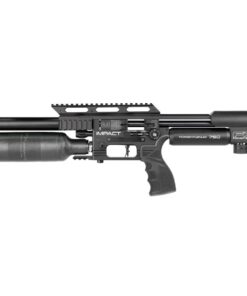
Among fx air rifles, the Impact family remains particularly recognizable. Searches frequently include fx impact, f x impact, fx impact m4, fx m4, impact m4 air rifle, and impact m4 500mm when comparing current configurations. The modular design philosophy associated with the Impact platform has helped make the fx air rifle range popular among shooters who appreciate adjustability and configurable PCP systems.
Earlier generations remain widely researched as well. The fx impact m3, impact m3, fx impact mk3, fx m3, and fx m3 airgun continue to attract attention from owners comparing generations or researching replacement components.
Caliber-specific searches include fx impact m3 .22cal air rifle, fx impact m3 .22cal air rifle. 600mm barrel, and the more general fx impact m3 air rifle. People comparing international pricing may also search fx impact m3 precio, fx impact m3 precio en usa, or fx impact m3 price before checking local regulations, specifications, and availability.
Beyond the Impact series, the FX catalog includes several distinctive designs. The fx leopard and fx leopard airgun are frequently researched alongside fx leopard .22 pcp specs by users interested in specifications and configuration details.
Other notable searches include fx drs, fx drs tactical, fx drs classic, and fx drs pro. These terms reflect interest in the different DRS configurations and their intended shooting styles.
The wider FX family also includes models such as the fx king, fx wildcat, fx panthera, and fx dreamline. Collectively, these platforms demonstrate the variety available to anyone researching a premium pcp air rifle, pellet rifle, or configurable precision air gun.
Some enthusiasts also search fx outdoors when researching outdoor shooting equipment and related products, while marketplaces and information sources such as guns.com may appear during broader online research.
Understanding Pellet Guns and PCP Air Rifles
A traditional pellet gun uses shaped pellets rather than conventional firearm ammunition. The broader term pellet guns can describe spring-powered, CO₂-powered, pneumatic, and PCP platforms.
A PCP air rifle stores compressed air inside a reservoir. This system can provide consistent pressure across multiple shots depending on the rifle’s regulator, reservoir capacity, caliber, and power configuration.
For shooters comparing ammunition sizes, .177 caliber remains one of the most common options. Larger configurations are also available, including the increasingly searched 30 cal air rifle category.
Some users accidentally search pallet gun when looking for pellet-powered equipment. Regardless of terminology, specifications such as energy output, caliber, barrel length, intended range, and local legal requirements should always be reviewed before use.
The practical range of air rifle platforms varies significantly. Pellet weight, velocity, environmental conditions, barrel design, optics, and shooter technique can all affect useful range and accuracy.
Hatsan Air Rifle and PCP Platforms
The hatsan air rifle lineup covers traditional spring-powered designs as well as modern PCP systems. Searches such as hatsanusa, hatsan usa, hatsan air guns, and hatsan pcp are commonly used by enthusiasts researching the company’s models.
One of the most recognizable platforms is the hatsan blitz. Search variations include hatsun blitz, hatzan blitz, hatsan blitz full automatic, hatsan blitz 30 cal, and hatsan blitz .30 cal. Specifications and legal classifications can vary by market, so owners should verify the rules applicable in their jurisdiction.
Another frequently researched model is the hatsan model 95, also searched as hatsan mod 95 and mod 95. This traditional air rifle platform remains familiar to shooters interested in conventional stock designs.
The hatsan 125 is another established model, while the hatsan 135 family attracts shooters researching powerful spring-piston platforms. Related searches include hatsan 135 vortex air rifle, hatsan 135 carnivore, and hatsan big bore carnivore rifle.
Hatsan Sortie, BullBoss and Bullpup Designs
Compact and semi-automatic PCP designs form another part of Hatsan’s catalog. The hatsan sortie is commonly researched alongside hatsan sortie tact, hatsan sortie tact semi-auto pcp, and hatsan sortie accessories.
Bullpup enthusiasts may encounter the hatsan bullboss, bullmaster, and hatsan hercules bully. Their compact layouts are designed to reduce overall length while maintaining useful barrel dimensions.
Other PCP models include the hatsan flash, hatsan flashpup qe, and hatsan invader. These rifles provide additional choices for people comparing conventional and bullpup PCP configurations.
Hatsan Hercules, Piledriver and Large-Caliber Platforms
For people researching larger airgun platforms, hatsan hercules and hatsan piledriver often appear in search results. Large-bore air rifles differ considerably from standard .177 and .22 pellet rifles in projectile size, power output, air consumption, and intended application.
The hatsan harpoon is associated with specialized projectile launching, while an arrow launcher represents another distinct air-powered category. Such equipment can be subject to different legal rules depending on location, so local regulations should be checked before ownership or use.
Additional Hatsan Models
The Hatsan catalog extends well beyond its best-known rifles. The hatsan airtact and hatsan airtact air rifle provide another entry point into the brand’s conventional rifle selection.
Other searches include hatsan zada, hatsan neutron star, hatsan factor rc, hatsan velox, and hatsan jet 2. Each platform serves a somewhat different role, making specifications such as caliber, reservoir capacity, operating system, barrel configuration, and overall dimensions important comparison points.
Shoppers researching discounted equipment may also encounter hatsan refurbished listings or broader searches for refurbished air rifles. Condition, warranty coverage, seals, regulators, reservoirs, and service history should be checked carefully when evaluating previously used or factory-refurbished equipment.
Airgun Optics, Pellets and Accessories
Accessories can significantly affect how an air rifle is configured. A compact 4×20 optic may suit basic shooting applications, while more advanced PCP rifles are frequently paired with adjustable optics.
Pellet choice also matters. Products such as h&n field target trophy bleifrei provide an option for shooters specifically researching lead-free projectile designs. Pellet diameter, weight, head size, and barrel compatibility should all be considered when evaluating accuracy.
Terms such as econ ii may also appear when researching airgun-related equipment and accessories. Compatibility should always be verified against the exact manufacturer, model, and specification rather than relying solely on a product name.
Comparing FX and Hatsan Air Guns
FX and Hatsan approach the modern air rifle market from different directions. FX is particularly well known for highly configurable PCP platforms such as the Impact, Panthera, Wildcat, Dreamline, Leopard, DRS, and King. Hatsan, meanwhile, maintains an exceptionally broad range spanning spring-powered rifles, PCP systems, bullpups, semi-automatic platforms, and larger-caliber airguns.
Whether researching an FX Impact M3, FX Impact M4, FX DRS, Hatsan Blitz, Hatsan Sortie, Hatsan Hercules, or another platform, specifications should be compared carefully. Caliber, operating pressure, reservoir capacity, barrel length, projectile compatibility, optics mounting, overall dimensions, energy output, and regional legal requirements can all influence which configuration is appropriate for a particular lawful sporting or target-shooting application.
Calibres, FAC Power Levels, and Accessories for the FX Impact M4 Copper Extended
A wide projectile range is supported by the FX Impact M4 Copper Extended, and legal power bands are therefore matched to local FAC or licence rules with care. Consequently, pellets and slugs from .22 through .35 are accommodated by the 800 mm Superior Heavy STX liner, while modular probes, magazines, and transfer ports are exchanged so that airflow remains appropriate. Moreover, inclusive shooting is encouraged because left- and right-handed users share the same reversible lever, and responsible ownership is expected wherever energy limits apply.
Calibres That Are Offered on the Extended Copper Platform
An Extended barrel is typically catalogued in four practical calibres. Accordingly, magazine capacity, approximate shot count, and maximum published FAC energy are summarised below. Actual results remain dependent on projectile mass, regulator setting, hammer preload, valve opening, and ambient temperature.
- .22 / 5.5 mm is favoured when a flat trajectory and a long shot string are required. A 28-round magazine is supplied, energy of up to 117 J (87 ft-lbs) can be reached with slug kits, and roughly 330 regulated shots per 250-bar fill may be observed on efficient tunes.
- .25 / 6.35 mm is selected when mid-weight slugs and pest work are combined. A 25-shot magazine is fitted, energy of up to 135 J (100 ft-lbs) is quoted at FAC settings, and about 160 shots per fill are commonly recorded.
- .30 / 7.62 mm is chosen when heavier slugs and longer hunting ranges are intended. A 23-round magazine is used, energy of up to 169 J (125 ft-lbs) is listed, and approximately 105 shots can be expected under similar conditions.
- .35 / 9 mm is reserved for maximum FAC impact. An 18-shot magazine is carried, energy of up to 211 J (156 ft-lbs) is cited with a slug power kit, and around 45 high-power shots may be delivered from the 580 cc cylinder.
A dual-hole transfer port is frequently incorporated so that pellet or slug airflow can be optimised after a liner or probe change. Furthermore, the entire barrel assembly can be removed, so that a different calibre or twist rate is installed without the receiver being replaced. Therefore, a single chassis can serve target days and hunting seasons alike.
FAC, Legal Limits, and Power That Must Be Confirmed
Power figures above represent maximum published FAC outputs that are achieved with slug ammunition, an appropriate power kit, and the 800 mm barrel. Sub-12 ft-lb or other restricted markets are served only when the rifle is supplied or retuned within those limits; those restricted configurations are not assumed here. Consequently, local airgun law, FAC paperwork, and transport rules must be verified before any high-energy setup is ordered or used.
Consistency is protected by the AMP brass-piston regulator, which is adjusted externally to a working pressure of up to approximately 170 bar while the bottle is filled to 250 bar. Meanwhile, the Power Plenum 750 holds a regulated volume of about 75 cc behind the valve, so that heavy slugs receive a stable air charge. In addition, hammer-spring preload is refined by Quick Tune macro and micro wheels, and valve tension is altered by an external adjuster. As a result, velocity can be held inside a preferred window—often cited by tuners as roughly 850–950 fps for many slug combinations—without the action being stripped.
A safe backstop must always be confirmed, eye and ear protection should be worn, and ammunition that matches the liner’s twist must be selected. Inclusive clubs and family ranges benefit when these habits are shared, because every shooter is protected by the same discipline.
Accessories That Complete a Ready-to-Shoot Package
A conversion-focused kit is assembled around the Copper Extended so that the rifle can leave the case and be zeroed with minimal extra shopping. Typical factory inclusions and popular upgrades are listed as follows:
- Hard case with custom foam is provided so that the 1120 mm platform is transported without the copper finish being marked.
- Rotary magazine matching the chosen calibre is included; spare magazines are recommended so that strings are not interrupted.
- Foster quick-disconnect fill adapter is supplied for 250-bar top-ups from a compressor or tank.
- 1/2×20 UNF muzzle thread accepts a dedicated FX moderator or aftermarket brake, and the integral shroud already reduces report.
- Sliding 30 MOA Picatinny rail on the thickened dovetail top plate accepts scopes of every eye relief, including compact thermals.
- UG1 grip and adjustable recoil pad remain on the rifle; aftermarket AR-pattern furniture can be fitted if a different palm swell is preferred.
- Slug power kit, high-flow probe, and matching STX Heavy liner are added when maximum FAC energy is lawfully required.
- Bipod, bag rider, or Picatinny accessory rail sections are mounted underneath so that a stable rest is created for long-range work.
- Dual pressure gauges already display bottle and regulator values; a separate chronograph is still advised whenever a new projectile is introduced.
- Spare seals, probe, and liner tools are kept on hand because modularity is only useful when parts can be swapped in the field.
Optics are not included with the rifle, so a scope, rings, and a level should be budgeted separately. Likewise, a quality compressor or large air tank is required if frequent 250-bar fills are planned. Therefore, a complete station—rifle, air, optic, rest, and legal paperwork—is prepared before the first magazine is loaded.
Collectively, calibres, FAC power, and accessories are arranged so that the FX Impact M4 Copper Extended can be specified with clarity. A lawful energy band is chosen first, a matching liner and magazine are fitted next, and supporting accessories are added last. In this way, precision is shared across disciplines, and every responsible shooter is given a platform that can be tuned, documented, and enjoyed within the rules that apply.
Practical Use Scenarios for Long-Range Modular PCP Shooting
A single extended copper-finished platform is pressed into many roles, and each role is served when barrel length, regulated air, and an 800 mm heavy liner are allowed to work together. Consequently, field work, range sessions, and shared club days are all supported without a second rifle being purchased. Moreover, left- and right-handed shooters are welcomed by a reversible side lever and an ambidextrous grip, so that participation is not limited by handedness. Therefore, practical use is described below as a set of scenes rather than a single fixed purpose.
Dawn Pest Control from a Supported Rest
Quiet hours on a farm boundary are often used for humane pest work, and a stable rest is preferred because the overall length of the extended barrel rewards a bipod or bags. Initially, a mid-weight slug in .25 or .30 is selected so that energy is delivered within a lawful FAC band. Subsequently, regulator pressure is confirmed on the lower gauge, and hammer preload is left at a previously logged setting so that velocity remains inside a known window. Meanwhile, a magazine is loaded with identical projectiles so that point of impact is not shifted mid-string.
A first ranging shot is taken only after a safe backstop has been verified and after livestock, paths, and neighbouring property have been checked. Thereafter, follow-up shots are spaced so that the plenum can refill and so that the bottle pressure is watched. In addition, a moderator on the 1/2×20 thread is left in place so that disturbance to the holding is reduced. As a result, a short, ethical sequence can be completed before the morning breeze rises.
Inclusive teams benefit when two people share the same rest: one observes wind and fall of shot, while the other maintains a consistent cheek weld on the adjustable pad. Likewise, a spare magazine is kept ready so that a second person can take a turn without the rifle being unloaded on the ground. Safety glasses and hearing protection are worn by everyone present, because shared work still requires shared precautions.
Mid-Morning Slug Testing at Known Distances
A measured range is next used so that slugs of different masses can be compared without guesswork. First, a chronograph is placed so that muzzle velocity is recorded rather than assumed. Then, groups are fired at 50, 75, and 100 metres from the same bags, because the heavy liner was designed to stabilise longer projectiles. Consequently, vertical stringing is noted against regulator setting and against hammer-spring clicks.
If a group opens, valve opening is reduced by a small external adjustment rather than by an immediate change of ammunition. Conversely, if impact is low and velocity is slow, a single macro click on the Quick Tune wheel is applied and a fresh five-shot group is fired. Transition words such as “thereafter” and “meanwhile” describe the process because each change is isolated. In this way, a written dope card is built that later travels to the field.
Club members of mixed experience are included when the same card is photocopied and when the trigger is left in a slightly longer hunting profile for newer shooters. A match-crisp break can still be restored with one screw when a more practised user takes the bench. Thus, one rifle serves a morning of tuition without furniture being swapped.
Afternoon Field-Target Practice on Mixed Lanes
Field-target lanes mix close reducers with longer knockdowns, and a sliding 30 MOA rail is therefore used so that a compact scope can be moved for comfortable eye relief. A lighter .22 pellet string is often chosen for this work because a flatter trajectory and a longer shot count from the 580 cc bottle are both useful. Meanwhile, the regulator is lowered so that air is conserved across a full course of fire.
Kneeling and standing shots are practised from the same pad height that was set at the bench, because consistency of mount matters more than raw energy. Additionally, the reversible lever is set to the shooter’s dominant side so that cycling does not break position. Wind flags are read between shots, and hold-over is applied from the card that was written in the morning.
Inclusive squads rotate the rifle among members after each lane so that fatigue is shared and so that no one is left watching from the fence. A switch-style safety is applied whenever the muzzle leaves the firing point. Consequently, a social afternoon remains disciplined without atmosphere being lost.
Evening Benchrest and Group Work Under Lights
When light fades, a heavier rest and a higher-magnification optic are preferred. The thickened top plate reduces flex under a large scope, and the copper finish is simply wiped so that glare is controlled. Five-shot groups at 75 metres are fired after the barrel has been allowed to cool, because heat soak from a long slug string can wander impact. Thereafter, seating depth and slug meplat are compared, yet only one variable is changed at a time.
A dual-gauge glance confirms that bottle pressure has not dropped into an unregulated region. If it has, a Foster fill is taken to 250 bar before another group is started. Accessories such as a bag rider and a spirit level on the rail are used so that cant is removed from the equation. In this manner, mechanical potential of the liner is separated from shooter error.
New benchrest guests are coached in passive language that avoids blame: “the group is tightened when the bag is loaded the same way each shot.” Inclusive language keeps the session open to anyone who is willing to log results rather than chase a single lucky hole.

Seasonal Hunting Walks Where Weight and Balance Matter
A farm walk is different from a bench. The 3.35 kg mass of the extended configuration is noticeable after an hour, so a sling stud or a light harness is added before departure. Calibre choice is reviewed against typical quarry size and against local law; a .25 slug at a moderate FAC tune is often sufficient when placement is guaranteed. The adjustable pad is raised so that a standing mount can be found quickly if a shot presents from a gateway.
The rifle is carried muzzle-down or in a sleeve until a safe shooting lane is confirmed. Magazines remain loaded only when a shot is imminent. After a successful, legal harvest, the action is made safe and the bottle pressure is noted so that a refill can be planned before the next outing. Shared hunts remain inclusive when a companion carries the spare air and when both parties agree the backstop before anyone mounts the rifle.
Training Days for Mixed-Ability Groups
A training syllabus is built around repetition rather than maximum energy. The trigger is set to a predictable two-stage pull, the lever is demonstrated on both sides, and each student fires the same five-shot drill from bags. Transition between students is made by opening the safety and by showing an empty chamber, so that confidence is transferred with the rifle.
Younger adult learners and older returning shooters are given the same briefing: eye protection, muzzle awareness, and a written log of regulator and hammer settings. No one is excluded because the grip and lever can be reversed in minutes. Spare magazines keep the line moving. A conversion-minded host also shows how a liner swap is booked with a gunsmith rather than improvised at the range, so that curiosity is directed toward lawful modularity.
Weather, Wind, and Seasonal Adjustments
Cold mornings thicken grease and can slow hammer fall; a slightly higher preload click is sometimes logged for winter only. Hot afternoons raise bottle pressure after a vehicle ride, so a brief cool-down is allowed before the first group. Crosswinds on an exposed dam wall are treated with hold-off rather than with a sudden power increase, because extra velocity can push a slug toward the transonic region and open groups.
Rain is managed by a sleeve and by a wipe of the copper surfaces after the session. Condensation inside a moderator is checked so that first-shot shift is not blamed on the regulator. Inclusive clubs post a simple weather note on the dope board so that every member starts from the same information.
Maintenance Between Scenarios
After each type of use, pellets or slugs are cleared, the magazine is emptied, and the Foster port is capped. A light barrel wipe is performed if lead or alloy residue is expected. Seals are inspected visually; replacement is scheduled rather than forced in the field. The hard case foam is checked so that the long barrel is supported on the journey home.
Accessories travel in a labelled pouch: spare magazine, fill probe, hex keys for the rail, and a printed settings card. That card lists calibre, projectile, regulator reading, hammer clicks, and date. Consequently, the next scenario begins where the last one ended, whether the next user is the same person or a club-mate.
A Closing Picture of Shared Practical Use
Across dawn pest work, slug testing, field-target lanes, lighted benchrest, seasonal walks, and mixed training days, the same architecture is reused: a long heavy liner, a large regulated plenum, an externally tuned hammer and valve, and furniture that can be reversed. Power is never assumed to be unlimited; it is matched to law, to quarry, and to the backstop that has been verified. Accuracy is treated as a logged relationship between air, projectile, and rest rather than as a slogan.
Inclusive language is kept because the platform is built to be handed across a bench. A reversible lever, an ambidextrous grip, and a sliding rail mean that a left-handed guest is not asked to “make do.” Conversion is invited not by urgency but by completeness: when a lawful calibre is chosen, when accessories are packed, and when a dope card is shared, the next outing is already half prepared. In that sense, practical use is less a single story than a calendar of scenes in which the same rifle is asked to do honest, documented work—and is returned to the case ready for whoever is next to take a careful, legal shot.



Reviews
There are no reviews yet.