Petru M18 PCP Air Rifle – Refined PCP Performance and Practical Design
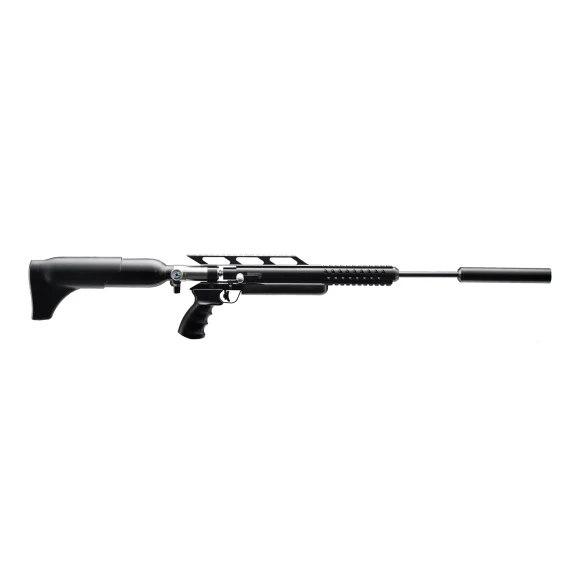
The Petru M18 PCP Air Rifle has been designed for shooters who appreciate the smooth operation, controlled handling, and convenience associated with modern pre-charged pneumatic air rifles. A practical balance between performance and usability has been created, while a distinctive sporting appearance has also been maintained. Consequently, the rifle can be considered by enthusiasts who want an adaptable PCP platform for recreational shooting, range sessions, target practice, and other lawful airgun activities.
Rather than being dependent on the heavy mechanical movement associated with some traditional airgun systems, compressed air is used to power each shot. As a result, a smoother shooting experience can be achieved. Furthermore, movement during the firing cycle is reduced, which can help the shooter maintain a stable shooting position and develop more consistent technique.
For buyers searching for a capable PCP platform with modern styling, the Petru M18 PCP Air Rifle offers an appealing combination of convenience, ergonomics, and straightforward operation.
Why Choose the Petru M18 PCP Air Rifle?
A modern air rifle should not simply be judged by appearance. Instead, attention should also be given to balance, repeatability, comfort, build quality, and everyday practicality. With the Petru M18 PCP Air Rifle, these characteristics have been brought together in a platform intended to provide an enjoyable shooting experience.
Because a pre-charged pneumatic system is used, the rifle can be prepared through an appropriate compressed-air filling system before shooting begins. Once filled correctly, multiple shots can normally be taken before another refill is required, although actual shot count will depend on the specific configuration, calibre, power setting, fill pressure, environmental conditions, and ammunition being used.
Moreover, the absence of a conventional spring-powered firing cycle means that substantial spring recoil is avoided. Therefore, sight alignment can be maintained more naturally while shooting technique is being developed.
Key Product Highlights
- PCP operating system for smooth and controlled shooting
- Modern sporting configuration suited to contemporary airgun users
- Reduced firing-cycle movement compared with traditional spring-powered designs
- Comfortable handling characteristics for extended range sessions
- Suitable for optical sight setups where compatible mounting equipment is provided
- Practical PCP platform for recreational and target shooting
- Reusable air-powered system supported by suitable charging equipment
- Versatile design that can be adapted to different shooting preferences
- Straightforward maintenance requirements when normal PCP care procedures are followed
- Balanced combination of performance, appearance, and usability
Smooth PCP Shooting Experience
One of the greatest advantages offered by the Petru M18 PCP Air Rifle is found in its pre-charged pneumatic operating principle. Compressed air is stored within the rifle’s air system and is released in a controlled manner when each shot is taken.
Consequently, the dramatic mechanical movement generated by a large spring is eliminated. A calmer shooting cycle is therefore experienced, while follow-through can be practiced more effectively.
Additionally, PCP technology has become popular among target shooters because repeatable shooting characteristics can be provided when the rifle is correctly filled, maintained, and paired with appropriate pellets.
However, the recommended fill pressure and operating procedure should always be checked against the supplied manufacturer’s documentation before the rifle is charged.
Designed Around Comfortable Handling
Good shooting performance is influenced heavily by ergonomics. For that reason, comfortable contact between the shooter and the rifle should always be considered.
The Petru M18 PCP Air Rifle has been developed around a modern sporting format in which stability and practical handling are emphasized. When a suitable stance is adopted, the rifle can be supported naturally while the sights or optic are aligned with the target.
Furthermore, because unnecessary recoil movement is minimized by the PCP system, less effort has to be spent controlling the rifle immediately after the trigger is operated. Instead, attention can be concentrated on breathing, trigger technique, sight picture, and follow-through.
This characteristic can be particularly useful during recreational target sessions, where consistency is often valued more than rapid shooting.
Modern Styling With Functional Purpose
A contemporary appearance has been incorporated into the Petru M18 PCP Air Rifle, although the design is intended to provide more than visual appeal.
Different areas of the rifle are arranged so that handling can remain practical while accessories and sighting equipment may be accommodated where compatible. Therefore, the rifle can be configured according to the shooter’s intended setup rather than being treated as a completely fixed platform.
A suitable optic, for example, can be selected for target shooting where local regulations permit. Equally, the rifle may be kept relatively simple by users who prefer a lighter and less complicated setup.
Because individual configurations can vary, the mounting interface supplied with the exact rifle should be confirmed before scopes, mounts, or other accessories are ordered.
Consistency for Target and Recreational Shooting
Accuracy is influenced by far more than the rifle alone. Pellet selection, air pressure, shooting technique, sight configuration, weather conditions, target distance, and maintenance can all affect results.
Nevertheless, a stable PCP platform can provide a strong foundation from which good shooting habits may be developed.
With the Petru M18 PCP Air Rifle, a smooth firing cycle is provided so that unnecessary disturbance is minimized. Consequently, the shooter’s technique can be repeated more easily from one shot to the next.
For the best results, several suitable pellet types can be tested safely on an approved range. Once a pellet that performs consistently has been identified, sight adjustments can then be made around that ammunition.
Practical Advantages of PCP Power
Compared with many traditional spring-powered air rifles, several practical benefits are associated with PCP technology.
First, the firing cycle is generally smoother because a large internal spring does not have to move rapidly during the shot. Secondly, repeat shots can be made without having to compress a heavy mainspring manually. Additionally, reduced mechanical movement can make optical sight use more comfortable.
However, charging equipment will be required. Depending on the equipment supported by the specific rifle, an appropriate PCP hand pump, diving cylinder, or compressor system may be used.
All filling equipment should be correctly rated for the pressure involved, and manufacturer instructions should always be followed.
Built for Different Experience Levels
The Petru M18 PCP Air Rifle can appeal to shooters at several experience levels.
For newer PCP users, an opportunity is provided to become familiar with compressed-air rifle operation, filling procedures, pellet selection, sight adjustment, and basic maintenance.
Meanwhile, more experienced shooters may appreciate the M18 as a platform that can be configured around their preferred optic and shooting style.
Regardless of experience, safe handling must always remain the priority. The rifle should be treated responsibly, stored securely, pointed only in a safe direction, and used exclusively where airgun shooting is lawful and permitted.
Maintenance and Long-Term Care
Reliable PCP performance is supported by correct maintenance.
The exterior should be kept clean and dry, while unnecessary contamination should be prevented from entering the filling system. In addition, seals and other pressure-related components should be inspected according to manufacturer recommendations.
Only compatible lubricants should be used where lubrication is specifically required. Petroleum-based products or unsuitable oils should never be introduced into high-pressure air systems.
Furthermore, the rifle should be stored securely in accordance with applicable local regulations. Proper storage not only protects the equipment but also helps prevent unauthorized access.
Who Is the Petru M18 PCP Air Rifle For?
The Petru M18 PCP Air Rifle can be considered by enthusiasts seeking a contemporary PCP platform for controlled recreational shooting and target practice.
It may particularly suit shooters who value:
- Smooth pre-charged pneumatic operation
- Reduced firing-cycle movement
- Comfortable modern ergonomics
- Compatibility with a personalized sighting setup
- Convenient repeat-shot shooting
- A contemporary sporting appearance
- Straightforward PCP maintenance
- A platform suitable for developing consistent shooting technique
Ultimately, a modern balance between practicality and shooting enjoyment is provided by the Petru M18 PCP Air Rifle. Its PCP operating principle allows a controlled shooting cycle to be experienced, while its sporting configuration makes it suitable for a variety of lawful recreational environments.
Whether it is selected for regular range practice, informal target shooting, or as an addition to an existing airgun collection, the Petru M18 PCP Air Rifle offers the core advantages that have made PCP air rifles increasingly popular. With suitable ammunition, appropriate charging equipment, careful maintenance, responsible storage, and correct setup, the rifle can be enjoyed as a practical and versatile airgun platform for years to come.
Snowpeak Airguns, PCP Rifles, Air Pistols and Umarex Airguns
For shooters researching Snowpeak airguns, Snowpeak Sports, and the wider Snowpeaks product range, there are many PCP rifles, air pistols, and shooting accessories to consider. Popular searches include the Snowpeak AP900, Snowpeak AP900B PCP air rifle, Snowpeak MAX 1, Snowpeak MAX 1 price, Snowpeak PP750, PP750, Snow Peak PP750, and PP750 air pistol. Buyers also regularly compare models such as the Snowpeak P35, P35, P 35, PCP P 35, Snowpeak P35X, P35X, P35X PCP, and Snowpeak P35 vs P35X.
Other Snowpeak models attracting attention include the Snow Peak PP20, Snowpeak PP20, Snowpeak M25, M25 rifle, M-25, M25 weapon, Snowpeak M60, Snowpeak M60B, M 60B, rifle M60, rifle M50, and M50 rifle. Searches such as Snow Peak brand origin are also common among buyers who want to understand the manufacturer before choosing a rifle or pistol.
Snowpeak PCP Models and Related Airgun Searches
The PCP category covers everything from compact pistols to full-size hunting and target rifles. Searches frequently include PR900 Gen 3, CR650, SR 1000X, T Rex 6000, and pistolet PCP Arcea-Snowpeak Onix Sport. People comparing pneumatic platforms may also search what is a PCP airgun, air gun, air rifle, pellet pistol, air gun accessories, 9mm pellet, and pellet 9mm.
Some search phrases overlap with firearm terminology even when shoppers are researching airgun products. These include rifle M60, how much did the M60 weigh, rifle M50, M50 rifle, M25 weapon, and snowfall gun. Therefore, model specifications should always be checked carefully so that a historical firearm search is not confused with a modern sporting airgun product.
Umarex Airguns, Air Rifles, Pistols and PCP Platforms
Alongside Snowpeak products, Umarex USA, UmarexUSA, Umarex airguns, and Umarex air rifles are widely searched by recreational shooters, target shooters, and PCP enthusiasts. The Umarex range includes PCP rifles, CO₂-powered platforms, break-barrel pistols, BB guns, airsoft replicas, and large-caliber airgun systems.
Popular PCP searches include Umarex Notos, Umarex Notos Carbine, Umarex Gauntlet, Umarex Gauntlet 2, Umarex Gauntlet 30, Umarex Zelos, Umarex Origin, Umarex Komplete, and Umarex Komplete NCR .22. Hunters researching larger airgun platforms may also encounter the Umarex Hammer, Umarex Hammer .50 caliber, Umarex Hammer Carbine, Umarex Primal 20, and Umarex AirSaber.
Umarex Pistols, BB Guns and T4E Models
For handgun-style platforms, popular searches include Umarex BB gun, BBgun, BB gun pistol, metal BB gun, Umarex TR50, Umarex HDR 50, Umarex T4E, Umarex T4E Smith, Umarex Smith, and Umarex P2P DR50 how many joules.
Glock-style replicas remain another major category. Search terms include Glock BB gun, Glock 19 BB gun, Umarex Glock 19, Umarex Glock 19X, Umarex Glock 19 Gen3 .177 caliber BB gun air pistol, Umarex Glock 17, Umarex Glock 17 Gen 5, Umarex Glock, airsoft Glock, airsoft Glock 19, Glock 17 airsoft, and Glock airsoft gun.
Other replica and recreational searches include Umarex MP40, Umarex MP5, Umarex Legends, Umarex HK Heckler, Umarex shotgun, and airsoft pistol.Umarex DX17.
Break-Barrel and Sporting Umarex Airguns
Shooters looking for spring or gas-piston platforms frequently research the Umarex Trevox, loading Umarex Trevox break barrel .177, Umarex pistol break barrel, Umarex Fusion 2, Umarex Synergis Elite, and Amazon Umarex Browning 800 Express. These platforms provide alternatives for people who want an airgun without relying on a high-pressure PCP charging system.
Additional searches across the Umarex catalog include Umarex H, while broader terms such as air rifle, pellet pistol, air gun, and air gun accessories help buyers compare platforms, ammunition, optics, filling equipment, targets, cases, and other shooting equipment.
Whether the focus is a Snowpeak M60, Snowpeak M25, Snowpeak P35X, Snowpeak PP750, Snowpeak MAX 1, Umarex Notos, Umarex Gauntlet 2, Umarex Origin, or Umarex Hammer Carbine, buyers should compare caliber, operating system, power level, dimensions, intended use, and local regulations before selecting an airgun.
Petru M18 PCP Air Rifle Calibres, FAC, Power and Accessories
The Petru M18 PCP Air Rifle is offered as a versatile pre-charged pneumatic platform, with different calibre and power configurations being supplied according to market and local regulations. Consequently, buyers should always select the exact version that matches their intended lawful use and the licensing rules that apply where they live.
A regulated PCP operating system is used on the M18, while a substantial 350cc air reservoir is incorporated into the design. Depending on the regional specification, maximum charging pressure is listed differently by retailers, so the documentation supplied with the individual rifle should always be followed rather than assuming that every M18 has identical operating limits.
Available Petru M18 PCP Air Rifle Calibres
Several calibre choices have been associated with the M18 platform. Current Arcea-Snowpeak listings show 4.5 mm, 5.5 mm, and 6.35 mm options, while some individual retailers stock only the 4.5 mm and 5.5 mm configurations.
4.5 mm (.177) is generally chosen by target-oriented shooters who value a relatively flat trajectory and widely available pellet selection. Because lightweight .177 pellets are commonly used for paper-target practice and recreational shooting, this calibre can provide an accessible introduction to PCP ownership.
Meanwhile, 5.5 mm (.22) provides a larger pellet diameter and is another widely available configuration. It is frequently selected by shooters who prefer the characteristics of a heavier projectile while continuing to benefit from the smooth firing cycle offered by a PCP system.
In addition, 6.35 mm (.25) is listed for the M18 by some official-market distributors. Availability, however, can vary significantly between countries. Therefore, buyers should confirm the calibre actually offered by their retailer before placing an order.
Power and Regulated PCP Performance
Power specifications for the Petru M18 PCP Air Rifle vary according to regional configuration.
For example, some European-market models are listed at below 19.9 joules, while another Arcea listing specifies power below 24 joules. This variation is important because airgun legislation and commercial configurations differ between jurisdictions.
The manufacturer’s M18 specification table also lists nominal velocities of approximately 1,000 fps for 4.5 mm, 900 fps for 5.5 mm, and 850 fps for 6.35 mm, although actual velocity will depend on the exact factory configuration and ammunition being used.
A regulator is incorporated into the platform. Therefore, air delivery can be managed more consistently across the usable pressure range. This regulated design is particularly useful for target shooting because repeatability between shots is one of the principal advantages sought from a modern PCP rifle.
Nevertheless, velocity and energy should never be assumed from calibre alone. Pellet weight, factory setup, air pressure, and regional specification all influence measured performance.
FAC and Licensing Considerations
The term FAC generally refers to a Firearm Certificate in jurisdictions such as Great Britain, where higher-powered air rifles can fall under firearm licensing requirements.
Whether a particular Petru M18 PCP Air Rifle requires an FAC or another licence depends on its factory power level and the law applicable in the buyer’s location. Therefore, there is no universal “FAC status” that can accurately be assigned to every M18 worldwide.
A sub-20-joule European model, for example, may be sold under one regulatory category, while a higher-power version supplied elsewhere may be treated differently. Buyers should consequently check current local legislation before purchasing, possessing, transporting, or using any air rifle.
Factory power settings should also be left in the configuration permitted by applicable law and manufacturer documentation.
Air System and Reservoir
A major feature of the M18 is its 350cc compressed-air reservoir. Additionally, the platform is fitted with pressure monitoring equipment and a regulator. Arcea’s specification describes two pressure gauges: one monitors reservoir pressure, while the other relates to the regulated low-pressure chamber.
A Foster-style filling connection is also listed on the Arcea version. Consequently, compatible high-pressure PCP charging equipment can be used when the rifle is filled according to the manufacturer’s instructions.
Depending on shooting conditions and factory configuration, some distributors advertise approximately 100 optimal shots from a fill, although real-world shot count will vary with calibre, regulator setup, power level, temperature, and the pressure range being used.
Compatible Accessories for the Petru M18
A useful accessory system has been incorporated into the Petru M18 PCP Air Rifle. A 21 mm mounting rail is specified for optical sights, allowing compatible equipment to be installed without fundamentally changing the rifle.
Popular compatible accessories may therefore include:
- PCP-rated rifle scopes with appropriate mounts
- Red-dot sights where suitable for the intended range
- Compatible 21 mm Picatinny mounts
- PCP hand pumps
- High-pressure compressors designed for PCP equipment
- Approved high-pressure air cylinders and filling adapters
- Foster-compatible filling equipment
- Pellet storage cases
- Protective rifle cases
- Cleaning and maintenance equipment
- Manufacturer-compatible seal kits
- Shooting rests and target equipment
A front accessory rail is also listed on the Arcea configuration, increasing the flexibility of the platform.
Building a Practical Petru M18 Setup
For most recreational target shooters, a straightforward setup can be highly effective. The Petru M18 PCP Air Rifle, a suitable optic, correctly matched pellets, reliable charging equipment, and a protective case can provide the core equipment required for regular range use.
Because specifications can differ between markets, accessories should always be selected according to the exact rifle supplied. Scope mounts must match the rail, filling equipment must be pressure-rated appropriately, and replacement seals or service parts should correspond to the correct M18 variant.
Ultimately, the combination of multiple calibre choices, regulated PCP operation, a 350cc reservoir, adaptable accessory mounting, and market-specific power configurations makes the Petru M18 a flexible platform for lawful recreational and target shooting. Properly matched accessories can further improve convenience, while responsible attention to local licensing requirements ensures that the rifle is owned and used within the relevant legal framework.
Frequently Asked Questions
What type of air rifle is the Petru M18?
The Petru M18 is a pre-charged pneumatic air rifle. Instead of relying on a spring-powered mechanism, compressed air is stored inside the rifle and released during each shot. Because of this operating system, the firing cycle is generally smoother and produces less mechanical movement than a conventional spring-powered air rifle.
That smoother operation can make the rifle comfortable for recreational target shooting and range practice. Furthermore, a PCP design allows multiple shots to be taken from a properly charged air reservoir before another refill is required.
What calibres are available for the M18?
The M18 platform has been listed in several calibre options, including 4.5 mm (.177), 5.5 mm (.22), and 6.35 mm (.25). However, not every calibre is necessarily distributed in every country or through every retailer.
The .177 version is commonly associated with target shooting because of its relatively flat trajectory and broad pellet availability. Meanwhile, .22 provides a larger and heavier projectile option. The .25 version offers an even larger pellet diameter where that configuration is available.
Before ordering, buyers should confirm the exact calibre listed for the rifle being sold.
Is the M18 suitable for beginners?
It can be suitable for responsible beginners who understand basic airgun safety and have access to appropriate instruction or supervision.
PCP rifles are often appreciated because they do not produce the same firing-cycle movement as traditional spring-powered models. Consequently, beginners can concentrate more easily on sight alignment, trigger control, breathing, and consistent positioning.
However, additional equipment is normally required for filling the air reservoir. New PCP owners should therefore become familiar with safe charging procedures and the manufacturer’s instructions before using the rifle.
Is the M18 suitable for experienced shooters?
Yes. More experienced airgun users may appreciate the regulated PCP system, accessory compatibility, multiple calibre options, and potential for a customized sighting setup.
Experienced shooters may also benefit from experimenting with different compatible pellets to identify ammunition that provides consistent grouping in their particular rifle.
Because every air rifle can perform differently with different pellets, testing several quality options on an approved range can help determine the most suitable combination.
Does the M18 have a regulator?
Certain documented M18 configurations are supplied with a regulated PCP system. A regulator controls the pressure delivered from the main air reservoir to the firing system.
This helps provide more consistent air delivery over the usable pressure range. Consequently, velocity variation between shots may be reduced when the rifle is properly maintained and operated within its intended pressure range.
Nevertheless, owners should always consult the manual supplied with their particular rifle because specifications can vary between markets.

How large is the air reservoir?
Published specifications for the M18 commonly list a 350cc air reservoir.
A reservoir of this capacity provides a useful air supply for repeated shooting sessions. However, the actual number of shots available from each fill depends on several variables, including calibre, factory power level, regulator settings, pellet weight, environmental temperature, and the pressures at which shooting begins and ends.
Therefore, advertised shot counts should be viewed as approximate rather than guaranteed numbers.
How many shots can be taken from one fill?
Some market listings indicate that approximately 100 optimal shots may be possible under certain configurations. However, real-world results will vary.
A lower-power configuration may generally obtain more usable shots than a higher-power version because less compressed air is required for each discharge. Similarly, calibre and projectile weight can influence air consumption.
For the most accurate expectation, shooters should record their own results using the exact rifle, ammunition, and fill pressure recommended by the manufacturer.
What equipment is needed to fill the rifle?
A PCP rifle requires an appropriate source of high-pressure compressed air.
Depending on compatibility and manufacturer recommendations, filling may be completed with a PCP-rated hand pump, approved high-pressure air cylinder, or compressor specifically designed for PCP equipment.
All charging equipment must be rated for the required pressure. Furthermore, fittings and adapters should match the rifle’s filling system.
Ordinary workshop compressors are generally unsuitable because they are not designed to produce the pressures required by PCP air rifles.
Can a normal bicycle pump be used?
No. A standard bicycle pump is not designed for the extremely high pressures used by PCP air rifles.
Only equipment specifically intended and pressure-rated for PCP applications should be used. Using inappropriate charging equipment can damage components and create serious safety hazards.
The manufacturer’s filling instructions and pressure limits should always be followed.
Does the rifle come with a pressure gauge?
Some documented versions of the M18 incorporate pressure monitoring equipment. Certain configurations have been described with two gauges, allowing reservoir pressure and regulated-system pressure to be monitored.
This arrangement can make it easier for the owner to understand the condition of the compressed-air system.
Because equipment specifications can vary between distributors, the exact gauge arrangement should be confirmed from the product being purchased.
What type of scope can be fitted?
A compatible air-rifle scope can be fitted when suitable mounting hardware is used.
Published M18 configurations have been listed with a 21 mm rail, which is commonly associated with Picatinny-style accessories. Therefore, buyers should select mounts specifically compatible with the rail fitted to their rifle.
Scope size should also be chosen carefully. Excessively large optics can add unnecessary weight, whereas a moderate optic may provide a more balanced configuration for recreational target shooting.
Can a red-dot sight be used?
Yes, provided that the red-dot sight and mounting system are compatible with the rifle’s accessory rail.
A red-dot sight can be useful for shorter-range recreational shooting because a simple aiming point can be acquired quickly. Meanwhile, a magnified scope may be preferred when greater target detail is required.
The most suitable sight therefore depends on the intended use and shooting distance.
What pellets should be used?
Only pellets of the correct calibre should be used.
Within that calibre, shooters can test different reputable pellet designs and weights to determine which performs consistently in their individual rifle. Barrel characteristics and factory configuration can cause one pellet type to perform differently from another.
Rather than assuming that the most expensive or heaviest pellet will automatically provide the best results, systematic testing on a proper target range is generally more useful.
Is heavier ammunition always more accurate?
No. Projectile weight alone does not determine accuracy.
Accuracy is affected by pellet shape, manufacturing consistency, barrel compatibility, velocity, environmental conditions, sight setup, and shooter technique.
A medium-weight pellet may outperform a heavier option in one rifle, while another rifle may show different preferences. Consequently, grouping tests are usually the most reliable way of determining which ammunition works best.
Does the M18 have recoil?
A PCP rifle produces substantially less mechanical recoil than a spring-powered air rifle because there is no large mainspring and piston rapidly moving during the firing cycle.
Some movement will still occur because a projectile and compressed air are being discharged. However, the shooting experience is generally much calmer than with conventional spring-powered designs.
This reduced movement is one reason PCP rifles are popular among target shooters.
Is the rifle loud?
Sound levels depend on calibre, power configuration, ammunition, barrel system, and local specification.
A PCP rifle still produces an audible report when fired. Therefore, hearing protection may be appropriate depending on the shooting environment and applicable range rules.
Owners should also ensure that any sound-moderating equipment considered for use is lawful in their jurisdiction and specifically compatible with the rifle.
Is the M18 an FAC air rifle?
FAC status depends on the jurisdiction and the actual power output of the individual rifle.
In Great Britain, for example, air-rifle power limits determine whether a Firearm Certificate is required. Other countries apply entirely different rules.
Because M18 rifles may be supplied in different factory power configurations, the legal classification should always be checked using the exact specification being purchased and the current regulations applying in the buyer’s location.
Can the power be adjusted?
Some PCP platforms may contain adjustable components, but users should not alter factory settings unless doing so is specifically permitted by the manufacturer and applicable law.
Changing an air rifle’s output may affect reliability, warranty coverage, accuracy, air consumption, and legal classification.
Therefore, power-related servicing should generally be performed according to manufacturer procedures and, where appropriate, by a qualified airgun technician.
Is the M18 suitable for target shooting?
Yes. Recreational target shooting is one of the most natural applications for a regulated PCP rifle.
The smooth firing cycle can support repeatable technique, while compatible optical sights can assist with precise aiming. Furthermore, the availability of different calibre options allows shooters to select a configuration appropriate for their preferred type of range practice.
Safe backstops, approved shooting locations, and applicable range rules must always be observed.
How should the rifle be stored?
The rifle should be stored securely, unloaded, and inaccessible to unauthorized users.
A protective gun case or suitable secure storage system can help prevent damage from dust, moisture, and accidental impacts. Local laws may impose additional storage requirements, so owners should follow the regulations applicable in their jurisdiction.
Compressed-air storage recommendations from the manufacturer should also be followed.
Does a PCP rifle need regular maintenance?
Yes, although maintenance requirements are usually manageable.
The exterior should be kept clean and dry, while the filling connection should be protected from dirt and contamination. Seals should be inspected if leaks develop, and only lubricants specifically approved for high-pressure PCP systems should be used.
Using unsuitable petroleum-based oils around high-pressure compressed-air equipment should be avoided.
Routine inspection can help preserve reliability and extend service life.
What should I do if the rifle begins losing air?
If air pressure drops unexpectedly while the rifle is stored, a seal or another component within the air system may require inspection.
The rifle should not be repeatedly overfilled in an attempt to compensate for a leak. Instead, charging should be stopped and the manufacturer, retailer, or competent PCP technician should be consulted.
High-pressure systems should not be dismantled casually because residual pressure may remain inside them.
Can aftermarket accessories be installed?
Compatible accessories can generally be added where suitable mounting interfaces are available.
Popular options include scopes, red-dot sights, cases, shooting rests, pellet storage equipment, compatible filling adapters, and other range accessories.
However, compatibility should always be confirmed before purchase. Rail dimensions, mount height, fitting type, and physical clearance can differ between accessories.
Is a hand pump or compressor better?
Both options have advantages.
A PCP hand pump does not require electricity and can be convenient for occasional shooting. However, manually filling a relatively large air reservoir requires physical effort.
A PCP compressor can provide greater convenience for frequent users, although it normally costs more and requires correct operating procedures.
High-pressure cylinders are another option where suitable filling services are available.
The best choice therefore depends on shooting frequency, budget, mobility, and access to charging facilities.
How should new owners get the best performance from the rifle?
The most effective approach is to keep the setup simple initially.
The rifle should first be inspected and filled according to the manufacturer’s instructions. A compatible sighting system can then be installed correctly. Afterward, several suitable pellets can be tested from a stable shooting position.
Keeping notes on pellet type, group size, fill pressure, and shot count can make performance trends easier to identify.
Regular cleaning of external surfaces, careful storage, and responsible handling will also help maintain dependable operation.
Why choose the M18 as a recreational PCP rifle?
The M18 combines several characteristics sought by modern airgun users: pre-charged pneumatic operation, reduced firing-cycle movement, multiple calibre options, an integrated air reservoir, regulated configurations, and compatibility with common sighting accessories.
Consequently, it can provide a practical platform for shooters who want to develop consistent target-shooting technique while enjoying the convenience of repeated shots from a single charge.
Ultimately, its suitability will depend on the exact configuration, the owner’s intended use, local legal requirements, and the accessories chosen to complete the setup.
Practical Use Scenarios
A modern pre-charged pneumatic rifle becomes most useful when its handling, consistency, air system, and accessory compatibility are matched to the type of shooting being performed. Rather than being limited to one narrow purpose, this kind of platform can serve effectively in several lawful recreational and target-shooting environments. Its smooth firing cycle, regulated air delivery, comfortable ergonomics, and adaptable sighting setup make it particularly practical for shooters who value repeatability and controlled performance.
Because compressed air is used instead of a large spring-and-piston mechanism, relatively little mechanical movement is produced during the firing cycle. As a result, the shooter can focus more easily on sight alignment, breathing, trigger control, and follow-through. These characteristics become especially valuable during longer practice sessions, where consistency from one shot to the next is often more important than simply firing quickly.
The following scenarios illustrate how such a rifle can be used in real-world recreational settings while remaining focused on safety, responsible ownership, and lawful operation.
Recreational Target Shooting at an Approved Range
One of the most practical uses is regular target shooting at a dedicated airgun range.
A controlled range environment allows the shooter to become familiar with the rifle without unnecessary distractions. Targets can be positioned at suitable distances, safe backstops are normally provided, and the shooter can concentrate on learning how the rifle behaves with different pellets and sighting arrangements.
During an initial range session, the rifle can be used from a supported position while the optic is checked and adjusted. Once the point of impact has been established, the shooter can gradually move toward unsupported positions.
Because the firing cycle is relatively smooth, small errors in trigger control or body position are easier to identify. This makes range practice particularly valuable for anyone trying to improve repeatability.
For example, a shooter might begin by firing several small groups from a stable benchrest. If the groups remain consistent but are positioned away from the intended aiming point, the sight can be adjusted. If the groups are unusually large, ammunition compatibility, shooter technique, fill pressure, and equipment setup can be examined individually.
This structured approach is considerably more useful than making several adjustments at the same time.
Benchrest Practice
Benchrest shooting provides an excellent opportunity to evaluate consistency.
When the rifle is supported properly, much of the movement associated with standing or kneeling positions is removed. Consequently, ammunition performance and sight setup can be assessed more clearly.
A front rest and rear support may be used where range rules permit. However, the rifle should always remain pointed in a safe direction, and the rest should support the rifle without interfering with its controls or air system.
Several pellet types can then be compared using identical shooting conditions. Small groups can be fired with one pellet before moving to another type. By recording the results, the shooter can determine which ammunition appears to perform most consistently.
Benchrest practice can also be useful for checking whether the point of impact changes as reservoir pressure decreases. When a regulated system is functioning correctly, performance should remain relatively stable through its intended operating range. Nevertheless, actual results should be measured rather than assumed.
Developing Basic Marksmanship Skills
A smooth PCP platform can be particularly useful for learning fundamental shooting technique.
Newer shooters can concentrate on four key elements: position, sight picture, trigger control, and follow-through.
Because strong spring movement is absent, the shooter is less likely to develop habits intended to compensate for a harsh firing cycle. Instead, a more relaxed hold can be practiced.
For example, while shooting from a seated or supported position, the shooter can establish the same cheek position for every shot. The same grip pressure can then be maintained while the trigger is operated smoothly.
After each shot, the sight picture should be maintained briefly rather than immediately lifting the head away from the stock. This practice encourages proper follow-through and helps the shooter recognize movement that may have occurred during the shot.
Over time, these small improvements can produce noticeably more consistent target results.
Indoor Target Practice
Where specifically permitted and where a professionally designed indoor airgun range is available, this type of rifle can also be used effectively indoors.
Indoor shooting offers one significant advantage: environmental variables such as wind are removed. Consequently, the shooter can concentrate more directly on technique, ammunition consistency, and sight adjustment.
Lighting conditions can also remain relatively constant, which makes repeated comparisons easier.
However, an appropriate ballistic backstop is essential. Ordinary walls, improvised household materials, or furniture should never be treated as adequate pellet traps. Shooting should take place only in a location specifically designed and legally approved for airgun use.
Hearing and eye protection should also be considered according to range rules and shooting conditions.
Outdoor Range Sessions
Outdoor shooting introduces additional variables that can make practice more challenging.
Wind, lighting, temperature, and changing weather conditions can all influence the shooting experience. As a result, outdoor range sessions provide an opportunity to understand how environmental factors affect practical accuracy.
For instance, a group fired during calm conditions may differ from one fired when crosswinds are present. Rather than immediately adjusting the optic, the shooter can observe how changing conditions influence point of impact.
This process can improve understanding of external factors without requiring unnecessary modifications to the rifle.
Outdoor ranges also provide more space for practicing different shooting positions. Standing, kneeling, seated, and supported techniques can all be explored where range regulations allow.
Informal Plinking in a Controlled Setting
Plinking can provide an enjoyable recreational use when it is performed at an approved location with a safe backstop.
Instead of concentrating exclusively on printed scoring targets, reactive targets specifically manufactured for airgun use may be used where permitted. Their immediate visual or audible feedback can make casual practice more engaging.
Nevertheless, ordinary glass, hard surfaces, stones, or unsuitable metal objects should not be used as targets because of ricochet and fragmentation risks.
Proper airgun targets should always be positioned so that missed shots are safely captured.
A structured plinking session can still improve shooting skills. Targets of different sizes may be placed at safe, known distances, allowing the shooter to practice sight acquisition and controlled trigger operation.
The emphasis should remain on safe, accurate shooting rather than speed.
Sight and Optic Evaluation
Accessory compatibility creates another practical use scenario: evaluating different sighting systems.
Some shooters prefer a traditional magnified optic, while others may favor a simpler aiming system for shorter-range recreational use. The best arrangement depends on shooting distance, target size, visual preference, and the type of range activity being performed.
When testing an optic, mount security should first be checked. Loose mounts can cause inconsistent point of impact and may be mistaken for poor ammunition performance.
After mounting, the sight can be adjusted gradually from a stable shooting position. Small, measured adjustments are preferable to large changes made after every shot.
Once a reliable zero has been established, the shooter can confirm the setup across several groups.
Pellet Comparison Sessions
Different rifles can show noticeable preferences for different pellet designs.
Therefore, one of the most useful practical exercises is a controlled ammunition comparison.
Several pellets of the correct calibre can be tested under the same conditions. Ideally, the same shooting position, target distance, fill condition, and sight setup should be maintained.
For example, five-shot groups can be fired with each pellet type. Group size and point of impact can then be compared.
The most suitable pellet is not necessarily the heaviest, most expensive, or fastest option. Instead, the best choice is generally the one that produces consistent results while remaining appropriate for the rifle’s factory specification.
This kind of structured testing can prevent unnecessary changes to the rifle when the actual issue may simply be ammunition compatibility.
Practicing Different Shooting Positions
Once basic bench technique has been developed, several shooting positions can be practiced.
Standing is usually the least stable position because the rifle is supported almost entirely by the shooter’s body. Consequently, small movements become more noticeable.
Kneeling and seated positions can provide greater stability. Meanwhile, supported shooting may be useful when practicing from a rest approved for range use.
Changing positions helps the shooter understand how body mechanics affect accuracy.
A useful practice routine may begin with several shots from the bench, followed by seated shooting and then standing shooting. By comparing the results, the shooter can identify where technique requires improvement.
The objective should not be to fire rapidly. Instead, each shot should be prepared deliberately.
Longer Practice Sessions
A relatively large compressed-air reservoir can make the rifle particularly convenient during extended recreational sessions.
Rather than interrupting practice after only a small number of shots, the shooter can complete multiple target groups before recharging becomes necessary.
This is especially useful when working on technique because repeated practice can be performed without changing equipment constantly.
However, reservoir pressure should still be monitored. Shooting below the manufacturer’s recommended operating range can affect consistency.
A simple notebook can be useful for recording starting pressure, approximate shot count, pellet type, and observed performance. Over several sessions, these records can help the owner understand how the rifle behaves in normal use.
Introducing a New Shooter to PCP Operation
Under appropriate supervision, the rifle can also be used to introduce a responsible adult or otherwise legally permitted new shooter to PCP operation.
The session should begin with safety rather than shooting.
Controls can be explained while the rifle is unloaded and pointed in a safe direction. The new shooter can then learn how the safety mechanism operates, how the rifle should be carried, and how the muzzle must remain controlled.
Once these principles have been understood, firing can begin from a stable supported position.
A low-pressure environment is usually preferable. Rather than emphasizing scoring or competition, attention should be placed on safe handling and correct technique.
Routine Equipment Checks
Practical use is not limited to firing the rifle.
Regular inspection is an important part of responsible ownership.
Before a range session, the owner can check that the optic mounts remain secure, the filling connection is clean, the pressure gauges appear normal, and no obvious air leakage is present.
The exterior can also be inspected for moisture, dirt, or damage.
If unusual pressure loss, damaged seals, or abnormal operation is detected, use should be stopped until the issue is properly assessed.
Routine inspection can help prevent small maintenance problems from becoming more significant.
Training for Better Consistency
For shooters who want measurable improvement, structured practice is highly effective.
Instead of firing continuously without a plan, each session can be given a specific objective.
One session might focus on trigger control. Another might concentrate on standing stability. A third might compare pellets or evaluate an optic.
This approach makes progress easier to track.
Target groups can be photographed or measured, while notes can be kept regarding shooting position and conditions. Over time, patterns become easier to identify.
If group sizes improve while equipment remains unchanged, the improvement can reasonably be attributed to better technique.

Reviews
There are no reviews yet.