Western Airguns, Benjamin PCP Rifles and Big-Bore Airgun Guide
People searching for air guns near me or comparing air gun dealers near me increasingly look beyond conventional pellet rifles toward PCP platforms, compact bullpups, hunting configurations, and American-designed big-bore systems. Whether the search begins with airguns usa, air rifle dealers, air rifle online, or airguns online, understanding the major platforms, calibers, operating systems, and intended applications makes it easier to compare available models responsibly.
Western Airguns and Big-Bore PCP Platforms
Among modern PCP manufacturers, western airguns has attracted considerable attention for compact designs and larger-caliber platforms. Searches such as western air guns, western air gun, western rifles, western firearm, western firearms, and western arms are commonly associated with people researching the Western Airguns product family.
Popular models include the western rattler, western rattler air gun, and western rattler bullpup. Buyers researching larger calibers may also encounter the western rattler 357, 357 rattler, 357 air rifle, .35 cal air rifle, western rattler 45, and western big bore bushbuck 45. These searches generally relate to powerful PCP platforms designed around larger projectiles rather than conventional small-caliber recreational pellet rifles.
The term western rattler bullpup for sale is frequently used by shoppers comparing availability, while western rattler bullpup amazon may appear in searches from users attempting to determine whether the platform is offered through major marketplaces. Availability, shipping rules, age restrictions, and licensing requirements should always be verified for the buyer’s jurisdiction.
Another recognizable Western platform is the western mordax. Related searches include western mordax pcp, western airguns mordax, western mordax venom, mordax venom, mordax airgun, mordax air gun, and mordax air gun price. People using these phrases are generally researching specifications, configurations, pricing, and availability rather than a traditional spring-powered rifle.
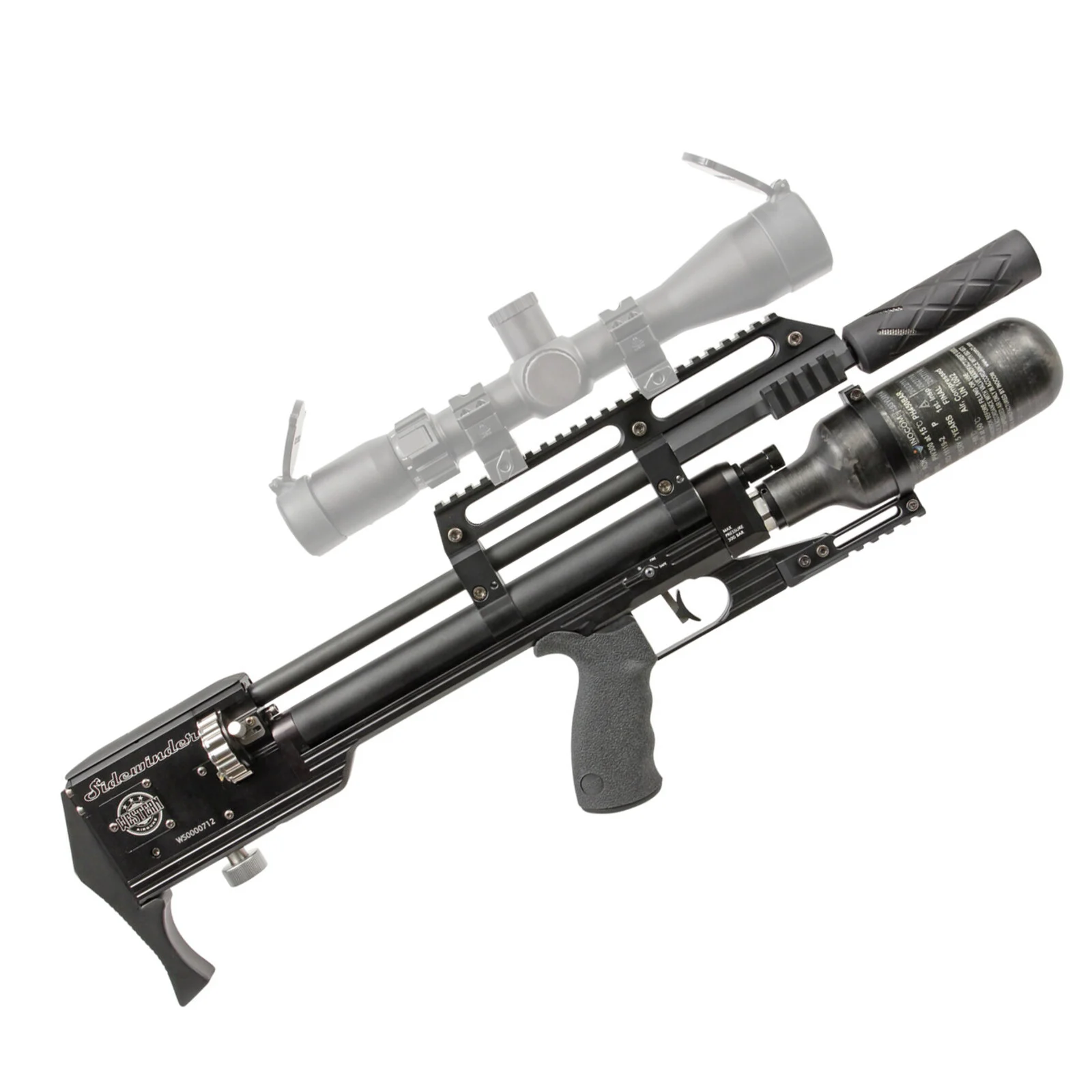
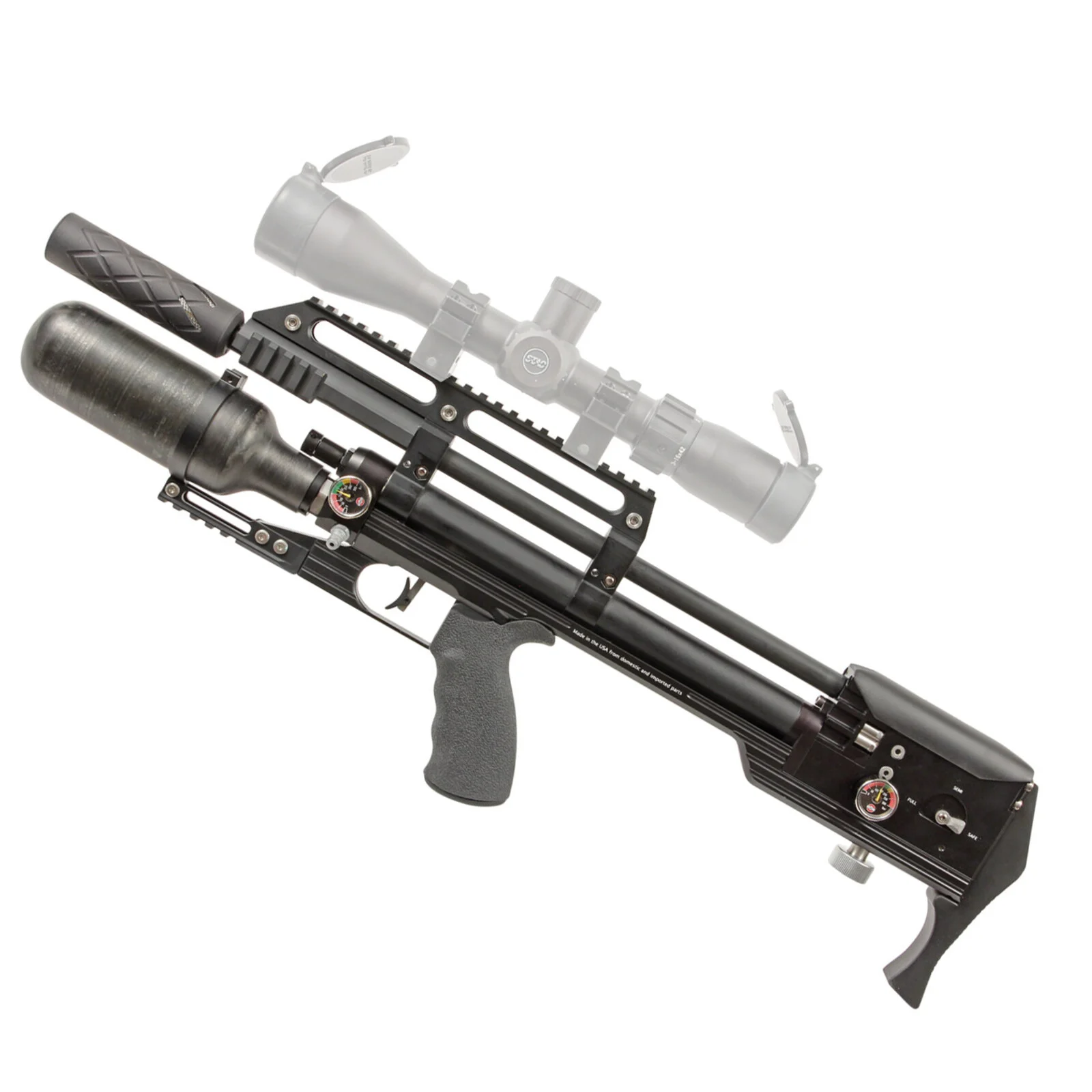
The western sidewinder is another platform frequently associated with the brand. Search phrases include western sidewinder compact, sidewinder gun, sidewiner, sidewinder length, and even technical searches such as sidewinder k7a-00008 manual. Product dimensions, magazine systems, air-cylinder capacity, operating pressure, and manufacturer documentation should be checked against the exact version because specifications can vary.
For customers researching very large-caliber Western models, bush buck and bushbuck air rifle price are common search phrases. Big-bore platforms are sometimes described broadly as a big bore pellet gun, big air rifle, big game airgun, or big game air guns. Their intended use, permissible energy level, and legal hunting applications vary significantly between regions.
Bullpup and PCP Air Rifle Technology
A bullpup air rifle places much of the action behind the trigger, allowing a comparatively long barrel to be packaged into a shorter overall platform. This layout has become particularly popular with pcp guns, pcp rifle, and pcp air rifles because compressed-air cylinders and magazines can be incorporated into relatively compact designs.
A compressed air rifle stores high-pressure air and releases a controlled amount during each shot. This system differs substantially from a break barrel pellet gun, where the barrel is typically used to cock a spring or gas-ram mechanism.
People researching an accurate pellet rifle or long range air rifle often compare regulator performance, barrel quality, projectile consistency, trigger characteristics, stock fit, shot count, and optics compatibility. Accuracy depends on the complete system rather than power alone.
Some shoppers also search for a semi automatic pellet gun or full auto air gun. These terms describe different cycling mechanisms and should not be treated as interchangeable. Regulations governing semi-automatic or fully automatic air-powered platforms may also differ from regulations covering manually cycled rifles.
Search phrases such as lethal air guns and steel penetrating full auto airgun sometimes appear online, but airguns should never be treated as toys or casually tested against unsafe targets. High-energy models can cause severe injury and should be used only with suitable backstops, eye protection, safe handling procedures, and full compliance with local law.
People also ask where do bullets land when shot in air. Projectiles fired upward eventually return toward the ground, and their landing point cannot be safely predicted. For that reason, an airgun or firearm should never be discharged vertically or in any direction without a verified safe impact area and backstop.
Other Western-Style and Specialty Airgun Searches
A number of additional terms appear alongside Western Airguns searches, including serpent arms, venom arms, desert scorpion pistol, atlas airguns, and lindstradt air gun. Similar searches may also include edgun west, edgunwest, and ed gun west, which are spelling variations commonly entered by people researching EDgun-related products and U.S. availability.
Search terms such as az air guns can relate to retailers, regional airgun communities, or businesses associated with Arizona. Because similar names can refer to different organizations, buyers should verify the manufacturer, retailer, warranty provider, and exact product before ordering.
A double barrel air gun or shotgun air rifle represents another specialized category that differs considerably from the typical single-barrel PCP rifle. Likewise, searches for a western arms shotgun may refer to products from a different manufacturer than Western Airguns, so model identification remains important.
Benjamin Air Rifles and PCP Platforms
Benjamin has a long history in the airgun market, which is why searches for a benjamin air rifle, benjamin air rifles, benjamin pellet gun, and benjamin pellet remain common among recreational shooters and hunters.
One of the best-known PCP families is the benjamin marauder. Search variations include benjamin marauder pcp and benjamin marauder air rifle. The Marauder platform is often researched by users comparing PCP rifles for target use, recreational shooting, and lawful pest-control applications.
Another widely searched model is the benjamin bulldog, a larger-caliber PCP platform. Queries such as benjamin bulldog 457 20 joules may refer to specific regional configurations, energy-restricted versions, or product information. Because power specifications can differ by market, purchasers should verify the manufacturer’s specifications and applicable regulations.
The benjamin prowler represents another area of interest for users comparing more traditional air-rifle configurations. Meanwhile, benjamin air rifle 22 break barrel is frequently searched by shoppers specifically looking for .22-caliber break-barrel designs.
Older or heavily used rifles may lead owners to search for benjamin air rifle repair. Seal condition, valves, pressure systems, triggers, barrels, stocks, and other components should be inspected or serviced according to manufacturer recommendations, particularly when dealing with high-pressure PCP equipment.
Airbows, Arrow Rifles and Alternative Air-Powered Platforms
Not every compressed-air hunting platform uses pellets. Searches for air bow, airbow, air bow rifle, arrow gun, benjamin airbow, and benjamin bow refer to systems designed to propel arrows using compressed air.
These products differ fundamentally from ordinary air pellet gun systems and should be selected according to their intended purpose and applicable local hunting regulations. Buyers should also confirm compatible arrows, pressure requirements, filling equipment, optics mounting options, and manufacturer-recommended accessories.
Air Pistols and Hunting-Oriented Searches
An air rifle and air pistol can serve very different roles depending on caliber, energy, operating system, and regional law. Searches such as hunting air pistol, air pistols for hunting, and co2 pellet guns often involve very different products.
CO2-powered models typically use replaceable carbon-dioxide cartridges, whereas PCP pistols rely on pre-charged compressed air. Local regulations determine whether either type can lawfully be used for hunting.
The term m357 can also appear when shoppers research revolver-style air pistols or products carrying similar model designations. Because this phrase can refer to multiple items, checking the manufacturer’s full model number is important before selecting accessories or replacement components.
Additional Airgun Types and Search Categories
The broader airgun market includes everything from a basic bb gun rifle and traditional spring-powered designs to sophisticated regulated PCP systems. Some buyers search for a pellet gun with silencer, although suppressor, moderator, and sound-reduction laws vary significantly between jurisdictions.
Others look for a hunting air rifle, big game air guns, or other high-powered platforms. The appropriate caliber and energy level depend on local law, target species where hunting is legal, shooting distance, projectile selection, and manufacturer recommendations.
A search such as air gun for semi truck may refer to an air-powered accessory, cleaning tool, pneumatic device, or another product entirely rather than an air rifle. Clarifying the intended equipment category is therefore important before purchasing anything based solely on that phrase.
Choosing Between Western, Benjamin and Other Airgun Platforms
Comparing products from western airguns, Benjamin, EDgun-related brands, and other PCP manufacturers requires more than comparing advertised power figures. Consider overall length, weight, caliber availability, magazine capacity, fill pressure, regulator design, shot count, trigger system, stock configuration, warranty coverage, parts availability, and manufacturer support.
A compact western sidewinder, larger western rattler, western mordax pcp, traditional benjamin marauder, big-bore benjamin bulldog, or another pcp air rifles platform may suit very different users and applications.
Responsible selection should therefore begin with the intended lawful use, followed by caliber, dimensions, power level, filling equipment, ammunition availability, service support, and local regulatory requirements. Whether someone begins their search with air guns near me, air gun dealers near me, air rifle dealers, or airguns online, careful comparison helps distinguish between recreational airguns, precision PCP rifles, hunting-oriented systems, specialty bullpups, and big-bore platforms.
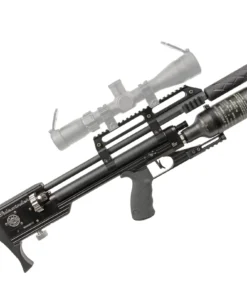
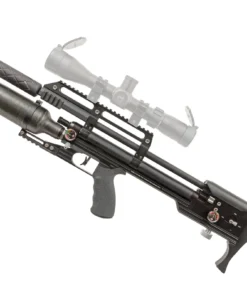
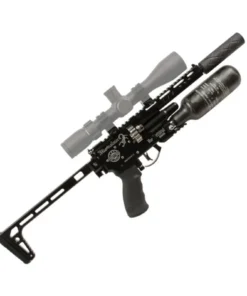
Calibers, FAC Considerations, Power Tuning, and Accessories for the Western Airguns Sidewinder S Compact Full-/Semi Automatic PCP Rifle
Caliber choice, legal power limits, and supporting accessories are selected so that the Western Airguns Sidewinder S Compact Full-/Semi Automatic PCP Rifle can be matched to intended use, local regulations, and shooter preference. Consequently, a single compact platform can be configured for quiet practice, pest work, or higher-energy applications where certificates and laws permit.
Calibers That Are Offered and How Each Is Typically Applied
Three factory calibers are supplied: .22 (5.5 mm), .25 (6.35 mm), and .30 (7.62 mm). Therefore, projectile weight, trajectory, and terminal performance can be chosen according to range and target type.
- .22 caliber is frequently preferred when higher shot counts, flatter trajectories, and lower recoil are desired. As a result, backyard targets, small pests, and training sessions are commonly supported. Magazine capacity of 15 shots is provided, and energy is typically adjustable from quiet backyard levels up to approximately 17–63 ft-lbs depending on setting and pellet or slug.
- .25 caliber is selected when a balance of energy, magazine capacity, and downrange punch is required. Hence, 15-shot magazines remain available while energy is commonly tuned from roughly 28–70 ft-lbs. Medium pests and longer-range paper or steel work are therefore well served.
- .30 caliber is chosen when maximum energy from the compact 300 cc bottle is prioritized. A 12-shot magazine is supplied, and energy can reach approximately 32–96.5 ft-lbs at higher settings. Consequently, larger pests or legally hunted species (where permitted) can be addressed, although shot count per fill is reduced compared with the smaller bores.
Pellets and slugs are both supported by the regulated action and TJ hammer-forged barrel. Moreover, maximum projectile length of about 10.9 mm should be observed so that reliable feeding from the removable magazine is maintained. Inclusive use is supported because lighter or heavier projectiles can be matched to the shooter’s recoil sensitivity and intended distance.
FAC, Legal Power Limits, and Responsible Configuration
Power output is not fixed; it is adjusted by the velocity-control wheel and regulator setting. Therefore, the same rifle can be kept within airgun-legal limits in many jurisdictions or raised into FAC/certificate territory where such certificates are required and held.
In the United Kingdom and similar regulatory systems, muzzle energy above 12 ft-lbs for rifles generally requires a Firearm Certificate (FAC). Export or “restricted” versions of some Western Airguns models are limited (for example, certain markets cap energy near 97 ft-lbs). Consequently, the purchaser’s local classification—airgun, FAC, or equivalent—must be confirmed before any high-power setting is used.
Fill pressure remains 300 bar / 4,350 psi maximum. Overfilling is never permitted. Likewise, only clean, dry high-pressure air or nitrogen is specified. Inclusive, responsible ownership is emphasized: every shooter is expected to verify current national and regional airgun laws, hunting seasons, and transport rules rather than relying on marketing energy figures alone.
Because energy and shot count change together, a lower regulator or wheel setting produces more shots at modest velocity, while a higher setting produces fewer, more powerful shots. Chronograph confirmation after any change is therefore recommended so that legal limits and ethical hunting energy are both respected.
Power Delivery That Is Tuned for the Task
A regulated PCP system is employed so that velocity remains consistent across a useful string. Approximate published ranges (subject to projectile, temperature, and individual rifle) include:
- .22: roughly 15–150 consistent shots per fill across the power band
- .25: roughly 15–90 shots
- .30: roughly 12–96 shots
Minimum-power settings favor long strings and quiet use. Mid settings suit everyday pest and target work. Maximum settings favor energy at the expense of shot count. Transition between these regimes is accomplished with the large velocity wheel, so field adjustments can be made without tools.
Recoil remains modest for a select-fire PCP, yet full-automatic strings consume air rapidly. Semi-automatic mode is therefore preferred for most precision and hunting applications, while full-auto is reserved for permitted training or specific pest scenarios.
Accessories That Are Commonly Added to Complete the Setup
A Picatinny top rail is already fitted so that scopes, red dots, or thermal/night-vision devices can be mounted. Side rails and a rigid bottom rail under the 300 cc bottle accept lights, lasers, and bipods. Inclusive customization is supported because AR-pattern grips can be swapped and aftermarket butt pads or wood stocks (where available) can be fitted.
Recommended supporting items typically include:
- Extra removable magazines (titanium or steel two-part designs are offered by the manufacturer) so that reloads stay fast
- A quality compact or larger ½ UNF moderator if extra sound reduction is desired beyond the included 0 dB unit
- A reliable PCP compressor or tank system rated for 300 bar fills
- A sturdy bipod on the under-bottle rail for bench or field-rested shots
- A sling and adjustable butt-pad kit for carry and length-of-pull comfort
- A protective case or the included rifle bag for transport
- Appropriate pellets or slugs matched to caliber and intended energy
- A chronograph so that power and legal compliance can be verified after any wheel or regulator change
Optics are not included with the rifle. Consequently, a compact variable scope or reflex sight is usually added so that the short 26.5-inch overall length is not compromised. Night-capable optics are chosen by hunters who operate in low light where legal.
When caliber, legal power band, and accessories are chosen together, the Western Airguns Sidewinder S Compact Full-/Semi Automatic PCP Rifle becomes a coherent, compact system rather than a collection of separate parts. Careful matching of projectile, setting, and supporting gear therefore allows the platform to serve target shooters, pest controllers, and licensed hunters with equal competence—always within the laws that apply at the place of use.
Practical Use Scenarios That Are Supported in Everyday and Field Conditions
Versatile use is enabled when a compact, regulated, select-fire PCP is matched to the task, the legal power band, and the environment. Consequently, the same platform can be employed for quiet practice, structured range work, pest management, and licensed hunting, provided every local rule is observed and every shot is taken with care.
Quiet Backyard and Garden Sessions That Are Kept Neighbor-Friendly
Low-power settings are selected so that report and pellet energy remain modest. Therefore, paper targets, spinning silhouettes, and reactive cans can be engaged at short distances without unnecessary disturbance. Moreover, the short overall length is appreciated in small gardens and enclosed yards where a longer rifle would be awkward to shoulder.
A compact moderator is already fitted, and a further ½ UNF can is added when extra hush is desired. As a result, evening practice after work can be completed with less concern for nearby households. Inclusive participation is supported because lighter projectiles and reduced velocity make recoil and noise more comfortable for newer shooters and for those who prefer a gentler session.
Safe backstops, known pellet drop, and a clear downrange area are always confirmed before the first shot. Likewise, full-automatic mode is left unused in residential settings so that air is conserved and control is maintained.
Indoor and Club Range Work That Is Used for Skill Building
Consistent velocities from the regulator allow holdover and click values to be learned quickly. Hence, twenty- and twenty-five-yard groups can be tightened with both pellets and short slugs. Additionally, magazine changes can be practiced under a shot timer so that reloads become smooth rather than rushed.
Semi-automatic fire is preferred for precision strings. Full-automatic fire, where the club permits it, is reserved for short controlled bursts so that trigger discipline and follow-through are still trained. A bipod on the under-bottle rail is fitted for bench or prone work; offhand and kneeling positions are also used so that field-realistic stances are not neglected.
Optics of modest magnification are chosen so that the compact profile is not lost. Consequently, the rifle remains easy to move between firing points and storage racks. Inclusive coaching is possible because the AR-style grip and modest recoil help a wide range of body sizes and experience levels share the same platform during a club evening.
Pest Control Around Buildings, Barns, and Smallholdings
Maneuverability in doorways, alleys, and between outbuildings is improved by the short barrel and light unscoped weight. Therefore, rats, feral pigeons, and similar species can be addressed where such control is legal and humane. Mid-power settings are typically chosen so that energy is adequate while over-penetration and excessive noise are limited.
A red-dot or low-power variable is mounted for fast target acquisition at close range. Side-rail lights are added for dusk work around feed stores. Rapid follow-up shots in semi-automatic are available if a second animal appears; full-automatic is generally avoided in confined farmyards so that every projectile remains accounted for.
Ethical shot placement is prioritized. Consequently, only clear, stationary, or predictably moving targets are taken, and a safe backstop of earth, timber, or purpose-built catcher is confirmed. Inclusive farm use is supported when several family members share one rifle: magazines can be swapped, power can be turned down for younger or smaller-framed users, and the same zero can be retained if ammunition is kept consistent.
Vehicle, Blind, and Tight-Cover Hunting Approaches
The compact envelope is carried more easily in a truck cab, UTV, or small boat than a full-length PCP. As a result, the rifle can be kept ready without dominating the cabin. A sling is fitted so that hands remain free while walking to a stand. Once in the blind, the short length reduces the chance of the muzzle catching canvas or branches.
Caliber and power are matched to the species and distance that are legal in that jurisdiction. Lighter .22 or .25 loads are used for small game at modest range; .30 and higher wheel settings are reserved for larger pests or licensed game where energy and local rules allow. Slugs may be chosen when a flatter trajectory or extra sectional density is needed; pellets remain useful when magazine capacity and cost per shot matter more.
A quiet approach is helped by the moderator and by the absence of a spring-piston twang. Wind, light, and animal behavior are still read with the same care as with any hunting arm. Inclusive field use is possible because the modest weight reduces fatigue on long sits, and an aftermarket grip or butt pad can be fitted so that length of pull and hand size are accommodated.american made air rifles
Dawn, Dusk, and Supported Night Work Where Legal
Low-light optics or a compact thermal or night-vision unit can be mounted on the Picatinny rail. Side-rail illumination is added only when it will not alert the quarry or violate local rules. Therefore, legally permitted night pest work around livestock or crops can be completed with a platform that already accepts common tactical accessories.
Battery packs and extra magazines are carried in a small pouch so that the rifle itself stays light. Power is set before last light and is left unchanged unless a chronograph check is possible. Semi-automatic remains the default so that each shot is aimed rather than sprayed.
Training, Demonstration, and Shared-Use Days
Select-fire capability is useful when instructors need to demonstrate both precise single shots and controlled rapid fire. Transition between modes is made at the breech without breaking the shooting position. Consequently, students can see the difference immediately.
Lower power and lighter pellets are selected for first-time users so that flinch is reduced. Higher settings are introduced only after safe handling and a clear understanding of the velocity wheel are shown. Inclusive groups—youth under supervision where legal, adaptive shooters, and mixed-experience clubs—can share the same rifle because grip, power, and ammunition can be adjusted between strings.
A clear “made safe” procedure is practiced with the removable magazine: the mag is out, the action is shown empty, and the selector is on safe. Extra magazines allow one shooter to prep while another is on the line.
Travel, Storage, and Multi-Day Outings
Overall length near 26.5 inches allows the rifle to fit many soft cases and some lockable hard cases without a break-down. A 300 bar fill from a hand pump, portable compressor, or larger tank can be completed at camp. Shot-count planning is done in advance: lower settings stretch a 300 cc bottle across more magazines; higher settings are reserved for the stalks that need them.
Spare magazines, a small tin of matched ammunition, a fill probe, and a compact cleaning kit travel with the rifle. Optics stay mounted when possible so that zero is not disturbed. Inclusive travel is supported when partners of different stature share the kit: the same zero can be used if ammunition and power setting remain unchanged, and a second grip or pad can be swapped in minutes.
Slug Versus Pellet Choices in Real Use
Pellets are favored when high shot count, lower cost, and magazine reliability at moderate power are the priority. Slugs are chosen when extra energy or a different ballistic coefficient is needed and when the magazine and barrel have been confirmed to feed that length and weight. Mixed use across a weekend is common: pellets for morning practice, slugs for an afternoon hunt, provided the wheel is reset and a few confirmation shots are fired.
Maximum projectile length must be respected so that jams are avoided. Therefore, a short test string is always fired after a change of ammunition type.
Seasonal and Weather Considerations
Cold air reduces pressure and can shift point of impact. A mid-session chronograph check or a known-distance confirmation target is used when temperatures drop. Wet conditions favor a covered action and a wipe-down after the outing. Dusty farm work benefits from a brief inspection of the magazine lips and fill port.airrifle
Wind is read the same way as with any mid-power air rifle: hold or wait. The compact barrel is no substitute for patience.
Limits That Are Respected So That Use Stays Safe and Legal
Full-automatic strings empty the bottle quickly and are inappropriate in most hunting and residential settings. Energy above local airgun limits requires the correct certificate or is simply not used. Every projectile must have a safe backstop. Inclusive language and shared equipment never replace individual responsibility: each person who shoulders the rifle is expected to know the current law, the current setting, and the current load.
When these scenarios are approached with planning rather than impulse, a compact regulated select-fire PCP becomes a practical daily tool rather than a range-only novelty. Quiet practice, farm pest work, licensed field use, and structured training can all be served by one carefully set-up rifle—provided power, ammunition, accessories, and attitude remain matched to the place and the purpose.
Frequently Asked Questions About Practical Ownership and Use
Clear answers are provided below so that setup, legal limits, ammunition, and day-to-day handling can be understood before the first fill. Inclusive, responsible use is assumed throughout: every shooter is expected to confirm local airgun and hunting rules rather than rely on general figures alone.
What Calibers Are Available and How Is One Chosen?
Three factory bores are offered: .22, .25, and .30. Consequently, trajectory, energy, magazine capacity, and recoil can be matched to the intended task.
A .22 barrel is often selected when flatter flight, higher shot count, and lower cost per shot are preferred. Garden practice, small pests, and club targets are commonly served. A .25 barrel is chosen when a middle path between energy and capacity is wanted. A .30 barrel is preferred when maximum energy from the 300 cc bottle is the priority and a 12-shot magazine is acceptable.
Pellets and compatible slugs can both be used when length and weight stay within the magazine’s design. Therefore, a short test string is always fired after a change of projectile type. Inclusive choice is supported because lighter loads and lower wheel settings reduce recoil for newer or smaller-framed shooters.
How Is Power Adjusted and What Energy Can Be Expected?
Power is changed with the large velocity-control wheel and, where needed, the regulator. Low settings favor quiet strings and more shots per fill. Mid settings suit everyday pest and target work. High settings produce fewer, more energetic shots.
Approximate published bands (subject to projectile, temperature, and the individual rifle) include roughly 17–63 ft-lbs in .22, 28–70 ft-lbs in .25, and 32–96.5 ft-lbs in .30. Shot counts typically range from about 15–150 in .22, 15–90 in .25, and 12–96 in .30 across that power spread. Chronograph confirmation after any change is strongly recommended so that legal limits and ethical hunting energy are both known.
Does High Power Require a Certificate or Special Permit?
In many countries a rifle above a stated energy threshold—commonly 12 ft-lbs in the United Kingdom—must be held on a Firearm Certificate or equivalent. Some export versions are factory-capped. Therefore, the purchaser’s local classification must be verified before high-wheel settings are used.
No general article can replace current statute. Inclusive, lawful ownership means the correct paperwork is obtained where required, and the wheel is left at a legal setting where it is not.
How Are Semi-Automatic and Full-Automatic Modes Used Safely?
A selector at the rear of the breech block is used to change mode without altering the shooting stance. Semi-automatic fire is the default for precision, hunting, and most pest work. Full-automatic fire consumes air quickly and is reserved for permitted training or specific control tasks where every projectile still has a safe backstop.
The trigger is not held after the magazine is empty if blank cycling is to be avoided. Inclusive training starts in semi-automatic at low power until safe handling is demonstrated.
What Magazine Capacity Is Provided and Can Extra Magazines Be Carried?
Fifteen shots are supplied in .22 and .25; twelve shots are supplied in .30. Removable magazines allow a fast swap on the line or in the field. Extra magazines—titanium or precision two-part steel types where offered—are commonly carried so that one magazine can be loaded while another is in the rifle.
Maximum projectile length of about 10.9 mm should be respected so that feeding remains reliable. A magazine is removed and the action is shown empty whenever the rifle is made safe.
How Is the Rifle Filled and What Pressure Must Not Be Exceeded?
Clean, dry high-pressure air or nitrogen only is specified. Maximum fill is 300 bar / 4,350 psi. Overfilling is never permitted. A portable compressor, hand pump, or larger tank rated for that pressure can be used.
Gauges on the bottle and regulator are checked before and after a fill. Inclusive club use is easier when a shared tank and a written fill procedure are employed so that every member follows the same limit.
What Optics and Accessories Are Commonly Added?
A Picatinny top rail is already fitted. Compact variables, red dots, and legally used night or thermal units can be mounted. Side rails accept lights and lasers. A rigid rail under the bottle accepts a bipod.
An AR-pattern grip can be swapped for a more personal fit. Aftermarket butt pads and, where available, wood stocks can be fitted. A sling, extra magazines, a ½ UNF moderator beyond the included compact unit, a chronograph, and a protective case complete most kits. Optics are not included from the factory.
Can Left-Handed Shooters Use This Platform Comfortably?
The cheek piece is typically configured for right-side use. Inclusive adaptation is still possible: a different grip, a raised comb pad, or a left-friendly optic can improve comfort. Full left-hand-specific furniture is not always offered, so a shoulder test before purchase is advised when possible.
Is the Compact Size Suitable for Hunting Blinds and Vehicles?
Overall length of about 26.5 inches and an unscoped weight near 6.5 lb make cab and blind use easier than with a full-length PCP. A sling keeps hands free on the walk in. The short muzzle is less likely to snag canvas or branches. Power and caliber are still matched to species and law; compactness does not replace shot placement or a safe backstop.

Reviews
There are no reviews yet.