JTS Airacuda – Precision PCP Air Rifle Designed for Performance
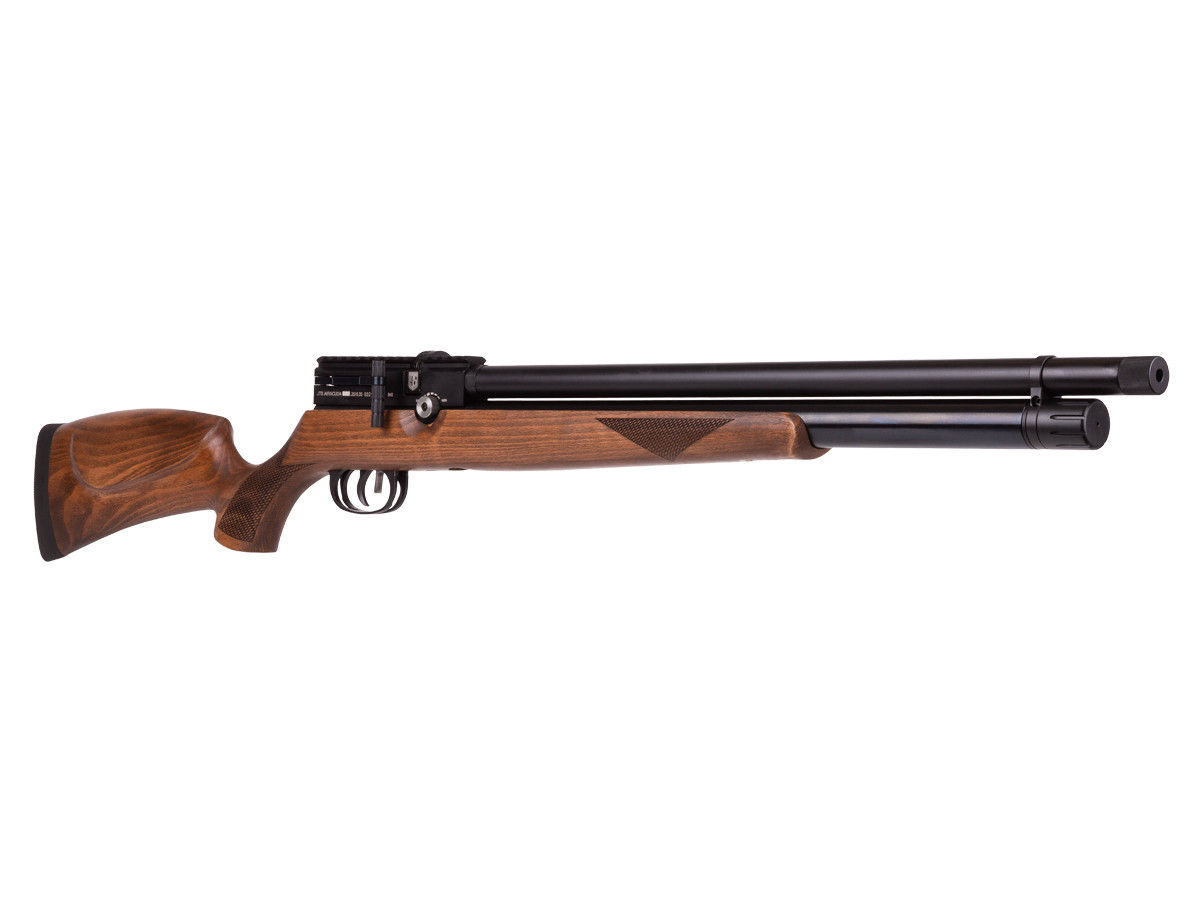
The JTS Airacuda has been developed for shooters who appreciate accuracy, balanced handling, dependable pneumatic performance, and a refined shooting experience. Built around a pre-charged pneumatic platform, this air rifle combines a traditional rifle profile with modern engineering to create a versatile option for recreational shooting, target practice, and other lawful airgun activities.
From the first look, a purposeful design can be noticed. Clean lines are combined with a comfortable stock, while the action has been arranged to provide straightforward operation. Furthermore, considerable attention has been given to stability and shot consistency. As a result, the rifle can be enjoyed by experienced airgun enthusiasts while remaining approachable for shooters becoming familiar with PCP platforms.
Rather than relying solely on appearance, the JTS Airacuda has been designed around practical performance. A regulated-style shooting experience, useful air capacity, adjustable features, and a smooth side-lever configuration help create a platform that can be adapted to different shooting preferences.
Why Choose the JTS Airacuda?
Performance has been placed at the center of the JTS Airacuda design. Because PCP rifles use compressed air rather than a conventional spring powerplant, recoil and vibration can be substantially reduced. Consequently, a steadier shooting cycle can be experienced.
Accuracy can therefore be supported more effectively when suitable pellets, optics, and shooting techniques are used.
At the same time, the rifle retains a familiar sporting-rifle appearance. Instead of an overly complicated external design, a clean and functional layout has been adopted. This combination makes the Airacuda especially appealing to shooters who want contemporary PCP technology without abandoning traditional ergonomics.
Highlighted JTS Airacuda Features
- Pre-charged pneumatic operating system for a smooth shooting cycle
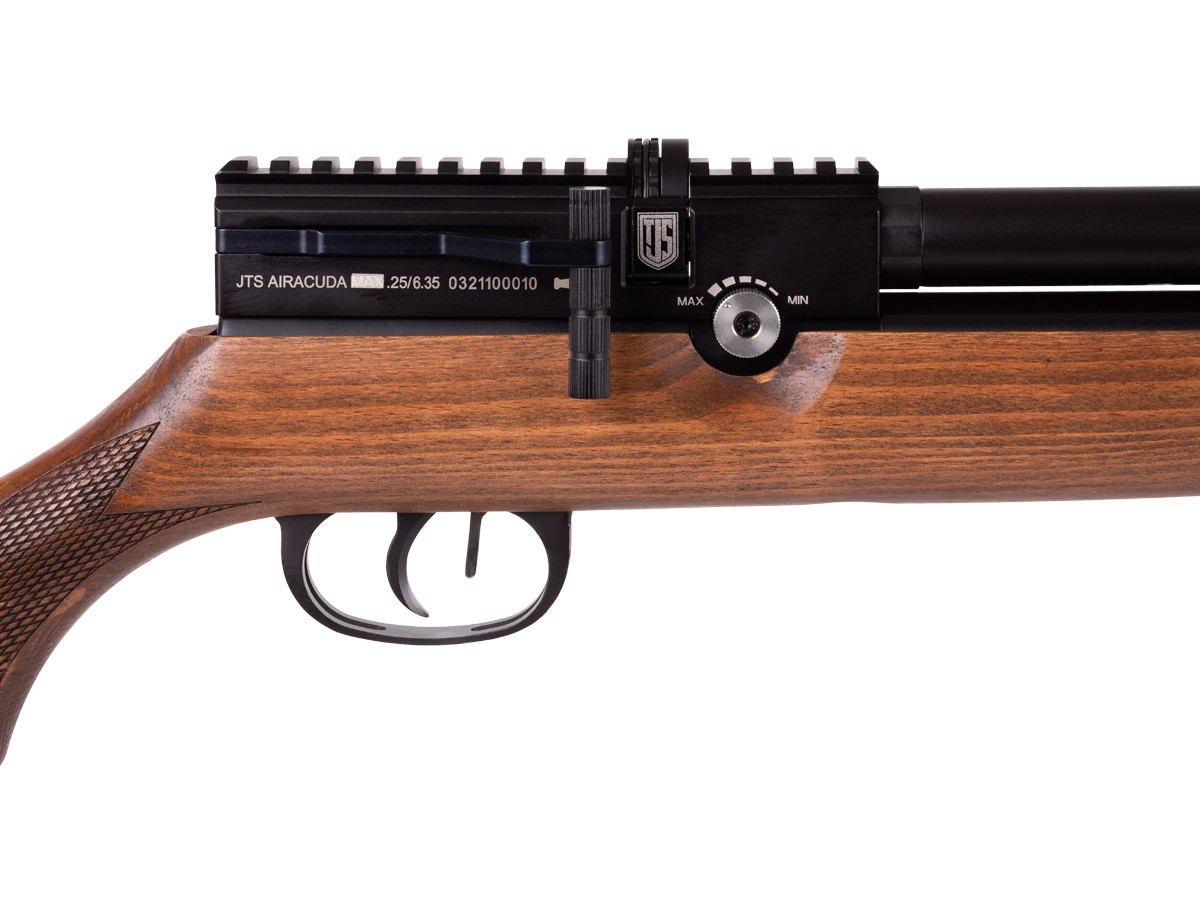
- Side-lever action designed for convenient follow-up operation
- Multi-shot magazine capability for practical range use
- Single-shot operation can be accommodated where compatible equipment is supplied
- Adjustable trigger system for a more personalized shooting feel
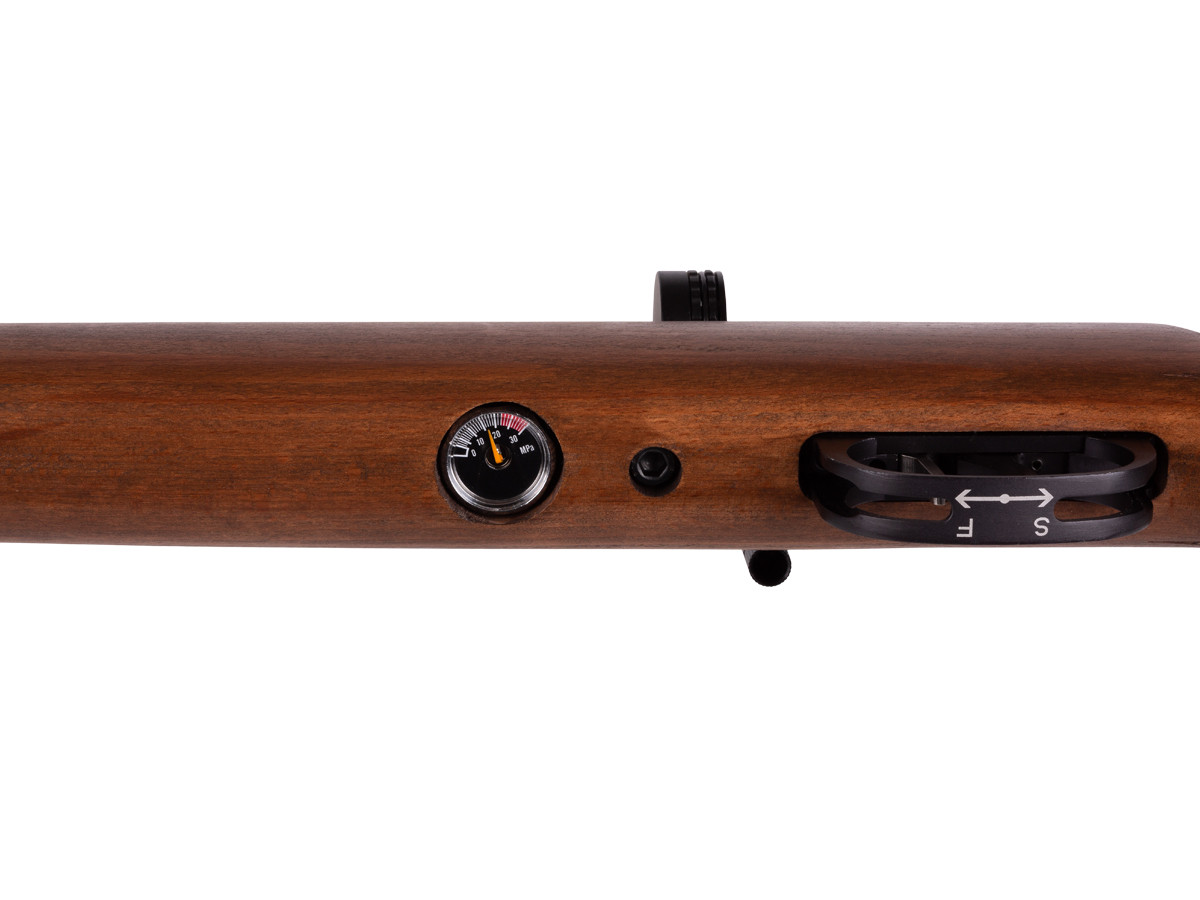
- Integrated pressure monitoring for easier air-management awareness
- Generous compressed-air reservoir for extended shooting sessions
- Optics-ready receiver configuration
- Comfortable stock profile for stable shoulder positioning
- Available configurations may include different calibres depending on market
- Reduced recoil compared with many spring-powered air rifles
- Designed for target shooting, recreational use, and other lawful applications
Refined PCP Performance
One of the greatest attractions of the JTS Airacuda is its pneumatic powerplant. Compressed air is stored inside the rifle’s reservoir and released in carefully controlled quantities during operation. Therefore, the mechanical movement associated with traditional spring-powered rifles can be greatly reduced.
Because heavy spring movement is absent, less disturbance is produced during the firing cycle. This characteristic can contribute to better sight-picture stability. In addition, shooters can concentrate more easily on trigger control, breathing, positioning, and follow-through.
Consistency remains particularly important in precision airgun shooting. Although actual performance depends on configuration, calibre, projectile selection, pressure, environment, and local specification, the Airacuda platform has been engineered with repeatable performance in mind.
Comfortable and Practical Rifle Design
Traditional Ergonomics Meet Modern Engineering
Comfort can have a significant effect on shooting consistency. For that reason, the JTS Airacuda has been shaped to provide natural handling from common supported and unsupported shooting positions.
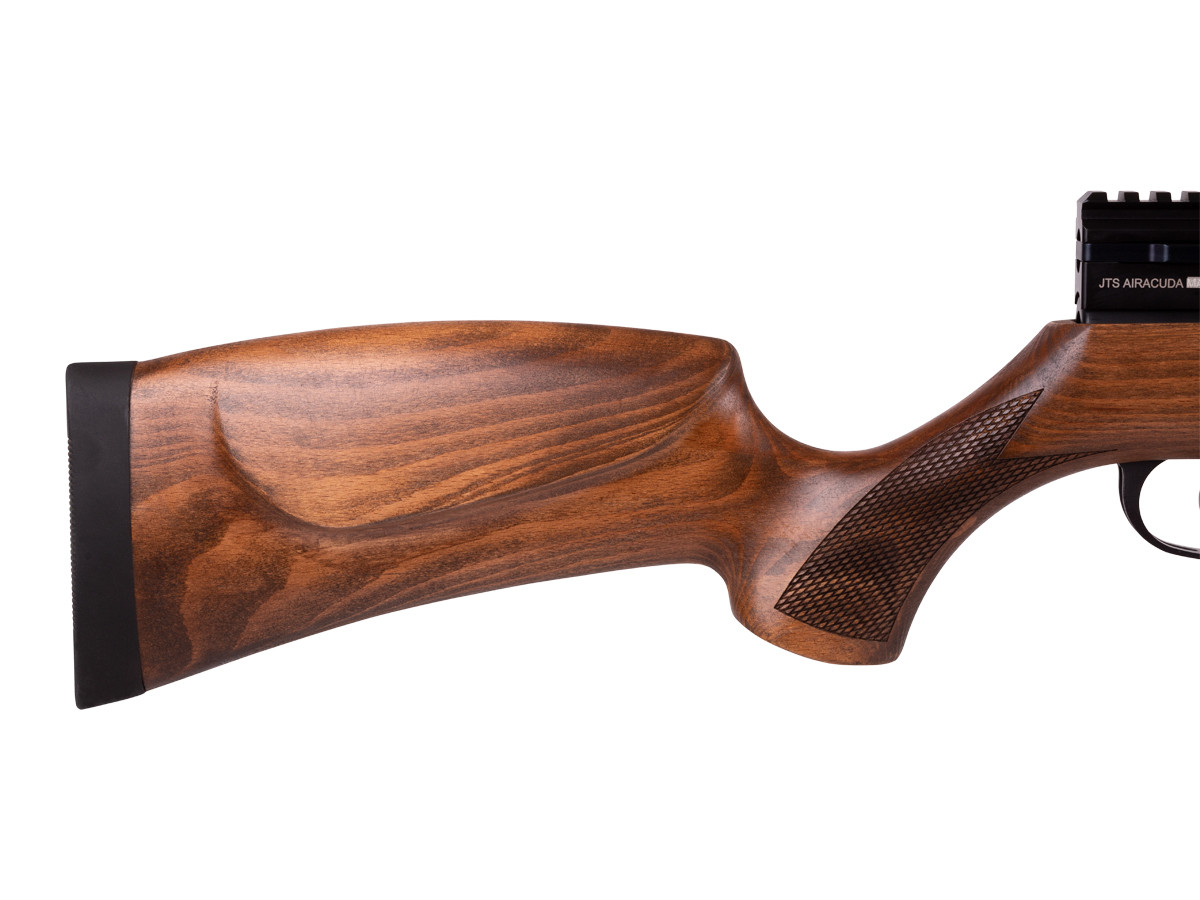
The stock allows the rifle to sit securely against the shoulder, while the grip area provides a controlled hand position. Meanwhile, the fore-end offers sufficient space for stable support.
Instead of forcing the shooter to adapt to an unnecessarily complicated platform, familiar rifle ergonomics have been retained.
Balance has also been carefully considered. When an appropriate optic is installed, the rifle can remain manageable during extended sessions. Consequently, unnecessary fatigue may be reduced.
Smooth Side-Lever Operation
Fast and comfortable operation is supported by the side-lever action. Compared with older bolt-style PCP arrangements, a side lever can offer a more natural movement between shots.
Once the system has been correctly operated, the next pellet can be indexed from the compatible magazine. Therefore, less time needs to be spent manually handling individual pellets during normal range sessions.
The magazine arrangement also makes the rifle convenient when multiple shots are required during supervised target practice or recreational shooting. However, safe muzzle control and responsible handling should always be maintained regardless of the loading system being used.
Adjustable Trigger Feel
Trigger characteristics play an important role in predictable shooting. Accordingly, an adjustable trigger system has been incorporated into the JTS Airacuda platform.
Depending on the exact model and regional specification, adjustments may allow the trigger feel to be better matched to individual preferences. A predictable break can help reduce unnecessary movement at the moment a shot is released.
Nevertheless, adjustments should always remain within manufacturer specifications. Factory documentation should also be followed whenever trigger settings or other mechanical components are being changed.
Air Reservoir and Pressure Management
A substantial compressed-air supply is carried within the rifle, allowing numerous shots to be taken before another fill is required. Actual shot count will naturally vary according to calibre, power configuration, fill pressure, projectile choice, and shooting conditions.
Pressure can be monitored through the rifle’s gauge or pressure-management system where fitted. Consequently, the remaining air supply can be checked before or during a shooting session.
For best results, the manufacturer’s recommended fill-pressure limits should always be respected. Approved PCP filling equipment should likewise be used.
Optics-Ready Configuration
Precision shooting is strongly influenced by the sighting system. Therefore, the JTS Airacuda has been designed so compatible optics can be mounted securely.
A suitable air-rifle scope can transform the rifle into a more complete target-oriented setup. Different magnification ranges can also be selected according to intended shooting distances and personal preference.
Once an optic has been mounted correctly, careful zeroing can be carried out with the projectile intended for regular use. Because different pellet designs can produce different trajectories and grouping characteristics, experimentation with manufacturer-compatible ammunition can help determine which option performs most consistently.
Built for Recreational and Target Shooting
Versatility is another notable characteristic of the Airacuda platform. It can be configured for informal range sessions, paper-target practice, accuracy testing, and other legal airgun disciplines.
Beginners entering PCP shooting can appreciate its straightforward layout. Meanwhile, experienced enthusiasts may value the combination of adjustability, magazine functionality, pneumatic consistency, and familiar ergonomics.
Furthermore, the platform provides room for personalization through compatible optics and selected accessories.
JTS Airacuda Quality and Everyday Usability
A successful PCP rifle needs more than impressive specifications. It must also remain practical during regular ownership.
For this reason, the JTS Airacuda combines accessible controls with an uncomplicated layout. Filling, loading, pressure monitoring, and normal operation can be incorporated into a straightforward shooting routine once the manufacturer’s instructions have been understood.
Routine care should still be performed. Exterior surfaces should be kept clean and dry, while seals, filling components, magazines, and other serviceable parts should be inspected according to manufacturer recommendations. Correct storage is equally important.
A Balanced PCP Platform
Ultimately, the JTS Airacuda brings together modern PCP technology, traditional rifle ergonomics, practical adjustability, and an accuracy-oriented design. Rather than focusing on one feature alone, the platform has been created to deliver a balanced overall shooting experience.
Smooth pneumatic operation is combined with convenient magazine feeding. Comfortable handling is complemented by an adjustable trigger system. Meanwhile, compatibility with suitable optics allows the rifle to be configured around different target-shooting preferences.
For shooters searching for a capable PCP air rifle with approachable controls and a refined sporting design, the JTS Airacuda represents a compelling platform to consider.
Specifications, calibre availability, power output, supplied accessories, and legal requirements can differ between countries and individual variants. Therefore, the exact product specification should always be confirmed before selection, and all applicable airgun ownership, transport, storage, and use regulations should be followed.
JTS Airacuda Calibres, FAC Power and Accessories
Choosing the right JTS Airacuda configuration depends heavily on calibre preference, local power regulations, intended shooting discipline, and the accessories that will be fitted to the rifle. Designed as a pre-charged pneumatic platform, the standard Airacuda is currently offered by JTS in .22 calibre (5.5 mm) and .25 calibre (6.35 mm). Both versions share the same fundamental side-lever action, adjustable power system, 10-shot magazine format, 18-inch barrel, and PCP filling arrangement.
JTS Airacuda .22 Calibre
For shooters looking for a versatile PCP configuration, the JTS Airacuda .22 offers a practical balance between projectile weight, trajectory, air consumption, and overall performance. According to JTS, the factory specification lists a maximum velocity of approximately 920 FPS, although actual velocity will vary according to pellet weight, power adjustment, air pressure, atmospheric conditions, and individual rifle tolerances.
Because .22 pellets are generally lighter than comparable .25-calibre projectiles, relatively flat trajectories can be achieved with suitable ammunition. Consequently, this calibre can be well suited to target shooting, recreational plinking, and lawful pest-control applications where local regulations permit.
Independent retailer testing specifications also list approximately 29.78 ft-lb of muzzle energy with an 18.13-grain .22 pellet, demonstrating that unrestricted versions can operate well above common low-power air-rifle limits.
JTS Airacuda .25 Calibre
Greater projectile mass is provided by the JTS Airacuda .25, making this version attractive to shooters who prioritize increased energy retention over the flatter trajectory normally associated with lighter pellets.
JTS publishes a maximum velocity of approximately 900 FPS for the .25-calibre Airacuda. Again, actual velocity will depend heavily on ammunition weight and rifle setup.
For reference, one published configuration produces approximately 41.67 ft-lb with a 25.39-grain pellet. Therefore, the .25 version should not automatically be treated as a low-power or licence-exempt rifle in jurisdictions where muzzle-energy limits apply.
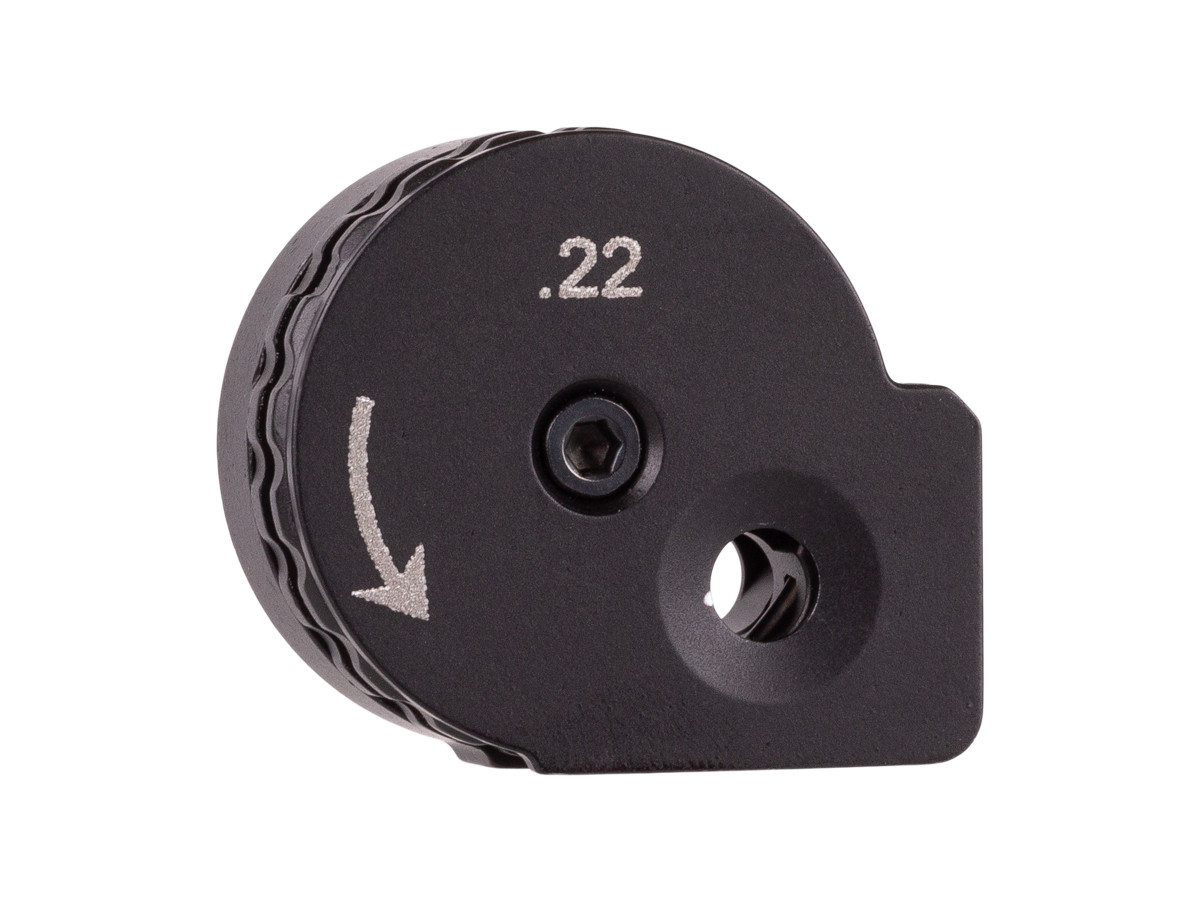
Both calibres use a 10-round all-metal magazine, and JTS states that two magazines are supplied with the standard rifle.
JTS Airacuda FAC Power Considerations
The term FAC is particularly important for buyers in Great Britain because it refers to a Firearm Certificate. Under current UK government guidance, an air rifle capable of producing more than 12 ft-lb of muzzle energy must be held on a firearm certificate.
Consequently, a full-power JTS Airacuda producing the energy figures associated with standard unrestricted versions would fall well above that threshold. Buyers should therefore distinguish carefully between a specifically supplied lower-power version and a full-power or FAC-rated configuration.
Importantly, power classifications should never be based on velocity alone. Muzzle energy depends on both pellet weight and velocity. Furthermore, UK firearms guidance specifically warns that individual examples of the same airgun model can produce different energy levels.
For that reason, owners should always verify the exact specification being purchased and follow the firearms regulations applying in their country or region. Factory power systems should not be altered in ways that would place the rifle outside the owner’s legal authorization.
Adjustable Power and PCP Air System
A major feature of the standard JTS Airacuda is its external power adjustment system. This allows the rifle’s operating characteristics to be adapted within its designed adjustment range.
Power adjustment can be useful when different ammunition types are being evaluated because PCP rifles often respond differently to changes in pellet weight and velocity. However, adjustment should always remain within the manufacturer’s instructions and applicable legal limits.
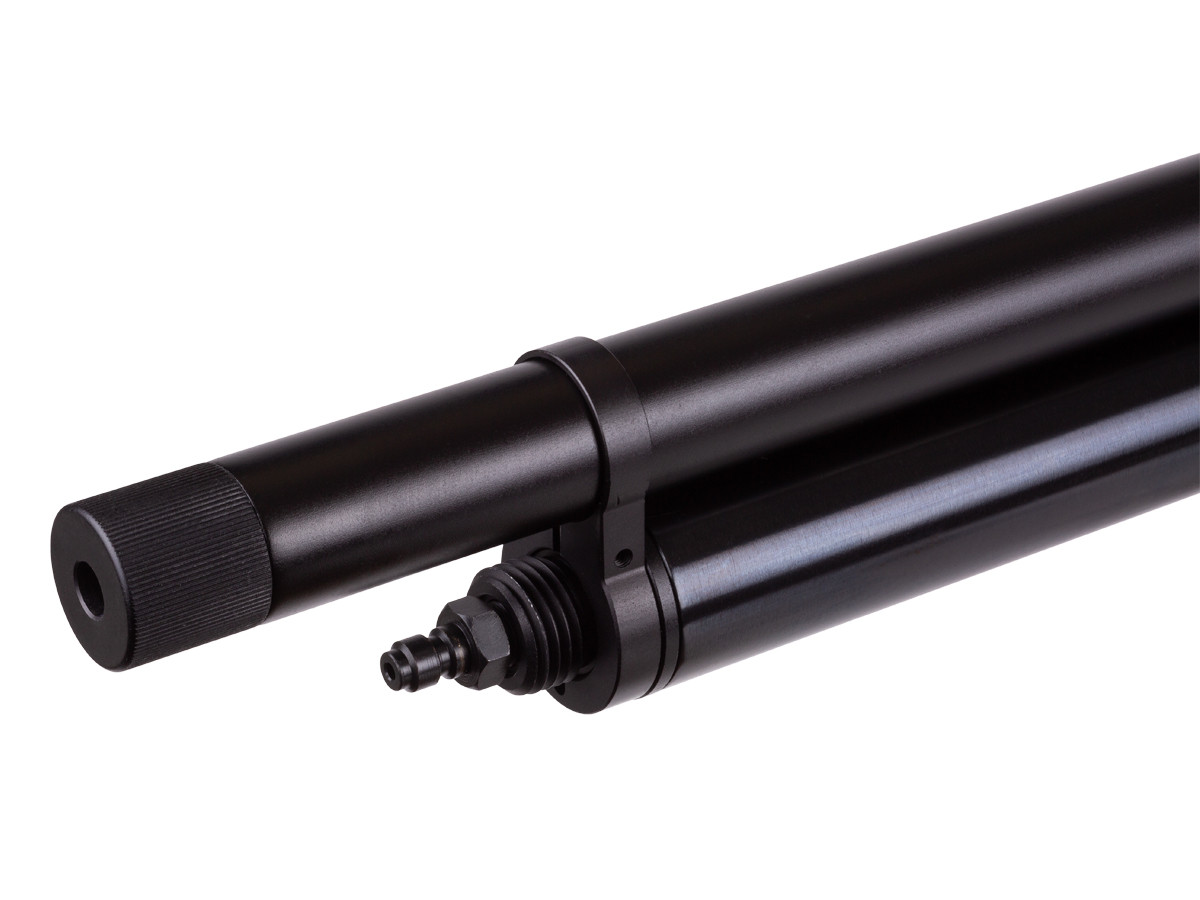
The Airacuda uses a 3,000 PSI / approximately 206 BAR maximum fill pressure. Its air cylinder is listed by Pyramyd AIR at approximately 280cc, while JTS advertises more than 30 shots per fill under its published specification. Actual shot count will vary according to power setting, calibre and shooting conditions.
A Foster quick-disconnect fitting is provided for filling, making the rifle compatible with appropriate PCP charging equipment.
Recommended JTS Airacuda Accessories
PCP Compressor and Hand Pump
A suitable high-pressure filling system is essential. JTS currently lists dedicated PCP charging equipment including the COMP1 portable compressor, the COMP100 high-pressure compressor, and its HP1 and HP2 hand pumps. The company lists its HP1 and HP2 pumps with maximum ratings of up to 4,500 PSI, comfortably above the Airacuda’s 3,000 PSI working fill pressure.
Additional Magazines
Extra magazines can make extended range sessions more convenient. JTS currently offers Airgun magazines in 9-round and 10-round configurations, although buyers should confirm calibre and model compatibility before ordering.
Scope and Optics
An all-metal Picatinny optics rail is fitted to the JTS Airacuda, allowing compatible scope rings and optical sights to be installed.
Depending on the intended shooting distance, owners may choose:
- Variable-magnification air-rifle scopes
- Compatible Picatinny scope rings
- Protective scope caps
- Bubble levels for precision target shooting
- Rangefinders where legally appropriate
- Pellet holders and storage cases
- Approved PCP filling hoses and adapters
- Additional 10-shot magazines
- PCP compressors or high-pressure hand pumps
- Protective rifle cases for lawful transport
JTS also currently lists more extensive Airacuda upgrades, including an aluminium-alloy chassis, adjustable buttstock with cheek riser, and Airacuda PRS grip, although compatibility should be confirmed for the exact standard or MAX rifle before purchase.
Overall, the JTS Airacuda .22 and .25 provide two distinctly useful PCP configurations. The .22 emphasizes versatility and efficient performance, whereas the .25 offers greater projectile mass and higher potential muzzle energy. Combined with adjustable power, magazine operation, a 3,000 PSI PCP system, Picatinny optics compatibility, and a growing range of JTS accessories, the Airacuda can be configured around different lawful target-shooting and airgun applications.
Practical Use Scenarios
A well-designed PCP air rifle becomes most valuable when its features translate into real-world usability. Rather than being judged only by specifications, performance should also be considered in terms of handling, consistency, comfort, air management, accessory compatibility, and ease of use during an actual shooting session. From structured target practice to informal recreational shooting, this type of rifle can serve several legitimate purposes when it is used responsibly and in accordance with local regulations.
Different environments place different demands on an air rifle. Consequently, shooters may value accuracy in one situation, manageable weight in another, or predictable shot-to-shot consistency during longer sessions. The combination of a multi-shot magazine, side-lever action, adjustable controls, compressed-air powerplant, and optics-ready configuration provides enough flexibility for several practical applications.
Target Shooting at a Local Range
One of the most natural environments for this rifle is a controlled shooting range. Paper targets can be placed at suitable distances, while a secure backstop allows shooters to focus on accuracy, consistency, and technique.
Because a PCP action produces comparatively little vibration, the sight picture can remain stable during each shot. Therefore, the shooter can concentrate more effectively on breathing, trigger control, body position, and follow-through.
The multi-shot magazine is also useful during structured practice. Instead of manually loading an individual pellet before every shot, multiple rounds can be prepared in advance. As a result, a shooting session may flow more smoothly without unnecessary interruptions.
For accuracy testing, a stable bench and shooting rest can be used. Groups can then be compared at different distances with various compatible pellet types. However, ammunition testing should always be conducted within the manufacturer’s specifications.
A variable-magnification scope can further improve the experience. Lower magnification may be useful for short-distance sessions, while greater magnification can assist with precise aiming at longer target distances.
Pellet Testing and Group Evaluation
Every barrel can show preferences for certain pellet designs or weights. Therefore, controlled testing can be valuable.
A practical session may begin by selecting several compatible pellets and firing small groups under similar conditions. Group size can then be compared without changing too many variables at once.
For example, the same shooting position, fill pressure range, target distance, and scope setting can be maintained during each test. Consequently, differences between pellet types become easier to evaluate.
This process is especially valuable for shooters who want to understand how their equipment behaves rather than simply relying on advertised specifications.
Recreational Backyard Shooting Where Legally Permitted
In locations where airgun use on private property is lawful and safe, the rifle can also be used for informal recreational shooting.
Suitable reactive targets, paper targets, or approved pellet traps can make short practice sessions enjoyable without requiring a full range visit. Nevertheless, the shooting area must be carefully controlled.
A secure backstop is essential. Furthermore, the shooter must confirm that pellets cannot leave the property or create a danger to people, animals, buildings, vehicles, or neighbouring land.
Because this rifle can produce substantial muzzle energy in some configurations, it should never be treated like a low-powered toy. Even casual shooting should be approached with the same disciplined handling standards used at a formal range.
Eye protection, safe muzzle control, responsible storage, and awareness of the surrounding area should remain part of every session.
Precision Practice From a Bench
Bench-rest style shooting provides an excellent opportunity to evaluate consistency.
The rifle can be supported on a suitable front rest or shooting bag while the rear of the stock is stabilized appropriately. This arrangement reduces unnecessary movement and allows the shooter to concentrate on fine aiming.
Because the compressed-air system minimizes the mechanical movement associated with many spring-powered platforms, consistent technique can be easier to maintain.
Shot groups can be recorded over time, allowing improvements in technique to be tracked. In addition, notes can be taken about pellet type, fill pressure, environmental conditions, and approximate shot count.
Such records can help reveal when performance begins to change as reservoir pressure decreases.
Learning Consistent Trigger Control
A stable bench session is also useful for developing trigger discipline.
Rather than pulling the trigger abruptly, steady pressure can be applied until the shot breaks naturally. This approach helps reduce unnecessary rifle movement.
Over repeated sessions, the shooter can become more familiar with the trigger’s feel and break point. Consequently, accuracy can improve through technique rather than through constant equipment changes.
Informal Steel and Reactive Target Shooting
Reactive targets can provide immediate visual or audible feedback, which makes recreational practice more engaging.
Approved airgun-rated steel targets may be used where appropriate, provided they are installed at safe distances and angles. Purpose-built targets can help reduce unpredictable pellet deflection.
Spinners and resetting targets can also provide variety during a range session.
The magazine system becomes particularly convenient in this environment because several shots can be taken before reloading. Meanwhile, the side-lever action helps maintain a smooth rhythm between shots.
However, speed should never replace safe handling. Each shot should still be aimed deliberately, and muzzle direction must remain controlled at all times.
Developing Shooting Fundamentals
Newer PCP shooters can use this rifle to practice foundational skills.
These include proper shoulder positioning, cheek placement, breathing control, sight alignment, trigger technique, and follow-through.
The relatively smooth firing cycle allows mistakes in technique to be identified more easily because recoil and vibration are reduced. Therefore, shooters may find it easier to understand whether a poor shot was caused by movement, inconsistent positioning, or incorrect trigger input.
A controlled environment with larger targets can be used initially. As consistency improves, smaller targets or longer distances can gradually be introduced.
Supported Field-Style Target Practice
Some shooters prefer practicing from positions that imitate outdoor sporting conditions rather than always firing from a bench.
Kneeling, seated, supported standing, or shooting-stick positions can be practiced on an authorized range.
These scenarios place greater emphasis on balance and rifle handling.
The traditional stock layout can help the rifle feel familiar when transitioning between positions. Meanwhile, suitable sling attachment solutions, where safely compatible, may improve carrying convenience between shooting stations.
A compact or moderate-magnification scope can also provide a useful balance between field of view and target identification.
Pest-Control Applications Where Lawful
In jurisdictions where air rifles may legally be used for pest management, an appropriately powered PCP rifle can form part of a responsible control program.
However, pest-control use requires considerably more judgment than recreational target shooting.
The shooter must be certain of the target species, local legal requirements, safe shooting direction, appropriate distance, and what lies beyond the target.
Humane use should always be prioritized. Consequently, only suitable equipment, lawful quarry, and conditions that allow a responsible shot should be considered.
Property owners should also establish clear boundaries and safe shooting zones before any activity begins.
Because laws differ significantly between regions, hunters and pest-control users should verify local requirements before using an air rifle for these purposes.
Farm and Rural Property Use
On suitable rural properties, air rifles may be used for lawful target practice or approved pest-control duties.
A farm environment often includes large open spaces, barns, fencing, livestock, machinery, and neighbouring properties. Therefore, careful site selection is essential.
Targets should be positioned so that missed shots cannot travel toward buildings, roads, people, animals, or equipment.
Portable target stands can be useful because they allow a safe shooting lane to be arranged without permanently modifying the property.
In addition, a portable PCP filling solution may be valuable when the shooting location is far from mains electricity.
Longer Shooting Sessions
One major practical benefit of a PCP platform is its suitability for extended range sessions.
Before shooting begins, the reservoir can be filled to the manufacturer’s approved pressure. Additional magazines can also be prepared.
This reduces interruptions once practice starts.
However, air pressure should still be monitored throughout the session. As the reservoir pressure decreases, velocity and point of impact may eventually begin to change.
Understanding this usable pressure range is important for maintaining consistency.
Experienced shooters often learn how many reliable shots their individual rifle produces before another fill is required. Actual shot count depends on calibre, power setting, pellet weight, temperature, and other variables.
Indoor Range Use
Where an authorized indoor airgun facility is available, the rifle can be used for controlled short-range practice.
Indoor environments have several advantages.
Wind is eliminated, lighting can be more consistent, and target distances are usually measured precisely. Consequently, technique can be evaluated without as many environmental variables.
The shooter can focus on group size, trigger control, sight picture, and equipment setup.
Nevertheless, the range operator’s power restrictions must always be respected. Some indoor facilities impose specific muzzle-energy limits, ammunition requirements, or target-system rules.
Scope Zeroing and Optics Setup
Another common use scenario involves setting up a new optic.
After the scope has been installed correctly, initial alignment can be checked at short distance. Adjustments can then be made gradually until the point of impact matches the chosen point of aim.
Once a basic zero has been established, confirmation groups can be fired.
This process should be performed carefully and methodically. Large adjustment changes should not be made based on a single shot because isolated impacts may be influenced by technique or pellet variation.
A stable rest makes the process easier.
After zeroing, the shooter can record how the pellet behaves at several distances. This information becomes useful during future target sessions.
Practicing With Different Shooting Supports
The rifle can also be used to test several forms of support.
Shooting bags, bipods where appropriately fitted, bench rests, and shooting sticks each create a different experience.
A bench rest offers maximum stability, while shooting sticks may be more useful for field-style practice.
Testing various supports can help shooters determine which setup suits their body position and intended use.
Importantly, accessories should be mounted only where the rifle is designed to accept them. Excessive force should never be applied to the air cylinder, barrel, or unsupported components.
Club Shooting and Social Range Sessions
Airgun clubs provide another practical environment.
Besides offering controlled facilities, clubs can give shooters access to different target layouts and experienced range supervision.
A reliable multi-shot PCP rifle can be particularly enjoyable in this setting because it can handle both casual practice and more structured accuracy exercises.
Sharing a range session can also allow new users to learn established safety procedures.
However, each shooter should understand the controls and operating procedure before handling the rifle.
Storage and Transport Between Sessions
Practical ownership extends beyond shooting.
When the rifle is not being used, it should be stored securely and in accordance with applicable laws.
A protective case can reduce the risk of scratches, impact damage, and contamination during transport.
Pellets, magazines, filling equipment, and optics accessories can be kept separately in organized compartments.
Before transporting the rifle, the magazine should be removed, the action should be confirmed safe, and local transportation rules should be followed.
Secure storage becomes especially important where children or unauthorized individuals could otherwise gain access.
JTS Airguns, Airacuda, Kral Arms, Reximex and PCP Air Rifle Guide
The modern PCP market covers a broad range of platforms, calibers, accessories, and shooting styles, with JTS airguns becoming increasingly visible among enthusiasts searching for performance-focused pneumatic rifles. Popular searches include JTS Airacuda, JTS Airacuda Max, Airacuda, JTS Aircuda, Airacuda Max, and JTS Aircuda Max, reflecting strong interest in this family of regulated PCP rifles. Shooters researching ammunition also commonly look for JTS pellets, while those comparing compact or alternative platforms may search for the JTS Airstryke, JTS Airstryke Carbine, and other JTS guns.
Caliber-specific searches are equally important. Terms such as JTS Airacuda 25 and JTS Airacuda Max 30 cal are frequently used by buyers comparing configurations and specifications. Other searches connected with the wider brand ecosystem include JTS firearms, JTS Group, JT guns blog, field supply airguns, Trenier Outdoors, TSC air, QTS 11, JPC 100, lindstradt air gun, tom air gun, and even broader or less directly related searches such as JROTC air rifle and jschlatt gun.
JTS Airacuda and Airstryke Searches
The JTS Airacuda platform attracts attention because many shooters compare it with other PCP rifles in similar price and performance categories. Search variations such as JTS Aircuda, JTS Aircuda Max, Airacuda, and Airacuda Max are commonly entered by users who may spell or abbreviate the product name differently. Meanwhile, the JTS Airstryke and JTS Airstryke Carbine expand the range of search intent toward compact PCP configurations.
Ammunition research often accompanies rifle research, which explains searches for JTS pellets alongside rifle model queries. Buyers may compare pellet weights, caliber compatibility, accuracy characteristics, and intended target use before selecting ammunition appropriate for their particular air rifle.
Hatsan PCP and Semi-Auto Searches
Another major group of related search terms concerns Hatsan products. These include Hatsan Sortie Tact semi-auto PCP, Hatsan Sortie, Hatsan Sortie Tact, Hatsan Jet, and Hatsan Jet 3. These searches often appear when enthusiasts compare compact PCP systems, semi-automatic platforms, and portable airgun designs.
Because buyers frequently research several brands during the same shopping session, JTS products may be compared with Hatsan, Kral Arms, Reximex, and other manufacturers before a final model is selected.
Kral Arms and Kral Puncher PCP Air Rifles
Kral Arms has a substantial presence in airgun searches, particularly among users researching PCP rifles. Search variations include KRQL, Kral NP 02, Kral Puncher, Kral Breaker Puncher, Kral Puncher K, Puncher Mega, Shadow Puncher, and Puncher Auto. These terms represent different model families as well as spelling variations entered by customers searching online.
Other Kral-related search phrases include Kral pump, Kral airguns, Krale airguns, Krale wholesale, KR9, KR9 rifle, KR-101, NP500, Bigmax, Raptor S, Dazzle S, EmpireX, TacticalX, Tactical Tundra, Rutundra, ST 500, and ST-500.
Search behavior does not always follow official product naming. As a result, visitors may also enter variants such as kr al, kiral, kroll firearms, kar gun, k gun, kora gun, aram gun, and akr gun while looking for rifles, parts, manufacturers, or related shooting equipment.
International searches can introduce additional terminology. Examples include الكرال, av tüfeği, and tabancalar, which may appear alongside English-language product and category searches.
PCP Air Rifles and Related Search Terms
Broad-category phrases remain important for users who have not yet selected a specific brand. These include PCP air rifles, PCP rifles, PCP air gun, air rifle PCP, rifle PCP, and rifles PCP 5.5. These phrases can lead shoppers toward a wider selection before they narrow their choice to a particular manufacturer or model.
Users comparing platforms may also search for terms such as muskrat gun, kalibre pistol, kahr firearms, and king arms FAL. Because several of these phrases refer to different product categories or manufacturers, specifications and legal classifications should always be checked individually rather than assuming that similarly worded searches describe the same type of equipment.
Reximex Airguns and PCP Models
Reximex airguns represent another important category within PCP search traffic. Common product searches include Reximex RP, Reximex Throne Gen 2, Reximex Mito, Reximex Mitos, Reximex RPA, and Reximex Lieva. These searches often come from shooters comparing configurations, ergonomics, caliber choices, air-cylinder capacity, and other factory specifications.
Reximex products may be compared directly with JTS, Kral, Hatsan, and other PCP manufacturers. Consequently, a shopper researching the JTS Airacuda Max may also investigate a Reximex Throne Gen 2, Kral Puncher, Kral NP 02, or another PCP rifle before deciding which configuration best suits their intended lawful sporting or target use.
Shotgun and Firearm-Related Search Variations
Some search phrases in this wider keyword group refer to firearm platforms rather than PCP airguns. Examples include 223 rifle, 223 guns, 223 arma, 410 shotgun semi auto magazine fed, inertia shotguns, K12 shotgun, KP12, A12 shotgun, XM shotgun, shotgun XM, Krieg shotgun, and SBS12.
Accessory-oriented searches include JTS X12PT shotgun accessories and JTS shotgun accessories. Users entering these terms may be looking for product compatibility information, replacement components, or manufacturer-specific accessories.
Other broader firearm-related search phrases include rifle cal 22 semiautomatico and Kahr firearms. Because legal definitions, licensing requirements, permitted calibers, magazine rules, and ownership regulations differ by jurisdiction, users should verify the rules applicable in their location before purchasing or possessing regulated equipment.
Additional Model and Brand Searches
The wider search ecosystem includes terms such as Ekinoks, King Arms FAL, Raptor S, EmpireX, Bigmax, and TacticalX. Although some searches overlap semantically, each unique term can represent a distinct user query and should therefore be handled with product-specific information where appropriate.
For customers specifically researching PCP equipment, the strongest relevance remains around JTS Airguns, JTS Airacuda, JTS Airacuda Max, JTS Airstryke, Kral Arms, Kral Puncher, Kral Breaker Puncher, Kral NP 02, Reximex Airguns, Reximex Throne Gen 2, Reximex Mito, and related PCP air rifles. Clear specifications, accurate model identification, compatible ammunition information, and transparent product descriptions help visitors distinguish among these different platforms without confusing unrelated product categories.
A Versatile Platform for Responsible Airgun Use
Overall, this rifle can support a wide range of legitimate shooting activities. It can be used for precision paper-target sessions, controlled recreational shooting, club practice, equipment testing, and lawful pest-management applications where permitted.
Its PCP action supports a smooth firing cycle, while the magazine system helps make longer shooting sessions more convenient. At the same time, optics compatibility allows the setup to be adapted for different target distances and shooting styles.
Ultimately, the best results are achieved when performance is combined with disciplined technique, appropriate equipment, regular maintenance, and careful attention to safety.
Regardless of whether the rifle is being used at a formal range, on suitable private property, or in another authorized environment, responsible handling should remain the priority. Local laws, power restrictions, safe backstops, secure storage, and manufacturer instructions should always be respected.
Frequently Asked Questions
What type of air rifle is the JTS Airacuda?
The JTS Airacuda is a pre-charged pneumatic air rifle designed for shooters who want a combination of smooth operation, practical adjustability, multi-shot capability, and traditional rifle handling. Instead of relying on a spring-powered mechanism, compressed air is stored inside the rifle and released during each shot. Consequently, recoil and vibration are relatively low, which can make the rifle easier to shoot consistently.
Its side-lever action, detachable magazine system, adjustable features, and optics-ready configuration also make it suitable for recreational target shooting, range use, and other lawful airgun applications. Exact specifications can vary according to calibre, regional version, and market configuration.
Which calibres are available?
The standard rifle is commonly offered in .22 calibre and .25 calibre configurations. Each option provides a different balance between projectile weight, velocity, trajectory, and energy.
The .22 version can be attractive to shooters who want a versatile setup with moderate pellet weight and efficient air use. By comparison, the .25 version generally uses heavier projectiles and can produce greater muzzle energy when supplied in a full-power configuration.
Availability can vary between countries and dealers, so buyers should confirm the exact calibre options before ordering.
Is the .22 or .25 version better?
Neither calibre is automatically better because the most suitable choice depends on intended use.
For general recreational target shooting and pellet testing, .22 calibre can provide a practical balance between trajectory, shot count, pellet availability, and handling.
Meanwhile, .25 calibre may be preferred by shooters who want heavier projectiles and increased energy retention.
Local regulations should also be considered because the energy produced by each version may affect licensing requirements.
Is the rifle regulated?
The design is intended to provide consistent PCP performance, although the exact internal configuration should always be confirmed for the specific model and production version being purchased.
A regulated or pressure-managed pneumatic system can help maintain more consistent velocity throughout the useful portion of the air fill. However, users should avoid assuming that every regional version has identical internal components.
Checking the manufacturer’s current specification is the safest approach.
How is the rifle filled with air?
Compressed air is introduced through the rifle’s PCP filling system using compatible high-pressure equipment.
A PCP hand pump can be used, although pumping becomes progressively more demanding as pressure increases. Alternatively, a suitable high-pressure compressor or approved air cylinder can make filling easier.
Only equipment designed for PCP airguns should be used. Ordinary workshop compressors do not normally generate the clean, high-pressure air required for a PCP system.
The manufacturer’s maximum fill-pressure instructions must always be followed.
What filling pressure does it use?
The Airacuda platform is generally associated with a maximum working fill pressure of around 3,000 PSI, equivalent to approximately 206 BAR.
The exact pressure should still be confirmed in the owner’s manual or on the rifle itself before filling.
Exceeding the manufacturer’s pressure limit should never be attempted because excessive pressure can damage seals, valves, gauges, filling components, or other parts of the pneumatic system.
How many shots can be fired from one fill?
Shot count depends on several factors, including calibre, power level, pellet weight, reservoir pressure, temperature, and how the rifle is adjusted.
A lower-power configuration may provide more shots per fill because less compressed air is released with each shot. Conversely, a higher-power configuration can consume air more quickly.
For practical use, shooters should monitor the pressure gauge and learn the usable pressure range of their individual rifle. Accuracy and velocity may begin to change once the reservoir pressure falls below the rifle’s optimal operating range.
Does it use a magazine?
Yes. The platform uses a detachable multi-shot magazine that allows several pellets to be loaded before shooting begins.
This arrangement is especially convenient during range sessions because the shooter does not have to place an individual pellet directly into the breech before every shot.
Depending on the exact configuration, magazine capacity can vary. Buyers should therefore confirm the correct replacement magazine for their calibre and model before purchasing extras.
Can additional magazines be purchased?
Additional compatible magazines are generally available.
Spare magazines can be useful during longer shooting sessions because several can be loaded before arriving at the firing line. That can reduce interruptions and make range practice more efficient.
However, magazine compatibility should be checked carefully. The correct calibre, dimensions, and indexing system must match the rifle.
What type of pellets should be used?
Only quality pellets of the correct calibre should be used.
Different rifles can perform differently with various pellet weights and head sizes, so testing several reputable options is often worthwhile. A pellet that groups extremely well in one rifle may not produce identical results in another.
For that reason, shooters frequently compare several pellet types under controlled conditions.
Accuracy testing should be conducted at a safe range with a proper backstop.
Can slugs be used?
Whether slugs are appropriate depends on the barrel, calibre, slug dimensions, power level, and manufacturer recommendations.
Because slugs differ significantly from conventional diabolo pellets, they should not automatically be treated as interchangeable.
Before using them, shooters should confirm that the projectile is compatible with the bore and magazine.
Accuracy should then be evaluated carefully. Some rifles perform exceptionally well with selected slugs, while others produce better results with traditional pellets.
Is it suitable for beginners?
It can be suitable for responsible shooters who are new to PCP airguns, particularly when proper instruction is provided.
The basic operating process is relatively straightforward once the filling system, magazine, safety mechanism, pressure gauge, and side lever are understood.
However, PCP rifles operate at very high internal air pressures. Therefore, beginners should learn proper filling procedures before attempting to charge the rifle independently.
Safe muzzle control and secure storage are equally important.
Is it suitable for experienced shooters?
Yes. More experienced users may appreciate the combination of adjustable controls, multi-shot operation, optics compatibility, and the ability to experiment with different ammunition.
Experienced shooters can also use the rifle for group testing, chronograph evaluation, optics setup, bench shooting, and other structured range activities.
The adjustable nature of the platform provides room for personalization without requiring an excessively complicated operating system.
Is it good for target shooting?
Target shooting is one of the most practical applications for this platform.
Low vibration and a smooth pneumatic firing cycle can make accurate shooting easier when good technique is used.
For bench shooting, the rifle can be supported on an appropriate rest while different pellets are compared.
For field-style target practice, shooters can also work from seated, kneeling, or supported standing positions at an authorized range.
A suitable scope can further improve precision.
Can it be used for pest control?
In jurisdictions where airgun pest control is legal, an appropriately configured rifle may be used for approved species.
However, local legislation, minimum energy requirements, landowner permission, safe backstops, and humane shooting standards must all be considered.
The shooter should also understand the effective capability of the specific calibre and projectile being used.
If local law does not permit pest control with airguns, the rifle should be limited to legal target and recreational applications.
Does it have adjustable power?
Many versions are designed with an adjustable power system that allows output to be managed within the rifle’s intended operating range.
Power adjustment can be useful when testing different ammunition or adapting the rifle for specific lawful shooting disciplines.
Nevertheless, adjustment must remain within manufacturer recommendations and local legal limits.
Changing a rifle from a lower-power configuration to a higher-power configuration may alter its legal classification in some countries.
What does FAC mean?
FAC is commonly used in Great Britain when discussing air rifles above the standard non-FAC muzzle-energy threshold.
An air rifle operating above the legal limit applicable to ordinary airgun ownership may require a Firearm Certificate.
Because laws can change and regional rules differ, shooters should verify current requirements before purchasing or modifying any high-powered configuration.
Can the rifle be used below FAC limits?
Lower-power versions may be available in certain markets, but the exact specification must be confirmed before purchase.
A rifle should never be assumed to comply with a particular power limit solely because of its model name.
Actual muzzle energy depends on pellet weight, velocity, rifle setup, and individual manufacturing tolerance.
Where legal compliance depends on muzzle energy, professional chronograph testing may be advisable.
Can a scope be fitted?
Yes. The receiver is designed to accommodate compatible optics.
A variable-magnification scope is a popular choice because magnification can be adapted to different target distances.
Correct rings and mounts should be selected for the rail system.
After installation, the optic should be levelled and zeroed carefully.
Rechecking mounting screws periodically can also help maintain a consistent point of impact.
What scope magnification is recommended?
The ideal magnification depends on how the rifle will be used.
Lower to moderate magnification can be practical for general recreational shooting, while greater magnification may help with smaller targets or precision bench work.
Image quality, parallax adjustment, eye relief, reticle design, and mounting height can be just as important as maximum magnification.
A balanced optic is usually preferable to an unnecessarily large scope.
Can a moderator be fitted?
Compatibility depends on the barrel configuration, thread specification, regional version, and local regulations.
Not every rifle or market version is supplied with the same muzzle arrangement.
Where moderators are legally regulated, appropriate licensing or authorization may also be required.
Before fitting any muzzle accessory, users should confirm both mechanical compatibility and legal status.
Is a bipod compatible?
A bipod may be used if an appropriate mounting point or compatible accessory system is available.
Shooters should avoid attaching equipment directly to components that are not designed to carry structural loads.
Where a chassis or accessory rail is fitted, a suitable mounting system can provide a secure attachment point.
A correctly installed bipod can be useful for bench shooting and supported field-style practice.
How accurate is it?
Accuracy depends on the rifle, ammunition, optic, environmental conditions, and shooter technique.
A well-set-up PCP rifle can deliver tight groups when matched with suitable pellets.
However, advertised accuracy should not be treated as a guarantee for every rifle and every ammunition combination.
The most reliable approach is to test several pellet types while keeping shooting conditions as consistent as possible.
Does it have much recoil?
Recoil is relatively low compared with many traditional spring-powered air rifles.
Because the projectile is propelled by released compressed air rather than a heavy spring and piston moving inside the action, considerably less mechanical disturbance is produced.
This characteristic can help shooters maintain a stable sight picture.
It can also make scope selection less demanding than it may be on certain powerful spring-powered rifles.
Is the trigger adjustable?
The trigger system is designed to provide a predictable shooting feel, and adjustment may be available depending on the exact model.
Any trigger adjustment should be performed carefully and according to manufacturer instructions.
An excessively light or incorrectly adjusted trigger can create a safety risk.
After adjustment, safe function should always be checked before live firing.
How should the rifle be stored?
The rifle should be unloaded and stored securely when it is not in use.
The magazine should be removed, and the action should be checked to confirm that no pellet remains loaded.
Local laws may require locked storage or additional security measures.
A dry storage environment is preferable because excessive moisture can contribute to corrosion.
A protective rifle case can also help prevent accidental knocks and surface damage.
How should it be maintained?
Routine maintenance should remain simple.
Exterior metal surfaces can be wiped carefully after use, while the filling connection should be kept clean and free from dirt.
Only manufacturer-approved lubricants should be used where required.
High-pressure components should not be disassembled casually.
If seals, valves, or internal pneumatic components require service, professional inspection may be preferable.
Why can velocity vary from published figures?
Published velocity figures are normally obtained using specific pellets and test conditions.
Changing projectile weight will change velocity, while pressure, temperature, power setting, and individual rifle tolerances can also affect results.
A lighter pellet can travel faster without necessarily producing greater muzzle energy.
For that reason, both velocity and projectile weight should be considered when evaluating performance.
Is it suitable for long shooting sessions?
Yes, particularly when spare magazines and a suitable air-filling solution are available.
Preparing magazines in advance can reduce time spent loading.
Meanwhile, monitoring reservoir pressure can help the shooter stay within the rifle’s most consistent operating range.
For frequent shooting, a compressor or larger approved filling source may be more convenient than relying exclusively on a hand pump.
What accessories are most useful?
A practical setup commonly includes a quality scope, compatible rings, additional magazines, an approved filling adapter, a PCP pump or compressor, pellet storage, a protective rifle case, and basic maintenance supplies.
Depending on the intended application, a rangefinder, shooting bags, bipod, or suitable target equipment may also be useful.
Accessories should be chosen according to actual requirements rather than simply adding unnecessary weight or complexity.
Is it a good choice for someone entering PCP shooting?
For shooters who want a traditional rifle layout combined with PCP technology, the platform provides an accessible introduction.
Its multi-shot magazine, side-lever action, optics compatibility, adjustable features, and straightforward filling system provide the core functions expected from a modern pneumatic rifle.
New owners should still take time to learn safe filling procedures, pressure limits, correct loading, maintenance requirements, and local airgun laws before regular use.
What should be checked before buying?
Before ordering, buyers should confirm the calibre, maximum power, legal classification, fill pressure, magazine capacity, barrel specification, included accessories, and warranty coverage.
It is also important to determine whether the exact version complies with local regulations.
If a lower-power model is required, that specification should be confirmed explicitly with the seller rather than assumed.
Taking these steps helps ensure that the rifle received matches both the intended shooting application and the legal requirements of the buyer’s location.








Reviews
There are no reviews yet.