JTS Airacuda PRS Max PCP Air Rifle
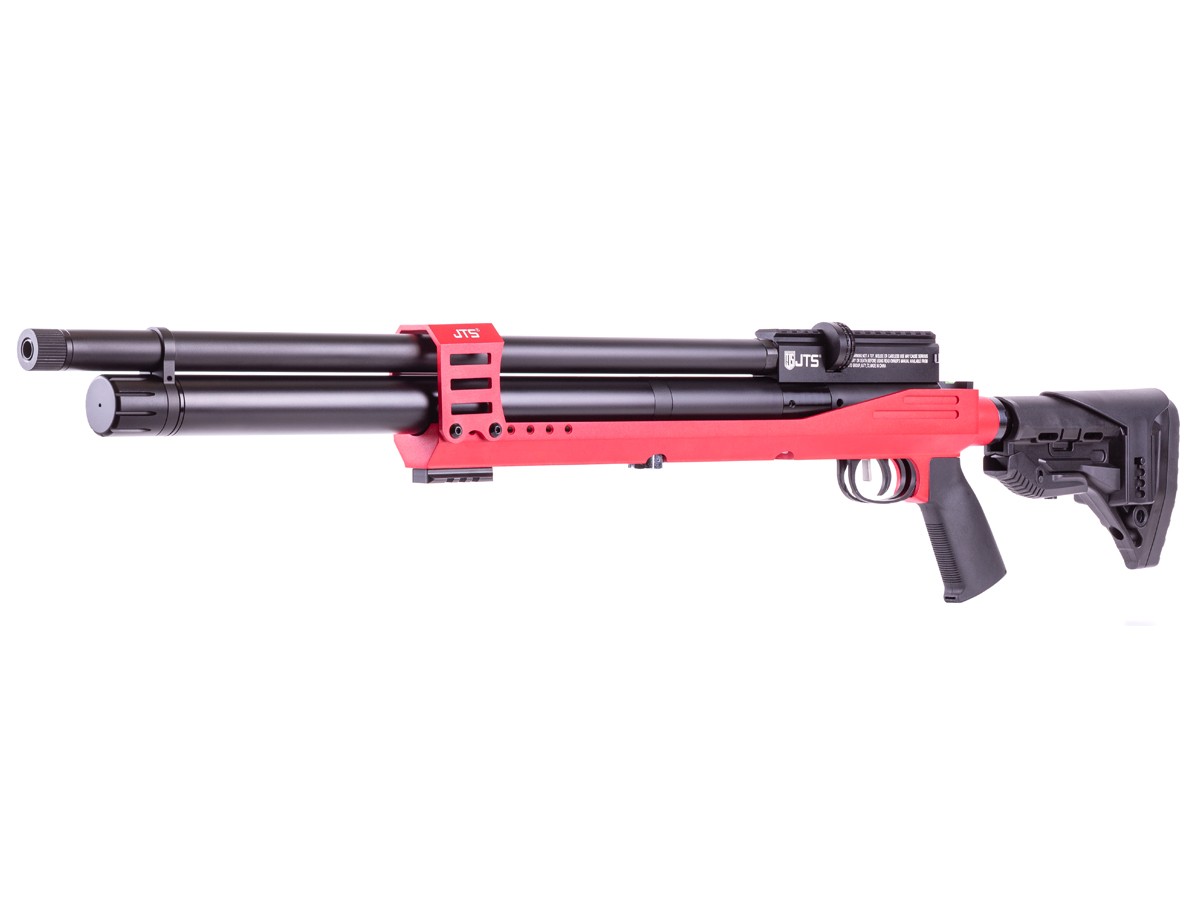
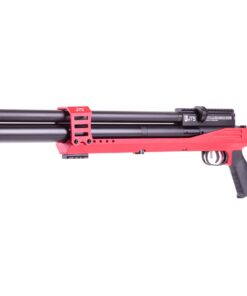
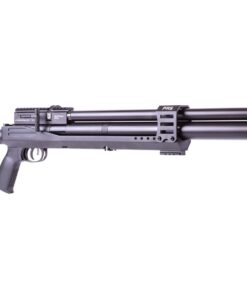
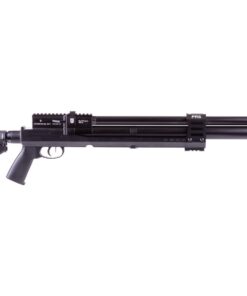
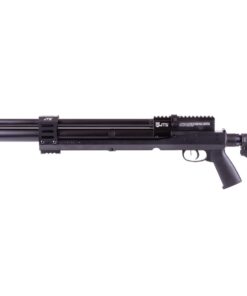
The JTS Airacuda PRS Max combines a regulated pre-charged pneumatic platform with a distinctive aluminum-alloy chassis designed around stability, adjustability, and organized accessory mounting. Developed as a more competition-oriented member of the Airacuda family, this PCP air rifle places particular emphasis on ergonomics, repeatable handling, and a configurable shooting position.
Rather than relying on a conventional sporting stock, the rifle is built around a rigid chassis system. Consequently, shooters can adjust important contact points while maintaining a stable platform for recreational target shooting and organized sporting applications.
JTS currently lists the platform in .22, .25, and .30 caliber configurations, allowing the specification to be selected according to local regulations and the intended lawful sporting application. The manufacturer also equips the rifle with a regulated action, sidelever operating system, adjustable stock assembly, cheek riser, AR-style grip, and integrated accessory interfaces.
Precision-Oriented PCP Platform
Consistency is an important characteristic of any PCP platform, and the JTS Airacuda PRS Max has therefore been designed around an internally regulated air system.
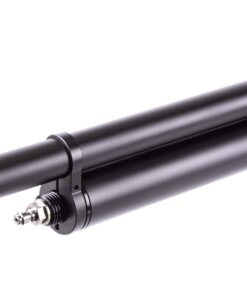
Compressed air is stored inside a 220 cc cylinder, while the maximum listed operating pressure is approximately 3,200 PSI / 220 bar. A regulator is incorporated into the system to help manage air delivery from shot to shot.
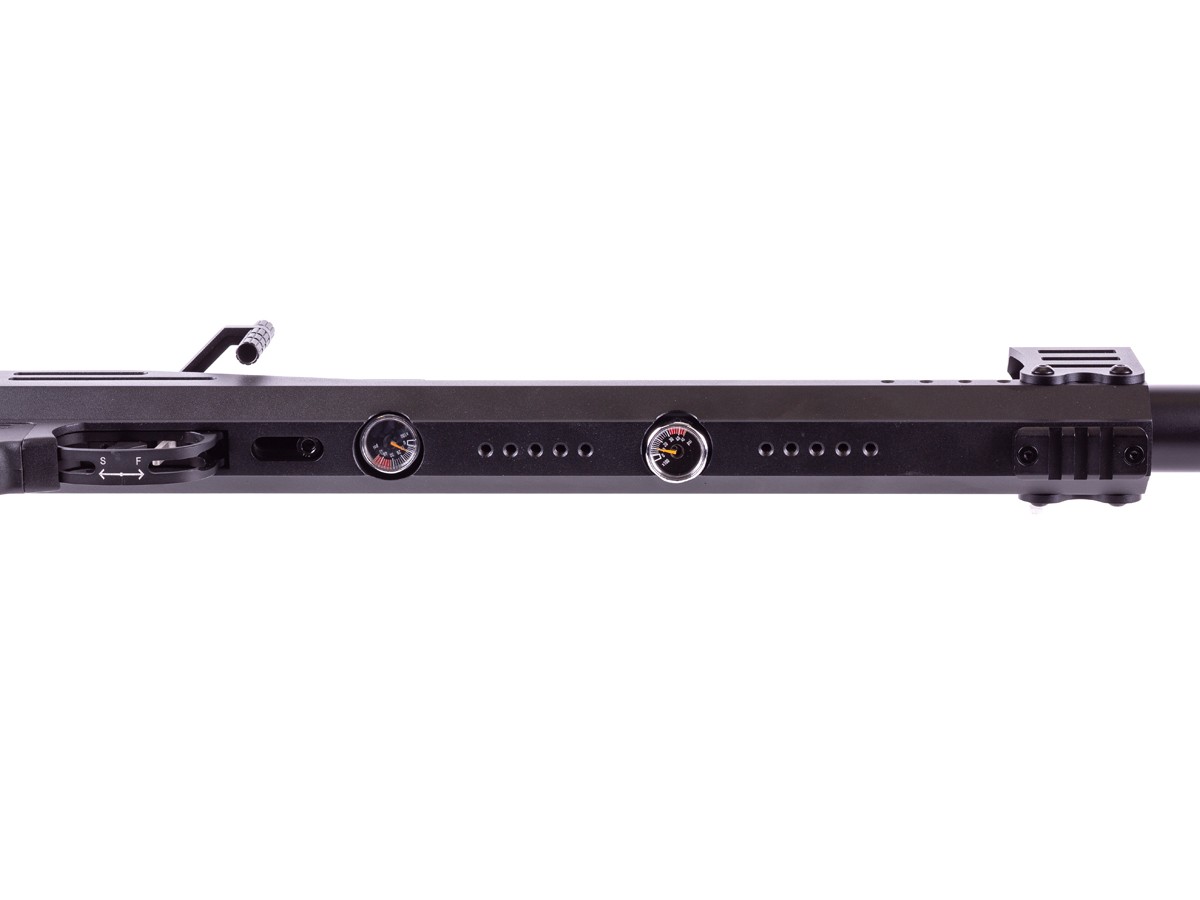
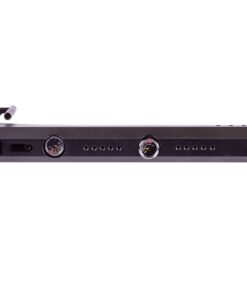
Additionally, the pressure gauge can be configured in different positions. This provides greater flexibility when configuring the rifle around different accessories or shooting setups.
The sidelever action has also been positioned to support straightforward cycling. Meanwhile, the two-stage adjustable trigger allows the rifle’s control interface to be configured according to the manufacturer’s instructions and applicable sporting requirements.
Aluminum-Alloy PRS Chassis
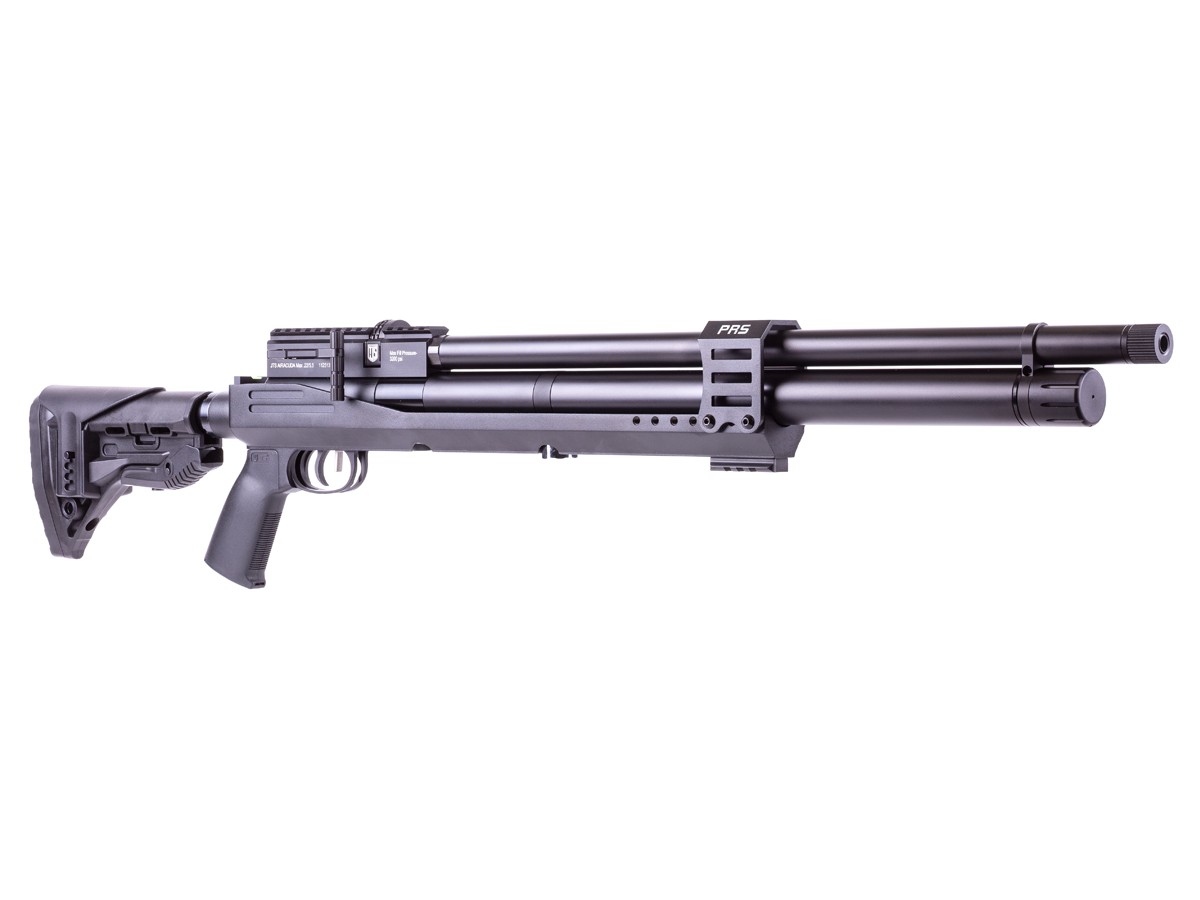
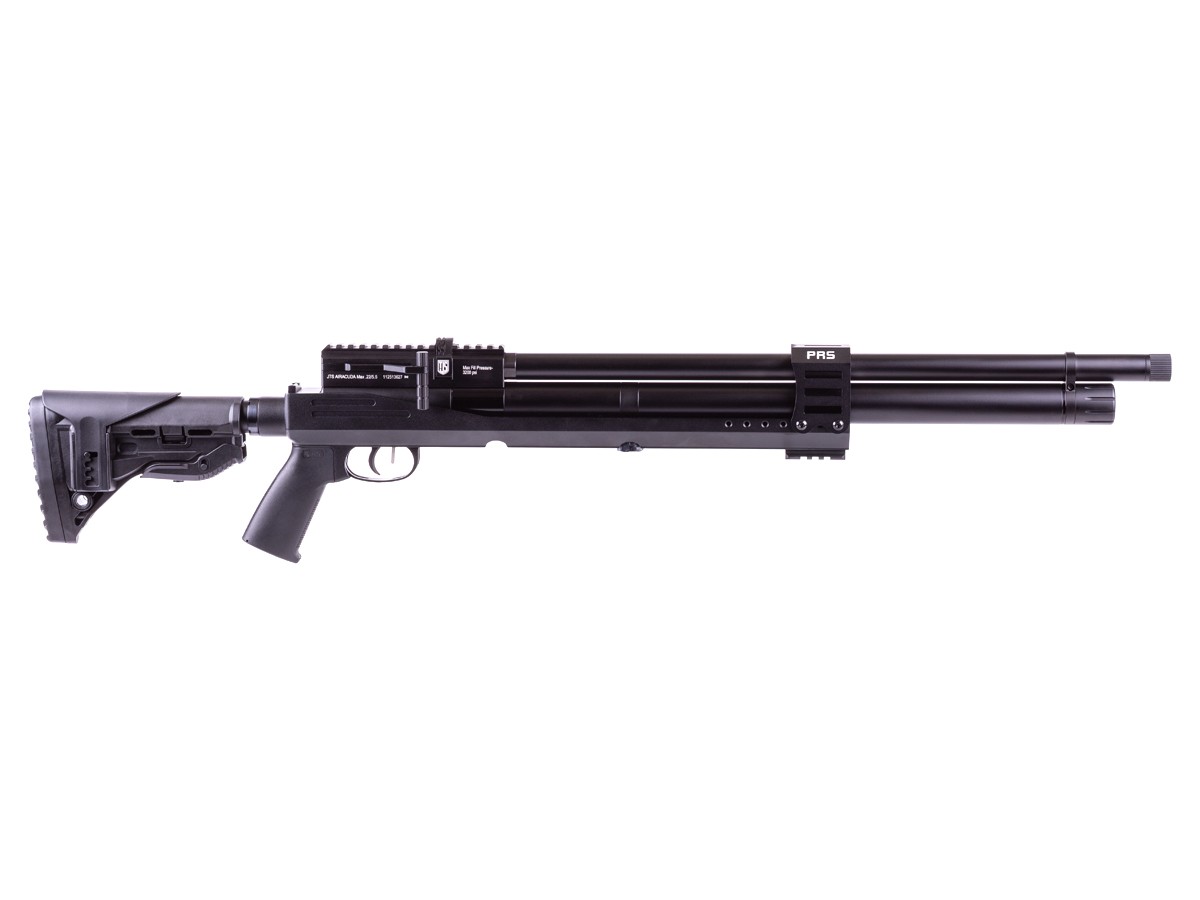
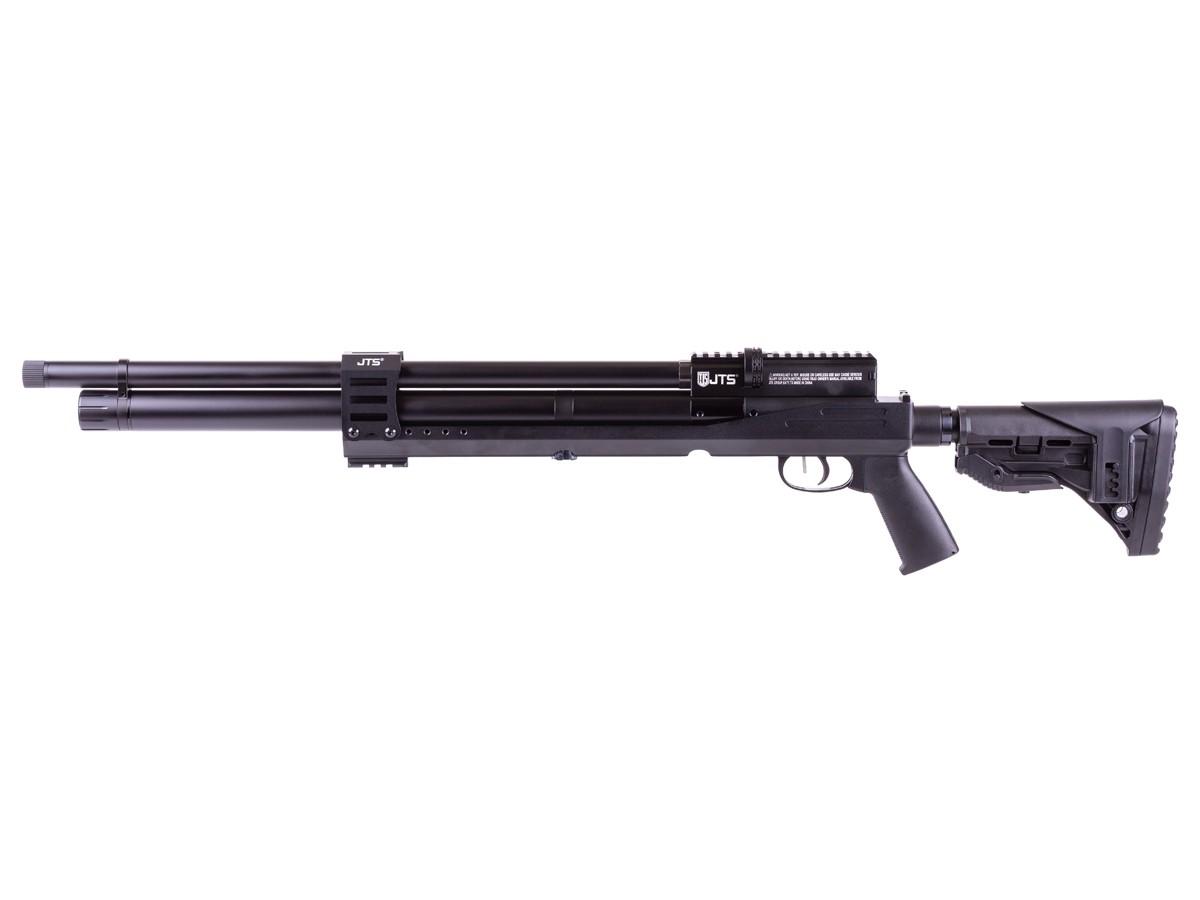
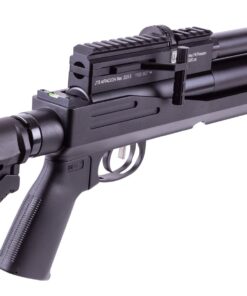
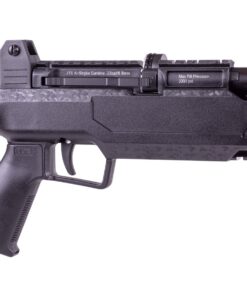
One of the most recognizable elements of the JTS Airacuda PRS Max is its aluminum-alloy chassis.
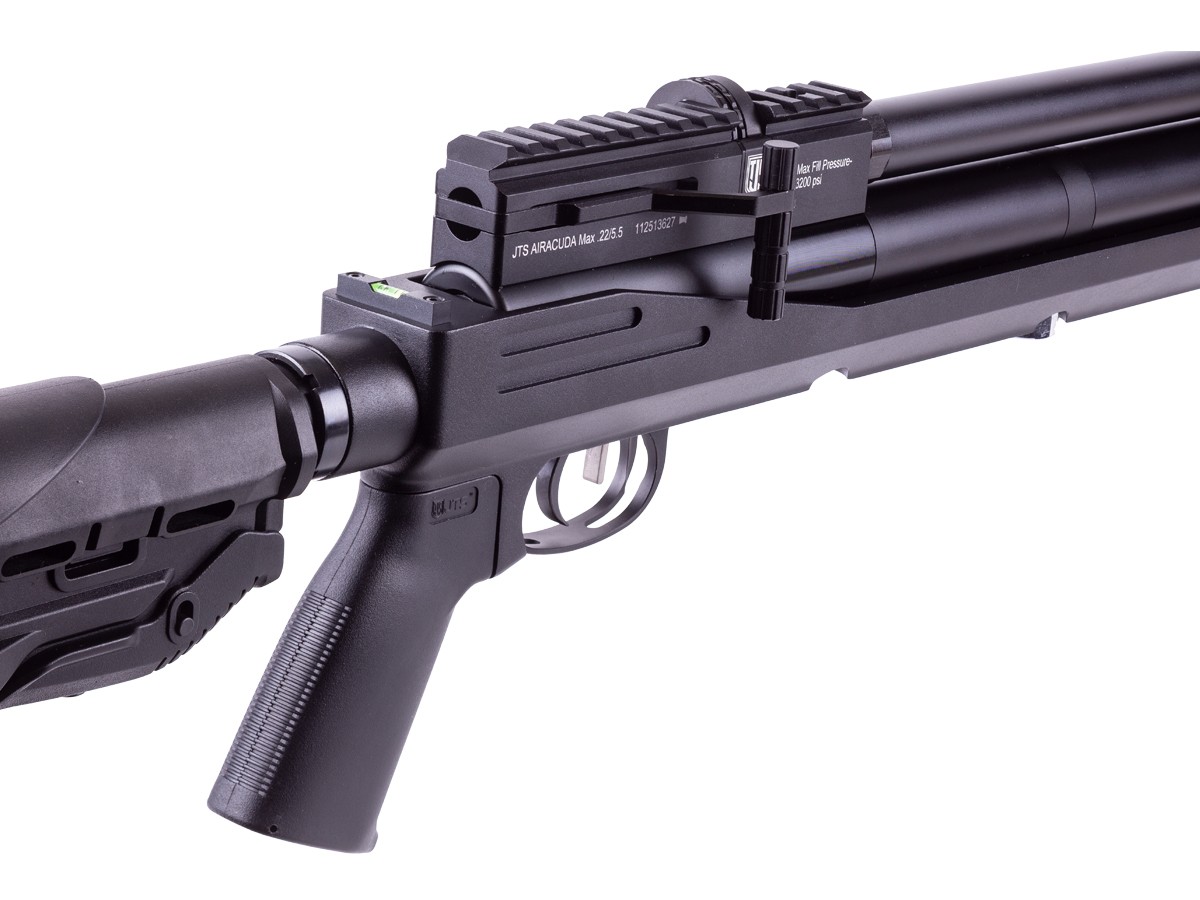
Unlike a traditional wood-stock configuration, the chassis creates a rigid structure around the PCP action while providing multiple adjustment and accessory options. JTS describes the design as being shaped to improve ergonomics and lever accessibility.
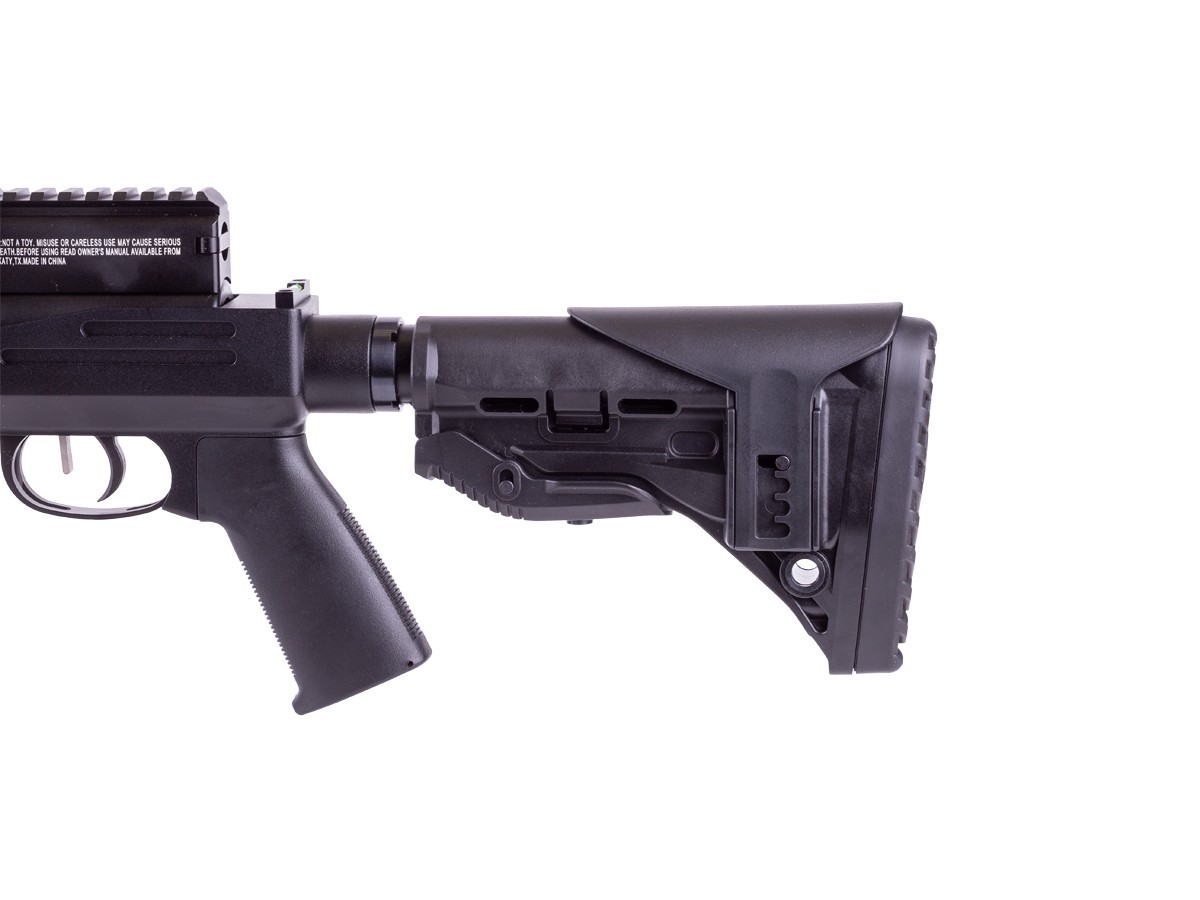
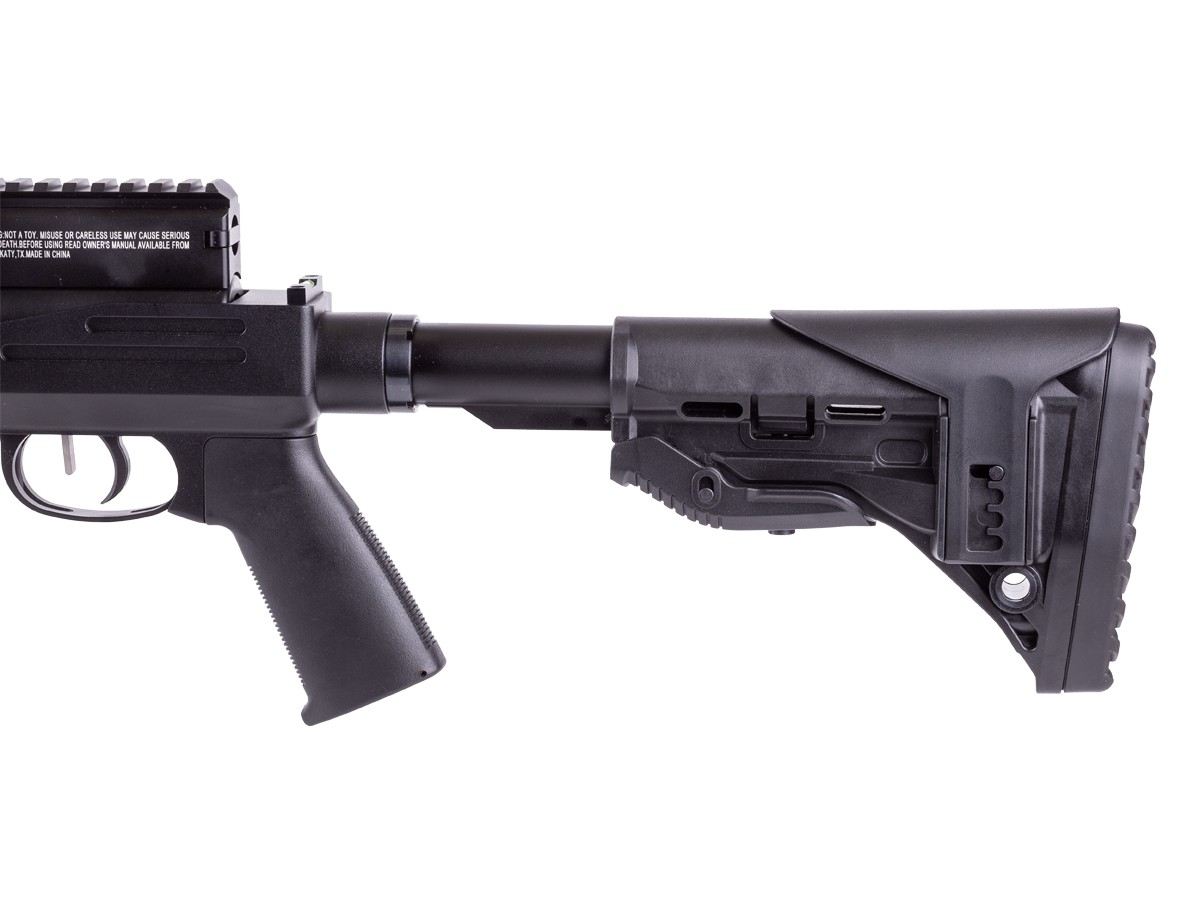
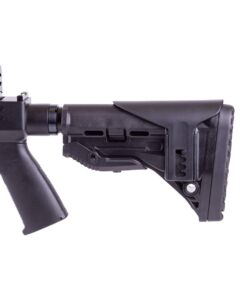
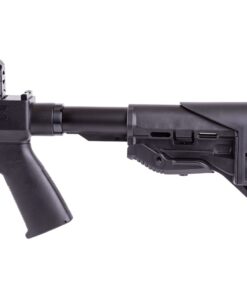
Moreover, the chassis is paired with an adjustable rear stock and cheek riser. Therefore, eye alignment and shoulder positioning can be adapted more easily when the rifle is being configured for different users or optics.
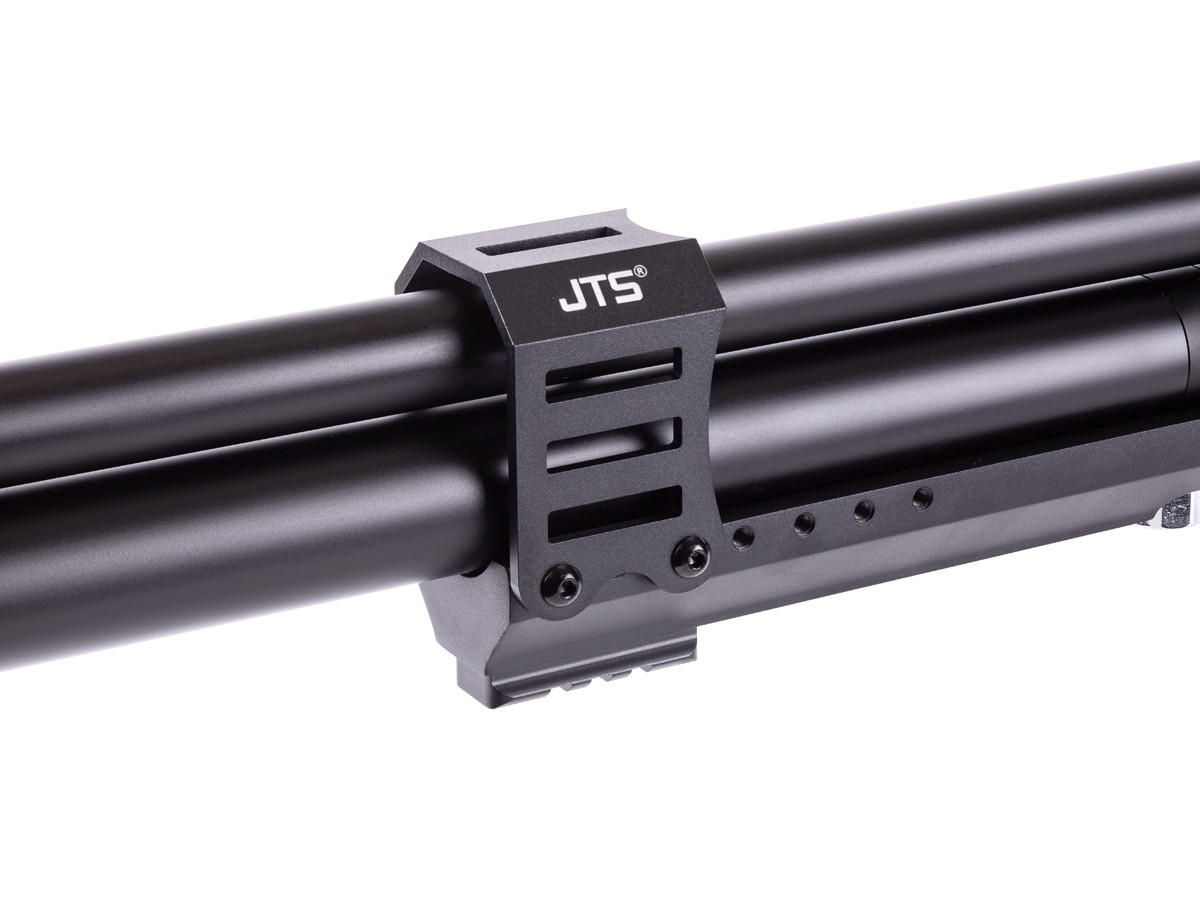
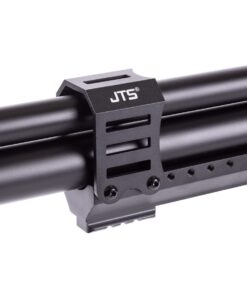
An AR-pattern grip is fitted as part of the system. Likewise, accessory rails allow compatible sporting equipment to be mounted where permitted.
JTS Airacuda PRS Max Key Features
Important manufacturer-listed specifications include:
- Regulated PCP operating system
- Custom aluminum-alloy chassis
- Available in .22, .25 and .30 caliber
- 220 cc compressed-air cylinder
- Maximum operating pressure of 3,200 PSI / 220 bar
- Sidelever action
- Two-stage adjustable trigger
- Manual safety
- Adjustable buttstock
- Elevation-adjustable cheek riser
- AR-style grip
- Integrated bubble level
- Picatinny optics interface
- Lower accessory rail
- Rifled barrel
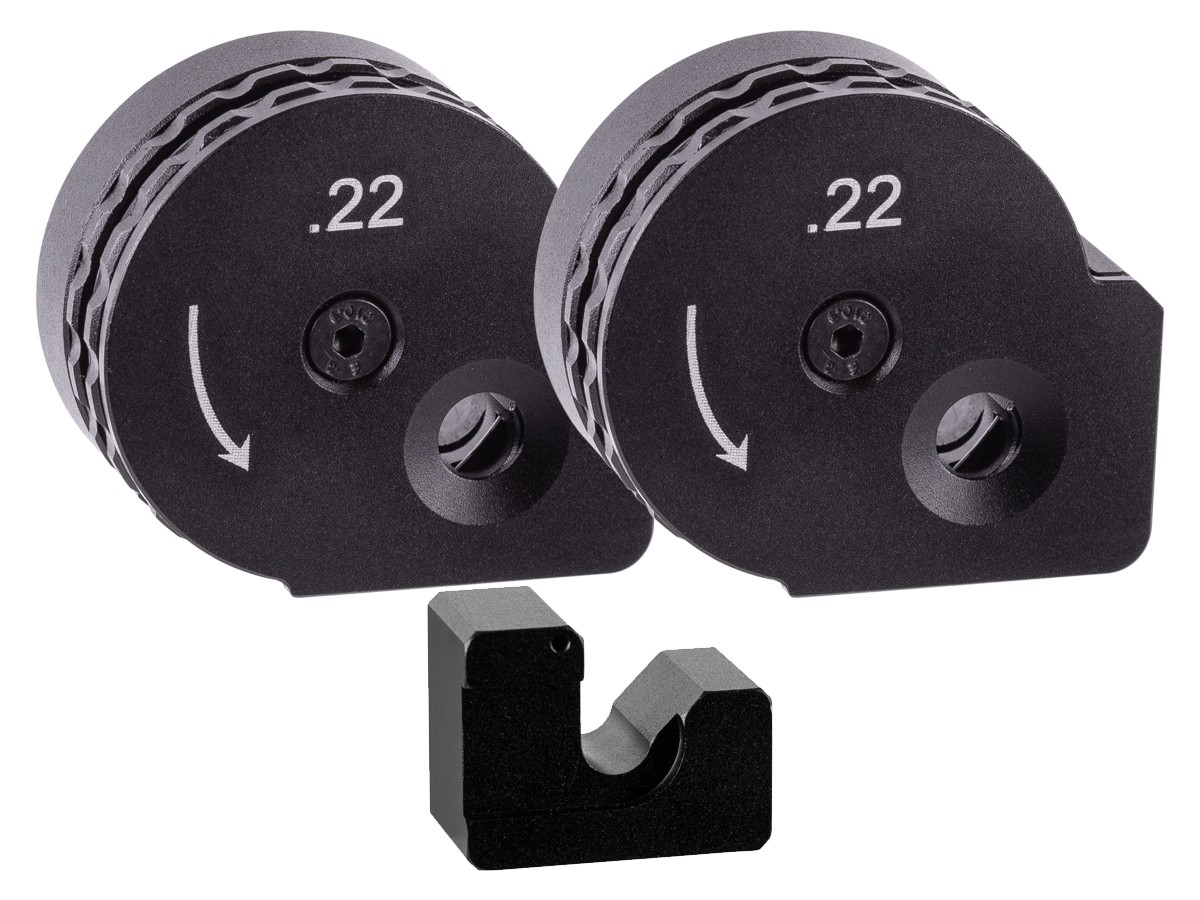
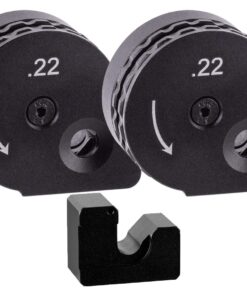
- Two metal magazines supplied by the manufacturer
- Single-shot tray included
- Customizable pressure-gauge positioning
- Approximately 21.1-inch barrel
- Approximately 38.8–41.2-inch overall length
- Approximately 8.5 lb weight
Specifications should always be checked against the exact caliber and regional version before use because configuration and legal power limits can differ between markets.
Adjustable Design for Different Shooting Positions
Fit plays an important role in repeatable sporting performance. Accordingly, several areas of the JTS Airacuda PRS Max can be adjusted.
The buttstock can be repositioned to accommodate different body dimensions and shooting positions. At the same time, the cheek riser helps establish a more consistent relationship between the shooter’s eye and a properly fitted optic.
Because these adjustments are incorporated into the chassis architecture, the rifle can be configured for supported target shooting, bench use, recreational range sessions, and other lawful sporting environments.
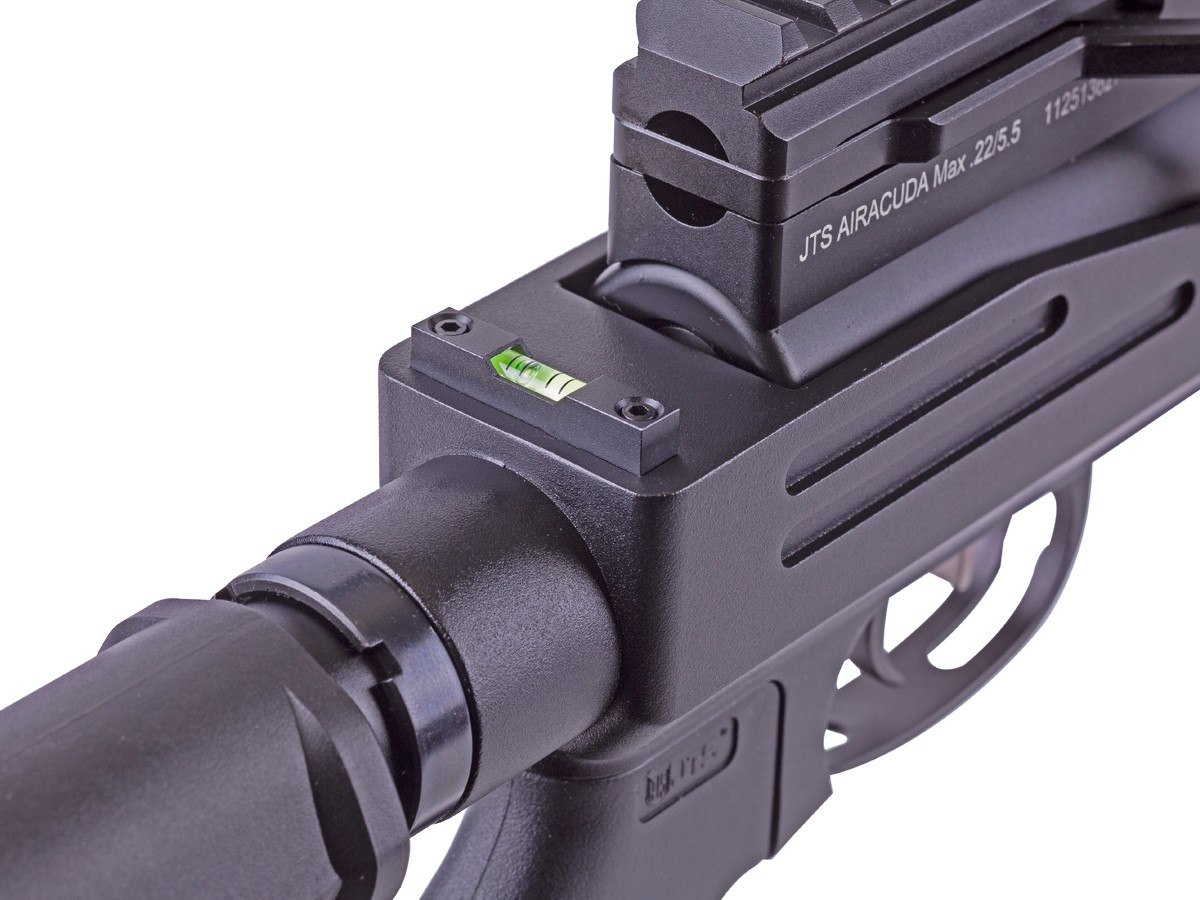
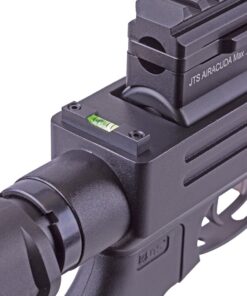
Furthermore, an integrated bubble level can help users recognize unwanted cant when establishing a stable shooting position.
Optics and Accessory Compatibility
A Picatinny-style optics rail has been incorporated into the rifle. As a result, compatible sporting optics can be installed according to their manufacturers’ mounting instructions.
Additional mounting space is provided underneath the chassis. Consequently, permitted accessories such as appropriate rests or support equipment may be incorporated into a range-oriented configuration.
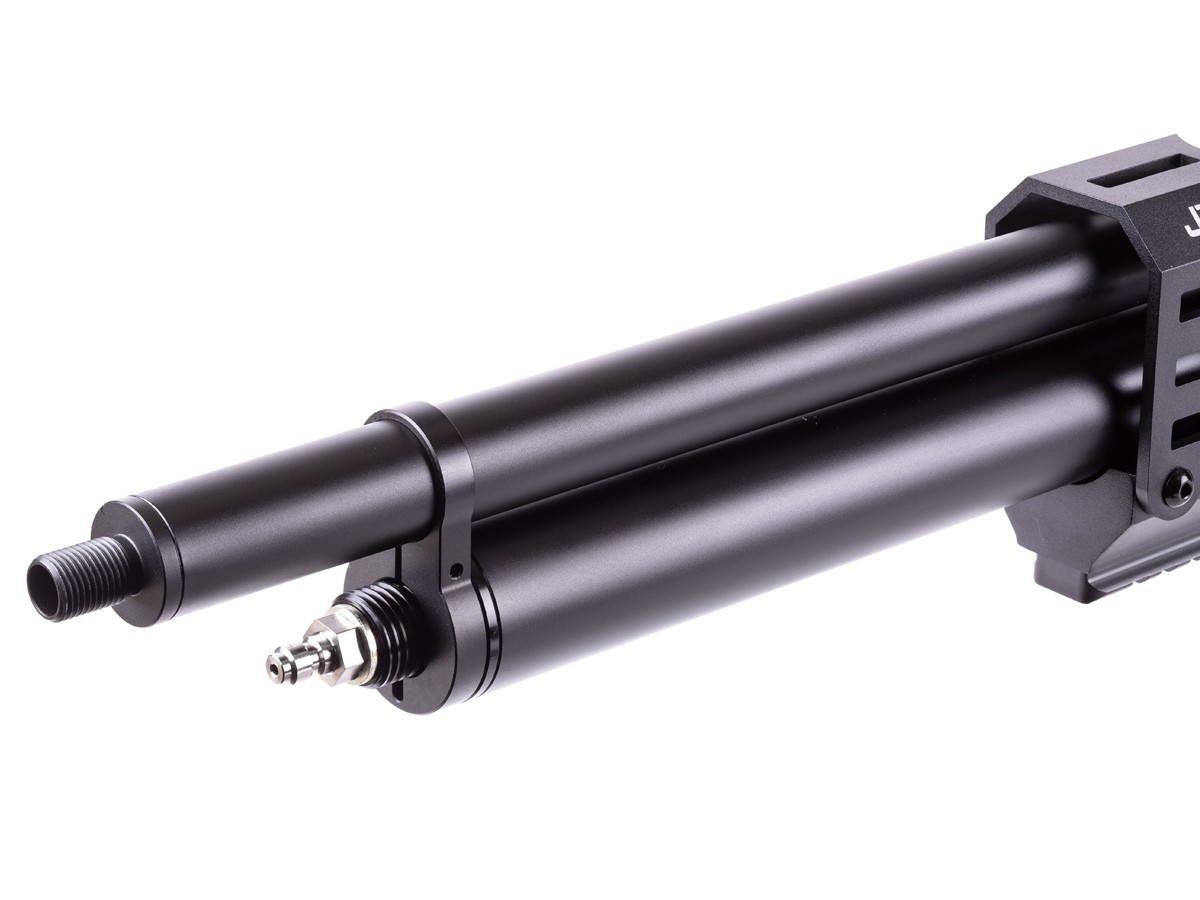
The barrel is rifled, while JTS lists the .22 and .25 versions with 1/2 UNF threading and the .30 version with M18-1 threading. Local regulations should always be checked before fitting any muzzle accessory.
Caliber Configurations
The JTS Airacuda PRS Max is manufactured in several caliber configurations.
JTS lists maximum velocities of approximately 950 fps for .22, 920 fps for .25, and 860 fps for .30, although actual velocity varies according to projectile weight, environmental conditions, rifle configuration, regional power restrictions, and other factors.
Magazine capacity also varies by caliber. Manufacturer specifications indicate ten-round magazines for .22 and .25 models, while the .30 configuration uses a seven-round magazine.
Likewise, the manufacturer’s stated approximate maximum shot counts are 40 shots for .22, 30 for .25, and 20 for .30 under its stated conditions. Real-world results can vary substantially.
Designed Around Consistency and Control
A major attraction of the PRS Max platform is the combination of a regulated PCP mechanism and adjustable chassis.
Instead of concentrating exclusively on headline velocity, its design places substantial emphasis on repeatable positioning, equipment compatibility, and shooter interface.
The 21.1-inch barrel is housed within a platform measuring approximately 38.8 to 41.2 inches overall, depending on stock adjustment. At approximately 8.5 pounds before additional equipment is installed, the rifle has a substantial chassis-based profile.
Therefore, users considering the platform should evaluate both its adjustability and its physical dimensions when determining whether it suits their intended sporting discipline.
Practical Sporting Applications
For lawful sporting use, the JTS Airacuda PRS Max is principally suited to shooters who value a configurable PCP platform.
Its adjustable stock and cheekpiece can be useful during structured range sessions because the rifle can be fitted around the user’s shooting position. Meanwhile, the regulated action supports the platform’s emphasis on consistent operation.
The single-shot tray provides another configuration option where deliberate single loading is preferred during certain target disciplines.
Additionally, two metal magazines are included according to JTS specifications, giving users an alternative configuration when magazine-fed operation is permitted and appropriate.
Responsible Ownership and Maintenance
Like every high-pressure PCP air rifle, the JTS Airacuda PRS Max should be handled only by responsible users who understand its operating system.
The manufacturer’s manual should be reviewed before filling, loading, adjusting, transporting, maintaining, or storing the rifle. Only compatible high-pressure filling equipment should be used, and specified pressure limits must never be exceeded.
A safe backstop, appropriate eye protection, secure storage, correct projectile selection, and strict muzzle discipline remain essential whenever the rifle is handled.
Laws governing air rifles also vary considerably between countries and regions. Consequently, caliber, energy limits, licensing requirements, permissible shooting locations, transportation rules, and accessory restrictions should always be verified locally.
JTS Airacuda PRS Max Overview
The JTS Airacuda PRS Max represents a chassis-based evolution of the Airacuda PCP platform. A regulated pneumatic system is combined with an aluminum-alloy chassis, adjustable rear stock, raised cheek support, sidelever action, integrated bubble level, accessory rails, and multiple caliber options.
Most importantly, the design centers on configurability and repeatable sporting use rather than a traditional fixed-stock layout.
For target shooters comparing modern PCP platforms, the Airacuda PRS Max therefore provides a useful combination of adjustability, regulated operation, accessory compatibility, and clearly defined .22, .25, and .30 caliber configurations.
Before selecting or operating any version, users should confirm the precise regional specification and comply with all applicable laws, range regulations, storage requirements, and manufacturer safety instructions.
JTS Airguns, Airacuda, Kral Arms, Reximex and PCP Air Rifle Guide
The modern PCP market covers a broad range of platforms, calibers, accessories, and shooting styles, with JTS airguns becoming increasingly visible among enthusiasts searching for performance-focused pneumatic rifles. Popular searches include JTS Airacuda, JTS Airacuda Max, Airacuda, JTS Aircuda, Airacuda Max, and JTS Aircuda Max, reflecting strong interest in this family of regulated PCP rifles. Shooters researching ammunition also commonly look for JTS pellets, while those comparing compact or alternative platforms may search for the JTS Airstryke, JTS Airstryke Carbine, and other JTS guns.
Caliber-specific searches are equally important. Terms such as JTS Airacuda 25 and JTS Airacuda Max 30 cal are frequently used by buyers comparing configurations and specifications. Other searches connected with the wider brand ecosystem include JTS firearms, JTS Group, JT guns blog, field supply airguns, Trenier Outdoors, TSC air, QTS 11, JPC 100, lindstradt air gun, tom air gun, and even broader or less directly related searches such as JROTC air rifle and jschlatt gun.
JTS Airacuda and Airstryke Searches
The JTS Airacuda platform attracts attention because many shooters compare it with other PCP rifles in similar price and performance categories. Search variations such as JTS Aircuda, JTS Aircuda Max, Airacuda, and Airacuda Max are commonly entered by users who may spell or abbreviate the product name differently. Meanwhile, the JTS Airstryke and JTS Airstryke Carbine expand the range of search intent toward compact PCP configurations.
Ammunition research often accompanies rifle research, which explains searches for JTS pellets alongside rifle model queries. Buyers may compare pellet weights, caliber compatibility, accuracy characteristics, and intended target use before selecting ammunition appropriate for their particular air rifle.
Hatsan PCP and Semi-Auto Searches
Another major group of related search terms concerns Hatsan products. These include Hatsan Sortie Tact semi-auto PCP, Hatsan Sortie, Hatsan Sortie Tact, Hatsan Jet, and Hatsan Jet 3. These searches often appear when enthusiasts compare compact PCP systems, semi-automatic platforms, and portable airgun designs.
Because buyers frequently research several brands during the same shopping session, JTS products may be compared with Hatsan, Kral Arms, Reximex, and other manufacturers before a final model is selected.
Kral Arms and Kral Puncher PCP Air Rifles
Kral Arms has a substantial presence in airgun searches, particularly among users researching PCP rifles. Search variations include KRQL, Kral NP 02, Kral Puncher, Kral Breaker Puncher, Kral Puncher K, Puncher Mega, Shadow Puncher, and Puncher Auto. These terms represent different model families as well as spelling variations entered by customers searching online.
Other Kral-related search phrases include Kral pump, Kral airguns, Krale airguns, Krale wholesale, KR9, KR9 rifle, KR-101, NP500, Bigmax, Raptor S, Dazzle S, EmpireX, TacticalX, Tactical Tundra, Rutundra, ST 500, and ST-500.
Search behavior does not always follow official product naming. As a result, visitors may also enter variants such as kr al, kiral, kroll firearms, kar gun, k gun, kora gun, aram gun, and akr gun while looking for rifles, parts, manufacturers, or related shooting equipment.
International searches can introduce additional terminology. Examples include الكرال, av tüfeği, and tabancalar, which may appear alongside English-language product and category searches.
PCP Air Rifles and Related Search Terms
Broad-category phrases remain important for users who have not yet selected a specific brand. These include PCP air rifles, PCP rifles, PCP air gun, air rifle PCP, rifle PCP, and rifles PCP 5.5. These phrases can lead shoppers toward a wider selection before they narrow their choice to a particular manufacturer or model.
Users comparing platforms may also search for terms such as muskrat gun, kalibre pistol, kahr firearms, and king arms FAL. Because several of these phrases refer to different product categories or manufacturers, specifications and legal classifications should always be checked individually rather than assuming that similarly worded searches describe the same type of equipment.
Reximex Airguns and PCP Models
Reximex airguns represent another important category within PCP search traffic. Common product searches include Reximex RP, Reximex Throne Gen 2, Reximex Mito, Reximex Mitos, Reximex RPA, and Reximex Lieva. These searches often come from shooters comparing configurations, ergonomics, caliber choices, air-cylinder capacity, and other factory specifications.
Reximex products may be compared directly with JTS, Kral, Hatsan, and other PCP manufacturers. Consequently, a shopper researching the JTS Airacuda Max may also investigate a Reximex Throne Gen 2, Kral Puncher, Kral NP 02, or another PCP rifle before deciding which configuration best suits their intended lawful sporting or target use.
Shotgun and Firearm-Related Search Variations
Some search phrases in this wider keyword group refer to firearm platforms rather than PCP airguns. Examples include 223 rifle, 223 guns, 223 arma, 410 shotgun semi auto magazine fed, inertia shotguns, K12 shotgun, KP12, A12 shotgun, XM shotgun, shotgun XM, Krieg shotgun, and SBS12.
Accessory-oriented searches include JTS X12PT shotgun accessories and JTS shotgun accessories. Users entering these terms may be looking for product compatibility information, replacement components, or manufacturer-specific accessories.
Other broader firearm-related search phrases include rifle cal 22 semiautomatico and Kahr firearms. Because legal definitions, licensing requirements, permitted calibers, magazine rules, and ownership regulations differ by jurisdiction, users should verify the rules applicable in their location before purchasing or possessing regulated equipment.
Additional Model and Brand Searches
The wider search ecosystem includes terms such as Ekinoks, King Arms FAL, Raptor S, EmpireX, Bigmax, and TacticalX. Although some searches overlap semantically, each unique term can represent a distinct user query and should therefore be handled with product-specific information where appropriate.
For customers specifically researching PCP equipment, the strongest relevance remains around JTS Airguns, JTS Airacuda, JTS Airacuda Max, JTS Airstryke, Kral Arms, Kral Puncher, Kral Breaker Puncher, Kral NP 02, Reximex Airguns, Reximex Throne Gen 2, Reximex Mito, and related PCP air rifles. Clear specifications, accurate model identification, compatible ammunition information, and transparent product descriptions help visitors distinguish among these different platforms without confusing unrelated product categories.
JTS Airacuda PRS Max Calibres, FAC Power and Accessories
The JTS Airacuda PRS Max is offered in three principal calibres: .22, .25, and .30. Each configuration gives the rifle a slightly different performance profile, magazine capacity, shot count, and muzzle-energy potential. Therefore, the most appropriate version depends on the intended lawful sporting application, local regulations, projectile choice, and the balance a shooter prefers between velocity, energy, and air consumption.
Because the platform is regulated and powered by a 220 cc compressed-air cylinder, performance is delivered through a controlled PCP system rather than a spring or gas-ram mechanism. The rifle operates at a maximum listed fill pressure of approximately 3,200 PSI / 220 bar, while an internal regulator helps stabilize air delivery during the usable portion of the fill.
.22 Calibre JTS Airacuda PRS Max
The .22 calibre version provides the highest listed velocity in the PRS Max range. JTS specifies a maximum velocity of approximately 950 fps, while current retailer specifications list maximum energy of approximately 36 ft-lb when tested with an 18.1-grain JTS pellet. Actual performance can vary according to ammunition weight, regulator behaviour, atmospheric conditions, individual rifle tolerances, and regional power restrictions.
This configuration uses a 10-round magazine, and JTS lists a maximum of approximately 40 shots per fill under its reference conditions. Consequently, the .22 version offers the highest published shot count of the three calibres.
For sporting users who prioritize a combination of manageable pellet weight, comparatively high velocity, and efficient air consumption, the .22 configuration provides a balanced specification.
.25 Calibre Configuration
Moving to .25 calibre increases projectile mass while retaining a listed maximum velocity of approximately 920 fps. Current published specifications indicate maximum energy around 48 ft-lb when using the referenced 25.39-grain JTS projectile. Again, this figure should be treated as a manufacturer or retailer test specification rather than a guaranteed output for every rifle and ammunition combination.
Magazine capacity remains at 10 rounds, while the manufacturer lists approximately 30 shots per fill.
Compared with the .22 version, the .25 model therefore exchanges some air efficiency for a heavier projectile and increased published muzzle energy. That distinction makes calibre selection particularly important where national or regional airgun power limits apply.
.30 Calibre Configuration
The largest standard configuration is the .30 calibre JTS Airacuda PRS Max.
JTS lists a maximum velocity of approximately 860 fps, while published retailer testing places maximum energy at approximately 74 ft-lb when using a 45.06-grain JTS pellet. Because significantly more compressed air is required to propel the heavier projectile, the manufacturer lists approximately 20 shots per fill.
Magazine capacity also decreases to 7 rounds.
Additionally, the muzzle interface differs from the smaller calibres. The .22 and .25 versions use a 1/2 UNF threaded interface, whereas the .30 configuration is listed with an M18-1 thread. Any muzzle accessory must be legal in the user’s jurisdiction and compatible with the exact rifle configuration.
FAC and Regional Power Considerations
The term FAC is commonly encountered in markets where higher-powered air rifles are regulated differently from lower-powered models. However, whether a specific JTS Airacuda PRS Max requires a licence, certificate, permit, registration, or other authorization depends entirely on the jurisdiction where it is possessed or used.
Consequently, the manufacturer’s maximum power figures should never be interpreted as confirmation that a particular configuration can legally be owned or operated without additional authorization.
Regional versions may also be supplied at different power levels.
Before selecting a calibre, users should therefore verify:
- Maximum permitted muzzle energy in their jurisdiction
- Whether an FAC, firearms certificate, licence, or permit is required
- Minimum age requirements
- Transportation and storage obligations
- Rules governing shooting locations
- Restrictions affecting muzzle accessories
- Whether calibre-specific limitations apply
The rifle should always be operated in the configuration approved for the relevant market.
Power and Regulated PCP Performance
A major component of the PRS Max design is its internally regulated PCP action.
Rather than releasing air directly from the cylinder at progressively changing pressure, the regulator manages the pressure supplied to the firing system. As a result, the rifle is designed to provide more consistent operation throughout the usable portion of the fill.
The main published performance figures are:
- .22 calibre: up to 950 fps and approximately 36 ft-lb
- .25 calibre: up to 920 fps and approximately 48 ft-lb
- .30 calibre: up to 860 fps and approximately 74 ft-lb
- Maximum operating pressure: 3,200 PSI / 220 bar
- Cylinder capacity: 220 cc
- Approximate shots per fill: 40 in .22, 30 in .25, and 20 in .30
- Regulated system: Yes
These figures are reference specifications rather than fixed results. Pellet mass, pellet fit, temperature, air pressure, maintenance condition, and rifle configuration can all influence measured velocity and energy.
Accessories and Equipment Compatibility
The JTS Airacuda PRS Max has been designed around a modular aluminum-alloy chassis, giving it considerably more accessory flexibility than many traditional wood-stock PCP rifles.
Supplied Equipment
According to the manufacturer, the rifle is supplied with:
- Two metal magazines
- Single-shot tray
- Adjustable buttstock
- Elevation-adjustable cheek riser
- AR-style grip
- Integrated bubble level
- Manual safety
- Adjustable two-stage trigger
- Customizable pressure-gauge positioning
The magazine capacity depends on calibre, with 10-round magazines used for .22 and .25 and a 7-round magazine specified for .30.
Optics and Mounting Accessories
A Picatinny optics rail is provided for compatible sporting optics. Therefore, appropriately matched scopes and mounts can be installed while maintaining the adjustable cheekpiece needed for proper eye alignment.
A lower Picatinny accessory rail is also incorporated into the chassis. This provides mounting space for compatible lawful sporting accessories or range-support equipment.
Because optic dimensions and mounting heights vary, users should confirm ring height, tube diameter, objective clearance, and rail compatibility before fitting equipment.
Filling Equipment
Since the rifle operates at up to 3,200 PSI / 220 bar, appropriate high-pressure filling equipment is required.
Compatible filling systems can include purpose-built PCP compressors, approved high-pressure cylinders, or manufacturer-compatible hand pumps capable of reaching the required working pressure.
Only equipment rated for the necessary pressure should be connected to the rifle. Seals, hoses, fill fittings, and gauges should also be inspected regularly according to their manufacturers’ instructions.
Choosing the Appropriate Configuration
Ultimately, the JTS Airacuda PRS Max provides three distinct calibre options within the same adjustable chassis platform.
The .22 version emphasizes higher velocity and a greater manufacturer-rated shot count. Meanwhile, the .25 version increases projectile mass and published energy while retaining a 10-round magazine. Finally, the .30 version provides the highest published muzzle energy but uses more compressed air and carries fewer rounds per magazine.
Combined with its regulated 220 cc PCP system, adjustable stock, Picatinny mounting interfaces, interchangeable sporting equipment options, and multiple calibre configurations, the PRS Max offers a highly adaptable platform for lawful target, range, and other permitted sporting applications.
Before use, however, the exact calibre, power level, filling specification, accessory compatibility, and legal classification should always be confirmed for the rifle’s intended market.
Frequently Asked Questions
What is the JTS Airacuda PRS Max?
The JTS Airacuda PRS Max is a regulated pre-charged pneumatic air rifle built around a rigid aluminum-alloy chassis. Rather than using a traditional wooden sporting stock, the rifle incorporates an adjustable rear stock, cheek riser, AR-style grip, accessory rails, sidelever action, and integrated bubble level.
Its design is primarily intended to provide a highly configurable platform for lawful recreational shooting, target practice, range use, and other sporting applications. The regulated pneumatic system also helps manage air delivery during the usable portion of each fill.
Which calibres are available?
The rifle is currently offered in .22, .25, and .30 calibre configurations. Each calibre produces a different combination of projectile weight, velocity, magazine capacity, air consumption, and manufacturer-rated shot count.
The .22 and .25 versions both use 10-round magazines, while the .30 version uses a 7-round magazine. Because individual markets may apply different power or calibre restrictions, buyers should always verify the exact regional specification before ownership or use.
Is the rifle regulated?
Yes. The manufacturer lists the rifle as having an internal regulator.
A regulated PCP system manages the pressure supplied to the firing mechanism instead of allowing cylinder pressure alone to determine air delivery. Consequently, greater consistency can be maintained through the usable portion of the air supply.
Nevertheless, velocity can still vary because of projectile weight, temperature, mechanical condition, individual rifle tolerances, and other factors.
What is the maximum fill pressure?
The listed maximum operating pressure is approximately 3,200 PSI, equivalent to roughly 220 bar.
Because this is a high-pressure pneumatic system, only filling equipment designed and rated for the required pressure should be used. Users should never exceed the manufacturer’s maximum pressure specification.
Hoses, gauges, connectors, seals, and filling equipment should also be inspected according to the relevant manufacturers’ instructions.
How large is the air cylinder?
The rifle uses a 220 cc compressed-air cylinder.
Cylinder volume is one factor that determines how many shots may be available from a fill. However, calibre also has a significant influence because larger projectiles generally require greater quantities of compressed air.
As a result, the manufacturer lists different approximate shot counts for each configuration.
How many shots can be expected from one fill?
JTS lists approximately 40 shots in .22 calibre, 30 shots in .25 calibre, and 20 shots in .30 calibre under its reference conditions.
These numbers should be regarded as approximate rather than guaranteed. Actual results may vary according to fill pressure, regulator behaviour, pellet weight, temperature, mechanical condition, and the point at which the user considers the useful pressure range to have ended.
What velocity does each calibre produce?
According to the manufacturer’s current specifications, maximum listed velocities are approximately:
- .22 calibre – up to 950 fps
- .25 calibre – up to 920 fps
- .30 calibre – up to 860 fps
These are maximum published specifications rather than guaranteed velocities for every projectile or individual rifle. Different ammunition weights can significantly change velocity.
Does higher velocity always mean better performance?
No. Velocity is only one part of air-rifle performance.
Projectile weight, consistency, stability, accuracy, retained energy, barrel compatibility, environmental conditions, and intended sporting application can all be equally important. A heavier projectile travelling more slowly may behave very differently from a lighter projectile travelling at a higher velocity.
Consequently, users should avoid choosing a configuration exclusively from its maximum velocity figure.
Does the rifle include magazines?
Yes. JTS states that the rifle is supplied with two metal magazines.
The .22 and .25 versions have a listed magazine capacity of 10 rounds, whereas the .30 configuration uses a 7-round magazine.
A single-shot tray is also included, allowing the rifle to be configured for deliberate single loading where that format is preferred.
Does it include a single-shot tray?
Yes. A single-shot tray is included with the rifle according to the manufacturer’s specification.
This can be useful for structured range sessions or sporting disciplines where individual loading is preferred. It also provides an alternative to using the rotary magazine.
What type of action does it use?
The rifle operates through a sidelever action.
This arrangement allows the action to be cycled from the side of the receiver rather than through a conventional bolt configuration. JTS has designed the aluminum chassis around access to the lever while maintaining a competition-inspired appearance.
Is the trigger adjustable?
Yes. A two-stage adjustable trigger is included.
A two-stage trigger provides an initial stage of movement before reaching the final release stage. Adjustment should always be performed in accordance with the manufacturer’s manual.
Users should avoid modifying the mechanism outside the recommended specifications because incorrect adjustments can compromise reliability or safety.
Does the rifle have a manual safety?
Yes. The manufacturer specifies a manual safety.
However, a mechanical safety should never replace proper handling practices. The rifle should always be treated as though it could discharge, while the muzzle should remain pointed in a safe direction.
Proper storage, controlled handling, a suitable backstop, and compliance with local range rules remain essential.
What type of stock does it use?
The rifle uses a patented adjustable rear stock with an adjustable cheek riser.
This arrangement enables the rear section to be configured around different body dimensions, shooting positions, and optic heights. Consequently, users can establish a more repeatable shoulder and cheek position.
The system differs considerably from the fixed wooden thumbhole stock found on the conventional Airacuda Max.
Can the cheekpiece be adjusted?
Yes. The cheek riser is adjustable for height.
This feature becomes particularly useful when an optic is mounted because different scope-ring heights change the position at which the shooter’s eye naturally aligns with the optic.
A properly configured cheekpiece can therefore support a more consistent head position during sporting use.
What is the rifle made from?
A major feature is its custom aluminum-alloy chassis.
The chassis provides a rigid foundation for the action while also supporting the adjustable stock, grip, and accessory interfaces.
Compared with a conventional sporting stock, this architecture gives the platform a more modular and competition-oriented appearance.
How much does it weigh?
The manufacturer’s current specification lists the rifle at approximately 8.5 pounds before additional equipment is installed.
The final working weight can increase once a scope, mounts, support equipment, and other permitted accessories have been fitted.
Therefore, overall weight should be considered when configuring the rifle for a particular sporting discipline.
What is the overall length?
JTS lists an adjustable overall length of approximately 38.8 to 41.2 inches.
The variation is mainly associated with adjustment of the rear stock.
This allows overall fit to be changed according to user dimensions and preferred shooting position while retaining the same core action and chassis.
How long is the barrel?
The barrel length is approximately 21.1 inches, according to JTS.
The barrel is rifled and forms part of the rifle’s precision-oriented configuration.
As with any air rifle, actual performance depends on the interaction between the barrel, projectile, regulator, pressure system, and shooting conditions rather than barrel length alone.
Is the barrel threaded?
Yes, although thread specifications differ by calibre.
JTS lists 1/2 UNF threading for .22 and .25 calibre models and an M18-1 thread for the .30 calibre version.
Any muzzle-mounted equipment must be physically compatible and legally permitted in the user’s jurisdiction.
Can a scope be fitted?
Yes. The platform incorporates an optics mounting interface suitable for compatible equipment.
Because scopes vary considerably in objective diameter, tube diameter, eye relief, and mounting height, users should match the rings and mounting hardware to the optic and rifle.
After installation, the adjustable cheek riser can help establish comfortable eye alignment.
Does it have an accessory rail?
Yes. The chassis includes additional mounting space for compatible sporting accessories.
This modular arrangement allows a user to configure the platform around permitted range-support equipment and other appropriate accessories.
Compatibility should always be confirmed before installation because dimensions and mounting standards can vary between manufacturers.
What is the integrated bubble level used for?
A bubble level is incorporated into the rifle’s chassis design.
Its purpose is to provide a visual reference that can help identify whether the rifle is being unintentionally tilted to one side.
Consistent rifle orientation can be useful during structured target shooting, particularly when users are attempting to maintain repeatable positioning between shots.
Can the pressure gauge position be changed?
Yes. JTS lists custom pressure-gauge placement options as one of the rifle’s features.
This reflects the modular nature of the chassis platform and can help accommodate different configurations.
Any changes should still follow manufacturer recommendations to protect seals, fittings, and pressure-system integrity.
Is this the same as the standard Airacuda Max?
No. Although both platforms share the Airacuda name and regulated PCP technology, their external configurations differ considerably.
The conventional Airacuda Max uses a wooden thumbhole stock and an 18-inch barrel, whereas the PRS-oriented model uses an aluminum-alloy chassis, longer 21.1-inch barrel, adjustable rear assembly, bubble level, and expanded accessory configuration.
Does it use a spring or compressed air?
It uses a pre-charged pneumatic system, commonly abbreviated as PCP.
High-pressure compressed air is stored inside the rifle’s cylinder. Therefore, there is no spring-piston mechanism that must be compressed before every shot.
The cylinder must instead be refilled using suitable high-pressure equipment once its usable pressure has decreased.
What filling equipment is required?
A source capable of safely supplying compressed air at the rifle’s specified operating pressure is required.
Purpose-designed PCP compressors, suitable high-pressure cylinders, and certain properly rated hand pumps may be used when compatible with the rifle and its filling interface.
Every component in the filling system must be rated for the required pressure.
Can an ordinary workshop compressor fill it?
Generally, no. Typical household and workshop compressors operate at pressures far below those required by PCP air rifles.
The rifle has a maximum operating pressure of approximately 3,200 PSI, whereas ordinary pneumatic-tool compressors normally operate at only a fraction of that pressure.
Only dedicated high-pressure equipment rated for PCP use should be considered.
Is the rifle suitable for target shooting?
Its configuration strongly supports structured recreational and target use.
The adjustable stock, cheek riser, regulated air system, chassis construction, accessory interfaces, two-stage trigger, and integrated level all contribute to a platform designed around repeatable shooting positions.
Users should nevertheless follow the rules of the range or sporting organization where the rifle is being used.
Is it suitable for beginners?
That depends on the individual user’s experience, legal eligibility, supervision, and familiarity with high-pressure pneumatic equipment.
The platform offers substantial adjustability, but it also requires an understanding of safe PCP filling procedures, pressure limits, ammunition compatibility, storage, handling, and maintenance.
New users should read the official owner’s manual and receive appropriate instruction before operating any high-pressure air rifle. JTS currently provides a dedicated owner’s manual for this model through its support resources.
What maintenance does the rifle require?
Routine care generally includes keeping the exterior clean and dry, checking the pressure system for obvious damage, inspecting seals and fittings, monitoring magazine condition, and following the manufacturer’s recommended barrel and action maintenance procedures.
Only suitable products should be used around high-pressure components.
Whenever maintenance extends beyond routine user procedures, qualified servicing may be preferable.
Can the rifle remain filled during storage?
Storage procedures should follow the manufacturer’s current owner’s manual rather than general assumptions.
PCP systems contain highly compressed air, so users should avoid dismantling pressurized components or attempting unauthorized repairs.
The rifle should also be stored securely, unloaded, inaccessible to unauthorized persons, and in accordance with local regulations.
Is an FAC or licence required?
Requirements depend entirely on the country, region, calibre, and power configuration.
In some jurisdictions, higher-powered air rifles are regulated under firearms legislation, while other locations apply different licensing thresholds or ownership rules.
Therefore, users should verify local legislation before possession, transport, modification, or use. A specification offered legally in one market may not have the same legal status elsewhere.
Are the published specifications identical in every country?
Not necessarily.
Manufacturers and distributors may supply different versions to comply with national or regional legislation. Power output, included equipment, muzzle configuration, and other characteristics may therefore differ.
For that reason, customers should confirm the specifications printed for the exact model supplied within their market rather than assuming every international version is identical.k12 shotgun.
Where can the official operating instructions be found?
JTS maintains an owner’s-manual section on its official website that currently includes a dedicated manual for the Airacuda PRS Max.
The official manual should be consulted before filling, loading, adjusting, maintaining, transporting, or storing the rifle because it contains model-specific instructions that take precedence over general online guidance.
Practical Use Scenarios
The JTS Airacuda PRS Max is best understood as a configurable sporting platform rather than a rifle designed around one single shooting style. Its regulated PCP action, aluminum-alloy chassis, adjustable stock, raised cheek support, sidelever operation, accessory rails, and multiple calibre options allow it to be adapted to a variety of lawful recreational and target-oriented environments.
In practical use, those features become most valuable when consistency, repeatable positioning, controlled equipment setup, and efficient range management matter. Instead of treating adjustability as a collection of isolated specifications, users can benefit most by configuring the rifle around a clearly defined shooting scenario.
Benchrest and Supported Target Shooting
One of the most natural environments for this platform is supported target shooting from a bench.
During a bench session, the shooter can establish a stable seated position and use an appropriate front support or rest permitted by the range. Because the rear stock and cheek riser can be adjusted, the rifle can be configured so that the user’s shoulder, cheek, dominant eye, and optic remain aligned with minimal unnecessary movement.
This matters because repeatability is a major element of precision-oriented target shooting. If the shooter’s head position changes considerably between shots, sight alignment can also change. By contrast, a properly adjusted cheekpiece allows the same facial contact point to be recreated more easily.
The integrated bubble level can also provide useful visual feedback. Even on a stable bench, a rifle may be unintentionally canted to one side. A consistent reference helps the shooter recognize this variation and improve equipment orientation from one shot sequence to the next.
The regulated pneumatic system also fits naturally into this environment. Because the air supply is managed through a regulator, the platform is designed to deliver more consistent operating pressure through the usable portion of a fill. That characteristic is particularly useful during structured target groups where the goal is to evaluate consistency rather than simply fire individual shots without comparison.
Zeroing and Optic Setup Sessions
Another important practical scenario involves setting up and confirming a sporting optic.
The Picatinny mounting interface allows compatible optics to be installed using appropriate mounts. Once an optic is attached correctly, the adjustable rear section can be configured around its height and eye relief.
For example, a larger optic may require higher mounting rings. That additional height can change the user’s natural line of sight. Instead of forcing an uncomfortable head position, the cheek riser can be raised so that the eye sits more naturally behind the optic.
This adjustment can be especially helpful during longer range sessions because an awkward head position may lead to fatigue and inconsistent sight alignment.
After an optic has been mounted, a controlled range environment provides the appropriate setting for confirming alignment and establishing a lawful sporting zero. Any adjustment process should follow the optic manufacturer’s instructions and the rules of the shooting facility.
Once setup has been completed, users should periodically verify that mounts remain secure and that the optic has not shifted during transportation.
Recreational Range Sessions
The rifle is also suitable for general recreational shooting at an approved range or other lawful shooting location.
In this situation, absolute competition-level precision may not be the only objective. Instead, users may want a comfortable, repeatable platform that can be used for informal target practice over a variety of distances permitted by the facility.
The magazine-fed action can make recreational sessions more convenient where multi-shot use is allowed. Meanwhile, the included single-shot tray provides an alternative for shooters who prefer to load each projectile individually.
This flexibility means the same platform can support different shooting rhythms.
For a relaxed practice session, the magazine may provide convenient operation. During slower technical drills, however, single loading can encourage a more deliberate sequence in which the shooter checks position, breathing, optic alignment, and trigger control before every shot.
Structured Accuracy Testing
A further practical use involves testing different compatible projectiles in a controlled sporting environment.
Individual air rifles can show different accuracy characteristics with different pellet weights and designs. Therefore, some users may compare several suitable projectiles to determine which produces the most repeatable grouping in their individual rifle.
Such testing is best performed from a stable position and under controlled conditions.
Rather than changing several variables at once, users can keep the shooting position, target distance, fill procedure, support system, and environmental conditions as consistent as possible. One projectile type can then be tested in a defined group before another is evaluated.
This type of structured comparison is useful because maximum velocity alone does not determine practical accuracy. Barrel compatibility, projectile consistency, manufacturing tolerances, and environmental conditions may all affect results.
The regulated action can make this evaluation easier by reducing one source of variation within the usable pressure range.
Familiarization With a PCP Platform
For a shooter transitioning from a spring-powered air rifle to a PCP system, the platform can also serve as a learning environment for proper pneumatic-rifle management.
PCP operation introduces several procedures that may be unfamiliar to users of conventional spring rifles.
The shooter must understand fill pressure, pressure gauges, approved high-pressure connectors, safe filling technique, cylinder condition, and the relationship between air consumption and shot count.
A practical training session can therefore begin without firing.
The user can first review the owner’s manual, identify the fill point and pressure gauge, learn the maximum operating pressure, and become familiar with the safety mechanism and action.
Only after these procedures are understood should the rifle be operated on an appropriate range.
This approach reduces the likelihood of mistakes caused by treating a high-pressure pneumatic rifle in the same way as a completely different airgun system.
Calibre-Specific Sporting Sessions
The availability of .22, .25, and .30 calibre configurations creates different practical operating characteristics.
The .22 version provides the highest manufacturer-listed shot count and comparatively lower air consumption. Therefore, it can be convenient for extended recreational range sessions where a larger number of controlled shots may be taken between fills.
The .25 configuration sits between the other two options. It uses the same 10-round magazine capacity as the .22 version while operating with heavier projectiles and a lower manufacturer-listed shot count.
The .30 version uses heavier ammunition, has a seven-round magazine, and consumes more compressed air per shot. Consequently, range sessions with this configuration may involve more frequent attention to the remaining cylinder pressure.
In practice, these differences affect more than ballistic specifications. They influence session planning, how much ammunition is brought to the range, how often the rifle must be refilled, and how filling equipment is managed.
Extended Range-Day Equipment Management
A longer day at the range introduces practical logistical considerations.
Because the rifle operates from a 220 cc high-pressure cylinder, users planning extended sessions should consider how the air supply will be managed before arriving at the facility.
A suitable filling source may include compatible PCP equipment capable of safely reaching the manufacturer’s specified operating pressure.
Before leaving for the range, the user can confirm that filling connectors are compatible, seals appear undamaged, the air source has sufficient pressure, and protective caps are present where applicable.
This preparation helps avoid a common problem in PCP shooting: arriving at the range with ammunition and targets but without the correct charging equipment.
The same principle applies to magazines. Bringing both supplied magazines can simplify range organization because one can be prepared while the other is being used, where range rules permit.
Single-Shot Practice
The included single-shot tray creates a useful scenario for deliberate target training.
Rather than concentrating on repeated magazine operation, the shooter can load one projectile at a time. This naturally slows the shooting process and allows more attention to be given to each individual sequence.
A deliberate routine might involve establishing a stable position, confirming that the target area and backstop are safe, aligning the optic, controlling breathing, operating the trigger smoothly, and then reviewing the result before continuing.
The benefit of this type of practice is not speed.
Instead, the objective is consistency and awareness.
Single loading can therefore be particularly useful when users are refining technique or evaluating how small changes in position affect their target results.
Indoor Range Use Where Permitted
Where an appropriately designed indoor airgun range permits the rifle’s calibre and power level, the platform may also be used in controlled indoor sporting sessions.
Indoor environments eliminate many weather-related variables. Wind, changing sunlight, and sudden temperature fluctuations have less influence, making it easier to evaluate equipment setup and shooter technique.
However, the suitability of any particular configuration depends entirely on the facility.
A high-powered version may exceed an indoor range’s energy limits or backstop rating. Therefore, users should always confirm the permitted calibre and muzzle-energy limits before bringing the rifle to an indoor facility.
Hearing and eye protection requirements should also be followed according to range rules.
Outdoor Target Practice
Approved outdoor ranges provide a different environment.
Wind, temperature, lighting conditions, and changing target distances can introduce variables that are absent indoors.
For sporting users, these conditions can help develop a better understanding of how equipment behaves outside a highly controlled environment.
The adjustable stock and cheekpiece remain useful because the shooter can maintain the same physical interface even when environmental conditions change.
Likewise, the bubble level can help maintain a consistent rifle orientation when shooting positions or supports vary.
Nevertheless, target distances should always remain within the rules of the shooting facility and the user’s ability to maintain safe, controlled use.
Shooting From Different Supported Positions
Although bench use is an obvious application, the adjustable chassis can also be useful when transitioning between different permitted supported shooting positions.
A position that feels comfortable at a bench may not be ideal when using another form of approved support.
Because stock length and cheek height can be adjusted, users can configure the rifle around their preferred sporting position.
Any adjustment should be tested carefully before the shooting session begins.
Repeatedly changing the setup during a live firing sequence can make consistency harder to evaluate. Therefore, it is usually more practical to establish a configuration, test it under safe conditions, and then make small refinements between groups.
Training for Consistent Trigger Control
The two-stage adjustable trigger can support structured trigger-control practice.
During target shooting, unwanted movement immediately before release can affect the point of impact. A predictable trigger interface allows the shooter to become familiar with the first stage and subsequent release point.
Training should focus on smooth operation rather than rapid firing.
Users should also avoid unsafe or unauthorized trigger modifications. Any adjustment should remain within the procedure described by the manufacturer because excessively light or incorrectly configured trigger settings can compromise safe operation.
When paired with a stable support and properly adjusted stock, trigger-control practice becomes easier to evaluate because fewer unrelated variables are changing at the same time.
Equipment Fit for Different Users
The adjustable design can be especially useful when the rifle is used by more than one legally eligible shooter under appropriate supervision.
People differ in arm length, shoulder position, facial structure, and preferred optic alignment.
A fixed stock may fit one shooter well while forcing another into an uncomfortable position. With an adjustable rear assembly, the setup can be changed to better accommodate different users.
However, the original configuration should be recorded if consistent settings are important.
For example, users can note preferred stock positions and cheek-riser heights so the rifle can be returned to a known setup after another person has used it.
Maintenance and Pre-Session Inspection
Practical use also includes what happens before and after shooting.
Before a range session, the rifle should be inspected for visible damage, loose accessories, abnormal pressure loss, damaged magazines, or problems with the filling system.
The optic and mounting hardware should also be checked.
After use, the rifle can be wiped down and stored according to the manufacturer’s instructions and applicable legal requirements. Dirt, moisture, and debris should not be allowed to accumulate around moving components.
High-pressure parts should never be dismantled casually.
If an issue affects the cylinder, regulator, valve, seals, or other pressure-bearing components, service should be performed according to manufacturer guidance or by an appropriately qualified technician.
Transporting the Rifle to a Shooting Facility
Transport represents another real-world scenario that should be considered during ownership.
The rifle should be unloaded and secured in a suitable protective case. Magazines, ammunition, and filling equipment should be organized so that they cannot damage the rifle during movement.
Local laws may also impose specific transport requirements, especially for higher-powered configurations.
Therefore, owners should confirm the applicable regulations before travelling.
A rigid case can also help protect the optic from impact, while internal padding can prevent the aluminum chassis and barrel assembly from being damaged by other equipment.
Evaluating Shot Count During a Session
Because each calibre has a different manufacturer-listed shot count, users can monitor air consumption during a range session.
This is particularly useful when learning the rifle.
Rather than relying entirely on an estimated number of remaining shots, the pressure gauge should be observed according to the instructions in the owner’s manual.
Over time, users may develop a practical understanding of how many controlled shots their individual rifle normally provides within its usable pressure range.
Environmental conditions and projectile selection can still influence performance, so this should be treated as an operational reference rather than an absolute number.





Reviews
There are no reviews yet.