We Deliver Airguns Directly To Your Door
SKU N/A Category

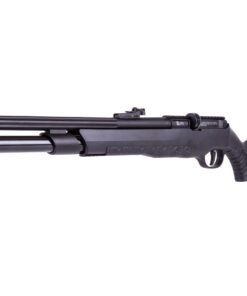
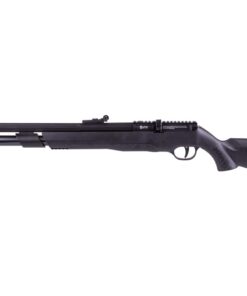
JTS AirStryke

$141.00

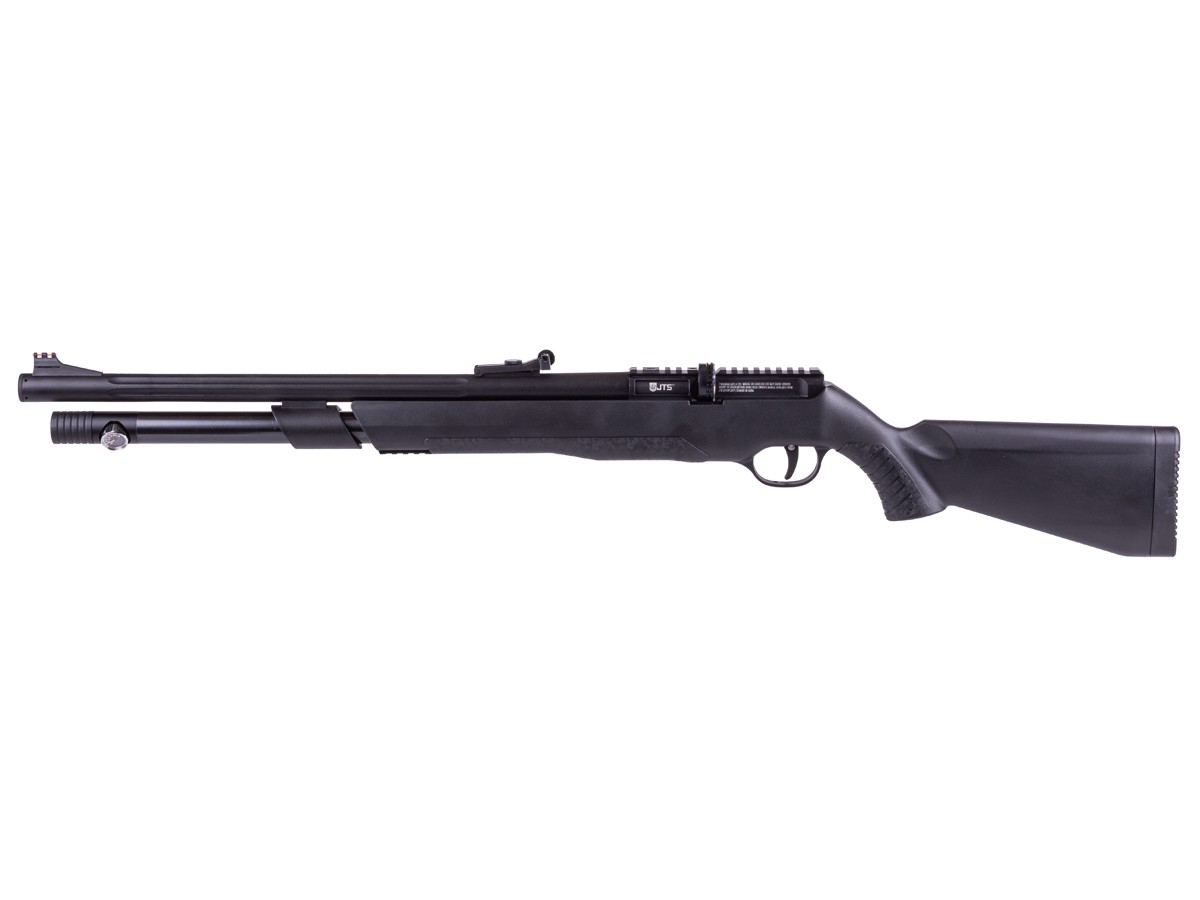
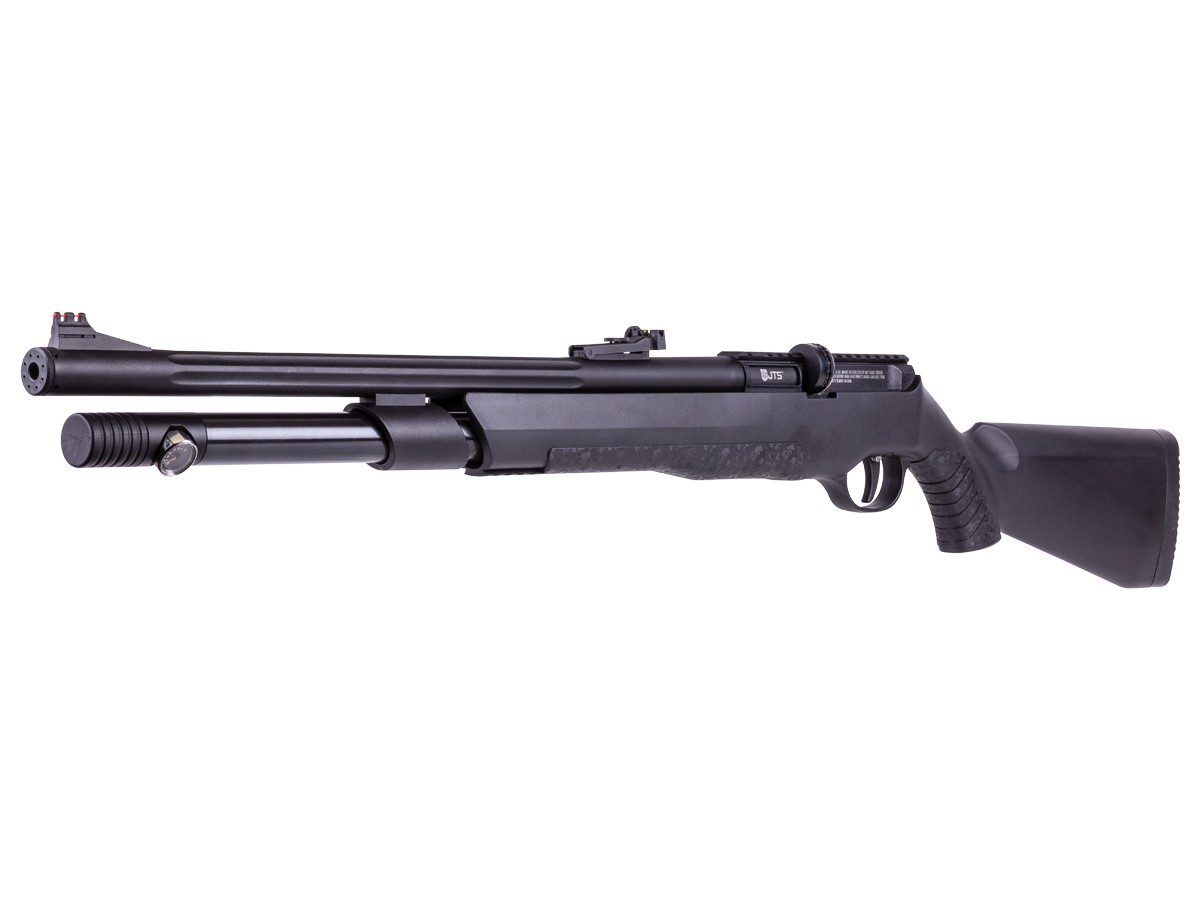
JTS AirStryke gives you a PCP air rifle with features and options you’d normally expect to pay a lot more to get. It has velocity up to 820 fps in .22 and 700 FPS in .25, giving you the performance needed for pesting, plinking, target practice, and small game hunting.

You’ll appreciate that you get steady and predictable performance with each shot from this air rifle thanks to the internal regulator, and you’ll also like that each shot leaves the rifled barrel with less noise than expected for its power level because of the internal moderator.

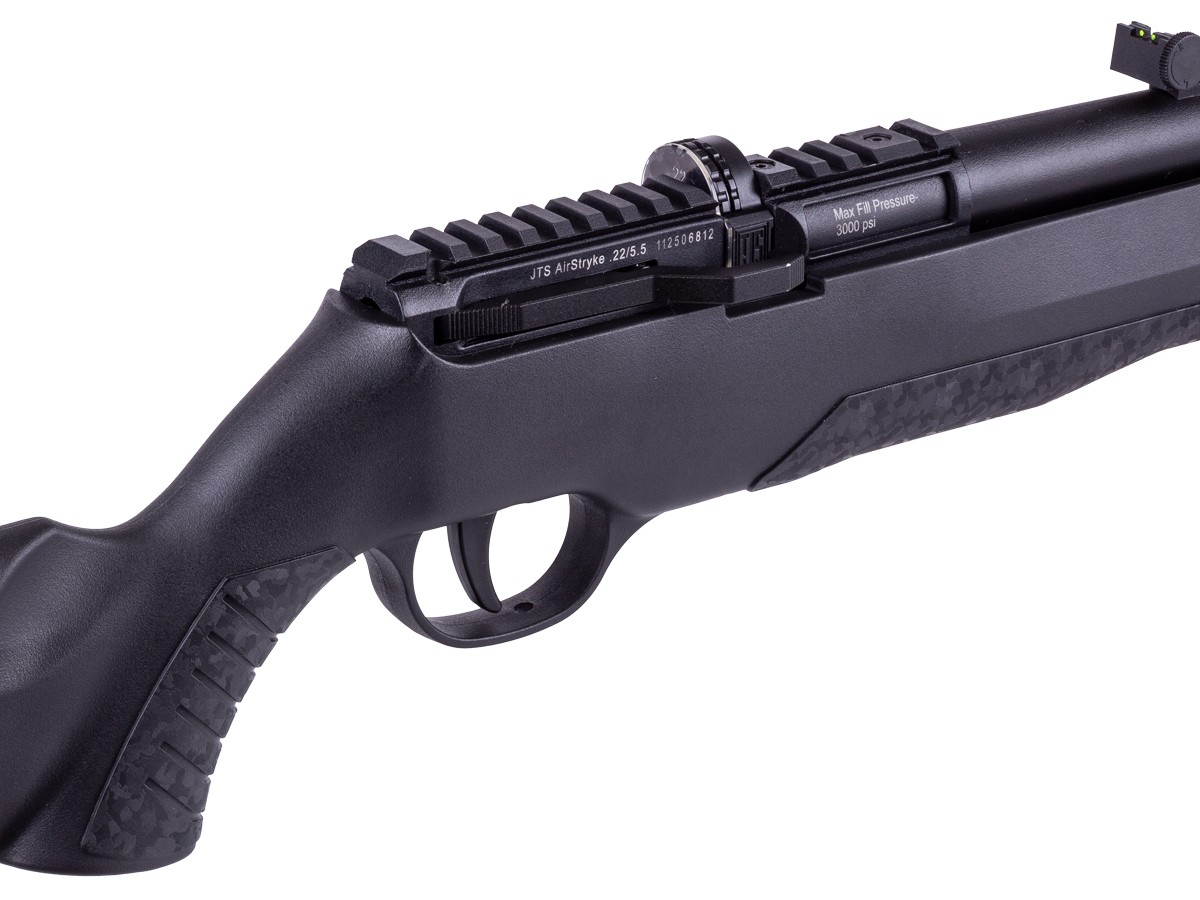
The JTS AirStryke lets you enjoy extended shooting sessions before needing to refill the 200cc air cylinder to 3000 psi because you get up to 47 shots in .22 and up to 73 shots in .25. You’ll also get a firm grip on the air rifle because it has a ridged and textured grip, texturing on the forearm, and a ridged rubber buttpad.

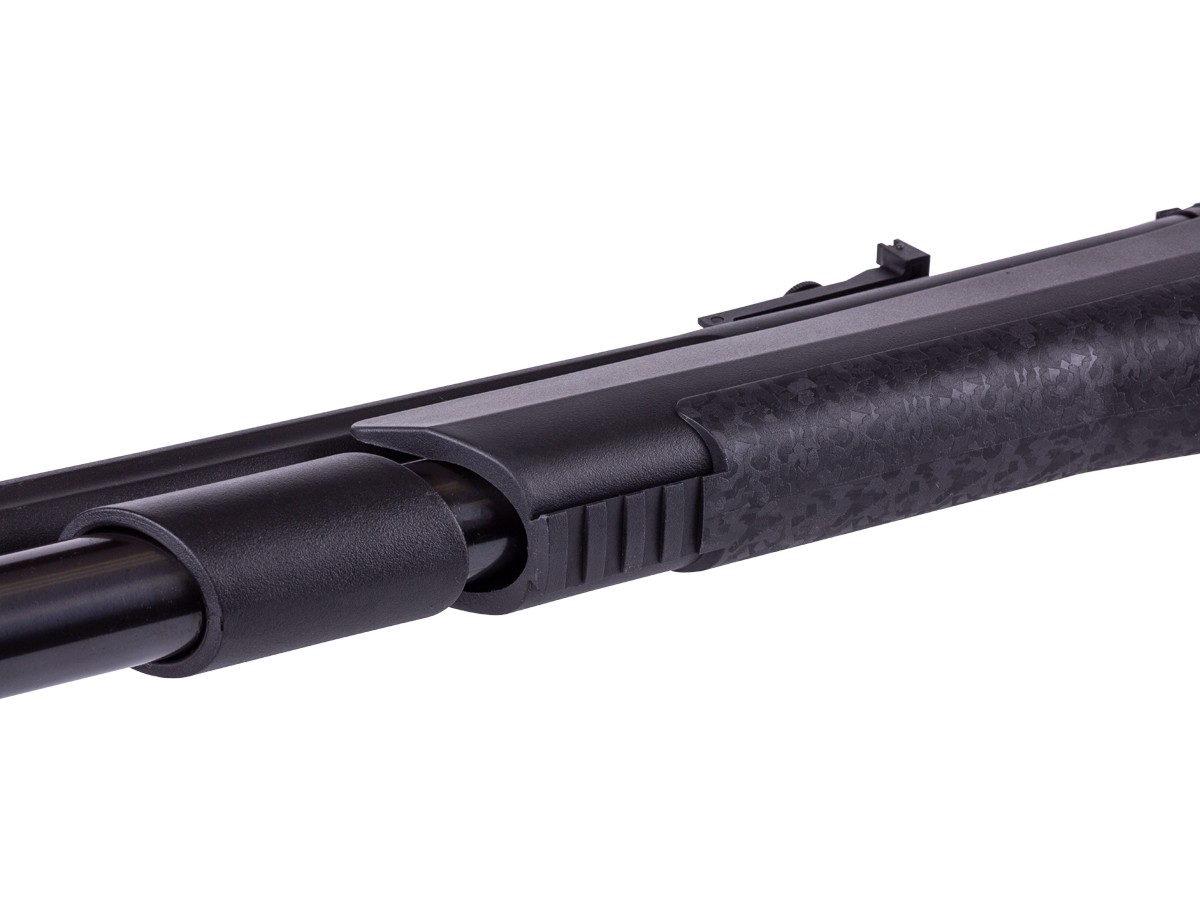
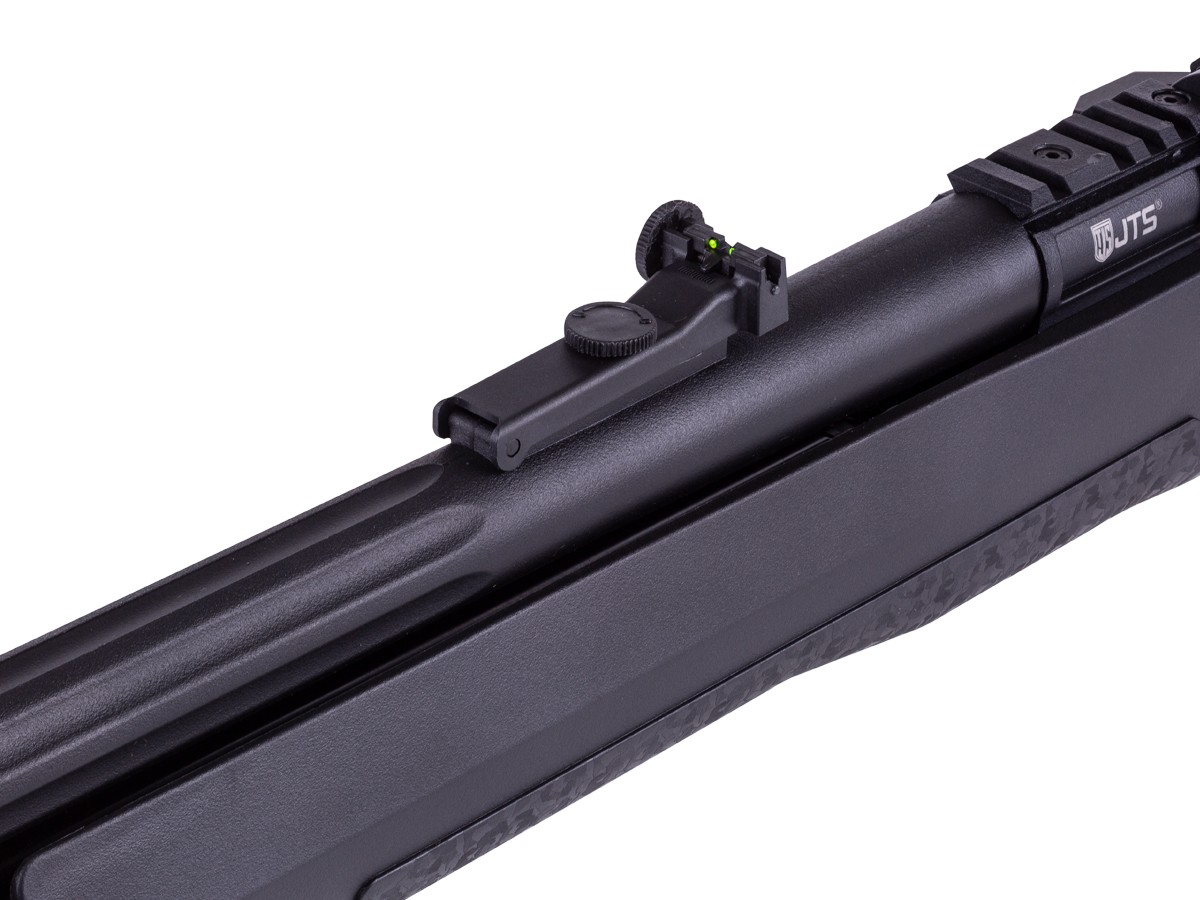
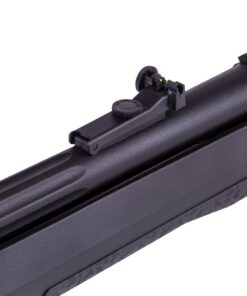
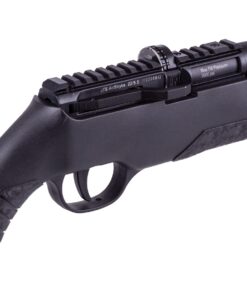
For sighting, this air rifle gives you more options than normal at this price level, with a fixed fiber optic front sight and adjustable fiber optic rear sight for accurate aiming without needing extra equipment, and a Picatinny scope rail so you can add a scope for better long distance precision. You also get a Picatinny forearm rail, rare at this price, to add accessories like bipods for better accuracy and more options.

If you’re in the market for a budget friendly PCP air rifle that’s packed with a surprising number of features and options that lead to accurate shots, get the JTS AirStryke from Airgun Depot now.

JTS AirStryke Features:

  • Sidelever
  • PCP
  • Repeater
  • Synthetic stock
  • Fully regulated
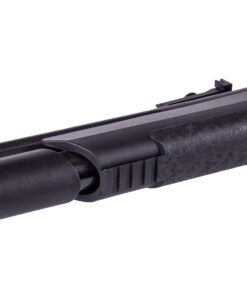
  • Internal moderator
  • Rifled barrel
  • Magazine capacity: 10rd (.22), 9rd (.25)
  • Max. shots per fill: 47 (.22), 43 (.25)
  • Max. velocity: 820 fps (.22), w/18.13gr pellet, 700 fps (.25), w/25.39gr pellet
  • Max. energy: 27.08 FPE (.22) w/ 18.13gr pellet, 27.63 FPE (.25) w/ 25.39gr pellet
  • Max. fill pressure: 3000 psi
  • 200cc air cylinder
  • Manual safety
  • Fiber optic front sight
  • Adjustable fiber optic rear sight
  • Picatinny scope rail
  • Picatinny forearm accessory rail
  • Ridged and textured grip
  • Textured forearm
  • Ridged rubber buttpad
  • Integrated pressure gauge
  • Includes two magazines
  • Barrel length: 19″
  • Overall length: 41″
  • Weight: 7 lbs.
Specs
  • ManufacturerJTS Airguns
  • Caliber .22
  • Velocity 820 fps
  • Condition New
  • Ammo Type Pellets
  • Action Sidelever
  • Barrel Style Rifled
  • Fire Mode Repeater
  • Gun Weight 7.00
  • Overall Length 41.00
  • Barrel Length 19.00
  • Loudness 3-Medium
  • Magazine Capacity 10
  • Mechanism Pre-charged pneumatic
  • Rail Weaver/Picatinny
  • Safety Manual
  • Front Sights Fiber Optic
  • Rear Sights Adjustable for windage & elevation
  • Shots per Fill 47
  • Trigger Adjustability Two-stage adjustable
  • Use Small game hunting/target practice
  • Warranty 1-year limited warranty
  • Noise Level 86.48 dB

JTS AirStryke PCP Air Rifle – Regulated Performance, Accuracy, and Everyday Versatility

The JTS AirStryke brings together regulated PCP performance, practical handling, dependable accuracy, and user-friendly features in a streamlined air-rifle platform. Designed for shooters who want modern PCP technology without unnecessary complexity, the rifle provides a balanced option for target shooting, recreational plinking, pest management where lawful, and appropriate small-game applications.

Rather than focusing on a single performance feature, the JTS AirStryke has been developed as an integrated shooting system. An internal regulator has been incorporated to support consistent air delivery, while a rifled barrel helps provide predictable pellet stabilization. Additionally, an integrated moderator has been included to reduce the report produced during normal operation. According to JTS, the standard AirStryke is currently offered in .22 and .25 caliber configurations.

Consequently, shooters can select a caliber according to their intended application while retaining the core characteristics of the AirStryke platform.

Why Choose the JTS AirStryke?

A modern PCP rifle should provide more than raw velocity. Accuracy, consistency, ergonomics, capacity, air management, and accessory compatibility all affect the overall shooting experience. Therefore, the JTS AirStryke has been configured around practical features that can benefit both newer PCP users and experienced recreational shooters.

Most importantly, the rifle uses an internally regulated PCP system. Air pressure is managed before each shot so that more consistent performance can be maintained throughout the useful portion of the fill. As a result, large velocity variations commonly associated with some unregulated systems can be reduced.

Furthermore, the side-lever action provides straightforward cycling between shots. Instead of requiring complicated manipulation, the mechanism can be operated efficiently while the rifle remains positioned naturally.

Key JTS AirStryke Features

Important specifications and equipment include:

  • Regulated pre-charged pneumatic power system
  • Available in .22 and .25 caliber
  • Rifled 19-inch barrel
  • Side-lever action
  • 200cc air cylinder
  • Maximum operating pressure of 3,000 PSI
  • Integrated moderator
  • Picatinny accessory rail
  • Adjustable trigger
  • Manual safety
  • Pressure gauge
  • Durable synthetic stock
  • Rubber buttpad
  • Textured grip and lower forearm
  • Fiber-optic front sight
  • Adjustable rear sight
  • Two magazines included
  • Approximately 41-inch overall length
  • Approximately 7 lb weight

These specifications are based on the current manufacturer listing for the standard JTS AirStryke.

Regulated PCP Performance

Consistency remains one of the primary advantages of a regulated PCP platform. During firing, compressed air must be delivered efficiently and predictably. Therefore, the regulator inside the JTS AirStryke has been designed to control the pressure supplied to the firing system.

More uniform air delivery can translate into more predictable pellet velocity. In turn, vertical point-of-impact variation caused by significant velocity changes can be minimized when suitable ammunition and proper shooting technique are used.

Additionally, shooters can concentrate more heavily on fundamentals such as trigger control, sight alignment, breathing, and follow-through rather than compensating continually for changing performance.

The manufacturer specifies a maximum operating pressure of 3,000 PSI and a 200cc air cylinder for both standard calibers.

JTS AirStryke .22 Caliber

For shooters looking for a versatile combination of velocity, magazine capacity, and shot count, the JTS AirStryke .22 provides an appealing configuration.

JTS lists the .22 version at approximately 820 FPS when tested with an 18.13-grain pellet. Additionally, its magazine accommodates 10 rounds. Up to approximately 47 shots per fill are listed by the manufacturer, although actual results can vary according to pellet weight, environmental conditions, fill pressure, rifle setup, and other operating factors.

Because .22 caliber pellets are widely available in multiple shapes and weights, owners can experiment with compatible ammunition to determine what performs most consistently in their individual barrel.

JTS AirStryke .25 Caliber

Alternatively, buyers wanting a larger pellet can select the JTS AirStryke .25.

The manufacturer lists approximately 700 FPS with a 25.39-grain pellet. Magazine capacity is 9 rounds, while the listed maximum shot count reaches approximately 43 shots per fill.

Although velocity is lower than the .22 specification, the heavier projectile gives shooters another performance option. Therefore, caliber selection can be matched more closely to individual preferences and lawful shooting applications.

Smooth Side-Lever Operation

Convenient cycling can significantly improve the usability of a repeating PCP air rifle. For that reason, a side-lever action has been incorporated into the JTS AirStryke.

After each shot, the action can be cycled to prepare the next pellet from the magazine. Consequently, repeated target sessions can remain straightforward without requiring a traditional break-barrel cocking movement.

Moreover, two magazines are supplied according to JTS.

Having a second magazine available can be particularly useful during longer range sessions because additional pellets can be prepared before shooting begins.

Integrated Moderator for Reduced Report

Another notable characteristic is the integrated moderator.

PCP rifles release compressed air rapidly, and that release produces sound. Therefore, moderation has been incorporated into the AirStryke barrel system to help reduce the muzzle report.

The moderated configuration can make routine shooting more comfortable and refined. However, owners should always confirm applicable local regulations regarding air rifles, moderators, shooting locations, and permissible uses.

Fiber-Optic Sights and Picatinny Optics Compatibility

Although many PCP rifles are immediately paired with telescopic sights, the JTS AirStryke includes a fiber-optic front sight and adjustable rear sight.

Consequently, the rifle can be used with its supplied sighting system before an optic is installed.

For shooters who prefer magnified optics or other compatible sighting solutions, a Picatinny rail has also been provided. Therefore, the rifle can be configured according to the user’s preferred shooting setup.

A suitable scope can be particularly beneficial for precision-oriented target shooting because the point of aim can be defined more precisely at longer distances.

Adjustable Trigger for Greater Control

Trigger characteristics strongly influence practical accuracy. Therefore, an adjustable trigger has been included on the AirStryke.

A predictable trigger allows pressure to be applied more progressively while the sights remain aligned. Consequently, unnecessary rifle movement immediately before pellet release can potentially be reduced.

Because individual preferences vary, adjustment capability also allows the firing controls to be tailored more closely to the shooter.

Durable Synthetic Stock

Practical durability has also been prioritized.

The AirStryke uses a synthetic stock with a textured grip and lower forearm. Meanwhile, a rubber buttpad has been fitted at the rear.

Synthetic construction offers straightforward maintenance while helping the rifle remain suitable for frequent recreational use.

Furthermore, the textured gripping areas provide additional contact between the shooter’s hands and the rifle. Stable positioning can therefore be maintained more naturally during standing, seated, bench-rested, or supported shooting positions.

Balanced Dimensions for Everyday Shooting

With an overall length of approximately 41 inches, a 19-inch barrel, and a listed weight of around 7 pounds, the standard JTS AirStryke maintains conventional rifle proportions.

The configuration provides enough size to promote a stable shooting position without turning the rifle into an excessively complicated platform.

Consequently, the AirStryke can transition comfortably between informal range sessions, structured target practice, recreational plinking, and other lawful airgun activities.

Easy Air-Pressure Monitoring

Knowing the remaining pressure inside a PCP rifle is essential for maintaining consistent operation.

Therefore, the JTS AirStryke includes a pressure gauge. Instead of guessing whether sufficient compressed air remains, the reservoir status can be monitored directly.

Furthermore, maintaining an appropriate fill level helps users operate within the manufacturer’s recommended pressure range.

Only compatible high-pressure PCP filling equipment should be used, and all filling procedures should follow the manufacturer’s instructions.

Who Is the JTS AirStryke Designed For?

The JTS AirStryke can suit a broad range of adult airgun enthusiasts.

Beginners entering PCP shooting can benefit from its regulated system, supplied sights, repeating magazines, pressure gauge, and straightforward side-lever action. Meanwhile, experienced shooters may appreciate its conventional configuration, optic compatibility, adjustable trigger, integrated moderation, and caliber options.

Therefore, it can be considered for:

  • Recreational target shooting
  • Informal plinking
  • Precision practice
  • Range training
  • Lawful pest-control applications
  • Appropriate small-game use where regulations permit
  • Shooters moving from spring-powered rifles into PCP systems
  • Experienced users seeking a practical regulated PCP platform

JTS AirStryke: Practical PCP Performance Without Unnecessary Complexity

Ultimately, the JTS AirStryke combines the features many shooters look for in a modern PCP air rifle without making operation unnecessarily complicated.

A regulated powerplant supports consistency. Meanwhile, the rifled barrel contributes to precision potential, the side lever simplifies cycling, and the integrated moderator helps control sound. Furthermore, adjustable sights allow immediate use, while the Picatinny rail supports customized optic configurations.

With .22 and .25 caliber choices, a 200cc cylinder, adjustable trigger, two included magazines, synthetic construction, and practical ergonomic features, the JTS AirStryke provides a well-rounded foundation for recreational and precision-oriented airgun shooting.

For buyers searching specifically for a JTS AirStryke, this model offers a compelling combination of regulated performance, straightforward handling, adaptable sighting options, and everyday usability in a single PCP platform.

Daystate, FX Airguns, PCP Rifles, Accessories and Precision Airgun Equipment

For enthusiasts researching premium PCP platforms, accessories, replacement components, and precision shooting equipment, the modern airgun market offers an extensive range of options from brands such as Daystate and FX. Searches for daystate blackwolf, daystate redwolf, delta wolf, huntsman daystate, daystate alpha wolf, wolf delta, day state, and daystate delta wolf frequently come from shooters comparing electronic PCP technology, ergonomic designs, premium construction, and sophisticated firing systems. Traditional styling also remains important, which is why terms such as stock walnut, safari stock, dima stock, rimfire stocks, and stock replacement continue to attract buyers who value both appearance and practical fit.

Among electronically controlled PCP rifles, the daystate alpha wolf, daystate blackwolf, daystate redwolf, and daystate delta wolf are commonly associated with advanced regulation, refined shot management, and a highly consistent firing cycle. Searches such as what is a delta wolf, what is a delta wolf, delta wolf meaning, deltaw, blackwolf, red alpha wolf, alpha red wolf, model alpha gun, model alpha gun, and electronic wolves often reflect buyers trying to understand how Daystate’s electronically managed rifles differ from conventional mechanical PCP systems. Other searches, including daysta, wolf gun, wolverine gun, wolveriner, daystate wolverine sapphire, daystate wolverine sapphire, and wolfpack armory wolverine, demonstrate the broad interest surrounding Wolf-branded and Wolverine-related sporting platforms.

Small ergonomic components can make a substantial difference to comfort and handling. A rifle butt pad, rubber butt, rubber butt pad, and butt pad rifle accessory can improve shoulder contact, while a bradley cheek riser can help support a more consistent head position. Likewise, enthusiasts may research gecko grips, a cocking ball, short cocking, an index pin, pin magazine, lock timing, and lock time when learning about rifle ergonomics, cycling characteristics, and replacement components. Searches for buddy bottle cover and buddy bottle cover also remain relevant for shooters who want to protect external air cylinders from cosmetic wear during transport or field use.

Magazine compatibility is another frequent consideration. Users may search for a 177 magazine, mag 177, 25 magazine, 5.0 mm pellets, 177 pellets types, slug pellet, or a general pellet rifle when comparing ammunition formats and magazine configurations. Pellet selection should always match the manufacturer’s recommended caliber and specifications for the rifle being used. A well-matched magazine and suitable ammunition can support reliable feeding and consistent performance without unnecessary mechanical stress.

PCP equipment relies on compressed air, so searches such as air rifle compressed air, air gun pc, air gun, and air guns are commonly connected with understanding pre-charged pneumatic systems. Owners also frequently search for a pcp o ring kit because seals form an important part of maintaining an air-tight pneumatic system. Maintenance should follow manufacturer-approved procedures, especially for high-pressure components, regulators, cylinders, and valves.

Sound-moderation accessories form another major category. Common search terms include air gun suppressor, air gun suppressors, airgun moderator, air rifle moderator, 0db, 0db moderator, 0 db moderator, 0 db moderator, 0 db moderator, 0 db moderator, and hogan decimeater silencer. Thread-related searches include silencer thread adapter, thread protector rifle, and muzzle thread protector. Compatibility depends on barrel threading, caliber, applicable law, and manufacturer specifications, so owners should verify all requirements before purchasing or fitting any muzzle accessory.

Mounting systems have also become increasingly important as modular fore-ends and accessory rails become more common. Searches for an mlok to picatinny rail adapter, best m-lok to picatinny rail adapter, m-lok to picatinny adapter, picatinny m lok adapter, and picatinny bag rider usually come from shooters wanting greater flexibility when mounting supported accessories. The best adapter is generally one that matches the rifle’s rail specification, uses quality hardware, fits securely, and avoids unnecessary bulk.

Sling-related searches are equally common. Buyers frequently look up how to put a gun sling on a rifle, how to put a rifle sling on, how to install a rifle sling, riffle sling, rigle sling, how to put sling on rifle, installing a rifle sling, and attaching a sling to a rifle. A compatible sling can improve carrying comfort and transportation, but attachment points should always be checked against the rifle manufacturer’s recommendations to avoid damage to the stock or mounting hardware.

The alpha wolf barrel and accessories such as an ats tuner may also interest precision-focused users researching how different rifle configurations are designed. Similarly, terms such as weatherby vanguard trigger adjustment appear in broader shooting-related searches, although trigger systems differ significantly between platforms and should be serviced or adjusted only according to the applicable manufacturer’s safety instructions. Another unusual search phrase, how to put extinguisher call back together, is unrelated to PCP rifle servicing and should be treated according to the specific extinguisher manufacturer’s maintenance guidance rather than general airgun information.

For buyers comparing premium European PCP equipment, daystate redwolf price and daystate redwolf price are common commercial-intent searches. Pricing can vary depending on caliber, stock type, configuration, region, dealer, and included accessories. People may also search fx airgun dealer near me when looking for authorized retailers, parts support, servicing, or warranty assistance.

FX Airguns remains another major name in the PCP market. Popular searches include fx impact m3 .22cal air rifle. 600mm barrel, fx impact m3, fx impact mk3, fx m3 airgun, fx m3, impact m3, and fx impact m3 air rifle. Price-focused searches such as fx impact m3 precio, fx impact m3 precio en usa, and fx impact m3 price indicate strong buyer interest in comparing regional pricing and available configurations. The modular design philosophy associated with the FX Impact family makes it especially attractive to experienced PCP users who prioritize adjustability, ergonomics, accessory compatibility, and high-quality construction.

Potential buyers also encounter less common search phrases such as griffin gun, unfend, black snood, red bodywarmer, and can wolverine go on planes. Airline transport rules for sporting equipment and compressed-air components can differ substantially between carriers and countries, so travelers should always check current airline, airport, customs, and destination regulations before making travel arrangements. Likewise, terms such as 3.55kg in lbs may appear when buyers compare rifle weight specifications across metric and imperial listings.

Whether someone is researching the daystate alpha wolf, daystate blackwolf, daystate redwolf, huntsman daystate, wolf delta, an fx impact m3, or another premium pellet rifle, the most important purchasing factors remain intended use, caliber compatibility, overall weight, stock ergonomics, magazine design, air-cylinder capacity, manufacturer support, and accessory compatibility. Premium PCP ownership is best supported by appropriate maintenance, manufacturer-approved components, secure storage, responsible handling, and compliance with all local laws and transport requirements.

JTS AirStryke Calibres, FAC Power, Performance and Accessories

The JTS AirStryke is designed around a regulated PCP platform that gives shooters a practical balance of accuracy, manageable air consumption, and dependable power. Calibre selection plays an important role in how the rifle performs, because pellet weight, velocity, trajectory, retained energy, and intended shooting distance all change according to the chosen configuration. For the standard AirStryke, JTS currently lists .22 and .25 calibre versions, both operating from a regulated 200cc air cylinder with a maximum fill pressure of 3,000 PSI.

JTS AirStryke .22 Calibre

The .22 calibre JTS AirStryke offers an effective middle ground between pellet velocity, energy, magazine capacity, and shot count. JTS rates this version at approximately 820 FPS when using an 18.13-grain pellet. It also uses a 10-round magazine and can provide up to approximately 47 shots per fill under the manufacturer’s test conditions.

Because .22 calibre pellets are available in many different weights and profiles, shooters can experiment with ammunition to find the best combination for their particular rifle. Lighter pellets can generally produce higher velocity, whereas heavier pellets can provide increased momentum and may retain energy more effectively downrange.

For general target shooting, recreational use, and appropriate lawful pest-control applications, .22 offers considerable versatility. Additionally, the relatively high magazine capacity makes it convenient for longer practice sessions.

JTS AirStryke .25 Calibre

Shooters wanting a heavier projectile can instead select the JTS AirStryke .25 calibre.

According to JTS specifications, the .25 version produces approximately 700 FPS with a 25.39-grain pellet. Magazine capacity is 9 rounds, while maximum listed shot count is approximately 43 shots per fill.

Although its velocity is lower than the .22 version, the heavier pellet can provide greater projectile mass. Consequently, the .25 may appeal to shooters who prefer heavier ammunition for appropriate applications.

The choice between .22 and .25 should therefore not be based purely on the highest velocity figure. Instead, pellet availability, preferred shooting distance, trajectory characteristics, accuracy, shot count, and legal requirements should all be considered.

FAC and Full-Power JTS AirStryke Configurations

In markets that distinguish between lower-powered air rifles and FAC-rated air rifles, the legal classification of a JTS AirStryke will depend on the rifle’s actual muzzle energy and the laws of the country or region where it is possessed or used.

“FAC” is commonly associated with higher-powered air rifles in jurisdictions where firearms certificates or similar licensing requirements apply. However, the exact threshold and licensing system are jurisdiction-specific. Therefore, buyers should verify local legislation rather than assuming that every JTS AirStryke configuration has the same legal classification.

The standard AirStryke should also be distinguished from the JTS AirStryke Magnum. The Magnum is a separate, substantially more powerful model offered in .22, .25, and .30 calibre. JTS lists energies of approximately 54 joules in .22, 69 joules in .25, and 90 joules in .30, making it clearly different from the standard rifle discussed here.

Consequently, buyers searching specifically for a high-energy or FAC-type configuration should confirm whether they are considering the standard AirStryke or the AirStryke Magnum before ordering.

Regulated Power Delivery

Rather than relying solely on maximum velocity, the JTS AirStryke uses an internal regulator to support consistent air delivery.

Compressed air is stored inside the 200cc cylinder, which can be filled to a maximum operating pressure of 3,000 PSI. The regulator controls the pressure delivered to the firing system, helping maintain more consistent velocity through the useful portion of the fill.

That consistency is especially valuable when accuracy matters. If pellet velocity changes significantly from shot to shot, vertical point-of-impact variation can increase. By regulating the air supply, the AirStryke is designed to provide a more predictable shooting cycle.

The rifle’s recoil characteristics also differ considerably from many spring-powered air rifles. Since a heavy spring or gas ram is not moving rapidly during firing, shooters can generally experience a calmer firing cycle.

Pellet Selection and Practical Power

Pellet choice can influence how the JTS AirStryke performs almost as much as calibre selection.

JTS produces dedicated Dead Center pellets, including 18.13-grain .22 pellets and 25.39-grain .25 pellets—the same weights referenced in the manufacturer’s AirStryke velocity specifications. Other .22 weights and heavier .25 options are also available from JTS.

For consistent results, shooters should test several compatible pellet weights rather than assuming that the fastest pellet will automatically provide the best accuracy.

Important factors include:

  • Pellet weight and diameter consistency
  • Group size at the intended shooting distance
  • Velocity consistency
  • Trajectory
  • Retained energy
  • Magazine compatibility
  • Barrel preference
  • Intended lawful application

A heavier pellet may travel more slowly while retaining useful momentum. Conversely, a lighter pellet can produce a flatter trajectory over certain distances. The ideal choice therefore depends on the intended use.

JTS AirStryke Accessories

One of the strengths of the JTS AirStryke is its ability to accept useful PCP and shooting accessories.

The rifle includes a Picatinny rail, which allows compatible optics and mounting equipment to be installed. This gives owners flexibility when building a setup for recreational shooting, range practice, or precision-focused use.

Popular compatible accessory categories can include:

  • Air rifle scope
  • Picatinny-compatible scope mounts
  • Red-dot sight where appropriate
  • Compatible bipod or shooting rest
  • Spare JTS magazines
  • Pellet tins and pellet storage
  • PCP hand pump
  • High-pressure PCP compressor
  • High-pressure air cylinder or filling system
  • Protective rifle case
  • Cleaning and maintenance equipment
  • Shooting bags and rests
  • Eye protection
  • Targets and target holders

JTS itself lists 9-round and 10-round replacement magazines, alongside high-pressure hand pumps and portable PCP compressors within its accessory range.

PCP Filling Accessories

Because the AirStryke operates at up to 3,000 PSI, it requires equipment specifically designed for high-pressure PCP filling.

A suitable hand pump can be practical for shooters who use their rifle occasionally. Conversely, a dedicated PCP compressor can make repeated fills considerably easier, especially for owners who shoot frequently.

JTS currently offers high-pressure hand pumps rated up to 4,500 PSI as well as portable PCP compressors within its accessory catalogue.

Whichever filling method is selected, the manufacturer’s pressure limits and filling instructions should always be followed.

Build the JTS AirStryke Around Your Shooting Style

Ultimately, the JTS AirStryke allows buyers to choose between the efficient versatility of .22 calibre and the heavier projectile characteristics of .25 calibre. Its regulated PCP system, 200cc reservoir, magazine-fed side-lever action, Picatinny compatibility, and available PCP accessories make it straightforward to configure around different shooting preferences.

For shooters who want substantially more power, the separate AirStryke Magnum platform expands the family into higher-output .22, .25, and .30 calibre configurations. Meanwhile, the standard JTS AirStryke remains focused on approachable regulated performance, useful shot capacity, practical accessories, and dependable everyday PCP shooting.

Practical Use Scenarios

A well-designed PCP rifle becomes most useful when its technical features translate into practical advantages during real shooting sessions. Instead of focusing only on specifications, shooters usually want to understand how a rifle behaves when it is carried, aimed, fired repeatedly, transported, maintained, and adapted to different shooting environments. In everyday use, factors such as balance, magazine capacity, shot consistency, optic compatibility, noise control, trigger feel, and air efficiency can matter as much as maximum velocity.

For that reason, this rifle can fit several practical scenarios ranging from recreational target practice to controlled pest-management applications where local regulations permit. Its regulated pneumatic system, repeating action, synthetic construction, moderate overall weight, and straightforward controls allow it to be used without an overly complicated setup. At the same time, the platform offers enough flexibility for more experienced shooters who want to refine their equipment around specific shooting conditions.

Backyard and Private-Property Target Practice

One of the most common real-world uses is informal target shooting on suitable private property. When local laws, safe backstops, property size, and surrounding conditions allow it, the rifle can provide an enjoyable platform for routine accuracy practice.

A typical session may involve paper targets placed at several distances. The shooter can begin at short range to confirm sight alignment before moving gradually farther away. Because the air delivery is regulated, point-of-impact changes caused by inconsistent pressure can be reduced during the useful portion of the fill. Consequently, the shooter can spend more time concentrating on fundamentals such as grip, breathing, trigger control, and follow-through.

The repeating magazine also adds convenience. Rather than loading a pellet manually before every shot, multiple pellets can be prepared in advance. This is particularly useful when practicing groups because the shooter can maintain a consistent body position between shots.

For safety, an appropriate pellet trap or substantial backstop should always be positioned behind the target. The entire shooting lane should also be checked before every session. Even relatively small projectiles can travel considerable distances, so safe shooting practices remain essential regardless of the location.

Bench-Rest Accuracy Practice

A supported shooting position provides one of the best ways to evaluate how consistently a rifle and pellet combination perform.

When placed on a front rest or shooting bag, movement caused by the shooter can be reduced. This makes it easier to compare different pellets, optic settings, and shooting distances. A practical accuracy test might involve firing several five-shot groups using one pellet type, recording the average group size, and then repeating the same procedure with another pellet.

Because a regulated pneumatic system is used, velocity variation may remain more predictable than with some unregulated designs. Therefore, bench testing can reveal which ammunition performs most consistently without excessive variation caused by reservoir pressure.

The adjustable trigger can also become more noticeable during this type of shooting. A clean and predictable trigger break allows the shooter to apply pressure gradually without disturbing sight alignment. Consequently, supported shooting is not only useful for testing ammunition but also for learning how the trigger behaves.

Once an effective combination has been identified, the same setup can then be used for other practical shooting activities.

Recreational Plinking

Formal targets are not required for every shooting session. Recreational plinking can provide a more relaxed way to practice sight alignment, trigger control, and target transitions.

Suitable reactive targets might include purpose-built spinning targets, metal knock-down systems rated for airgun use, or other safe commercial target products. Random household objects should not be used if they can create dangerous fragments, unpredictable ricochets, or environmental waste.

A repeating side-lever action works especially well for this type of shooting. After each shot, the next pellet can be chambered quickly while the rifle remains generally aligned with the target area. Therefore, the session feels smoother than repeatedly stopping to load single pellets manually.

Additionally, multiple magazines can be prepared before shooting begins. This reduces interruptions and makes longer sessions more convenient.

Plinking is also an effective way to become comfortable with the handling characteristics of a rifle. Shooters can practice moving between targets at different distances, maintaining safe muzzle direction, and adjusting their position without the pressure of competitive scoring.

Developing Consistent Shooting Technique

A rifle can also serve as a training tool for improving fundamental marksmanship.

Rather than concentrating entirely on equipment upgrades, shooters can use structured drills to improve repeatability. For example, one session may focus only on trigger control, while another concentrates on breathing technique or stable shoulder placement.

The relatively calm firing cycle of a pneumatic rifle can be useful for this purpose because there is less mechanical movement compared with many spring-powered systems. Consequently, shooter-induced errors can become easier to identify.

A useful exercise involves firing groups from a stable bench position first. After an accurate baseline has been established, the same drill can be repeated from seated, kneeling, standing, or supported positions.

Differences in group size can then show where shooting technique needs improvement.

Over time, these exercises help the shooter develop a repeatable sequence: establish the position, align the sights, control breathing, apply steady trigger pressure, maintain follow-through, and then cycle the action.

Scope-Based Precision Shooting

Although open sights can be useful at shorter ranges, many shooters prefer a telescopic sight when greater aiming precision is required.

A compatible optic can be mounted using the rifle’s rail system. Once properly installed, the scope should be zeroed at a distance appropriate for the intended application.

For example, a shooter may choose an initial zero distance and then observe how the pellet impacts at shorter and longer ranges. Because pellets follow a curved trajectory, the point of impact will change as distance increases. Learning this trajectory is an important part of practical air-rifle shooting.

A controlled practice session can involve targets positioned at several known distances. Instead of continuously changing the scope settings, the shooter can learn where the pellet impacts relative to the crosshair.

This knowledge becomes valuable during field shooting because distance estimation can then be combined with known trajectory behavior.

Informal Range Sessions

At an approved shooting range, the rifle can be used without many of the space limitations associated with residential environments.

Range shooting provides an excellent opportunity to test accuracy at longer distances, compare ammunition, verify optic settings, and monitor shot consistency.

Before beginning a session, the air cylinder can be filled to the manufacturer’s recommended level. Magazines can then be loaded, while pellets, tools, and spare equipment can be arranged nearby.

A typical range routine might involve firing several groups, checking air pressure, making small optic adjustments, and recording the results.

Keeping notes can be surprisingly useful. Information such as pellet type, group size, distance, weather conditions, and fill pressure can help identify patterns over time.

Rather than relying on memory, the shooter can gradually build a reliable understanding of how the rifle performs under different conditions.

Controlled Pest Management

Where legally permitted, an air rifle may also be considered for certain pest-management applications.

However, suitability depends on several factors, including local law, target species, range, pellet choice, shooting angle, surrounding property, and the shooter’s ability to place shots accurately.

Before considering this type of use, the shooter should confirm that the activity is lawful and that the rifle’s power level is appropriate for the intended application.

A safe backstop remains essential. Shots should never be taken toward roads, buildings, livestock, people, hard surfaces, or areas where the final pellet destination cannot be confirmed.

Accuracy is more important than simply maximizing velocity. Therefore, shooters should first establish reliable group sizes on paper at the same distances they expect to encounter during actual use.

If consistent shot placement cannot be maintained, the distance should be reduced.

Farm and Agricultural Property Use

On suitable agricultural property, the rifle can offer a practical combination of portability and repeat-shot capability.

A synthetic stock is particularly useful in this environment because it can tolerate routine handling more easily than some more delicate stock materials. Dust, light moisture, and minor surface contact can generally be cleaned without requiring complicated care.

The rifle can be carried between different parts of a property, although it should always be transported safely and in accordance with local law.

A scope with moderate magnification may be useful when targets are encountered at varying distances. Alternatively, open sights can remain convenient for closer-range applications.

When operating around farm buildings, extra attention should be given to hard surfaces such as metal roofing, concrete, machinery, and stone walls because they can increase ricochet risk.

Shooting From Supported Field Positions

Not every shot can be taken from a bench. In practical environments, shooters may need to use natural or portable support.

A shooting stick, bipod, tree support, fence post, or stable rest can help reduce movement. However, the rifle should be supported without interfering with the air cylinder, action, or barrel.

Practicing these supported positions in advance is useful because field conditions are rarely identical to a shooting range.

For example, a shooter can practice firing from a seated position with the forearm supported. Another session may involve standing shots with shooting sticks.

By comparing group sizes from each position, the shooter can determine which technique provides the most dependable accuracy.

Short and Medium-Distance Shooting

Different shooting distances highlight different characteristics of the rifle.

At shorter ranges, open sights can provide fast and uncomplicated aiming. Target acquisition is usually straightforward, while pellet trajectory requires relatively little compensation.

At medium distances, however, pellet drop becomes more noticeable. An optic can therefore provide an advantage by allowing more precise aiming and better target identification.

The key is to establish realistic limits through practice.

Instead of assuming that a particular distance is automatically suitable, the shooter should test accuracy under controlled conditions. If groups become too large for the intended target size, the practical range has been exceeded.

This approach encourages responsible shooting while also helping the user understand the capabilities of the equipment.

Long Practice Sessions

Air efficiency and magazine convenience become especially important during extended shooting sessions.

Rather than stopping after only a few shots, the rifle provides enough capacity for multiple groups before refilling becomes necessary. Actual shot count can vary with calibre, temperature, fill pressure, pellet weight, and rifle condition.

Monitoring the pressure gauge helps the shooter understand when the usable portion of the fill is approaching its end.

For longer sessions, bringing additional magazines can also save time. Several magazines may be loaded before shooting begins, allowing the user to concentrate on practice rather than repeatedly handling loose pellets.

A portable filling source can be useful when shooting far from home, provided the equipment is compatible with the rifle and rated for the required pressure.

Introducing Someone to PCP Shooting

For an adult shooter who is new to pre-charged pneumatic rifles, a straightforward regulated platform can provide a manageable introduction.

The operating sequence is relatively simple: confirm safe conditions, fill the air system correctly, load the magazine, operate the action, disengage the safety only when ready to fire, aim, and shoot.

Because there is no heavy barrel-cocking motion between shots, the user can focus more directly on safe handling and marksmanship.

Nevertheless, a new shooter should receive proper instruction before operating any air rifle. Safe muzzle direction, trigger discipline, backstop awareness, and correct filling procedures should be demonstrated before live firing begins.

Once those basics are understood, short structured practice sessions can build confidence gradually.

Pellet Testing and Ammunition Selection

Another useful practical scenario involves systematic ammunition testing.

Even two rifles of the same model may show preferences for slightly different pellet designs or weights. Therefore, testing multiple compatible pellets can help maximize accuracy.

The shooter can begin by selecting several reputable pellet types. Each pellet should then be tested under similar conditions at the same distance.

For meaningful results, one variable should be changed at a time.

For example, scope settings should not be adjusted repeatedly between pellet groups unless absolutely necessary. Instead, the shooter can compare group size rather than exact point of impact.

Once the most consistent options have been identified, further testing can be performed at longer distances.

Transporting the Rifle to the Range

Practical ownership also includes transportation.

A protective rifle case can help shield the optic, stock, barrel, and action from accidental impact. The rifle should be unloaded before transport, and magazines should be stored separately where required by local law.

If an optic has already been zeroed, a padded case becomes particularly valuable because significant impact can shift mounting hardware or alter alignment.

After arriving at the destination, the rifle can be inspected before shooting begins. The pressure level, optic mounts, barrel area, and action should all be checked.

This short inspection can prevent minor issues from affecting an entire range session.

Routine Maintenance After Use

After shooting, basic maintenance helps keep the rifle performing consistently.

Exterior surfaces can be wiped down to remove dust, fingerprints, moisture, and debris. The magazine should be checked for pellet fragments or dirt, while the action can be inspected for anything that might interfere with smooth cycling.

The air system should always be handled according to manufacturer guidance. High-pressure components should not be disassembled casually.

Likewise, only suitable lubricants and cleaning products should be used where recommended.

Over-cleaning the barrel is generally unnecessary unless accuracy changes or contamination is suspected. Instead, routine inspection and careful storage usually provide better long-term results.

Adapting the Setup to Different Shooters

Not every shooter prefers the same configuration.

One person may choose a lightweight optic and minimal accessories to keep the rifle simple. Another may prefer a larger scope, shooting rest, spare magazines, and additional field equipment.

This flexibility allows the platform to evolve gradually rather than requiring every accessory from the beginning.

A newer owner might start with the standard sights and basic filling equipment. Later, a scope can be added once the shooter understands the rifle’s handling and trajectory.

More experienced users can tailor the setup around their preferred shooting style.

A Practical Rifle for Regular Use

Ultimately, the strongest practical advantage of this platform is versatility.

It can be used for casual target shooting one weekend, structured accuracy testing the next, and longer range sessions after that. With appropriate equipment and legal compliance, it can also support controlled field applications.

Its magazine-fed action keeps shooting sessions efficient, while regulated air delivery supports consistency. The synthetic construction suits frequent handling, and optic compatibility allows the rifle to be adapted as the shooter’s requirements change.

Instead of being limited to a single specialized role, it can serve as a flexible everyday platform for shooters who value accuracy, straightforward operation, repeat-shot convenience, and adaptable configuration.

By combining responsible handling with regular practice, appropriate ammunition selection, proper maintenance, and realistic distance limits, shooters can make effective use of the rifle across a wide range of practical scenarios.

Frequently Asked Questions

What type of air rifle is this?

This model is a pre-charged pneumatic air rifle, commonly known as a PCP. Instead of using a spring or disposable CO₂ cartridge, compressed air is stored inside an onboard reservoir and released in a controlled amount each time the trigger is pulled. Because the system uses regulated compressed air, the firing cycle is generally smooth, predictable, and easier to manage than many traditional spring-powered designs.

The rifle also uses a repeating magazine system and a side-lever action. As a result, shooters can load multiple pellets in advance and cycle the next shot without manually inserting a pellet into the breech every time.

Which calibres are available?

The standard version is commonly offered in .22 calibre and .25 calibre.

The .22 version generally appeals to shooters who want a balance between velocity, shot count, magazine capacity, and pellet availability. Meanwhile, the .25 version uses a heavier projectile and may be preferred by shooters looking for greater projectile mass for appropriate applications.

Choosing between the two depends on intended use, ammunition availability, preferred shooting distance, legal requirements, and the type of trajectory the shooter prefers.

Is the rifle regulated?

Yes. An internal regulator is used to help control the pressure delivered from the air reservoir to the firing system.

Regulation is important because reservoir pressure gradually falls as shots are fired. Without a regulator, that changing pressure can create larger velocity variations. A regulated system helps keep the pressure supplied to each shot more consistent through the useful portion of the fill.

Consequently, shooters may experience more predictable velocity and more consistent point of impact when suitable pellets are used.

What is the maximum fill pressure?

The air cylinder is designed for a maximum operating pressure of approximately 3,000 PSI.

Only filling equipment designed specifically for PCP air rifles should be used. Standard workshop air compressors are not suitable because they normally cannot provide the required pressure or proper air quality.

A compatible PCP hand pump, high-pressure compressor, or suitable high-pressure cylinder system can be used according to the manufacturer’s filling instructions.

How large is the air reservoir?

The rifle uses a 200cc air cylinder.

That capacity provides enough stored air for multiple shots before another fill is required. Actual shot count depends on several variables, including calibre, pellet weight, pressure, environmental conditions, regulator behavior, and the condition of the rifle.

Because the system includes a pressure gauge, remaining air pressure can be monitored during a shooting session.

How many shots can I expect from one fill?

Shot count varies depending on calibre and operating conditions.

The .22 configuration is generally rated for a higher number of usable shots than the .25 version because it requires less air per shot under comparable conditions.

However, manufacturer figures should be treated as approximate rather than guaranteed. Temperature, pellet weight, fill pressure, regulator settings, maintenance condition, and shooting pace can all influence practical shot count.

For the most reliable results, users should monitor the pressure gauge and learn the pressure range where their individual rifle produces the most consistent groups.

What magazine capacity does it have?

The .22 calibre configuration commonly uses a 10-shot magazine, while the .25 calibre configuration typically uses a 9-shot magazine.

Magazine-fed operation makes the rifle convenient for repeated target shooting because several pellets can be loaded before the session begins.

Having additional compatible magazines can also make range sessions more efficient. Shooters can prepare them in advance rather than stopping frequently to reload one magazine.

Are spare magazines available?

Compatible replacement magazines are available for the platform.

Before buying a spare magazine, the calibre should always be confirmed because .22 and .25 magazines are different.

It is also advisable to purchase magazines intended specifically for the rifle rather than assuming that magazines from another model will fit correctly.

Does it have a side-lever action?

Yes. A side lever is used to cycle the action and load the next pellet from the magazine.

Side-lever systems are popular on modern PCP rifles because they allow the shooter to operate the action without significantly changing shooting position.

After firing, the lever can be cycled, the next pellet is indexed, and the rifle is prepared for the following shot.

Is it suitable for beginners?

It can be a practical option for adults who are new to PCP shooting, provided they receive proper instruction in airgun safety and high-pressure filling procedures.

The regulated system, repeating magazine, pressure gauge, and straightforward side-lever operation make the basic shooting process relatively easy to understand.

However, PCP ownership also requires familiarity with high-pressure air. New users should learn correct filling techniques, safe pressure limits, pellet loading, storage, and maintenance before operating the rifle independently.

Is it suitable for experienced shooters?

Yes. More experienced shooters may appreciate the regulated action, adjustable trigger, optics rail, magazine system, and ability to test different pellet weights.

The rifle can be configured for informal target shooting, supported accuracy testing, recreational plinking, and other lawful uses.

Its relatively straightforward design also allows experienced users to concentrate on ammunition selection, sight setup, and technique rather than managing an excessively complicated platform.

Does it come with open sights?

The rifle includes a fiber-optic front sight and an adjustable rear sight.

This means it can be used without immediately purchasing a scope.

Open sights are particularly practical for shorter distances, informal shooting, and users who prefer a lightweight setup.

Shooters who later decide they want magnification can install a compatible optic using the rail provided on the rifle.

Can a scope be mounted?

Yes. The rifle includes a Picatinny-style mounting rail, allowing compatible scope mounts and optics to be installed.

A scope can be especially useful for shooters interested in tighter groups or longer-distance target shooting.

When selecting an optic, buyers should consider magnification range, weight, mounting height, objective size, eye relief, and intended shooting distance.

The scope should be mounted securely and zeroed before serious accuracy testing begins.

Can a red-dot sight be used?

A compatible red-dot sight can be fitted to the rail.

Red-dot optics are generally best suited to short and moderate distances where rapid target acquisition is more important than high magnification.

For precision-oriented shooting at longer distances, a traditional telescopic sight is usually more suitable.

Does it have an adjustable trigger?

Yes. An adjustable trigger is included.

Trigger adjustment can help users tailor the shooting feel to their preference, although changes should always be made carefully and within manufacturer guidelines.

A predictable trigger can contribute to practical accuracy because less unwanted movement may be introduced during the final moment before the shot breaks.

Select Caliber

.22, .25

Reviews

There are no reviews yet.

Be the first to review “JTS AirStryke”

Related Products

FAQ

  • Spring-Piston (Break-Barrel or Underlever): Cock by compressing a spring. Reliable, no external air source needed, but can have more recoil (“spring twang”) and require technique to shoot accurately.
  • Pre-Charged Pneumatic (PCP): Filled from a scuba tank, compressor, or pump. High power, low recoil, multiple shots per fill. Popular for precision and hunting.
  • CO₂: Powered by disposable cartridges. Good for pistols and semi-auto/repeaters, but performance drops in cold weather.
  • Multi-Pump Pneumatic: Hand-pumped to build pressure. Versatile but requires effort.
  • Gas Ram (Nitro Piston): Uses compressed gas instead of a metal spring. Smoother than traditional springers.

Calibers: Most common are .177 (4.5mm) for speed/flat trajectory and general use, and .22 (5.5mm) for better hunting knockdown power. Larger “big bore” (.25, .30, .357+) exist for hunting bigger game where legal.

Yes, many modern PCP and springers deliver enough energy for small game (rabbits, squirrels, birds) and even larger game in some areas. Muzzle energy (in ft-lbs or joules) matters more than velocity alone. Always match caliber, pellet weight, and energy to the game and check local hunting regs.

Treat every airgun as if it is loaded.

  • Always point the muzzle in a safe direction.
  • Keep your finger off the trigger until ready to shoot.
  • Know your target and what is beyond it (pellets can ricochet or travel far).
  • Wear eye protection.
  • Store unloaded, out of reach of children/untrained users, and ideally locked.
  • Never shoot at hard surfaces or in areas where pellets could escape your property.

Follow these rules strictly—airguns cause real injuries.

Laws differ dramatically by country, state/province, and even city. Always verify current local laws before buying, owning, transporting, or using an airgun. Age restrictions (often 18+) are common.

Examples (summaries only; check official sources):

  • UK: Air rifles ≤12 ft-lbs (16.3 joules) and pistols ≤6 ft-lbs generally do not require a license (FAC needed above that).
  • USA: Varies by state. Some treat powerful airguns as firearms; others do not. Many states now allow big-game hunting with air rifles.
  • Canada: Some airguns classified as firearms if they exceed velocity/energy thresholds.
  • Australia: Often treated as firearms; licensing/registration required in most states.
  • EU/France/Belgium/etc.: Varies; many allow low-power (<20J) guns freely to adults, with higher power needing permits. Germany has strict ~7.5J limits in some contexts.
  • Other countries: Some have no restrictions below certain energies; others ban or heavily regulate them.

Resources: Wikipedia “Air gun laws”, airgun forums, or official government sites. For travel, research transit laws carefully.

Consider:

  • Purpose: Plinking/backyard → lower power springer or CO₂. Hunting/precision → PCP.
  • Budget: Entry-level springers are affordable; PCPs need a fill system (extra cost).
  • .177 vs .22: .177 easier for beginners/targets; .22 better for hunting.
  • Power source: Convenience vs performance.
  • Test pellets in your gun—accuracy varies.

Buy from reputable dealers and consider warranties.

  • Clean barrel periodically (especially if accuracy drops) with patches and appropriate tools/solvents. Avoid over-oiling.
  • Lubricate moving parts and seals with airgun-specific oil (not general gun oil). Springers need piston seal oil occasionally.
  • Check screws, seals for leaks (PCP), and safety mechanisms regularly.
  • Store in a cool, dry place, ideally in a case. Avoid leaving cocked for long periods.

Follow your model’s manual. Basic care extends life significantly.

International shipping may be available for select products. Customers are responsible for understanding and complying with their local import laws and regulations before ordering.

Yes. Customers are required to confirm their order number through WhatsApp or Live Chat before orders are processed and shipped.

If local laws prevent shipment to your area, your order may be canceled and refunded according to our store policy.

Processing typically takes 1–3 business days after payment confirmation. Delivery times vary depending on destination, carrier, and product availability.


  • Wrong pellets for your barrel/caliber.
  • “Death grip” or poor shooting form (especially with springers—let the gun recoil naturally).
  • Loose scopes or mounts.
  • Ignoring safety or local laws.
  • Over-oiling or shooting with obstructions.


Pellets are the most common projectile (lead or lead-free). Match them to your gun, caliber, and purpose—test several brands as accuracy varies by barrel.

  • Domed (Round-Head): Best all-rounder. Excellent accuracy, ballistic coefficient, and energy retention. Ideal for target shooting, field target, and general hunting (e.g., JSB Exact, Air Arms Diabolo Field, H&N Field Target Trophy).
  • Wadcutter (Flat-Head): Clean holes in paper. Best for close-range target/plinking (under 20-25 yards).
  • Hollow Point: Expands on impact for better energy dump. Good for small game hunting (e.g., Predator Polymag, H&N Terminator).
  • Pointed: More penetration, but often less accurate than domed.
  • Slugs: Heavier, more aerodynamic for high-power PCPs at longer ranges (better for big game where legal).

Tips: Heavier pellets in .22/.25 for hunting (better momentum). Lighter in .177 for speed/flat trajectory. Always check head size fit (e.g., 4.51-4.53mm variants).

Muzzle energy (ft-lbs or joules) matters more than velocity. Ethical shots require precise placement (head/heart-lung) within effective range.

Rough Guidelines (adjust for distance, pellet, and local laws):

  • Small game (squirrels, rabbits, birds): 9-20+ FPE, .177/.22.
  • Medium (raccoons, etc.): 25+ FPE, .22/.25 recommended.
  • Larger game: 40-100+ FPE in .30+ calibers (up to big bore for deer/hogs where permitted).

PCPs dominate serious hunting due to power and shot count. Springers/gas rams work well for small game but require skill. Always prioritize clean kills and check seasons/species rules.

  • Barrel Cleaning: Use a pull-through kit or rod with patches. Avoid brushes that could damage rifling. Clean when accuracy drops or after 500-1000 shots.
  • Lubrication: Airgun-specific silicone oil for seals/O-rings (sparingly—excess causes dieseling in springers). Springers may need piston lube periodically.
  • PCP Specific: Check for leaks (soapy water test), monitor regulator/hammer settings, and keep fill systems clean. Don’t exceed rated pressure.
  • General: Tighten stock screws, inspect for wear, store properly. Chronograph shots to track consistency.

Common Issues:

  • Inconsistent velocity → dirty barrel, bad pellets, or seal problems.
  • Spring “twang” → tuning or proper hold.
  • Low power → worn seals or under/over-pumping.

Toggle Content

  • Scopes: Airgun-rated (hold zero under recoil). 3-9x or 4-12x common.
  • Fill Systems: Hand pumps, compressors, or tanks for PCPs.
  • Safety Gear: Eye/ear protection, targets with backstops.
  • Noise: Airguns quieter than firearms, but moderators help further.

Budget Tip: Start with a quality springer (~$150-400) before investing in PCP setup.

Airgunning offers endless depth—from backyard plinking to precision competition and ethical hunting. Prioritize safety, legality, and practice. If you want specifics (e.g., recommendations for a country, budget, hunting small game, or a particular type like PCP vs springer), let me know for more targeted info! Shoot responsibly.

Tuning improves accuracy, reduces noise/recoil, or increases power (within legal limits).

  • Springers: Lighter springs, guides, seals, or custom tuning kits for smoother shot cycle. “V-Mach” or similar professional tunes popular.
  • PCPs: Regulator tuning, hammer spring adjustments, valve work for efficiency and shot count. Some add electronic systems.
  • Accessories: Suppressors (often unregulated on airguns), better triggers, stocks, and scopes.

Caution: Check laws—power increases may reclassify your gun. DIY only if experienced; professional tuners recommended.

You must be at least 18 years old to purchase any airgun or related accessories from our store. By placing an order, you confirm that you meet the legal age requirements in your state or country.

Yes. Orders may require age verification before processing and shipping. In some cases, we may request a valid government-issued ID to confirm eligibility.