JTS Airacuda Max – Regulated PCP Air Rifle Built for Precision and Comfort
The JTS Airacuda Max has been designed for shooters who want refined PCP performance, traditional styling, and practical adjustability in one well-balanced platform. Rather than being limited to basic functionality, this regulated air rifle has been equipped with features intended to improve consistency, comfort, and usability. Consequently, the JTS Airacuda Max can be considered by recreational target shooters and experienced airgun enthusiasts who value a dependable, thoughtfully designed PCP rifle.
At the heart of the rifle, a regulated pre-charged pneumatic system has been incorporated. Because pressure is regulated, more consistent performance can be maintained throughout the usable portion of the air charge. Furthermore, the Airacuda Max is offered in several caliber configurations by JTS, while velocity varies according to caliber. Current manufacturer specifications list up to 1,000 FPS for .177, 920 FPS for .22, 900 FPS for .25, and 860 FPS for .30.
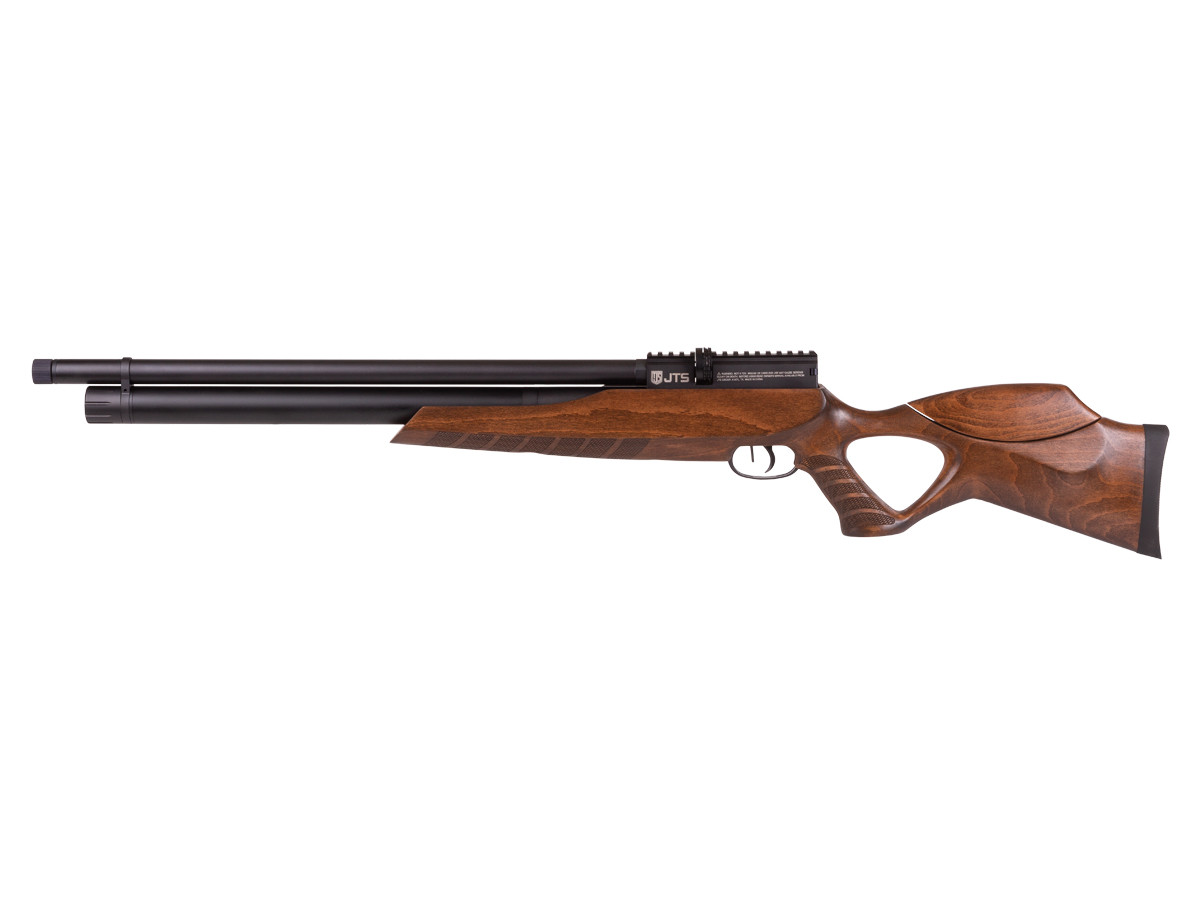
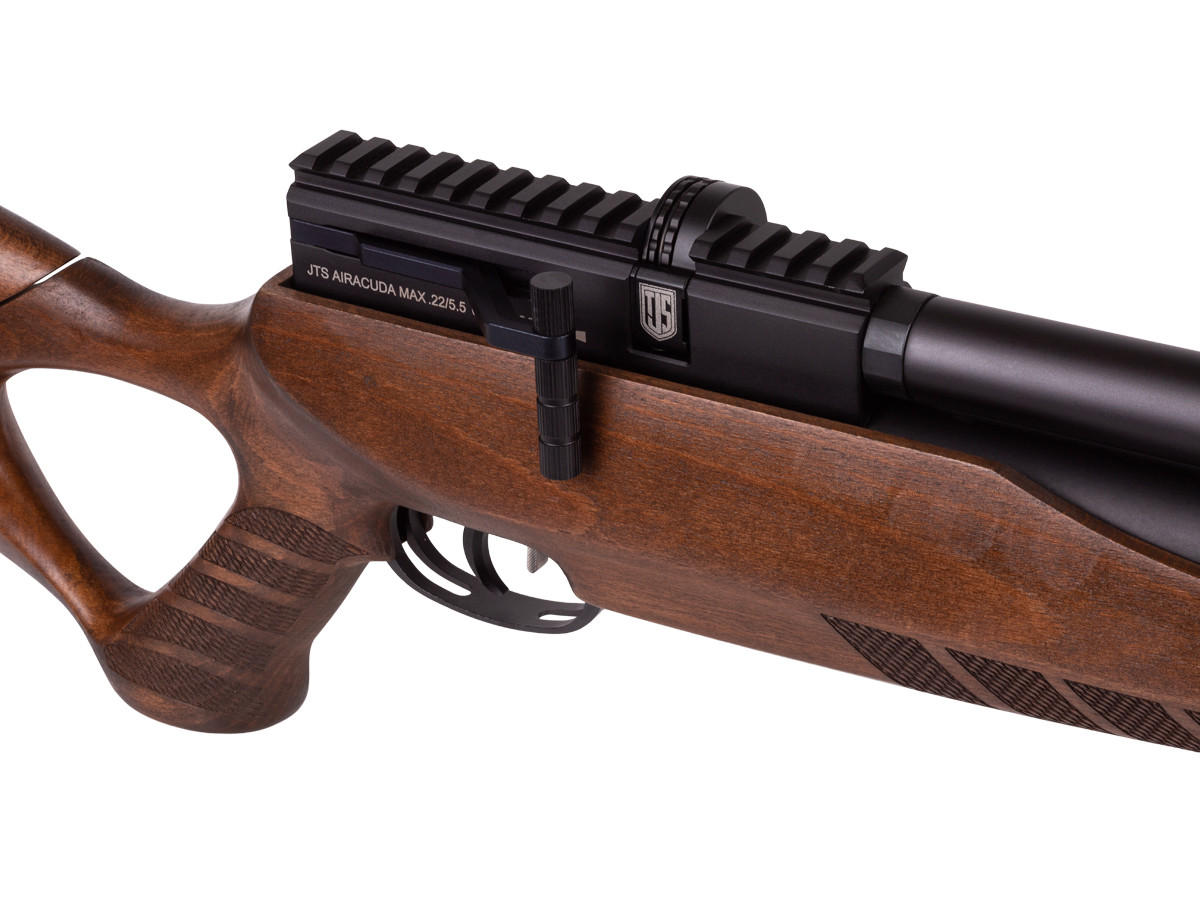
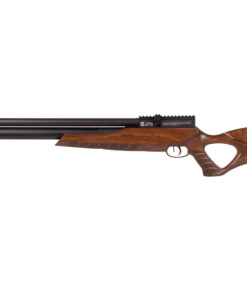
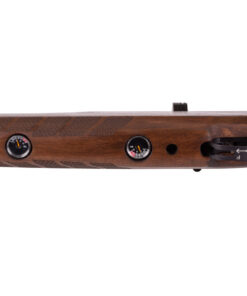
Meanwhile, a classic thumbhole wood stock has been combined with modern adjustability. As a result, a traditional appearance is retained while a more customized shooting position can be achieved.
Why Choose the JTS Airacuda Max?
A combination of regulation, ergonomic stock design, metal construction, and repeat-shot capability has been brought together in the JTS Airacuda Max. Therefore, users who want a PCP rifle positioned above a basic entry-level platform are provided with a compelling option.
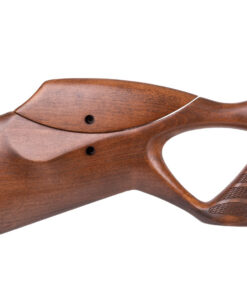
Additionally, an adjustable cheek riser has been included. Because cheek position can be important when an optic is mounted, the adjustable design can help the rifle be fitted more naturally to different users and scope configurations.
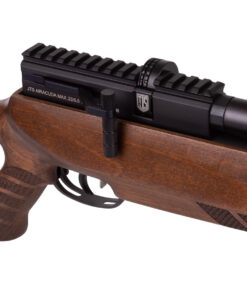
Likewise, a Picatinny rail has been provided for compatible optics. Therefore, a preferred scope or suitable sighting system can be installed without the rifle being restricted to an unusual proprietary mounting arrangement.
Key JTS Airacuda Max Features
The following features are currently listed by JTS for the Airacuda Max platform:
- Regulated PCP operating system
- Adjustable cheek riser
- Thumbhole wood stock
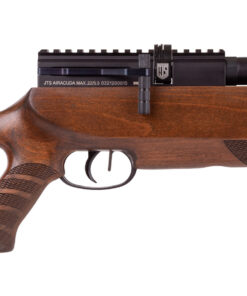
- Side-lever action
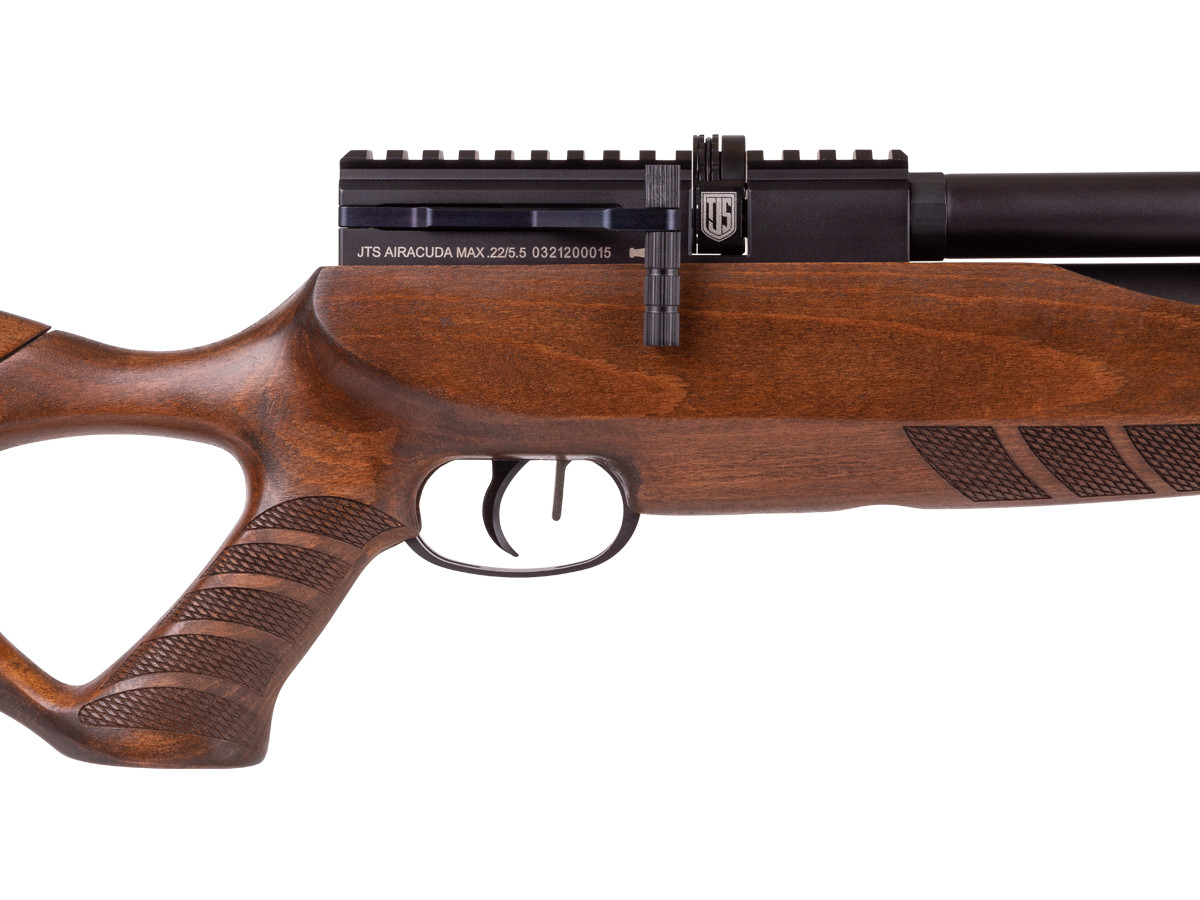
- Adjustable two-stage trigger
- Approximately 2 lb factory-listed trigger pull
- Manual safety
- Picatinny optics rail
- Shrouded 18-inch barrel
- Barrel band for additional support
- Foster-style quick-fill fitting
- All-metal magazines
- Two magazines included according to the manufacturer
- All-metal action construction
- Approximately 41.5-inch overall length
- Approximately 7.9 lb listed weight
Together, these specifications allow the rifle to offer a substantial feature package without excessive complication.
Regulated PCP Performance
One of the defining features of the JTS Airacuda Max is its regulated air system. Instead of reservoir pressure being allowed to influence every shot directly, regulated pressure is used to help produce a more controlled air supply during firing.
Consequently, velocity consistency can be supported across consecutive shots. For target shooters in particular, predictable performance can be valuable because fewer variables are introduced from shot to shot.
Furthermore, the PCP powerplant allows the mechanical movement normally associated with spring-powered air rifles to be avoided. Therefore, a comparatively smooth firing cycle can be experienced.
According to JTS, the rifle is capable of 30+ shots per fill in the .22 and .25 configurations currently detailed on its product page, although actual usable shot count can vary with caliber, fill pressure, pellet selection, environmental conditions, and individual rifle setup.
Smooth Side-Lever Operation
A side-lever action has been fitted to the JTS Airacuda Max. As a result, repeat shots can be prepared through a straightforward mechanical cycling system.
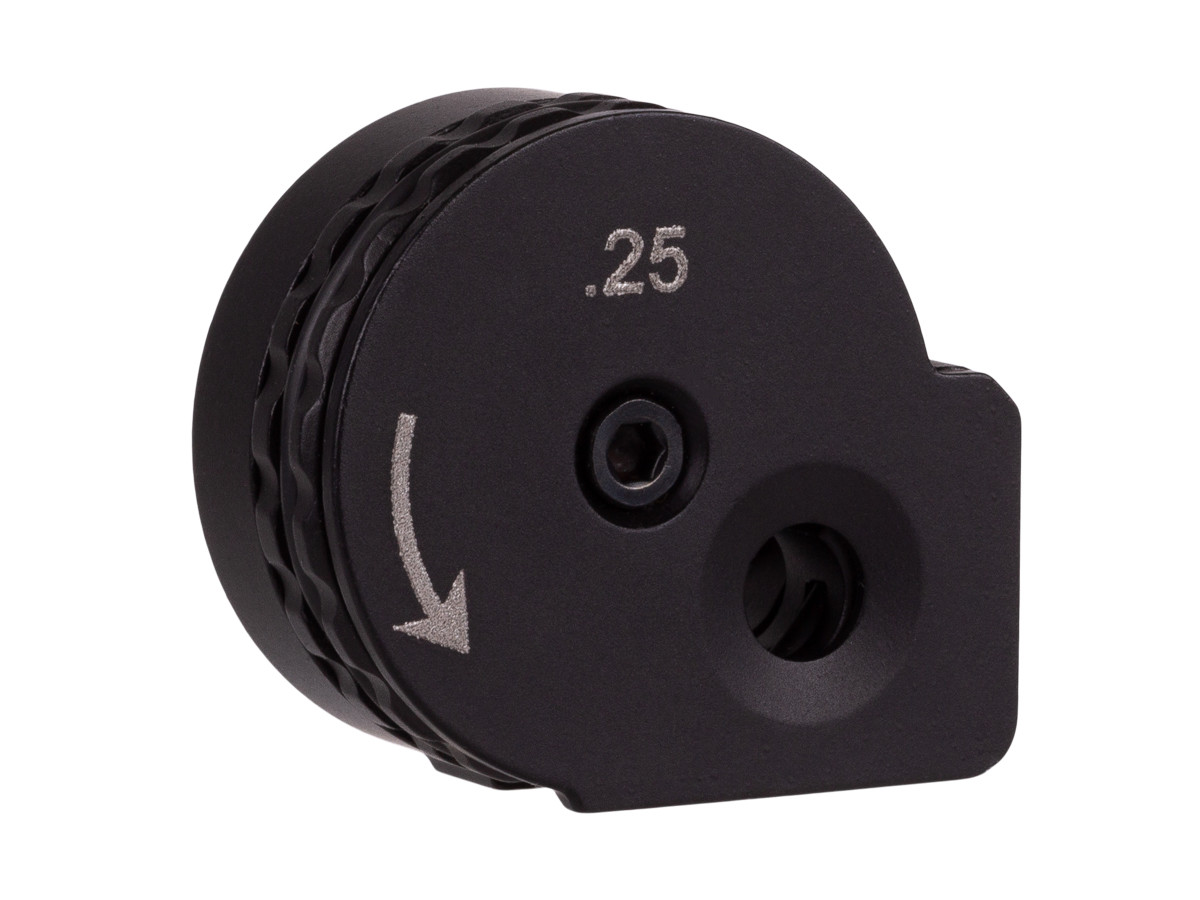
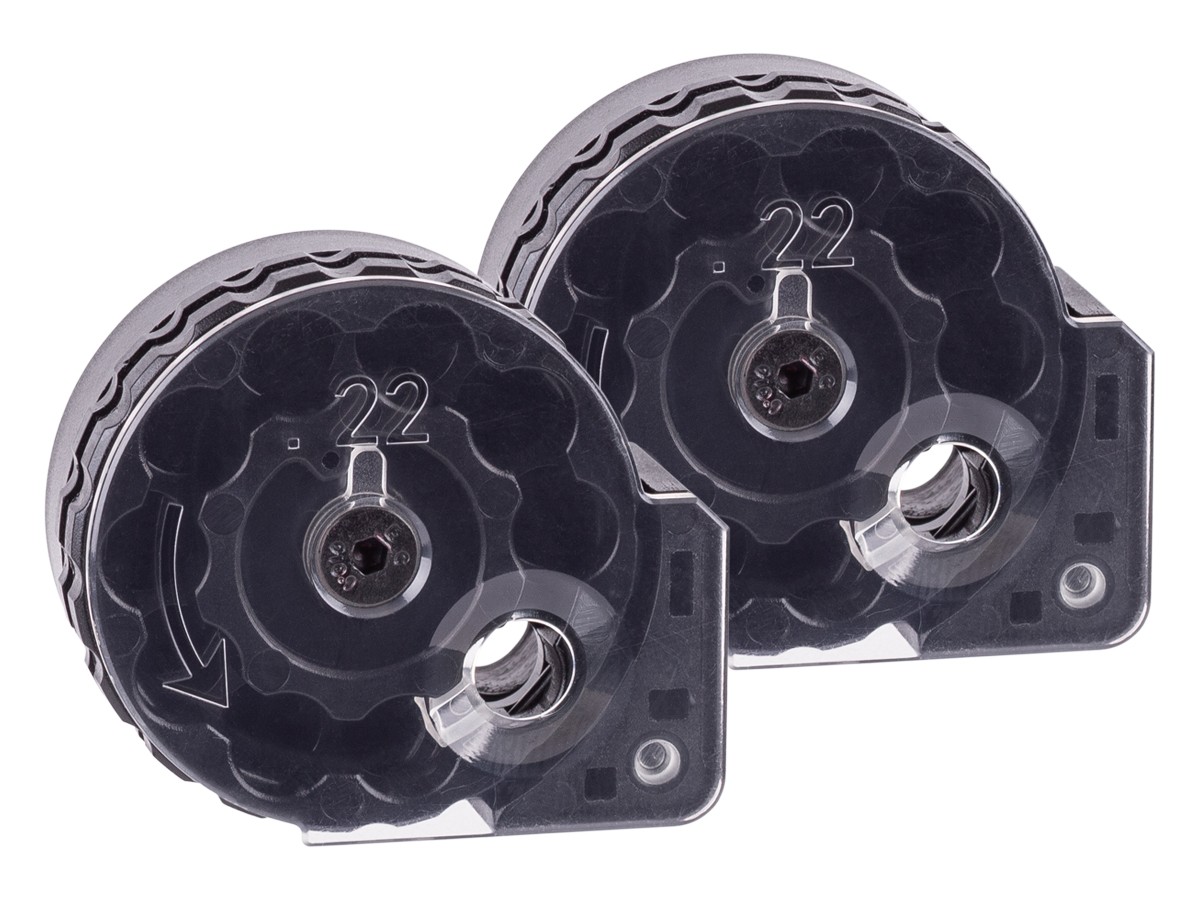
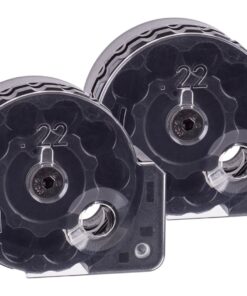
Moreover, metal rotary magazines have been supplied rather than a single-shot-only arrangement. Current manufacturer specifications list magazine capacities of 12 rounds for .177, 10 rounds for .22 and .25, and 7 rounds for .30.
Therefore, range sessions can be conducted with fewer interruptions for individual pellet loading.
At the same time, safe handling practices should always be followed. The manual safety should be used appropriately, and the manufacturer’s operating instructions should be read before the air rifle is handled or used.
Adjustable Two-Stage Trigger
Greater control has also been supported through an adjustable two-stage trigger.
A two-stage system allows the initial trigger movement to be separated from the final release point. Consequently, a more predictable trigger feel can be achieved once the rifle has been properly familiarized with.
A trigger pull of approximately 2 pounds is listed by JTS. Nevertheless, factory safety settings should be respected, and unauthorized internal modifications should be avoided. JTS specifically warns that improper modification or tampering may create unsafe operating conditions.
Premium Thumbhole Wood Stock
Visual appeal has not been ignored with the JTS Airacuda Max.
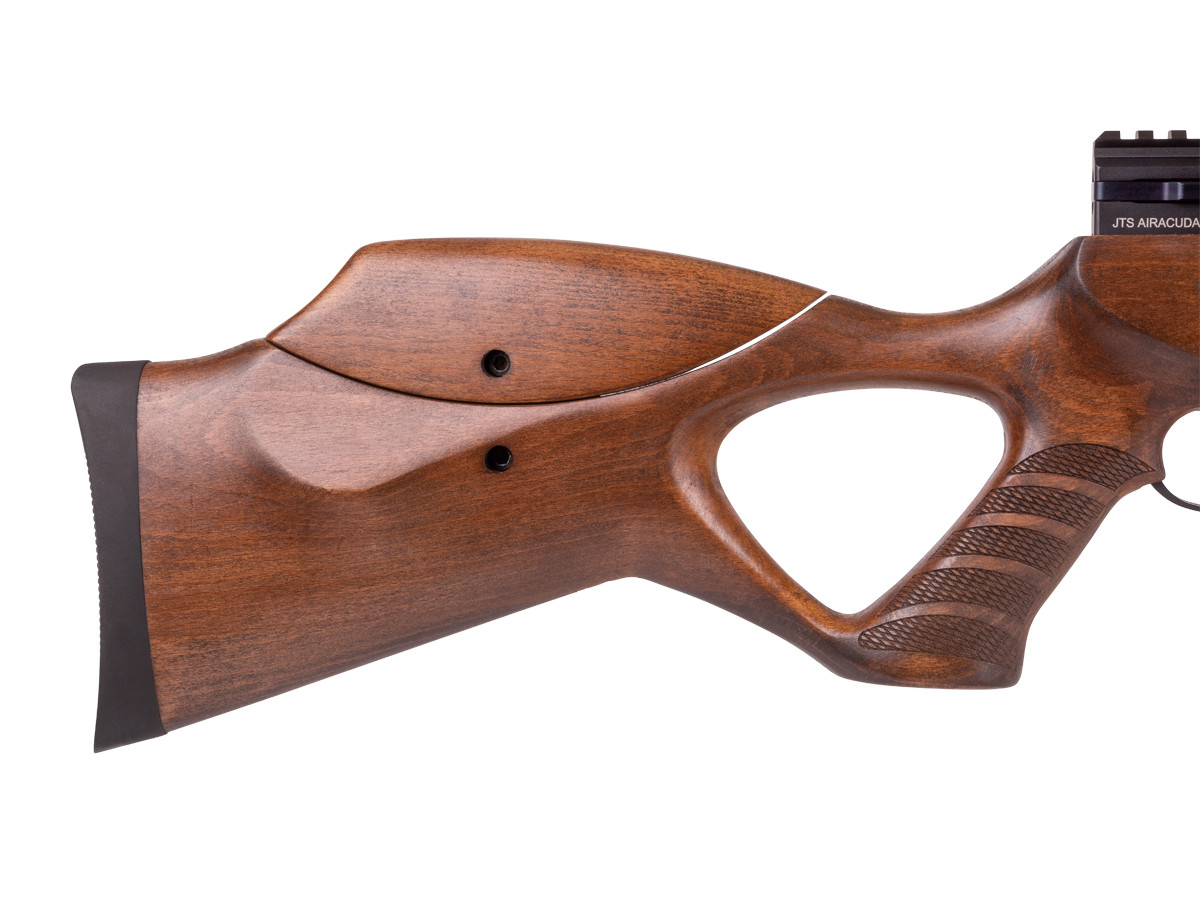
A shaped wooden thumbhole stock has been fitted, creating a noticeably different presentation from synthetic-stock PCP rifles. At the same time, comfortable handling has been prioritized through the stock geometry.
More importantly, an adjustable cheekpiece has been integrated. Therefore, the shooter’s head position can be better matched with a mounted optic.
Because shooting preferences and body dimensions differ between users, this adjustment can make the platform more accommodating to a wider range of shooters.
Designed Around Practical Ergonomics
The rifle’s approximately 41.5-inch overall length and 7.9-pound listed weight give it the dimensions of a full-size sporting PCP platform.
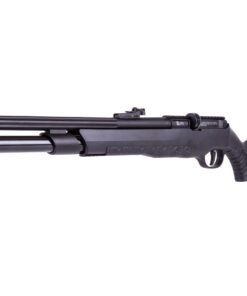
Meanwhile, an 18-inch shrouded barrel has been incorporated. The barrel is additionally supported by a barrel band, while the air reservoir and action are arranged in a conventional rifle format.
As a result, familiar handling characteristics are retained while PCP technology is provided.
Optics-Ready Picatinny Rail
A Picatinny rail has been integrated into the JTS Airacuda Max, allowing compatible optics to be mounted according to the shooter’s intended use.
Consequently, the rifle can be configured with an appropriate scope for recreational target shooting or other lawful airgun activities.
Because the cheek riser is adjustable, optic height can also be accommodated more effectively than with a completely fixed stock configuration.
Convenient Foster Quick-Fill System
PCP rifles require compressed air to be replenished, so filling convenience can directly affect the ownership experience.
For this reason, a Foster-style fitting has been incorporated into the JTS Airacuda Max. The connection allows compatible PCP filling equipment to be attached according to the procedures specified by the manufacturer.
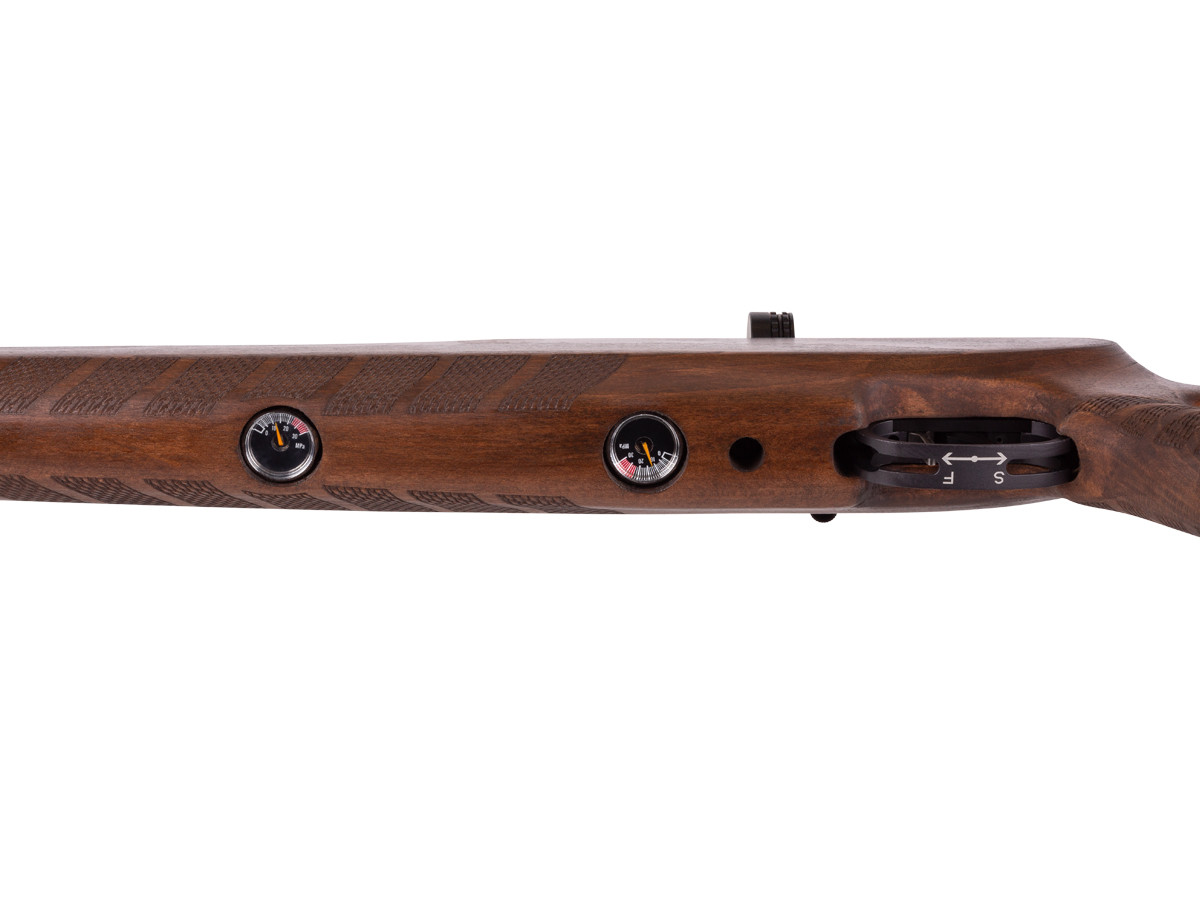
Additionally, a pressure gauge is incorporated into the system so reservoir pressure can be monitored. The owner’s manual identifies the rifle as a regulated PCP platform and provides the applicable operating and safety information for filling and handling.
Who Is the JTS Airacuda Max For?
The JTS Airacuda Max has been positioned for adult airgun users who value a combination of traditional wood styling and modern PCP engineering.
In particular, it may appeal to buyers looking for:
- A regulated PCP air rifle
- A traditional wooden stock
- Adjustable cheek support
- Repeat-shot magazine operation
- A smooth side-lever action
- An adjustable two-stage trigger
- Standardized optics mounting
- Multiple available caliber choices
- A solid, full-size sporting rifle configuration
Therefore, rather than relying on one standout feature, the Airacuda Max has been developed as a balanced package.
JTS Airacuda Max – A Refined PCP Package
Ultimately, the JTS Airacuda Max combines regulated PCP technology, a side-lever action, adjustable ergonomics, metal magazines, a shrouded barrel, and an attractive thumbhole wood stock in one cohesive platform.
Furthermore, useful factory features have been included without making the rifle unnecessarily complicated. The adjustable cheek riser supports proper positioning, the Picatinny rail provides familiar optic compatibility, and the regulated system has been incorporated to promote consistent performance.
For buyers searching for a JTS Airacuda Max that blends classic styling with contemporary PCP functionality, this model presents a comprehensive combination of comfort, construction quality, adjustability, and practical design.
Always confirm caliber-specific specifications before purchasing, follow local laws concerning airgun ownership and use, and operate the rifle strictly according to the JTS owner’s manual.
JTS Airacuda Max Calibres, FAC Power and Accessories
The JTS Airacuda Max has been developed in several calibre configurations, allowing shooters to select a version that better matches their preferred style of lawful recreational shooting. Currently, JTS lists the Airacuda Max in .177, .22, .25 and .30 calibre, with each version providing a different balance between pellet weight, velocity, magazine capacity and downrange energy.
Because the rifle is powered by a regulated pre-charged pneumatic system, consistent air delivery is supported throughout the usable pressure range. Therefore, whether the lighter .177 calibre or considerably heavier .30 calibre version is selected, the Airacuda Max platform is designed around controlled, repeatable PCP performance.
JTS Airacuda Max .177 Calibre
For shooters who prefer a smaller projectile and higher velocity, the JTS Airacuda Max .177 provides an appealing configuration. According to JTS, this model can achieve velocities of up to 1,000 FPS, although actual velocity will depend on pellet weight, environmental conditions and the individual rifle.
Moreover, the .177 version provides the highest magazine capacity in the range. Its all-metal rotary magazine holds 12 pellets, making it particularly convenient during extended target sessions.
Because .177 pellets are generally lighter than the larger calibre alternatives, this configuration provides a notably different ballistic character from the .22, .25 and .30 versions.
JTS Airacuda Max .22 Calibre
Moving upward in calibre, the JTS Airacuda Max .22 provides an excellent middle-ground configuration for shooters wanting a combination of manageable pellet size and increased projectile mass.
JTS lists a maximum velocity of approximately 920 FPS for the .22 model. Furthermore, its magazine accommodates 10 rounds, allowing repeated shots to be taken without individually loading a pellet before every firing cycle.
For many PCP enthusiasts, .22 calibre represents a versatile choice because a broad range of pellet weights and designs is available. JTS itself offers numerous .22 calibre Dead Center pellet weights, giving owners several ammunition options that can be tested for compatibility and accuracy in their particular rifle.
JTS Airacuda Max .25 Calibre
For shooters wanting a heavier projectile, the JTS Airacuda Max .25 provides another step upward in calibre while retaining a 10-round magazine.
A maximum velocity of approximately 900 FPS is currently specified by JTS for this version. Consequently, considerably heavier pellets can be paired with the PCP powerplant while a useful velocity range is retained.
Additionally, JTS produces .25 calibre pellets in several weights, including options around the upper-20-grain and 30-grain range. Therefore, different ammunition can be evaluated to determine which performs most consistently with an individual Airacuda Max.
JTS Airacuda Max .30 Calibre
At the larger end of the Airacuda Max lineup, the .30 calibre configuration is designed around substantially heavier ammunition.
JTS currently specifies a maximum velocity of approximately 860 FPS, while its rotary magazine carries 7 rounds.
Although the magazine capacity is lower than the smaller-calibre models, considerably larger pellets can be used. JTS currently lists .30 calibre Dead Center pellets in weights including approximately 45.06 grains and 50.46 grains, providing examples of the heavier projectile class associated with this configuration.
JTS Airacuda Max FAC and Power Classification
The term FAC is particularly relevant to buyers in England and Wales because it refers to a Firearm Certificate.
Under current UK Home Office guidance, an air rifle capable of producing muzzle energy above 12 ft-lb is classified as a specially dangerous air weapon and must be held on a Firearm Certificate. Therefore, buyers should never assume that every JTS Airacuda Max offered internationally has the same legal classification.
A full-power or FAC-market configuration may produce substantially more than the UK non-FAC threshold depending on calibre, pellet weight and the specification in which the rifle has been supplied.
Importantly, muzzle velocity alone should not be treated as muzzle energy. Energy is determined by both projectile weight and velocity. Therefore, the legal status of a particular rifle should be confirmed from its actual tested muzzle energy rather than simply from an advertised FPS figure.
The UK Home Office specifically notes that individual specimens of the same airgun model can produce different muzzle-energy results. Consequently, rifles approaching regulatory limits should be assessed correctly rather than assumed to fall above or below the threshold based solely on model name.
Local regulations can also differ considerably outside England and Wales, so ownership, purchase and use requirements should always be checked for the buyer’s jurisdiction.
Accessories for the JTS Airacuda Max
One of the advantages of the JTS Airacuda Max platform is that several useful shooting accessories can be incorporated without changing the fundamental character of the rifle.
A Picatinny optics rail is supplied as standard, providing a common mounting platform for compatible airgun scopes and sighting equipment. Additionally, a Foster-style quick-fill fitting is incorporated for connection to suitable PCP filling equipment.
Useful Airacuda Max accessories may therefore include:
- Airgun scope with compatible Picatinny mounting hardware
- Scope rings or mounts
- PCP hand pump rated for the rifle’s required filling pressure
- PCP compressor or suitable high-pressure filling system
- High-pressure air tank and compatible fill equipment
- Foster quick-connect filling accessories
- Spare JTS Airacuda Max magazines in the correct calibre
- Quality pellets matched to the rifle’s calibre
- Pellet selection or test packs
- Protective rifle case
- Airgun cleaning and maintenance supplies
- Suitable shooting rest or support equipment
Because JTS supplies two all-metal magazines with the Airacuda Max, users already receive repeat-shot capability directly from the factory. Magazine capacity is calibre dependent, with 12 rounds available in .177, 10 rounds in .22 and .25, and 7 rounds in .30.
Choosing the Right JTS Airacuda Max Setup
Ultimately, choosing between the JTS Airacuda Max .177, .22, .25 and .30 should be based on intended lawful use, local regulations, ammunition availability and personal preference.
Meanwhile, selecting appropriate optics, filling equipment, pellets and spare magazines can turn the rifle into a more complete PCP package. With its regulated action, multiple calibre choices, Picatinny optics platform and practical filling system, the JTS Airacuda Max provides a flexible foundation that can be configured around different shooting requirements while maintaining the refined characteristics of the Airacuda Max platform.
Practical Use Scenarios
A well-designed regulated PCP rifle becomes most valuable when its features translate naturally into everyday shooting situations. Rather than existing only as technical specifications on a product page, features such as the side-lever action, adjustable cheek riser, two-stage trigger, Picatinny optics rail, rotary magazines, regulated air system, wooden thumbhole stock, pressure gauge, and Foster-style filling connection can contribute directly to a more organized and enjoyable ownership experience. The manufacturer currently lists these features as standard equipment, together with an 18-inch shrouded barrel, approximately 41.5-inch overall length, and a weight of about 7.9 pounds.
Relaxed Backyard and Private-Range Target Shooting
For recreational target shooting where local laws and property conditions permit it, the rifle can provide a comfortable platform for repeated practice. Paper targets, approved reactive targets, and conventional range exercises can be used to develop consistency while becoming familiar with the rifle’s handling characteristics.
Because a regulated PCP system is used, air pressure supplied to the firing system is controlled rather than being determined solely by the continuously changing pressure inside the reservoir. Consequently, users can experience more predictable shot-to-shot behavior during the useful portion of a fill.
This becomes particularly valuable during longer target sessions. Instead of concentrating constantly on changing rifle characteristics, attention can remain focused on sight alignment, breathing, trigger control, and shooting position.
The adjustable cheek riser is equally useful in this environment. Different scopes and mounting systems can position the eyepiece at different heights. Therefore, cheek support can be adjusted so that the shooter’s eye naturally aligns with the optic while a comfortable head position is maintained.
A thumbhole wooden stock further supports a familiar sporting-rifle feel. Although individual preferences differ, the combination of a traditional stock shape and adjustable cheek support can make relaxed bench or standing sessions more comfortable.
Benchrest Practice and Accuracy Testing
Another practical scenario involves controlled shooting from a bench. Bench testing can be useful when comparing pellet types, checking optic settings, evaluating consistency, or simply practicing under more stable conditions.
The approximately 7.9-pound rifle weight can provide a substantial and planted feel when supported correctly. Rather than being an ultra-light compact platform, the rifle has dimensions closer to those of a conventional full-size sporting air rifle.
When supported on an appropriate shooting rest, this construction can make the platform suitable for deliberate target work. The adjustable two-stage trigger also becomes particularly noticeable during this type of shooting because the user can become familiar with the distinction between the initial stage and the final release.
The manufacturer’s current listing specifies an approximately two-pound trigger pull. However, safe factory settings should always be maintained, and unnecessary internal modification should be avoided. The owner’s manual specifically warns that unauthorized alteration or tampering may affect safe operation and warranty coverage.
During bench sessions, the regulated system also makes ammunition comparison more meaningful because fewer pressure-related variables may be introduced across consecutive shots. As a result, differences between pellet types can be evaluated under more repeatable conditions.
Pellet Selection and Familiarization Sessions
Every individual air rifle can show preferences for particular pellet shapes and weights. Therefore, one practical use scenario is simply spending time determining which suitable ammunition provides consistent results in the individual rifle.
This process does not need to be complicated. Users can work with commercially manufactured pellets of the correct calibre while observing general grouping consistency and reliable magazine operation.
Because two all-metal magazines are included according to the manufacturer, multiple magazines can be prepared for an organized range session. Magazine capacity currently varies according to calibre, with 12 rounds listed for .177, 10 rounds for .22 and .25, and 7 rounds for .30.
That capacity becomes useful when comparing ammunition because several controlled groups can be completed without manually loading every projectile individually.
However, different pellet designs should not simply be mixed inside one magazine when meaningful comparison is the objective. Keeping each group associated with a known pellet type allows results to be evaluated more clearly.
Regular Club and Shooting-Range Use
For shooters who visit an established airgun club or approved range, the platform can function as a dedicated recreational rifle that is transported, set up, used, and packed away as part of a regular shooting routine.
Its 41.5-inch overall length means that an appropriately sized protective case should be selected. A fitted case can help protect the wood stock, optic, barrel assembly, and other external components during transport.
Upon arrival at the range, the pressure gauge can be checked as part of normal equipment preparation. The optic can then be inspected to ensure that mounts remain secure, while magazines and correctly matched pellets can be organized before shooting begins.
The manual safety provides an additional handling control, although it should never replace fundamental safe handling practices. The owner’s manual emphasizes that an unloaded and uncocked airgun with the safety engaged represents the safest condition.
Consequently, club and range use can provide an excellent environment for developing consistent habits around loading, unloading, muzzle direction, equipment inspection, and storage.
Repeated Shooting With the Side-Lever Action
The side-lever mechanism is particularly useful when multiple controlled shots are required during a normal target session.
Instead of individually inserting a pellet into the breech before every shot, a compatible rotary magazine can be used. The side lever is then operated between shots according to the manufacturer’s normal operating procedure.
This arrangement reduces unnecessary interruption during recreational shooting. More importantly, it allows the shooter to maintain a relatively consistent position between consecutive shots.
For example, while shooting from a bench, extensive repositioning is not required simply to prepare the next pellet. The action can be cycled, the shooting position re-established, and the next target engagement completed.
Because the lever is mechanically operated, deliberate handling remains important. It should never be forced if abnormal resistance is encountered.
Optics-Based Target Practice
The integrated Picatinny rail makes optical sighting equipment one of the most practical accessories for everyday use.
A suitable airgun scope can be selected according to the shooter’s normal target distances and preferred shooting style. Some users may prefer simple moderate-magnification optics, whereas others may choose a variable-power scope for more flexibility.
Once an optic has been properly mounted, the adjustable cheek riser becomes especially useful. A consistent cheek position can help the eye return naturally to the same position behind the optic.
This repeatable relationship between stock position and scope alignment can contribute to more comfortable target sessions because the shooter is not continually lifting or lowering their head to find the sight picture.
Additionally, the full-size stock provides room for a conventional shooting position rather than forcing users into an unusually compact posture.
Longer Recreational Sessions
Longer range sessions reveal practical differences that may not be obvious during brief testing.
Having two magazines, for example, allows one magazine to remain ready while another is being checked or reloaded. Furthermore, the PCP operating system eliminates the repeated barrel-cocking movement required by a traditional break-barrel rifle.
Consequently, a shooting rhythm can be maintained with fewer large physical movements between shots.
The regulated action is also beneficial during these sessions because the rifle is designed to provide controlled air delivery. JTS currently lists at least 15 shots per fill for the overall range and 30+ shots per fill for the .22 and .25 versions on its product page. Actual results can vary according to calibre, ammunition, fill conditions, temperature, and the individual rifle.
For practical ownership, this means users should learn how their particular rifle behaves over a normal fill rather than relying entirely on a headline shot-count figure.
Recreational Plinking
Informal plinking can provide an enjoyable way to build familiarity with the rifle, provided that approved targets, a safe backstop, and a lawful shooting location are used.
Compared with formal paper-target shooting, plinking can introduce greater variety into a recreational session. Nevertheless, safe target placement remains essential.
The combination of magazine feeding and side-lever operation is particularly convenient here because multiple approved targets can be engaged during the same range session without constant single loading.
Furthermore, the adjustable cheek riser and scope mounting system allow the rifle to remain configured around one user’s preferred setup. Once a comfortable position has been established, it can generally be retained for future sessions unless the optic or stock configuration is changed.
Lawful Field and Sporting Use
Where permitted by local law, suitable calibre versions may also be used for lawful sporting or field applications. Local rules regarding airgun power, quarry species, licensing, land access, and permissible shooting areas vary considerably, so the user must confirm the regulations applying in their jurisdiction before undertaking such activity.
From a practical handling standpoint, the wood stock and full-size dimensions provide a traditional sporting configuration. The approximately 7.9-pound weight should also be considered before extended carrying.
Some users may appreciate the stability associated with this weight, whereas those expecting to walk significant distances may prefer to use an appropriate carrying solution when the rifle is unloaded and being transported in accordance with local requirements.
The shrouded 18-inch barrel keeps the overall arrangement relatively conventional despite the PCP powerplant.
Filling and Air Management
PCP ownership naturally involves compressed-air management, making the filling routine an important practical part of using the rifle.
A Foster-style fitting is provided for quick connection to compatible filling equipment, and a pressure gauge is incorporated so reservoir pressure can be monitored.
Depending on the user’s circumstances, an appropriate high-pressure hand pump, PCP compressor, or compatible pre-filled air source may form part of the supporting equipment.
Rather than waiting until immediately before shooting, many owners find it practical to inspect their filling equipment, magazines, pellets, optic, and rifle condition before leaving for a range session.
This helps prevent situations where shooting time is lost because an adapter, magazine, or other essential item has been forgotten.
Only filling equipment rated for the necessary pressure should be used, and the manufacturer’s manual should be followed rather than improvised filling procedures.
Cleaning, Inspection and Routine Ownership
Practical use continues after the final shot has been fired.
The exterior can be inspected for moisture, dust, or obvious damage before storage. Particular attention can be given to the wooden stock, external metal surfaces, magazine, optic mounts, filling connection, and pressure gauge.
The rifle does not need to be unnecessarily dismantled after every recreational session. Indeed, avoiding needless disassembly can reduce the risk of accidental damage or incorrect reassembly.
Instead, routine ownership should focus on keeping the rifle clean, dry, correctly stored, and periodically inspected.
If a change in operation is noticed, the owner’s manual recommends professional attention rather than unauthorized internal modification. The manufacturer specifically warns that modifications or tampering can produce malfunctions and potentially unsafe operation.
A Practical All-Round Shooting Routine
Perhaps the most realistic scenario is not one specialized activity but a combination of several.
A typical owner may prepare the rifle at home, transport it safely in a protective case, arrive at an approved range, check reservoir pressure, install a prepared magazine, confirm optic settings, shoot several paper-target groups, spend part of the session plinking at approved targets, and then pack the equipment away for transport and storage.
Within that routine, virtually every major design feature serves a practical purpose.
The regulator supports consistent air delivery. The rotary magazine makes repeated shooting convenient. The side lever simplifies cycling between shots. The Picatinny rail accommodates an appropriate optic. The cheek riser helps establish a comfortable head position. The thumbhole stock provides a traditional handling profile. Meanwhile, the Foster fitting and pressure gauge support routine PCP air management.
Therefore, the strongest practical advantage is versatility rather than dependence on a single specialized function. Whether used for deliberate bench shooting, recreational plinking, regular club sessions, ammunition familiarization, optics practice, or other lawful sporting applications, the platform can be incorporated into a straightforward shooting routine while remaining comfortable, familiar, and adaptable to different users.
Daystate, FX Airguns, PCP Rifles, Accessories and Precision Airgun Equipment
For enthusiasts researching premium PCP platforms, accessories, replacement components, and precision shooting equipment, the modern airgun market offers an extensive range of options from brands such as Daystate and FX. Searches for daystate blackwolf, daystate redwolf, delta wolf, huntsman daystate, daystate alpha wolf, wolf delta, day state, and daystate delta wolf frequently come from shooters comparing electronic PCP technology, ergonomic designs, premium construction, and sophisticated firing systems. Traditional styling also remains important, which is why terms such as stock walnut, safari stock, dima stock, rimfire stocks, and stock replacement continue to attract buyers who value both appearance and practical fit.
Among electronically controlled PCP rifles, the daystate alpha wolf, daystate blackwolf, daystate redwolf, and daystate delta wolf are commonly associated with advanced regulation, refined shot management, and a highly consistent firing cycle. Searches such as what is a delta wolf, what is a delta wolf, delta wolf meaning, deltaw, blackwolf, red alpha wolf, alpha red wolf, model alpha gun, model alpha gun, and electronic wolves often reflect buyers trying to understand how Daystate’s electronically managed rifles differ from conventional mechanical PCP systems. Other searches, including daysta, wolf gun, wolverine gun, wolveriner, daystate wolverine sapphire, daystate wolverine sapphire, and wolfpack armory wolverine, demonstrate the broad interest surrounding Wolf-branded and Wolverine-related sporting platforms.
Small ergonomic components can make a substantial difference to comfort and handling. A rifle butt pad, rubber butt, rubber butt pad, and butt pad rifle accessory can improve shoulder contact, while a bradley cheek riser can help support a more consistent head position. Likewise, enthusiasts may research gecko grips, a cocking ball, short cocking, an index pin, pin magazine, lock timing, and lock time when learning about rifle ergonomics, cycling characteristics, and replacement components. Searches for buddy bottle cover and buddy bottle cover also remain relevant for shooters who want to protect external air cylinders from cosmetic wear during transport or field use.
Magazine compatibility is another frequent consideration. Users may search for a 177 magazine, mag 177, 25 magazine, 5.0 mm pellets, 177 pellets types, slug pellet, or a general pellet rifle when comparing ammunition formats and magazine configurations. Pellet selection should always match the manufacturer’s recommended caliber and specifications for the rifle being used. A well-matched magazine and suitable ammunition can support reliable feeding and consistent performance without unnecessary mechanical stress.
PCP equipment relies on compressed air, so searches such as air rifle compressed air, air gun pc, air gun, and air guns are commonly connected with understanding pre-charged pneumatic systems. Owners also frequently search for a pcp o ring kit because seals form an important part of maintaining an air-tight pneumatic system. Maintenance should follow manufacturer-approved procedures, especially for high-pressure components, regulators, cylinders, and valves.
Sound-moderation accessories form another major category. Common search terms include air gun suppressor, air gun suppressors, airgun moderator, air rifle moderator, 0db, 0db moderator, 0 db moderator, 0 db moderator, 0 db moderator, 0 db moderator, and hogan decimeater silencer. Thread-related searches include silencer thread adapter, thread protector rifle, and muzzle thread protector. Compatibility depends on barrel threading, caliber, applicable law, and manufacturer specifications, so owners should verify all requirements before purchasing or fitting any muzzle accessory.
Mounting systems have also become increasingly important as modular fore-ends and accessory rails become more common. Searches for an mlok to picatinny rail adapter, best m-lok to picatinny rail adapter, m-lok to picatinny adapter, picatinny m lok adapter, and picatinny bag rider usually come from shooters wanting greater flexibility when mounting supported accessories. The best adapter is generally one that matches the rifle’s rail specification, uses quality hardware, fits securely, and avoids unnecessary bulk.
Sling-related searches are equally common. Buyers frequently look up how to put a gun sling on a rifle, how to put a rifle sling on, how to install a rifle sling, riffle sling, rigle sling, how to put sling on rifle, installing a rifle sling, and attaching a sling to a rifle. A compatible sling can improve carrying comfort and transportation, but attachment points should always be checked against the rifle manufacturer’s recommendations to avoid damage to the stock or mounting hardware.
The alpha wolf barrel and accessories such as an ats tuner may also interest precision-focused users researching how different rifle configurations are designed. Similarly, terms such as weatherby vanguard trigger adjustment appear in broader shooting-related searches, although trigger systems differ significantly between platforms and should be serviced or adjusted only according to the applicable manufacturer’s safety instructions. Another unusual search phrase, how to put extinguisher call back together, is unrelated to PCP rifle servicing and should be treated according to the specific extinguisher manufacturer’s maintenance guidance rather than general airgun information.
For buyers comparing premium European PCP equipment, daystate redwolf price and daystate redwolf price are common commercial-intent searches. Pricing can vary depending on caliber, stock type, configuration, region, dealer, and included accessories. People may also search fx airgun dealer near me when looking for authorized retailers, parts support, servicing, or warranty assistance.
FX Airguns remains another major name in the PCP market. Popular searches include fx impact m3 .22cal air rifle. 600mm barrel, fx impact m3, fx impact mk3, fx m3 airgun, fx m3, impact m3, and fx impact m3 air rifle. Price-focused searches such as fx impact m3 precio, fx impact m3 precio en usa, and fx impact m3 price indicate strong buyer interest in comparing regional pricing and available configurations. The modular design philosophy associated with the FX Impact family makes it especially attractive to experienced PCP users who prioritize adjustability, ergonomics, accessory compatibility, and high-quality construction.
Potential buyers also encounter less common search phrases such as griffin gun, unfend, black snood, red bodywarmer, and can wolverine go on planes. Airline transport rules for sporting equipment and compressed-air components can differ substantially between carriers and countries, so travelers should always check current airline, airport, customs, and destination regulations before making travel arrangements. Likewise, terms such as 3.55kg in lbs may appear when buyers compare rifle weight specifications across metric and imperial listings.
Whether someone is researching the daystate alpha wolf, daystate blackwolf, daystate redwolf, huntsman daystate, wolf delta, an fx impact m3, or another premium pellet rifle, the most important purchasing factors remain intended use, caliber compatibility, overall weight, stock ergonomics, magazine design, air-cylinder capacity, manufacturer support, and accessory compatibility. Premium PCP ownership is best supported by appropriate maintenance, manufacturer-approved components, secure storage, responsible handling, and compliance with all local laws and transport requirements.
Frequently Asked Questions
What type of air rifle is this?
It is a regulated pre-charged pneumatic air rifle designed for recreational target shooting and other lawful sporting applications. Compressed air is stored in the rifle’s reservoir and then managed through a regulated system before each shot is fired. As a result, shot-to-shot performance can remain more consistent across the useful portion of the fill.
Unlike a spring-powered break-barrel rifle, the platform does not require the barrel to be cocked before every shot. Instead, a side-lever action is used together with a rotary magazine. Therefore, follow-up shooting can be conducted with fewer large movements between shots.
The rifle is also built around a full-size wood-stock configuration, which gives it a more traditional sporting appearance than many synthetic-stock PCP designs.
Which calibres are available?
The manufacturer currently lists the platform in .177, .22, .25, and .30 calibre configurations. Each calibre offers different characteristics in terms of projectile weight, velocity, magazine capacity, ammunition availability, and intended lawful use.
The smaller .177 version is generally associated with lighter pellets and higher velocities, while .22 offers a widely used middle-ground configuration. The .25 model accommodates heavier ammunition, and the .30 version is intended for substantially heavier pellets.
Because performance varies by calibre and pellet weight, buyers should select a version according to their intended use, local regulations, ammunition availability, and shooting preferences.
Is the rifle regulated?
Yes. A regulated PCP system is used.
The regulator helps control the pressure delivered to the firing system rather than allowing every shot to be influenced directly by the changing pressure inside the main reservoir. Consequently, more consistent performance can be supported during the useful portion of an air fill.
Regulation can be especially valuable during target shooting because velocity variation is one of several factors that can affect repeatability. However, actual consistency will still depend on pellet selection, fill pressure, environmental conditions, maintenance, and the individual rifle.
How many shots can be fired from one fill?
Shot count depends on calibre, fill conditions, pellet choice, and the individual rifle.
The manufacturer currently lists at least 15 shots per fill across the platform and more than 30 shots per fill for certain .22 and .25 configurations. However, these figures should be treated as manufacturer specifications rather than guaranteed results for every rifle and every shooting condition.
Actual usable shot count can change with temperature, projectile weight, fill technique, regulator behavior, and how the shooter defines the acceptable velocity range.
For that reason, owners may find it useful to become familiar with the performance of their own rifle over several normal filling cycles.
What type of action is used?
A side-lever action is fitted.
Once a loaded magazine has been inserted correctly, the side lever is operated between shots according to the manufacturer’s instructions. This provides a practical repeat-shot arrangement that avoids manually placing a pellet into the breech before every shot.
The action should always be operated smoothly and deliberately. If unusual resistance is encountered, the lever should not be forced. Instead, the rifle should be made safe and inspected according to the owner’s manual.
How many pellets does the magazine hold?
Magazine capacity depends on calibre.
The current manufacturer specifications list approximately:
- 12 rounds in .177 calibre
- 10 rounds in .22 calibre
- 10 rounds in .25 calibre
- 7 rounds in .30 calibre
This allows multiple shots to be prepared before shooting begins, which can make target sessions more convenient.
Two all-metal magazines are currently supplied according to the manufacturer’s product information, although package contents should always be confirmed with the seller before purchase.
Does it come with a scope?
A scope is not generally treated as standard equipment unless a specific retailer package states otherwise.
However, a Picatinny optics rail is fitted, making the platform compatible with many commonly available scope mounting systems. Buyers can therefore select an optic according to their intended shooting distances, preferred magnification range, budget, and legal use.
Because the stock incorporates an adjustable cheek riser, the shooter can also better match head position to the height of the installed optic.
What type of scope works well with it?
A suitable airgun-rated optic with compatible Picatinny mounts can be used.
The ideal magnification range depends on the intended application. Lower or moderate magnification may be preferred for casual plinking and general recreational shooting, while higher variable magnification can be useful for more deliberate target work.
Rather than choosing an optic based only on magnification, buyers should also consider eye relief, reticle design, weight, turret quality, parallax adjustment, overall size, and mount height.
The most suitable setup is one that provides a clear sight picture while allowing a comfortable and repeatable cheek position.
Is the cheekpiece adjustable?
Yes. An adjustable cheek riser is included.
This feature is particularly useful when an optic is mounted because different scope rings and optic designs position the eyepiece at different heights.
By adjusting the cheek riser, the shooter can establish a more natural head position and align the eye more consistently with the scope.
A repeatable cheek position can help improve comfort and consistency during longer range sessions.
What type of stock is used?
A wooden thumbhole stock is fitted.
The design combines a traditional sporting appearance with a more modern ergonomic profile. The thumbhole configuration helps define the grip area, while the adjustable cheek riser allows the stock to be adapted more closely to the shooter’s preferred position.
Because natural wood can vary slightly in grain and appearance, individual stocks may not look completely identical.
Owners should keep the stock clean and dry and avoid prolonged exposure to excessive moisture.
How heavy is the rifle?
The manufacturer currently lists the rifle at approximately 7.9 pounds, although fitted accessories can increase the total shooting weight.
Once a scope, mounts, loaded magazine, sling, or other equipment is added, the complete setup may weigh noticeably more.
The weight gives the rifle a substantial full-size feel and may provide useful stability during supported shooting. However, buyers planning long periods of carrying should consider the finished weight of the complete setup rather than only the bare rifle specification.





Reviews
There are no reviews yet.