We Deliver Airguns Directly To Your Door
SKU N/A Category

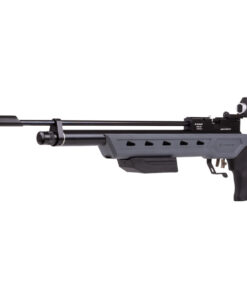
Crosman 3622 PCP Air Rifle Pump Combo

$130.00

If you’ve always wanted a PCP air rifle but didn’t want to pay the price, the Crosman 3622 may just be what the doctor ordered. It comes with a 2,000 PSI reservoir that offers up to 25 shots per fill and helps propel .22 caliber pellets up to 700 FPS. This bolt-action PCP airgun has a rifled steel barrel, a synthetic stock, and a crossbolt safety. And because it has adjustable sights it’s easy to get on target for accurate shooting, all day. It’s compact at only 3.9 lbs with a 36-inch overall length and is easy to get in and out of the field.

If you’re looking for an affordable .22 caliber airgun, check out the Crosman 3622 PCP Air Rifle. Buy yours today from Airgun Depot.

Crosman 3622 PCP Air Rifle Pump Combo, Crosman Pump

  • Bolt Action Rifle
  • Rifle Weight: 3.9 lbs
  • Rifle Length: 35.625”
  • Velocity: Up to 700 FPS
  • Rifle Max Fill Pressure: 2,000 PSI
  • Safety: Crossbolt
  • Stock: Synthetic
  • Front sight: Covered fixed blade
  • Rear sight: Windage and elevation adjustable
  • Barrel bands
  • Crosman Pump Combo Includes: Crosman 3622 rifle and Crosman hand pump
  • Air Venturi G9 Pump Combo Includes: Crosman 3622 rifle and Air Venturi G9 hand pump
Specs
  • ManufacturerCrosman
  • Caliber .22
  • Velocity 700 fps
  • Condition New
  • Ammo Type Pellets
  • Action Bolt-action
  • Barrel Style Rifled
  • Fire Mode Single-shot
  • Gun Weight 8.00
  • Overall Length 35.63
  • Barrel Length 21.25
  • Loudness 4-Medium-High
  • Mechanism Pre-charged pneumatic
  • Rail No
  • Safety Manual
  • Front Sights Blade
  • Rear Sights Adjustable for windage & elevation
  • Shots per Fill 25
  • Use Small game hunting/target practice
  • Warranty 5-year limited warranty
  • Upgrades Crosman Hand Pump

Crosman 3622 PCP Air Rifle Pump Combo

An accessible path into pre-charged pneumatic shooting is opened by the Crosman 3622 PCP Air Rifle Pump Combo. Affordable .22-caliber performance is packaged with a hand-pump-friendly 2,000 PSI reservoir, so consistent pellet power can be enjoyed without an expensive compressor being required from day one. Compact handling, weather-resistant construction, and straightforward sights are combined so backyard practice, pest control, and light small-game work can be approached with confidence.

Why the Crosman 3622 PCP Air Rifle Pump Combo Stands Out

Entry into PCP shooting is often delayed by fill equipment cost. That barrier is reduced because a three-stage high-pressure hand pump is included with the Crosman 3622 PCP Air Rifle Pump Combo. Consequently, the rifle can be charged from empty to working pressure at home. Moreover, the modest 2,000 PSI ceiling is kinder on hand-pumping effort than typical 3,000 PSI platforms. As a result, more time can be spent on the trigger and less time on logistics.

Compact Handling That Travels Easily

A rifle weight of approximately 3.9 pounds is carried by this platform, while an overall length of about 35.6 inches is maintained. Therefore, carry through brush, over fences, or around a backyard range is simplified. Likewise, fatigue during longer sessions is reduced. In addition, a synthetic polymer stock is used so rain, dust, and rough handling can be shrugged off. Meanwhile, a rubber buttpad is provided so shoulder comfort is supported during repeated strings.

Crosman 3622 PCP Air Rifle Combo, Crosman Pump

Performance Features of the Crosman 3622 PCP Air Rifle Pump Combo

Reliable .22 pellet performance is delivered by a rifled steel barrel measuring roughly 21.25 inches. Advertised velocity of up to 700 FPS with lead pellets—and higher figures with lighter alloy ammunition—is supported by independent tests that have often met or exceeded the published lead claim. Furthermore, muzzle energy in the mid-teens of foot-pounds is typically produced with common hunting-weight pellets. Accordingly, cans, paper, and small pests at modest distances can be addressed when ethical shot placement is observed.

Fill Pressure, Shot Count, and Consistency

Up to 25 shots per fill are advertised, and testers have frequently recorded a similar or slightly higher usable string from a full 2,000 PSI charge. Because the system is unregulated, a velocity curve is expected; nevertheless, a useful sweet spot of consistent shots is commonly found once pressure has settled. Therefore, shot counting is recommended. An onboard reservoir gauge is not fitted, so fill pressure must be monitored on the pump or bottle. Overfilling past 2,000 PSI must be avoided, since damage or lock-up can otherwise be caused.

Highlighted combo essentials

  • Bolt-action, single-shot .22 PCP platform
  • Hand-pump-friendly 2,000 PSI air reservoir
  • Up to 700 FPS with lead pellets; higher potential with alloy
  • Up to 25 shots advertised per fill
  • Rifled steel barrel for pellet stability
  • Hooded front blade sight with windage-and-elevation-adjustable rear sight
  • Crossbolt manual safety
  • Weather-resistant synthetic stock and compact 3.9 lb carry weight
  • Included high-pressure hand pump for self-contained filling
  • Five-year limited manufacturer warranty on the rifle

Sights, Safety, and Everyday Controls

Rapid aiming is supported by a covered fixed-blade front sight and a rear sight that can be adjusted for windage and elevation. A notch or peep-style rear plate is used on many examples, so target acquisition can be tailored. A factory optic rail is not provided on the standard receiver; however, an optional steel breech kit (sold separately) is offered by Crosman so scope mounting and a more durable loading area can later be added.

A familiar plastic trigger blade is paired with a crossbolt safety. Match-grade adjustability is not claimed, yet a predictable pull in the mid-three to mid-four-pound range is typically reported. Consequently, safe handling habits can be built without an overly complex trigger being introduced. Inclusive use is supported by an ambidextrous-friendly stock profile, so left- and right-handed shooters can share the same platform after local laws and range rules have been confirmed.

Filling, Maintenance, and Responsible Use

Assembly of the included pump is completed by following the supplied directions. Thereafter, a Foster-style quick-disconnect hose is connected to the fill port, the bleed valve is closed, and strokes are applied until the pump gauge approaches—but does not exceed—2,000 PSI. Roughly ten strokes per 100 PSI is a common planning figure from empty; subsequent top-offs require far fewer strokes because the rifle is rarely emptied completely.

Periodic inspection of o-rings, the fill probe, and the barrel crown is advised. Only dry, clean, airgun-rated high-pressure air should be used. Lead and alloy pellets of appropriate .22 diameter should be selected after grouping tests, since pellet preference varies by individual barrel. Local airgun laws, age restrictions, and hunting regulations must be followed. Eye protection is required, and a safe backstop must always be confirmed before a shot is released.

Practical Uses for Target Work and Light Field Duty

Paper punching at 15–30 yards is a natural first use, and open-sight groups tight enough for silhouette-style practice have been recorded when a favored pellet is found. Moreover, pest and small-game applications within ethical energy and distance limits can be considered where lawful. Because the Crosman 3622 PCP Air Rifle Pump Combo remains light and short, offhand practice and youth-to-adult shared range time can both be accommodated when supervision and safety rules are in place.

In contrast to multi-pump rifles that demand several strokes between every shot, follow-up shots can be taken as quickly as the bolt is cycled and a pellet is seated. Therefore, cadence training and informal plinking sessions feel closer to a conventional PCP experience. Ultimately, the package is positioned as a transitional hunting-and-practice rifle: enough power for modest field work, enough simplicity for first-time PCP owners, and enough upgrade path for shooters who later add a steel breech and optic.

Who Is Served by This Combo

Budget-minded shooters who want PCP consistency without compressor sticker shock are served first. Additionally, households seeking a shared, lightweight .22 for backyard skill building are well matched. Furthermore, experienced airgunners who want an inexpensive “grab-and-go” spare or a platform for experimenting with aftermarket breeches may find value. Inclusive language is used throughout ownership: every shooter is invited to treat the rifle as a precision tool, to verify local compliance, and to prioritize safety over speed.

Conversion-focused next steps are straightforward. A quality tin of .22 pellets, extra fill-probe o-rings, and a solid backstop complete a responsible first kit. After groups have been established with iron sights, the optional steel breech can be considered if magnified optics are desired. Meanwhile, fill discipline—never exceeding 2,000 PSI—protects both rifle and warranty.

The Crosman 3622 PCP Air Rifle Pump Combo is offered as an honest, American-assembled introduction to pre-charged pneumatic shooting. Accuracy is produced by a rifled barrel, convenience is provided by the included pump, and durability is supported by a weather-resistant stock and a five-year limited warranty. When laws are respected and fundamentals are practiced, satisfying sessions on steel, paper, and lawful small targets can be expected from this compact .22 package.

Beeman PCP Underlever Air Rifle and Airgun Collection

The world of precision shooting continues to evolve with advanced air-powered platforms designed for accuracy, reliability, and enjoyable shooting experiences. Modern beeman pcp underlever air rifle models combine innovative engineering with traditional shooting features, offering enthusiasts a wide selection of options including precharged pneumatic systems, pcp air rifle platforms, and classic spring-powered designs. Whether you are searching for a powerful field rifle, a target shooting setup, or a dependable training platform, airguns provide versatile solutions for different shooting applications.

A quality pcp air rifles collection offers consistent performance through regulated air systems, improved shot cycles, and excellent accuracy. These pcp rifle and pcp rifles are popular among shooters who value power, precision, and customization. The beeman underlever design philosophy focuses on balance, stability, and smooth operation, making these rifles suitable for both beginners and experienced marksmen.

For shooters looking for compact and efficient performance, options such as the pcp air rifle 22 cal provide a practical combination of power and accuracy. Models like the beeman chief ii, beeman chief 2, and beeman chief 2 plus are recognized for their reliable performance, comfortable handling, and suitability for recreational shooting. The beeman gs1000 delivers another option for users seeking a powerful pellet shooting platform with dependable construction.

The iconic 1783 silver bear beeman and beeman 1783 silver bear represent classic airgun designs appreciated by collectors and shooting enthusiasts. These rifles are often associated with durable construction, traditional styling, and reliable shooting characteristics. A high power pellet gun provides additional capability for outdoor shooting, while a 22 air rifle, 22 caliber pellet gun, and 22 caliber air rifle offer versatility for target practice and field use.

Traditional shooters may also appreciate designs such as a single shot 22 break barrel rifle or a dependable break barrel air rifle. These systems provide simple operation, low maintenance requirements, and excellent training value. Accessories such as the beeman 66rl scope help improve aiming capability, while products like the beeman 1358 expand the available options for airgun enthusiasts.

Precision Airguns, Pistols, Scopes, and Shooting Accessories

The Beeman range includes many popular models and accessories designed around different shooting preferences. The beeman under lever configuration offers a unique shooting experience with smooth loading operation and enhanced stability. The beeman bp50 and beeman bp50 black models provide modern styling combined with practical shooting features.

For shooters interested in repeating platforms, the beeman repeater rifle sights magazine system provides convenience and faster follow-up shots. Additional models such as the beeman commander, beeman protect bp50, and beeman p3 provide alternatives for recreational shooting and training.

Airgun enthusiasts also explore related shooting products including freeman balers, 392 gun, and other classic shooting equipment. The market includes various designs such as a double barrel air gun, lever action pcp air rifle, lever action air rifle, and co2 rifle systems. These platforms appeal to users who enjoy traditional firearm styling combined with air-powered technology.

For collectors and advanced shooters, models like the sportsman rs2 series, sportsman rs2 series price, and beeman sportsman rs2 series price are frequently searched options. Additional products such as the barra sportsman 900, barra 1866, and co2 bb rifle provide alternative choices for those interested in CO2-powered shooting systems.

Air Pistols, Slingshots, and Marksmanship Equipment

Beyond rifles, airgun users can explore a wide range of compact shooting platforms. Popular options include air pistols, beeman p17, pump handgun, bee bee gun pistol, and 22 caliber air pistol designs. These compact platforms are useful for target training, recreational shooting, and improving shooting skills.

Models such as pellet guns pistols, air pistol pump action, 177 caliber air pistol, .177 air pistol, and .177 pistol provide excellent choices for precision practice. Shooters interested in improving their technique often focus on air rifle marksmanship, developing skills with equipment such as a marksman rifle, marksman rifles, marksman carbine, and army marksman rifle.

The world of outdoor shooting also includes traditional options such as marksman slingshot, marksman slingshots, crosman slingshot, beeman marksman laserhawk iii slingshot, and marksman folding slingshot. These products provide portable shooting solutions for recreational users. Additional related terms include marksman sling, armsman, slingman, marksman pistol, pockethunter, hunting pocket, and classic slingshot.

Choosing the Right PCP, CO2, and Air Rifle Setup

Understanding different airgun technologies helps shooters select the right equipment. Many beginners ask whats a pcp gun, and the answer is that PCP systems use compressed air stored in a high-pressure reservoir to deliver consistent shots. These systems are valued for accuracy, power, and customization options.

A most powerful co2 air rifle provides an alternative for users who prefer CO2-powered operation. Products like the cummins industrial tools pellet gun and workman package b power shot 20oz co2 sidearm kit demonstrate the variety available within the airgun market.

Optics also play an important role in shooting performance. Accessories including a bb gun scope, bb gun rifle with scope, bb gun scopes, and bec gold label scope allow shooters to improve visibility and aiming precision. Different calibers such as 117 cal and other pellet sizes provide flexibility depending on shooting goals.

From traditional rifles to advanced PCP systems, today’s airgun market offers solutions for hunting practice, target shooting, recreational use, and collection. Whether choosing a beeman qb78, beeman r9, beeman 2028, beeman gs1000, or another specialized platform, selecting the right combination of rifle, scope, accessories, and shooting style helps create a better overall experience.

Calibres, FAC Considerations, Power, and Accessories for the Crosman 3622 PCP Air Rifle Pump Combo

A single, purpose-built chambering is used by the Crosman 3622 PCP Air Rifle Pump Combo. Consequently, pellet choice, legal classification, and accessory planning can be approached with clarity rather than confusion. Moreover, power delivery, fill discipline, and aftermarket options are closely linked, so each topic is treated together below.

Available Calibre and Pellet Selection

Only .22 (5.5 mm) is offered on the Crosman 3622 PCP Air Rifle Pump Combo. A multi-calibre barrel swap is not provided from the factory. Therefore, attention can be focused on finding the pellet that groups best in an individual barrel rather than on calibre conversion.

Lead wadcutters, hollow points, and domed hunting or match pellets in the typical 14- to 18-grain class are commonly evaluated first. Additionally, lighter alloy pellets may be tested when higher advertised velocity is desired for informal plinking. In contrast, heavier slugs are generally outside the design intent of this unregulated, modest-pressure platform. As a result, grouping tests at a safe, measured distance remain the most reliable way for every shooter to confirm what flies true.

Highlighted calibre notes

  • Factory chambering: .22 only
  • Intended ammunition: diabolo pellets (lead or alloy)
  • Typical test weights: mid-teens of grains for balance of speed and energy
  • Slug use: not the primary design focus of this compact reservoir
  • Best practice: several tins are compared before a “house load” is adopted

Inclusive range sessions are supported when pellet debris, lead hygiene, and shared backstops are managed for all participants. Eye protection is required whenever the action is closed on a live pellet.bel air gun

FAC Status, Power Class, and Legal Context

Power output near 16 foot-pounds is published for the Crosman 3622 PCP Air Rifle Pump Combo, and independent chronograph work has often landed in a similar band with suitable lead pellets. Therefore, legal classification is not identical in every country.

In many U.S. jurisdictions the rifle is treated as an airgun rather than a firearm, yet local age, transport, and hunting rules still apply. Meanwhile, in the United Kingdom, air rifles that produce more than 12 ft-lbs of muzzle energy are generally classed as FAC (Firearms Certificate) air rifles. Because advertised and tested energy for this model sits above that common 12 ft-lb line, FAC status should be assumed for UK ownership unless a specific, lawfully limited example is confirmed by a competent authority. Elsewhere in the EU and other regions, additional licensing, energy caps, or transport rules may apply.

Consequently, a purchase decision should be paired with a check of current local law—not with assumptions copied from another market. Overfilling, aftermarket power tweaks, or unapproved modifications can also change both performance and legal standing. Responsible ownership is therefore framed around compliance first and velocity second.

Highlighted legal and power checkpoints

  • Advertised lead velocity: up to about 700 FPS
  • Advertised alloy potential: higher figures (often cited near 850 FPS)
  • Typical energy class: around 16 ft-lbs with appropriate pellets
  • Fill ceiling: 2,000 PSI (must not be exceeded)
  • UK context: energy above 12 ft-lbs commonly places a rifle in FAC territory
  • Universal rule: local statutes, hunting seasons, and age limits must be verified

No method for raising power above lawful limits is described here. Safety, documentation, and lawful use are prioritized for every community of shooters.

How Power Is Delivered on This Platform

An unregulated 2,000 PSI reservoir is employed. Shot-to-shot velocity therefore follows a curve rather than a flat regulator plateau. Nevertheless, a usable string of about 25 advertised shots—and sometimes a few more of practical consistency—is commonly obtained from a full fill. Furthermore, testers have noted that the most stable portion of the string often appears after the first few shots and before pressure falls too far.second air

Because an onboard gauge is not fitted, fill pressure is read on the included hand pump or on a bottle/compressor gauge. Accordingly, shot counting is treated as part of good technique. Overfilling past 2,000 PSI can damage seals or lock the action, so that limit is treated as a hard ceiling.

Muzzle energy in the mid-teens of foot-pounds is adequate for paper, steel, pest work, and small game only where law, ethics, and shot placement allow. Distant or oversized game is outside the intended envelope. Inclusive language is used here on purpose: ethical limits protect the sport for new and experienced shooters alike.

Crosman 3622 PCP Air Rifle Combo, Crosman Pump

Accessories That Complete the Crosman 3622 PCP Air Rifle Pump Combo

A high-pressure hand pump is already included in the combo, so first fills can be completed without a compressor being purchased on day one. Foster-style quick-disconnect compatibility is typical on the fill hose, which keeps topping-off straightforward after the initial assembly steps are finished.

A factory optic rail is not present on the standard synthetic receiver. However, a steel breech kit is sold separately by Crosman and is the usual path when a scope or more durable loading trough is desired. After that kit is fitted, airgun-rated rings and a compact 4x-class or similar optic are often chosen so the light 3.9 lb rifle is not made nose-heavy.

Highlighted accessory list

  • Included: three-stage high-pressure hand pump and fill hose
  • Sold separately: Crosman steel breech kit for scope mounting
  • Recommended consumables: quality .22 pellets, extra fill-probe o-rings
  • Sighting: factory hooded front blade and adjustable rear; optic after breech upgrade
  • Range kit: safe backstop, chronograph (optional), pellet trap, eye protection
  • Care items: airgun oil only where specified, dry cloth, seal inspection
  • Not standard: sling swivels, shroud, regulator, or onboard pressure gauge

Additionally, a compressor or scuba/tank fill can later be used provided the 2,000 PSI limit is respected. In contrast, a more powerful pump or unregulated high-pressure source must still be watched closely, because this reservoir is intentionally modest. Spare probes and o-rings are inexpensive insurance, since fill-port leaks are among the most common field interruptions on budget PCP rifles.45 70 double rifle

Conversion-focused next steps remain simple. After a favored .22 pellet is identified, the steel breech and a lightweight scope can be planned if iron-sight groups have already been proven. Meanwhile, FAC or local licensing paperwork—where required—should be completed before the rifle is carried afield. Ultimately, calibre simplicity, honest mid-teen power, and a short list of meaningful accessories keep the Crosman 3622 PCP Air Rifle Pump Combo approachable for households and clubs that value lawful, shared.double rifle 45 70 shooting.marksman’s rifle.marks man

Practical Use Scenarios

Everyday shooting is made approachable by a light, single-shot .22 pre-charged rifle that can be filled with the included hand pump. Consequently, sessions can be planned around skill building, lawful pest work, and modest small-game opportunities rather than around compressor logistics. Moreover, inclusive range habits are easier to maintain when the platform stays compact, simple, and predictable.

Backyard Zeroing and Paper Practice

A first outing is often spent on paper at a measured 10 to 25 yards. A sturdy trap or earthen backstop is placed so every pellet is captured. Thereafter, the reservoir is filled to the published 2,000 PSI ceiling using the pump gauge, never beyond it. A pellet is then seated, the bolt is closed, and the crossbolt safety is managed until the sight picture is settled.

Open sights are used initially so fundamentals can be learned without mount height being introduced. Groups are fired in short strings because an unregulated curve is expected. Therefore, shot counting is treated as part of the drill. After a dozen or so shots, point of impact is compared with point of aim, and the rear sight is adjusted for windage and elevation. In addition, two or three pellet types are rotated so the barrel’s preference can be discovered without a long, wasteful string being fired from a single tin.

Inclusive practice is supported when each participant waits behind the firing line until the action is open and the muzzle is pointed at the trap. Eye protection is worn by everyone nearby, including observers. Meanwhile, lead hygiene is observed: hands are washed after pellets are handled, and spent lead is collected rather than left in soil where children or pets may later play.

Field-ready backyard checklist

  • Confirmed backstop and defined firing line
  • Pump gauge watched to the 2,000 PSI limit
  • Shot count recorded on paper or a phone note
  • Two or three pellet samples compared
  • Safety on until the sight picture is accepted
  • Shared eye protection for every person present

Offhand Skill Building and Informal Silhouette Work

Standing practice is well matched to a rifle that weighs under four pounds. Consequently, hold fatigue is delayed, and more repetitions can be completed in a single session. Small steel spinners or scaled silhouette targets are set at known distances. A slow cadence is kept so each shot is aimed rather than rushed.

Because follow-up shots require only a bolt cycle and a fresh pellet, rhythm training can be introduced after the first zero is confirmed. However, speed is never placed ahead of muzzle discipline. A miss is treated as information: hold, trigger press, and pellet choice are reviewed before the next attempt. Likewise, wind flags or grass movement are noted so beginners learn that even modest .22 pellets are moved by a crossbreeze.

Club-style games can be adapted without expensive gear. Tin cans, painted dots on cardboard, and resettable spinners all serve when distances remain ethical for the energy class. Furthermore, left- and right-handed shooters can share the same stock profile after the safety’s direction is explained to each person. Ultimately, the session is judged by consistent hits and calm reloading, not by noise or speed.

Lawful Pest Control Around Outbuildings

Where local rules allow airgun pest control, a compact .22 with mid-teen energy can be used on close-range, small pests when a safe backstop exists beyond the target. Identification of the species is completed first. Thereafter, permission from the landholder is confirmed, and discharge laws for the property are checked. Night shooting, road-adjacent shots, and urban discharge are refused wherever they are restricted.

A rest is used whenever possible: a fence post, a packed bag, or a kneeling position. Shot placement is limited to ranges at which the chosen pellet has already grouped on paper. Hollow-point or hunting-profile pellets are typically selected after grouping tests, because expansion and energy transfer matter more than advertised peak velocity. In contrast, long crossing shots at moving animals are declined.

After a successful, lawful shot, the area is approached only with the action open. Retrieval, disposal, and hygiene follow local health rules. Additionally, neighbors are considered: a medium-high report is produced by an unshrouded barrel, so sessions are timed to avoid unnecessary disturbance.

Pest-work boundaries that protect everyone

  • Species and property permission confirmed in advance
  • Backstop verified beyond the intended impact
  • Distances limited to those already proven on paper
  • Moving or poorly identified targets passed up
  • Action opened before any approach
  • Local noise and discharge ordinances respected

Small-Game Outings Within Ethical Limits

Light small-game use is sometimes appropriate where seasons, licences, and energy rules allow. A still-sitting rabbit or similar small quarry at modest distance is the intended picture—not distant or oversized animals. Therefore, a personal maximum range is written down after chronograph or grouping data are reviewed, and that card is kept in the kit.

Stalking with a 35-inch-class rifle is simplified by low weight. Brush is crossed more quietly when a sling is improvised only after secure attachment points are confirmed; factory sling hardware is not assumed. Filling can be completed at the vehicle with the hand pump before a walk-in, because a full 2,000 PSI charge supports a practical string of shots if counting is maintained.

Weather-resistant polymer is an advantage when dew or light rain is present. Nevertheless, the fill port is kept clean, and the pump hose is not dragged through mud. After the hunt, the rifle is unloaded, wiped, and stored separately from pellets. Inclusive hunting culture is practiced when new companions are taught to pass on uncertain shots and to treat every pellet as if a house or livestock sits beyond the hill.

Introducing New Shooters Without Overwhelm

A first PCP experience is often delayed by compressor cost and complexity. That delay is reduced when filling is demonstrated on a three-stage hand pump in short, supervised turns. Stroke count is explained, the gauge is watched together, and the reason for the 2,000 PSI ceiling is stated in plain language. Consequently, respect for pressure is learned before the first live shot.

Loading is taught as a slow ritual: pellet base inspected, breech checked, bolt closed fully, safety understood. Dry-fire is avoided. A large target is used at short range so success arrives early. Thereafter, distance is increased only after groups shrink. Inclusive coaching language is used—no assumptions about strength, prior firearm experience, or dominant eye—so every learner can find a comfortable stance.

Parents, mentors, and club coaches benefit from the light balance. A smaller-framed shooter can hold the rifle on target longer than with a heavy regulated hunter. Meanwhile, an experienced adult can demonstrate offhand form without the session turning into a lecture on fill adapters and bottle hydro dates.

Travel, Camp, and Informal Plinking Days

Packed length near three feet allows the rifle to be cased beside camping gear when transport laws are followed. Pellets, pump, and eye protection travel in a separate pouch. Upon arrival, local rules for discharge on that land are read again. A natural bank or a portable trap is arranged before any filling begins.

Hand pumping at camp is part of the routine rather than a chore when expectations are set: from empty, many strokes are required; from a partial fill, far fewer. Therefore, the rifle is not shot completely flat unless a training goal requires it. A rest between pumping sets is taken so form stays safe. Inclusive camp sessions rotate pumping, spotting, and shooting so no single person is left on the pump for the whole afternoon.

Crosman 3622 PCP Air Rifle Combo, Crosman Pump

Steel and paper are mixed. Cans are placed only where ricochet risk is low and pickup will be complete. At dusk, the action is left open, the pump bleed valve is confirmed open after disconnect, and equipment is stored away from heat sources and curious hands.

Fill Discipline During Real Use

An onboard reservoir gauge is not provided. Consequently, every practical scenario depends on the pump or bottle gauge and on a written shot count. A notebook line such as “full fill, 18 shots fired, top off before the next string” prevents surprise velocity drop on a pest or game shot.

Overfill is treated as a hard error, not a performance trick. Seals, valves, and lock-up risk increase when the published ceiling is ignored. Likewise, dirty probes and dry o-rings cause slow leaks that waste pumping effort in the field. A spare o-ring and a clean rag therefore live in the same pouch as the pellets.

If a compressor or tank is later introduced, the same 2,000 PSI limit is kept. The hand pump remains useful as a backup when electricity is unavailable. In that sense, field independence is preserved even after the kit grows.

Weather, Clothing, and All-Day Carry

Synthetic furniture shrugs off light rain and dust, yet the shooter still dresses for the session. Gloves that allow a clean trigger press are chosen. Bright clothing is used when movement near other land users is possible. Hearing protection may be added even though the report is not firearm-loud, because repeated strings add up.

Carry between stations is done with the muzzle controlled and the safety applied. A hot barrel after a long string is respected. Inclusive groups assign a designated safety person when several rifles are present so loading and filling are not done shoulder-to-shoulder.

After-Action Habits That Keep the Next Outing Ready

Once the last shot is fired, the bolt is left open and the rifle is confirmed empty. The pump hose is bled and capped. Moisture is wiped from metal and polymer. Pellets are returned to tins, not left loose in a bag where they can deform. A brief note is written: pellet that grouped, estimated shots used, any change in point of impact.

That note becomes the start of the next zero check. Accuracy is a habit built across outings, not a single lucky group. Furthermore, any change in local law, season, or property permission is reviewed before the following trip. Conversion from curiosity to competence happens when these small loops—fill, shoot, count, clean, record—are repeated.

Closing field habits

  • Empty action confirmed before casing
  • Pump bled after every disconnect
  • Shot and pellet notes saved
  • Lead and steel picked up
  • Laws and permissions rechecked before the next use

Across backyard paper, standing steel, lawful pest work, and carefully limited small-game walks, the same themes are repeated: a modest 2,000 PSI fill, a counted string, a proven pellet, and a backstop that protects people who are not part of the shot. When those conditions are met, practical use stays enjoyable, inclusive, and responsible for every shooter who shares the line.

Caliber

.22

Select Option

Crosman Hand Pump, G9 Hand Pump

Reviews

There are no reviews yet.

Be the first to review “Crosman 3622 PCP Air Rifle Pump Combo”

Related Products

FAQ

  • Spring-Piston (Break-Barrel or Underlever): Cock by compressing a spring. Reliable, no external air source needed, but can have more recoil (“spring twang”) and require technique to shoot accurately.
  • Pre-Charged Pneumatic (PCP): Filled from a scuba tank, compressor, or pump. High power, low recoil, multiple shots per fill. Popular for precision and hunting.
  • CO₂: Powered by disposable cartridges. Good for pistols and semi-auto/repeaters, but performance drops in cold weather.
  • Multi-Pump Pneumatic: Hand-pumped to build pressure. Versatile but requires effort.
  • Gas Ram (Nitro Piston): Uses compressed gas instead of a metal spring. Smoother than traditional springers.

Calibers: Most common are .177 (4.5mm) for speed/flat trajectory and general use, and .22 (5.5mm) for better hunting knockdown power. Larger “big bore” (.25, .30, .357+) exist for hunting bigger game where legal.

Yes, many modern PCP and springers deliver enough energy for small game (rabbits, squirrels, birds) and even larger game in some areas. Muzzle energy (in ft-lbs or joules) matters more than velocity alone. Always match caliber, pellet weight, and energy to the game and check local hunting regs.

Treat every airgun as if it is loaded.

  • Always point the muzzle in a safe direction.
  • Keep your finger off the trigger until ready to shoot.
  • Know your target and what is beyond it (pellets can ricochet or travel far).
  • Wear eye protection.
  • Store unloaded, out of reach of children/untrained users, and ideally locked.
  • Never shoot at hard surfaces or in areas where pellets could escape your property.

Follow these rules strictly—airguns cause real injuries.

Laws differ dramatically by country, state/province, and even city. Always verify current local laws before buying, owning, transporting, or using an airgun. Age restrictions (often 18+) are common.

Examples (summaries only; check official sources):

  • UK: Air rifles ≤12 ft-lbs (16.3 joules) and pistols ≤6 ft-lbs generally do not require a license (FAC needed above that).
  • USA: Varies by state. Some treat powerful airguns as firearms; others do not. Many states now allow big-game hunting with air rifles.
  • Canada: Some airguns classified as firearms if they exceed velocity/energy thresholds.
  • Australia: Often treated as firearms; licensing/registration required in most states.
  • EU/France/Belgium/etc.: Varies; many allow low-power (<20J) guns freely to adults, with higher power needing permits. Germany has strict ~7.5J limits in some contexts.
  • Other countries: Some have no restrictions below certain energies; others ban or heavily regulate them.

Resources: Wikipedia “Air gun laws”, airgun forums, or official government sites. For travel, research transit laws carefully.

Consider:

  • Purpose: Plinking/backyard → lower power springer or CO₂. Hunting/precision → PCP.
  • Budget: Entry-level springers are affordable; PCPs need a fill system (extra cost).
  • .177 vs .22: .177 easier for beginners/targets; .22 better for hunting.
  • Power source: Convenience vs performance.
  • Test pellets in your gun—accuracy varies.

Buy from reputable dealers and consider warranties.

  • Clean barrel periodically (especially if accuracy drops) with patches and appropriate tools/solvents. Avoid over-oiling.
  • Lubricate moving parts and seals with airgun-specific oil (not general gun oil). Springers need piston seal oil occasionally.
  • Check screws, seals for leaks (PCP), and safety mechanisms regularly.
  • Store in a cool, dry place, ideally in a case. Avoid leaving cocked for long periods.

Follow your model’s manual. Basic care extends life significantly.

International shipping may be available for select products. Customers are responsible for understanding and complying with their local import laws and regulations before ordering.

Yes. Customers are required to confirm their order number through WhatsApp or Live Chat before orders are processed and shipped.

If local laws prevent shipment to your area, your order may be canceled and refunded according to our store policy.

Processing typically takes 1–3 business days after payment confirmation. Delivery times vary depending on destination, carrier, and product availability.


  • Wrong pellets for your barrel/caliber.
  • “Death grip” or poor shooting form (especially with springers—let the gun recoil naturally).
  • Loose scopes or mounts.
  • Ignoring safety or local laws.
  • Over-oiling or shooting with obstructions.


Pellets are the most common projectile (lead or lead-free). Match them to your gun, caliber, and purpose—test several brands as accuracy varies by barrel.

  • Domed (Round-Head): Best all-rounder. Excellent accuracy, ballistic coefficient, and energy retention. Ideal for target shooting, field target, and general hunting (e.g., JSB Exact, Air Arms Diabolo Field, H&N Field Target Trophy).
  • Wadcutter (Flat-Head): Clean holes in paper. Best for close-range target/plinking (under 20-25 yards).
  • Hollow Point: Expands on impact for better energy dump. Good for small game hunting (e.g., Predator Polymag, H&N Terminator).
  • Pointed: More penetration, but often less accurate than domed.
  • Slugs: Heavier, more aerodynamic for high-power PCPs at longer ranges (better for big game where legal).

Tips: Heavier pellets in .22/.25 for hunting (better momentum). Lighter in .177 for speed/flat trajectory. Always check head size fit (e.g., 4.51-4.53mm variants).

Muzzle energy (ft-lbs or joules) matters more than velocity. Ethical shots require precise placement (head/heart-lung) within effective range.

Rough Guidelines (adjust for distance, pellet, and local laws):

  • Small game (squirrels, rabbits, birds): 9-20+ FPE, .177/.22.
  • Medium (raccoons, etc.): 25+ FPE, .22/.25 recommended.
  • Larger game: 40-100+ FPE in .30+ calibers (up to big bore for deer/hogs where permitted).

PCPs dominate serious hunting due to power and shot count. Springers/gas rams work well for small game but require skill. Always prioritize clean kills and check seasons/species rules.

  • Barrel Cleaning: Use a pull-through kit or rod with patches. Avoid brushes that could damage rifling. Clean when accuracy drops or after 500-1000 shots.
  • Lubrication: Airgun-specific silicone oil for seals/O-rings (sparingly—excess causes dieseling in springers). Springers may need piston lube periodically.
  • PCP Specific: Check for leaks (soapy water test), monitor regulator/hammer settings, and keep fill systems clean. Don’t exceed rated pressure.
  • General: Tighten stock screws, inspect for wear, store properly. Chronograph shots to track consistency.

Common Issues:

  • Inconsistent velocity → dirty barrel, bad pellets, or seal problems.
  • Spring “twang” → tuning or proper hold.
  • Low power → worn seals or under/over-pumping.

Toggle Content

  • Scopes: Airgun-rated (hold zero under recoil). 3-9x or 4-12x common.
  • Fill Systems: Hand pumps, compressors, or tanks for PCPs.
  • Safety Gear: Eye/ear protection, targets with backstops.
  • Noise: Airguns quieter than firearms, but moderators help further.

Budget Tip: Start with a quality springer (~$150-400) before investing in PCP setup.

Airgunning offers endless depth—from backyard plinking to precision competition and ethical hunting. Prioritize safety, legality, and practice. If you want specifics (e.g., recommendations for a country, budget, hunting small game, or a particular type like PCP vs springer), let me know for more targeted info! Shoot responsibly.

Tuning improves accuracy, reduces noise/recoil, or increases power (within legal limits).

  • Springers: Lighter springs, guides, seals, or custom tuning kits for smoother shot cycle. “V-Mach” or similar professional tunes popular.
  • PCPs: Regulator tuning, hammer spring adjustments, valve work for efficiency and shot count. Some add electronic systems.
  • Accessories: Suppressors (often unregulated on airguns), better triggers, stocks, and scopes.

Caution: Check laws—power increases may reclassify your gun. DIY only if experienced; professional tuners recommended.

You must be at least 18 years old to purchase any airgun or related accessories from our store. By placing an order, you confirm that you meet the legal age requirements in your state or country.

Yes. Orders may require age verification before processing and shipping. In some cases, we may request a valid government-issued ID to confirm eligibility.