Discover the Exceptional Performance of the Reximex Lyra K
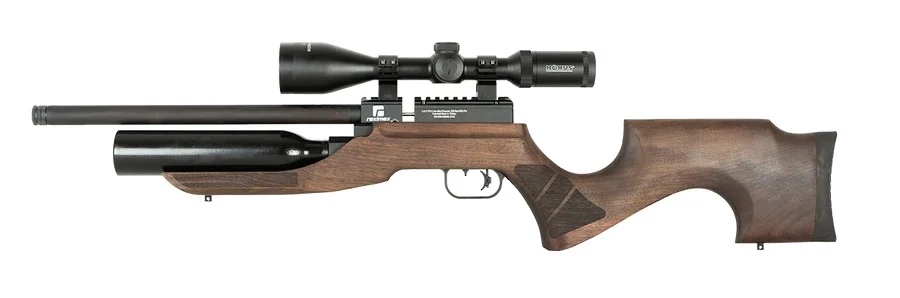
Precision and portability are combined seamlessly in the Reximex Lyra K, a compact carbine-style pre-charged pneumatic air rifle that has been engineered for shooters seeking agility without any compromise on accuracy or power. This refined model is presented as the shorter, more maneuverable evolution of the popular Lyra series, and it is crafted to deliver outstanding results in the field, on the range, or during pest-control sessions. Lightweight construction at just 2.8 kg is paired with an overall length of approximately 880 mm, allowing the Reximex Lyra K to be handled comfortably by shooters of every experience level and physical stature.
Furthermore, the design prioritizes balance and ease of transport, making extended sessions far more enjoyable. In addition, the Reximex Lyra K is offered in popular calibers including .177, .22, and .25, ensuring that the right configuration can be selected for target practice, small-game pursuits, or backyard plinking. As a result, this versatile air rifle quickly becomes a favored companion for anyone who values both performance and practicality.
Compact Design Meets Premium Craftsmanship
A beautiful Turkish walnut stock is featured on many versions of the Reximex Lyra K, while synthetic options are also available for those preferring weather resistance and modern aesthetics. The ergonomic sporter-style stock is finished with a rubber butt pad that absorbs residual energy and provides a secure shoulder fit. Moreover, ambidextrous contours are incorporated so that left- and right-handed shooters alike can enjoy equal comfort and control.
In addition to the refined stock, a fully shrouded 380 mm rifled barrel is included, complete with a ½-inch UNF threaded end cap that readily accepts moderators or other muzzle devices. Consequently, quieter operation and improved accuracy are achieved across various shooting scenarios. The biathlon-style side-lever action further enhances the user experience by enabling smooth, rapid cycling that feels natural even during high-volume sessions.
Power adjustment capability is built directly into the system, allowing output to be tailored quickly according to distance, target type, or air conservation needs. Therefore, consistency remains high whether the Reximex Lyra K is used for close-range pest control or longer-range precision work.
Impressive Shot Capacity and Reliable Air System
A generous 250 cc buddy bottle is positioned beneath the barrel and can be filled to 250 bar, delivering an impressive number of consistent shots per fill. Depending on caliber and power setting, approximately 80–100 shots in .177, around 70 in .22, and roughly 60 in .25 can typically be expected. Furthermore, an integrated pressure gauge keeps the current fill level clearly visible at a glance, so readiness is never left to chance.
In addition, the magazine-fed system supports efficient multi-shot operation. Capacities of 14 rounds in .177, 12 rounds in .22, and 10 rounds in .25 are provided, and two magazines are supplied as standard. A single-shot tray is also included for those occasions when maximum precision is preferred over rapid follow-up shots. As a result, flexibility is maintained whether the focus is on speed or deliberate accuracy.
Key Features of the Reximex Lyra K
- Pre-charged pneumatic (PCP) power plant with 250 cc air reservoir
- Overall length of approximately 880 mm / 35 inches for superior maneuverability
- Lightweight construction at only 2.8 kg / 6.1 lbs
- Shrouded 380 mm / 14.9-inch rifled barrel with ½-inch UNF thread
- Biathlon-style side-lever cocking mechanism
- Four-way adjustable trigger for personalized feel and control
- Manual safety for confident handling
- Picatinny / Weaver optics rail plus accessory rail and pre-fitted bipod stud
- Available in .177, .22, and .25 calibers
- Turkish walnut or synthetic stock options with rubber butt pad
- Power adjuster for on-the-fly performance tuning
- Includes two magazines, single-shot tray, fill probe / adapter, and essential accessories
Moreover, the four-way adjustable trigger can be fine-tuned for pull weight, position, and travel, ensuring that every shooter can achieve a crisp, predictable break. In addition, the Picatinny rail system readily accepts scopes, bipods, lights, or other accessories, so the Reximex Lyra K can be customized to match individual preferences and shooting disciplines.
Precision Engineering for Everyday Excellence
Accuracy is delivered through the combination of a quality rifled barrel, stable air delivery, and the refined trigger system. Consistent shot-to-shot performance is maintained across the usable pressure range, giving shooters the confidence needed for tight groups at typical air-rifle distances. Furthermore, the compact carbine proportions reduce fatigue during prolonged carrying or when navigating tight cover, woodland paths, or backyard ranges.
In addition to field practicality, the Reximex Lyra K performs admirably on the target range. Transitioning between power settings is straightforward, allowing energy to be conserved for longer sessions or increased when more authoritative performance is required. Consequently, one rifle serves multiple roles without the need for frequent equipment changes.
Inclusive design choices ensure that the Reximex Lyra K welcomes shooters of all ages, sizes, and skill levels. The balanced weight distribution and moderate length of pull make it accessible, while the adjustable components invite personalization. Therefore, newcomers can develop technique with confidence, and experienced enthusiasts can push their performance further.
Why the Reximex Lyra K Stands Out
Value is maximized through the thoughtful inclusion of essential accessories and the use of quality materials at a competitive price point. The Turkish walnut stock, where fitted, displays attractive grain patterns that elevate the visual appeal, while the mechanical components are engineered for durability and smooth operation. Moreover, the combination of a high shot count, power adjustability, and compact dimensions addresses the most common requests from airgun enthusiasts.
In addition, the side-lever action and magazine system support rapid follow-up shots when needed, yet the single-shot tray remains available for deliberate, high-precision work. As a result, the Reximex Lyra K adapts easily to changing conditions and preferences. Transition words and careful pacing throughout the design philosophy emphasize reliability and user-focused engineering.
Furthermore, the ½-inch UNF thread opens the door to a wide range of moderators, enabling quieter shooting that is appreciated in residential areas or when minimizing disturbance to wildlife. The pre-fitted bipod stud and supplied accessory rail further expand mounting options, so stability aids can be added whenever longer-range work or supported positions are preferred.
Ideal Applications and Everyday Benefits
Pest control, small-game hunting where legal, target shooting, and recreational plinking are all well suited to the capabilities of the Reximex Lyra K. Its light weight reduces shoulder fatigue during all-day outings, while the compact overall length improves handling in confined spaces or when moving through undergrowth. In addition, the consistent power delivery and adjustable trigger contribute to ethical, accurate shot placement.
Moreover, the rifle’s moderate report (especially when moderated) and manageable recoil make it approachable for a broad audience. Inclusive language and thoughtful ergonomics ensure that every shooter feels welcomed and supported. Therefore, whether the goal is improving marksmanship, managing local pests, or simply enjoying time outdoors, the Reximex Lyra K provides a reliable and engaging platform.
Technical Specifications at a Glance
- Type: Pre-charged pneumatic (PCP)
- Action: Side-lever, multi-shot
- Calibers: .177 / .22 / .25
- Magazine capacity: 14 / 12 / 10 rounds respectively
- Air capacity: 250 cc
- Max fill pressure: 250 bar
- Barrel length: 380 mm
- Overall length: 880 mm
- Weight: 2.8 kg
- Trigger: Four-way adjustable
- Safety: Manual
- Stock: Turkish walnut or synthetic with rubber butt pad
- Optics rail: Picatinny / Weaver
- Thread: ½-inch UNF
- Included: Two magazines, single-shot tray, fill accessories
Furthermore, velocity and energy figures vary by caliber and regulatory limits, with FAC versions capable of higher outputs while UK-spec models remain comfortably within legal limits. In addition, the non-regulated or power-adjustable nature of many examples allows fine control over performance characteristics.
Elevate Your Shooting Experience Today
Outstanding balance of compactness, shot capacity, adjustability, and build quality is delivered by the Reximex Lyra K. Every element has been considered so that shooters can focus on the enjoyment of accurate, consistent shooting rather than wrestling with cumbersome equipment. Moreover, the inclusive design and versatile feature set ensure that this carbine feels at home in many different hands and scenarios.
In addition, the ready-to-shoot package—complete with magazines, fill probe, and single-shot tray—means that time spent waiting for extras is minimized. As a result, more time can be devoted to actual shooting. Transition smoothly into ownership of a rifle that rewards both newcomers and seasoned enthusiasts with dependable performance session after session.
Therefore, the Reximex Lyra K stands ready to become a valued part of any air-rifle collection. Experience the difference that thoughtful engineering, quality materials, and user-focused design can make. Secure your Reximex Lyra K today and discover how precision, portability, and pure shooting pleasure can be combined in one highly capable package.
Weihrauch Air Rifles, PCP Platforms, Spring-Piston Systems, and Related Airgun Terminology
Enthusiasts researching premium German airgun engineering frequently encounter models and search terms such as Weihrauch HW100X Karbine, Thumbhole PCP Air Rifle, hw35, h 45, german air rifle, accurate air rifles, hw97k, hw 70, hw35e for sale, hw40, weihrauch hw30, weihrauch hw80, weihrauch hw 95, hw100, hw 97k, hw35 air rifle, hw50 s, weihrauch hw45, weihrauch english, weihrauch hw98, weihrauch englisch, hw77 air rifle, weihrauch hw50s, compressed air rifles, air rifle makes, spring piston, what are air rifles, weihrauch hw44, air shot gun, sk x rifles, weihrauch hw50, hw30s, hw 30, what are air pistols, hw50, and rifles de aire.
Within the Weihrauch lineup, the Weihrauch HW77 air rifle is widely recognized as a traditional fixed-barrel underlever platform. Related terminology includes HW77 Green Laminate rifle, Weihrauch underlever air rifle, HW77 spring piston air rifle, Weihrauch HW77 for sale, and German precision air rifle. Researchers comparing versions may also encounter phrases such as buy Weihrauch HW77 Green Laminate online, Weihrauch HW77 Green Laminate price and specs, Weihrauch HW77 accuracy review, HW77 Green Laminate vs HW97 comparison, is Weihrauch HW77 good for beginners, precision shooting airgun, high quality German airguns, best price Weihrauch HW77, where to buy Weihrauch HW77, Weihrauch HW77 in stock, affordable premium air rifle, and top rated underlever air rifle.
Technical comparison searches commonly include Weihrauch HW77 vs HW97, HW77 vs break barrel air rifle, best Weihrauch air rifles, most accurate air rifle for target shooting, air rifle with low recoil, durable air rifle for outdoor use, and reliable air rifle for long term use. These phrases generally reflect interest in operating systems, mechanical durability, handling characteristics, consistency, and the differences between fixed-barrel underlever designs, break-barrel rifles, and PCP platforms.
Other Weihrauch-related terminology includes air pistols, hw100 airgun, weihrauch hw95, weihrauch hw 30, weihrauch hw90, hw 44, hw 40, hw 98, and weihrauch hw100. The HW100 family represents the PCP side of Weihrauch’s catalog, while models such as the HW30, HW50, HW80, HW90, HW95, HW97, and HW98 are associated with spring-powered or gas-ram-style sporting airgun platforms depending on the specific model and configuration. By contrast, the HW44 is commonly discussed as a PCP air pistol.
The broader airgun market also includes search terminology connected with alternative PCP manufacturers and modern platforms. Examples include 25 karma, pcp bb gun, karma eq air rifle, karma red panda, panda guns, full auto pcp, karma sls compact, air karma, red panda hat, eq air, karma sls, eq magazine, air pcp, and karma airguns. These terms may refer to specific products, product families, accessories, community terminology, or unrelated search phrases that appear alongside airgun research.
Reximex is another name frequently encountered in PCP discussions. Related search phrases include reximex airguns, reximex rp, reximex throne gen 2, reximex mito, reximex rpa, sbs12, reximex mitos, reximex lieva, reximex accura pcp air rifle, and reximex throne gen2. Model naming can vary slightly between retailers, regions, and search listings, which explains variations such as “Throne Gen 2” and “Throne Gen2” or “Mito” and “Mitos.”
Airgun research also involves understanding velocity and energy. Searches such as fps to joules calculator, fps to ft lbs, and airgun calculator relate to converting projectile velocity and mass into kinetic-energy measurements. These calculations are commonly used for technical comparison, range evaluation, regulatory research, and understanding how different compressed-air or spring-powered platforms perform within their intended specifications.
More general discovery terms can include gunseek and yivli av tüfeği, alongside broader international phrases such as rifles de aire. Because airgun terminology varies considerably between English, German, Spanish, and Turkish-speaking markets, researchers may encounter several different naming conventions for comparable sporting, target, and recreational airgun platforms.
Taken together, terms ranging from Weihrauch HW100X Karbine and Thumbhole PCP Air Rifle to HW77 Green Laminate rifle, spring piston, compressed air rifles, karma airguns, and reximex airguns illustrate the diversity of modern airgun technology. Weihrauch remains particularly associated with German engineering, fixed-barrel underlever rifles, traditional spring-powered designs, precision PCP systems, and air pistols, while Karma and Reximex represent additional names encountered when comparing contemporary PCP platforms and associated airgun technology.
Calibres, FAC Power Levels and Accessories of the Reximex Lyra K
A choice of popular pellet diameters is offered by the Reximex Lyra K so that target work, pest control and higher-energy field use can all be matched to local law and intended range. Moreover, both UK-legal sub-12 ft-lb rifles and higher-output FAC versions are produced from the same compact carbine platform. Consequently, the same walnut stock, side-lever action, 250 cc bottle and adjustable trigger can be specified according to the energy that is legally permitted and the game or targets that will be engaged. Furthermore, a practical set of rails, threads and included extras is supplied so that optics, bipods, slings and silencers can be added without immediate extra purchases.
Available Calibres on the Reximex Lyra K
Three mainstream PCP calibres are commonly listed for the Reximex Lyra K: .177 (4.5 mm), .22 (5.5 mm) and .25 (6.35 mm). Therefore a light, flat-shooting pellet, a versatile mid-weight hunting pellet, or a heavier, larger-diameter pellet can be selected. Likewise, magazine capacity is reduced as calibre increases, which is typical of rotary magazines of this design.
A 14-round magazine is used in .177. Subsequently, a 12-round magazine is fitted in .22, while a 10-round magazine is supplied in .25. In addition, two magazines plus a single-shot tray are included with the rifle, so a spare can be kept loaded and single-pellet testing can still be carried out when unusual or extra-long projectiles are tried.
Flat trajectory and high shot count are generally associated with .177, which is why that calibre is often preferred for paper, spinners and longer-range practice on sub-12 rifles. Meanwhile, .22 remains the most widely chosen hunting and pest-control diameter because a useful balance of energy, pellet weight and wind resistance is obtained. Moreover, .25 is frequently specified where extra momentum and a larger wound channel are wanted on FAC rifles, provided local energy limits allow it. Inclusive use is supported because each calibre can be chosen to suit experience level, typical distance and the type of shooting that will be done most often.
Barrel length remains 380 mm across the range, and the shroud and ½” UNF thread are retained. As a result, a moderator can be fitted on any calibre when quieter shooting is required. Pellet choice should still be confirmed by grouping tests, because individual barrels can prefer particular head sizes and weights even within the same nominal calibre.
FAC Ratings, Sub-12 Output and Shot Count
Two broad power families are encountered with the Reximex Lyra K. UK-legal examples are set just below the 12 ft-lb limit. Typically, muzzle energy in the 10.8–11.8 ft-lb band is quoted, with many examples clustering around 11.3 ft-lb. Consequently, those rifles can be used without an FAC in Great Britain when other airgun rules are followed. Approximately 80 usable shots in .177 and a similar or slightly lower figure in .22 are commonly reported on a 250 bar fill, although exact count depends on pellet, temperature and the setting of the power wheel.
Higher-energy FAC versions are also marketed. Published figures for those rifles include approximately 1,000 fps and 18.7 ft-lb in .177, 900 fps and 32.6 ft-lb in .22, and 800 fps and 36.1 ft-lb in .25 (figures vary with pellet weight and individual regulation of the valve). Shot estimates of about 100 / 70 / 60 rounds per fill from 250 bar down through the useful pressure band are often listed for those three calibres respectively. Therefore FAC owners gain extra reach and terminal effect, while a larger air budget per shot is accepted.
An unregulated valve is used on the Reximex Lyra K. Nevertheless, shot-to-shot consistency is frequently described as tight for the price, especially over the first magazines of a fill. In addition, the external power-adjuster knob allows output to be reduced for close work, indoor practice or air conservation. Subsequently, full power can be restored without tools when longer shots or hunting energy are required. Local licensing, energy limits and transport rules must always be checked before a FAC rifle is ordered or carried; the same platform can be specified in either legal class, but the certificate and storage duties change with energy.
Fill pressure remains 250 bar and cylinder volume remains 250 cc on both sub-12 and FAC examples. Hence the compact buddy-bottle layout is unchanged; only the transfer-port or hammer setup differs to produce the higher muzzle energy. A clearly marked underside gauge is provided so remaining pressure can be monitored between sessions.
Accessories, Rails and Practical Add-Ons
A useful starter kit is already packed with the Reximex Lyra K. Two rotary magazines, a single-shot tray, a fill probe, and basic tools or O-rings are typically included. Moreover, a Picatinny/Weaver optics rail is fitted on the action so that a scope or red-dot can be mounted immediately. An interrupted rail section around the magazine well is common on this layout; therefore medium or high mounts are usually selected so that the magazine clears the scope bell.
A short Picatinny accessory rail is also supplied for the underside of the forend, and a bipod stud is pre-fitted. Consequently a bipod, grip or light can be attached without extra drilling. Likewise, sling studs are present so a carrying strap can be added for long walks. The ½” UNF muzzle thread accepts a wide range of airgun moderators; a shroud is already in place, so further sound reduction is obtained once a can is screwed on.
Optional extras that are frequently paired with the Reximex Lyra K include:
- Quality PCP scopes in compact or mid-size tubes that match the short 880 mm overall length
- 1/2″ UNF silencers chosen for the calibre in use
- Bipods on the supplied stud or short rail
- Spare magazines so one set can stay loaded
- Fill probes, hoses and pumps or compressors rated to 250 bar
- Soft or hard cases cut for a carbine-length rifle with moderator fitted
Additionally, synthetic-stock versions are listed alongside Turkish walnut on some markets, so weather resistance can be chosen if the walnut finish is not preferred. Inclusive customisation is therefore straightforward: a new shooter can begin with the supplied magazines and a simple scope, while an experienced hunter can add a moderator, bipod and spare mags without changing the core rifle.
Responsible pairing of accessories remains important. Over-long moderators can unbalance a light carbine; excessively heavy scopes can make a 2.8 kg rifle feel muzzle-heavy. Hence compact optics and moderately sized cans are usually the better match. When these choices are made carefully, the Reximex Lyra K remains a compact, well-equipped PCP that can be adapted across calibres, legal power classes and shooting roles without losing the handling that defines the K model.
Practical Use Scenarios for a Compact Carbine PCP
A short, light, multi-shot pre-charged rifle is most useful when space is limited, carry time is long, and a clean first shot still matters. Consequently, everyday work around gardens, woodland edges, farm buildings and club ranges is where this class of carbine is most often employed. Moreover, the combination of a shrouded barrel, threaded muzzle, power wheel, ambidextrous stock and modest weight allows the same platform to be moved from a bench bag to a hedge-line without a change of rifle. Inclusive use is therefore realistic: newer shooters, smaller-framed adults and experienced field users can all work with the same handling envelope when local law, backstops and pellet choice are respected.
Close-Range Pest Control Around Buildings and Gardens
Work around sheds, fruit cages, poultry runs and outbuildings is frequently carried out at 15–30 metres. As a result, a carbine that can be shouldered quickly in a doorway or between fruit trees is preferred to a long-barrelled rifle that catches on posts and netting. Furthermore, a rubber butt pad and a relatively high comb help a stable cheek weld to be found even when the shot must be taken from a slightly awkward stance.
A lower setting on the power wheel is often selected for these distances. Subsequently, pellet splash and over-penetration are reduced when a backstop of earth, brick or a purpose-built pellet catcher is used. In addition, a moderator on the ½” UNF thread keeps report down so that livestock and neighbours are less disturbed. Two magazines can be kept loaded; therefore a follow-up shot is available if a pest moves at the last moment, while the single-shot tray remains useful when a particular pellet is being tested for grouping at 20 metres.
Safe angles and a known backstop remain non-negotiable. Hence shots are only taken when the area beyond the target has been checked. Inclusive practice means a second person can act as a spotter on first outings, so that range estimation and pellet drop are learned together rather than guessed.
Highlight points for this role:
- Short overall length for doorways, alleys and fruit cages
- Reduced power setting for close work and quieter impact
- Moderator-ready muzzle for courtesy around buildings
- Spare magazine so a second shot can be offered without a reload from the pouch
- Light carry weight during slow walks around a holding
Woodland Edges, Hides and Vehicle Work
A compact buddy-bottle rifle is readily kept across the passenger footwell or in a slip beside a hide. Consequently, it can be brought into the shoulder as soon as a safe window appears along a ride or over a feeder. Likewise, the side-lever can be worked without a large swing of the support arm, which helps when space inside a vehicle or a tight hide is limited.
Typical engagement distances in this setting run from 20 to 40 metres. Therefore a mid-power setting is often left on the adjuster so that trajectory stays familiar while air is not wasted. Moreover, a bipod on the pre-fitted stud or short underside rail steadies the rifle when a long wait is expected. A sling on the studs allows the carbine to be carried muzzle-down or across the chest during a stalk along a hedge, after which the same sling can be used as a hasty rest.
Wind along a woodland edge is rarely constant. As a result, a slightly heavier pellet in .22 is frequently chosen for these sessions even when a flatter .177 load is used on the range. In addition, the shroud and an optional silencer reduce the chance that a missed shot will flush every bird in the ride. Follow-up shots remain available from the rotary magazine provided the first shot was taken with a solid rest and a clear view of the impact.
Inclusive field craft is supported when a less experienced companion is shown how the safety, lever and magazine are operated before the hide is occupied. Subsequently, both people can share the same rifle without a change of stock or trigger setup, because the blade can already have been adjusted for a medium-sized hand.
Bench, Zeroing and Club-Range Practice
Paper, spinners and knockdowns at 20–40 metres are where the adjustable trigger and consistent valve behaviour are most easily appreciated. A rest or bag is used so that the carbine’s light weight does not become a source of wobble. Furthermore, the four-way trigger adjustment allows the blade to be raised, lowered or angled until a clean break is obtained from a seated position.
Zeroing is commonly started at 20 or 25 metres, after which a second confirmation group is fired at 30 or 35 metres so that hold-over can be noted. Meanwhile, the power wheel can be left on a repeatable mid or high mark so that the same point of impact is seen from week to week. A single-shot tray is useful when a new pellet is being evaluated, because magazine-to-magazine variation is removed from the test.
Shot strings from a 250 bar fill are long enough for a full evening’s practice on a sub-12 example, provided groups are not fired as fast as the lever can be cycled. Consequently, the underside gauge should still be checked so that the last, falling-velocity shots are not used for a final zero. Inclusive range sessions work well when a coach or club mate calls the group and the shooter only concentrates on trigger and picture; the modest recoil of a PCP at these energy levels makes that teaching style comfortable for a wide range of physiques.
Highlight points for range use:
- Adjustable trigger blade for a repeatable seated release
- Single-shot tray for pellet testing and precise zeroing
- Picatinny rail for a compact scope that matches carbine length
- Power wheel left on a marked setting so trajectory stays familiar
- Gauge check before the last magazine of a fill is used for record groups
Small-Game and Pest Work Where Higher Energy Is Lawful
Where a firearms certificate or equivalent permission allows higher muzzle energy, the same carbine layout is used with a hotter valve setup. Subsequently, .22 or .25 pellets can be driven to energies that extend ethical range on appropriate quarry, provided shot placement and local seasons are observed. A moderator remains advisable because report rises with energy; the threaded shroud already prepared for that addition.
A rest or bipod becomes more important as distance increases, because the light stock transmits more of the shooter’s pulse. Moreover, magazine capacity drops in the larger calibres, so shot selection is made more carefully and a spare magazine is kept in a pocket rather than relied upon as an unlimited reserve. Fill planning also changes: fewer shots per 250 bar charge are obtained, therefore a pump or bottle may be carried in the vehicle even if it is left at the truck during the stalk.
Inclusive hunting practice still begins with closer, well-supported shots. Hence a new FAC holder is better served by confirming groups at 25 and 35 metres before any attempt is made at the far edge of the pellet’s useful curve. Backstops, ricochet risk and the presence of other people on the ground must be treated with the same caution as on a sub-12 outing; extra energy does not reduce the duty of care.
Dusk, Weather and All-Day Carry
A walnut stock and a rubber pad remain comfortable when a session stretches from late afternoon into last light. Consequently, a compact rifle that already weighs under three kilograms unscoped is less tiring than a longer, heavier PCP when it is carried for hours. A sling takes the weight off the hands during the walk between stands; the same sling can be wrapped as a brace when a standing shot is offered.
Damp weather favours a wipe-down of the metalwork after the outing and a check of the fill probe O-rings. Meanwhile, a synthetic-stock option, where it is available, can be chosen if the rifle will live in a farm vehicle. The buddy bottle’s underside gauge should be read before last light so that a return to the truck for a top-up is made while there is still enough sky to walk safely.
Inclusive dusk use includes a clear agreement about who is shooting and who is watching the lane. Furthermore, a modest-powered lamp or a day-bright optic is easier to manage on a short rail than on a long, heavy barrel. The power wheel can be left slightly below maximum if the typical shot at last light is inside 30 metres; air is saved and muzzle flip stays mild.
Training, Sharing the Rifle and Building Confidence
Because the stock is ambidextrous and the trigger can be tailored, the same carbine can be used by more than one person in a household or club. Therefore a new shooter can begin on a low power setting and a close, large target, after which distance and energy can be increased as groups shrink. A coach can stand to the side and watch trigger movement without fighting a long forend or a high-recoil springer.
Safety habits are easier to embed when the manual safety and the open-lever reminder are used every time a magazine is changed. Subsequently, the habit of pointing the muzzle at a known backstop during a reload is formed before the rifle is taken into the field. Inclusive language and pacing matter here: no assumption is made that every adult has the same hand size, eye relief or previous experience with side-levers.
A practical training sequence that is often followed:
- Dry familiarisation with safety, lever and magazine on an empty chamber
- Bag-rest groups at 15–20 metres on a low power setting
- Confirmation groups at 25–30 metres with the intended hunting or range pellet
- Off-hand or sticks practice only after the zero is trusted
- Field walk with an empty magazine or snap caps equivalent so carry and muzzle awareness are rehearsed
Limits, Ethics and When Another Tool Is Chosen
A carbine of this size is not a substitute for a long-range FAC rifle or a heavy big-bore. Consequently, shots that demand a heavier pellet at 50 metres and beyond are better left for another platform. Likewise, dense cover that requires a very short bullpup may still feel tighter than an 880 mm carbine, even if the difference is only a few centimetres.
Ethical use means a pellet and energy level that can reach the vitals with a margin, a rest when the shot is not certain, and a decision to walk away when the angle or the wind is wrong. Moreover, local seasons, permissions and transport rules override any convenience the rifle offers. Inclusive sport is only possible when every person on the ground understands those limits and the rifle is stored and carried as the law requires.
When these scenarios are respected, a compact multi-shot PCP with a power adjuster, threaded shroud and light walnut stock becomes a daily working tool rather than a safe queen. Garden edges, woodland rides, club benches and lawful small-game outings can all be covered by one short rifle, provided the shooter supplies the patience, the backstop and the pellet that the job actually needs.




Reviews
There are no reviews yet.