Weihrauch Air Rifles, PCP Platforms, Spring-Piston Systems, and Related Airgun Terminology
Enthusiasts researching premium German airgun engineering frequently encounter models and search terms such as Weihrauch HW100X Karbine, Thumbhole PCP Air Rifle, hw35, h 45, german air rifle, accurate air rifles, hw97k, hw 70, hw35e for sale, hw40, weihrauch hw30, weihrauch hw80, weihrauch hw 95, hw100, hw 97k, hw35 air rifle, hw50 s, weihrauch hw45, weihrauch english, weihrauch hw98, weihrauch englisch, hw77 air rifle, weihrauch hw50s, compressed air rifles, air rifle makes, spring piston, what are air rifles, weihrauch hw44, air shot gun, sk x rifles, weihrauch hw50, hw30s, hw 30, what are air pistols, hw50, and rifles de aire.
Within the Weihrauch lineup, the Weihrauch HW77 air rifle is widely recognized as a traditional fixed-barrel underlever platform. Related terminology includes HW77 Green Laminate rifle, Weihrauch underlever air rifle, HW77 spring piston air rifle, Weihrauch HW77 for sale, and German precision air rifle. Researchers comparing versions may also encounter phrases such as buy Weihrauch HW77 Green Laminate online, Weihrauch HW77 Green Laminate price and specs, Weihrauch HW77 accuracy review, HW77 Green Laminate vs HW97 comparison, is Weihrauch HW77 good for beginners, precision shooting airgun, high quality German airguns, best price Weihrauch HW77, where to buy Weihrauch HW77, Weihrauch HW77 in stock, affordable premium air rifle, and top rated underlever air rifle.
Technical comparison searches commonly include Weihrauch HW77 vs HW97, HW77 vs break barrel air rifle, best Weihrauch air rifles, most accurate air rifle for target shooting, air rifle with low recoil, durable air rifle for outdoor use, and reliable air rifle for long term use. These phrases generally reflect interest in operating systems, mechanical durability, handling characteristics, consistency, and the differences between fixed-barrel underlever designs, break-barrel rifles, and PCP platforms.
Other Weihrauch-related terminology includes air pistols, hw100 airgun, weihrauch hw95, weihrauch hw 30, weihrauch hw90, hw 44, hw 40, hw 98, and weihrauch hw100. The HW100 family represents the PCP side of Weihrauch’s catalog, while models such as the HW30, HW50, HW80, HW90, HW95, HW97, and HW98 are associated with spring-powered or gas-ram-style sporting airgun platforms depending on the specific model and configuration. By contrast, the HW44 is commonly discussed as a PCP air pistol.
The broader airgun market also includes search terminology connected with alternative PCP manufacturers and modern platforms. Examples include 25 karma, pcp bb gun, karma eq air rifle, karma red panda, panda guns, full auto pcp, karma sls compact, air karma, red panda hat, eq air, karma sls, eq magazine, air pcp, and karma airguns. These terms may refer to specific products, product families, accessories, community terminology, or unrelated search phrases that appear alongside airgun research.
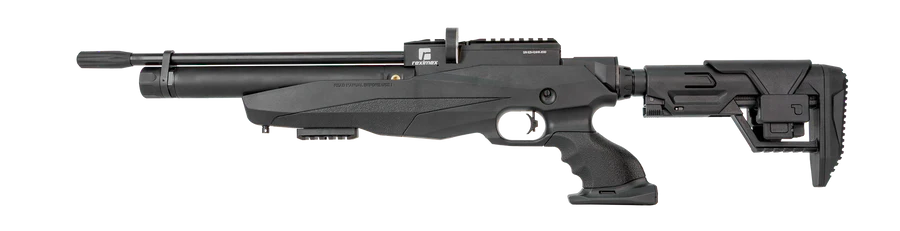
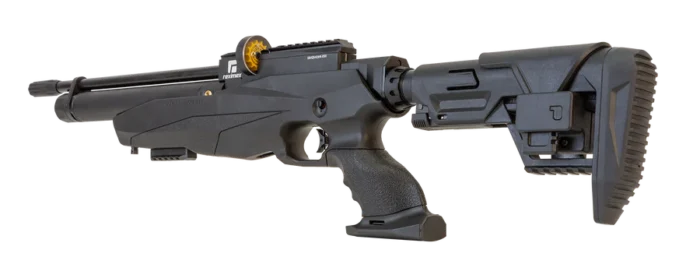
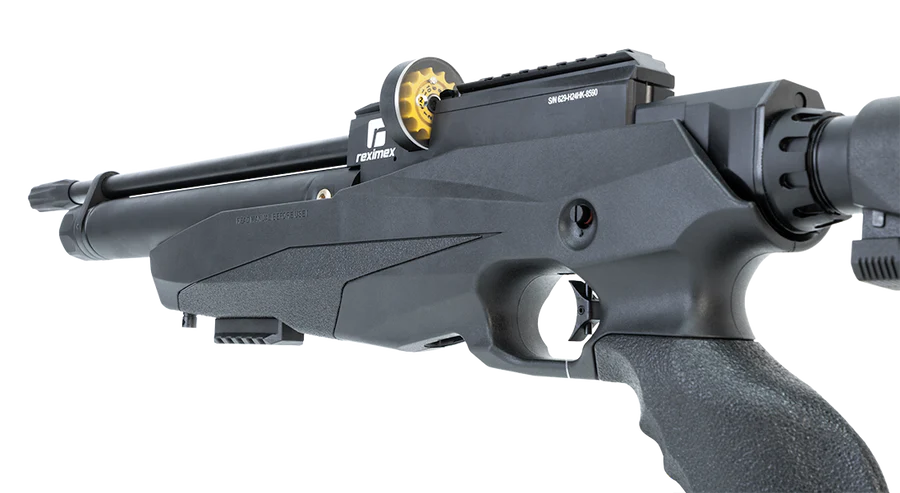
Reximex is another name frequently encountered in PCP discussions. Related search phrases include reximex airguns, reximex rp, reximex throne gen 2, reximex mito, reximex rpa, sbs12, reximex mitos, reximex lieva, reximex accura pcp air rifle, and reximex throne gen2. Model naming can vary slightly between retailers, regions, and search listings, which explains variations such as “Throne Gen 2” and “Throne Gen2” or “Mito” and “Mitos.”
Airgun research also involves understanding velocity and energy. Searches such as fps to joules calculator, fps to ft lbs, and airgun calculator relate to converting projectile velocity and mass into kinetic-energy measurements. These calculations are commonly used for technical comparison, range evaluation, regulatory research, and understanding how different compressed-air or spring-powered platforms perform within their intended specifications.
More general discovery terms can include gunseek and yivli av tüfeği, alongside broader international phrases such as rifles de aire. Because airgun terminology varies considerably between English, German, Spanish, and Turkish-speaking markets, researchers may encounter several different naming conventions for comparable sporting, target, and recreational airgun platforms.
Taken together, terms ranging from Weihrauch HW100X Karbine and Thumbhole PCP Air Rifle to HW77 Green Laminate rifle, spring piston, compressed air rifles, karma airguns, and reximex airguns illustrate the diversity of modern airgun technology. Weihrauch remains particularly associated with German engineering, fixed-barrel underlever rifles, traditional spring-powered designs, precision PCP systems, and air pistols, while Karma and Reximex represent additional names encountered when comparing contemporary PCP platforms and associated airgun technology.
Calibres, FAC, Power and Accessories of the Reximex Myth Lite
Versatility across shooting disciplines is supported by the Reximex Myth Lite through carefully matched calibre options, legally compliant power output, and a practical accessory package. Consequently, both new and experienced shooters can configure the rifle for target work, pest control, or recreational use while remaining within applicable regulations.
Calibre Choices Offered by the Reximex Myth Lite
Three pellet diameters are commonly associated with the Reximex Myth Lite so that trajectory, energy transfer, and magazine capacity can be aligned with intended use. In .177 (4.5 mm) a 14-shot rotary magazine is supplied, allowing a flatter flight path and higher pellet velocity to be utilised for paper targets and longer-range plinking. Meanwhile, .22 (5.5 mm) is paired with a 12-shot magazine, delivering a widely favoured balance of knockdown and manageable drop for close- to mid-range pest work. Additionally, .25 (6.35 mm) is listed by several retailers as available on request and is typically fitted with a 10-shot magazine when supplied, concentrating more energy at shorter distances.
Pellet selection remains critical regardless of calibre. Quality domed or hollow-point designs from established makers are recommended so that grouping and consistency can be maximised after the barrel has been cleaned and seasoned. Therefore, the same compact action can serve precision practice one day and humane pest control the next. Inclusive fit is maintained because magazine insertion and side-lever cycling stay identical across the available calibres, allowing left- and right-handed shooters to operate the rifle without change of technique.
FAC Requirements and Legal Power Limits
Unlicensed ownership in the United Kingdom is normally possible when muzzle energy is kept below 12 ft/lbs. The Reximex Myth Lite is marketed in that configuration by the majority of specialist dealers, with typical chronograph results falling between approximately 10.8 and 11.8 ft/lbs depending on pellet weight and individual rifle. Consequently, a Firearms Certificate is not required for the standard factory-tuned examples sold for general airgun use.
However, local and national laws must always be verified before purchase or use. In other jurisdictions different energy thresholds, licensing, or storage rules may apply. Moreover, any aftermarket modification that raises power above the legal limit would place the rifle into a licensed category and could render it illegal if the appropriate certificate is not held. Responsible ownership is therefore emphasised: a safe backstop must be confirmed, eye protection worn, and the rifle stored securely when not in use. Likewise, hunters and pest controllers are expected to confirm that the chosen calibre and power level remain suitable and lawful for the species and location involved.
Power Delivery and Shot Consistency
Consistent sub-12 ft/lb output is produced by the 130 cc cylinder when filled to the recommended 200 bar. Approximately 80 usable shots in .177 and around 100 shots in .22 can be expected from a full charge, although actual count varies with pellet weight, ambient temperature, and residual pressure. A power-adjustment facility is noted on related Myth-series models and may be present or adaptable on some Lite examples, allowing output to be reduced for indoor or garden use and thereby extending the number of shots per fill.
Unregulated operation is typical of the Lite specification, yet a relatively tight velocity spread is frequently reported once the barrel is properly leaded. As a result, point of impact remains stable across a practical hunting or range session. Fill pressure is displayed on a clearly marked gauge so that remaining air can be monitored, and the supplied probe is used to recharge the cylinder from a suitable pump or bottle. Hence, field sessions of realistic length can be completed without an immediate refill, while the compact reservoir keeps overall weight at 2.8 kg.
Accessories Supplied and Readily Added
A ready-to-shoot package is included with every Reximex Myth Lite so that additional purchases can be limited to optics and a moderator if desired.
- Two multi-shot rotary magazines (capacity matched to calibre)
- Single-shot loading tray for precision or testing work
- Fill probe for 200 bar charging
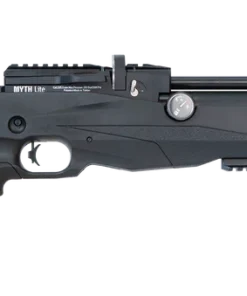
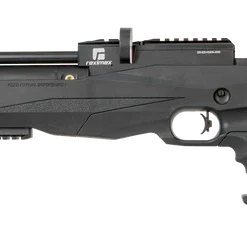
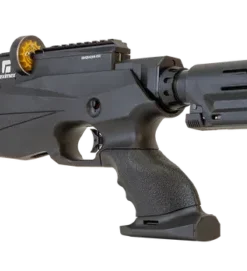
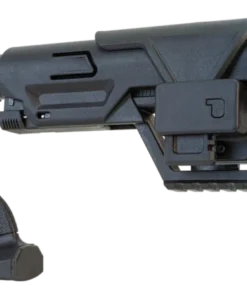
- Soft-touch synthetic stock with pistol grip and adjustable butt pad
- Sling-attachment points
- Hybrid Picatinny / dovetail rail for scopes and accessories
- 1/2″ UNF threaded muzzle for a silencer or muzzle brake
- Manual safety and two-stage adjustable trigger already fitted
Further customisation is enabled by the rail system and threaded barrel. A compact moderator can be fitted where permitted, reducing report for discreet pest control or backyard practice. Likewise, a lightweight scope, red-dot, or thermal unit can be mounted without high rings in most cases because the magazine sits relatively low. Bipods, slings, and spare magazines are widely available from aftermarket suppliers, allowing the rifle to be adapted as skills and needs develop.
Walnut-stocked versions of the Reximex Myth Lite are also offered by some retailers, providing a traditional alternative to the standard synthetic furniture while retaining the same action, cylinder, and accessory interface. Therefore, aesthetic preference can be satisfied without sacrificing the compact handling or included extras that define the model.
When calibre, legal power, and a complete starter accessory set are considered together, the Reximex Myth Lite is positioned as a practical, inclusive PCP that can be brought into service quickly and refined over time. Careful pellet matching, observance of local FAC or licensing rules, and modest accessory additions allow the rifle’s accuracy and lightweight design to be fully utilised by shooters of varying experience.
Practical Use Scenarios
Everyday versatility is demonstrated when a compact, lightweight PCP is taken from the gun cabinet into real shooting environments. Consequently, sessions that once felt cumbersome can be completed with less fatigue and more control, whether the task is discreet pest work, informal practice, or a planned range visit.
Close-Range Pest Control Around Buildings and Farmyards
Quiet, precise work around outbuildings is supported by the short overall length and modest weight. Movement through doorways, along feed passages, and behind machinery is made easier because the rifle does not project far ahead of the shooter. Moreover, a threaded muzzle allows a moderator to be fitted where local rules permit, so that report is reduced and livestock or neighbours are less likely to be disturbed.
Rats, feral pigeons, and similar pests at typical farmyard distances are engaged more confidently when a stable rest—gate post, feed bin, or bipod—is used. A two-stage trigger that has been adjusted to a clean break helps the first shot to be placed accurately, and the multi-shot magazine then permits a rapid follow-up if a second opportunity appears. Meanwhile, the manual safety remains easy to operate with gloved hands, so the rifle can be made safe the moment the shot is finished.
Lighting conditions after dusk are frequently encountered in this role. A compact optic or a dedicated night-vision or thermal unit can be mounted on the rail so that identification and placement remain possible without a bulky rifle becoming unmanageable. Therefore, an evening circuit of barns and yards can be completed without the shooter becoming tired from carrying excess mass.
Responsible conduct is essential. Permission from the landowner must be obtained, a safe backstop confirmed, and only legal quarry engaged. Inclusive practice means the same compact layout can be used by shooters of different stature once the butt pad has been set for a comfortable length of pull.
Woodland Edges, Hides, and Short Stalks
Movement along hedgerows and into simple hides is favoured by the reduced length and 2.8 kg unscoped weight. A sling can be attached so that the rifle is carried across the shoulder or in the hand while terrain is crossed. Subsequently, the rifle can be brought into the shoulder quickly when a rabbit or grey squirrel presents at 20–35 yards.
From a seated or kneeling hide, the adjustable pad and pistol grip help a consistent cheek weld and trigger-hand position to be maintained for longer periods. Additionally, the side-lever can be cycled without large movements that might catch on netting or branches. As a result, a second shot can be prepared with minimal disturbance if the first animal is missed or a companion appears.
Pellet choice should be matched to the calibre and the ranges expected. Heavier pellets in .22 are often selected for this work so that energy is retained at the point of impact, while .177 may be preferred when a flatter trajectory is wanted for slightly longer shots across a ride. In either case, the barrel should be cleaned and a few familiarisation shots fired before a serious outing so that point of impact is known.
Weather resistance of the synthetic furniture allows the rifle to be used in damp conditions without immediate concern for the stock. Nevertheless, the action and fill port should be kept free of debris, and the rifle dried before it is returned to storage. Hence, a morning or evening session in typical countryside weather can be completed without the platform becoming a burden.
Informal Range Practice and Skill Building
Regular practice is encouraged because the rifle is light enough to be taken to a club or private range without special transport arrangements. Zeroing at 20, 25, and 30 yards can be completed efficiently once a suitable optic is fitted. Furthermore, the single-shot tray that is supplied in the box allows careful group testing without magazine variables being introduced.
Trigger control, follow-through, and positional shooting can all be rehearsed. From a bench, a rested group quickly shows whether pellet and rifle are well matched. Afterwards, kneeling and standing positions can be attempted so that field skills are not limited to a bag rest. Likewise, new shooters can be introduced to PCP operation because the side-lever and magazine are straightforward once a brief safety briefing has been given.
A power setting that remains within legal limits keeps the session neighbour-friendly at many outdoor ranges. When a moderator is added, muzzle blast is further reduced, allowing more shots to be fired in a session before fatigue or noise becomes an issue. Therefore, skill development can be pursued by a wide range of enthusiasts without the rifle itself becoming the limiting factor.
Inclusive coaching is supported by the ambidextrous stock and adjustable pad. Length of pull can be altered so that younger or smaller-framed shooters obtain a comfortable mount, while taller users can extend the pad for a full sight picture. Consequently, the same rifle can serve a household or club rather than being suited to only one body type.
Garden, Allotment, and Backyard Sessions
Where local by-laws and a safe backstop allow, short-range practice or pest work in a large garden or allotment can be undertaken. The compact profile helps the rifle to be stored and carried through sheds and greenhouses without catching on tools or plants. Moreover, a reduced power setting—where available—or a well-chosen pellet can keep impact appropriate for close distances.
Targets such as spinner sets, paper cards, or pest species that are legally taken on the property can be engaged from a stable position. A bipod or a simple rest on a garden table improves consistency. Meanwhile, the magazine system lets several shots be fired before a reload is needed, which is useful when timing is important.
Safety remains the first consideration. A pellet-proof backstop, awareness of what lies beyond the target, and secure storage after the session are non-negotiable. Eye protection should be worn by everyone on the firing point. When these conditions are met, a short evening session can be used both to stay in practice and to address a genuine pest problem without a larger, heavier rifle being required.
Travel, Days Afield, and Multi-Location Use
Portability is one of the strongest practical advantages. The rifle and a modest accessory kit—spare magazines, a small tin of pellets, fill probe, and a compact scope—can be packed in a modest case or slip. Consequently, a day that includes more than one permission or a club visit followed by a farmyard check can be planned without excessive luggage.
Fill pressure of 200 bar and a 130 cc cylinder mean a pump or a small bottle can restore a useful shot count between locations. A gauge on the rifle allows remaining air to be checked before the next session begins. Thus, two or three shorter outings can be completed from a single morning fill if shot counts are managed sensibly.
On longer walks between stands, the light weight reduces shoulder fatigue. A sling keeps both hands free for gates and uneven ground. After arrival, the rifle can be unslung and made ready quickly because there is no long barrel to negotiate through undergrowth. Therefore, time spent actually shooting is increased relative to time spent carrying equipment.
Night Work and Optic Pairing
After-dark pest control is a common application. A thermal or digital night-vision unit can be mounted on the rail so that identification is possible before the shot is taken. Because the rifle itself is short and light, the combined outfit remains manageable even when the optic adds mass at the front.
Stability from a bipod or a fence rest becomes more important in low light. The adjustable stock helps a repeatable head position to be found so that the eye aligns with the optic without strain. Additionally, the side-lever can be worked by feel, and the safety can be operated without looking away from the target area.
Battery life of the optic, spare magazines, and a plan for a safe backstop in darkness must all be prepared in advance. Inclusive use means a shooting partner can share the same rifle after the pad and optic focus have been checked, rather than two complete outfits being needed for a short joint session.
Seasonal and Weather Considerations
Winter gloves and summer heat both affect handling. The pistol grip and relatively simple controls remain usable with light gloves, while the synthetic stock does not become as slippery as some polished woods when wet. Nevertheless, the fill port and magazine well should be kept clear of mud and ice.
In hot weather the lighter weight is appreciated on long walks. In cold weather the compact size makes it easier to keep the rifle inside a jacket or slip until the shooting position is reached, reducing condensation on a cold optic. Subsequent drying and a light wipe of metal surfaces after each outing help corrosion to be avoided.
Building Confidence and Long-Term Use
First PCP ownership is often the context in which this class of rifle is chosen. Simple filling, a clear gauge, and included magazines lower the barrier to a successful first session. After a few range visits, the same platform can be taken on a permitted pest outing so that skills transfer from paper to the field.
Maintenance that can be performed at home—cleaning the barrel from the breech where possible, checking stock screws, inspecting O-rings on the fill probe—keeps the rifle reliable. Spare magazines and a single-shot tray already in the box mean extra cost is delayed until the shooter decides on a preferred optic or moderator.
Over months of mixed use—range, garden, hide, and yard—the combination of low carry weight, adequate shot count, and legal power level allows the rifle to remain a first-choice tool rather than one that is left at home because it is too heavy or too long. When those practical demands are met, more time is spent shooting and less time is spent managing equipment, which is the outcome most enthusiasts ultimately seek.
Frequently Asked Questions
Clear answers to the questions most often raised before purchase and first use are collected below. Consequently, calibre choice, legal power, included extras, and everyday handling can be understood before the rifle is ordered or taken into the field.
Which pellet sizes can be chosen?
Three common diameters are offered so that trajectory and impact can be matched to the intended task. In 4.5 mm a 14-shot magazine is normally supplied, favouring a flatter path for targets and longer practice distances. Meanwhile, 5.5 mm is paired with a 12-shot magazine and is widely selected for pest work where a balance of drop and energy is wanted. Additionally, 6.35 mm may be available on request and is typically fitted with a 10-shot magazine when supplied, concentrating more energy at shorter ranges.
Pellet brand and weight still matter more than diameter alone. Quality domed or hunting designs should be tested after the barrel has been cleaned so that the most consistent group can be identified. Therefore, the same compact action can serve paper, spinners, and permitted quarry once a suitable pellet has been confirmed.
Is a firearms certificate required?
Unlicensed ownership is normally possible in the United Kingdom when muzzle energy remains below 12 foot-pounds. Factory examples are generally supplied in that configuration, with typical results falling between roughly 10.8 and 11.8 foot-pounds depending on pellet and individual rifle. Consequently, a certificate is not required for standard use in that jurisdiction.
Local rules must always be checked. Other countries apply different energy limits, storage duties, or licensing. Moreover, any modification that raises power above the legal threshold would place the rifle into a licensed category. Responsible storage, a safe backstop, and confirmation of permission on private land remain essential regardless of certificate status.
How many shots can be expected from one fill?
A 130 cc cylinder filled to 200 bar is specified. Approximately 80 usable shots in 4.5 mm and around 100 shots in 5.5 mm are commonly quoted, although the exact number varies with pellet weight, temperature, residual pressure, and whether output has been reduced. A clearly marked gauge allows remaining air to be monitored so that a session can be ended before consistency falls away.
A small pump or a charged bottle can restore the cylinder between locations. Hence, two shorter outings can often be completed from a single morning fill when shot count is managed with care.
What is supplied in the box?
A ready-to-use package is included so that shooting can begin after an optic has been fitted.
- Two multi-shot rotary magazines matched to calibre
- Single-shot loading tray
- Fill probe for 200 bar charging
- Adjustable butt pad already fitted to the stock
- Manual safety and two-stage adjustable trigger
A scope is not included. Rings, a moderator, a sling, and a bipod remain optional extras. Spare magazines and a simple slip or case can be added later as needs develop.
How heavy and how long is the rifle?
An unscoped weight of 2.8 kg and an overall length of approximately 850 mm are typical. A 380 mm rifled barrel is fitted. Consequently, movement through doorways, hides, and undergrowth is easier than with a full-length sporter, and shoulder fatigue on a long walk is reduced.
A sling can be attached at the provided points so that both hands remain free when gates or uneven ground are crossed. After arrival, the rifle can be unslung and brought into the shoulder quickly because there is little extra length to manage.
Can a silencer or moderator be fitted?
A 1/2 inch UNF thread is cut at the muzzle. Where local regulations permit, a compact moderator can therefore be added to reduce report. Shrouding is also present on many examples, which already helps muzzle noise to be lowered before an extra can is fitted.
Neighbour-friendly garden practice and discreet farmyard work are both supported once a suitable moderator has been chosen and legally fitted. The thread cap should be replaced when no moderator is used so that the crown remains protected.
Is the action regulated?
An unregulated 130 cc cylinder is the usual Lite specification. A relatively tight velocity spread is nevertheless often reported once the barrel has been leaded and a consistent pellet is used. Related models in the same family sometimes carry a power-adjustment lever; where that feature is present or later fitted, output can be lowered for indoor or close-range use and shot count extended.
Point of impact should be checked after any change of pellet or power setting. As a result, the first session at a new distance remains a zeroing exercise rather than a hunting outing.
Is this platform suitable for a first PCP?
Simple filling, a visible gauge, and magazines already in the box lower the barrier to a successful first session. The side-lever and rotary magazine are straightforward after a short safety briefing. Inclusive stock design—an ambidextrous pistol grip and an adjustable pad—means length of pull can be set for smaller or taller shooters without extra parts.
Supervision, eye protection, and a safe backstop must still be provided. When those conditions are met, skill can be built on paper before the same rifle is taken on a permitted pest outing.
Can the rifle be used from the left shoulder?
An ambidextrous synthetic stock is fitted. Mounting from either shoulder is therefore possible. The side-lever is typically located on the right; it is not described as reversible on the Lite specification. Left-handed shooters often adapt to right-side cycling on compact rifles of this type, but personal preference should be confirmed if possible before purchase.
The manual safety remains reachable, and the trigger can be adjusted so that a clean break is obtained regardless of which eye and shoulder are used.
How is the trigger set up?
A two-stage adjustable trigger is provided. First-stage travel and second-stage weight can be refined so that a predictable release is obtained. A crisp, creep-free break is frequently noted once the unit has been set to the shooter’s liking.
Adjustment should be made with the rifle unloaded and pointed in a safe direction. After any change, a few shots from a rest should be fired so that zero and feel can be confirmed together.
What accuracy can reasonably be expected?
Tight groups at 25–35 yards are regularly achieved when quality pellets are used, the barrel has been cleaned, and a stable rest or bipod is employed. Sub-coin-sized clusters at 30 yards have been reported with well-matched ammunition. Field accuracy depends on position, wind, and optic quality as much as on the barrel itself.
A single-shot tray is supplied so that magazine variables can be removed during testing. Therefore, pellet selection can be completed methodically before magazines are relied upon for follow-up shots.
Which optics and accessories work well?
A hybrid Picatinny and dovetail rail is fitted, giving generous clamp length for a compact scope, red-dot, or thermal unit. Because the magazine sits relatively low, excessively high rings are seldom required. A lightweight optic keeps the overall balance close to the unscoped 2.8 kg figure.




Reviews
There are no reviews yet.