TAIPAN Slash 420 Self-Indexing PCP Air Rifle
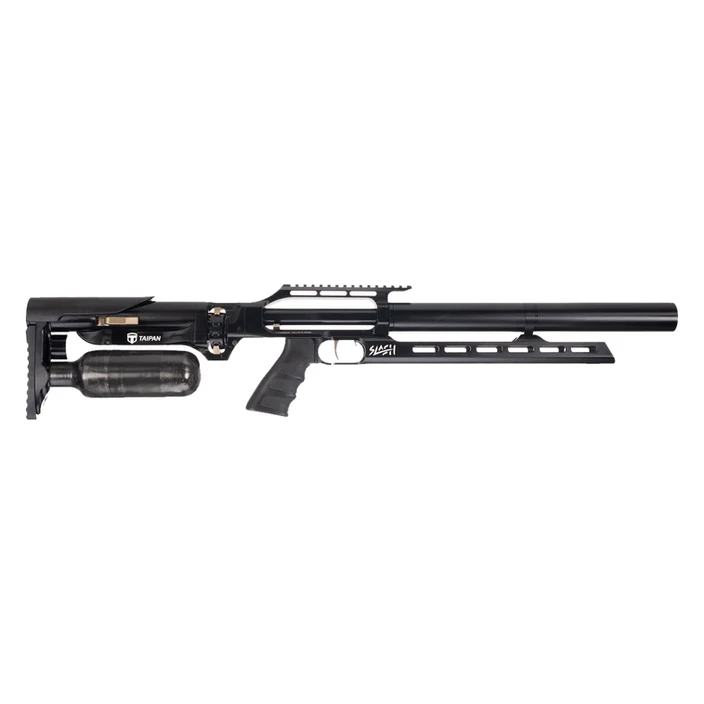
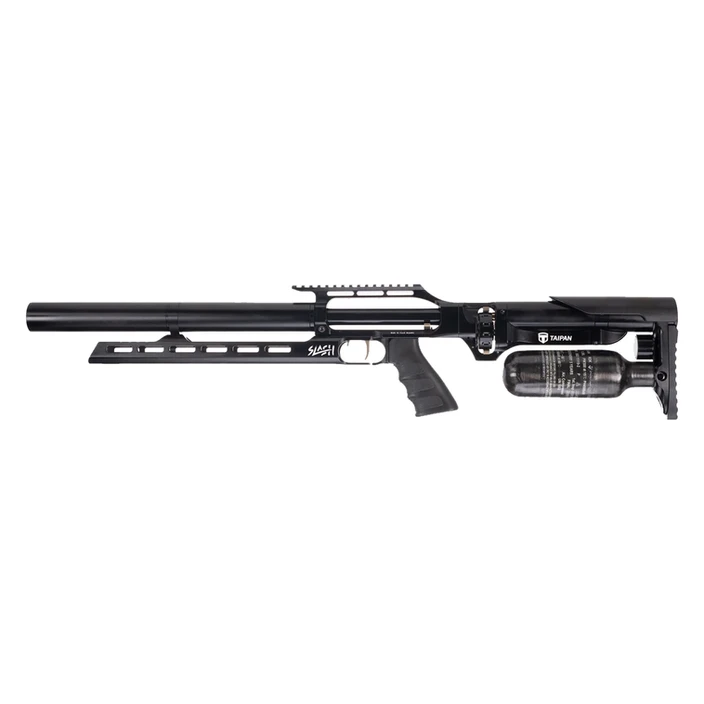
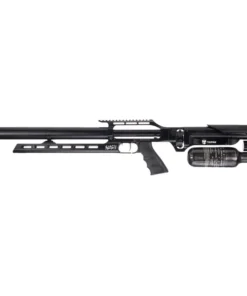
Rapid follow-up capability is delivered by the TAIPAN Slash 420 Self-Indexing PCP Air Rifle through a compact bullpup platform that was engineered from the ground up. Consequently, a patented high-speed valve is combined with a 12-round rotary magazine so that consecutive shots can be released without manual cycling after each discharge. Moreover, a 420 mm shrouded barrel, a 300 cc carbon-fiber bottle, and a rigid aluminum chassis are brought together so that accuracy, efficiency, and handling can be enjoyed by target shooters, hunters, and field enthusiasts alike.
Furthermore, pellets and slugs can be used interchangeably because dedicated magazines and a spring-free feed system are supplied. Therefore, consistent muzzle energy is maintained while air consumption is kept remarkably low. In addition, modular AR-15-style ergonomics and M-LOK mounting points are provided so that the rifle can be tailored to individual needs.
Revolutionary Self-Indexing Action and Valve Design
Lightning-fast magazine advancement is achieved by the self-indexing system of the TAIPAN Slash 420 Self-Indexing PCP Air Rifle. As a result, up to twelve rounds can be fired in quick succession once the first shot has been released. Meanwhile, a patented valve with extraordinary opening and closing speed is employed so that energy transfer remains consistent from shot to shot.
Subsequently, air usage of approximately 7–9 cm³ per joule is realized, which is regarded as among the most efficient figures in its class. Additionally, a 46 cc power plenum is paired with an externally adjustable regulator so that output can be fine-tuned where local regulations permit. Notably, a unique decocking lever is included so that the action can be returned to a safe state without a live discharge.
Magazine, Safety, and Ammunition Flexibility
Effortless loading is made possible because the rotary magazine can be removed from the left side after the retainer pin has been pushed forward. Likewise, two magazines are typically supplied: one optimized for pellets and, in most calibers above .177, one marked for slugs. Consequently, projectile deformation is avoided by the spring-free magazine design, and slugs up to about 13 mm in length can be supported.
Moreover, dual safety systems are fitted. A manual safety is provided, and an automatic interlock is activated whenever the magazine is removed. Therefore, unintended discharge is prevented during handling or reloading. In the same way, firing is blocked if the magazine retainer is not fully seated.
Compact Chassis, Barrel, and Optics Interface
Maneuverability is enhanced by the 809 mm overall length and approximately 2.8 kg weight of the 420 mm configuration. At the same time, rigidity is preserved by the full-metal aluminum chassis, so flex and vibration are minimized during rapid strings. Furthermore, a match-grade CZUB rifled barrel is fully shrouded and an integrated sound moderator is incorporated, allowing report to be reduced for discreet pest control or range sessions.
Additionally, a 20 MOA canted Picatinny rail is mounted so that long-range optics can be zeroed with extra elevation in reserve. M-LOK slots along the forend are also provided, enabling bipods, lights, or other accessories to be attached. Likewise, a replaceable polymer AR-15-style pistol grip and an adjustable buttpad are fitted so that cheek weld and hand position can be customized by shooters of different builds.
Calibers, Power, and Fill System
Versatile ballistic choices are offered because the TAIPAN Slash 420 Self-Indexing PCP Air Rifle is produced in .177 (4.5 mm), .22 (5.5 mm), and .25 (6.35 mm), with .30 available on selected longer-barrel variants. Accordingly, factory energy figures for the 420 mm tube are typically quoted in approximate ranges such as 18–42 J in .177, 42–70 J in .22, and 60–100 J in .25, while higher FAC outputs can be specified where licensing allows. Sub-12 ft-lb versions are likewise available for jurisdictions that require them.
Meanwhile, a 300 cc carbon-fiber bottle seated in the buttstock is filled to a maximum of 300 bar. As a result, an impressive number of regulated shots per fill can be obtained even during semi-automatic strings. Fill access is completed with a probe, and consistent regulator performance is maintained across a useful working pressure band.
Highlighted specifications and features
- Self-indexing 12-round rotary magazine with quick side removal
- Patented ultra-fast valve for high energy and low air consumption
- 420 mm shrouded barrel with integrated sound moderator
- 300 cc carbon-fiber bottle rated to 300 bar
- Externally adjustable regulator and 46 cc plenum
- 20 MOA Picatinny rail plus M-LOK accessory slots
- Replaceable AR-15-style grip and adjustable buttpad
- Manual safety plus magazine-removal interlock
- Unique decocking system
- Dual magazines for pellets and slugs (where applicable)
- Rigid aluminum bullpup chassis, approx. 2.8 kg / 809 mm
- CZUB match-grade rifled barrel
Practical Use, Accuracy, and Responsible Ownership
Precision groups are routinely reported from supported positions at 30–50 m when quality ammunition is selected. Consequently, the platform is well suited to field target practice, steel-plate sessions, and ethical small-game or pest work where local law permits. In addition, the compact 420 mm layout is especially valued when movement through cover or vehicle transport is required.
Furthermore, quiet operation from the full-length shroud makes the rifle considerate in backyard or urban-edge settings, provided all legal limits are observed. Inclusive design choices—interchangeable grip, adjustable length of pull, and balanced weight—allow the TAIPAN Slash 420 Self-Indexing PCP Air Rifle to be enjoyed by a wide community of shooters. Nevertheless, local airgun laws, FAC requirements, and safe-storage rules must always be followed, and hearing and eye protection should be worn.
Ultimately, a complete shooting system is presented: rapid yet controllable fire, efficient air use, modular mounting, and factory compatibility with both pellets and slugs. Therefore, the TAIPAN Slash 420 Self-Indexing PCP Air Rifle stands ready for enthusiasts who want compact handling without sacrificing follow-up speed or consistency. Responsible ownership, regular maintenance, and correct regulator settings will keep performance repeatable for years of use.
Explore the Hatsan Air Rifle Range: PCP, Spring-Piston, Bullpup, and Semi-Auto Airguns
For shooters comparing a hatsan air rifle, the Hatsan lineup covers everything from traditional spring-powered platforms to modern hatsan pcp designs, compact bullpups, semi-automatic systems, and specialized large-bore models. Whether someone is researching an entry-level air rifle, premium PCP equipment, target-oriented air rifles, or replacement components, the broader range of air rifle options associated with hatsanusa and hatsan usa provides many configurations to compare.
Hatsan Blitz and Semi-Automatic PCP Platforms
The hatsan blitz remains one of the most recognizable names among Hatsan PCP platforms. Searches for hatsan blitz full automatic, hatsan blitz bullpup, hatsan blitz 30 cal, and hatsan blitz .30 cal commonly come from enthusiasts comparing high-capacity PCP designs and different caliber configurations. Alternative searches such as hatsun blitz and hatzan blitz may also appear when shoppers are looking for the same product family.
The term blitz guns is sometimes used more broadly when discussing this platform, while phrases such as blitz 777 may appear in related product searches. Buyers comparing a 30 cal air rifle with smaller-caliber platforms should always review the model specifications, local regulations, intended sporting application, and compatible ammunition before choosing an air gun.
Another notable semi-auto platform is the hatsan sortie. The hatsan sortie tact semi-auto pcp configuration combines compact handling with PCP operation, while hatsan sortie tact searches are frequently associated with tactical-style variants. Owners may additionally look for hatsan sortie accessories when configuring optics, magazines, maintenance components, or other compatible equipment. Likewise, buyers searching for a semi auto pellet gun may compare the Sortie with the invader auto and other semi-automatic PCP designs.
Hatsan Bullpup and PCP Air Rifles
Hatsan produces several PCP configurations for shooters who prefer compact ergonomics without giving up barrel length. The hatsan bullboss is one example, while the bullmaster represents another recognizable bullpup-style platform. The hatsan hercules family is associated with higher-capacity PCP configurations, and the hatsan hercules bully provides a compact bullpup alternative within that broader design category.
The hatsan flash is another widely recognized PCP platform. Because hatsan flash configurations can vary, buyers should compare caliber, stock style, barrel arrangement, pressure system, and included equipment before purchase. The hatsan flashpup qe offers a bullpup-inspired format and is often considered by customers wanting a shorter overall rifle.
Other PCP-related searches include the hatsan invader, hatsan factor rc, and hatsan neutron star. Each platform serves a somewhat different purpose, which means specifications rather than appearance alone should determine which airguns are most appropriate for a particular type of sporting or recreational shooting.
Hatsan Jet 2 and Compact PCP Options
The hatsan jet 2 has attracted attention among customers looking for compact PCP versatility. Because the hatsan jet 2 may be configured differently depending on market and package, shoppers should verify the exact specifications supplied by the retailer. Searches for jet ii generally refer to the same Jet-series concept, while hatsan jet 2 accessories may include compatible magazines, optics solutions, carrying equipment, seals, and manufacturer-approved replacement components.
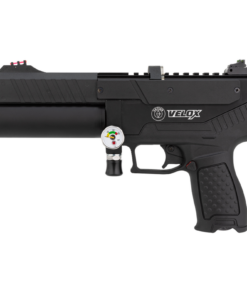
The hatsan velox is another compact platform that may appeal to customers researching modern PCP systems. However, compatible equipment should always be verified against the precise model designation rather than assuming accessories interchange across different Hatsan products.
Classic Hatsan Spring and Gas-Ram Air Rifles
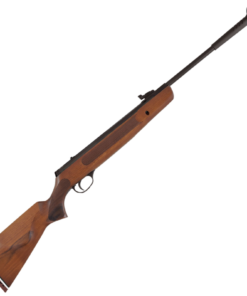
Not every Hatsan buyer wants PCP equipment. Traditional spring-piston and gas-ram designs remain an important part of the catalog. The hatsan model 95 is among the best-known examples, while searches for hatsan mod 95 and simply mod 95 usually refer to the same established platform.
The hatsan 125 is another familiar full-size option. Meanwhile, the hatsan 135 is commonly researched by shooters interested in larger, more substantial break-barrel platforms. The hatsan 135 vortex air rifle incorporates Hatsan’s Vortex gas-piston concept, while the hatsan 135 carnivore is associated with larger-caliber configurations. Searches for a hatsan big bore carnivore rifle are similarly connected with users comparing large-bore air-powered platforms.
Additional traditional models include the hatsan mod 65, which appears in searches from buyers interested in full-size sporting configurations. The hatsan airtact air rifle, commonly shortened to hatsan airtact, represents another accessible platform. The hatsan zada also broadens the selection for customers comparing break-barrel designs.
Big-Bore Hatsan Models and Specialty Platforms
For customers researching large-bore PCP technology, the hatsan piledriver is one of Hatsan’s best-known specialized platforms. Large-bore air rifles occupy a different category from a conventional .177 caliber air pellet gun, so caliber, projectile compatibility, operating pressure, legal restrictions, and intended sporting use should all be carefully reviewed.
The hatsan harpoon is another specialized product name associated with Hatsan’s air-powered lineup. Because it functions differently from a conventional pellet rifle, buyers may encounter the phrase arrow launcher while researching this category.
These specialized products should not automatically be compared with a traditional pallet gun or standard pellet rifle because their operating systems, projectiles, dimensions, and intended uses can be substantially different.
Refurbished Hatsan Air Rifles and Replacement Parts
Budget-conscious customers sometimes search for hatsan refurbished equipment or refurbished air rifles. A refurbished product can offer good value when its condition, inspection history, seals, pressure system, warranty coverage, and included accessories are clearly disclosed.
Existing owners may instead require hatsan aftermarket parts. When replacing magazines, seals, fill probes, stocks, mounts, or other components, compatibility should always be matched to the precise rifle generation and caliber. Similar-looking parts should never automatically be assumed to fit every Hatsan platform.
Product names such as 1000x.25 may also appear when shoppers compare model or caliber-specific configurations, so confirming the manufacturer’s exact designation is particularly important.
Scopes, Pellets, and Air Rifle Accessories
Optics are another major consideration when configuring an air rifle. A basic 4×20 optic may be encountered in entry-level packages, and the term 4×20 is therefore frequently seen alongside airgun searches. However, optic selection should ultimately reflect the rifle’s mounting system, recoil characteristics, shooting distance, and intended use.
Pellet selection also matters. Products such as h&n field target trophy are widely recognized among airgun enthusiasts, while h&n field target trophy bleifrei refers to a lead-free option within that product family. Individual rifles may prefer different pellet weights and shapes, so consistency and accuracy should be evaluated with the manufacturer’s recommendations in mind.
The term crow magnum may also appear when users research heavier hunting-oriented pellet designs or related airgun ammunition. Ammunition compatibility must always be checked against the specific caliber and manufacturer’s specifications.
Choosing Between PCP, CO2, and Spring-Powered Airguns
A modern air pellet gun can use several different power systems. A PCP system stores compressed air inside a reservoir, while a spring-piston rifle relies on mechanical energy generated during cocking. A co2 pellet rifle, by contrast, uses carbon dioxide cartridges or a compatible CO2 supply.
Each system offers different advantages. PCP rifles may provide low recoil and repeatable operation, while spring-powered rifles avoid the need for external filling equipment. CO2 systems can offer convenient operation in compatible platforms, although performance may vary with temperature.
Customers researching the air rifle range should therefore consider much more than velocity figures. Ergonomics, caliber, overall length, weight, filling equipment, magazine design, maintenance requirements, noise level, available service support, and local regulations can all affect long-term ownership.
Hatsan Models for Different Airgun Preferences
With platforms such as the hatsan blitz, hatsan sortie, hatsan hercules, hatsan bullboss, hatsan flash, hatsan invader, hatsan piledriver, hatsan jet 2, hatsan velox, hatsan factor rc, hatsan airtact, and hatsan model 95, Hatsan covers a broad spectrum of airgun categories.
Some customers may prioritize a traditional sporting rifle, whereas others may prefer a compact PCP or bullpup. Shooters interested in sniper long style configurations may focus more strongly on stock ergonomics, optics mounting, stability, and longer-range target capability rather than simply choosing the most powerful model.
Meanwhile, terms such as econ ii may appear in accessory or product-related searches depending on the equipment being compared. Compatibility should always be established using the exact manufacturer and model specification.
Ultimately, selecting among hatsan air guns should begin with the intended application. A lightweight .177 caliber rifle may suit recreational target shooting, while a larger PCP platform can serve a very different sporting role. Models such as the hatsan blitz .30 cal, hatsan blitz 30 cal, or other 30 cal air rifle configurations should therefore be evaluated according to their specifications, local law, appropriate shooting environment, and intended lawful use.
From the compact jet ii and hatsan jet 2 to the established hatsan mod 95, powerful hatsan 135, specialized hatsan harpoon, and modern semi-auto PCP platforms, the Hatsan catalog gives airgun enthusiasts an extensive selection. Comparing specifications carefully helps buyers identify the right air rifle while ensuring that pellets, optics, filling equipment, magazines, and accessories remain correctly matched to the chosen platform.
Frequently Asked Questions
How is rapid follow-up fire achieved on this compact 420 mm bullpup?
Consecutive shots are released without a bolt or side lever being cycled after each discharge because a self-indexing rotary magazine is advanced automatically by a patented high-speed valve. Consequently, up to twelve rounds can be sent downrange in quick succession once the first trigger press has been completed. Moreover, consistent muzzle energy is maintained from shot to shot because the valve is opened and closed at exceptional speed. Meanwhile, air consumption remains unusually low, so an efficient string can still be completed from a single fill. In addition, lag between shots is minimized, which is appreciated during steel-plate sessions and ethical pest work. Therefore, a true multi-shot experience is delivered while the compact overall length of the 420 mm configuration is preserved.
Which calibers and power levels can be specified?
Several projectile diameters are offered so that the platform can be matched to target work, field use, or licensed higher-output applications. Typically, .177, .22, and .25 are supplied on the shorter barrel, while .30 is more commonly associated with the longer tube. Accordingly, factory energy bands for the 420 mm barrel are often quoted in approximate ranges that vary by caliber and regulator setting. Sub-12 ft-lb versions are also prepared for jurisdictions in which that limit must be observed. Furthermore, FAC-level output can be requested where a certificate is held. Nonetheless, local law is always checked before a purchase is finalized, because power figures that are legal in one region may be restricted in another. Inclusive options are therefore provided so that club shooters, hunters, and competitors can select a configuration that suits both skill and regulation.
How many shots can be expected from one fill?
An impressive shot count is obtained from the 300 cc carbon-fiber bottle when it is filled to a maximum of 300 bar. Subsequently, a 46 cc plenum and an efficient valve work together so that air use of roughly 7–9 cm³ per joule can be realized. As a result, multiple magazines can often be emptied before a refill is required, although the exact number depends on caliber, projectile weight, regulator pressure, and firing pace. In practice, sub-12 ft-lb setups in the smaller calibers may yield several dozen consistent shots, while higher-energy strings consume air more quickly. Additionally, velocity variation is kept tight when the regulator is set within its recommended working band. Therefore, range sessions and field outings can be planned with fewer bottle changes than would be expected from many older semi-automatic designs.
Can both pellets and slugs be used without extra tuning?
Both conventional pellets and slugs are supported because dedicated magazines and a spring-free feed system are supplied. In most calibers above .177, one magazine is intended for pellets and another is marked for slugs, often by a small identifying dot. Consequently, projectile deformation is avoided during loading, and slugs up to about 13 mm in length can be seated without force. Moreover, no valve or hammer adjustment is normally required when ammunition type is changed. Nevertheless, quality projectiles of the correct diameter should still be selected, because oversized slugs can affect cycling. Likewise, a seating tool is commonly included so that each round can be placed flush. Inclusive ammunition choice is thereby offered to target shooters and hunters who prefer different projectile styles on the same chassis.
Calibres, FAC Power Options, and Accessories
Versatile projectile choices are offered so that the compact 420 mm self-indexing bullpup can be matched to club targets, field work, or licensed higher-output use. Consequently, legal limits and intended quarry must be considered before a calibre and power specification are selected. Moreover, modular mounting points are provided so that optics, supports, and handling parts can be added without a different chassis being required. Inclusive options are therefore presented for shooters of many disciplines, provided local airgun and firearms rules are observed.
Available Calibres and Typical Applications
Several diameters are produced on this platform. Typically, .177 (4.5 mm), .22 (5.5 mm), and .25 (6.35 mm) are supplied on the 420 mm barrel, while .30 (7.62 mm) is more commonly associated with the longer 550 mm tube. Accordingly, each calibre is chosen for a different balance of trajectory, energy, and shot count.
A flat trajectory and high pellet count are often favoured in .177 when paper or steel at moderate distance is the goal. Subsequently, .22 is selected by many field users because a useful blend of downrange energy and magazine capacity is retained. In addition, .25 is preferred when heavier slugs or extra impact on small game are required under a valid licence. Meanwhile, .30 remains a specialised FAC choice on selected longer-barrel variants rather than the standard short-barrel package.
Furthermore, dual magazines are commonly packed. In .177 both units are usually identical, whereas in .22 and above one magazine is intended for pellets and another is marked for slugs. As a result, projectile deformation is avoided by the spring-free feed, and slugs up to about 13 mm in length can be supported. Therefore, ammunition type can be changed without a valve or hammer tune being performed in most cases. Quality projectiles of the correct diameter should still be used, because oversized slugs can interrupt cycling.
FAC, Sub-Limit Power, and Regulator Behaviour
Power output is not a single fixed figure. Factory energy bands for the 420 mm barrel are frequently quoted in approximate ranges such as 18–42 J in .177, 42–70 J in .22, and 60–100 J in .25, depending on regulator setting and ammunition. Higher FAC figures—often discussed up to roughly 80 J, 140 J, or 180 J by calibre on this platform, with still greater numbers on the longer barrel—can be specified where a certificate is held. Conversely, sub-12 ft-lb (and, in some markets, sub-16 J) versions are prepared so that the rifle can be owned without FAC in jurisdictions that impose those ceilings.
Consequently, the same mechanical design can be shipped as a club-legal plinker or as a licensed hunting tool. An externally adjustable regulator and a 46 cc plenum are fitted so that consistency can be maintained across a useful pressure band. Moreover, air use of approximately 7–9 cm³ per joule is realised by the patented high-speed valve, which helps shot count even when energy is raised. Nevertheless, many factory manuals advise that the regulator be left at the shipped setting unless a competent technician is involved. Light pellets may fail to cycle reliably if regulator pressure is dropped too far.
Inclusive advice is straightforward: local law is checked first, then calibre and energy are chosen to match quarry, range, and licence status. Chronograph testing after any change remains the responsible way to confirm that the rifle stays inside the intended limit.
Accessories, Optics, and Modular Fitments
A 20 MOA canted Picatinny rail is mounted so that extra elevation is available for longer zeros. Subsequently, scopes and compact sights can be aligned without turret travel being exhausted as quickly. In addition, M-LOK slots along the forend accept bipods, lights, slings, and barrier stops. Likewise, a replaceable polymer AR-15-style grip is fitted, allowing aftermarket grips to be swapped for comfort or glove use. An adjustable buttpad is also provided so that length of pull and cheek weld can be refined by shooters of different builds.
The barrel is fully shrouded and an integrated sound moderator is built in, so report is already reduced for discreet pest work or backyard practice where permitted. Additional external moderators can sometimes be added with a suitable adapter. A fill probe is supplied for the 300 cc carbon-fiber bottle, which is rated to 300 bar. Two magazines and, typically, a seating tool complete the usual package.
Spare magazines, sling hardware, and quality optics are the accessories most often added first. Inclusive setup means the chassis can be left minimal for woodland movement or dressed with a bipod and high-magnification glass for supported precision. Safe storage, dry filtered air, and correct magazine hygiene remain more important than any extra rail gadget.
Calibre, power, and accessory highlights
- .177, .22, and .25 on the 420 mm barrel; .30 mainly on longer-barrel FAC builds
- Sub-12 ft-lb / sub-16 J versions where required by law
- FAC energy bands that rise with calibre and barrel length
- Externally adjustable regulator and efficient high-speed valve
- Pellet and slug magazines (slug magazine usually marked above .177)
- 20 MOA Picatinny rail for optics
- M-LOK slots for bipods, lights, and slings
- Replaceable AR-15-style grip and adjustable buttpad
- Full-length shroud with integrated moderator
- 300 cc / 300 bar carbon-fiber bottle and fill probe
- Dual magazines and seating tool in a typical carton
Ultimately, calibre, legal power, and accessories should be chosen together. A quiet, compact self-indexing rifle is only as useful as the ammunition, licence, and mounting choices that are paired with it. Responsible specification—matched to local rules and inclusive of different shooting styles—keeps the platform accurate, efficient, and ready for the next session.
How is the magazine loaded and removed?
The rotary magazine is withdrawn from the left side after the retainer pin has been pushed forward. Afterward, twelve chambers can be filled by hand, and the magazine is then reinserted until it is locked. Meanwhile, an automatic safety interlock is engaged whenever the magazine is absent, so a discharge cannot be initiated during a reload. Furthermore, firing is blocked if the retainer is not fully seated. As a result, handling remains straightforward even when gloves are worn. In addition, two magazines are typically packed with the rifle so that a spare can be kept ready. Therefore, downtime between strings is reduced, which is valued during competitions and extended pest-control circuits.
What safety features are fitted?
A manual safety is provided alongside an automatic interlock that is activated when the magazine is removed. Consequently, unintended discharge is prevented during loading, transport, and storage. Moreover, a rare decocking lever is included so that the action can be returned to a safe state without a live shot being fired. After the retainer is confirmed in place and the safety is taken off, the lever can be drawn, the trigger pressed, and the lever eased forward so that stored energy is released safely. Additionally, the rifle cannot be fired if the magazine retainer pin is missing. Inclusive safety design is therefore emphasized so that newer and experienced shooters alike can handle the platform with confidence. Still, eye and hearing protection should always be worn, and local storage laws must be followed.
How quiet is the 420 mm shrouded barrel?
Report is reduced because the barrel is shrouded along its full length and an integrated sound moderator is built in. Subsequently, neighbor-friendly backyard practice and discreet field use become more practical where permitted. Meanwhile, barrel rigidity is increased by the shroud, which also helps accuracy. Additional external moderators can sometimes be fitted with a suitable adapter, although the factory shroud already delivers a noticeable drop in muzzle blast. Furthermore, the compact 809 mm overall length remains unchanged, so handling is not compromised. Therefore, consideration for surroundings can be shown without a bulky aftermarket can being added as a first step.
What optics and accessory mounting is available?
A 20 MOA canted Picatinny rail is mounted so that extra elevation is available for longer-range zeros. Consequently, scopes and red dots can be aligned without running out of turret travel as readily. In addition, M-LOK slots are machined along the forend so that bipods, lights, slings, and other accessories can be attached. Likewise, a replaceable polymer AR-15-style grip is fitted, allowing aftermarket grips to be swapped for a custom feel. An adjustable buttpad is also provided so that length of pull and cheek weld can be refined. Inclusive ergonomics are thereby supported for shooters of different statures. As a result, the same chassis can be configured for bench work, stalking, or tactical-style training.
How is the regulator used, and should it be adjusted?
An externally adjustable regulator is fitted so that output can be tuned where the owner is competent and local rules allow. Subsequently, a useful working band—often discussed in the region of 120–180 bar by tuners—can be selected to balance power, consistency, and cycling reliability. However, many factory manuals advise that the regulator be left at the shipped setting unless a qualified technician is involved. Moreover, cycling of light pellets can become inconsistent if pressure is dropped too far. Therefore, chrono testing and gradual changes are recommended whenever adjustment is undertaken. Inclusive guidance is offered: factory settings are sufficient for most owners, while advanced users may refine performance after proper research.
What accuracy can reasonably be expected?
Tight groups are routinely reported from a supported rest when quality ammunition is matched to the CZUB match-grade barrel. Consequently, single-hole or very small clusters at 30–40 m are commonly described, and steel targets at 50 m can be engaged with confidence. Meanwhile, the rigid aluminum chassis reduces flex, and the spring-free magazine avoids deforming projectiles before they enter the breech. Furthermore, consistent regulator output keeps velocity variation low across a string. Nevertheless, results still depend on shooter technique, wind, and pellet or slug choice. Inclusive practice advice applies: a solid rest, a consistent hold, and documented ammo tests will reveal the best combination for each rifle.


Reviews
There are no reviews yet.