Daystate, FX Airguns, PCP Rifles, Accessories and Precision Airgun Equipment
For enthusiasts researching premium PCP platforms, accessories, replacement components, and precision shooting equipment, the modern airgun market offers an extensive range of options from brands such as Daystate and FX. Searches for daystate blackwolf, daystate redwolf, delta wolf, huntsman daystate, daystate alpha wolf, wolf delta, day state, and daystate delta wolf frequently come from shooters comparing electronic PCP technology, ergonomic designs, premium construction, and sophisticated firing systems. Traditional styling also remains important, which is why terms such as stock walnut, safari stock, dima stock, rimfire stocks, and stock replacement continue to attract buyers who value both appearance and practical fit.
Among electronically controlled PCP rifles, the daystate alpha wolf, daystate blackwolf, daystate redwolf, and daystate delta wolf are commonly associated with advanced regulation, refined shot management, and a highly consistent firing cycle. Searches such as what is a delta wolf, what is a delta wolf, delta wolf meaning, deltaw, blackwolf, red alpha wolf, alpha red wolf, model alpha gun, model alpha gun, and electronic wolves often reflect buyers trying to understand how Daystate’s electronically managed rifles differ from conventional mechanical PCP systems. Other searches, including daysta, wolf gun, wolverine gun, wolveriner, daystate wolverine sapphire, daystate wolverine sapphire, and wolfpack armory wolverine, demonstrate the broad interest surrounding Wolf-branded and Wolverine-related sporting platforms.
Calibres, FAC Considerations, Power Delivery and Accessories for the Daystate Alpha Wolf Shadow
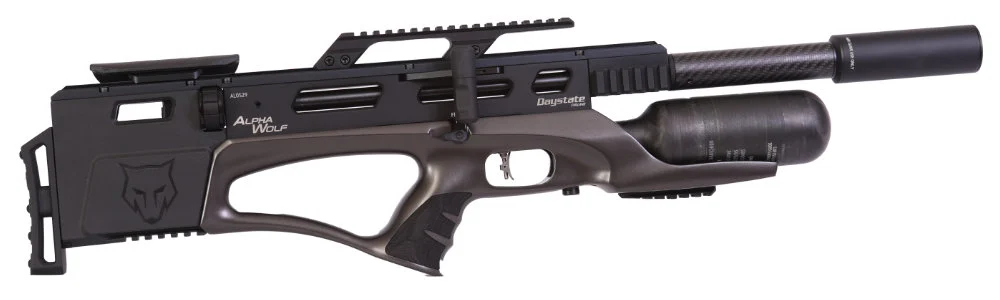
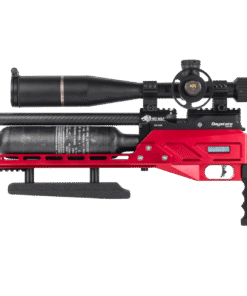
Calibre choice is treated as a foundational decision when the Daystate Alpha Wolf Shadow is specified. Two primary options are currently offered for the compact Shadow platform. A .177 (4.5 mm) chambering is provided so that flatter trajectories and higher pellet counts can be utilised for precision pest work. Meanwhile, a .22 (5.5 mm) chambering is supplied so that greater downrange energy and wind resistance can be obtained on larger quarry. Magazine capacity of thirteen rounds is allocated to .177, while eleven rounds are allocated to .22. Consequently, both popular UK legal-limit calibres are supported without a second rifle being required.
Furthermore, higher-power export and FAC configurations are described by the manufacturer as being in development. Therefore, future availability of additional chamberings on the same compact chassis should be confirmed with the retailer before an order is placed. Inclusive language is used throughout this section because shooters of every background are expected to verify local licensing before any purchase or use is completed.
Power Output, Regulation and Legal Limits
Sub-12 ft/lb performance is delivered by current UK-market examples of the Daystate Alpha Wolf Shadow. Typical muzzle energy in the region of 11.5 ft/lb has been recorded, with shot-to-shot variation held to only a few feet per second. A Huma regulator is fitted so that consistency is maintained from the 300 cc carbon-wrapped bottle. Fill pressure of up to 240 bar is accepted. Thereafter, approximately 350 regulated shots per fill can be expected at legal-limit settings in both .177 and .22.
Power is adjusted electronically through the SMART Control interface. Incremental changes are made on-screen so that output can be reduced when over-penetration inside buildings or vehicles must be avoided. As a result, the same rifle can be used for close-range ratting and for slightly longer opportunistic shots without a mechanical power wheel being turned. Chronograph hardware is omitted on the Shadow variant so that overall length remains 731 mm; nevertheless, usable power control is retained.
FAC and high-power versions are not the default specification of the compact Shadow at launch. Higher energy levels consume air more rapidly, which is why a 300 cc bottle was chosen for the UK-oriented model. Export markets that permit elevated power are expected to receive dedicated configurations in due course. Legal classification is determined by muzzle energy and by the laws of the country in which the rifle is possessed. Therefore, current FAC status, certificate requirements, and transport rules must be confirmed with the relevant authority before the Daystate Alpha Wolf Shadow is ordered or collected. No assumption of legality should be made from marketing copy alone.
Practical Implications of Calibre and Power Selection
A .177 setup is often preferred when high shot count, modest recoil, and a flatter trajectory are valued inside barns and around machinery. Conversely, a .22 setup is frequently selected when extra striking energy on rats, rabbits, or similar quarry is required. Because power can be dialled down electronically, a single .22 rifle can still be used at reduced settings when structural damage must be prevented. Inclusive fitting is supported by the reversible side-lever and ambidextrous Grey Shadow stock, so that either calibre can be run comfortably by left- or right-handed shooters.
Shot-count figures quoted above apply to legal-limit, regulated use from a full 240 bar fill. Higher FAC outputs, if and when they become available on this chassis, will reduce the number of consistent shots per charge. Efficiency of the fast-flow valve and Huma regulator remains an advantage even when power is increased, yet air consumption will inevitably rise.
Included Accessories and Modular Expansion
A working package is supplied with every Daystate Alpha Wolf Shadow. The following items are included so that the rifle can be put into service immediately:
- BRK MF-121 moderator
- ½-inch UNF muzzle thread on the carbon shroud
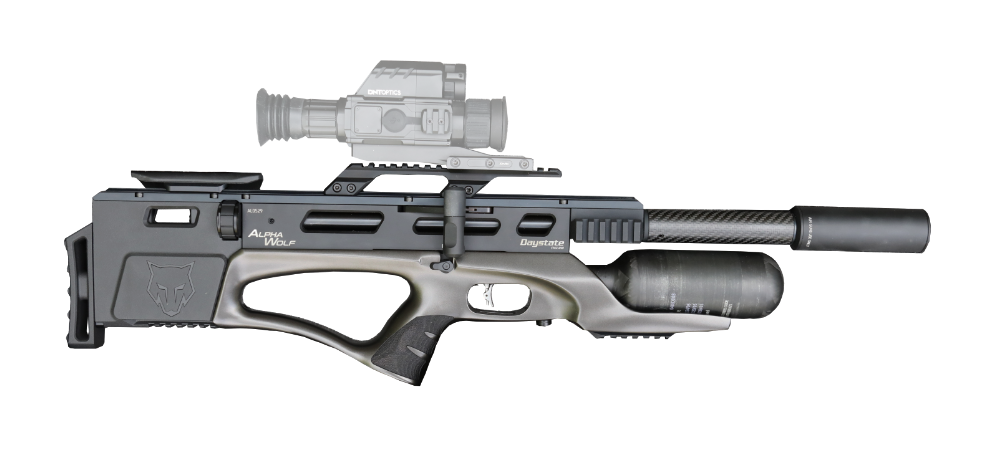
- V3 Optic Race Rail with 0.3-degree tilt
- Gecko adjustable butt pad
- Fitted hard case
- Fill probe with quick-connect coupling
- At least one gate-fronted magazine
- Magnetic fill-port cover
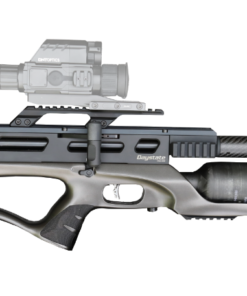
Quiet operation is therefore available from the first outing. Night-vision and thermal optics are accommodated more easily because the V3 rail’s slight downward tilt assists zeroing of taller units. Length of pull and recoil alignment can be refined through the Gecko pad. Transport and storage are simplified by the supplied hard case.
Additional accessory mounting is provided by multiple Picatinny rails on the action and forend. Lights, lasers, bipods, and other working tools can therefore be attached without the stock being drilled. Daystate’s broader Performance Centre catalogue is designed around the Alpha Wolf family, so authorised grips, rails, slings, and barrel-related options can be added later. A quick-change barrel system is retained from the parent platform; calibre or barrel-length swaps are therefore possible when official kits are obtained.
An optional factory accessories package is advertised by some retailers. Contents vary by dealer, yet the intent is the same: extra magazines, probes, or small parts can be obtained at the point of sale so that downtime in the field is reduced. Aftermarket optics from established airgun brands are readily fitted to the V3 Race Rail. Inclusive use is supported because rail height, pad adjustment, and lever reversal can all be set to suit different body sizes and shooting positions.
Matching Accessories to Calibre and Role
A compact moderator is already fitted, yet additional ½ UNF silencers can be trialled if a different report or length is preferred. Thermal or digital night-vision units benefit from the tilted race rail, which is especially useful when the Daystate Alpha Wolf Shadow is used after dark in farm buildings. Bipods or shooting sticks can be mounted on the accessory rails when longer, supported shots are taken from a hide. Extra magazines are inexpensive insurance when high-volume pest sessions are planned.
Because the platform is modular, a legal-limit .177 or .22 Shadow can be equipped for discrete close-range work today and later expanded if a higher-power barrel kit becomes officially available. All such changes remain subject to local firearms law. Responsible owners are expected to keep documentation current and to use only manufacturer-approved parts when power or calibre is altered.
In summary, the Daystate Alpha Wolf Shadow is currently offered in .177 and .22 at regulated 12 ft/lb levels, with electronic power control, strong shot counts from a 300 cc bottle, and a generous included accessory set. FAC and extra-calibre options should be treated as forthcoming rather than guaranteed. Accessories already supplied, together with the extensive rail and thread provision, allow the rifle to be configured for pest control, hide work, and vehicle use without delay—provided that every legal requirement in the owner’s jurisdiction is satisfied first.
Small ergonomic components can make a substantial difference to comfort and handling. A rifle butt pad, rubber butt, rubber butt pad, and butt pad rifle accessory can improve shoulder contact, while a bradley cheek riser can help support a more consistent head position. Likewise, enthusiasts may research gecko grips, a cocking ball, short cocking, an index pin, pin magazine, lock timing, and lock time when learning about rifle ergonomics, cycling characteristics, and replacement components. Searches for buddy bottle cover and buddy bottle cover also remain relevant for shooters who want to protect external air cylinders from cosmetic wear during transport or field use.
Magazine compatibility is another frequent consideration. Users may search for a 177 magazine, mag 177, 25 magazine, 5.0 mm pellets, 177 pellets types, slug pellet, or a general pellet rifle when comparing ammunition formats and magazine configurations. Pellet selection should always match the manufacturer’s recommended caliber and specifications for the rifle being used. A well-matched magazine and suitable ammunition can support reliable feeding and consistent performance without unnecessary mechanical stress.
PCP equipment relies on compressed air, so searches such as air rifle compressed air, air gun pc, air gun, and air guns are commonly connected with understanding pre-charged pneumatic systems. Owners also frequently search for a pcp o ring kit because seals form an important part of maintaining an air-tight pneumatic system. Maintenance should follow manufacturer-approved procedures, especially for high-pressure components, regulators, cylinders, and valves.
Sound-moderation accessories form another major category. Common search terms include air gun suppressor, air gun suppressors, airgun moderator, air rifle moderator, 0db, 0db moderator, 0 db moderator, 0 db moderator, 0 db moderator, 0 db moderator, and hogan decimeater silencer. Thread-related searches include silencer thread adapter, thread protector rifle, and muzzle thread protector. Compatibility depends on barrel threading, caliber, applicable law, and manufacturer specifications, so owners should verify all requirements before purchasing or fitting any muzzle accessory.
Mounting systems have also become increasingly important as modular fore-ends and accessory rails become more common. Searches for an mlok to picatinny rail adapter, best m-lok to picatinny rail adapter, m-lok to picatinny adapter, picatinny m lok adapter, and picatinny bag rider usually come from shooters wanting greater flexibility when mounting supported accessories. The best adapter is generally one that matches the rifle’s rail specification, uses quality hardware, fits securely, and avoids unnecessary bulk.
Sling-related searches are equally common. Buyers frequently look up how to put a gun sling on a rifle, how to put a rifle sling on, how to install a rifle sling, riffle sling, rigle sling, how to put sling on rifle, installing a rifle sling, and attaching a sling to a rifle. A compatible sling can improve carrying comfort and transportation, but attachment points should always be checked against the rifle manufacturer’s recommendations to avoid damage to the stock or mounting hardware.
The alpha wolf barrel and accessories such as an ats tuner may also interest precision-focused users researching how different rifle configurations are designed. Similarly, terms such as weatherby vanguard trigger adjustment appear in broader shooting-related searches, although trigger systems differ significantly between platforms and should be serviced or adjusted only according to the applicable manufacturer’s safety instructions. Another unusual search phrase, how to put extinguisher call back together, is unrelated to PCP rifle servicing and should be treated according to the specific extinguisher manufacturer’s maintenance guidance rather than general airgun information.
For buyers comparing premium European PCP equipment, daystate redwolf price and daystate redwolf price are common commercial-intent searches. Pricing can vary depending on caliber, stock type, configuration, region, dealer, and included accessories. People may also search fx airgun dealer near me when looking for authorized retailers, parts support, servicing, or warranty assistance.
FX Airguns remains another major name in the PCP market. Popular searches include fx impact m3 .22cal air rifle. 600mm barrel, fx impact m3, fx impact mk3, fx m3 airgun, fx m3, impact m3, and fx impact m3 air rifle. Price-focused searches such as fx impact m3 precio, fx impact m3 precio en usa, and fx impact m3 price indicate strong buyer interest in comparing regional pricing and available configurations. The modular design philosophy associated with the FX Impact family makes it especially attractive to experienced PCP users who prioritize adjustability, ergonomics, accessory compatibility, and high-quality construction.
Potential buyers also encounter less common search phrases such as griffin gun, unfend, black snood, red bodywarmer, and can wolverine go on planes. Airline transport rules for sporting equipment and compressed-air components can differ substantially between carriers and countries, so travelers should always check current airline, airport, customs, and destination regulations before making travel arrangements. Likewise, terms such as 3.55kg in lbs may appear when buyers compare rifle weight specifications across metric and imperial listings.
Whether someone is researching the daystate alpha wolf, daystate blackwolf, daystate redwolf, huntsman daystate, wolf delta, an fx impact m3, or another premium pellet rifle, the most important purchasing factors remain intended use, caliber compatibility, overall weight, stock ergonomics, magazine design, air-cylinder capacity, manufacturer support, and accessory compatibility. Premium PCP ownership is best supported by appropriate maintenance, manufacturer-approved components, secure storage, responsible handling, and compliance with all local laws and transport requirements.
Practical Use Scenarios in the Field
Everyday pest and hunting work is where a short, electronically regulated bullpup is asked to earn its keep. Confined interiors, vehicle windows, last-light hides, and awkward woodland edges all place different demands on length, report, power, and mounting options. Those demands can be met when handling, quietness, and instant output control are treated as a single system rather than as separate gadgets. Inclusive use is assumed throughout: left- and right-handed shooters, mixed experience levels, and varied body sizes are expected to share the same platform after simple adjustments have been made.
Confined Farm Buildings, Grain Stores and Machinery Aisles
Movement between hoppers, sack stacks, and parked machinery is required on many working nights. A compact overall length is therefore valued because doorways, feed passages, and loft hatches can be negotiated without the muzzle being knocked. Report is kept low by the supplied moderator and carbon shroud so that livestock is less likely to be unsettled. Power is reduced on the touchscreen before the first shot is taken inside thin-walled sheds, because over-penetration through cladding or stored produce must be avoided.
Rats are typically engaged at very short to moderate distances. Holdover remains predictable when velocity is held consistent by the regulator. Magazine capacity is sufficient for a circuit of a large store before a reload is needed, yet a spare magazine is still carried so that a second wave of activity can be dealt with without a return to the vehicle. Lights or compact illuminators are mounted on accessory rails when loft spaces are unlit. Safety isolation is applied whenever the rifle is passed through a hatch or laid on a feed bin.
Furthermore, grain-store floors are often dusty. The fill port remains covered by its magnetic cap until a top-up is required, and the action is kept pointed in a safe direction while aisles are crossed. After a session, the exterior is wiped so that dust is not carried into the next building. Inclusive fitting of the adjustable pad allows a shorter or taller colleague to take over without the whole setup being rebuilt.
Vehicle-Based and Mobile Pest Control
Shots from a truck window, UTV seat, or estate vehicle are common on large holdings. A short, well-balanced carbine can be brought to the shoulder without the butt being jammed against the seat back or the muzzle projecting dangerously beyond the window line. The side-lever can be reversed so that the driver or passenger side is equally usable. Power can be left at a moderate setting for open-yard shots and then reduced in seconds when the next target appears against a barn wall.
Meanwhile, a thermal or digital night-vision unit is often left mounted because the tilted optic rail helps zero to be retained when taller devices are used. Battery packs and spare magazines are stored in the supplied hard case so that a change of field can be made without loose items rolling under seats. The rifle is isolated electronically whenever the vehicle is moved between barns. Consequently, a full night of mobile work can be completed without the need for a long-barrelled sporter that will not fit easily through a window.
Mud and rain are frequently encountered on farm tracks. The laminate stock and carbon bottle are wiped at each stop so that grit is not transferred onto the rails. A bipod is left in the case unless a static watch from the tailgate is planned, because extra length at the forend can catch on door frames.
Hide Work at Last Light and First Light
A hide, straw bale, or hedgerow seat places a premium on stillness and a short profile. The rifle can be rested on bags or a compact rest without an excessive amount of barrel projecting through the viewing gap. Report is suppressed so that subsequent shots at the same location remain possible. Power is set for the expected distance before the first animal appears, then trimmed if a closer opportunity presents itself against a fence or outbuilding.
Additionally, length of pull is refined with the adjustable pad so that a seated position can be held for long periods without shoulder fatigue. The electronic trigger is lightened or staged to suit gloved winter use. Spare magazines are kept inside the hide rather than in a noisy pocket. After legal shooting light ends, the isolation lever is applied and the rifle is cased before the walk back to the vehicle is begun.
In particular, mixed quarry evenings are common: rats around a feed trough may be followed by a rabbit on the same margin. Electronic power control allows the same zeroed optic to be used for both without a mechanical adjustment being made in the dark. Inclusive language and shared kit matter here as well; a partner can take the next watch after the pad and lever have been set to their preference.
Woodland Edges, Orchards and Boundary Control
Longer, quieter approaches along headlands and orchard rows are required when quarry is wary. The reduced visual bulk of a grey, compact stock helps the outline remain broken against trunks and netting. Shots are still taken at modest hunting distances rather than at extreme range, because the barrel length is chosen for handling first. Consistency from the regulator keeps the same aim-point usable after a slow stalk.
Moreover, a sling or simple carry method can be added to the accessory points so that both hands remain free while fences are crossed. The moderator stays fitted unless local rules require otherwise. After a circuit, residual air pressure is checked on the gauge and display so that the next outing is not begun on a half-empty bottle. Leaves and sap are wiped from the rails before the rifle is returned to the hard case.
Seasonal fruit-farm work often involves early-morning or late-evening visits when staff are absent. Power is kept at a level appropriate to the backstop. Safe directions are chosen with extra care because public paths may run beyond the boundary. Documentation and permission are confirmed before any session on land that is not solely under the shooter’s control.
Night-Vision and Thermal Sessions
Dark interiors and unlit yards are the natural home of a compact, rail-rich bullpup. A thermal or digital night-vision sight is mounted on the tilted race rail so that the optical axis remains workable with modern, taller housings. Zero shift is minimised when the same mounts are left undisturbed between outings. Illuminators, if used, are clamped to the forend rails rather than to the optic itself, so that the sight picture is not disturbed.
Subsequently, power is often reduced for loft and lean-to shots even when the thermal picture looks “easy,” because structural damage remains a risk. Magazine changes are practised in low light so that the gate-fronted design can be indexed by feel. Batteries for both rifle electronics and the optic are carried as a pair. After the last shot, the isolation lever is used before the thermal is powered down, reducing the chance of an accidental discharge while kit is packed.
Fogged lenses and condensation are common when a warm vehicle is left for a cold yard. Time is allowed for optics to acclimatise. The hard case is kept closed until the rifle is needed so that damp air is not trapped against the action overnight.
Shared Use, Coaching and Inclusive Fitting
A single rifle is frequently used by more than one person on a working farm. The reversible side-lever, ambidextrous stock, and adjustable pad allow the same zeroed optic to be shared after only a short refit. Trigger weight can be increased for a new shooter and reduced again for an experienced pest controller. Power presets on the screen can be returned to a known legal-limit value after a training string has been fired at lower output.
Likewise, coaching sessions in a barn or on a private range benefit from the quiet report and the absence of a long barrel that might intimidate a first-time user. Safe muzzle discipline is easier to teach when the overall length does not sweep a wide arc. Inclusive practice means gloves, eye protection, and hearing protection are offered to every participant, and no one is asked to use a setup that does not fit their shoulder or reach.
Training strings are kept short so that the bottle is not emptied before a real pest outing the same night. A note of the last power setting is kept so that the working configuration can be restored in seconds.
Weather, Season and After-Action Routine
Winter gloves change trigger feel; the electronic blade position and weight can be altered so that a clean break is retained. Summer dust in grain stores is the opposite problem: the action and rails are brushed and wiped before the case is closed. Rain is shed reasonably well by the stock finish, yet the fill port and screen are dried before storage. Extreme cold can affect battery performance on both the rifle electronics and any thermal sight; spare power is therefore packed as a matter of course.
After every session the following steps are completed so that the next call-out is not delayed:
- Isolation is applied and the magazine is removed
- Residual moisture and dust are wiped from rails, bottle, and stock
- Air pressure and on-screen status are noted
- Moderator and optic mounts are checked for tightness
- The rifle is returned to the fitted hard case with probe and spare magazine
- Permissions, times, and quarry taken are recorded according to local rules
Consequently, a compact electronic PCP that is quiet, short, and instantly adjustable can be used across barns, vehicles, hides, and woodland margins without a second specialist rifle being required for every environment. Legal limits, backstops, and landowner permission remain the first considerations on every outing. When those conditions are satisfied, the same handling traits that make indoor ratting practical also make last-light hide work and shared farm use more comfortable for a wide range of shooters.
Frequently Asked Questions
Clear answers are expected before a compact electronic PCP is added to a working kit. The points below are written so that calibre, power, legality, handling, and accessories can be understood without the product name being repeated. Local laws always take precedence over general guidance. Inclusive use is assumed: left- and right-handed shooters and mixed experience levels are considered throughout.
Which calibres are offered, and how is magazine capacity arranged?
Two primary chamberings are supplied on the current compact platform. A .177 option is provided so that a flatter trajectory and a thirteen-shot magazine can be used for precision work at modest distances. A .22 option is provided so that extra pellet mass and wind resistance can be obtained, with an eleven-shot magazine being fitted as standard. Higher-power or additional calibres are described by the maker as being in development for certain markets; availability should therefore be confirmed with the retailer before an order is placed. Magazine bodies are gate-fronted and self-indexing, so pellets are loaded without being crushed. Spare magazines can be carried so that a second string is available during a long pest circuit.
What power level is delivered, and can output be changed in the field?
Legal-limit performance in the region of twelve foot-pounds is delivered by current home-market examples. Typical test figures sit close to eleven and a half foot-pounds with only a few feet per second of variation over a short string. Instant adjustment is made through the on-stock touchscreen. Power can therefore be reduced when shots are taken inside thin-walled buildings or against machinery, then restored for open-yard work. Chronograph hardware is omitted on this short variant so that overall length remains compact; usable electronic control is nevertheless retained. FAC or export energy levels are not the default specification of this particular compact model. Classification is determined by measured muzzle energy and by the laws of the country of use. Certificates, storage rules, and transport conditions must be verified with the relevant authority before purchase or collection.
How many shots can be expected from a full fill?
Approximately three hundred and fifty regulated shots at legal-limit settings are typically obtained from a full charge in both popular calibres. A three-hundred-cubic-centimetre carbon-wrapped bottle is filled to a maximum of two hundred and forty bar. Consistency is maintained by a Huma regulator and a fast-flow valve. Higher energy settings, if they become officially available later, will reduce the number of shots per fill. Pressure is shown on the gauge and on the electronic display so that a session is not begun on a depleted reservoir. A top-up is completed with the supplied probe after the magnetic port cover has been removed.
How short and how heavy is the rifle when it is carried into a barn or hide?
An overall length of seven hundred and thirty-one millimetres is achieved while a seventeen-inch Lothar Walther barrel is still housed in the bullpup layout. Unscoped weight is held near three point three five kilograms. Consequently, doorways, vehicle windows, and hide apertures can be negotiated without an excessive amount of muzzle projecting. A grey ambidextrous stock is specified so that the outline remains discreet against timber, netting, and concrete. The Gecko butt pad can be adjusted so that length of pull suits seated hide work or standing loft shots. Inclusive fitting is supported because the side-lever can be reversed for left-handed use.
What is included in the box, and which accessories can be added later?
A working package is supplied as standard. The following items are included so that the first outing can be completed without extra purchases being required immediately:
- Moderator of BRK MF-121 pattern
- Half-inch UNF muzzle thread on the carbon shroud
- V3 optic race rail with a slight downward tilt
- Adjustable Gecko butt pad
- Fitted hard case
- Fill probe with quick-connect coupling
- At least one magazine
- Magnetic cover for the fill port
Additional Picatinny positions are provided on the action and forend. Lights, lasers, bipods, and thermal or digital night-vision units can therefore be mounted. The tilted race rail is particularly useful when taller night-vision housings are zeroed. Authorised parts from the maker’s modular catalogue can be added later. Aftermarket optics from established airgun brands are readily fitted. A factory accessories bundle is offered by some dealers; contents should be confirmed at the point of sale.
Is the rifle suitable for left-handed shooters and for shared farm use?
Ambidextrous geometry is built into the stock. The cocking lever can be swapped to the opposite side. Trigger blade position, pull weight, and pad height can all be refined. A single zeroed optic can therefore be shared by colleagues after a short refit. Inclusive practice also means that eye and hearing protection are used by every participant and that no one is asked to fire a setup that does not fit their shoulder or reach. Trigger weight can be increased for a new shooter and reduced again for an experienced pest controller.
How quiet is the report, and can additional silencers be fitted?
Report is reduced by the combination of the carbon shroud and the supplied moderator. A half-inch UNF thread remains available if a different can is preferred or if local rules require a change. Indoor grain-store work and last-light hide sessions both benefit from the lower signature. Livestock and neighbouring properties are less likely to be disturbed when the muzzle is kept moderated and when safe backstops are chosen. Additional silencers must still leave the overall package legal and practical for vehicle or loft use.
How is the rifle filled, and what care is needed after dusty or wet sessions?
Dry, clean compressed air only is used. The magnetic cap is lifted from the inlet ahead of the trigger guard, and the supplied Foster-style probe is coupled. Maximum fill pressure of two hundred and forty bar must not be exceeded. After dusty grain-store work the exterior, rails, and bottle are wiped before the case is closed. After rain the screen, fill port, and moderator thread are dried. Isolation is applied and the magazine is removed before transport. Residual pressure and on-screen status are noted so that the next call-out is not begun on a surprise empty bottle.
Can night-vision or thermal sights be used without a difficult zero?
A dedicated race rail with a small downward tilt is supplied so that modern, taller electro-optics can be aligned more easily. Mounts are left undisturbed between outings whenever possible so that zero shift is minimised. Illuminators, if required, are clamped to accessory rails rather than to the sight body. Batteries for both the rifle electronics and the optic are carried as a pair. Time is allowed for lenses to acclimatise when a warm vehicle is left for a cold yard. Condensation is wiped before the first shot is taken.

Reviews
There are no reviews yet.