Calibers, FAC, Power, and Accessories for the AirForce Condor SS Spin-Loc Blue
Four smallbore options are offered on the AirForce Condor SS Spin-Loc Blue so a single platform can be matched to target work, pest control, or hunting. Moreover, user-adjustable power is provided so energy can be kept within local limits or raised for ethical field use. Additionally, a wide accessory ecosystem is supported so barrels, tanks, optics, and fill gear can be added without replacing the rifle. Consequently, long-term value is delivered to shooters who prefer one configurable system instead of several fixed guns.
Caliber Choices and Typical Roles
A Lothar Walther barrel in .177, .20, .22, or .25 is fitted from the factory. High velocity and a flat trajectory are typically produced in .177, therefore paper punching and small-pest work at modest distances are well served. A useful middle ground between speed and energy is offered by .20, and many shooters find that pellet availability and grouping both remain strong. Balanced hunting performance is commonly obtained in .22, where a wide pellet selection and solid knockdown are combined. Substantial energy for larger pests is generated in .25 when heavier pellets or slugs are used at higher power settings.
Barrel swaps are supported so a second caliber can be added later. However, a dedicated tank valve spring is specified for .177; if a .177 tank is used with .20, .22, or .25 barrels, a velocity drop of roughly 50–100 fps is often experienced. Likewise, Hi-Flo Spin-Loc tanks are intended for .22 and .25 only. Therefore, matching tank and barrel combinations should be selected before a conversion is completed. Pellet length also differs slightly between .20 and .22 of similar weight, so feeding and grouping should be verified after any change.
Power Adjustment, Velocity, and Energy
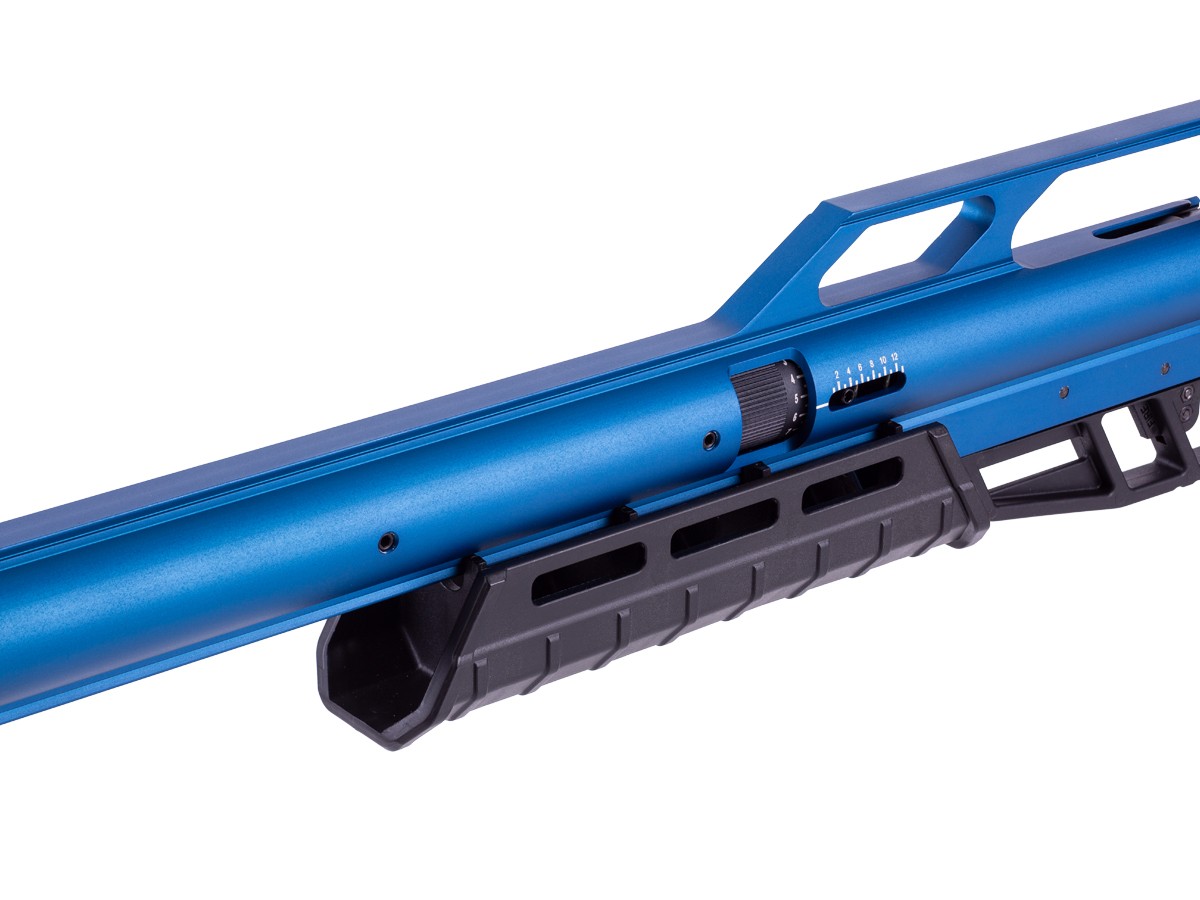
An unregulated but widely adjustable hammer-spring wheel is built into the AirForce Condor SS Spin-Loc Blue. Settings from low practice levels up through maximum output are available, and repeatable marks on the wheel allow a preferred combination to be restored. Velocities from approximately 600 fps to as high as 1,300 fps in .177 are published, depending on pellet weight, fill pressure, and power setting. In .22 and .25, slightly lower peak speed is typical, while muzzle energy rises.
Energy approaching 40–50 ft-lbs on the shrouded SS platform is frequently recorded in mid-to-high settings with hunting pellets; higher figures toward 70–90 ft-lbs are cited on some Condor-family configurations with optimal valves, barrels, and ammunition. Shot count falls as power is raised. Dozens of usable shots per 3,000 psi fill are commonly obtained at moderate settings, while maximum output may yield closer to 20–35 consistent shots before velocity drops off. Accordingly, a chronograph is strongly recommended so the most efficient setting for each pellet can be documented.
Quiet operation is aided by the integral shroud and baffle system, yet report still increases at the highest settings. For this reason, mid-range settings are often preferred for backyard use, while higher settings are reserved for ethical hunting distances. Dry-fire is permitted on this design, which simplifies safe function checks.
FAC Considerations and Legal Compliance
In the United Kingdom, air rifles that produce more than 12 foot-pounds of muzzle energy require a Firearms Certificate (FAC). Full-power settings on the AirForce Condor SS Spin-Loc Blue readily exceed that threshold, especially in .22 and .25. Therefore, FAC-rated ownership is required if the rifle is to be used at its designed hunting output in the UK. Sub-12 ft-lb use may be possible only if power is deliberately limited and independently verified; factory configuration should never be assumed legal without measurement.
Elsewhere, limits vary by country, state, and even municipality. Export, import, hunting seasons, and pest-control rules must be confirmed before purchase or travel. Responsible owners keep chronograph logs, use only dry air or nitrogen, and observe adult-use and pellet-only restrictions stated by the manufacturer. Inclusive, lawful shooting is supported when local certificates, storage rules, and land permissions are obtained first.
Accessories That Expand the Platform
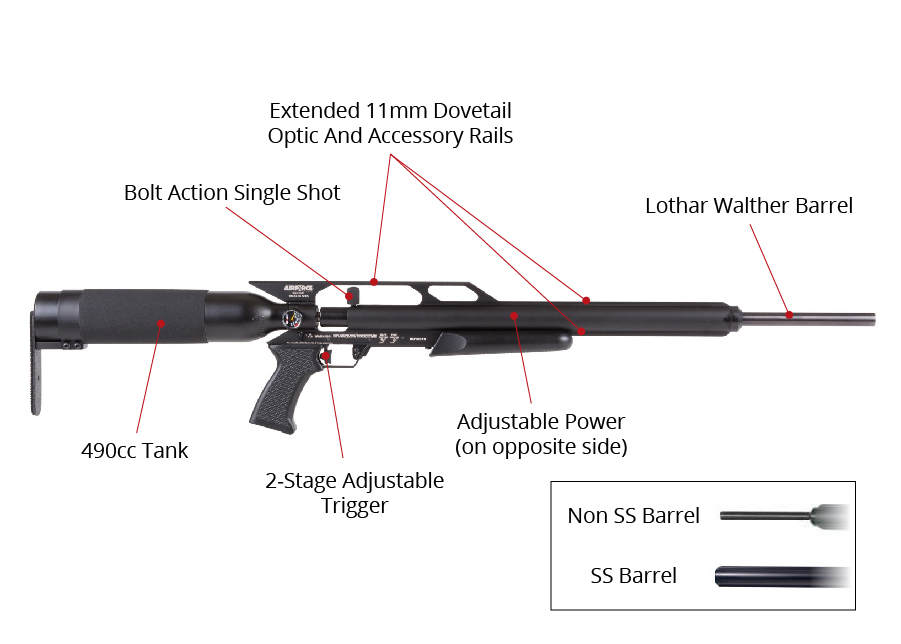
A modular accessory list is maintained so the AirForce Condor SS Spin-Loc Blue can be tailored without tools beyond coin-slot screws.
Barrels and suppression
- 12-inch, 18-inch, and 24-inch Lothar Walther barrels are offered in each caliber
- Integral shroud effect is retained only with the factory SS barrel; unsilenced report results when a plain tube is fitted
- Optional external Sound-Loc moderators are available on dual-suppressed SS-SL variants for further report reduction
Tanks and filling
- Standard Spin-Loc 490 cc tanks with onboard gauges allow filling without tank removal
- Hi-Flo Spin-Loc tanks are specified for .22 and .25 to support higher airflow
- Micro-Meter tanks can be used when lower, more efficient output is preferred
- Spare pre-filled tanks, scuba adapters, DIN/yoke fittings, and hand-pump kits complete the air supply
Optics, furniture, and field gear
- 11 mm dovetail plus accessory grooves accept scopes, lights, lasers, and bipods
- Factory and aftermarket 3–9× and 4–16× airgun-rated scopes are commonly paired with high rings
- Sling swivel studs, slings, and AR-pattern grips can be fitted
- Shooting kits that include scope, rings, pump or fill system, and sometimes a bipod are offered for turnkey setups
Extended rails keep optics clear of the power wheel. Consequently, night-vision or thermal devices can be added where regulations allow. Maintenance remains simple: lead pellets only, correct fill media, and periodic inspection of O-rings and the pressure-relief device.
When caliber, verified power, FAC status, and accessories are chosen together, the AirForce Condor SS Spin-Loc Blue becomes a scalable system rather than a single-purpose rifle. Ethical energy, legal compliance, and field convenience are thereby aligned for target shooters and hunters who want American-made flexibility in a distinctive blue finish.
AirForce Condor SS Spin-Loc Blue: Precision Power in a Distinctive Finish
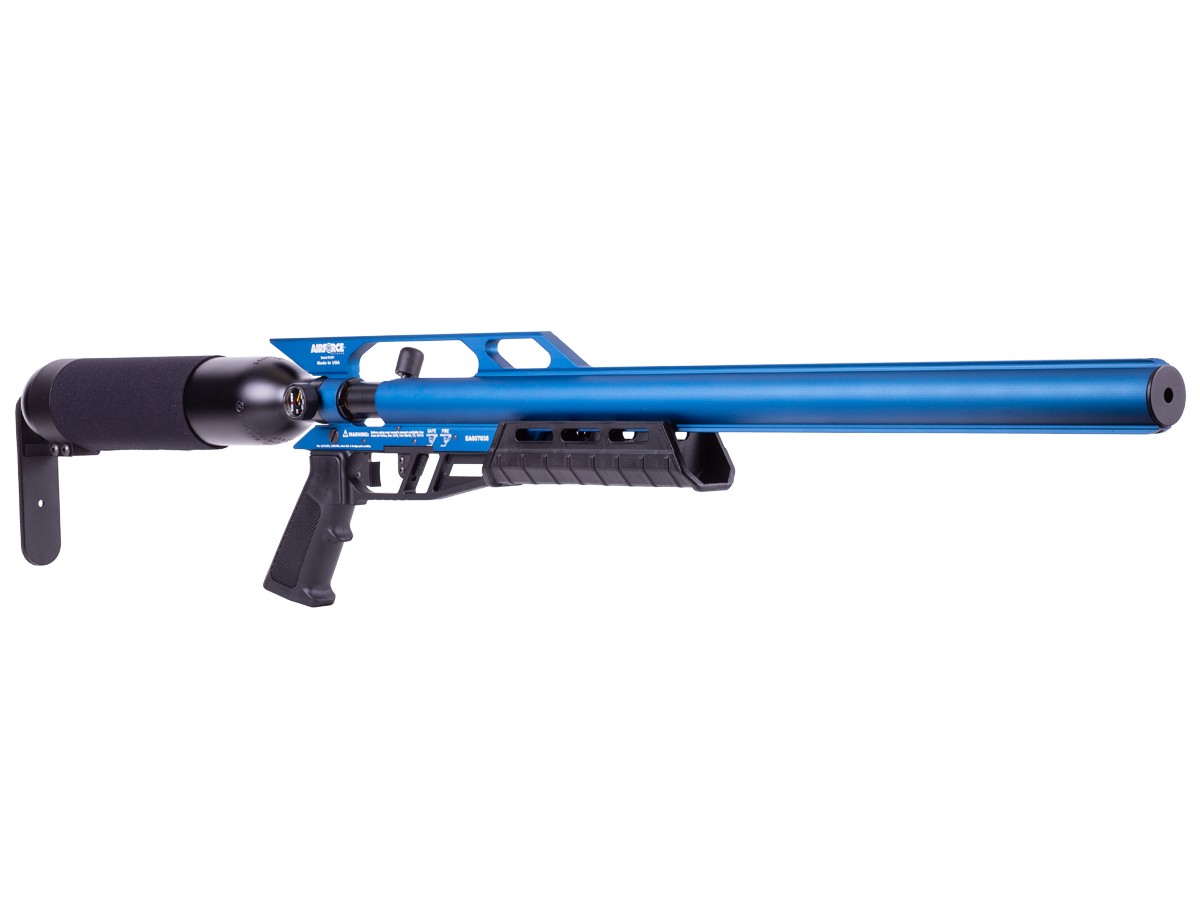
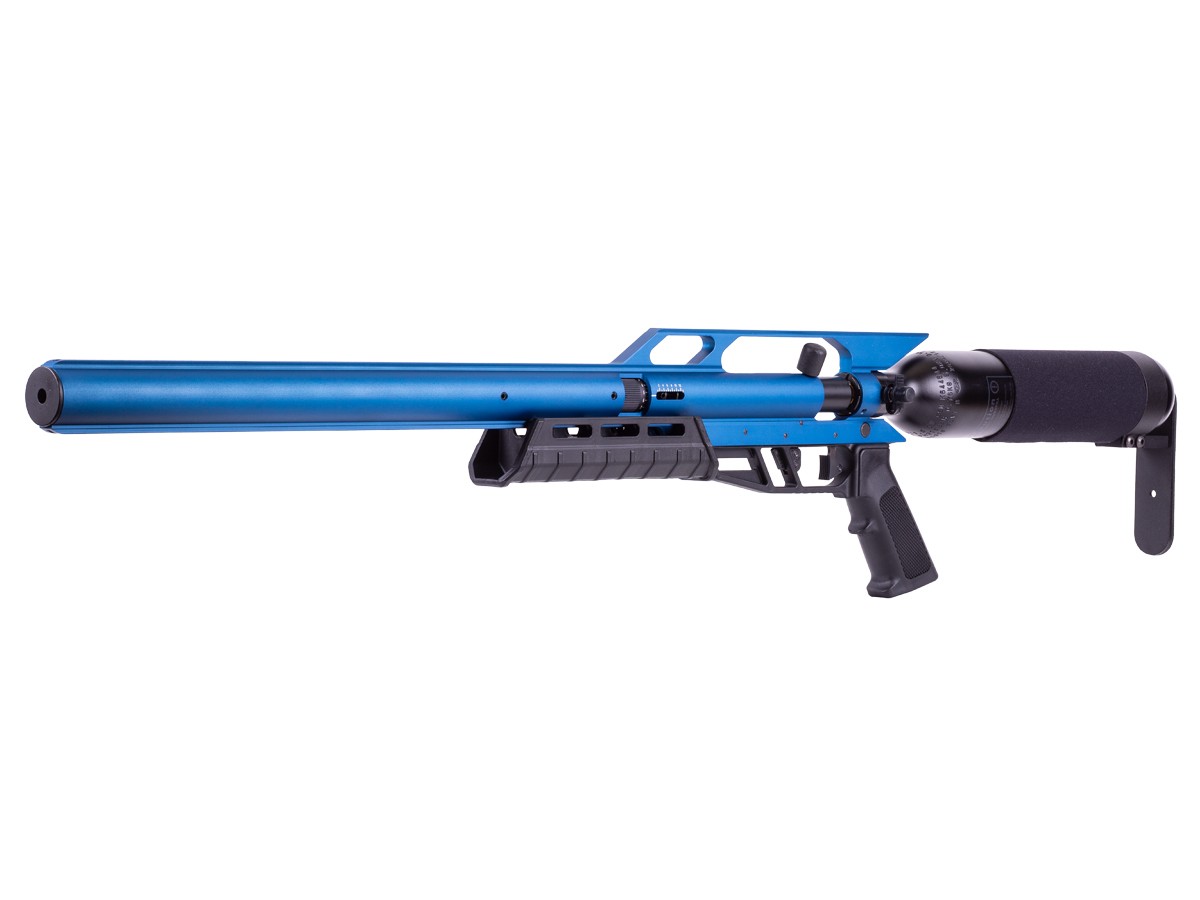
Unmatched flexibility is delivered by the AirForce Condor SS Spin-Loc Blue for hunters, target shooters, and pest-control enthusiasts who demand adjustable performance in a lightweight American-made platform. Quiet operation is supported by an integrated baffle and shroud system, while recoilless shooting is maintained shot after shot. Distinctive blue anodizing is applied to the frame so the rifle stands out without sacrificing field-ready durability. Consequently, a highly configurable PCP experience is provided for users who value accuracy, power control, and straightforward filling.
Why the AirForce Condor SS Spin-Loc Blue Stands Apart
Adjustable power is built into the AirForce Condor SS Spin-Loc Blue so velocity and energy can be matched to the task at hand. Moreover, a recoilless firing cycle is produced by the pre-charged pneumatic design, therefore a stable sight picture is preserved even during extended sessions. Additionally, neighbor-friendly report levels are achieved through the SS baffle system compared with unshrouded Condor models. As a result, backyard practice and discreet field use are both supported.
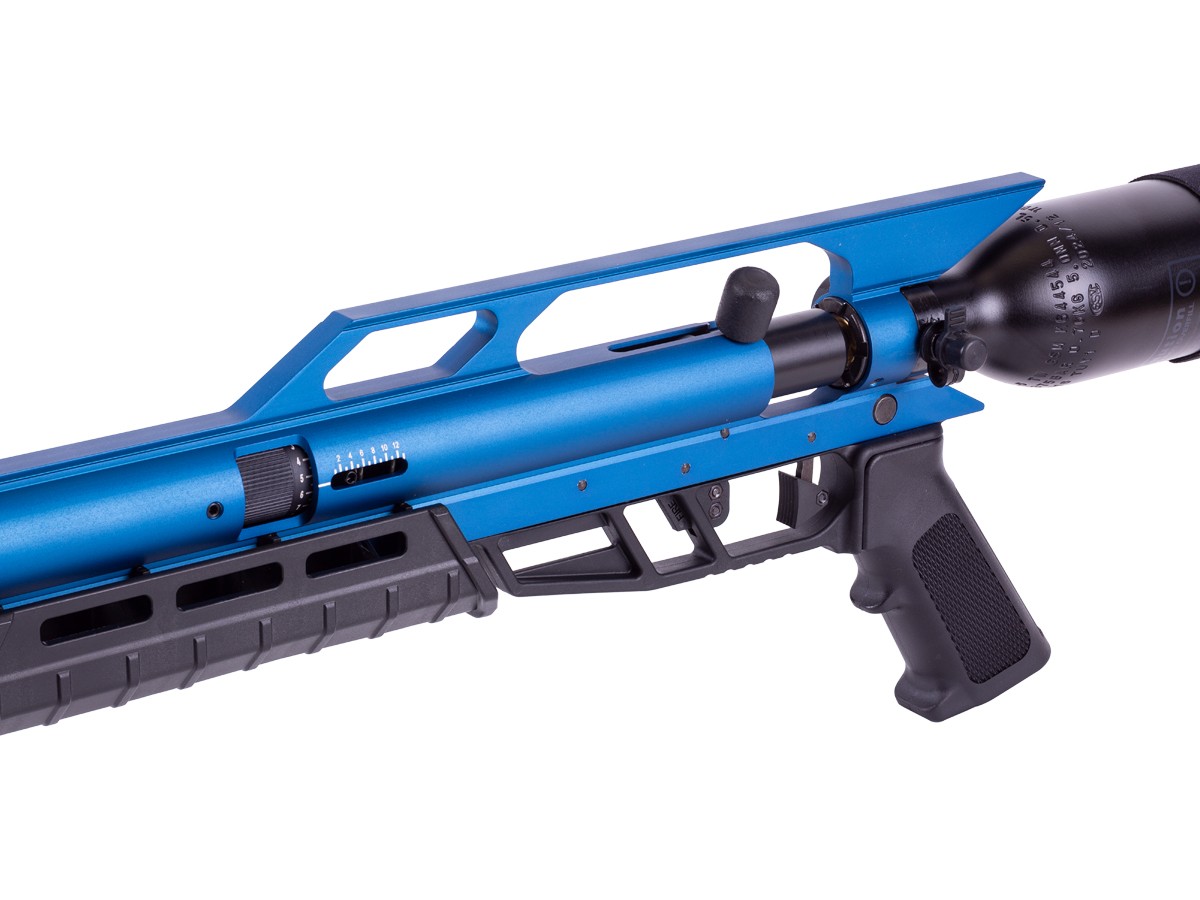
Furthermore, tank changes and refills are simplified by the Spin-Loc collar and onboard gauge. In addition, extra filled tanks can be carried in the field instead of a bulky scuba bottle. Likewise, accessory mounting is enabled by the extended 11mm dovetail and accessory grooves along the frame. Hence, optics, lights, lasers, and bipods can be fitted without tools beyond coin-slot screws.
Core Features Highlighted for Product Listings
The following capabilities are featured on the AirForce Condor SS Spin-Loc Blue:
- Adjustable PCP powerplant — Velocity and energy are tuned by the user across a wide range
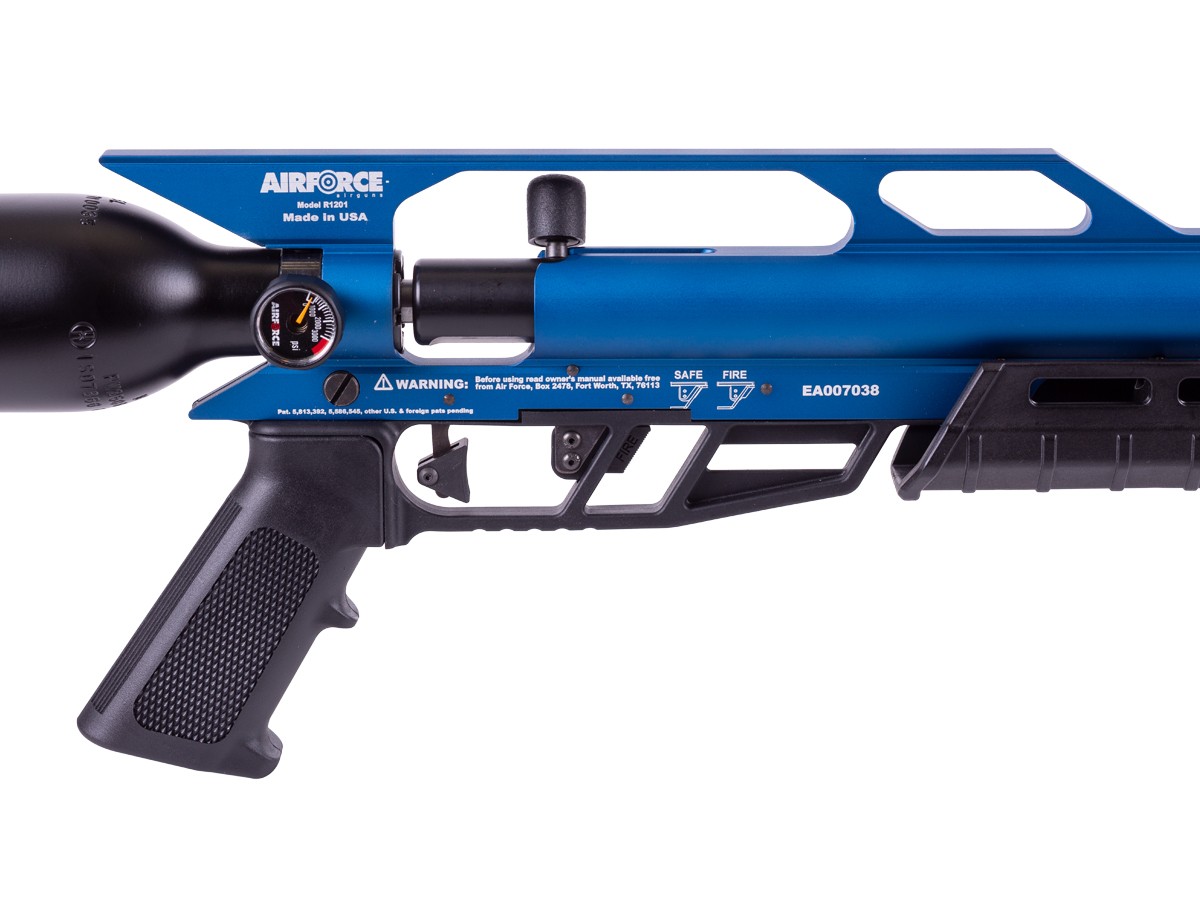
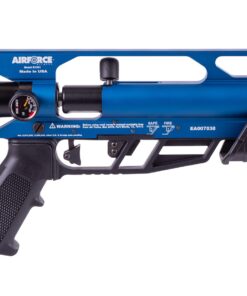
- Spin-Loc air tank with gauge — Filling is completed without removing the reservoir from the rifle
- 18-inch Lothar Walther rifled barrel — Consistent grouping is supported by German-made precision
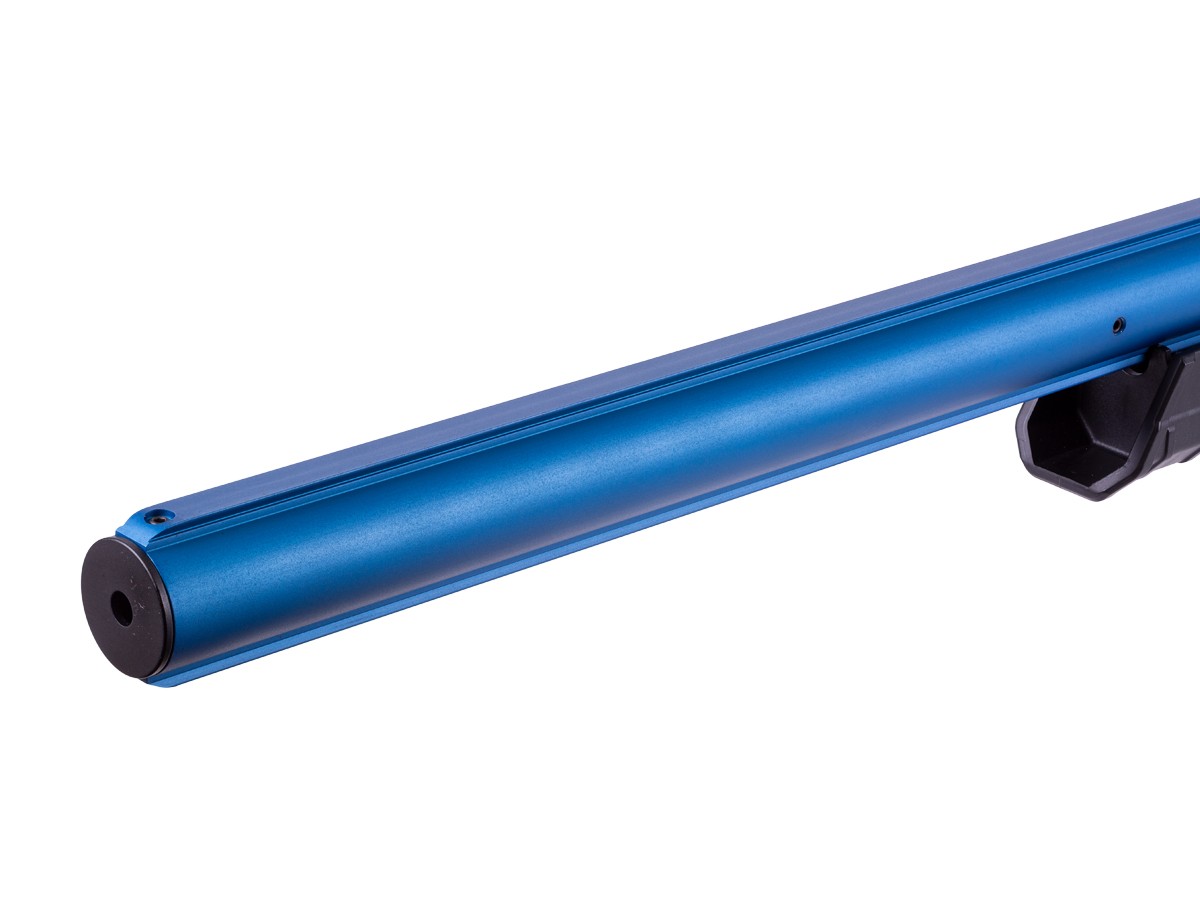
- Integrated shroud and baffle system — Report is reduced while power is retained
- Recoilless single-shot bolt action — Follow-through is improved for precision work
- Automatic safety — The action is secured when the bolt is cocked
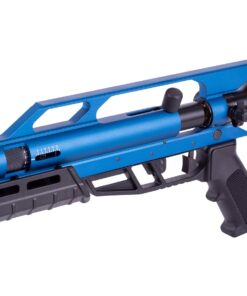
- Ambidextrous grip and synthetic frame — Comfortable handling is offered to left- and right-handed shooters
- Two-stage trigger adjustable for position — A crisp break is available after setup
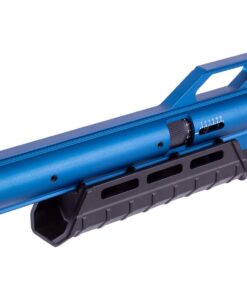
- 11mm dovetail rail plus accessory grooves — Optics and field gear are mounted easily
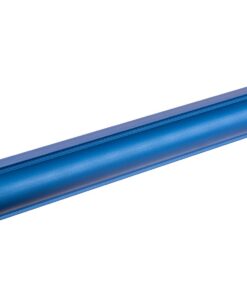
- Blue anodized finish — A distinctive look is combined with corrosion-resistant surfaces
- Made in the USA — Quality control and parts support are maintained domestically
- Limited lifetime warranty (as offered by the manufacturer) — Long-term ownership is backed
Calibers, Power, and Practical Performance
Four popular smallbore options are offered so the AirForce Condor SS Spin-Loc Blue can be specified for different roles. High velocity for small game and paper is typically delivered in .177. Balanced trajectory and energy are provided in .20 and .22. Substantial knockdown power for larger pests is generated in .25 when heavier pellets are used. Therefore, a single platform can be adapted as needs change, provided the correct barrel and, where required, matching tank valve spring are installed.
Velocities from roughly 600 fps up to 1,300 fps in .177 are reported depending on pellet weight, power setting, and fill pressure. Consequently, ethical hunting distances and flat-shooting target work are both within reach. Energy levels suitable for small- to medium-game pest control are produced in the larger calibers when the power wheel is set appropriately. Meanwhile, shot counts of several dozen per fill are commonly obtained at moderate settings, while higher settings trade volume for maximum output. Accordingly, a chronograph is recommended so the most efficient setting for a given pellet can be confirmed.
Accuracy of approximately one inch at 50 yards is frequently cited under good conditions. Furthermore, the recoilless nature of the AirForce Condor SS Spin-Loc Blue helps groups stay tight because the rifle is not driven off target. In addition, barrel swaps to 12-inch or 24-inch tubes are possible for those who want a different balance of velocity, handling, or suppression; however, the integral shroud effect is lost when a non-shrouded barrel is fitted.
Spin-Loc Tank, Filling, and Field Use
A 490 cc reservoir rated to 3,000 psi (approximately 200 bar) is used on the standard Spin-Loc configuration. Only dry compressed air or nitrogen should be introduced. Moreover, the built-in manometer allows remaining pressure to be read at a glance. Filling is performed through the side fitting while the tank remains on the rifle, which is the principal advantage of the Spin-Loc system over older quick-detach bottles.
Spare tanks can be pre-filled and swapped in the field so a hand pump or large carbon bottle does not have to be carried on every outing. Nevertheless, compatible fill adapters must be selected according to the source—hand pump, scuba, or carbon fiber. Pressure-relief protection is incorporated so overfill risk is reduced. As a result, the AirForce Condor SS Spin-Loc Blue remains practical for hunters who move between stands and for club shooters who prefer quick top-offs between strings.
Handling, Ergonomics, and Accessory Freedom
An overall length of about 38.13 inches and a weight near 6.1 pounds keep the AirForce Condor SS Spin-Loc Blue portable without feeling fragile. The air tank itself serves as the shoulder stock, and a rubber buttpad improves comfort. Ambidextrous architecture means the same rifle can be used comfortably from either side. Consequently, shared household or club use is simplified.
No iron sights are fitted from the factory, so an optic is expected. The long 11mm rail accepts a wide range of scopes, and accessory grooves accept lights or lasers. Night-vision or thermal devices can likewise be mounted when local regulations allow. Therefore, the platform scales from daytime plinking to after-dark pest control without a complete redesign.
Responsible Ownership and Conversion-Focused Advantages
Legal compliance, safe handling, and local hunting regulations must always be observed. Adult use only is specified by the manufacturer, and lead pellets are required. When those conditions are met, a highly efficient alternative to rimfire is provided: inexpensive pellets, adjustable power, and recoilless shooting combine to lower the cost per shot while accuracy is retained.
Quiet enough for many suburban settings yet powerful enough for ethical field work, the AirForce Condor SS Spin-Loc Blue is positioned as a long-term platform rather than a disposable plinker. Barrel and tank options, spare reservoirs, and a broad accessory ecosystem mean the rifle can grow with the shooter. Limited lifetime coverage from AirForce further supports that investment.
Ready-to-hunt or ready-to-train configurations are completed by pairing the AirForce Condor SS Spin-Loc Blue with a quality scope, a fill source, and a selection of pellets matched to the chosen caliber. Distinctive blue finish, Spin-Loc convenience, and proven Condor power are thereby combined in one American-made package that continues to serve precision-minded shooters across target, pest, and hunting applications.
Explore the Hatsan Air Rifle Range: PCP, Spring-Piston, Bullpup, and Semi-Auto Airguns
For shooters comparing a hatsan air rifle, the Hatsan lineup covers everything from traditional spring-powered platforms to modern hatsan pcp designs, compact bullpups, semi-automatic systems, and specialized large-bore models. Whether someone is researching an entry-level air rifle, premium PCP equipment, target-oriented air rifles, or replacement components, the broader range of air rifle options associated with hatsanusa and hatsan usa provides many configurations to compare.
Hatsan Blitz and Semi-Automatic PCP Platforms
The hatsan blitz remains one of the most recognizable names among Hatsan PCP platforms. Searches for hatsan blitz full automatic, hatsan blitz bullpup, hatsan blitz 30 cal, and hatsan blitz .30 cal commonly come from enthusiasts comparing high-capacity PCP designs and different caliber configurations. Alternative searches such as hatsun blitz and hatzan blitz may also appear when shoppers are looking for the same product family.
The term blitz guns is sometimes used more broadly when discussing this platform, while phrases such as blitz 777 may appear in related product searches. Buyers comparing a 30 cal air rifle with smaller-caliber platforms should always review the model specifications, local regulations, intended sporting application, and compatible ammunition before choosing an air gun.
Another notable semi-auto platform is the hatsan sortie. The hatsan sortie tact semi-auto pcp configuration combines compact handling with PCP operation, while hatsan sortie tact searches are frequently associated with tactical-style variants. Owners may additionally look for hatsan sortie accessories when configuring optics, magazines, maintenance components, or other compatible equipment. Likewise, buyers searching for a semi auto pellet gun may compare the Sortie with the invader auto and other semi-automatic PCP designs.
Hatsan Bullpup and PCP Air Rifles
Hatsan produces several PCP configurations for shooters who prefer compact ergonomics without giving up barrel length. The hatsan bullboss is one example, while the bullmaster represents another recognizable bullpup-style platform. The hatsan hercules family is associated with higher-capacity PCP configurations, and the hatsan hercules bully provides a compact bullpup alternative within that broader design category.
The hatsan flash is another widely recognized PCP platform. Because hatsan flash configurations can vary, buyers should compare caliber, stock style, barrel arrangement, pressure system, and included equipment before purchase. The hatsan flashpup qe offers a bullpup-inspired format and is often considered by customers wanting a shorter overall rifle.
Other PCP-related searches include the hatsan invader, hatsan factor rc, and hatsan neutron star. Each platform serves a somewhat different purpose, which means specifications rather than appearance alone should determine which airguns are most appropriate for a particular type of sporting or recreational shooting.
Hatsan Jet 2 and Compact PCP Options
The hatsan jet 2 has attracted attention among customers looking for compact PCP versatility. Because the hatsan jet 2 may be configured differently depending on market and package, shoppers should verify the exact specifications supplied by the retailer. Searches for jet ii generally refer to the same Jet-series concept, while hatsan jet 2 accessories may include compatible magazines, optics solutions, carrying equipment, seals, and manufacturer-approved replacement components.
The hatsan velox is another compact platform that may appeal to customers researching modern PCP systems. However, compatible equipment should always be verified against the precise model designation rather than assuming accessories interchange across different Hatsan products.
Classic Hatsan Spring and Gas-Ram Air Rifles
Not every Hatsan buyer wants PCP equipment. Traditional spring-piston and gas-ram designs remain an important part of the catalog. The hatsan model 95 is among the best-known examples, while searches for hatsan mod 95 and simply mod 95 usually refer to the same established platform.
The hatsan 125 is another familiar full-size option. Meanwhile, the hatsan 135 is commonly researched by shooters interested in larger, more substantial break-barrel platforms. The hatsan 135 vortex air rifle incorporates Hatsan’s Vortex gas-piston concept, while the hatsan 135 carnivore is associated with larger-caliber configurations. Searches for a hatsan big bore carnivore rifle are similarly connected with users comparing large-bore air-powered platforms.
Additional traditional models include the hatsan mod 65, which appears in searches from buyers interested in full-size sporting configurations. The hatsan airtact air rifle, commonly shortened to hatsan airtact, represents another accessible platform. The hatsan zada also broadens the selection for customers comparing break-barrel designs.
Big-Bore Hatsan Models and Specialty Platforms
For customers researching large-bore PCP technology, the hatsan piledriver is one of Hatsan’s best-known specialized platforms. Large-bore air rifles occupy a different category from a conventional .177 caliber air pellet gun, so caliber, projectile compatibility, operating pressure, legal restrictions, and intended sporting use should all be carefully reviewed.
The hatsan harpoon is another specialized product name associated with Hatsan’s air-powered lineup. Because it functions differently from a conventional pellet rifle, buyers may encounter the phrase arrow launcher while researching this category.
These specialized products should not automatically be compared with a traditional pallet gun or standard pellet rifle because their operating systems, projectiles, dimensions, and intended uses can be substantially different.
Refurbished Hatsan Air Rifles and Replacement Parts
Budget-conscious customers sometimes search for hatsan refurbished equipment or refurbished air rifles. A refurbished product can offer good value when its condition, inspection history, seals, pressure system, warranty coverage, and included accessories are clearly disclosed.
Existing owners may instead require hatsan aftermarket parts. When replacing magazines, seals, fill probes, stocks, mounts, or other components, compatibility should always be matched to the precise rifle generation and caliber. Similar-looking parts should never automatically be assumed to fit every Hatsan platform.
Product names such as 1000x.25 may also appear when shoppers compare model or caliber-specific configurations, so confirming the manufacturer’s exact designation is particularly important.
Scopes, Pellets, and Air Rifle Accessories
Optics are another major consideration when configuring an air rifle. A basic 4×20 optic may be encountered in entry-level packages, and the term 4×20 is therefore frequently seen alongside airgun searches. However, optic selection should ultimately reflect the rifle’s mounting system, recoil characteristics, shooting distance, and intended use.
Pellet selection also matters. Products such as h&n field target trophy are widely recognized among airgun enthusiasts, while h&n field target trophy bleifrei refers to a lead-free option within that product family. Individual rifles may prefer different pellet weights and shapes, so consistency and accuracy should be evaluated with the manufacturer’s recommendations in mind.
The term crow magnum may also appear when users research heavier hunting-oriented pellet designs or related airgun ammunition. Ammunition compatibility must always be checked against the specific caliber and manufacturer’s specifications.
Choosing Between PCP, CO2, and Spring-Powered Airguns
A modern air pellet gun can use several different power systems. A PCP system stores compressed air inside a reservoir, while a spring-piston rifle relies on mechanical energy generated during cocking. A co2 pellet rifle, by contrast, uses carbon dioxide cartridges or a compatible CO2 supply.
Each system offers different advantages. PCP rifles may provide low recoil and repeatable operation, while spring-powered rifles avoid the need for external filling equipment. CO2 systems can offer convenient operation in compatible platforms, although performance may vary with temperature.
Customers researching the air rifle range should therefore consider much more than velocity figures. Ergonomics, caliber, overall length, weight, filling equipment, magazine design, maintenance requirements, noise level, available service support, and local regulations can all affect long-term ownership.
Hatsan Models for Different Airgun Preferences
With platforms such as the hatsan blitz, hatsan sortie, hatsan hercules, hatsan bullboss, hatsan flash, hatsan invader, hatsan piledriver, hatsan jet 2, hatsan velox, hatsan factor rc, hatsan airtact, and hatsan model 95, Hatsan covers a broad spectrum of airgun categories.
Some customers may prioritize a traditional sporting rifle, whereas others may prefer a compact PCP or bullpup. Shooters interested in sniper long style configurations may focus more strongly on stock ergonomics, optics mounting, stability, and longer-range target capability rather than simply choosing the most powerful model.
Meanwhile, terms such as econ ii may appear in accessory or product-related searches depending on the equipment being compared. Compatibility should always be established using the exact manufacturer and model specification.
Ultimately, selecting among hatsan air guns should begin with the intended application. A lightweight .177 caliber rifle may suit recreational target shooting, while a larger PCP platform can serve a very different sporting role. Models such as the hatsan blitz .30 cal, hatsan blitz 30 cal, or other 30 cal air rifle configurations should therefore be evaluated according to their specifications, local law, appropriate shooting environment, and intended lawful use.
From the compact jet ii and hatsan jet 2 to the established hatsan mod 95, powerful hatsan 135, specialized hatsan harpoon, and modern semi-auto PCP platforms, the Hatsan catalog gives airgun enthusiasts an extensive selection. Comparing specifications carefully helps buyers identify the right air rifle while ensuring that pellets, optics, filling equipment, magazines, and accessories remain correctly matched to the chosen platform.
Practical Use Scenarios in the Field and at Home
Quiet, recoilless shooting is supported by this adjustable pre-charged platform so a single rifle can move from a backyard zeroing session to ethical pest work and measured hunting without a second gun being purchased. Power is dialed to the task, air is conserved when volume matters, and accessories are added only when a scenario demands them. Inclusive use is intended for adult shooters of every background who accept local law, safe backstops, and responsible pellet selection.
Backyard Zeroing and Skill Building
A stable sight picture is preserved because recoil is essentially absent. Therefore, new shooters and experienced marksmen alike can watch the pellet’s flight and correct hold without the rifle jumping. Low-to-mid power settings are selected first so report stays modest and neighbor-friendly. Thirty to well over a hundred usable shots per fill become available when the hammer spring is not wound to the stop. Consequently, a full evening of grouping work can be completed from one 3,000 psi charge.
Paper or reactive targets are placed in front of an adequate backstop. Distances of 10, 25, and 50 yards are commonly used so scope parallax, pellet choice, and point of impact are confirmed. Mid-weight domed pellets in the factory caliber are usually started with, then lighter or heavier designs are compared. A chronograph is kept beside the bench so velocity at each wheel mark is recorded. Repeatable settings are thereby created for later field use.
Short practice sessions are ideal because the rifle is light enough to hold offhand yet heavy enough to settle on a rest. Ambidextrous layout means left- and right-handed family members can share the same gun after a simple length-of-pull check at the rubber pad. Inclusive coaching is easier when the instructor can stand on either side without fighting a handed stock.
Quiet Suburban Pest Control
Discretion is often required where houses sit close together. The integral shroud and baffle stack reduce muzzle blast compared with an unshrouded tube, so a controlled pop rather than a sharp crack is produced at moderate settings. Early morning or late evening work around gardens, outbuildings, and feeders can therefore be completed with less disturbance.
Power is kept only as high as ethical dispatch requires. Small rodents and similar pests at short to medium range are typically addressed with a mid-wheel setting and a pellet known to expand or flatten on impact. Shot placement is aimed at the vital zone; volume of fire is never substituted for a careful first shot. Automatic safety engagement on cocking adds a pause before the shot is taken, which is useful when a target appears suddenly near property lines.
Spare Spin-Loc tanks that have already been filled at home can be carried in a pack. A second reservoir is swapped in seconds if a long evening is expected. Lights or compact lasers on the accessory grooves assist identification after dusk where local rules allow illumination. Legal status of pest species, time of day, and discharge near dwellings must still be confirmed before any shot is fired.
Small-Game and Varmint Hunting
Greater energy is available when the power wheel is raised and a heavier pellet or suitable slug is chosen in .22 or .25. Ethical ranges remain modest compared with centerfire rifles; most users keep shots inside distances where the chosen projectile retains both accuracy and adequate energy. One-inch-class grouping at 50 yards, when demonstrated on paper, gives a realistic starting envelope for field work.
Stalking is helped by the rifle’s modest weight and the fact that a filled spare tank replaces a bulky scuba bottle. A sling on factory swivel studs frees the hands for binoculars or a call. The single-shot bolt encourages a deliberate rhythm: load, settle, confirm the backstop, then fire. Follow-up shots are possible but never assumed; a second pellet is chambered only after the first result is observed.
Terrain and weather change point of impact. Cold air reduces velocity slightly, so a brief chronograph check on opening day is worthwhile. Wind drift on light .177 pellets is more noticeable than on heavier .22 or .25 designs; many hunters therefore reserve .177 for closer, calmer shots and step up caliber when distance or animal size increases. Inclusive hunting parties benefit from the same zero if everyone uses the documented power setting and pellet.
Precision Practice and Club-Style Courses
Although the platform is not a dedicated 10-meter match rifle, tight groups at 25–50 yards are routinely produced when the trigger position is adjusted and a consistent cheek weld is used. Field-target or hunter-field-target style knockdowns can be practiced on private land where falling targets and known distances are available. Mid power often yields the best combination of stability, shot count, and manageable report.
A quality airgun-rated scope with adjustable objective is mounted on the long 11 mm rail so close-range parallax can be removed. High rings keep the ocular clear of the power wheel. Bipods on the lower groove or a simple field rest turn the rifle into a bench-accurate tool for load development. Pellet sorting by weight and head size rewards the extra minutes spent at the loading bench.
Club days are simplified because dry-fire is permitted for safe demonstration of bolt throw and trigger break. New adult participants can be walked through filling, gauge reading, and automatic safety function without live pellets in the breech. Shared use is practical: one rifle, several documented settings, and a common pellet tin.
Travel, Pack-In Hunts, and Multi-Day Outings
Portability is a central advantage. Overall length near 38 inches and weight near 6.1 pounds allow the rifle to ride in a lockable case or, where lawful, a scabbard. Two or three pre-charged Spin-Loc tanks occupy less space than a single large carbon bottle and a long hose. Filling at camp is still possible with a hand pump if a vehicle-based compressor is unavailable; more strokes are required at high power, so many travelers keep a moderate hunting setting that balances energy and pump effort.
Barrel changes in the field are possible but uncommon. Most users pick one caliber for a trip and carry matching pellets plus a spare tank valve-aware of the .177 spring difference. Optics stay mounted; a compact backup red-dot on a quick rail section can be added for close timber work. Weather-resistant synthetic surfaces and the blue anodized finish shrug off light rain, though the gauge and fill nipple should be kept capped.
Multi-day pest contracts or ranch work benefit from the same kit: rifle, two tanks, pump or adapter, pellets, and a simple cleaning kit for the Lothar Walther bore. Shot counts are logged against pressure so the next fill is planned before the gauge enters the steep part of the curve.
Night and Low-Light Work Where Permitted
Accessory grooves accept compact lights. Identification of the target and what lies beyond it remains the first duty; illumination is used to confirm, not to search illegally. Thermal or night-vision optics can be mounted on the extended rail where regulations and landowner permission allow. Recoilless operation keeps the reticle from leaping, which is valuable when a single high-value shot is taken after dark.
Power is often reduced at night so report and wasted air are both limited. Heavier pellets that stay subsonic can further quiet the shot. Automatic safety still engages on every cocking stroke, giving a physical reminder before the trigger is touched in darkness.
Teaching, Shared Household Use, and Inclusive Access
Ambidextrous grip and bolt path allow the same rifle to be used from either shoulder. Length of pull is adjusted at the pad so smaller-statured adults are not forced into a stretched position. Low power and a large backstop create a forgiving first session. Inclusive language and patient demonstration matter more than hardware: gauge reading, fill discipline, and the rule that the muzzle stays pointed at the backstop are taught before velocity is discussed.
Household sharing works when each user has a written setting and pellet. A left-handed adult and a right-handed adult can alternate without stock swaps. Storage follows local secure-storage rules; tanks are stored discharged or at a documented pressure according to manufacturer guidance.
Matching Setting to Scenario
A simple field card is kept in the case:
- Low wheel marks — high shot count, quiet practice, close pests
- Mid marks — everyday hunting zero, best accuracy for many pellets
- High marks — maximum ethical energy, fewer shots, louder report
Chronograph numbers, not wheel folklore, decide which mark is used. Fill pressure is started at the rated maximum with dry air or nitrogen only. As pressure falls, velocity declines on this unregulated system; hunters learn the usable band and stop before energy drops below an ethical floor.
Closing the Loop After the Shot
Follow-through is easy because the rifle does not move. The target is observed, then the bolt is lifted only after the decision to reload is made. Spent pellets are accounted for; lead is not left where livestock or children may contact it. After the session, residual pressure is noted, the nipple is capped, and the rifle is cased muzzle-safe.
Practical use of this adjustable, shrouded, recoilless PCP is therefore a cycle of verified power, legal permission, and deliberate shooting. Backyard groups, suburban pests, small-game hunts, club courses, pack-in trips, and shared family practice are all served by the same air frame when settings, pellets, and accessories are chosen for the day rather than left at maximum. Responsible adults who measure first and shoot second get the most from every fill.


 Click here for California’s Proposition 65 warning.


Reviews
There are no reviews yet.