
$145.00
| Power source: | Spring piston |
| Caliber: | 4.5mm (.177) | 5.5mm (.22) |
| Muzzle energy: | 23 joules | 30 joules |
| Magazine: | Single shot |
| Operating system: | Break barrel |
| Trigger: | |
| Optics mounting: | 11mm dovetail |
| Barrel length: | 420mm |
| Total length: | 1095mm |
| Weight: | 2.9kg |
| Muzzle: | Not threaded |
| Extra: | |
| Accessories: |
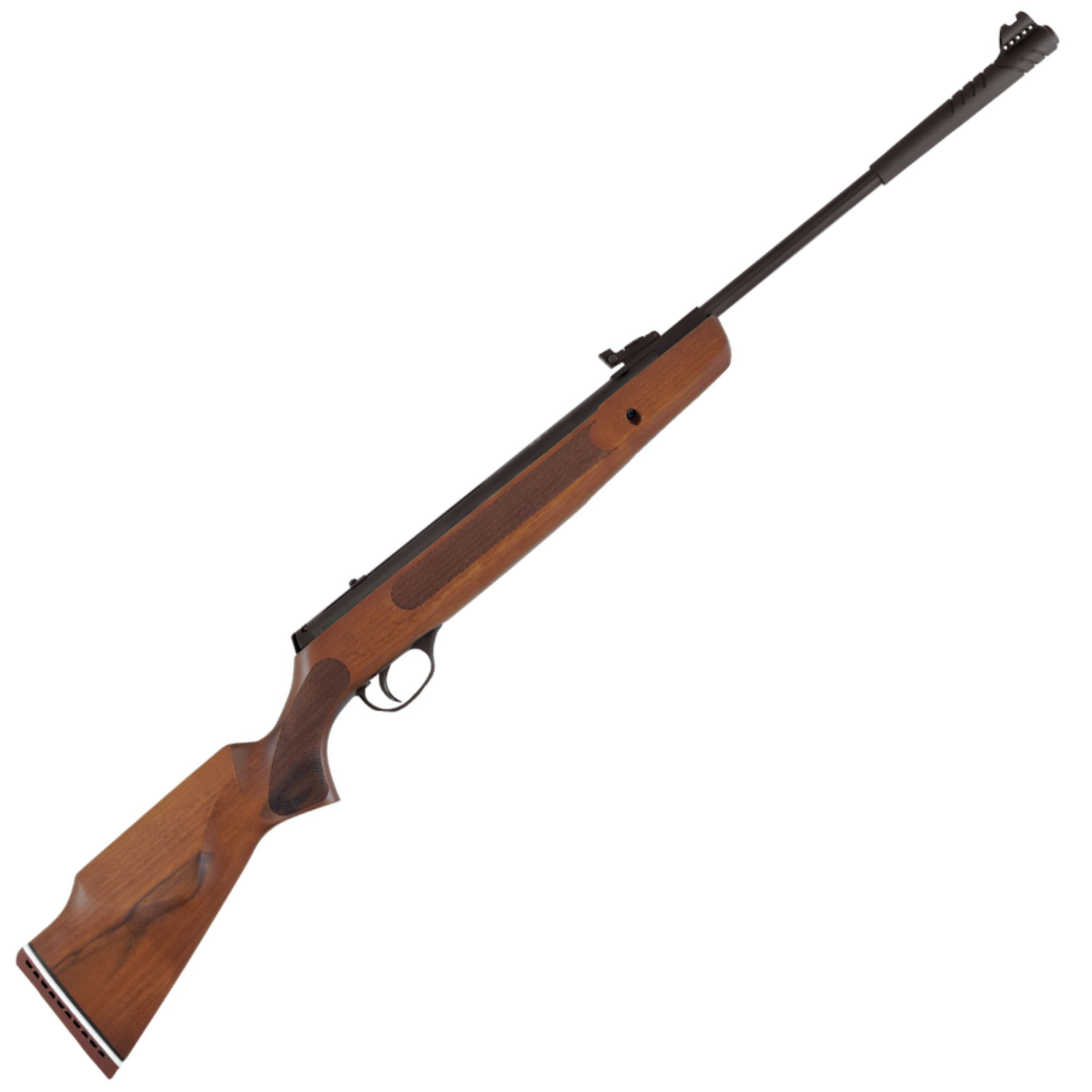
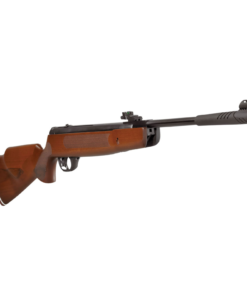
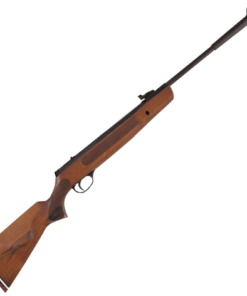
The Hatsan Striker 1000X is a powerful and well-finished air rifle featuring a classic wooden stock. Even in the 4.5mm caliber, this rifle delivers an impressive 23 joules of power!
Using the 1000X is extremely simple:
Break the barrel fully and cock the internal spring.
Once cocked, insert a pellet into the barrel.
Close the barrel, and you’re ready to shoot!
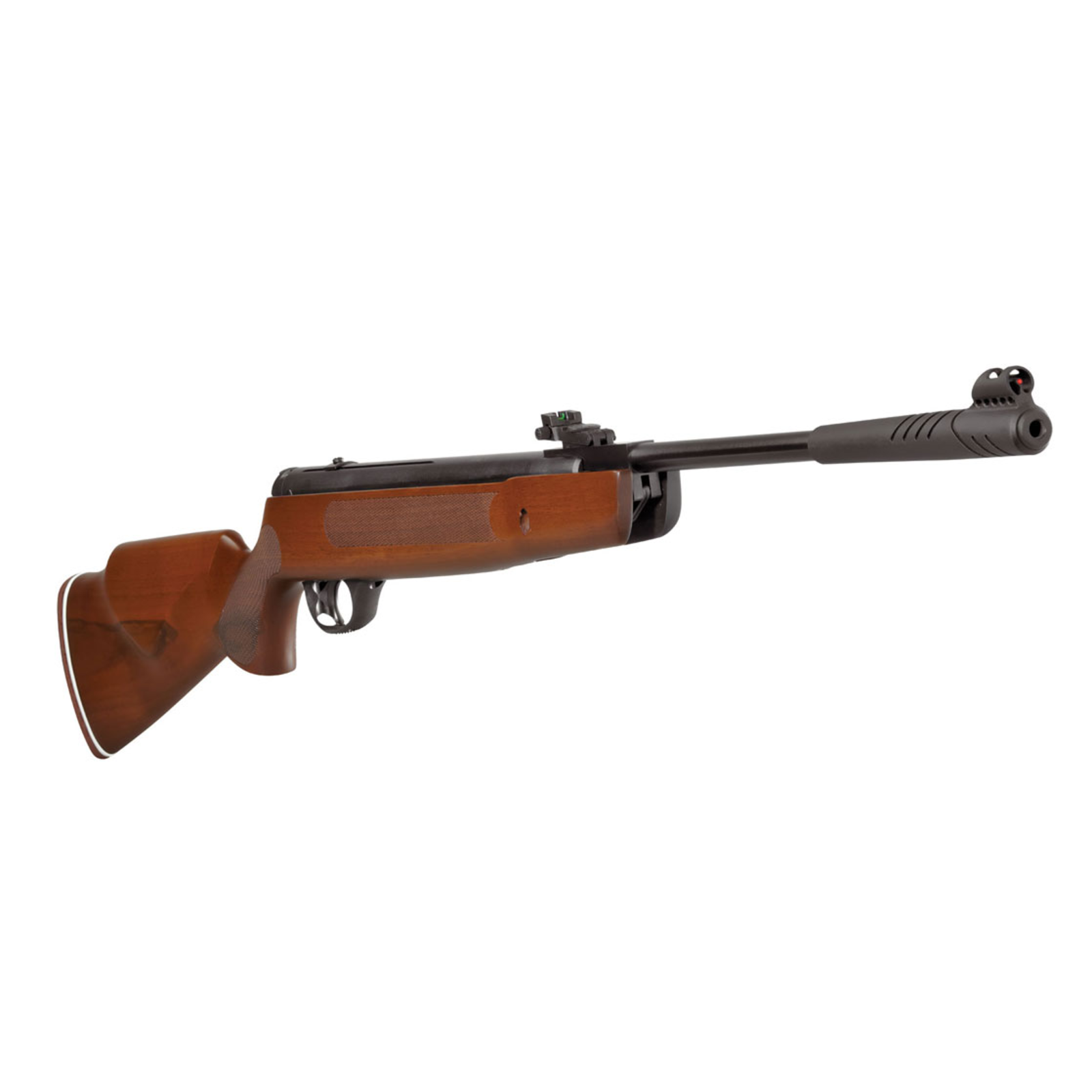
The Striker 1000X comes standard with an adjustable fiber optic open sight (Tru-Glo).
For those seeking more precision, the rifle is also equipped with an 11mm dovetail rail, allowing you to mount a scope such as the Hawke 2-7×32 AO.
Discover the Hatsan Striker 1000X, a break-barrel air rifle that blends reliable performance with timeless design. This model delivers impressive velocity, solid build quality, and user-friendly features that appeal to beginners and experienced shooters alike. Whether you enjoy target practice, backyard plinking, or small-game pursuits where legal, the Hatsan Striker 1000X stands ready to elevate your sessions. Its ambidextrous wood stock and thoughtful ergonomics ensure comfort for left- and right-handed users, making it an inclusive choice for a wide range of people.
The Hatsan Striker 1000X uses a proven spring-piston system in a single-shot break-barrel action. You simply break the barrel to cock the spring, load a pellet, close the barrel, and fire. This straightforward process keeps operation simple and dependable.
Available in three popular calibers, the rifle adapts to different needs:
These figures can vary with pellet weight, shape, and local energy restrictions. In unrestricted setups the .177 version offers flat trajectories ideal for precise target work, while the larger calibers provide greater impact energy. As a result, shooters can select the option that best matches their preferred distance and purpose. Moreover, the precision-rifled steel barrel helps maintain consistent pellet stability for tighter groups.
Comfort matters during extended range time. Therefore, Hatsan equipped the Striker 1000X with a stylish ambidextrous wood stock featuring Monte Carlo cheekpieces on both sides. This design supports proper head alignment for left- or right-handed shooters without forcing awkward adjustments.
Checkering on the grip and forearm improves hold and control, even in varying conditions. In addition, a rubber ventilated butt pad absorbs recoil and reduces shoulder fatigue. Overall length measures 1095 mm (43 inches), barrel length is 420 mm (16.5 inches), and average weight is just 2.9 kg (6.4 lbs). Consequently, the rifle remains manageable for a broad range of users while still feeling substantial and well-balanced.
Quick target acquisition is essential. The Hatsan Striker 1000X comes with Truglo fiber-optic sights: a micro-adjustable rear sight (green fiber) for windage and elevation, plus a hooded front sight (red fiber). These bright elements remain visible in different lighting, helping you stay on target.
Furthermore, a grooved cylinder accepts 11 mm scope mounts and includes a mounted scope stop. Many shooters therefore add an optic for greater precision at longer distances. The large muzzle brake also aids cocking while integrating the front sight, combining function with practical design.
Safety remains a core priority. The Hatsan Striker 1000X includes multiple protective systems:
These features work together to reduce risk during handling and cocking. In addition, the adjustable trigger lets you fine-tune pull weight and travel for a smoother, more controlled release that matches your preference.
Reliability, value, and classic aesthetics set this model apart. The spring-piston power plant requires no batteries, CO2, or air tanks—just consistent cocking and quality pellets. Meanwhile, the hardwood stock delivers a traditional look that many prefer over synthetic alternatives.
Shooters appreciate how the combination of power, accuracy potential, and inclusive ergonomics creates an enjoyable experience. Beginners gain confidence from the simple operation and multiple safeties. Experienced users value the adjustable trigger, solid barrel, and scope-ready platform for refining skills. Additionally, the rifle’s balanced weight and recoil-absorbing pad support longer practice sessions without excessive fatigue.
Here is a clear summary of what the Hatsan Striker 1000X offers:
These attributes combine to create a capable, approachable air rifle that performs reliably session after session.
The Hatsan Striker 1000X delivers an engaging mix of power, precision potential, and classic style. Its thoughtful design welcomes a diverse range of shooters while providing the features needed for accurate, enjoyable shooting. Transition from casual plinking to more focused practice with confidence, knowing the rifle’s safeties and ergonomics support safe handling.
Whether you are building foundational skills or seeking a dependable workhorse for regular range visits, this model stands out as a smart choice. Explore the available calibers, add your preferred optic if desired, and experience the balanced performance that has made the Hatsan Striker 1000X a popular option among airgun enthusiasts. Ready to feel the difference? Choose the Hatsan Striker 1000X and start refining your accuracy with every shot.
For shooters comparing a hatsan air rifle, the Hatsan lineup covers everything from traditional spring-powered platforms to modern hatsan pcp designs, compact bullpups, semi-automatic systems, and specialized large-bore models. Whether someone is researching an entry-level air rifle, premium PCP equipment, target-oriented air rifles, or replacement components, the broader range of air rifle options associated with hatsanusa and hatsan usa provides many configurations to compare.
The hatsan blitz remains one of the most recognizable names among Hatsan PCP platforms. Searches for hatsan blitz full automatic, hatsan blitz bullpup, hatsan blitz 30 cal, and hatsan blitz .30 cal commonly come from enthusiasts comparing high-capacity PCP designs and different caliber configurations. Alternative searches such as hatsun blitz and hatzan blitz may also appear when shoppers are looking for the same product family.
The term blitz guns is sometimes used more broadly when discussing this platform, while phrases such as blitz 777 may appear in related product searches. Buyers comparing a 30 cal air rifle with smaller-caliber platforms should always review the model specifications, local regulations, intended sporting application, and compatible ammunition before choosing an air gun.
Another notable semi-auto platform is the hatsan sortie. The hatsan sortie tact semi-auto pcp configuration combines compact handling with PCP operation, while hatsan sortie tact searches are frequently associated with tactical-style variants. Owners may additionally look for hatsan sortie accessories when configuring optics, magazines, maintenance components, or other compatible equipment. Likewise, buyers searching for a semi auto pellet gun may compare the Sortie with the invader auto and other semi-automatic PCP designs.
Hatsan produces several PCP configurations for shooters who prefer compact ergonomics without giving up barrel length. The hatsan bullboss is one example, while the bullmaster represents another recognizable bullpup-style platform. The hatsan hercules family is associated with higher-capacity PCP configurations, and the hatsan hercules bully provides a compact bullpup alternative within that broader design category.
The hatsan flash is another widely recognized PCP platform. Because hatsan flash configurations can vary, buyers should compare caliber, stock style, barrel arrangement, pressure system, and included equipment before purchase. The hatsan flashpup qe offers a bullpup-inspired format and is often considered by customers wanting a shorter overall rifle.
Other PCP-related searches include the hatsan invader, hatsan factor rc, and hatsan neutron star. Each platform serves a somewhat different purpose, which means specifications rather than appearance alone should determine which airguns are most appropriate for a particular type of sporting or recreational shooting.
The hatsan jet 2 has attracted attention among customers looking for compact PCP versatility. Because the hatsan jet 2 may be configured differently depending on market and package, shoppers should verify the exact specifications supplied by the retailer. Searches for jet ii generally refer to the same Jet-series concept, while hatsan jet 2 accessories may include compatible magazines, optics solutions, carrying equipment, seals, and manufacturer-approved replacement components.
The hatsan velox is another compact platform that may appeal to customers researching modern PCP systems. However, compatible equipment should always be verified against the precise model designation rather than assuming accessories interchange across different Hatsan products.
Calibres, Power Levels, FAC Considerations and Recommended Accessories for the Hatsan Striker 1000X
Choosing the right calibre, understanding power output, and selecting suitable accessories transform the Hatsan Striker 1000X into a truly personalised air rifle. This section breaks down the available options so you can match the rifle to your shooting goals, local regulations, and preferred setup.
The Hatsan Striker 1000X comes in three proven calibres, each offering distinct advantages:
Because the rifle uses a single-shot break-barrel design, switching calibres simply means selecting the matching version at purchase. All three share the same ambidextrous wood stock, adjustable trigger, and 11 mm dovetail rail, so handling and accessory compatibility remain consistent.
In unrestricted (full-power) configuration the Hatsan Striker 1000X produces the following approximate maximum muzzle velocities with suitable pellets:
Corresponding energy levels typically reach around 23 joules in .177, approximately 30 joules in .22, and higher figures (up to the mid-30s joules in some markets) in .25. Actual results vary with pellet weight, shape, temperature, and altitude. Hatsan notes that maximum velocity figures apply when no energy restriction exists; manufacturers reduce spring tension or barrel porting to meet specific national limits.
In markets that impose legal power ceilings, versions of the Striker 1000X are supplied at lower energy. For example, UK models are commonly regulated to under 12 ft-lbs (approximately 16.3 joules) so they can be owned without a Firearms Certificate. Other countries apply different thresholds (such as under 17 joules in Poland). Always verify the exact power rating of the rifle offered for sale in your region, as the same model name can appear in both full-power and restricted forms.
FAC (Firearms Certificate) requirements apply mainly in the United Kingdom. Any air rifle exceeding 12 ft-lbs muzzle energy requires an FAC. Full-power Hatsan Striker 1000X rifles therefore fall into the FAC category in the UK, while the sub-12 ft-lbs versions do not. Outside the UK the legal landscape differs: some countries treat higher-powered air rifles as ordinary sporting goods, while others impose licensing or energy limits.
Before purchasing, confirm local regulations regarding ownership, storage, transport, and use. Responsible shooters also respect landowner permission and safe-backstop rules regardless of legal power class. The multi-safety system on the Striker 1000X (automatic cocking safety, manual safety, and anti-bear-trap mechanism) supports safe handling in every jurisdiction.
The Hatsan Striker 1000X ships with fibre-optic open sights and an 11 mm dovetail rail, yet most owners expand its capability with carefully chosen accessories.
Optics Mount a quality scope on the integral rail for improved precision. Popular choices include 3-9×32 or 2-7×32 models with adjustable objective. Many retailers offer combo packages that already include a scope and rings. Ensure the mounts are rated for spring-piston recoil.
Pellets Match pellet weight and design to your calibre and purpose. Domed pellets such as H&N Baracuda or JSB Exact series frequently deliver excellent accuracy and consistency in the Striker 1000X. Hollow-point or expanding designs suit closer-range impact work where permitted. Always test several brands to find the best group for your individual rifle.
Support and Protection A padded rifle slip or hard case protects the wood stock and optics during transport. A bipod or shooting rest improves stability for zeroing and extended sessions. Cleaning kits, silicone cloths, and spring-safe lubricants keep the barrel and action in top condition.
Practical Add-ons
Many shooters begin with a ready-to-shoot kit that bundles the rifle, a basic scope, a supply of pellets, and a soft case. This approach minimises initial decision-making and lets you start enjoying the rifle immediately.
Select .177 with a variable-power scope if precision target work is your priority. Choose .22 or .25 with robust mounts and heavier pellets when greater energy matters more. In restricted-power markets the lower-energy versions still deliver satisfying performance when paired with high-quality optics and well-matched pellets.
Whatever combination you prefer, the Hatsan Striker 1000X provides a solid platform that responds well to thoughtful upgrades. Confirm the exact power rating and legal status for your location, then equip the rifle with accessories that match your shooting style. The result is a capable, enjoyable air rifle ready for years of accurate and responsible use.
Not every Hatsan buyer wants PCP equipment. Traditional spring-piston and gas-ram designs remain an important part of the catalog. The hatsan model 95 is among the best-known examples, while searches for hatsan mod 95 and simply mod 95 usually refer to the same established platform.
The hatsan 125 is another familiar full-size option. Meanwhile, the hatsan 135 is commonly researched by shooters interested in larger, more substantial break-barrel platforms. The hatsan 135 vortex air rifle incorporates Hatsan’s Vortex gas-piston concept, while the hatsan 135 carnivore is associated with larger-caliber configurations. Searches for a hatsan big bore carnivore rifle are similarly connected with users comparing large-bore air-powered platforms.
Additional traditional models include the hatsan mod 65, which appears in searches from buyers interested in full-size sporting configurations. The hatsan airtact air rifle, commonly shortened to hatsan airtact, represents another accessible platform. The hatsan zada also broadens the selection for customers comparing break-barrel designs.
For customers researching large-bore PCP technology, the hatsan piledriver is one of Hatsan’s best-known specialized platforms. Large-bore air rifles occupy a different category from a conventional .177 caliber air pellet gun, so caliber, projectile compatibility, operating pressure, legal restrictions, and intended sporting use should all be carefully reviewed.
The hatsan harpoon is another specialized product name associated with Hatsan’s air-powered lineup. Because it functions differently from a conventional pellet rifle, buyers may encounter the phrase arrow launcher while researching this category.
These specialized products should not automatically be compared with a traditional pallet gun or standard pellet rifle because their operating systems, projectiles, dimensions, and intended uses can be substantially different.
Budget-conscious customers sometimes search for hatsan refurbished equipment or refurbished air rifles. A refurbished product can offer good value when its condition, inspection history, seals, pressure system, warranty coverage, and included accessories are clearly disclosed.
Existing owners may instead require hatsan aftermarket parts. When replacing magazines, seals, fill probes, stocks, mounts, or other components, compatibility should always be matched to the precise rifle generation and caliber. Similar-looking parts should never automatically be assumed to fit every Hatsan platform.
Product names such as 1000x.25 may also appear when shoppers compare model or caliber-specific configurations, so confirming the manufacturer’s exact designation is particularly important.
Optics are another major consideration when configuring an air rifle. A basic 4×20 optic may be encountered in entry-level packages, and the term 4×20 is therefore frequently seen alongside airgun searches. However, optic selection should ultimately reflect the rifle’s mounting system, recoil characteristics, shooting distance, and intended use.
Pellet selection also matters. Products such as h&n field target trophy are widely recognized among airgun enthusiasts, while h&n field target trophy bleifrei refers to a lead-free option within that product family. Individual rifles may prefer different pellet weights and shapes, so consistency and accuracy should be evaluated with the manufacturer’s recommendations in mind.
The term crow magnum may also appear when users research heavier hunting-oriented pellet designs or related airgun ammunition. Ammunition compatibility must always be checked against the specific caliber and manufacturer’s specifications.
A modern air pellet gun can use several different power systems. A PCP system stores compressed air inside a reservoir, while a spring-piston rifle relies on mechanical energy generated during cocking. A co2 pellet rifle, by contrast, uses carbon dioxide cartridges or a compatible CO2 supply.
Each system offers different advantages. PCP rifles may provide low recoil and repeatable operation, while spring-powered rifles avoid the need for external filling equipment. CO2 systems can offer convenient operation in compatible platforms, although performance may vary with temperature.
Customers researching the air rifle range should therefore consider much more than velocity figures. Ergonomics, caliber, overall length, weight, filling equipment, magazine design, maintenance requirements, noise level, available service support, and local regulations can all affect long-term ownership.
With platforms such as the hatsan blitz, hatsan sortie, hatsan hercules, hatsan bullboss, hatsan flash, hatsan invader, hatsan piledriver, hatsan jet 2, hatsan velox, hatsan factor rc, hatsan airtact, and hatsan model 95, Hatsan covers a broad spectrum of airgun categories.
Some customers may prioritize a traditional sporting rifle, whereas others may prefer a compact PCP or bullpup. Shooters interested in sniper long style configurations may focus more strongly on stock ergonomics, optics mounting, stability, and longer-range target capability rather than simply choosing the most powerful model.
Meanwhile, terms such as econ ii may appear in accessory or product-related searches depending on the equipment being compared. Compatibility should always be established using the exact manufacturer and model specification.
Ultimately, selecting among hatsan air guns should begin with the intended application. A lightweight .177 caliber rifle may suit recreational target shooting, while a larger PCP platform can serve a very different sporting role. Models such as the hatsan blitz .30 cal, hatsan blitz 30 cal, or other 30 cal air rifle configurations should therefore be evaluated according to their specifications, local law, appropriate shooting environment, and intended lawful use.
From the compact jet ii and hatsan jet 2 to the established hatsan mod 95, powerful hatsan 135, specialized hatsan harpoon, and modern semi-auto PCP platforms, the Hatsan catalog gives airgun enthusiasts an extensive selection. Comparing specifications carefully helps buyers identify the right air rifle while ensuring that pellets, optics, filling equipment, magazines, and accessories remain correctly matched to the chosen platform.
Frequently Asked Questions
The rifle is offered in three popular calibres: .177 (4.5 mm), .22 (5.5 mm), and .25 (6.35 mm). Each option suits different preferences. The .177 version prioritises flatter trajectories and higher velocity for target shooting and longer-range precision. The .22 calibre strikes a practical balance between speed and impact energy, making it a favourite for general use. Meanwhile, the .25 calibre delivers the heaviest pellet mass for greater knockdown potential at moderate distances. All versions share the same ambidextrous wood stock, adjustable trigger, and overall design, so the choice mainly depends on your primary shooting goals and local regulations.
In unrestricted configurations, approximate maximum velocities reach 1000 fps in .177, 800 fps in .22, and 650 fps in .25, depending on pellet type. Energy levels commonly fall in the region of 23 joules for the smaller calibre and higher for the larger ones. However, many countries impose legal power limits. Manufacturers reduce muzzle velocity or spring tension to comply, so versions sold in restricted markets operate at lower energy. In the United Kingdom, for example, models are often regulated below 12 ft-lbs so they can be owned without a Firearms Certificate. Always check the exact specification of the rifle available in your region, as the same name can appear in both full-power and limited-power forms. Actual performance also depends on pellet weight, shape, temperature, and elevation.
Requirements depend on local laws and the specific power rating of the rifle you purchase. In the United Kingdom, any air rifle exceeding 12 ft-lbs muzzle energy needs a Firearms Certificate. Full-power versions therefore fall under FAC rules, while the sub-12 ft-lbs models do not. Other countries apply different thresholds or treat higher-powered air rifles differently. Confirm the legal status and power rating for your location before buying. Regardless of classification, responsible ownership includes secure storage, safe handling, and adherence to all local rules about where and how you may shoot.
Many newcomers find the straightforward break-barrel operation easy to learn. You simply cock the barrel, load a single pellet, close the barrel, and fire. Multiple safety systems—including an automatic cocking safety, a resettable manual safety, and an anti-bear-trap mechanism—add layers of protection that help new shooters build confidence. At the same time, the cocking effort requires reasonable strength, and the rifle produces noticeable recoil typical of spring-piston designs. Younger or smaller-framed shooters benefit from adult supervision and proper instruction. Once the basics of hold, follow-through, and consistent technique are mastered, the rifle becomes an enjoyable and capable platform for developing skills.
With quality pellets and a consistent shooting technique, the rifle is capable of good accuracy at typical airgun distances. Many owners report tight groups at 15 to 30 yards once they identify the preferred pellet and settle into a stable hold. Spring-piston air rifles are hold-sensitive, so a firm, consistent grip and proper follow-through make a noticeable difference. Beyond 35 to 40 yards, trajectory drop and environmental factors increase, so most practical shooting stays within closer ranges. Mounting a suitable scope on the 11 mm dovetail rail further improves precision for those who prefer optical sights over the fibre-optic open sights supplied as standard.
Performance varies with individual rifles, yet domed pellets of consistent quality generally produce the best results. Brands such as H&N Baracuda, JSB Exact, and similar match-grade options frequently group well. Lighter pellets may achieve higher velocity, while heavier ones often improve stability and energy transfer. Avoid low-quality or deformed ammunition, as inconsistent pellets undermine accuracy. Testing several types in your specific rifle remains the most reliable way to discover the optimal combination. Always use lead pellets of the correct calibre and never dry-fire the rifle, as this can damage the piston seal and internal components.
Yes. The receiver features an 11 mm dovetail rail with a scope stop to help manage recoil. Many shooters add a 3-9×32 or similar variable-power scope for improved target acquisition. Choose mounts rated for the recoil of spring-piston air rifles, and ensure the scope itself is designed to withstand the unique forward-and-back impulse these guns produce. Eye relief and proper mounting height matter for comfortable shooting. Some package deals include a basic scope and rings, but upgrading to higher-quality optics often yields better long-term satisfaction. After mounting, re-zero carefully and periodically check that all screws remain tight.
Cocking requires a firm, deliberate motion to break the barrel fully and compress the spring. Most adults manage it without difficulty after a short familiarisation period, although the effort is greater than on some lighter or gas-ram models. Using the large muzzle brake helps, and proper body positioning reduces strain. Shooters with limited upper-body strength or shoulder issues may prefer a different power plant. Once cocked, the action feels solid, and the anti-bear-trap safety prevents the barrel from closing accidentally during loading.
Regular care keeps the rifle performing reliably. Check the stock screws before and after shooting sessions, as recoil can loosen them over time. Clean the barrel periodically with a proper cleaning rod and patches to remove lead fouling; every few hundred shots is a sensible interval for most users. Avoid introducing lubricant into the compression chamber, because excess oil can cause dieseling and damage the seal. Light lubrication on the cocking linkage and external pivot points is usually sufficient. Store the rifle uncocked in a dry place, and protect the wood stock from extreme moisture or temperature changes. Annual professional inspection is worthwhile if you shoot frequently.
New spring-piston air rifles often produce a small amount of smoke or a burnt-oil smell for the first few dozen shots. Residual assembly lubricants burn off during initial firing. This is normal and usually clears within the first 100 to 200 pellets. Do not add extra oil to the chamber in an attempt to stop it; that can worsen the problem and harm the seal. Simply shoot the rifle with quality pellets and allow the excess lubricant to burn away naturally.
Yes. The wood stock is ambidextrous and features Monte Carlo cheekpieces on both sides. Checkering on the grip and forearm provides secure purchase for either hand. The rubber ventilated butt pad absorbs recoil equally well regardless of which shoulder you use. Most left-handed shooters find the layout comfortable without modification.
The rifle incorporates three important safety systems. An automatic safety engages when the barrel is cocked. A resettable manual safety allows you to lock the trigger at any time. An anti-bear-trap mechanism prevents the barrel from snapping closed while you load a pellet. Together these features reduce the risk of accidental discharge and protect fingers during the loading process. Always treat the rifle as if it is loaded, keep the muzzle pointed in a safe direction, and engage the safety until you are ready to fire.
Yes. The trigger allows adjustment of both pull weight and travel. Many owners fine-tune these settings to achieve a cleaner break that matches their preference. Make changes carefully and in small increments, then test the results at the range. If the trigger feels unusually heavy or fails to catch the sear, stop and consult the manual or a qualified technician rather than forcing further adjustment.
Store the rifle uncocked in a secure location away from unauthorised users, especially children. A padded soft case or hard case protects the wood stock and any mounted optics during transport. When travelling, follow all local laws regarding the carriage of air rifles. Keep pellets and the rifle separate when not in use, and never leave a cocked rifle unattended.
First inspect the stock screws and tighten them if necessary; loose screws are a common cause of wandering groups. Next, clean the barrel thoroughly and try a different batch of high-quality pellets. Confirm that your hold and follow-through remain consistent. Check that any mounted scope is still secure and properly zeroed. If the problem persists after these steps, examine the barrel for lead fouling or consult a service technician. Regular maintenance prevents most accuracy issues before they arise.
Where local laws permit, the higher-energy versions provide sufficient power for close-range pest control and small-game hunting. Success depends on accurate shot placement, appropriate pellet choice, and ethical range limits. Always confirm that such use is legal in your area and that you have the necessary permissions. Practise extensively on paper targets before considering any live quarry, and never shoot beyond your proven effective range.
The open sights use bright fibre-optic elements: a green rear sight that is micro-adjustable for windage and elevation, and a red front sight protected by a hood. These elements gather ambient light and remain highly visible in a variety of conditions. Many shooters find them quick and intuitive for close- to medium-range work. Those who prefer greater magnification simply mount a scope on the dovetail rail.
These answers cover the questions most frequently raised by owners and prospective buyers. Proper technique, quality ammunition, and routine care allow the rifle to deliver consistent performance for years. Always prioritise safety, follow local regulations, and enjoy the satisfying combination of classic design and reliable spring-piston power.
| Caliber | .177,, .22,, .25 |
|---|
Hatsan
Hatsan
Hatsan
Calibers: Most common are .177 (4.5mm) for speed/flat trajectory and general use, and .22 (5.5mm) for better hunting knockdown power. Larger “big bore” (.25, .30, .357+) exist for hunting bigger game where legal.
Yes, many modern PCP and springers deliver enough energy for small game (rabbits, squirrels, birds) and even larger game in some areas. Muzzle energy (in ft-lbs or joules) matters more than velocity alone. Always match caliber, pellet weight, and energy to the game and check local hunting regs.
Treat every airgun as if it is loaded.
Follow these rules strictly—airguns cause real injuries.
Laws differ dramatically by country, state/province, and even city. Always verify current local laws before buying, owning, transporting, or using an airgun. Age restrictions (often 18+) are common.
Examples (summaries only; check official sources):
Resources: Wikipedia “Air gun laws”, airgun forums, or official government sites. For travel, research transit laws carefully.
Consider:
Buy from reputable dealers and consider warranties.
Follow your model’s manual. Basic care extends life significantly.
International shipping may be available for select products. Customers are responsible for understanding and complying with their local import laws and regulations before ordering.
Yes. Customers are required to confirm their order number through WhatsApp or Live Chat before orders are processed and shipped.
If local laws prevent shipment to your area, your order may be canceled and refunded according to our store policy.
Processing typically takes 1–3 business days after payment confirmation. Delivery times vary depending on destination, carrier, and product availability.
Pellets are the most common projectile (lead or lead-free). Match them to your gun, caliber, and purpose—test several brands as accuracy varies by barrel.
Tips: Heavier pellets in .22/.25 for hunting (better momentum). Lighter in .177 for speed/flat trajectory. Always check head size fit (e.g., 4.51-4.53mm variants).
Muzzle energy (ft-lbs or joules) matters more than velocity. Ethical shots require precise placement (head/heart-lung) within effective range.
Rough Guidelines (adjust for distance, pellet, and local laws):
PCPs dominate serious hunting due to power and shot count. Springers/gas rams work well for small game but require skill. Always prioritize clean kills and check seasons/species rules.
Common Issues:
Toggle Content
Budget Tip: Start with a quality springer (~$150-400) before investing in PCP setup.
Airgunning offers endless depth—from backyard plinking to precision competition and ethical hunting. Prioritize safety, legality, and practice. If you want specifics (e.g., recommendations for a country, budget, hunting small game, or a particular type like PCP vs springer), let me know for more targeted info! Shoot responsibly.
Tuning improves accuracy, reduces noise/recoil, or increases power (within legal limits).
Caution: Check laws—power increases may reclassify your gun. DIY only if experienced; professional tuners recommended.
You must be at least 18 years old to purchase any airgun or related accessories from our store. By placing an order, you confirm that you meet the legal age requirements in your state or country.
Yes. Orders may require age verification before processing and shipping. In some cases, we may request a valid government-issued ID to confirm eligibility.
WhatsApp us


Reviews
There are no reviews yet.