Practical Use Scenarios
Everyday shooting opportunities are transformed when a compact, convertible platform is available that shifts effortlessly between pistol and carbine configurations. Lightweight construction, solid shot capacity from a dual-cylinder air system, and the ability to mount optics or accessories make the design suitable for a wide range of real-world situations. From casual backyard sessions to more purposeful field work, the same tool adapts without requiring multiple specialised firearms.
Backyard Plinking and Casual Recreation
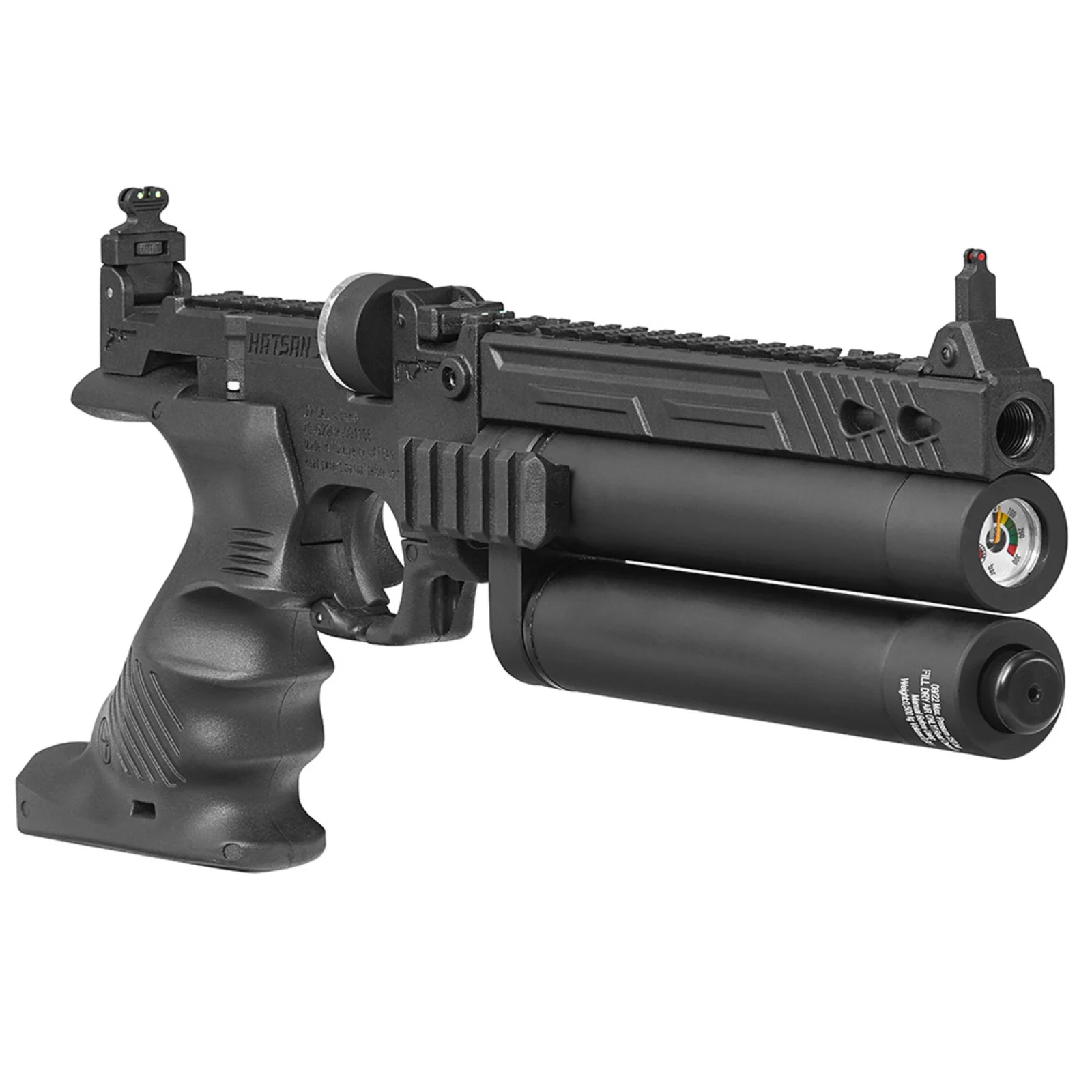
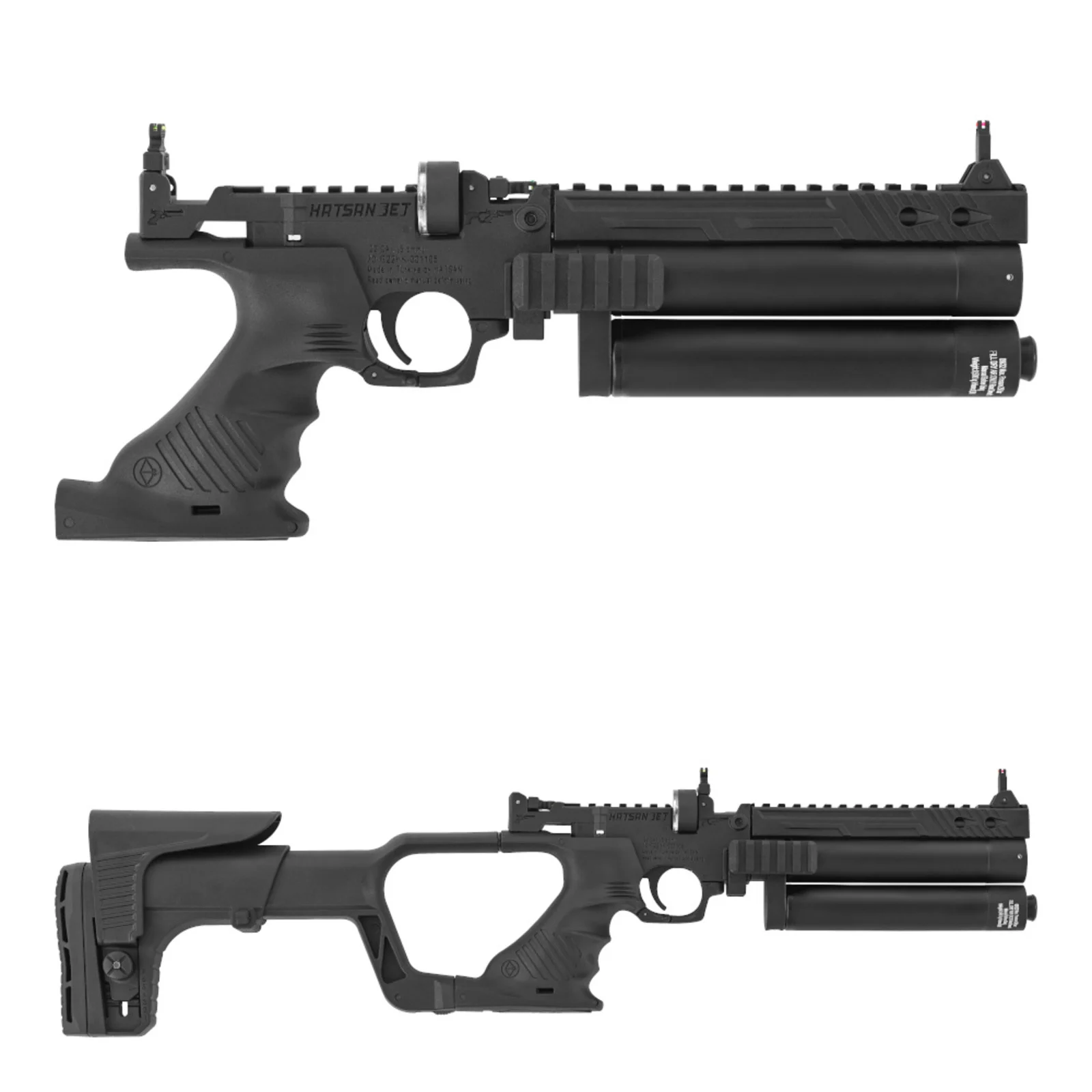
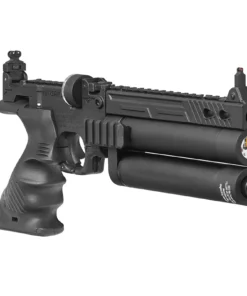
Many owners begin with simple backyard use. Paper targets, tin cans, or reactive spinners can be set up at distances of 10 to 25 yards. In pistol form the overall length stays around 15 inches and the weight remains under 2.5 pounds, so the gun can be carried with one hand and stored in a small case or drawer when not in use. The side-lever action allows quick follow-up shots, while the multi-shot magazines reduce reloading interruptions.
A full fill typically supports several magazines of consistent shots before velocity drops noticeably. This means a single charging session can cover an entire afternoon of informal practice. Fibre-optic flip-up sights provide a clear aiming reference in daylight, and the shrouded barrel keeps the report moderate enough for most suburban settings when local ordinances permit airgun use.
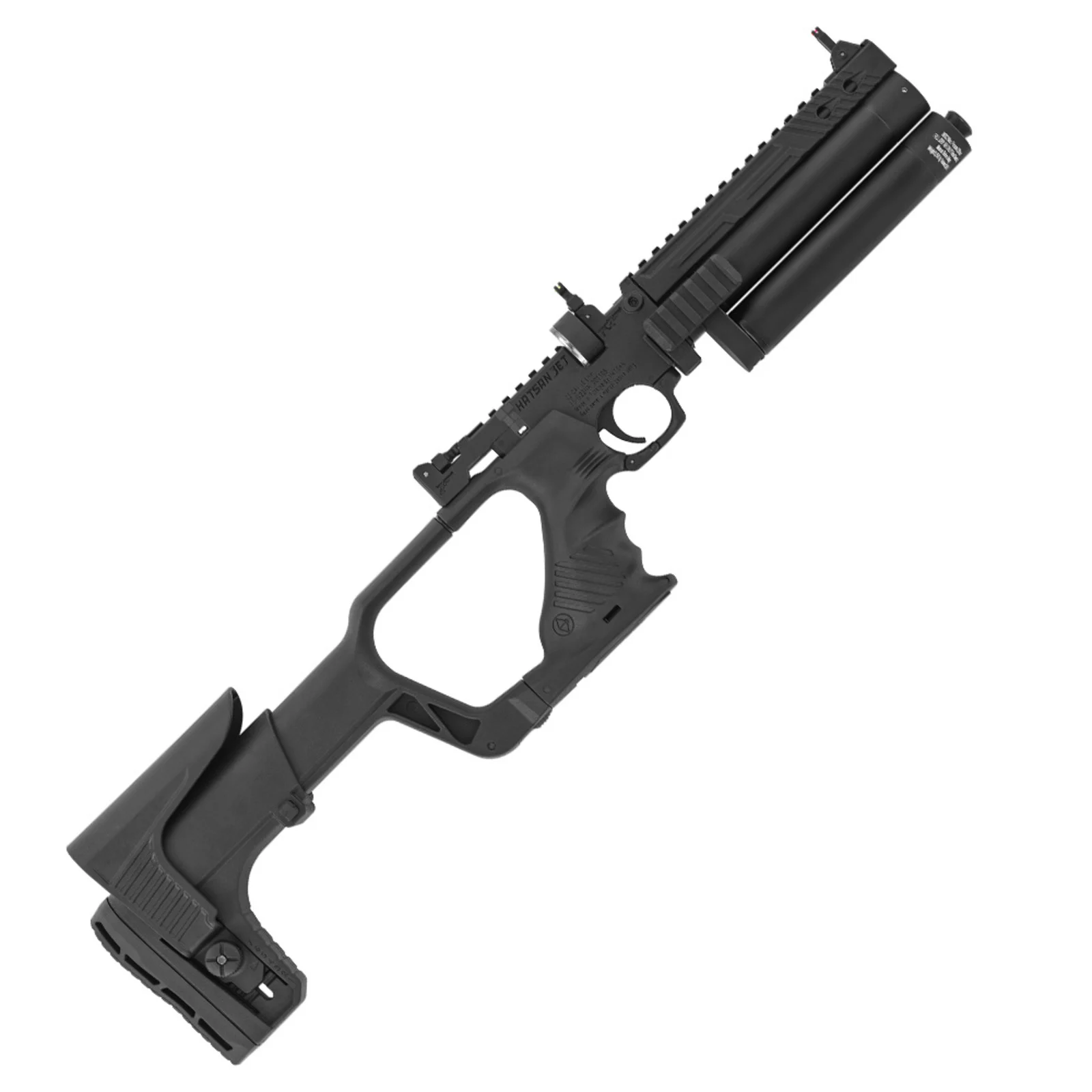
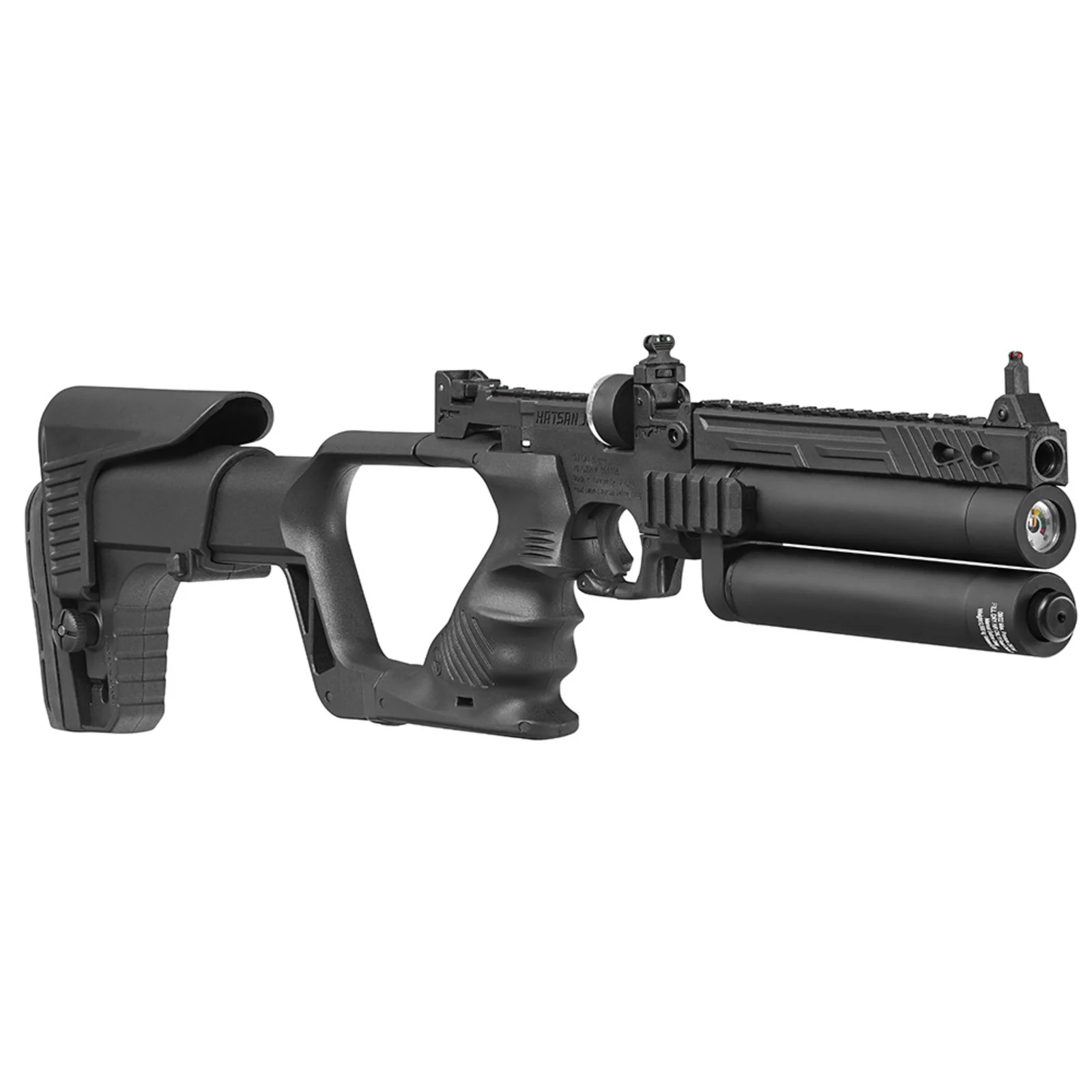
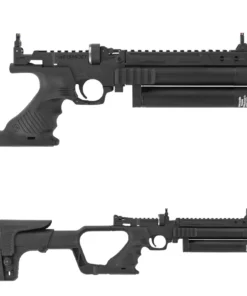
Switching to the adjustable stock turns the same gun into a short carbine that rests more stably against the shoulder. The extra support improves group sizes for newer shooters and reduces fatigue during longer sessions. Because the grip is ambidextrous and the length of pull can be altered, family members of different sizes can share the same platform comfortably.
Pellet choice further refines the experience. Lighter domed or wadcutter pellets in the smaller bore keep velocities high and trajectories flat for close-range fun, while slightly heavier options in the mid-size bore deliver more pronounced impact on reactive targets. The result is an accessible, low-pressure way to enjoy marksmanship without the noise, cost, or regulatory burden of powder-burning firearms.
Precision Target Practice and Skill Building
When the goal shifts from casual fun to deliberate improvement, the convertible design continues to serve well. At formal or informal ranges the carbine configuration offers a stable shooting position. The elevation-adjustable cheek piece and rubber butt-pad help maintain consistent head and shoulder placement, which is essential for tightening groups.
An 11 mm dovetail rail accepts compact scopes or red-dot sights that suit the short barrel length. Many shooters mount a low-magnification optic for 15- to 30-yard work and achieve groups small enough to confirm the mechanical accuracy of the rifled barrel. The three integrated flip-up sights remain available as a backup or for pure iron-sight training.
Side-lever cocking is smooth and can be performed without breaking the cheek weld once the shooter develops a rhythm. Magazine changes are quick, so strings of fire can be kept relatively continuous. For pure accuracy testing the included single-shot tray allows careful hand-loading of match-grade pellets.
Because the air system is unregulated, experienced users learn to manage the power curve. Some prefer to refill after two magazines to stay in the flattest portion of the velocity curve; others accept the gradual decline and simply adjust aim or holdover. Either approach builds practical knowledge of how airguns behave under real conditions. Over time the same platform can be used to practice standing, kneeling, and supported positions, translating directly to better field performance.
Small-Game Hunting and Pest Management
In rural or semi-rural settings the higher-energy configurations find practical application on small pests and game. The mid- and larger-bore versions deliver sufficient energy for close-range dispatch of suitable quarry when paired with appropriate expanding or hunting pellets. Ethical hunters emphasise shot placement and keep distances short—typically inside 30 yards—to ensure clean results.
The compact size is an advantage when moving through brush or working around outbuildings. In pure pistol form the gun can be carried in a holster or pack and brought into action quickly. Adding the stock improves stability for more deliberate shots from a rest or braced position. Dual Picatinny rails accept a compact light for low-light work around barns or feeders, while the pressure gauge lets the user confirm adequate air before each outing.
Spare pre-filled cylinders become especially useful on longer days. A second or third set of cylinders can be carried in a pack and swapped in moments, keeping the gun ready without returning to a compressor or bulk tank. The moderate report of the shrouded barrel helps avoid unnecessary disturbance of other wildlife or nearby livestock.
Local regulations must always be observed. In some jurisdictions the power level may place the gun into a licensed category; in others it remains an unrestricted airgun. Responsible users confirm legal quarry, seasons, and required permissions before heading afield. When those boxes are checked, the platform offers a quiet, accurate, and economical option for property management and small-game opportunities.
Camping, Hiking and Backcountry Use
Portability opens another set of scenarios. At roughly 2.4 pounds without the stock and only a pound more with it attached, the gun packs easily into a backpack or canoe. The 15-inch pistol length fits many daypacks, while the collapsible stock still leaves the overall package shorter than most conventional rifles.
On multi-day trips a small hand pump or a compact carbon-fibre bottle can keep the dual cylinders topped up. Because shot counts per fill are relatively generous for the size of the gun, a few careful top-ups usually suffice for an entire outing. The all-weather synthetic stock and grip resist moisture and temperature swings common in outdoor environments.
In camp the gun can serve dual roles: a means of collecting small edible game where legal, and a tool for recreational shooting during downtime. The ability to switch between pistol and carbine form means the same item can be used for quiet evening plinking near camp and for more deliberate shots if an opportunity arises. Flip-up sights require no batteries, and the manual safety is positive and easy to operate with gloves.
Weight and bulk remain low enough that the gun does not dominate the packing list. Many users report that it occupies less space than a typical thermos or spare layer, yet provides both practical utility and entertainment value far from established ranges.
Explore the Hatsan Air Rifle Range: PCP, Spring-Piston, Bullpup, and Semi-Auto Airguns
For shooters comparing a hatsan air rifle, the Hatsan lineup covers everything from traditional spring-powered platforms to modern hatsan pcp designs, compact bullpups, semi-automatic systems, and specialized large-bore models. Whether someone is researching an entry-level air rifle, premium PCP equipment, target-oriented air rifles, or replacement components, the broader range of air rifle options associated with hatsanusa and hatsan usa provides many configurations to compare.
Hatsan Blitz and Semi-Automatic PCP Platforms
The hatsan blitz remains one of the most recognizable names among Hatsan PCP platforms. Searches for hatsan blitz full automatic, hatsan blitz bullpup, hatsan blitz 30 cal, and hatsan blitz .30 cal commonly come from enthusiasts comparing high-capacity PCP designs and different caliber configurations. Alternative searches such as hatsun blitz and hatzan blitz may also appear when shoppers are looking for the same product family.
The term blitz guns is sometimes used more broadly when discussing this platform, while phrases such as blitz 777 may appear in related product searches. Buyers comparing a 30 cal air rifle with smaller-caliber platforms should always review the model specifications, local regulations, intended sporting application, and compatible ammunition before choosing an air gun.
Another notable semi-auto platform is the hatsan sortie. The hatsan sortie tact semi-auto pcp configuration combines compact handling with PCP operation, while hatsan sortie tact searches are frequently associated with tactical-style variants. Owners may additionally look for hatsan sortie accessories when configuring optics, magazines, maintenance components, or other compatible equipment. Likewise, buyers searching for a semi auto pellet gun may compare the Sortie with the invader auto and other semi-automatic PCP designs.
Hatsan Bullpup and PCP Air Rifles
Hatsan produces several PCP configurations for shooters who prefer compact ergonomics without giving up barrel length. The hatsan bullboss is one example, while the bullmaster represents another recognizable bullpup-style platform. The hatsan hercules family is associated with higher-capacity PCP configurations, and the hatsan hercules bully provides a compact bullpup alternative within that broader design category.
The hatsan flash is another widely recognized PCP platform. Because hatsan flash configurations can vary, buyers should compare caliber, stock style, barrel arrangement, pressure system, and included equipment before purchase. The hatsan flashpup qe offers a bullpup-inspired format and is often considered by customers wanting a shorter overall rifle.
Other PCP-related searches include the hatsan invader, hatsan factor rc, and hatsan neutron star. Each platform serves a somewhat different purpose, which means specifications rather than appearance alone should determine which airguns are most appropriate for a particular type of sporting or recreational shooting.
Hatsan Jet 2 and Compact PCP Options
The hatsan jet 2 has attracted attention among customers looking for compact PCP versatility. Because the hatsan jet 2 may be configured differently depending on market and package, shoppers should verify the exact specifications supplied by the retailer. Searches for jet ii generally refer to the same Jet-series concept, while hatsan jet 2 accessories may include compatible magazines, optics solutions, carrying equipment, seals, and manufacturer-approved replacement components.
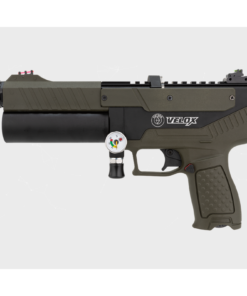
The hatsan velox is another compact platform that may appeal to customers researching modern PCP systems. However, compatible equipment should always be verified against the precise model designation rather than assuming accessories interchange across different Hatsan products.
Classic Hatsan Spring and Gas-Ram Air Rifles
Not every Hatsan buyer wants PCP equipment. Traditional spring-piston and gas-ram designs remain an important part of the catalog. The hatsan model 95 is among the best-known examples, while searches for hatsan mod 95 and simply mod 95 usually refer to the same established platform.
The hatsan 125 is another familiar full-size option. Meanwhile, the hatsan 135 is commonly researched by shooters interested in larger, more substantial break-barrel platforms. The hatsan 135 vortex air rifle incorporates Hatsan’s Vortex gas-piston concept, while the hatsan 135 carnivore is associated with larger-caliber configurations. Searches for a hatsan big bore carnivore rifle are similarly connected with users comparing large-bore air-powered platforms.
Additional traditional models include the hatsan mod 65, which appears in searches from buyers interested in full-size sporting configurations. The hatsan airtact air rifle, commonly shortened to hatsan airtact, represents another accessible platform. The hatsan zada also broadens the selection for customers comparing break-barrel designs.
Big-Bore Hatsan Models and Specialty Platforms
For customers researching large-bore PCP technology, the hatsan piledriver is one of Hatsan’s best-known specialized platforms. Large-bore air rifles occupy a different category from a conventional .177 caliber air pellet gun, so caliber, projectile compatibility, operating pressure, legal restrictions, and intended sporting use should all be carefully reviewed.
The hatsan harpoon is another specialized product name associated with Hatsan’s air-powered lineup. Because it functions differently from a conventional pellet rifle, buyers may encounter the phrase arrow launcher while researching this category.
These specialized products should not automatically be compared with a traditional pallet gun or standard pellet rifle because their operating systems, projectiles, dimensions, and intended uses can be substantially different.
Refurbished Hatsan Air Rifles and Replacement Parts
Budget-conscious customers sometimes search for hatsan refurbished equipment or refurbished air rifles. A refurbished product can offer good value when its condition, inspection history, seals, pressure system, warranty coverage, and included accessories are clearly disclosed.
Existing owners may instead require hatsan aftermarket parts. When replacing magazines, seals, fill probes, stocks, mounts, or other components, compatibility should always be matched to the precise rifle generation and caliber. Similar-looking parts should never automatically be assumed to fit every Hatsan platform.
Product names such as 1000x.25 may also appear when shoppers compare model or caliber-specific configurations, so confirming the manufacturer’s exact designation is particularly important.
Scopes, Pellets, and Air Rifle Accessories
Optics are another major consideration when configuring an air rifle. A basic 4×20 optic may be encountered in entry-level packages, and the term 4×20 is therefore frequently seen alongside airgun searches. However, optic selection should ultimately reflect the rifle’s mounting system, recoil characteristics, shooting distance, and intended use.
Pellet selection also matters. Products such as h&n field target trophy are widely recognized among airgun enthusiasts, while h&n field target trophy bleifrei refers to a lead-free option within that product family. Individual rifles may prefer different pellet weights and shapes, so consistency and accuracy should be evaluated with the manufacturer’s recommendations in mind.
The term crow magnum may also appear when users research heavier hunting-oriented pellet designs or related airgun ammunition. Ammunition compatibility must always be checked against the specific caliber and manufacturer’s specifications.
Choosing Between PCP, CO2, and Spring-Powered Airguns
A modern air pellet gun can use several different power systems. A PCP system stores compressed air inside a reservoir, while a spring-piston rifle relies on mechanical energy generated during cocking. A co2 pellet rifle, by contrast, uses carbon dioxide cartridges or a compatible CO2 supply.
Each system offers different advantages. PCP rifles may provide low recoil and repeatable operation, while spring-powered rifles avoid the need for external filling equipment. CO2 systems can offer convenient operation in compatible platforms, although performance may vary with temperature.
Customers researching the air rifle range should therefore consider much more than velocity figures. Ergonomics, caliber, overall length, weight, filling equipment, magazine design, maintenance requirements, noise level, available service support, and local regulations can all affect long-term ownership.
Hatsan Models for Different Airgun Preferences
With platforms such as the hatsan blitz, hatsan sortie, hatsan hercules, hatsan bullboss, hatsan flash, hatsan invader, hatsan piledriver, hatsan jet 2, hatsan velox, hatsan factor rc, hatsan airtact, and hatsan model 95, Hatsan covers a broad spectrum of airgun categories.
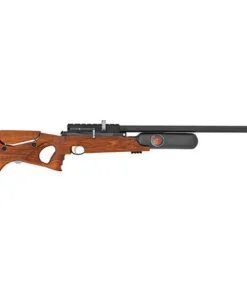
Some customers may prioritize a traditional sporting rifle, whereas others may prefer a compact PCP or bullpup. Shooters interested in sniper long style configurations may focus more strongly on stock ergonomics, optics mounting, stability, and longer-range target capability rather than simply choosing the most powerful model.
Meanwhile, terms such as econ ii may appear in accessory or product-related searches depending on the equipment being compared. Compatibility should always be established using the exact manufacturer and model specification.
Ultimately, selecting among hatsan air guns should begin with the intended application. A lightweight .177 caliber rifle may suit recreational target shooting, while a larger PCP platform can serve a very different sporting role. Models such as the hatsan blitz .30 cal, hatsan blitz 30 cal, or other 30 cal air rifle configurations should therefore be evaluated according to their specifications, local law, appropriate shooting environment, and intended lawful use.
From the compact jet ii and hatsan jet 2 to the established hatsan mod 95, powerful hatsan 135, specialized hatsan harpoon, and modern semi-auto PCP platforms, the Hatsan catalog gives airgun enthusiasts an extensive selection. Comparing specifications carefully helps buyers identify the right air rifle while ensuring that pellets, optics, filling equipment, magazines, and accessories remain correctly matched to the chosen platform.
Shared Family and Introductory Use
Inclusive design features make the platform suitable for introducing new shooters. The adjustable stock accommodates different body sizes, and the ambidextrous grip works equally well for left- or right-handed individuals. Recoil is negligible compared with powder firearms, which reduces flinch and builds confidence quickly.
A parent or instructor can start a newcomer in the supported carbine configuration with a red-dot sight, then progress to iron sights or the pure pistol form as skills improve. The multi-shot magazines keep the focus on aiming and trigger control rather than constant reloading. Because the report is moderate and the power can be matched to the shooter’s needs through calibre and pellet selection, the experience stays enjoyable rather than intimidating.
Shared ownership is straightforward. One set of cylinders and a small collection of magazines can serve several users. Colour-coded spare cylinders help keep track of which set is fully charged. The overall simplicity of the side-lever action and manual safety lowers the instructional burden, allowing more time for the enjoyable aspects of shooting.
Urban and Suburban Considerations
In more populated areas the emphasis shifts toward quiet operation, compact storage, and strict adherence to local rules. The shrouded barrel already reduces the report relative to an unshrouded design. Where legal, a further moderator can bring the sound signature down to a level that is less likely to disturb neighbours.
Storage is simple: the pistol configuration fits in a locked drawer, briefcase, or small safe. The detachable stock can be stored separately if space is limited. When transported, the short overall length makes vehicle storage discreet.
Pellet traps and backstops become essential for backyard use. Properly constructed traps capture pellets cleanly and prevent ricochets. Many urban shooters also favour the smaller bore for its flatter trajectory and lower residual energy at typical backyard distances.
Night or low-light practice is possible with a compact weapon light on one of the Picatinny rails, provided local ordinances allow it. The pressure gauge remains visible so the user always knows the remaining air supply before beginning a session.
Customisation for Specific Roles
Practical performance improves further when the gun is tailored to the task. A low-power compact scope or red-dot suits general plinking and pest work. A higher-magnification optic with adjustable parallax can be fitted for deliberate target work. Spare magazines pre-loaded with different pellet types allow rapid switching between practice and hunting loads.
Some users add a simple sling to the stock for hands-free carry during longer walks. Others prefer a minimalist approach and rely on the pistol form alone. Because the accessory rails and dovetail are standard, almost any common airgun optic or light can be mounted without permanent modification.
The ability to pre-fill and carry extra cylinders effectively multiplies the on-board shot capacity. A shooter heading to a remote range or multi-day camp can leave with enough air for hundreds of shots, limited mainly by the number of cylinders and the capacity of the primary fill source.
Safety and Real-World Best Practices
Every practical scenario rests on consistent safety habits. The manual safety is engaged whenever the gun is not actively in use. Muzzles are kept pointed in a safe direction during loading, unloading, and cylinder changes. Cylinders are never removed while still under pressure.
Eye protection is worn by everyone near the firing line. Backstops are verified before every session. In the field, positive target identification and a clear backdrop are non-negotiable. Regular inspection of O-rings, the fill probe, and the barrel crown helps maintain reliability.
When these fundamentals are observed, the same compact platform can move fluidly between backyard recreation, structured practice, property management, and outdoor adventure. The combination of portability, adjustable ergonomics, adequate power, and modular accessories produces a tool that earns its place in a wide variety of real-world shooting situations.

Reviews
There are no reviews yet.